
Reviewed · CASTLES AND HISTORIC SITES
Tokyo Imperial Palace with Kagurazaka Alley Tour
Tokyo rewards the curious. This 3.5-hour walk links Imperial Palace history with the quiet lanes of Kagurazaka, giving you both grand civic sights and a more local-feeling corner of the city. I like the small maximum of eight people, and I like the way the route moves beyond the usual Tokyo checklist. The main drawback is that the palace itself is not open to the public, so this is an exterior and grounds-focused visit rather than an indoor palace tour.
The route begins near Tokyo Station at 9:00 a.m. and ends in Kagurazaka, a useful setup if you want to continue exploring there afterward. Guides such as Sho and Aya have earned especially warm praise for clear history lessons, thoughtful answers, group photos, and enthusiasm even on a chilly morning. You should still expect a fair amount of walking, and the listed stop times are short at several locations.
In This Review
- Key points to know before booking
- Starting beside Tokyo Station at 9:00 a.m.
- What you actually see around the Imperial Palace
- Nippon Budokan and the path through Kitanomaru Park
- A quiet pause at Tokyo Daijingu Shrine
- Kagurazaka: where old Tokyo meets dinner streets
- Ushigome Mitsuke and Edo Castle defenses
- Why the guide matters on this particular route
- The walking pace, timing, and practical tradeoffs
- Is $52.84 a fair price?
- Who should book this walk?
- Should you book the Imperial Palace and Kagurazaka tour?
- FAQ
- How long is the Tokyo Imperial Palace and Kagurazaka tour?
- What time does the tour start?
- Where is the meeting point?
- Where does the tour end?
- Is the Imperial Palace open during the tour?
- How many people can join the tour?
- Is transportation included?
- Is the ticket mobile?
- Does the tour include food or drinks?
- What is the cancellation policy?
Key points to know before booking
- A rare two-part Tokyo view: You move from the grand Marunouchi district and Imperial Palace to the old lanes of Kagurazaka.
- Small group of up to eight: This gives you a better chance to ask questions than on a large city tour.
- The palace is seen from outside: You explore its grounds, moat, gates, and setting, but the palace building is not open to the public.
- Kagurazaka is the tour’s special finish: Geisha Alley, Hyogo Yokocho, and Kakurenbo Yokocho show a quieter side of Tokyo.
- Guides add cultural context: Past tours have included explanations of Japanese history, architecture, plants, Buddhist tradition, and details such as fish roof ornaments.
- Good value at $52.84: The price is reasonable if you want a guide to connect several districts and explain what you are seeing.
Starting beside Tokyo Station at 9:00 a.m.
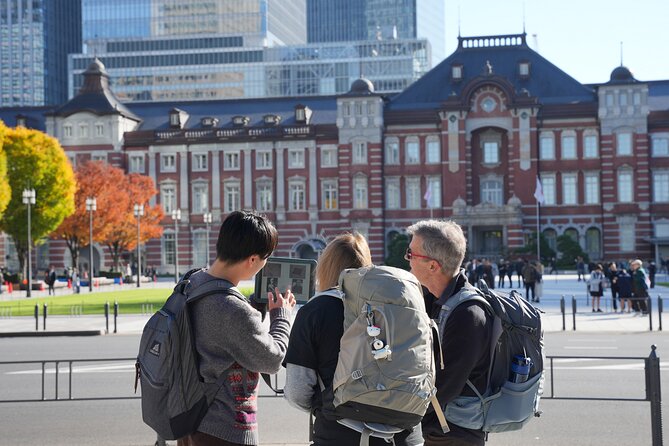
Your meeting point is in front of the Shin-Marunouchi Building, at 1-chōme-5-1 Marunouchi. This is a practical place to begin because Tokyo Station is one of the city’s major rail hubs, served by local and long-distance trains. You can arrive by public transportation and meet the guide in a district that quickly shows Tokyo’s contrast between modern business towers and older imperial spaces.
Tokyo Station receives only about five minutes on the formal route, so do not treat this as a full station tour. The stop is more useful as an orientation point and a chance to see the Marunouchi setting before walking toward the palace area.
I like this early start. At 9:00 a.m., you have most of the day left after the tour, and the route ends in Kagurazaka rather than returning you to the starting point. That makes the tour easy to pair with lunch and more wandering in the neighborhood.
The mobile ticket is convenient, and booking confirmation is provided at the time of purchase. Since the tour is often reserved well ahead, booking around six weeks before your visit is sensible if your dates are fixed.
More Castles and Historic Sites in Tokyo
- Tokyo: Imperial Palace and Shogun Historical Walking Tour
★ 5.0 · 2,251 reviews - Tokyo Castle & Imperial PalaceーShogun Walking Tour
★ 4.7 · 1,068 reviews - Tokyo: Samurai Ninja Museum Guided tour and Experience
★ 4.6 · 1,010 reviews
What you actually see around the Imperial Palace
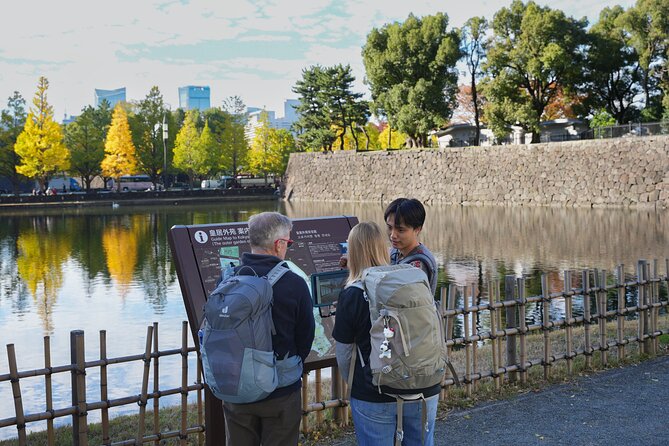
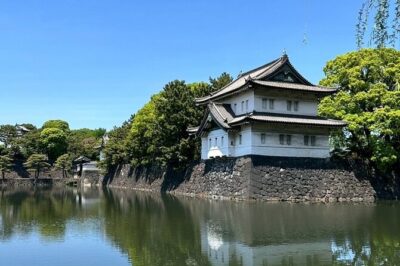
The Imperial Palace is the official residence of Japan’s emperor. It sits in central Tokyo behind moats, gardens, broad park areas, and defensive traces from the former Edo Castle. The scheduled palace portion lasts about 55 minutes, making it the longest formal stop.
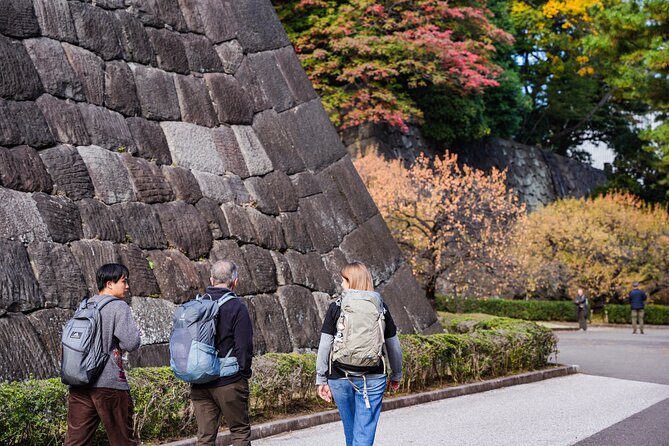
This is the historical heart of the walk. The Tokugawa Shogunate ruled Japan from Edo, the old name for Tokyo, and the castle was the center of that political system. A guide can help you understand why the palace grounds matter, instead of leaving you with a few grand walls and a moat that look impressive but lack context.
The palace building itself is not open to the public, so set your expectations correctly. You will not tour royal rooms or enter a grand interior. The value comes from the setting, the remaining castle structures, the gardens, and the explanations that connect the site to Japan’s government and imperial tradition.
The reviews supplied for this tour point to several strengths worth looking for. Sho was praised for explaining both the palace and wider Japanese history. Another guide was appreciated for discussing fish decorations on roofs, a small detail that shows how a good guide can turn architecture into a cultural lesson.
A different tour experience included a guide who explained plants and connected Buddhist tradition with architecture. That combination is useful here because palace grounds are not only political spaces. They also reflect Japanese ideas about design, nature, symbolism, and seasonal change.
Spring can be especially attractive when blossoms are present, but the tour is not sold as a blossom-specific outing. If flowers matter most to you, timing will affect what you see. The route itself remains worthwhile in other seasons because its main focus is history and place.
Nippon Budokan and the path through Kitanomaru Park
The route also passes the Nippon Budokan in Kitanomaru Park. The arena was built in 1964 for martial arts events during the Tokyo Olympics and is now used for many kinds of events, including concerts.
No separate stop duration is provided, so you should regard this as a passing landmark rather than a scheduled indoor visit. There is no indication that arena admission is included. Its value is the story: the building connects Japan’s martial arts traditions with the country’s modern international identity.
This part of the route helps keep the palace from feeling like an isolated monument. You see how parkland, historic defenses, public institutions, and contemporary city life sit close together in central Tokyo.
A quiet pause at Tokyo Daijingu Shrine
Tokyo Daijingu Shrine receives about 15 minutes. Established in 1880, it is dedicated to Amaterasu, the sun goddess, along with spirits connected to Japan’s imperial family.
The short visit gives you time to observe the shrine’s religious role without turning the tour into a long shrine circuit. Your guide can explain how Shinto places relate to Japanese belief and imperial tradition, adding a different layer to the palace visit.
Fifteen minutes is enough for a focused stop, but not enough for a long, unhurried exploration. If you prefer to linger at every shrine, you may wish you had more time. For a tour that also covers Tokyo Station, the palace, and Kagurazaka, the brisk pace is understandable.
A completely different kind of day out:
- Tokyo Disney Resort – Tokyo Disneyland & Tokyo DisneySea Park Tickets
★ 4.8 · 99,488 reviews - SHIBUYA SKY Ticket
★ 4.7 · 46,509 reviews - JR Whole Japan Rail Pass
★ 4.8 · 29,150 reviews - Mt Fuji and Hakone 1-Day Bus Tour Return by Bullet Train
★ 5.0 · 26,383 reviews
Kagurazaka: where old Tokyo meets dinner streets
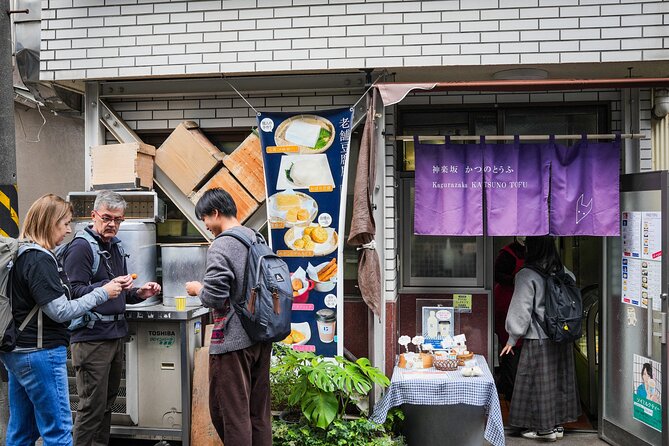
Kagurazaka is the most distinctive part of the experience. Once associated with geisha culture, the neighborhood now mixes narrow lanes, traditional restaurants, modern cafes, and small shops. The formal stop lasts about 30 minutes, but the route also includes several named alleys and historic points.
This is where the tour moves away from Tokyo’s major postcard sights. You are no longer looking at an enormous station or an imperial compound. Instead, you are following compact lanes where the scale feels more intimate and the past is easier to imagine.
The route includes Geisha Alley, a narrow street linked to the area’s former geisha culture. Traditional teahouses and older buildings give it a nostalgic feel, though you should remember that this is a living neighborhood, not an open-air museum.
Hyogo Yokocho offers another change of pace. It is known for small eateries and traditional shops, with an old-fashioned atmosphere that is especially appealing if you like food streets more than formal monuments. The tour does not list a meal or tasting, so plan to return on your own if you want to eat there.
Kakurenbo Yokocho is another narrow lane with small bars and eateries. Its appeal is the cozy scale and quiet setting. It may be more interesting to you than a famous shopping street because it shows how Tokyo’s older neighborhoods continue to function after dark and during ordinary daily life.
The tour ends near 3-chōme-2-202 Kagurazaka, close to the main street and near a FamilyMart convenience store. That is a useful landmark, especially in a neighborhood where small alleys can make directions confusing. From the end point, you can continue exploring Kagurazaka independently.
Ushigome Mitsuke and Edo Castle defenses
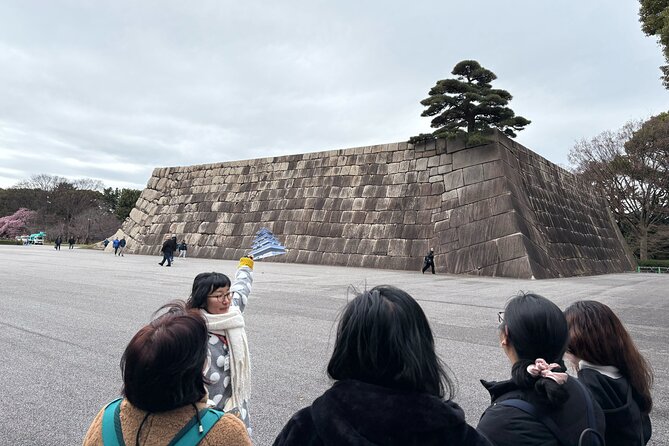
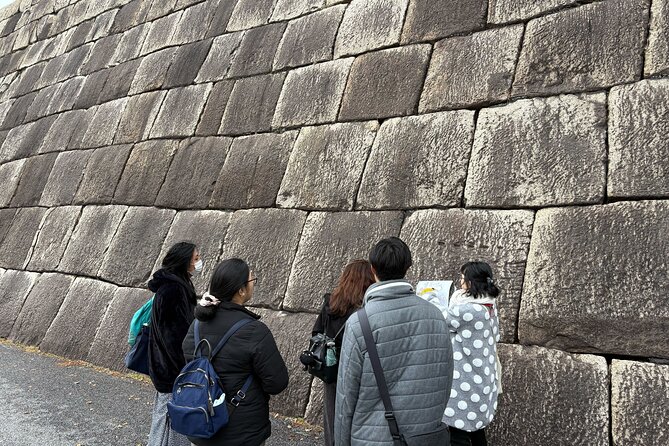
Ushigome Mitsuke was once one of the gates of Edo Castle. The gate itself no longer exists, but the site preserves the memory of the castle’s defensive network.
This is an easy detail to miss if you walk through Tokyo alone. A modern city can hide its former boundaries, and a guide helps you notice how roads, walls, gates, and districts relate to the old castle town.
I would not book this tour expecting preserved fortress buildings at every turn. Some of the history is represented by locations and remains rather than complete structures. That is also part of the charm: you learn to read the city instead of simply photographing a monument.
Why the guide matters on this particular route
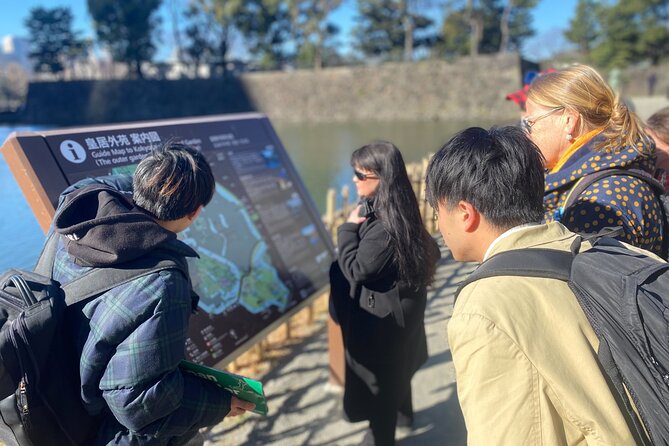
You can visit Tokyo Station, the Imperial Palace area, Tokyo Daijingu, and Kagurazaka without paying for a tour. The reason to book this experience is the connection between them.
A strong guide can explain how Edo became Tokyo, how the Tokugawa Shogunate shaped the city, why a shrine is dedicated to Amaterasu, and how Kagurazaka’s alleys relate to geisha culture. Without that help, you may see attractive places but miss the links between them.
The small group, capped at eight people, is a real advantage. It is easier to hear in busy city spaces, and you have more room to ask about things that catch your eye. One past booking even operated as a private tour because no other people joined. That possibility cannot be guaranteed, but a small group gives you a better chance of a personal exchange.
Sho received praise for enthusiasm on a cold morning, while Aya was praised for experience and for taking good group photos. Another guide was described as young but strong on plants and cultural explanation. These details suggest that the provider places real weight on the guide’s role, though your individual guide will depend on the date.
The walking pace, timing, and practical tradeoffs
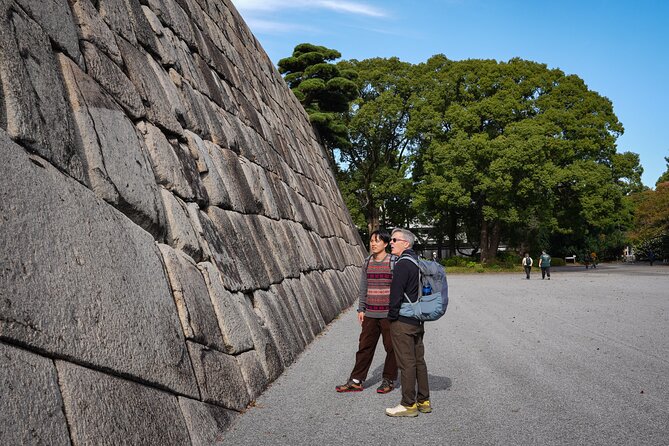
The total duration is about 3 hours and 30 minutes. The formal times include five minutes at Tokyo Station, 55 minutes at the Imperial Palace, 15 minutes at Tokyo Daijingu, and 30 minutes in Kagurazaka. The remaining time covers walking and the additional landmarks.
That schedule is efficient, but it is not leisurely. You will cross several central Tokyo areas and should be ready to keep moving between stops. Comfortable shoes make sense, and you should be prepared for changing weather, especially since one highly praised outing took place on a chilly morning.
The tour is near public transportation, and most people can participate. The supplied information does not promise a step-free route or detail accessibility arrangements, so contact the provider if you need specific support.
The mobile ticket keeps the check-in simple. The meeting and ending points are different, which is helpful for seeing more of Tokyo but important to remember when planning your day.
Is $52.84 a fair price?
At $52.84 per person, this is not the cheapest way to walk around the palace. You can reach the major areas independently for far less.
The price becomes easier to justify if you value explanation and structure. In one morning, you get a carefully arranged route through Marunouchi, the Imperial Palace area, a historic shrine, and several Kagurazaka alleys. You also avoid spending time deciding where to turn next.
The strongest value comes from the cultural details. Learning why a roof carries fish ornaments, how Buddhist ideas connect with architecture, or how the old castle shaped modern Tokyo can change the way you see the rest of your trip.
I would skip it if you prefer complete freedom, long photo stops, or museum interiors. The palace is not open to the public, the Tokyo Station stop is brief, and Kagurazaka receives only a limited formal time. I would choose it if you want a compact introduction to central Tokyo with a guide who can answer questions.
Free cancellation is available until 24 hours before the 9:00 a.m. start. Changes or cancellations inside that period are not refunded, so check your plans before the deadline.
Who should book this walk?
I think this tour suits first-time visitors who want history without spending half a day inside a museum. It also works well for anyone who has already seen Tokyo’s major districts and wants a quieter neighborhood with older roots.
It is a good match for curious walkers who enjoy asking questions. The small group gives you a better setting for that, and the guide’s explanations are central to the experience.
Families and mixed-age groups may appreciate the variety. The route alternates between large open palace spaces, a shrine, city landmarks, and narrow food lanes. You are less likely to feel stuck in one type of sight for three and a half hours.
You may want another plan if your main goal is shopping, dining, or entering the Imperial Palace. This is primarily a guided cultural walk, and the food streets are viewed rather than included as tastings.
Should you book the Imperial Palace and Kagurazaka tour?
Book it if you want context more than checklists. The Imperial Palace provides the grand political story, while Kagurazaka supplies the small-scale streets and old neighborhood character. That contrast is the tour’s best idea.
The $52.84 price is fair for a small group and a route that would take more effort to organize alone. Just remember the limits: the palace interior is closed, the walk is active, and some stops are brief.
For a focused morning that connects Edo-era Tokyo with the city you see today, I would book this tour. If you prefer to wander at your own speed, spend longer at each shrine, or make the day about food, save your money and explore the same districts independently.
FAQ
How long is the Tokyo Imperial Palace and Kagurazaka tour?
The tour lasts approximately 3 hours and 30 minutes.
What time does the tour start?
It starts at 9:00 a.m.
Where is the meeting point?
The meeting point is the Shin-Marunouchi Building at 1-chōme-5-1 Marunouchi, Chiyoda City, Tokyo 100-6590, Japan.
Where does the tour end?
The tour ends at 3-chōme-2-202 Kagurazaka, Shinjuku City, Tokyo 162-0825, Japan, near the main street and close to a FamilyMart convenience store.
Is the Imperial Palace open during the tour?
The palace itself is not open to the public. The visit focuses on the surrounding grounds, gardens, moat, park areas, and historic setting.
How many people can join the tour?
The maximum group size is eight people.
Is transportation included?
The experience is a walking tour. The meeting area is near public transportation, but transportation costs are not stated as included.
Is the ticket mobile?
Yes. The experience provides a mobile ticket.
Does the tour include food or drinks?
No food or drink inclusion is specified. Kagurazaka has restaurants, cafes, bars, and eateries, but purchases are not listed as part of the tour.
What is the cancellation policy?
You can cancel at least 24 hours before the start time for a full refund. Cancellations or changes made less than 24 hours before the start time are not accepted for a refund.
Just added in Tokyo
- Tokyo Like a Local: Private & Personalised Experience (2-3 hours)★ 4.5 · 81 reviews
- Samurai Experience – Learn Bushido through Kendo, in Tokyo★ 5.0 · 88 reviews
- Tokyo Layover 5 Hours Private Tour★ 5.0 · 40 reviews
- Tokyo: SEGA Joypolis E-Tickets with Optional Tokyo Metro Pass★ 4.0 · 14 reviews
- Experience Big soba knife Soba Making Class in Tokyo Kappabashi★ 5.0 · 71 reviews
- Traditional Japanese Comedy, Juggling & Magic Live Show in Tokyo★ 5.0 · 37 reviews
- Tokyo Ikebukuro Evening Tour Dive into Japanese culture★ 5.0 · 15 reviews
- Imperial Palace Tour: Discover Samurai History with a Local Guide★ 5.0 · 20 reviews
Castles and Historic Sites, compared.
Imperial Palace and Shogun Historical Walking Tour
Read our review →
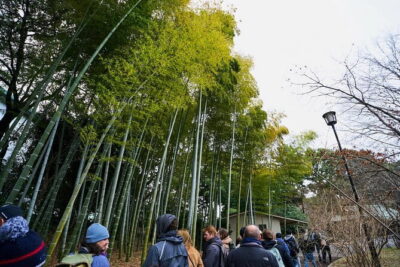
Tokyo Castle & Imperial PalaceーShogun Walking Tour
Read our review →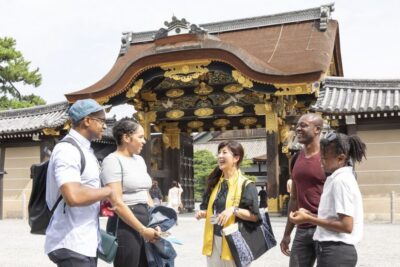
Nijo-jo Castle and Ninomaru Palace Guided Tour
Read our review →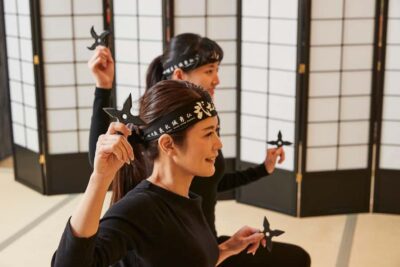
Samurai Ninja Museum Guided tour and Experience
Read our review →Browse the lists this tour appears in