
Reviewed · PRIVATE TOURS IN TOKYO
Tokyo Off the Beaten Path 6hr Private Tour with Licensed Guide
Tokyo has more than neon and skyscrapers. This six-hour private tour lets you choose three or four places from a wide menu of traditional neighborhoods, temples, markets, gardens, and small museums. I like the personal format, especially the chance to meet your guide at your hotel and shape the day around your interests. I also like that guides such as Yoshi, Tatsu, Masa, Taka, and Kris have helped visitors handle Tokyo’s subway system while adding local context along the way.
The main drawback is pace and cost control. Six hours can disappear quickly when you cross this enormous city, and transportation, meals, and admission fees are extra. A few past participants also found the day rushed or the explanations too brief, so you should agree on a realistic plan before setting out.
In This Review
- Key points to know before booking
- What this private Tokyo day is really designed to do
- Yanaka, Nezu, and Sendagi: Tokyo’s old neighborhood trio
- Nezu Shrine
- Yanaka Ginza Shopping Street
- Yanaka Cemetery and Sendagi
- SCAI The Bathhouse
- Shibamata: a traditional day on Tokyo’s eastern edge
- Taishakuten-Sando
- Shibamata Taishakuten
- Fukagawa: temples, gardens, sumo, and the Edo period
- Fukagawa Edo Museum
- Fukagawa Fudodo
- Tomioka Hachimangu
- Kiyosumi Teien and the Basho Memorial Museum
- Asakusa, Kappabashi, and Tsukiji for food and familiar sights
- Kappabashi Street
- Asakusa Hanayashiki and Nishisando
- Tsukiji Fish Market
- Gotokuji Temple and the maneki-neko connection
- Guides, pace, and the value of a private format
- Price, extra costs, and who gets good value
- Should you book this Tokyo private tour?
- FAQ
- How long is the Tokyo off the beaten path tour?
- How many places can I choose?
- Where does the tour begin?
- Is transportation included?
- Is a private vehicle provided?
- Are entrance fees included?
- Is lunch included?
- Can I cancel for a full refund?
Key points to know before booking
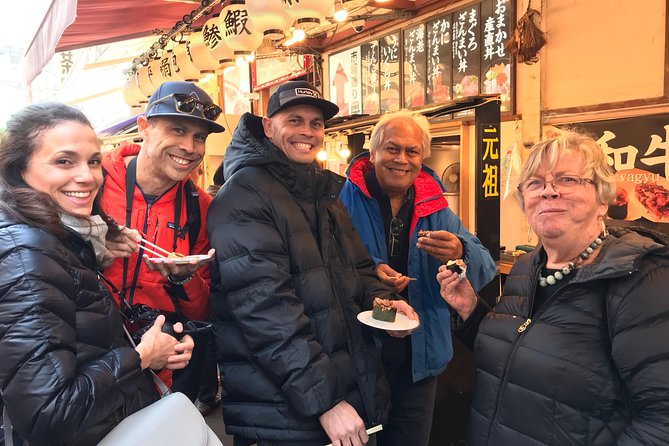
- Choose three or four places: You can build the day around Yanaka, Shibamata, Fukagawa, Asakusa, Tsukiji, Gotokuji, or other available sites.
- Meet at your hotel on foot: The guide meets you within a designated Tokyo area, but this is not a private-car pickup.
- Subway skills come included: Guides can organize public transport and help you understand Tokyo’s famously complex rail system.
- Old Tokyo is the focus: Yanaka’s lanes, Shibamata’s traditional shopping street, and Fukagawa’s temples offer a quieter side of the city.
- Transport costs extra: Taxi or public transit fares are paid separately, as are lunch and many admission tickets.
- Private means flexible: Only your group participates, making it easier to adjust the route, pace, and interests.
What this private Tokyo day is really designed to do
This is not a fixed sightseeing circuit. Think of it as a guided planning service wrapped around a six-hour walking and transit day.
You select three or four sites from a long list. That choice matters because the locations are spread across Tokyo. Yanaka and Nezu pair naturally. Shibamata works well as its own old-town outing. Fukagawa can fill a day with museums, temples, a garden, and sumo connections. Asakusa and Kappabashi make another sensible combination.
I would not try to cover four far-apart districts just because the menu allows it. You could spend much of the day getting between places, especially if you add lunch. The strongest plan links nearby sites and leaves enough time to look around instead of collecting quick photographs.
The guide handles the route, explains the transport options, and meets you at your hotel on foot within the service area. That is useful during a first Tokyo visit, when a simple rail connection can involve several platforms, ticket machines, and confusing station exits.
More Private Tours in Tokyo
- Tokyo 6hr Private Tour with Government-Licensed Guide
★ 5.0 · 3,902 reviews - Private Tour to Mt. Fuji and Hakone (Fully Licenced Operator)
★ 5.0 · 1,910 reviews - Tokyo Customized Private Tour (Must See Places in 1 Day)
★ 5.0 · 1,499 reviews
Yanaka, Nezu, and Sendagi: Tokyo’s old neighborhood trio
Yanaka, Nezu, and Sendagi are often grouped together as Yanesen. These districts preserve a slower, more residential feel than central Tokyo, with narrow streets, small shops, temples, cemeteries, and older buildings.
The area avoided much of the destruction caused by earthquakes, war, and redevelopment. You are not visiting a frozen museum, though. People still live and work here, and the appeal comes from ordinary streets rather than one grand monument.
Nezu Shrine
Nezu Shrine dates from 1706 and is known for its Edo-period shrine buildings, with vermilion and gold details in the gongen-zukuri style. It offers a strong introduction to older Japanese religious architecture without the scale and crowds associated with Tokyo’s best-known temples.
The listed visit time is only about 15 minutes, which is enough for a quick look but not a slow wander. If this is one of your chosen sites, ask the guide how much time you will actually have. The shrine becomes more worthwhile when paired with the surrounding Nezu streets.
Yanaka Ginza Shopping Street
Yanaka Ginza is a local shopping street rather than a grand tourist attraction. Small food shops and everyday businesses line the street, giving you a chance to see how a traditional neighborhood functions.
This is a good place to ask your guide about snacks, shopping customs, and the difference between a local shopping arcade and a major department store. It can also be one of the more relaxed stops, provided you do not pack too many other districts into the day.
A completely different kind of day out:
- Tokyo Disney Resort – Tokyo Disneyland & Tokyo DisneySea Park Tickets
★ 4.8 · 99,488 reviews - SHIBUYA SKY Ticket
★ 4.7 · 46,509 reviews - JR Whole Japan Rail Pass
★ 4.8 · 29,150 reviews - Mt Fuji and Hakone 1-Day Bus Tour Return by Bullet Train
★ 5.0 · 26,383 reviews
Yanaka Cemetery and Sendagi
Yanaka Cemetery is one of Tokyo’s largest graveyards and is known for its quiet paths and mature trees. The central avenue once formed part of an older route through the district, and today it provides a calm break from the city’s traffic.
Sendagi completes the Yanesen picture. It has the same old-neighborhood character as Yanaka and Nezu, with lanes that reward slow walking. I would choose this group if you want atmosphere, local life, and a look at Tokyo that does not depend on a famous landmark.
SCAI The Bathhouse
SCAI The Bathhouse occupies a former bathhouse building more than 200 years old. Inside, it presents contemporary Japanese and international art, including work by artists such as Tatsuo Miyajima.
Admission is not included. Opening hours and exhibitions can affect the visit, so confirm the plan with your guide in advance. This stop is a clever choice for anyone who wants old Tokyo outside and modern art inside.
Shibamata: a traditional day on Tokyo’s eastern edge
Shibamata sits in eastern Tokyo near the Edogawa River and feels distinctly removed from the central districts. Its old-fashioned character makes it one of the best choices for a private tour focused on traditional streets and local atmosphere.
Taishakuten-Sando
Taishakuten-Sando is a 200-meter approach road leading to Shibamata Taishakuten Temple. Food stalls and small shops line the route, many with traditional wooden signs and storefronts.
The street is compact, so it works well with the temple and does not require a long museum visit. I would allow time for a snack or a short browse instead of treating it as a quick passage.
Shibamata Taishakuten
This Nichiren Buddhist temple has an impressive Nitenmon Gate and a gallery of wood carvings made between 1922 and 1934. The carvings depict scenes connected with the Lotus Sutra and give the temple more visual detail than a brief exterior stop suggests.
The temple is listed as a 15-minute stop, but that is a tight window if you want to study the carvings. Shibamata is also a useful choice for visitors who have already seen central Tokyo’s largest temples and want a different setting.
Fukagawa: temples, gardens, sumo, and the Edo period
Fukagawa offers a strong mix of cultural stops. It is especially appealing if you enjoy Japanese history, religious sites, gardens, or the old world of Edo-period Tokyo.
Fukagawa Edo Museum
The Fukagawa Edo Museum recreates a late Edo-period village, complete with houses, a canal, and a fire watchtower. Unlike a conventional museum of objects in glass cases, it gives you a sense of how a neighborhood was arranged.
Admission is extra, and the suggested stop is about 15 minutes, although the site may deserve more time. If you choose it, I would avoid pairing it with too many distant attractions.
Fukagawa Fudodo
Fukagawa Fudodo is a Shingon Buddhist temple with a somewhat unusual mix of architectural elements. The main building has notable wood carvings, even if the overall design may not appeal to everyone.
It is best approached as a place of active religious practice rather than a polished sightseeing monument. Your guide can help explain what you are seeing and how the temple fits into local Buddhist life. Admission is not included.
Tomioka Hachimangu
Tomioka Hachimangu is linked with sumo wrestling and hosts one of Tokyo’s major Shinto festivals. The shrine was damaged during World War II, and its current building dates from 1956.
That contrast is useful: you see both a long cultural connection and the effects of modern destruction and rebuilding. Pairing this shrine with Fukagawa Fudodo gives you two different religious traditions in the same broad area.
Kiyosumi Teien and the Basho Memorial Museum
Kiyosumi Teien is an Edo-period garden associated with merchant Kinokuniya Bunzaemon. Admission is extra. It offers a quiet change of pace after streets and temples, and it may be especially welcome during a busy day of walking.
The Basho Memorial Museum honors Matsuo Basho, the best-known poet of the Edo period. Fukagawa was connected with his writing and travels, making this a worthwhile stop for anyone interested in poetry and Japanese literary culture. The suggested visit is one hour, so choosing it means giving up some other stops.
Asakusa, Kappabashi, and Tsukiji for food and familiar sights
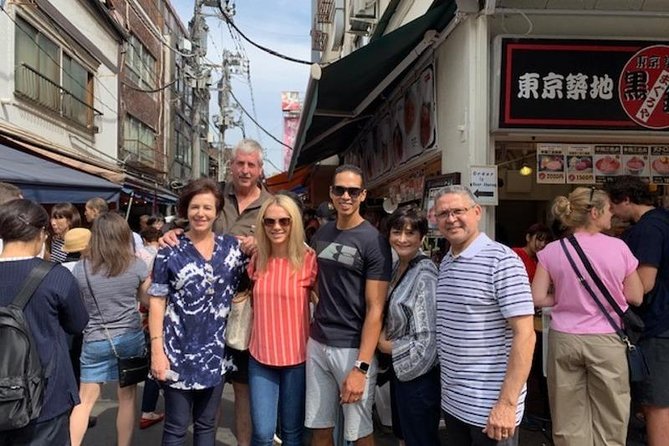
Asakusa is the most recognizable district among the choices, but the tour can use it in a more focused way than a standard sightseeing visit.
Kappabashi Street
Kappabashi is known for kitchen supplies, from Japanese knives and chopsticks to dishes and restaurant equipment. Prices are described as fair, and the area is a practical stop for cooks, food lovers, and anyone looking for a useful souvenir.
It is not a temple visit or a scenic walk. You choose it because you want to browse specialist shops and see a trade district with a clear local purpose.
Asakusa Hanayashiki and Nishisando
Hanayashiki opened in 1853 and is one of Japan’s oldest amusement parks. It has around 25 attractions and sits close to Sensoji Temple.
Asakusa Nishisando is a covered shopping street with a traditional appearance near Sensoji. These stops add a more playful and commercial side to Asakusa, while Kappabashi gives the area a practical, working character.
Tsukiji Fish Market
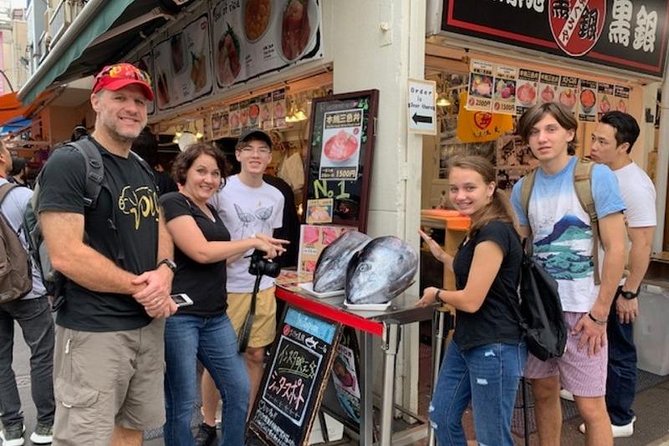
Tsukiji is included as a possible stop, with time to explore the market area and find lunch. One particularly useful detail from the experience is that guides have helped arrange seafood meals, including fresh sushi.
Food costs are your responsibility, and the market can easily take longer than 15 minutes if you want to eat. Tell your guide early if lunch is important. One past guide, Taka, was praised for combining Tsukiji with other Tokyo sights and helping the group manage the subway and walking route.
Gotokuji Temple and the maneki-neko connection
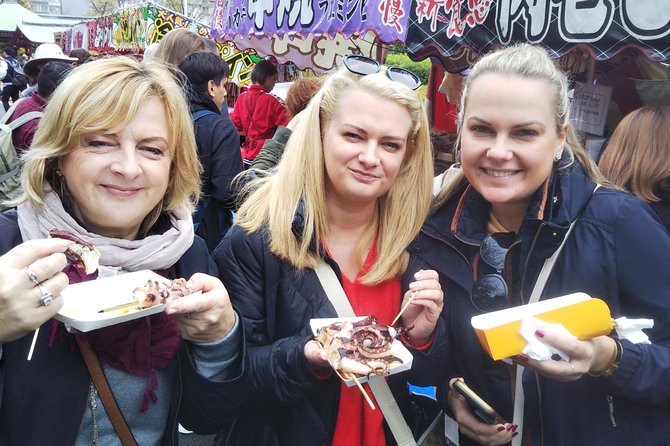
Gotokuji Temple in Setagaya is associated with the origin of the maneki-neko, the familiar cat figurine with a raised paw. The short suggested visit, about 10 minutes, makes it a simple add-on if the route works geographically.
I would choose Gotokuji for a specific interest in Japanese folk customs and the symbolism of the lucky cat. It is less useful if you are trying to see a broad range of Tokyo neighborhoods in only six hours.
Guides, pace, and the value of a private format
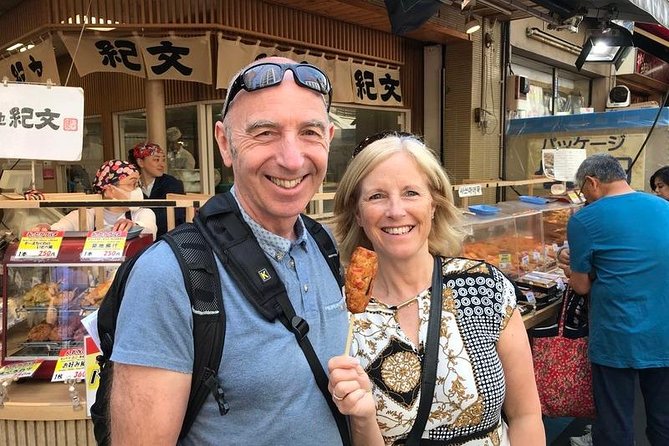
The guide is the heart of this experience. Strong guides have been praised for clear English, advance planning, patience with children, subway advice, and the ability to change plans when a site is closed.
Tatsu was noted for setting up good logistics around the group’s preferences. Kris reportedly sent a long list of possible activities, planned the transportation, explained cultural manners, shared personal stories, and even adapted the final destination when plans changed. Yoshi was praised for practical subway help, while Masa received warm feedback for tailoring a day around Nezu and other traditional areas.
That quality is not guaranteed with every guide. Two weak points appear in the feedback: one guide ended the day early after discussing a shorter return, and another moved too quickly with limited explanation. You can reduce this risk by confirming three things before departure:
- Which three or four sites are definite
- How long you want at each place
- Whether lunch is part of the plan or skipped
The private format is valuable because you are not tied to a large group. You can ask questions, adjust the pace, and choose a neighborhood that matches your interests. The guide can also teach you enough subway technique to continue exploring independently afterward.
Price, extra costs, and who gets good value
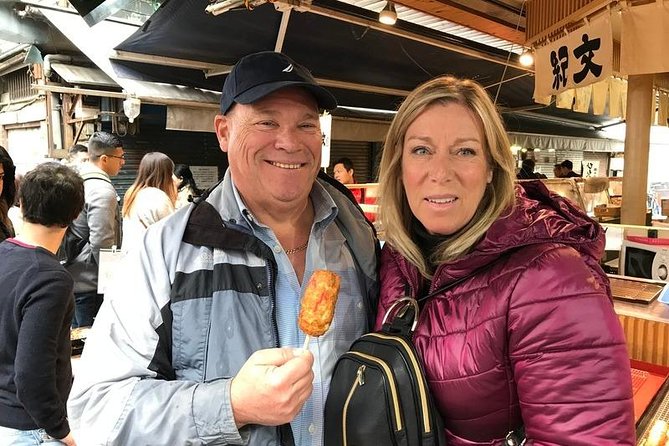
At $155.22 per person, the tour is not the cheapest way to see Tokyo. You still pay for public transit or taxis, lunch, and admissions not covered by the guide arrangement. There is no private vehicle.
The price makes more sense for a small private group that wants help making decisions and navigating Tokyo efficiently. If you are comfortable using trains and already know what you want to see, you may find it cheaper to visit a few places alone.
I see the best value for first-time Tokyo visitors with limited time, families who want a flexible day, and people who prefer local neighborhoods over a standard major-landmark route. It also suits anyone nervous about Tokyo’s rail system. The experience has a 4.9 rating from 64 reviews and a 94 percent recommendation rate, which supports the idea that guide quality is usually a strength.
This is a walking tour, not a chauffeur service. Wear comfortable shoes, keep your plan realistic, and remember that Tokyo’s distances can make four stops feel ambitious.
Should you book this Tokyo private tour?
Book it if you want help reaching older neighborhoods, smaller temples, local shopping streets, or less familiar corners of Tokyo. Yanaka and Nezu are the safest choice for traditional streets, Shibamata is excellent for old-town character, Fukagawa suits history and religion, and Kappabashi or Tsukiji works well for food interests.
Skip it if you want a fixed, polished sightseeing route with all expenses included. Also think twice if you dislike walking, public transport, or making choices before the day begins.
For the best result, choose three nearby sites, tell the guide what you care about, and protect time for lunch or a proper look around. That approach gives you a better chance of seeing the real character of Tokyo without turning the day into a race between train stations.
FAQ
How long is the Tokyo off the beaten path tour?
The tour lasts approximately six hours.
How many places can I choose?
You can customize the experience by choosing three or four sites from the available options.
Where does the tour begin?
The licensed guide meets you at your hotel on foot within the designated area of Tokyo.
Is transportation included?
No. Your guide can organize taxi or public transportation, but transportation fees are extra.
Is a private vehicle provided?
No. A private vehicle is not included. The experience is a walking tour using public transport or taxis when needed.
Are entrance fees included?
Some guide entry fees are covered for sights listed among the available sites, but entrance fees for the participant are not generally included. SCAI The Bathhouse, Fukagawa Edo Museum, Fukagawa Fudodo, Kiyosumi Teien, the Basho Memorial Museum, and Asakusa Hanayashiki list admission as not included.
Is lunch included?
No. Lunch and other personal expenses are extra.
Can I cancel for a full refund?
Yes, if you cancel at least 24 hours before the local start time. Cancellations or changes made less than 24 hours before the experience are not refunded or accepted.
Just added in Tokyo
- Tokyo Private Day Tour by Car with English speaking Driver★ 5.0 · 25 reviews
- Tokyo Private Customizable Tour with English Speaking Chauffeur★ 5.0 · 92 reviews
- Chill Out in Tokyo: Personalized Private Tours with Local Friends★ 5.0 · 104 reviews
- Tokyo Private Customized Walking tours with Local guide★ 5.0 · 23 reviews
- Tokyo Private Tour with Local Expert Guide – Hidden Gems★ 5.0 · 36 reviews
- Tokyo 6 hour Tour : English Speaking Driver Only, No Guide★ 4.0 · 15 reviews
- Tokyo Metropolis★ 5.0 · 51 reviews
- Tokyo Portrait Tour with a Professional Photographer★ 5.0 · 58 reviews
Private Tours in Tokyo, compared.
Tokyo 6hr Private Tour with Government-Licensed Guide
Read our review →
Private Tour to Mt. Fuji and Hakone (Fully Licenced Operator)
Read our review →
Tokyo Customized Private Tour (Must See Places in 1 Day)
Read our review →
Mount Fuji Full-Day Private Tour from Tokyo (Customizable)
Read our review →
Tokyo 4hr Private Tour with Government-Licensed Guide
Read our review →
Tokyo Customized Private Tour: See Top Attractions in 1 Day
Read our review →
Mt Fuji Private Tour with English Speaking Driver
Read our review →
Mt. Fuji & Hakone Private Day Tour with English-Speaking Driver
Read our review →Browse the lists this tour appears in