
Reviewed · CASTLES AND HISTORIC SITES
Tokyo Samurai Experience
Samurai training adds a sharp edge to Tokyo sightseeing. I like the small group of no more than seven and the mix of Kagurazaka streets, kimono dressing, sword practice, and lunch in one outing. The main consideration is the price, $166.04 per person, which is fair only if you value hands-on cultural activities as much as sightseeing.
I also like that a Certified MagicalTrip guide connects the pieces instead of leaving you to find each one alone. Vegetarian lunch is available, but vegan and gluten-free meals are not, and the four-hour schedule may feel tight if you prefer a slow walk with long stops.
In This Review
- Key points to know before booking
- Why this Tokyo tour feels different
- Meeting at Iidabashi and entering Kagurazaka
- Walking streets once linked with samurai
- Putting on a kimono at Samurai Theater Tokyo
- A traditional Japanese lunch in Kagurazaka
- The final Kagurazaka stroll
- Is $166.04 a fair price?
- Who will enjoy this experience most?
- Should you book the Tokyo Samurai Experience?
- FAQ
- Where does the Tokyo Samurai Experience begin?
- Where does the tour end?
- How long does the experience last?
- How large is the group?
- Is lunch included?
- Are vegetarian meals available?
- Is the kimono rental included?
- Can I cancel for a full refund?
Key points to know before booking
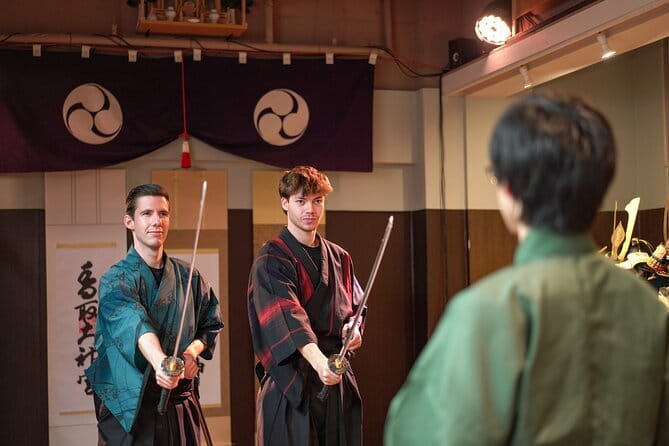
- Samurai training lasts one hour: Professional instructors teach basic fighting movements and katana handling before you perform what you have learned.
- Kagurazaka supplies the setting: You walk streets once associated with samurai, passing temples and shrines with a guide who adds local stories.
- Lunch is part of the value: A traditional Japanese meal at a wooden restaurant is included, along with one traditional food or sweet.
- The group stays small: A maximum of seven people makes it easier to hear the guide and take part in the activity.
- The meeting point is at Iidabashi Station: Find the Aoyama Flower Market by the West Exit of JR Iidabashi Station.
- The tour returns to its starting point: You do not need to arrange a separate ride from the final stop.
Why this Tokyo tour feels different
Tokyo gives you endless ways to see temples, eat noodles, and photograph neon signs. This experience takes a narrower path. It focuses on Kagurazaka, a district with old samurai connections, then adds a practical lesson in samurai movement and a traditional meal.
I like that combination because it gives you three ways to connect with Japan. You see a historic neighborhood, take part in a staged cultural activity, and sit down to eat. None of these pieces has to carry the whole tour by itself.
The samurai segment is the main draw. You do not simply watch a performance. You put on a kimono, learn basic movements from professional instructors, and use a katana as part of the training. The information does not specify the exact style of kimono or whether the sword is a live blade, so you should think of this as an instructional performance experience rather than formal martial arts training.
The outing is also designed for conversation. With no more than seven participants, your guide can keep the pace personal. That matters in a neighborhood walk, where the value comes from small details and stories rather than a long list of major sights.
More Castles and Historic Sites in Tokyo
- Tokyo: Imperial Palace and Shogun Historical Walking Tour
★ 5.0 · 2,251 reviews - Tokyo Castle & Imperial PalaceーShogun Walking Tour
★ 4.7 · 1,068 reviews - Tokyo: Samurai Ninja Museum Guided tour and Experience
★ 4.6 · 1,010 reviews
Meeting at Iidabashi and entering Kagurazaka
The tour begins at the Aoyama Flower Market, located inside JR Iidabashi Station near the West Exit. The supplied directions say you will see it on your right after leaving the West Exit. That is useful, but I would still allow a few extra minutes to find the correct station exit, especially if you are arriving by a different rail line.
The meeting point is in Chiyoda City at 4-chome Iidabashi. Your mobile ticket and booking confirmation should be easy to keep on your phone. Since the activity is near public transportation, you do not need to build a complicated transfer plan around it.
The first stop is brief, about 10 minutes. It works as a meeting and orientation point rather than a major sightseeing stop. From there, you move toward Kagurazaka, where the walk begins in earnest.
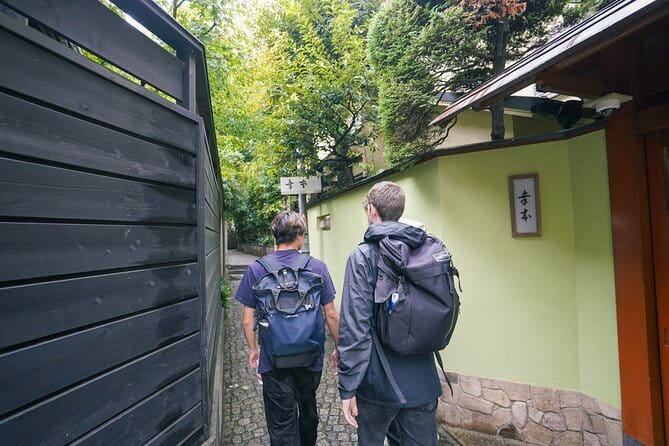
Kagurazaka is a good choice for this kind of tour. The district is connected with samurai-era streets, temples, and shrines, yet it is not presented as a museum exhibit. You walk through an active Tokyo neighborhood while learning how the area developed and why it matters.
The first guided portion lasts about 20 minutes. That is enough to introduce the district without using up the time needed for the samurai activity and meal. If you want a long, unhurried neighborhood walk, this tour may feel too structured. If you want a clear introduction before a hands-on activity, the timing works well.
Walking streets once linked with samurai
The Kagurazaka walk is more than a transfer between stops. Your guide points out places connected to the district’s samurai past and brings attention to temples, shrines, and older streets.
This is where the guide’s storytelling matters most. A guidebook can tell you that samurai once lived in an area. A local guide can explain what you are seeing as you move through it, connect a street or temple to the district’s past, and help you notice details you might otherwise pass without a thought.
The tour description does not name specific temples or shrines, so you should not expect a fixed list of famous monuments. That is not necessarily a weakness. The point is the character of Kagurazaka and the stories attached to its streets, not a checklist of headline attractions.
I would keep your expectations in the right place. This is not a full historical tour of Tokyo, and the walking sections together total about 40 minutes. You get a focused taste of the area before and after the samurai lesson, with the longer middle section reserved for food and training.
Putting on a kimono at Samurai Theater Tokyo
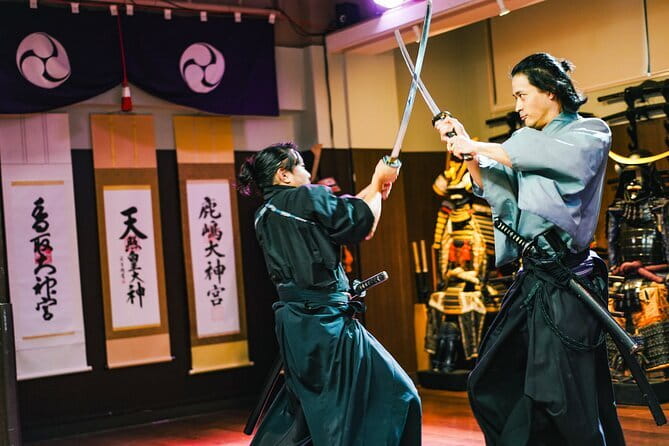
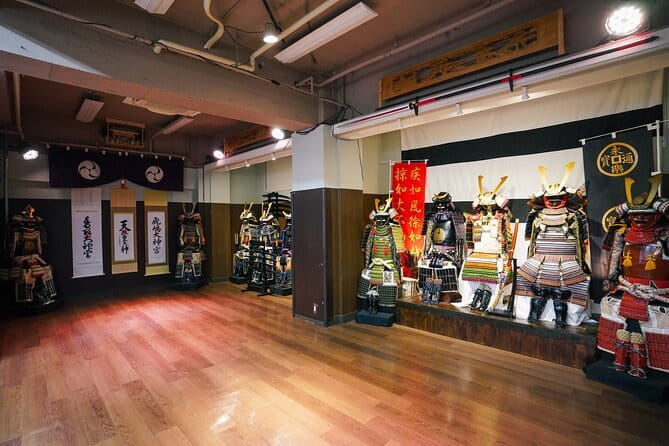
The one-hour session at Samurai Theater Tokyo is the centerpiece. You receive a kimono rental and learn basic samurai fighting movements from professional instructors.
For many people, the clothing is as important as the sword practice. A kimono changes how you carry yourself, and wearing one gives the activity a stronger sense of occasion than simply holding a prop. The experience then builds toward movement, including the basics of using a katana.
The available description says you learn, train, and perform. That last step is important. You are not only shown a routine and sent back to the street. You practice the movements and then perform what you learned, giving the session a clear beginning, middle, and end.
I like this active format for families, first-time visitors, and anyone who prefers doing something over listening to a long lecture. It also gives you a memorable way to understand samurai culture without pretending that one hour makes you a martial artist.
The activity is not described as a demanding combat class. Most participants can take part, and the experience is presented as a cultural session led by professional instructors. If you have mobility concerns, the supplied details do not provide specific accessibility information, so ask the operator before booking.
You should also plan to follow instructions closely. The experience involves sword movements and a group performance, so the value comes from learning the sequence rather than improvising. The small group should help the instructors give clear guidance.
A completely different kind of day out:
- Tokyo Disney Resort – Tokyo Disneyland & Tokyo DisneySea Park Tickets
★ 4.8 · 99,488 reviews - SHIBUYA SKY Ticket
★ 4.7 · 46,509 reviews - JR Whole Japan Rail Pass
★ 4.8 · 29,150 reviews - Mt Fuji and Hakone 1-Day Bus Tour Return by Bullet Train
★ 5.0 · 26,383 reviews
A traditional Japanese lunch in Kagurazaka

After training, you sit down for a traditional Japanese lunch at a cozy wooden restaurant in Kagurazaka. The meal is included, so the $166.04 price covers more than the walk and activity.
Lunch lasts about one hour and 40 minutes, making it the longest part of the schedule. That gives you time to eat at a reasonable pace and hear more about Japanese food and dining customs. It also provides a welcome pause after the physical activity.
A vegetarian option is available. Vegan and gluten-free options are not available, so this is an important booking decision for anyone with those dietary needs. Additional food and drinks can be purchased, but they are not included.
One traditional food or sweet is also included, and you can choose one during the tour. The details do not specify the exact dish or dessert, so the choice may depend on what is available that day. I would treat this as a small extra taste rather than a full food tour.
The restaurant setting sounds like a strong part of the experience. A wooden dining room in Kagurazaka fits the mood better than a generic stop near a major station. Still, the meal is not a substitute for a specialized culinary tour. If your main goal is tasting many regional dishes, you may want a separate food walk.
The final Kagurazaka stroll

After lunch, you spend about 20 more minutes walking through Kagurazaka. This second walk gives the guide a chance to return to the neighborhood’s temples, shrines, and samurai connections with the context you have gained during the day.
The order works nicely. You first see the area, then take part in a samurai activity, then eat, and finally revisit the streets. The neighborhood is no longer just a backdrop for the lesson. It becomes the setting that ties the experience together.
Because this final section is short, it is best viewed as a closing walk rather than a chance to explore every corner. You return to the original meeting point when the activity ends, which makes the tour easy to fit into a larger day in Tokyo.
Is $166.04 a fair price?
At $166.04 per person, this is not a budget walking tour. You are paying for a guided neighborhood visit, a one-hour kimono and samurai session, a traditional lunch, one food or sweet, and a small group capped at seven.
The price makes the most sense if you would otherwise book several separate activities. A samurai performance, a Kagurazaka walk, and a traditional meal could easily become a full day of planning. Here, one booking connects them and includes the central costs.
The value is weaker if you mainly want to see Kagurazaka. The walking time is limited, and the tour is built around participation rather than extended sightseeing. You may get more from the price if you are excited to wear a kimono, practice katana movements, and perform a short routine.
The small group also matters. A maximum of seven people is a useful feature for an activity where you need to hear instructions and have enough room to practice. It is more personal than a large staged group, though the supplied details do not promise private instruction.
The experience is booked, on average, 62 days ahead. That suggests you should plan early if your Tokyo dates are fixed, especially since the group is small. Free cancellation is available up to 24 hours before the start time, but changes or cancellations inside that window are not refunded.
Who will enjoy this experience most?
I would recommend this tour to you if you want a cultural activity with a clear physical and social element. It suits visitors who enjoy learning by doing, dressing in traditional clothing, and hearing local stories while walking through a historic district.
It is especially well suited to:
- First-time visitors who want more than major Tokyo sights
- Families and small groups looking for a shared activity
- Couples who want a memorable cultural outing
- People interested in samurai traditions without committing to a long martial arts course
- Diners who want a traditional lunch included in the day
- Visitors who appreciate a guide-led schedule and a small group
I would think twice if you need vegan or gluten-free food, want a private tour, or prefer a long, flexible neighborhood exploration. The tour also may not suit you if you are looking for advanced sword instruction. The information supports a beginner-level cultural lesson, not a professional training program.
The experience has a full but sensible rhythm. The walk is short, the samurai lesson is focused, and lunch takes up a large portion of the time. You get a little history, a hands-on activity, and a meal without spending an entire day on one theme.
Should you book the Tokyo Samurai Experience?
Book it if the idea of wearing a kimono and performing samurai movements appeals to you more than simply taking photos at a historic site. The combination of Kagurazaka, professional instruction, a traditional lunch, and a group of seven or fewer gives the outing a clear sense of purpose.
At $166.04, I would not call it a bargain. I would call it a practical package for someone who wants several connected experiences without arranging them separately. Check the meal restrictions first, allow time to find the Iidabashi meeting point, and reserve early if your schedule is firm.
If you want an easy, friendly introduction to Japanese culture with plenty of participation, this is a strong choice. If you want a serious martial arts lesson or an extensive food tour, spend your money elsewhere.
FAQ
Where does the Tokyo Samurai Experience begin?
It begins at Aoyama Flower Market inside JR Iidabashi Station, near the West Exit, at 4-chome Iidabashi in Chiyoda City.
Where does the tour end?
The activity ends back at the original meeting point.
How long does the experience last?
It lasts approximately four hours. The listed activities total about three and a half hours, with the remaining time allowing for movement between stops and transitions.
How large is the group?
The maximum group size is seven people.
Is lunch included?
Yes. A traditional Japanese lunch is included, along with one traditional food or sweet.
Are vegetarian meals available?
Yes, a vegetarian option is available. Vegan and gluten-free options are not available.
Is the kimono rental included?
Yes. The one-hour samurai experience includes kimono rental.
Can I cancel for a full refund?
Yes, if you cancel at least 24 hours before the experience start time. Cancellations or changes made less than 24 hours before the start time are not refunded.
Just added in Tokyo
- Very popular in Harajuku♡Animal petting zoo★ 4.6 · 39 reviews
- Yokohama Port: Private Customizable Tour with Transfer★ 5.0 · 19 reviews
- Wagyu & Sake 8 Course Tasting Dinner in Shinjuku★ 4.9 · 20 reviews
- Warner Bros. Studio Tour Tokyo – The Making of Harry Potter★ 4.8 · 181 reviews
- Yanaka District: Historical Walking Tour in Tokyo’s Old Town★ 4.8 · 117 reviews
- Tokyo: Classic Tsukiji Food Tour★ 4.9 · 78 reviews
- Tokyo: Tsukiji Fish Market Tour with 6 Stops & Seafood Lunch★ 4.5 · 165 reviews
- Tokyo Wagyu & Sake Pairing Tasting Experience with Local Flavors★ 5.0 · 108 reviews
Castles and Historic Sites, compared.


Imperial Palace and Shogun Historical Walking Tour
Read our review →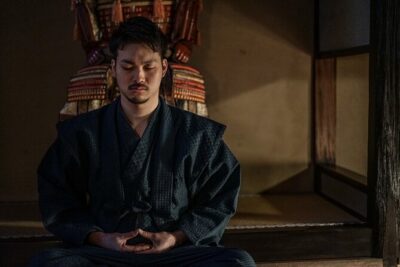
Tokyo Castle & Imperial PalaceーShogun Walking Tour
Read our review →
Nijo-jo Castle and Ninomaru Palace Guided Tour
Read our review →
Samurai Ninja Museum Guided tour and Experience
Read our review →Browse the lists this tour appears in