
Reviewed · CASTLES AND HISTORIC SITES
Tokyo: Samurai Sword Academy in the Hometown of the Last Samurai
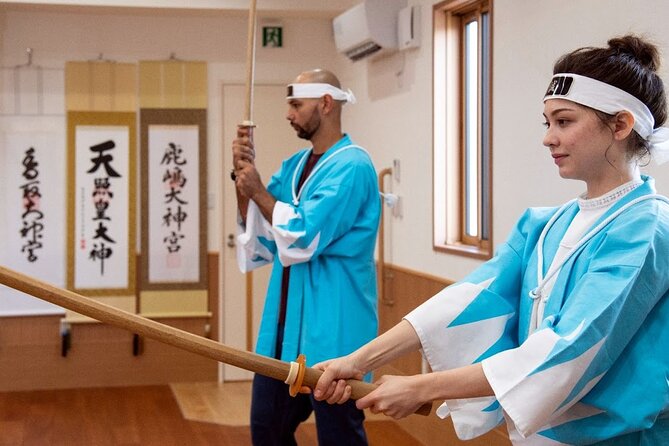
Step into the world of Japan’s last samurai. This small-group experience takes you to Hino, Tokyo, where Tennen Rishin-ryu swordsmanship is still practiced at the Tennen Rishin-ryu Hino Dojo. I like the chance to train in a real dojo rather than a staged tourist setting, and I like the direct link to the Shinsengumi, the famed sword-fighting group formed in Hino at the end of the Edo period. The main consideration is that this is serious swordsmanship, not a light entertainment show, so you should be ready to listen closely and make a moderate physical effort.
The two-hour session costs $118.60 per person and is limited to four people. That price is not cheap for a short activity, but the small group, the instruction from Masao Inoue, a descendant of Shinsengumi executive Genzaburo Inoue, and the chance to handle a Japanese sword give it a level of access you rarely find in a standard Tokyo tour.
In This Review
- Key points to know before you book
- Why Hino matters to this sword lesson
- Arriving at Genzaburo Inoue Shiryokan
- Learning the basics of Tennen Rishin-ryu
- Meeting Masao Inoue and connecting with the Last Samurai
- Handling the Japanese sword
- What the two-hour schedule feels like
- How the small group changes the experience
- Who should book this experience
- Price, cancellation, and practical planning
- Should you book the Hino samurai sword experience?
- FAQ
- Where does the samurai sword experience take place?
- What time does the experience begin?
- How long does the activity last?
- How many people can join the experience?
- Do I need a high level of fitness?
- Can I cancel for a full refund?
Key points to know before you book
- Train in Hino, the Shinsengumi’s hometown: You practice in the area linked to the group known as the Shogun’s Last Samurai.
- Learn Tennen Rishin-ryu basics: The session covers posture, sword handling, etiquette, and basic forms.
- Meet Masao Inoue: The dojo chairman and descendant of Genzaburo Inoue leads the program.
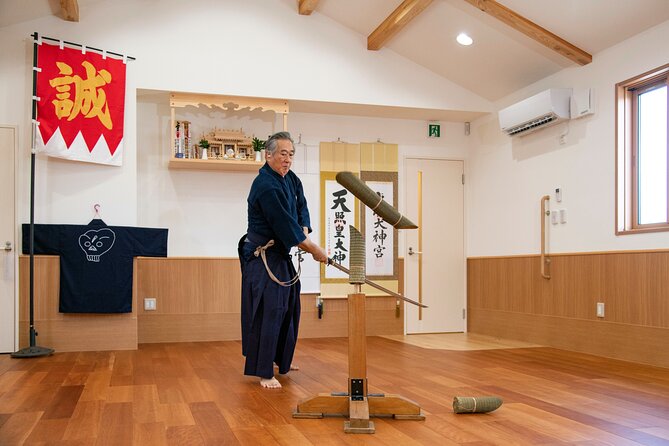
- Handle a Japanese sword: The experience includes contact with a real sword, with the supplied information also describing test cutting under instruction.
- Keep the group tiny: A maximum of four people allows close attention during a demanding activity.
- Plan for a two-hour afternoon: The experience begins at 1:00 pm at Genzaburo Inoue Shiryokan and finishes at the same meeting point.
Why Hino matters to this sword lesson
Tokyo can feel like a city of neon signs, packed trains, and polished modern design. Hino offers a different connection to the past. It is identified as the hometown of the Shinsengumi, the group of swordsmen active during the final years of the Edo period.
The Shinsengumi is often described as one of the strongest bands of swordsmen of its time. Its members practiced Tennen Rishin-ryu, the style taught during this experience. That connection gives the lesson more weight than a generic samurai demonstration. You are not simply copying a pose for a photograph. You are being introduced to a school of swordsmanship that has continued from the Edo period to the present.
I find that setting especially valuable for anyone who wants history with some physical action attached to it. You learn through your hands and posture, not just through a guide’s talk. The link to Hino also helps explain why the session takes place outside the usual central Tokyo sightseeing circuit.
The location is Genzaburo Inoue Shiryokan, at 4-chome 11-12 Hinohonmachi, Hino, Tokyo 191-0011. The activity begins and ends at this meeting point. It is near public transportation, but you should allow enough time to reach Hino without rushing. A late arrival would be especially awkward in a small class that starts at a fixed time.
More Castles and Historic Sites in Japan:
- Osaka Castle Ticket
★ 4.7 · 12,450 reviews - Osaka Castle: Museum and Tower Entry Ticket
★ 4.5 · 2,380 reviews - Tokyo: Imperial Palace and Shogun Historical Walking Tour
★ 5.0 · 2,251 reviews
Arriving at Genzaburo Inoue Shiryokan
The meeting point gives the experience a useful sense of place before the physical training begins. The name connects directly to Genzaburo Inoue, a Shinsengumi executive and ancestor of Masao Inoue, who leads the program.
Your first moments are likely to set the tone. This is presented as a true dojo experience, not a casual activity designed only for photographs. You should expect attention to manners, focus, and correct movement from the start.
That distinction matters. Many samurai-themed activities in Japan are built around costumes, theatrical sword fights, or a quick lesson followed by pictures. This session takes a quieter and more disciplined path. The point is to learn the fundamentals of a traditional sword school and understand the attitude behind them.
The small maximum of four people is one of the strongest practical features. If the class is full, you still have a very different experience from a large demonstration. The instructor can watch your stance and movements more closely, and you have a better chance to ask for clarification. The tradeoff is that the experience may feel more exposed. In a small group, there is nowhere to hide if you lose track of the form.
English guidance is available through Yu Ma, according to the supplied experience details and participant feedback. That makes the session more approachable for international visitors, though the activity remains physically and culturally specific. You will need to pay attention rather than expect every movement to be translated into a long lecture.
Learning the basics of Tennen Rishin-ryu
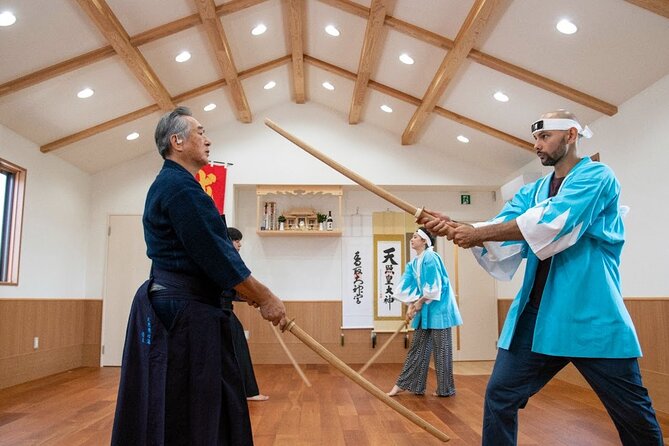
The core of the class is an introduction to Tennen Rishin-ryu swordsmanship. You learn basic forms, how to hold and position the sword, and the correct way to move through the exercise.
The Japanese review supplied for this experience describes a full sequence that includes etiquette, sword posture, forms, and test cutting. That is useful because it shows the program is not limited to waving a sword around for a few minutes. The lesson has an order to it. You begin with proper conduct and body position before moving toward more advanced handling.
I like that structure. Swordsmanship is not only about force or speed. Even a short introduction can show you that the position of your feet, hands, and body matters. The formal movements may look simple when performed by an expert, but they require concentration when you try them yourself.
You should also expect a moderate physical demand. The official guidance recommends a moderate fitness level. That does not mean you need to be an athlete, but you should be comfortable standing, following repeated movements, and handling the activity with care.
The lesson may feel intense in a good way. One participant described the experience as nervous and highly focused, with a rare sense of tension that daily life does not usually provide. That is a fair warning and part of the appeal. If you want something loose and playful, this may feel too formal. If you want an activity that asks you to concentrate, it should be a better match.
Meeting Masao Inoue and connecting with the Last Samurai
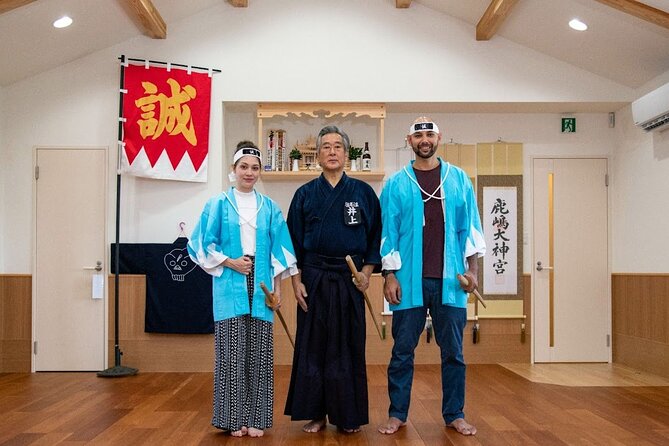
Masao Inoue is the chairman of the Tennen Rishin-ryu Hino Dojo and a descendant of Genzaburo Inoue, one of the Shinsengumi executives. His family connection gives the class a personal link to the people and place behind the story.
You should not expect a long museum-style presentation filled with dates and names. The value here comes from seeing the tradition carried into a working dojo and then trying its basic movements yourself. Masao Inoue’s role also gives the experience a sense of continuity. The Shinsengumi are not treated only as distant characters from a television drama. Their sword school remains part of a living practice.
The word living is important here, but it should not be misunderstood. You are not joining a full martial arts course in two hours. You are receiving a compact introduction. The program can show you how the tradition feels in practice, but real skill would take far more time.
That balance is worth keeping in mind when you decide if the price works for you. At $118.60, this is a specialist activity. You are paying for close instruction, a very small class, a particular location, and access to a tradition with a direct Hino and Shinsengumi connection. You are not paying for a full day of sightseeing or a broad overview of Japanese history.
For someone fascinated by samurai culture, the value is strong. For someone who simply wants a quick Tokyo activity, the price may seem high.
A completely different kind of day out:
- Tokyo Disney Resort – Tokyo Disneyland & Tokyo DisneySea Park Tickets
★ 4.8 · 99,488 reviews - Universal Studios Japan Studio Pass
★ 4.8 · 89,883 reviews - Universal Studios Japan Express Pass
★ 4.7 · 53,138 reviews - SHIBUYA SKY Ticket
★ 4.7 · 46,509 reviews
Handling the Japanese sword
The chance to handle a Japanese sword is the moment many people will be waiting for. The sword is presented as the soul of the samurai, and the lesson treats it with care rather than as a prop.
This part requires a serious attitude. You will learn how to hold and position the sword, then apply the forms under instruction. The Japanese feedback specifically describes shinken test cutting, with the teacher showing participants how to perform it. Since the supplied details do not provide a full description of the materials, technique, or safety process, you should follow every instruction closely and avoid assuming that this is a casual cutting demonstration.
That uncertainty is also a reason to ask questions when you arrive. Confirm what type of sword you will use, which parts of the session involve cutting, and what clothing or movement limits apply. The experience description makes clear that sword handling is included, but it does not provide a detailed equipment list.
The sword work gives the class its strongest sense of purpose. A wooden replica or theatrical prop could teach a basic pose, but a Japanese sword carries a different physical presence. You become more aware of control, distance, and responsibility.
It can also be nerve-racking. One participant described feeling a strong tension during the session. I would consider that a positive sign for the right person, but a warning for anyone who dislikes formal instruction or controlled physical activities.
What the two-hour schedule feels like
The experience begins at 1:00 pm and lasts about two hours. That makes it easy to fit into a half-day plan, but you should not try to squeeze in a distant attraction immediately before or after it.
The supplied itinerary lists one stop, Genzaburo Inoue Shiryokan, and the activity ends back at the meeting point. The simplicity is helpful. You are not being moved between several sights, and you do not lose time loading into a vehicle or waiting for a large group.
A likely rhythm is an introduction to the place and tradition, instruction in etiquette and posture, practice with basic forms, and sword handling under supervision. The exact order and level of test cutting are not fully detailed, so you should treat that outline as a practical guide rather than a minute-by-minute schedule.
Two hours is enough to make the experience feel substantial without turning it into a full training day. It also means the instructor can keep the lesson focused. You will not spend half the booking listening to a long speech before getting to the activity.
Still, two hours can pass quickly. If your main goal is to become proficient in Tennen Rishin-ryu, this is only a first step. The program is best understood as an introduction with historical context, not a qualification or extended martial arts course.
How the small group changes the experience
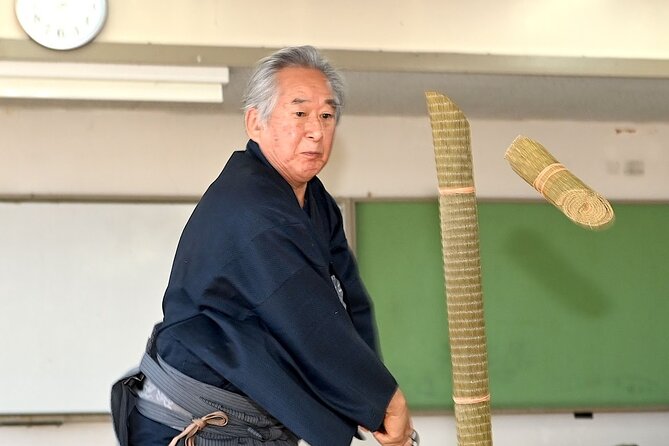
A maximum of four people is unusually small for a bookable Tokyo activity. That affects the experience in several useful ways.
You get more room for direct correction. Sword forms can look straightforward until you try to repeat them, and a small class gives the teacher more opportunity to address your stance or grip. It also reduces the chance that you will spend most of the session watching someone else.
The small group may help with questions, too. If English guidance is needed, Yu Ma’s support can be more useful when the class is not crowded. Instructions can be repeated without holding up a large group.
The downside is that the atmosphere may feel more formal and personal. In a group of four, you are part of the lesson rather than an anonymous face in a crowd. That is good for learning, but it can add pressure if you are shy or uncoordinated.
I would also avoid booking this as a last-minute filler activity. The experience is booked an average of 31 days ahead, which suggests planning matters. That does not guarantee that every date sells out, but it is sensible to reserve early if the schedule is important to you.
Who should book this experience
I would recommend it most strongly to you if you have a real interest in Japanese martial arts, the Shinsengumi, Edo-period culture, or hands-on cultural activities. It also suits repeat visitors to Tokyo who want to get beyond the city’s best-known sights.
You do not need to be an experienced martial artist. The description says anyone can learn the art of the sword in the dojo, while also noting that moderate physical fitness is required. The important quality is willingness to listen and follow instructions.
Families should think carefully before booking. The supplied details do not give a minimum age, so you would need to confirm that directly before making a reservation for a child. The serious setting may suit mature older children, but the data provided does not promise that younger participants are accepted.
This is less suitable for you if you want a relaxed photo opportunity, a large theatrical show, or a broad sightseeing tour. There is no list of multiple Tokyo landmarks, no extended transport, and no promise of a costume presentation. The reward is depth in one narrow subject.
Price, cancellation, and practical planning
At $118.60 per person, this is a premium two-hour activity. I think the cost makes sense if you value the combination of a genuine dojo setting, a group capped at four, instruction connected to Tennen Rishin-ryu, and the personal link to Masao Inoue and Genzaburo Inoue.
The value is weaker if you are mainly paying for the novelty of holding a sword. Tokyo offers many cultural activities, and a short session can feel expensive when compared with a full museum visit or a longer guided tour.
You receive a mobile ticket, and booking confirmation is provided at the time of reservation. The meeting point is near public transportation. Since the start time is fixed at 1:00 pm, I would plan your route in advance and arrive with time to spare.
Free cancellation is available if you cancel at least 24 hours before the start time. Cancellations or changes made inside that window are not accepted for a refund. The cut-off follows local Tokyo time, so keep that in mind if you are arranging plans across time zones.
Should you book the Hino samurai sword experience?
Book it if you want a focused, serious introduction to a Japanese sword tradition in the place tied to the Shinsengumi. The small group and the involvement of Masao Inoue give it far more personal value than a crowded stage performance.
Skip it if you want a casual activity, a full day of sightseeing, or a guaranteed detailed history lecture. This is a two-hour lesson that asks for concentration and respect.
For the right person, the price buys more than a sword photo. You get a chance to stand in a real dojo, learn the first forms of Tennen Rishin-ryu, and feel why the Shinsengumi story still matters in Hino.
FAQ
Where does the samurai sword experience take place?
It takes place at Genzaburo Inoue Shiryokan in Hino, Tokyo, at 4-chome 11-12 Hinohonmachi, Hino, Tokyo 191-0011.
What time does the experience begin?
The experience starts at 1:00 pm.
How long does the activity last?
The session lasts approximately two hours.
How many people can join the experience?
The activity has a maximum of four participants.
Do I need a high level of fitness?
The supplied information recommends a moderate level of physical fitness. You should be prepared to stand, practice sword forms, and follow physical instruction.
Can I cancel for a full refund?
Yes. You can receive a full refund if you cancel at least 24 hours before the experience start time. Cancellations or changes made less than 24 hours before the start time are not accepted for a refund.
Just added in Japan
- Japanese Home Cooking Class & Walk in Todoroki Temple Tokyo★ 5.0 · 88 reviews
- A One-of-a-Kind Sushi Experience in a Special Place of Japan★ 5.0 · 15 reviews
- Tokyo Cute Bento Cooking Class – Make a Kawaii Character Lunchbox★ 5.0 · 126 reviews
- Japan Tokyo Tower Observatory Deck E-Ticket★ 4.0 · 34 reviews
- Catch a Baseball Game in Tokyo with a Local – Tickets Included★ 5.0 · 24 reviews
- JDM Experience with Fast&Furious RX-7 (English speaking Driver)★ 5.0 · 57 reviews
- Tokyo Private Day Tour by Car with English speaking Driver Guide★ 4.0 · 29 reviews
- Japan Classic 10 Day – One Life Adventures★ 5.0 · 129 reviews
Castles and Historic Sites, compared.

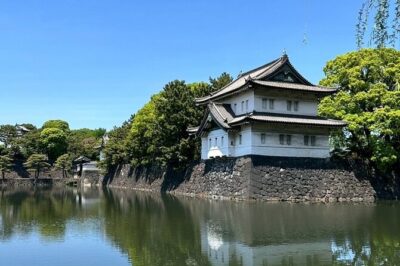
Imperial Palace and Shogun Historical Walking Tour
Read our review →
Tokyo Castle & Imperial PalaceーShogun Walking Tour
Read our review →
Nijo-jo Castle and Ninomaru Palace Guided Tour
Read our review →
Samurai Ninja Museum Guided tour and Experience
Read our review →Browse the lists this tour appears in