
Reviewed · KIMONO AND CULTURAL DRESS
Tokyo Traditional Geisha Show and Japanese Fine Dining Experience
Tokyo has a rare cultural evening waiting upstairs. At BENITSUYA, you share a seasonal kaiseki meal with Tokyo geishas, watch graceful dances, and join traditional games that turn a formal performance into a friendly exchange. I like the personal contact with the performers and the chance to see Japanese dance at close range. I also like the compact 90-minute format, which fits neatly into a busy Tokyo night.
The main caution is value. At $144.96 per person, this is not simply dinner and it is not a full-night theater show. The geishas are consistently praised for warmth, humor, and skill, but the meal can feel basic to some diners, especially at the lower package level. You should book this for the cultural meeting, not just for the food.
In This Review
- Key points to know before you book
- What BENITSUYA offers in central Tokyo
- The 90-minute evening, from dinner to games
- Arriving and settling in
- Kaiseki dining and the question of value
- The geisha dances are the heart of the evening
- Conversation, translation, and genuine human contact
- Traditional games make the formal show easier to enjoy
- Group size changes the entire experience
- Who will enjoy this, and who may not
- Price, timing, and cancellation
- Practical tips for a smoother visit
- Should you book BENITSUYA?
- FAQ
- Where does the geisha dining experience take place?
- How long does the experience last?
- What happens during the experience?
- Is the experience suitable for children?
- How many people can attend?
- Is the venue near public transportation?
- Are drinks included in the price?
- Are there different meal options?
- Can I cancel for a refund?
Key points to know before you book
- The geishas do more than dance: You can ask questions, play games, take photos, and enjoy direct conversation.
- The setting is brand new: BENITSUYA opened in November 2024 on the sixth floor of Grand Hammer in Shinbashi.
- The meal may vary by package: Some diners enjoyed a seven-course meal, while others found their dinner too small or too ordinary for the price.
- The show lasts about 90 minutes: It is a focused cultural outing, not an entire evening of entertainment.
- Small groups can make a big difference: With only a few people present, the geishas have more time to speak with you.
- You must be at least 20: The experience is not available to anyone under 20 years old.
What BENITSUYA offers in central Tokyo
BENITSUYA occupies the sixth floor of Grand Hammer, a newer food, entertainment, and leisure complex in Shinbashi. The venue was produced by Hamakura, the company behind Ebisu Yokocho, Shibuya Yokocho, and Kabuki Hall.
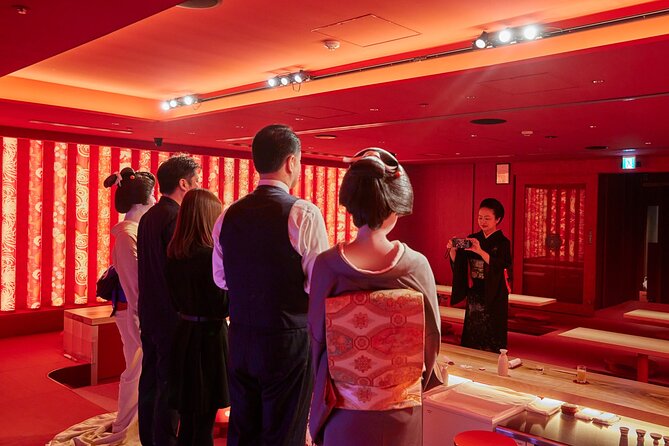
The room uses crimson walls and polished Japanese décor. It aims for a modern dining setting rather than a dusty recreation of an old tea house. That contrast is part of the appeal: you get a traditional performance inside one of Tokyo’s newest entertainment buildings.
The location is near public transportation, but finding the correct entrance takes some care. One useful landmark is the McDonald’s near the gold-colored building facing the street. Once inside, the sixth-floor destination can be confusing. The escalator may not take you all the way up, and the elevator may not be available before the official start time.
I would arrive early enough to locate Grand Hammer, but do not expect to enter the show room far ahead of time. The performance begins at the stated start time, so allow extra minutes for the building rather than cutting your arrival close.
More Kimono Experiences in Tokyo
- Tokyo Asakusa Kimono&Yukata Rental at Kimono Miyabi Asakusa Station
★ 4.9 · 8,489 reviews - Tokyo Kimono, Furisode, and Yukata Rental Experience | Exquisite Hairstyling & Japanese Makeup & Photo Shoot (Ookini Asakusa Kaminarimon)
★ 4.8 · 767 reviews - Let’s make kimono !(Kimono is a gift for you
★ 5.0 · 252 reviews
The 90-minute evening, from dinner to games
The experience takes place at one location, BENITSUYA, and ends there. The schedule is short and fairly structured, with dining, dance, conversation, games, and a photo opportunity fitting into roughly an hour and a half.
You do not spend the evening moving between sights. That is helpful after a long day in Tokyo, though the fixed timetable can feel rushed if you want a long meal or extended conversation. One sitting reportedly lasted only 90 minutes rather than the two hours some diners expected, so treat the advertised duration as the full length.
Arriving and settling in
At the start, you are seated in the BENITSUYA dining room. The décor sets a formal tone, but the interaction is meant to be relaxed. You are not expected to know Japanese etiquette or understand every custom before you arrive.
The staff and performers work to include international visitors. Translation devices are available, and this matters because some geishas speak little or no English. Conversation can move more slowly through a translator, but it still gives you a chance to ask about Japanese culture, the performers’ work, and their lives.
The quality of this part depends partly on the group. A small sitting with two couples or fewer can feel almost private. A larger group, with a maximum of 30 people, gives the evening more energy but less one-to-one time.
Kaiseki dining and the question of value
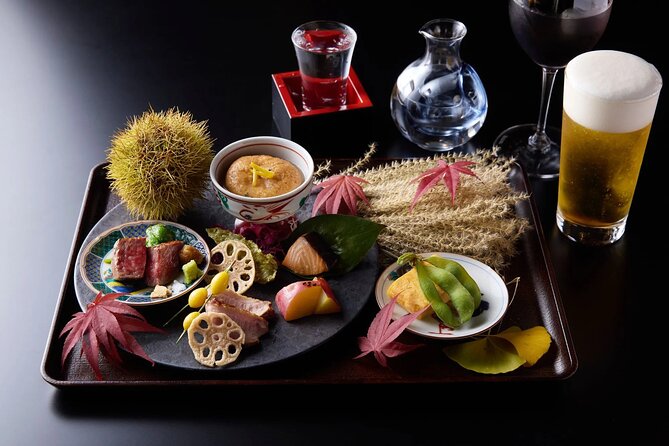
Kaiseki is a carefully arranged, multi-course style of Japanese dining. The point is not only to fill you up. Seasonal ingredients, presentation, order, and balance all matter.
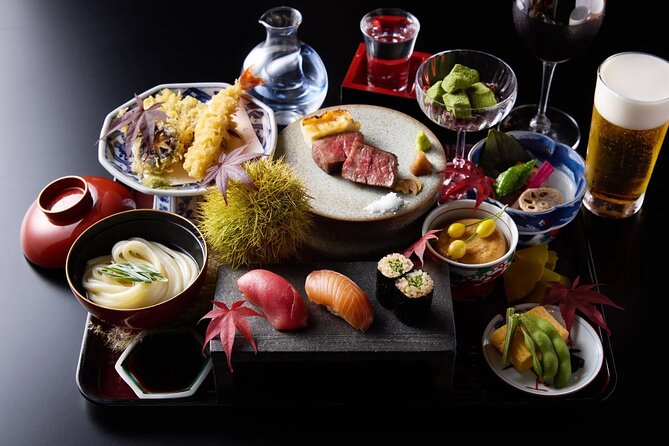
BENITSUYA serves a Kyoto-style course under the supervision of Kyoto chef Naoki Okumura, associated with Gion Okumura. The menu can include several small courses, and one diner specifically found the seven-course option filling and interesting. That person also noted that large appetites might want more.
Other diners had a different experience. Some found the lower-level meal too basic for a price near $145 per person, while others felt even an upgraded meal did not justify the cost. A few dishes may be unfamiliar or strongly flavored, including seafood that some people may find too fishy or exotic.
This is where you need to read the booking choices carefully. There are different dinner types, and confusion over meal levels caused disappointment for some diners. Do not assume every person in the room receives the same menu. Check exactly which course or package you are buying before you pay.
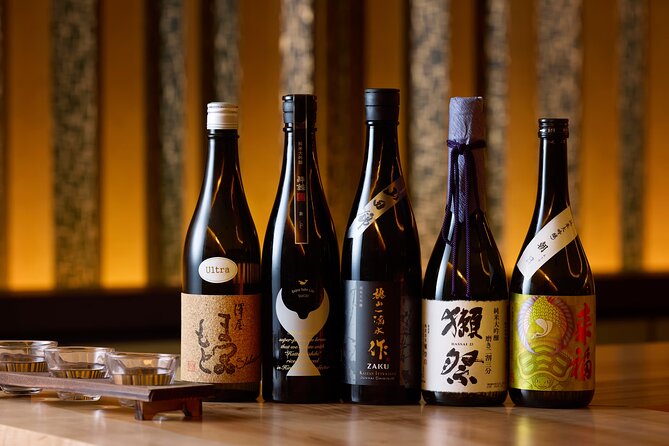
Drinks may cost extra. One diner was surprised that a soft drink was not included, even after choosing the highest food package. If you do not drink alcohol, confirm the beverage policy rather than assuming a soda comes with dinner.
My advice is simple: think of the food as one part of a cultural program. If you judge the experience as a fine-dining meal alone, the price may feel hard to defend. If you value the performance, conversation, and games as well, the calculation becomes more favorable.
A completely different kind of day out:
- Tokyo Disney Resort – Tokyo Disneyland & Tokyo DisneySea Park Tickets
★ 4.8 · 99,488 reviews - SHIBUYA SKY Ticket
★ 4.7 · 46,509 reviews - JR Whole Japan Rail Pass
★ 4.8 · 29,150 reviews - Mt Fuji and Hakone 1-Day Bus Tour Return by Bullet Train
★ 5.0 · 26,383 reviews
The geisha dances are the heart of the evening
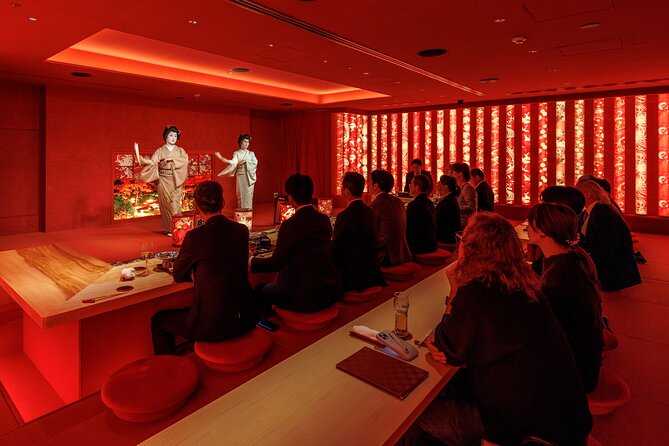
The traditional dances are the strongest reason to come. The movements are controlled, precise, and deliberately restrained. This is not a loud stage show with a large cast. The appeal lies in the detail of hand gestures, fan work, posture, costume, and timing.
You may see several dances, along with a demonstration involving a fan. The intimate room lets you watch the performers closely, which makes small movements easier to notice. The presentation also gives you a direct look at an art form that can be difficult to encounter casually.
The performers are presented as authentic Tokyo geishas, and the strongest praise focuses on their artistry and grace. At the same time, one dissatisfied diner felt the event was not a real geisha show. That criticism points to an important expectation: this is a hosted dining experience for visitors, not a private ozashiki gathering arranged through a traditional Kyoto teahouse.
For many people, that accessibility is a benefit. You can attend without special connections, formal introductions, or advanced knowledge of geisha customs. The setting is designed to help you understand and enjoy the tradition rather than observe it from a distance.
Conversation, translation, and genuine human contact
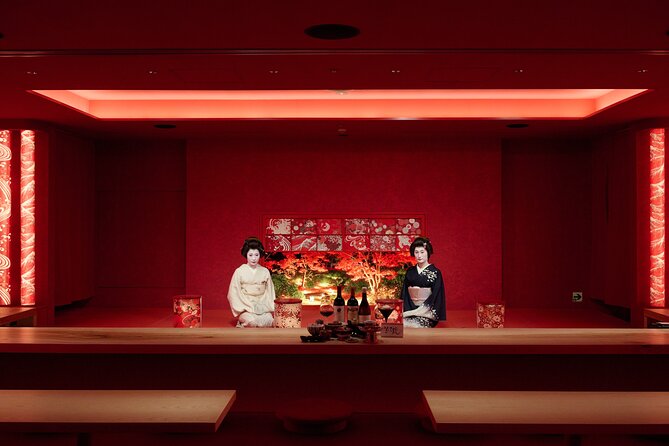
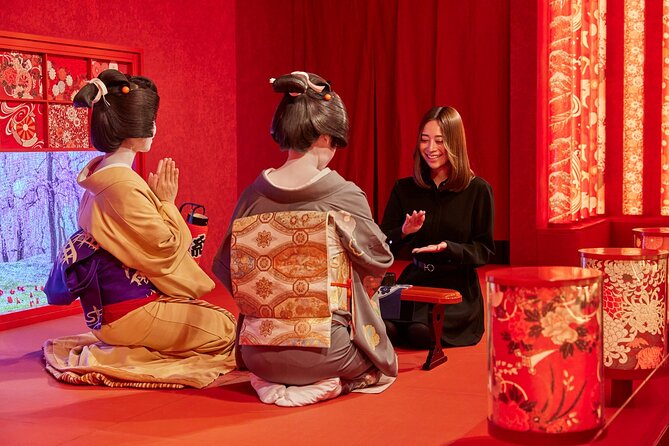
The geishas are not simply brought out for a dance and then sent away. They pour drinks, speak with diners, answer questions, teach small cultural details, and try to make people feel included.
Several performances were especially praised because the geishas were funny, kind, and attentive. One performer spoke about her path to becoming a geisha. Another helped a diner learn to use chopsticks. Those small moments may become more memorable than the formal dance because they give you a sense of the people behind the art.
Communication is not always smooth. Pocket translation devices help, but they can make conversation feel mechanical. If your group includes mostly English speakers and the performers do not speak much English, expect pauses and short exchanges rather than a free-flowing dinner conversation.
The performers also have to divide their attention. In some sittings, two geishas spent most of their time speaking with Japanese men or another group. That left some diners feeling overlooked. A small group gives you better odds of personal attention, but it cannot guarantee that every minute will be evenly shared.
If you want to make the most of this part, prepare a few simple questions about dance, training, clothing, music, or daily work. Short, clear questions are easier to handle through translation and help the conversation move beyond polite greetings.
Traditional games make the formal show easier to enjoy
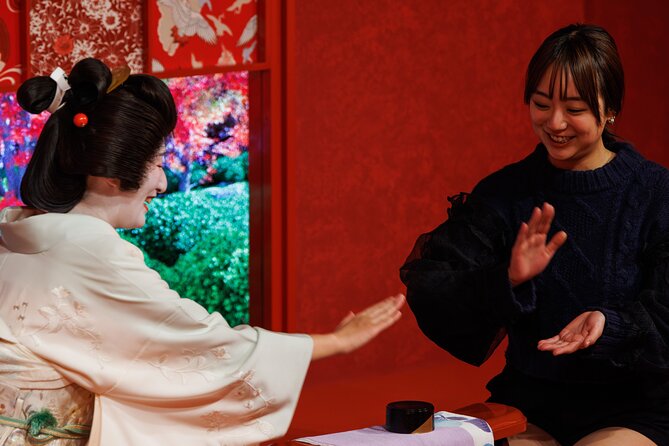
After the dances, the mood becomes lighter. The geishas teach traditional games, and you can play along rather than simply watch.
This is a clever part of the evening. A dance performance can feel formal, especially if you are unsure when to clap or how to respond. The games remove that stiffness. You may find yourself laughing, competing, and making mistakes in front of the performers, which is exactly what makes the exchange feel human.
The games are brief, so do not book this expecting a long activity session. Their value is in the change of pace and the direct participation. Families with adult children have enjoyed this part, and younger adults often find it easier to connect through a game than through a formal cultural explanation.
The age rule matters here. Everyone must be at least 20 years old, so this is not an option for families with teenagers, despite the fact that some adult children may enjoy the playful format.
Group size changes the entire experience
The maximum group size is 30, but actual sittings can be much smaller. That difference matters more here than it would on a standard city tour.
With only two couples and two geishas, you may receive frequent attention and have time for questions. One mother and daughter found a very small sitting personal and memorable. Another couple had the performers almost to themselves and enjoyed a more intimate view of the customs.
A larger room may feel livelier, but each person receives less conversation time. The geishas are talented entertainers, yet two performers cannot give equal attention to 30 diners during a 90-minute session.
If your schedule allows flexibility, a less popular time may be worth considering. There is no guarantee that it will be quiet, but a smaller sitting can improve the value of the experience without changing the price.
Who will enjoy this, and who may not
I would recommend BENITSUYA to you if you want a straightforward introduction to geisha arts without arranging a private cultural booking. It suits first-time visitors to Japan, couples, solo adults, business visitors, and anyone curious about Japanese dance and hospitality.
It is also a good choice if you enjoy meeting performers directly. The opportunity to ask questions, use a translation device, play games, and take photos gives the evening more substance than a short stage act.
You may want to skip it if your main goal is a large, polished theatrical production. The show uses only a few performers and keeps the presentation intimate. Production value can feel modest for the price.
You should also think twice if you are a very selective eater. The menu is seasonal and traditional, and not every dish will suit every palate. The higher food package may offer more courses, but more food does not guarantee that every item will be familiar or appealing.
Price, timing, and cancellation
The listed price is $144.96 per person, with mobile ticketing and confirmation at booking. That is a substantial amount for 90 minutes, especially if you compare it with the cost of an ordinary Tokyo dinner or a longer cultural show.
The value improves if you see the performance as the main purchase and the meal as part of the setting. The dances, direct contact, games, translation help, and photo opportunity create a type of access that is not easy to arrange independently.
The value weakens if your meal is small, your drinks are extra, or the performers have little time for your table. Check the food level and beverage details closely. Free cancellation is available up to 24 hours before the start time, while cancellations or changes made less than 24 hours ahead are not accepted for a refund.
Practical tips for a smoother visit
- Give yourself extra time to find the Grand Hammer entrance and sixth floor.
- Use the nearby McDonald’s and gold-colored building as visual landmarks.
- Confirm your exact dinner package before booking.
- Ask if drinks are included, especially if you plan to order soft drinks.
- Arrive on time because the program starts at the stated hour.
- Prepare a few short questions for the geishas.
- Keep the evening open for about two hours, even though the activity itself lasts about 90 minutes.
- Expect traditional flavors and seasonal ingredients rather than familiar Western food.
- Bring your phone for the photo opportunity after the performance.
- Remember that all participants must be at least 20 years old.
Should you book BENITSUYA?
Book this experience if you want a personal introduction to geisha performance and are willing to pay for the access, atmosphere, and conversation. The dances are beautiful, the games are fun, and the performers are often warm enough to turn a formal evening into a friendly one.
Skip it if you want the best fine-dining value in Tokyo or a long, lavish show. The food receives mixed reactions, the schedule is tight, and the experience can feel expensive when the group is large or the meal package is modest.
My practical verdict: choose the seven-course option if the price difference is reasonable, confirm what drinks and dishes are included, and book when you can accept the possibility of a small or unevenly attended sitting. For the right visitor, this can be a memorable cultural evening. Just make sure you are buying a close encounter with geisha arts, not merely a premium dinner.
FAQ
Where does the geisha dining experience take place?
It takes place at BENITSUYA on the sixth floor of Grand Hammer, located at 2-chōme 8-5 Shinbashi, Minato City, Tokyo, 105-0004, Japan.
How long does the experience last?
The activity lasts approximately 1 hour and 30 minutes.
What happens during the experience?
You enjoy a Kyoto-style kaiseki meal, watch traditional dances by Tokyo geishas, take part in traditional geisha games, speak with the performers, and have a brief photo opportunity.
Is the experience suitable for children?
No. The experience is not available to anyone under 20 years old.
How many people can attend?
The maximum group size is 30 people.
Is the venue near public transportation?
Yes. The venue is near public transportation, though finding the correct floor and entrance in Grand Hammer may take extra time.
Are drinks included in the price?
The provided information does not confirm that drinks are included. Some diners reported paying separately for soft drinks, so you should check the beverage policy when booking.
Are there different meal options?
Yes. The experience offers different dinner types or meal levels. Check the exact option carefully because the food served may differ between packages.
Can I cancel for a refund?
Yes. You can cancel at least 24 hours before the local start time for a full refund. Cancellations or changes made less than 24 hours before the start time are not accepted for a refund.
More Dinner Experiences in Tokyo
- Tokyo: Shinjuku Bar Hopping with All-You-Can-Drink & Dinner
★ 4.9 · 440 reviews - Tokyo Dinner Cruise & Tradition Show & Drinks & Tokyo Tower
★ 4.7 · 315 reviews - Authentic Geisha Performance with Dinner in Tokyo
★ 4.5 · 101 reviews - Tokyo: Traditional Japanese Performing Arts Show and Dinner
★ 4.5 · 99 reviews
More Dining Experiences in Tokyo
- Tokyo Bar Hopping Tour in Shinjuku (All-You-Can-Drink + Dinner)
★ 5.0 · 3,587 reviews - Tokyo: Sumo Show and Dining Experience
★ 4.8 · 2,742 reviews - Sumida River: Japanese Traditional Yakatabune Dinner Cruise
★ 4.6 · 779 reviews - Tokyo Bay Yakatabune Dinner/Day Cruise with Japan Show and Drinks
★ 4.5 · 473 reviews
Just added in Tokyo
- Very popular in Harajuku♡Animal petting zoo★ 4.6 · 39 reviews
- Yokohama Port: Private Customizable Tour with Transfer★ 5.0 · 19 reviews
- Wagyu & Sake 8 Course Tasting Dinner in Shinjuku★ 4.9 · 20 reviews
- Warner Bros. Studio Tour Tokyo – The Making of Harry Potter★ 4.8 · 181 reviews
- Yanaka District: Historical Walking Tour in Tokyo’s Old Town★ 4.8 · 117 reviews
- Tokyo: Classic Tsukiji Food Tour★ 4.9 · 78 reviews
- Tokyo: Tsukiji Fish Market Tour with 6 Stops & Seafood Lunch★ 4.5 · 165 reviews
- Tokyo Wagyu & Sake Pairing Tasting Experience with Local Flavors★ 5.0 · 108 reviews
Kimono and Cultural Dress, compared.

Tokyo Asakusa Kimono&Yukata Rental at Kimono Miyabi Asakusa Station
Read our review →
Kyoto Geisha Walking Tour: Gion District & Hidden Gems
Read our review →
Gion Magical Night Walking Tour with Geisha Trivia
Read our review →
Gion Geisha District Walking Tour – Stories of Geisha
Read our review →
Best of Kyoto: Gion, Geisha, Pagodas & Cobblestones
Read our review →
Kyoto Kimono Rental Experience (Optional Exquisite Hair Styling/Japanese Makeup/Photography) (Ookini Kiyomizu-dera Main Store)
Read our review →Browse the lists this tour appears in