
Reviewed · TEA CEREMONIES
Asakusa: Geisha Performance and Tea House Experience
Step behind the hidden door. This 75-minute visit to Miyakodori’s Ozashiki Tea House gives you a rare look at traditional Japanese entertainment in a small Asakusa setting. I like the graceful dance with live shamisen music, and I like that you can speak directly with the geisha rather than simply watch from a distance. The main drawback is the extra drink charge: each person must order one alcoholic or non-alcoholic drink beyond the included matcha.
The experience balances ceremony with plenty of laughter. You will taste seasonal sweets, try the ozashiki-asobi game Konpira Fune Fune, and finish with a commemorative photo. It is polished but not stiff, and the English-speaking host or translator helps you follow the conversation.
In This Review
- Key points at a glance
- Why this Asakusa experience feels different
- Entering the tea house and settling in
- The welcome and geisha introduction
- Dance, shamisen, and the quiet side of the show
- Konpira Fune Fune brings the room to life
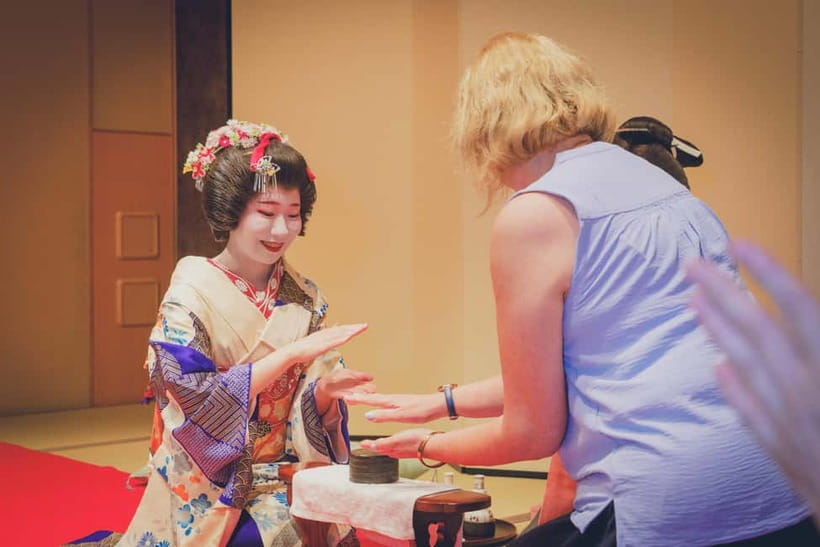
- Matcha and seasonal sweets
- Asking questions about geisha life
- The final photo and what you take away
- Is $106 a fair price?
- Who should book this experience?
- Practical advice before you go
- Should you book it?
- FAQ
- Where does the experience take place?
- How long does the experience last?
- Are real geisha present?
- Is English available?
- Is a drink included in the ticket?
- What food and drink are included?
- Can I cancel the booking?
Key points at a glance
- Live performance: Watch geisha dance to shamisen music and singing in an intimate tea house setting.
- Real conversation: Ask questions about geisha life through the English-speaking host or translator.
- Traditional game: Join Konpira Fune Fune, a quick, playful ozashiki drinking game that gets the whole room involved.
- Tea and sweets: Enjoy freshly whisked matcha with seasonal Japanese confectionery.
- Small-group feel: One recent visitor described a group of about 16, making the event feel personal rather than theatrical.
- Extra cost to remember: One drink purchase is required per person, and it is not covered by the $106 ticket.
Why this Asakusa experience feels different
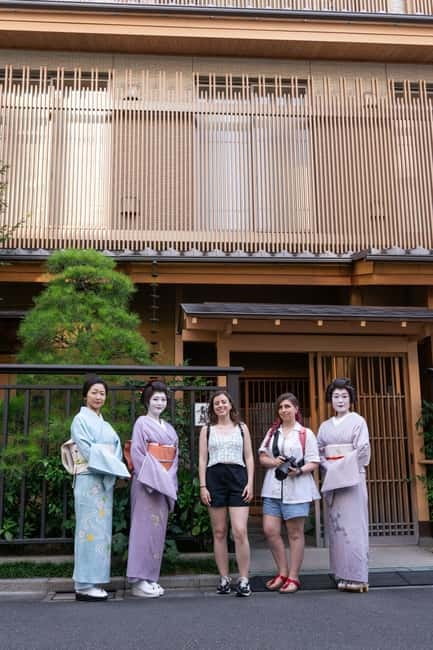
Asakusa is one of Tokyo’s best districts for seeing old and new Japan side by side. The neighborhood is known for its temples, traditional shops, and long connection with entertainment, but a geisha performance offers a more focused look at Japanese arts.
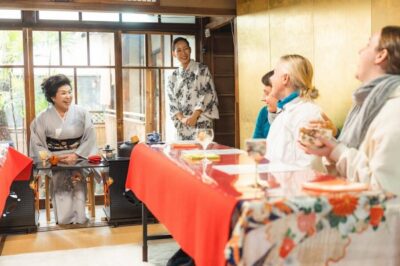
At Miyakodori’s Ozashiki Tea House, you are not simply sitting in an auditorium for a stage show. The format brings the performers into the room with you. You watch the dance, hear the shamisen, take part in a game, and have time to ask questions.
That combination matters. A short performance can be beautiful, but it may leave you wondering about the people behind the makeup and costume. Here, the conversation helps explain the work and training that support the performance.
I also like the scale. One account describes a group of roughly 16 people, though the exact size can vary. That is small enough for the geisha to interact with the room, yet large enough to create a cheerful shared mood.
More Kimono Experiences in Tokyo
- Tokyo Asakusa Kimono&Yukata Rental at Kimono Miyabi Asakusa Station
★ 4.9 · 8,489 reviews - Tokyo Kimono, Furisode, and Yukata Rental Experience | Exquisite Hairstyling & Japanese Makeup & Photo Shoot (Ookini Asakusa Kaminarimon)
★ 4.8 · 767 reviews - Let’s make kimono !(Kimono is a gift for you
★ 5.0 · 252 reviews
Entering the tea house and settling in
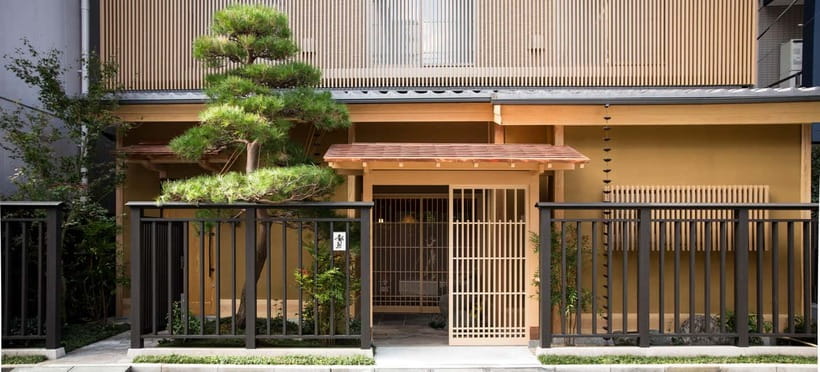
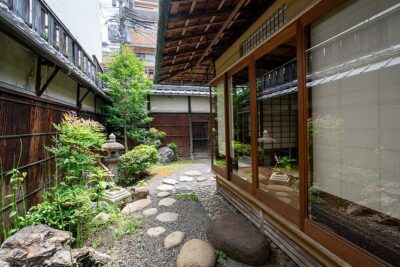
The meeting point is in Asakusa, and transportation to the venue is not included. You will need to make your own way there, so allow time to locate the entrance. One person described entering through a hidden door and being welcomed by the owner before moving into the banquet area.
That detail gives you a useful expectation: this is not a large public theater with a prominent entrance. The setting has a private tea house character, and arriving early is sensible. One attendee specifically recommended arriving ahead of time, which can help you avoid a rushed start.
Once inside, you may be seated on low stools in the banquet area. This is part of the traditional atmosphere, but it is worth keeping in mind if you prefer standard-height chairs. The supplied information does not promise a particular seating arrangement for every session.
A host or greeter speaks English, and an English translator helps you communicate with the performers. That support is important because the social part of the experience is just as valuable as the formal show.
You will also be asked to order one drink. It may be alcoholic or non-alcoholic, but it is required for every participant and costs extra. Think of the $106 price as covering the cultural program, matcha, sweets, and photo, not the additional drink.
The welcome and geisha introduction
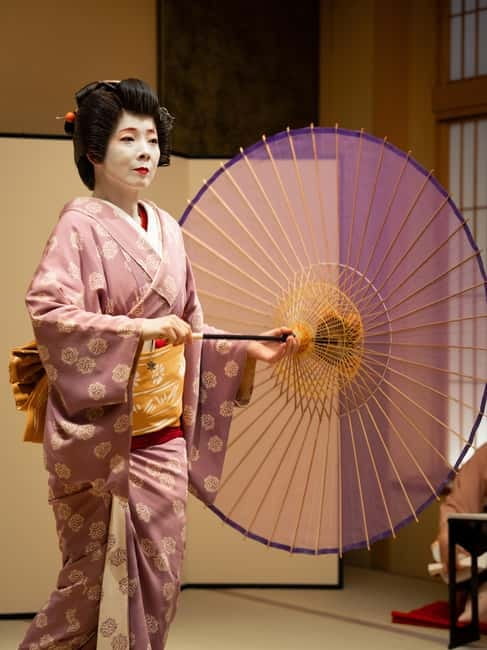
The event begins with a graceful welcome. The tone is formal enough to feel special, but the people involved are also warm and welcoming. That mix prevents the experience from becoming a dry lecture about tradition.
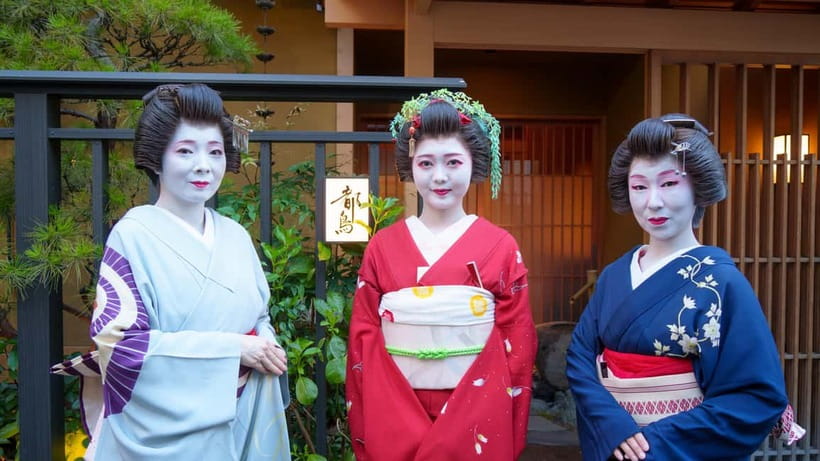
You meet real geisha, and the exact performers may vary. One session featured geiko Chizuru and maiko Tamaaki, accompanied by Shisa on shamisen and vocals. Their names are useful context, but you should not book this activity expecting those same performers every time.
The distinction between the performers adds interest. A geiko is a highly trained professional entertainer, while a maiko is an apprentice geisha. The experience presents these artists as working performers rather than museum pieces, and you get a sense of the discipline behind their movements, music, and social skills.
This is also a good moment to pay attention to the setting. The costumes, makeup, instruments, and controlled gestures are not decoration added for tourists. They are part of a living performance tradition. You do not need specialist knowledge to appreciate it, but a little curiosity will make the session more rewarding.
Dance, shamisen, and the quiet side of the show
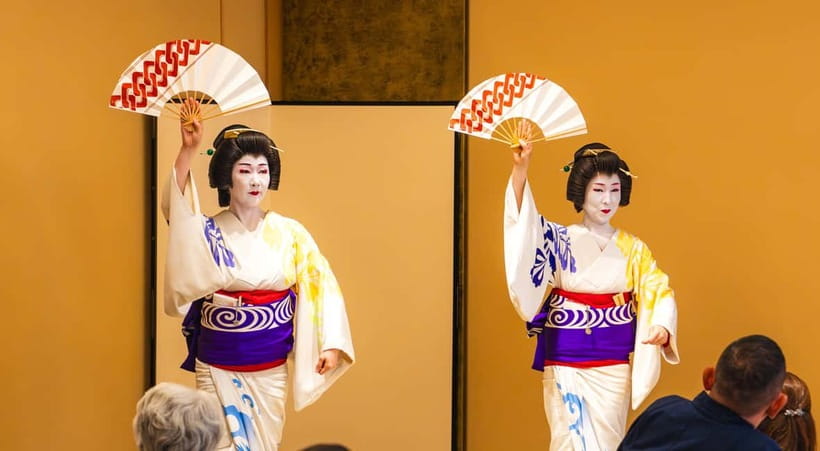
The dance is the most polished part of the program. You can expect measured movements, precise posture, and formal Japanese music rather than a fast stage spectacle. The charm comes from control and detail.
The shamisen, a traditional three-stringed instrument, supplies the sound for the performance. Live music makes a difference. You are not watching a recording matched to a routine, but seeing musicians and dancers share the same room.
The accompanying singing is also part of the presentation in at least some sessions. Shisa was praised for shamisen playing and singing alongside Chizuru and Tamaaki. The effect is intimate, especially when compared with a large theater performance.
I would encourage you to slow down and watch the hands, fans, costume movement, and changes in posture. The performance may be brief, but it rewards attention. If you are looking for a loud, highly interactive show from the first minute, this may feel restrained. If you enjoy traditional arts and careful movement, it is likely to be the highlight.
Photography can be tempting during the dance, but the best approach is to stay present and follow the host’s guidance. You will have a planned commemorative photo later, so you do not need to spend the performance holding your phone above your head.
More Tea Ceremonies in Tokyo
- Matcha Making Class in Tokyo with Authentic Japanese Sweets Set
★ 5.0 · 744 reviews - Tokyo: Traditional Tea Ceremony with a Tea Master
★ 5.0 · 528 reviews - Tokyo: Matcha Making Experience with Mochi Sweets in Asakusa
★ 4.9 · 388 reviews - Tokyo: Matcha and Kimono Experience
★ 4.7 · 219 reviews
Konpira Fune Fune brings the room to life
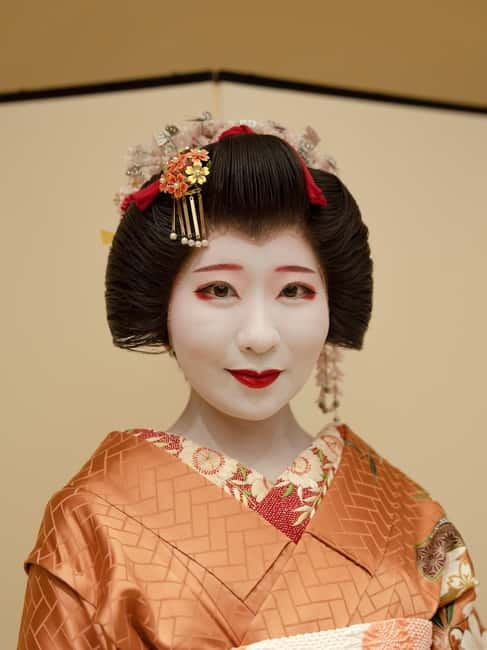
After the formal performance, the mood shifts. You are guided through Konpira Fune Fune, an authentic ozashiki-asobi game traditionally associated with banquet entertainment.
The game is lighthearted and easy to enjoy once you understand the rhythm. It is often described as a drinking game, but the required drink can be alcoholic or non-alcoholic. You do not need to be a skilled performer. The point is to join in, react quickly, and laugh when the rhythm catches you out.
This section gives the experience its balance. The dance and music show the refined side of the tradition, while the game shows its social side. You are not expected to sit silently and admire the performers from afar.
Families can enjoy this part too. One group attended with children aged 3 to 10, who remained absorbed by the performance before taking part in the lively game. Still, because an alcohol order is required per person, parents should be clear about the drink arrangement when booking.
If you dislike group participation, you may find this portion slightly uncomfortable. The game is part of the program, and the room works best when people are willing to join rather than watch from the sidelines.
Matcha and seasonal sweets
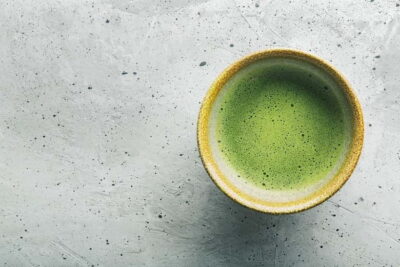
The tea portion follows the entertainment and gives the session a calmer finish. You receive freshly whisked matcha and seasonal Japanese sweets. The sweets are not a full meal, so you should eat beforehand if you expect dinner-sized portions.
I like this part because it connects taste with the setting. Matcha is more than a green drink served as a souvenir. Its bitterness works well with delicate Japanese confectionery, and the seasonal sweets add a sense of time and place.
The portions are best viewed as a tasting rather than a snack stop. Meals beyond the sweets are not included, and the additional drink requirement remains separate from the complimentary matcha.
For some people, this will be the most approachable part of the experience. You can enjoy the tea and sweets while discussing the performance or asking follow-up questions. The pace becomes less formal, and the room feels more conversational.
Asking questions about geisha life
The question period is one of the strongest reasons to choose this activity instead of watching a short cultural show. You can ask about the geisha world directly, with help from the translator when needed.
Past sessions have included questions about daily life and the path into the profession. The exact conversation depends on the performers and the group, so you should arrive with a few questions of your own.
Good topics might include the training involved, the difference between geiko and maiko, the role of shamisen music, and how the performers prepare for a public appearance. Keep questions respectful and remember that the people in the room are artists and professionals, not costume characters.
The conversations can feel surprisingly personal in a polite way. The performers are described as friendly, funny, and eager to interact, while the owner and staff help create a welcoming atmosphere. This makes the experience useful for anyone who wants cultural context rather than a quick photo opportunity.
The translator is essential here. English is available through the host or translator, but this is not presented as a fully English-language lecture at every moment. Some conversation may move through interpretation, so allow a little patience.
The final photo and what you take away
The session ends with a commemorative photo with the geisha. This gives you a clear keepsake without making the entire event revolve around photography.
A photo with performers in traditional costume will be important to many people, but I think its value comes from what comes before it. After the dance, music, game, tea, and conversation, the image records an experience rather than replacing one.
The final picture can also make this a good choice for a honeymoon, birthday, or family visit. One couple attended during their honeymoon, and another family used the occasion to celebrate a birthday. The hosts may be able to respond warmly to special occasions, but you should not assume that a custom celebration is guaranteed unless arranged in advance.
Is $106 a fair price?
At $106 per person, this is not a bargain entertainment option. You are paying for a 75-minute encounter with real geisha, live music, a guided traditional game, matcha, sweets, translation support, and a commemorative photograph.
The price makes more sense if you value access and personal contact. A standard dance performance might cost less, but it would not necessarily include questions, shared games, or direct conversation. Here, the program combines several elements that would otherwise be difficult to arrange independently.
The required drink adds a small complication. You must purchase one drink per person, and that cost is not included in the ticket. If you are watching your budget, include it when comparing the total price with other Tokyo activities.
I consider the experience good value for a visitor who wants one focused cultural event rather than another general sightseeing tour. It is especially worthwhile if you have already seen Asakusa’s temples and streets and want to understand a less visible part of the district’s traditional entertainment culture.
Who should book this experience?
I would choose this for solo visitors, couples, and small groups who are comfortable with a social setting. You do not need to know much about geisha beforehand, and the host helps explain what is happening.
It also suits families with children who can sit through a formal performance and take part in a simple group game. The program includes alcohol, but non-alcoholic drinks are allowed, so the required order does not mean children must drink alcohol.
This is a particularly good pick for:
- People interested in traditional Japanese dance and music
- Visitors who want to ask questions rather than only watch
- Couples marking a honeymoon or special occasion
- Families seeking a cultural activity with an interactive section
- Solo visitors who want a welcoming group experience
- Anyone who prefers a 75-minute activity that fits neatly into an Asakusa day
I would think twice if you want a full meal, a long evening program, or a completely private performance. You also need to be willing to join the ozashiki-asobi game, since participation is part of the charm.
Practical advice before you go
Arrive early. Finding the venue may take time, and one attendee specifically advised an early arrival. Transportation is not included, so plan your route to Asakusa before the day of the experience.
Wear something that lets you sit comfortably on low stools if that seating is used for your session. The available information does not specify a dress code, but neat, respectful clothing suits the setting.
Bring a few thoughtful questions. The chance to speak with the geisha is one of the best parts, and you will get more from the conversation if you have already considered what you want to learn.
Budget for the required drink. Matcha is included, but each person must order one alcoholic or non-alcoholic drink separately.
The activity lasts 75 minutes, so you can place it between other Asakusa plans. A full meal is not included, and the seasonal sweets are light, so leave time for lunch or dinner elsewhere.
Cancellation is flexible if your plans change. You can cancel up to 24 hours in advance for a full refund, and the reserve-now, pay-later option lets you hold a place without paying immediately.
Should you book it?
Book it if you want direct contact with traditional Japanese performance, not just a staged photo stop. The combination of live shamisen, dance, geisha conversation, matcha, seasonal sweets, and Konpira Fune Fune gives the 75 minutes a satisfying shape.
I especially recommend it for first-time visitors who want a cultural memory that feels more personal than a large show. Just remember the extra drink charge, light food service, possible low seating, and group participation.
For $106, this is a special-occasion activity rather than a casual filler. If the cost fits your budget, Miyakodori’s Ozashiki Tea House offers a graceful, funny, and unusually personal way to spend part of an afternoon or evening in Asakusa.
FAQ
Where does the experience take place?
It takes place at Miyakodori’s Ozashiki Tea House in Asakusa, a district of Tokyo on Honshu, Japan.
How long does the experience last?
The cultural experience lasts 75 minutes.
Are real geisha present?
Yes. The activity includes a meeting with real geisha, a dance performance, conversation, and a commemorative photo.
Is English available?
Yes. The host or greeter and translator provide English-language support.
Is a drink included in the ticket?
No. Each participant must order one alcoholic or non-alcoholic drink separately. Complimentary matcha is included.
What food and drink are included?
You receive freshly whisked matcha and seasonal Japanese sweets. Meals other than the sweets are not included.
Can I cancel the booking?
Yes. You can cancel up to 24 hours in advance for a full refund. A reserve-now, pay-later option is also available.
Just added in Tokyo
- A One-of-a-Kind Sushi Experience in a Special Place of Japan★ 5.0 · 15 reviews
- Tokyo Cute Bento Cooking Class – Make a Kawaii Character Lunchbox★ 5.0 · 126 reviews
- Japanese Home Cooking Class & Walk in Todoroki Temple Tokyo★ 5.0 · 88 reviews
- Japan Tokyo Tower Observatory Deck E-Ticket★ 4.0 · 34 reviews
- Catch a Baseball Game in Tokyo with a Local – Tickets Included★ 5.0 · 24 reviews
- Japan Classic 10 Day – One Life Adventures★ 5.0 · 129 reviews
- JDM Experience with Fast&Furious RX-7 (English speaking Driver)★ 5.0 · 57 reviews
- Tokyo Private Day Tour by Car with English speaking Driver Guide★ 4.0 · 29 reviews
Tea Ceremonies, compared.
Tea Ceremony in a Traditional Tea House in Kiyomizu
Read our review →
World Heritage Kyoto & Nara Uji Authentic Matcha Experience
Read our review →
Browse the lists this tour appears in