Reviewed · KYOTO TOURS
Authentic Knife Making Experience at a Blacksmith in Kyoto
Fire, steel, and a souvenir you made yourself. At Atelier NIN, you spend about three hours learning the traditional steps behind a Japanese kitchen knife, from hammering hot metal to sharpening the finished blade. I like the small groups of up to six and the chance to make a useful keepsake rather than simply watch a demonstration. I also like that uniforms, tools, and materials are supplied, so you can arrive ready to work.
The main consideration is that this is physical work, not a relaxed craft class. Hammering steel takes effort, and the grinding and sharpening stages demand care. The location at studio NIN in Yase is outside central Kyoto, and finding the workshop can take some planning.
In This Review
- Key points before you book
- Why this Kyoto workshop feels different
- Arriving at studio NIN in Yase
- Changing into the goldsmith uniform
- Forging the blade, the hardest and best part
- Grinding, sharpening, and polishing the knife
- What kind of knife will you take home?
- Is the $158.52 price fair?
- Safety, effort, and the small-space reality
- Who will enjoy this most?
- Useful planning advice for your Kyoto day
- Should you book Atelier NIN?
- FAQ
- How long does the knife-making experience last?
- Where does the experience begin and end?
- Is the experience conducted in English?
- What is included in the price?
- What size knife will I make?
- Does the knife come with a wooden handle?
- Do I need previous blacksmithing experience?
- Can I cancel for a full refund?
Key points before you book
- You make a real 13 to 15-centimeter knife, not a decorative token.
- The work is hands-on, with forging, grinding, sharpening, and polishing.
- A traditional goldsmith-style uniform is provided, adding some ceremony without requiring special clothing.
- Groups are capped at six people, so instructors can help with technique and safety.
- The standard knife has a simple iron handle, not a wooden handle.
- Allow extra time for the trip to Yase, especially if you are relying on a station map or phone signal.
Why this Kyoto workshop feels different
Kyoto is full of polished cultural activities, but this one asks you to make a little mess. You change into a traditional goldsmith outfit, learn how the tools work, and then put your arms to use. That physical effort is a big part of the appeal.
I like the way the class connects the finished knife to the process. You do not simply receive a blade with your name on it. You help forge and shape the metal, then work on the edge and surface. Your knife will show your hand in it, including any small irregularities.
That also means you should adjust your expectations. The result is intended to be a functioning knife, but it may not look like a perfectly uniform product from a high-end Japanese kitchenware shop. The blade is handmade, and its final size and shape can vary from person to person.
The workshop uses a traditional and simple method. The knife is approximately 13 to 15 centimeters long, with an iron handle rather than the familiar wooden handle found on many Japanese kitchen knives. A wooden handle may be available as an extra option, but the standard experience does not include one, so ask Atelier NIN directly if that matters to you.
A few more options to weigh up in Kyoto
- PERFECT KYOTO 1-Day Bus Tour
★ 5.0 · 13,518 reviews - [Kyoto & Nara Day Tour] Sagano Scenic Railway & Nara Park & Fushimi Inari Taisha Thousand Torii Gates & Togetsukyo Bridge & Bamboo Grove & Kimono Forest (Departing from Osaka)
★ 4.9 · 10,942 reviews - Kyoto: Fushimi Inari, Kinkakuji, Bamboo Grove 1 Day Bus Tour
★ 4.8 · 4,316 reviews
Arriving at studio NIN in Yase
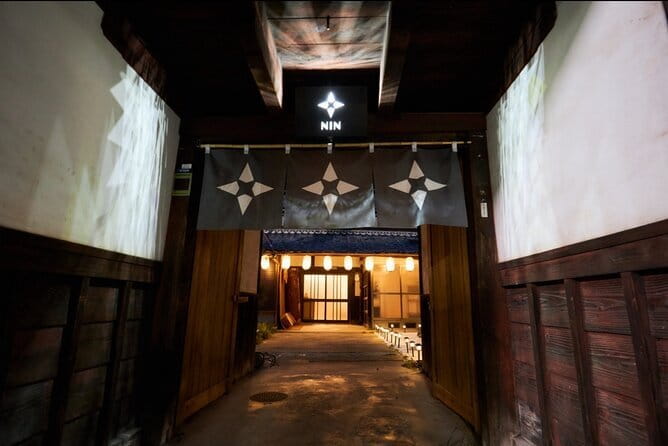
The meeting point is studio NIN at 168-1 Yasenosechō in Sakyo Ward, Kyoto. This is not a central Kyoto activity that you can casually fit between Nishiki Market and Gion. You are heading toward Yase, a quieter area on the northeastern edge of the city.
The setting adds to the sense that you are visiting a working craft studio rather than a tourist attraction. At the same time, the location requires practical preparation. The workshop is near public transportation, but the final approach may include a long walk through a residential area. One useful warning is that phone reception may be weak or absent near the station, so save directions before leaving your hotel.
A small train serves the route, and the ride itself can be part of the outing. It has been described as a charming one-carriage train, which gives the trip a local feel. Still, do not cut your arrival time close. The meeting point is tucked away, and a little extra time is worth it when you are carrying no map and standing without a signal.
The itinerary also identifies Rurikoin as a stop, although the supplied schedule gives no separate sightseeing program or visit details there. Treat the blacksmith workshop at studio NIN as the main event, and confirm the meeting instructions before setting out.
Changing into the goldsmith uniform
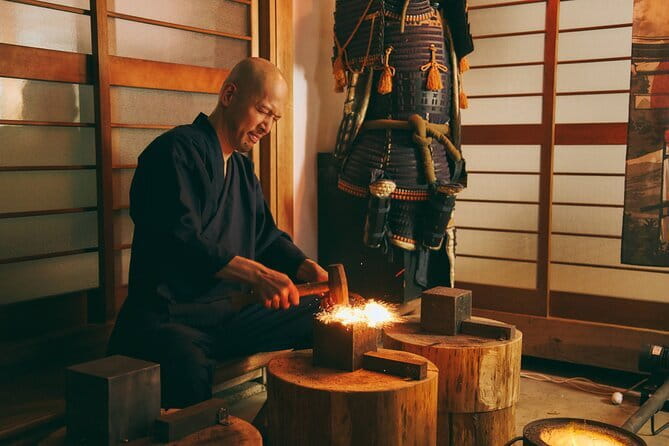
Once you arrive, you change into the provided traditional goldsmith outfit. This is a useful touch for two reasons. First, it protects your regular clothes from the heat, dust, and metal filings. Second, it gives the class a stronger connection to Japanese craft traditions.
You do not need to source protective clothing yourself. The uniform is supplied, along with the tools and materials needed to make the knife. You should still wear practical clothing underneath and avoid arriving in anything you would be upset to mark or scuff.
The group limit of six matters here. Blacksmithing involves timing, body position, and safe use of equipment. With a small class, the instructors can step in when your hammer angle goes wrong or when you need help with the next stage. The teaching style is described as friendly and patient, with English guidance available.
Several instructors receive especially warm praise for staying close without taking over. Diaki is singled out as an engaging teacher who quietly assists when needed. That balance is important. You get to make your own decisions and mistakes, but you are not left alone with hot steel.
Forging the blade, the hardest and best part
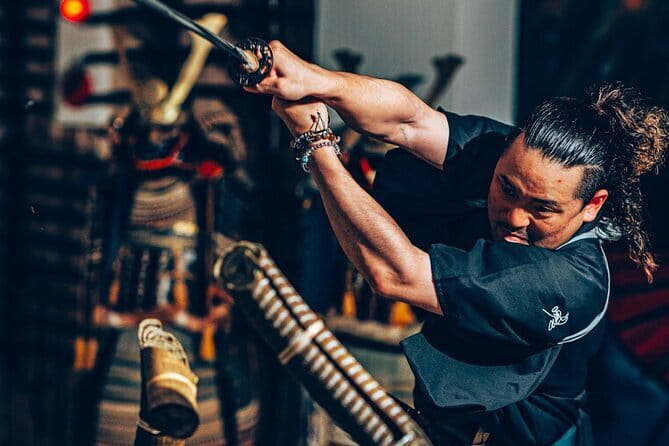
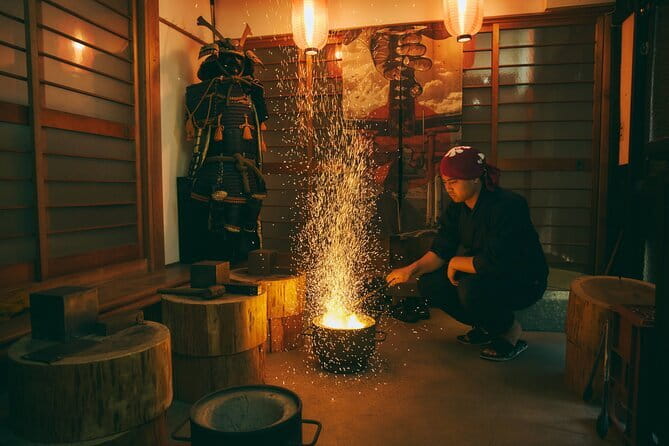
The forging stage is the heart of the experience. You heat and hammer a metal billet, flattening and stretching it into the beginnings of a blade. This can take about an hour, and it is the point where you will feel the class in your shoulders and arms.
I like that the workshop does not reduce forging to a quick photo opportunity. You really do hammer the metal. The instructors show you how to use the tools safely, then let you do the work while correcting your technique when needed.
The steel used by some participants has been identified as white paper grade steel, a material associated with Japanese kitchen knives. You can choose a knife design, though the information supplied does not specify a full menu of shapes or sizes. The result is shaped by your work, the selected design, and the amount of metal you move.
This is also where your expectations matter most. If you have watched blacksmithing programs, you may recognize the rhythm, but the real work is slower and more tiring than it looks on television. Hammering a blade into shape is strenuous. The experience is suitable for people with a moderate level of physical fitness, and you should be comfortable standing and using a hammer for an extended period.
After the initial forging, the staff cut the general knife shape requested by the participant. That means your main creative work is concentrated in forging, while the instructors help bring the rough metal into a usable outline.
A completely different kind of day out:
- Kyoto: Tea Ceremony in a Traditional Tea House in Kiyomizu
★ 4.9 · 3,519 reviews - Kyoto: Gion Make Your Own Chopsticks with Engraving Option
★ 5.0 · 3,465 reviews - Kyoto Nara Day Trip │ Kiyomizu-dera Temple + Fushimi Inari-taisha Shrine + Nara Park (Departing from Osaka/Kyoto)
★ 4.7 · 3,408 reviews - Kyoto Geisha Walking Tour: Gion District & Hidden Gems
★ 4.7 · 3,273 reviews
Grinding, sharpening, and polishing the knife

The second half shifts from heavy hammering to more careful finishing. You grind the blade to clean up the surface and begin forming the edge. Then you work on sharpening and polishing.
This part can be just as rewarding as the forging, but it requires more concentration. Holding the blade at the correct angle is important, especially when using sanding belts or grinding equipment. One practical weakness is that the instructions during this stage may feel less detailed than the guidance during forging.
I would pay close attention when the instructor demonstrates the grinding angle. Ask for a correction early rather than trying to fix a broad mistake later. The small group helps here, since the instructors can watch your technique and step in when necessary.
The blade is sharp by the end. That sounds obvious, but it affects how you pack and transport it. Some participants have been advised to place the knife in checked luggage when flying home because the blade may exceed carry-on restrictions. Check your airline and airport rules before booking your return flight.
The final polishing and sharpening may receive more staff attention than the forging. That is sensible. You still make a meaningful part of the knife, while trained hands help ensure the finished edge is usable.
What kind of knife will you take home?
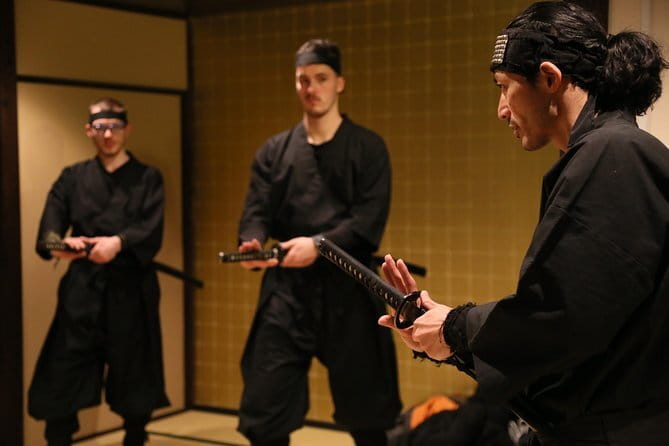
The finished blade is approximately 13 to 15 centimeters long. Since each knife is handmade, the exact size can vary. The standard design uses an iron handle, following the workshop’s simple traditional method.
This is not the same as buying a finished chef’s knife from a specialist shop. The value is partly in the object and partly in the memory of making it. You will notice hammer marks, small variations, and the evidence of your own work. For many people, those marks make the knife more interesting.
Some participants arranged for a wooden handle as an additional option, reported at ¥5,000. The standard description says wooden handles are not included, so treat this as something to confirm with Atelier NIN rather than part of the advertised package. If you want a polished kitchen tool with a fitted handle, ask before the class.
The finished knife is wrapped and placed in a gift bag. A small commemorative photo has also been provided at no extra charge during the experience. These are modest touches, but they make the result easier to carry home and give as a gift.
Is the $158.52 price fair?
The listed price is $158.52 per person. That is not a bargain activity, but it is easier to judge when you look at what is included. You receive roughly three hours of instruction, a uniform, a complete set of tools, the metal, English guidance, and a handmade knife to take home.
A larger cooking knife would require more than five hours and cost more than $400 according to the workshop’s own comparison. The shorter format keeps the experience within a half-day and makes traditional forging accessible to people who do not have a full day or a professional interest in blacksmithing.
The value is strongest if you want an activity rather than a purchase. If your only goal is to own the finest Japanese kitchen knife, you can spend the same money in a specialist shop and avoid the physical work. If you want a personal souvenir that carries a story, the price is easier to justify.
The 94 percent recommendation rate and 4.8 rating from 53 reviews also suggest dependable satisfaction, though no workshop is perfect. The main concerns are the effort involved, the somewhat tight working space, limited guidance during some grinding steps, and the practical issue of getting the blade home.
Safety, effort, and the small-space reality
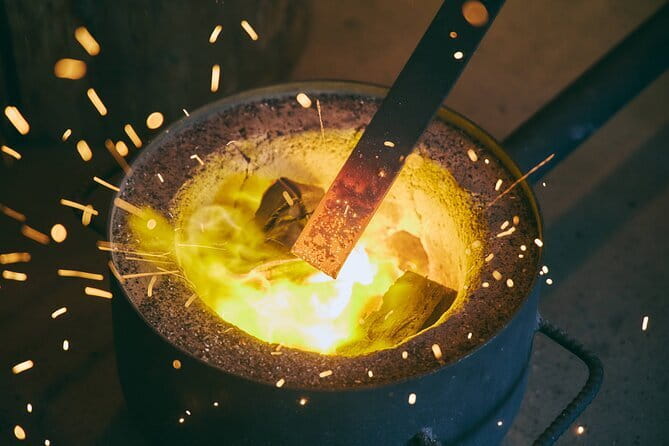
You should expect heat, noise, dust, sharp edges, and repeated hammering. The workshop provides a uniform and teaches safe tool use, but this is still a working blacksmith setting rather than a museum demonstration.
A moderate fitness level is recommended. You do not need prior knife-making or blacksmithing experience. Beginners have been able to complete the activity with help from the instructors, and the process is designed so that first-time participants can take part in forging.
The space may feel tight when several people are working. One account also raised concerns about dropping a knife while using the sanding equipment and about working without safety shoes. The supplied information does not confirm a different footwear arrangement, so I would ask Atelier NIN what footwear is provided and what you should wear.
The best approach is to listen closely during every equipment demonstration. Keep your hands and blade under control, ask questions when the angle or pressure feels uncertain, and do not rush simply because another person has moved ahead.
Who will enjoy this most?
I would recommend the workshop to adults, couples, families with older children, cooks, and anyone who prefers making something over looking at another temple. A 13-year-old has enjoyed the experience with guidance, and the activity has also worked well for couples and parent-child groups.
It is particularly well suited to you if:
- You enjoy practical work and do not mind getting tired.
- You want a personal Japanese souvenir with a clear story.
- You are interested in cooking, metalwork, or traditional crafts.
- You like small classes with direct help.
- You can manage a trip outside central Kyoto.
- You have a checked bag or a clear plan for transporting a blade home.
I would hesitate to recommend it if you want a quiet, seated activity, have limited mobility, or dislike heat and repetitive physical work. It is also not the best choice if your schedule is so tight that a longer journey to Yase would cause stress.
Useful planning advice for your Kyoto day
Set aside at least half a day, even though the workshop itself lasts about three hours. The journey to Yase, the walk to the studio, and the need to find your way back all deserve breathing room.
Save the address and directions before you leave. Because phone service may be unreliable near the station, do not depend entirely on live navigation. If you are traveling with children, explain in advance that they will be working around hot metal and sharp tools, not simply decorating a souvenir.
Think about luggage before the class. The completed knife is sharp and may not meet carry-on rules. If you are flying, a checked bag is the safer plan, but confirm current airline requirements.
Cancellation is flexible up to 24 hours before the start time, with a full refund. Changes or cancellations made less than 24 hours ahead are not accepted for a refund. That policy is worth noting because the activity involves a specific small-group schedule.
Should you book Atelier NIN?
Book this experience if you want a genuine hands-on craft session and like the idea of carrying home a knife shaped partly by your own effort. The strongest features are the small class size, the friendly English guidance, the full process from forging to polishing, and the fact that you leave with a functional object.
Go in ready to work. The forging is tiring, the finishing stage deserves careful attention, and the trip to Yase is not effortless. I would also confirm the exact meeting route, footwear, and any wooden-handle option before you pay.
For cooks and craft-minded people, this is one of Kyoto’s more memorable ways to spend three hours. For anyone seeking an easy indoor activity, choose something gentler. The right attitude is simple: accept a few rough edges, listen to the instructors, and take pride in a knife that could never be mistaken for something mass-produced.
FAQ
How long does the knife-making experience last?
The experience lasts approximately three hours. The workshop describes the shortened format as about two and a half hours of forging and finishing, so allow extra time around the activity for arrival and departure.
Where does the experience begin and end?
It begins and ends at studio NIN, located at 168-1 Yasenosechō, Sakyo Ward, Kyoto, 601-1254, Japan.
Is the experience conducted in English?
Yes. An English guide is included.
What is included in the price?
The price includes a uniform, a set of tools used to make the knife, the materials, and English guidance.
What size knife will I make?
The knife is approximately 13 to 15 centimeters long. Because it is handmade, the final size can vary.
Does the knife come with a wooden handle?
No wooden handle is included in the standard description. The standard knife uses an iron handle. A wooden handle has been offered as an additional option in some cases, so confirm the current arrangements with Atelier NIN.
Do I need previous blacksmithing experience?
No. The experience is designed for beginners, and you learn how to use the tools before forging. You should still have a moderate level of physical fitness because hammering and finishing the blade require effort.
Can I cancel for a full refund?
Yes. You can cancel at least 24 hours before the local start time for a full refund. Cancellations or changes made less than 24 hours before the start time are not refunded.
Just added in Kyoto
- The “Golden Route” and Ancient Japan by DIAMIR Erlebnisreisen – 14-Day Tour★ 2.0 · 2 reviews
- Japan: Castles & Cuisine by G Adventures – 6-Day Kyoto to Osaka Tour★ 4.5 · 4 reviews
- Cycle Japan by Explore! – 13-Day Kyoto to Tokyo Tour★ 4.7 · 12 reviews
- Cycle Japan by Intrepid Travel – 11-Day Kyoto to Tokyo Tour★ 4.8 · 2 reviews
- Classic Japan by Intrepid Travel – 11-Day Kyoto to Tokyo Tour★ 4.4 · 14 reviews
- Ancient & Modern Japan 14-Day Tour by Exodus Adventure Travels★ 4.4 · 40 reviews
- 5 Day Cultural Adventure of Kyoto, Nara & Osaka by Tourist Journey★ 2.5 · 2 reviews
- 12 Days Kinosaki Onsen Escape: A Journey Through Japan’s Timeless Towns by UME Travel★ 4.8 · 5 reviews
Kyoto Tours, compared.

![[Kyoto & Nara Day Tour] Sagano Scenic Railway & Nara Park & Fushimi Inari Taisha Thousand Torii Gates & Togetsukyo Bridge & Bamboo Grove & Kimono Forest (Departing from Osaka)](https://media.japanvisits.com/wp-content/uploads/kyoto-nara-day-tour-sagano-scenic-railway-nara-park-fushimi-inari-taisha-thousand-torii-gates-togetsukyo-bridge-bamboo-grove-kimono-forest-departing-from-osaka-k110001-400x257.jpg)

Fushimi Inari, Kinkakuji, Bamboo Grove 1 Day Bus Tour
Read our review →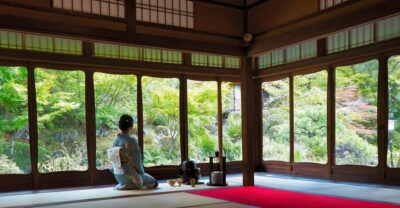
Tea Ceremony in a Traditional Tea House in Kiyomizu
Read our review →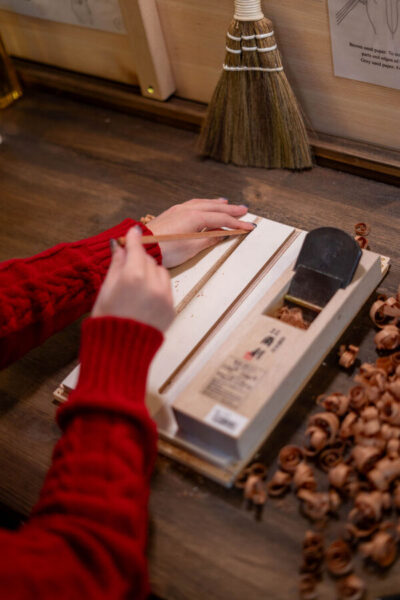
Gion Make Your Own Chopsticks with Engraving Option
Read our review →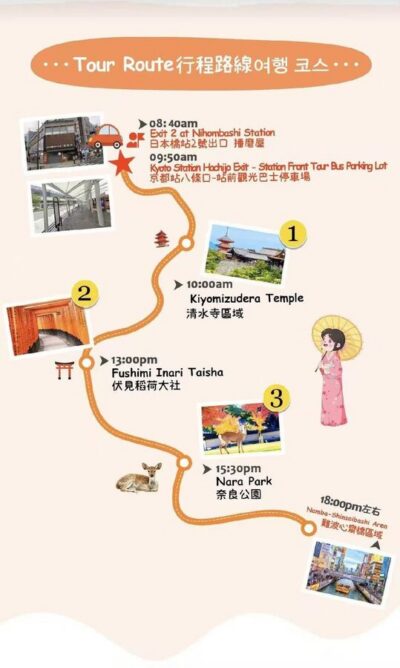
Kyoto Nara Day Trip │ Kiyomizu-dera Temple + Fushimi Inari-taisha Shrine + Nara Park (Departing from Osaka/Kyoto)
Read our review →
Kyoto Geisha Walking Tour: Gion District & Hidden Gems
Read our review →