Reviewed · KYOTO TOURS
Early Bird E-biking through East Kyoto
Kyoto is easier on two wheels. This early start links Fushimi Inari, Tofukuji, Ginkakuji, Nanzenji, Heian Shrine, Gion, and Higashi Honganji in one long day, with an electric bicycle doing the hard work between them. I especially like the eight-person maximum, which keeps the group small enough for questions and safer street riding. I also like the included lunch and coffee stop, since you do not have to waste sightseeing time choosing where to eat.
The main caution is the pace and traffic. You ride for much of the day through busy streets, crowded paths, and a few uphill sections, so you need solid cycling skills and moderate fitness. The guide can make or break the cultural side of the outing too. Guides such as Indra, Jay, Juan, Paul, Carl, and Jaime have been praised for humor, local insight, and careful riding, while one poorly received outing suffered from weak explanations and ill-fitting bikes.
In This Review
- Five things to know before you book
- Why Kyoto works so well by e-bike
- Starting beside the river and reaching Fushimi Inari
- Tofukuji and the first temple contrast
- The Kamogawa River makes the ride worthwhile
- Ginkakuji and lunch near the Silver Pavilion
- The Philosopher’s Path by bicycle
- Nanzenji reveals Kyoto’s grander side
- Heian Shrine and a ride through Gion
- Higashi Honganji closes the loop
- What the $138.74 price really buys you
- Bikes, fitness, and practical comfort
- Who should book this Kyoto ride?
- Should you book Early Bird E-Biking through East Kyoto?
- FAQ
- Where does the tour start?
- What time does the tour begin?
- Where does the tour end?
- How long does the experience last?
- How many people can join the tour?
- Is lunch included?
- Is a bicycle provided?
- What fitness level is required?
- Are there age and height requirements?
- Can I cancel for a full refund?
- What happens if bad weather cancels the tour?
- Do I need to share dietary requirements?
Five things to know before you book
- You cover a remarkable amount of Kyoto: Nine major stops fit into roughly six to seven hours.
- The early 8 a.m. start matters: It gives you a better chance at calmer temple grounds before the day becomes crowded.
- The e-bike saves your legs: You still pedal, but the motor helps with distance and uphill stretches.
- The group is capped at eight: That is useful for safety, questions, and small changes to the route.
- Lunch and a cafe stop are built in: Ginkakuji includes a nearby lunch break, and Higashi Honganji includes a stop at a favorite cafe.
- Bike comfort deserves attention: Minimum age is 13, minimum height is 145 centimeters, and you should confirm the bike suits you before setting off.
Why Kyoto works so well by e-bike
Kyoto’s famous sights are spread out. Fushimi Inari is in the south, Ginkakuji and the Philosopher’s Path sit farther east, and Gion and Higashi Honganji pull you back toward the center. On foot, you would spend a large part of the day simply getting between them. By car, you would miss the canals, river paths, residential lanes, and small changes in the city from one neighborhood to the next.
An e-bike gives you a useful middle ground. You can cover serious ground without treating the day as an athletic event. At the same time, you remain close to the street, moving through Kyoto’s quieter corners rather than sealed inside a vehicle.
The ride is not effortless. You still need to steer, brake, watch traffic, and keep up with the group. Some roads are busy, and parts of the route include uneven ground or uphill riding. The electric assistance helps, but it does not replace basic confidence on a bicycle.
The early start is another smart feature. Meeting at 8 a.m. at Cycle Kyoto, in Higashikujō Nishisannōchō, puts you on the road before the busiest part of the sightseeing day. Kyoto’s major temples can become crowded, particularly during cherry blossom season, so those first stops are worth reaching early.
A few more options to weigh up in Kyoto
- PERFECT KYOTO 1-Day Bus Tour
★ 5.0 · 13,518 reviews - [Kyoto & Nara Day Tour] Sagano Scenic Railway & Nara Park & Fushimi Inari Taisha Thousand Torii Gates & Togetsukyo Bridge & Bamboo Grove & Kimono Forest (Departing from Osaka)
★ 4.9 · 10,942 reviews - Kyoto: Fushimi Inari, Kinkakuji, Bamboo Grove 1 Day Bus Tour
★ 4.8 · 4,316 reviews
Starting beside the river and reaching Fushimi Inari
After receiving your e-bike and helmet, you ride for about 25 minutes along the river toward Fushimi Inari-taisha Shrine. This opening section gives you time to settle into the bicycle and learn how the group moves together.
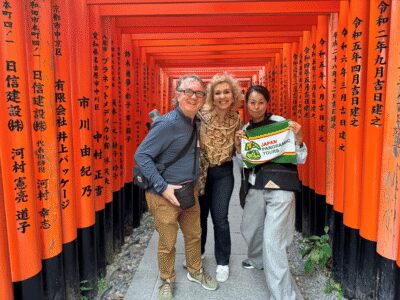
Fushimi Inari is famous for its seemingly endless rows of vermilion torii gates. The tour allows about 30 minutes to explore on foot, with free admission. That is enough for an introduction and photographs, though not enough to walk the full mountain route. If you want to hike deep into the shrine complex, you would need a separate visit.
The early timing helps here. Fushimi Inari is one of Kyoto’s most popular sights, and the atmosphere changes sharply as more people arrive. You should treat this as a focused visit rather than a complete exploration. Wear shoes that are comfortable for walking, even though the main activity is cycling.
Tofukuji and the first temple contrast
From Fushimi Inari, it takes around 15 minutes to reach Tofukuji Temple. The planned stop lasts about 30 minutes, including a pause on a picturesque bridge. Admission is listed as free for this visit.
Tofukuji gives you a different feel from Fushimi Inari. Instead of a shrine path marked by torii gates, you see a major Zen Buddhist temple complex with strong lines, wooden structures, and seasonal garden appeal. The short stop works well as part of a moving tour, but you will not have time to inspect every corner.
I like this pairing because it puts two important religious sites close together while showing you how different Kyoto’s shrine and temple traditions can feel. The bridge stop also breaks up the cycling before the route opens into a longer riverside ride.
The Kamogawa River makes the ride worthwhile
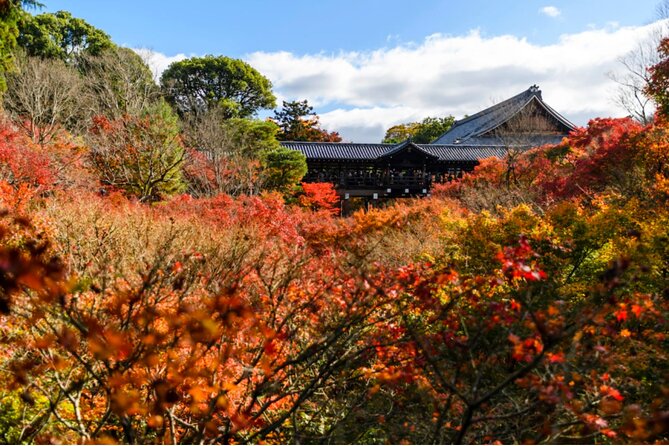
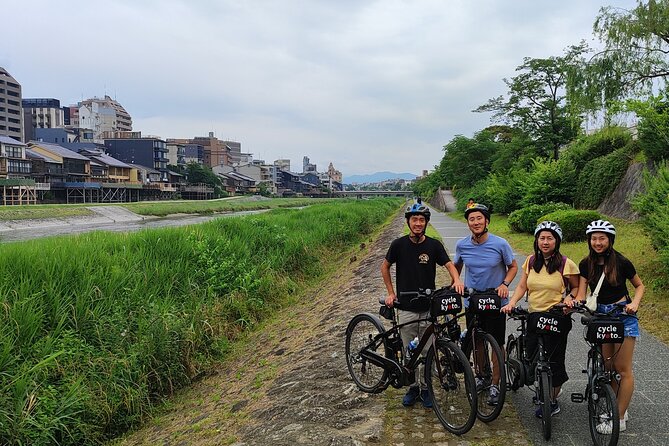
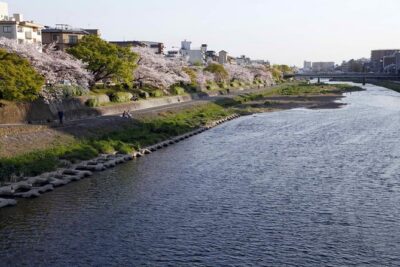
The tour then follows the Kamogawa River for about 30 minutes. This is not just transport between attractions. It is one of the best chances to enjoy Kyoto at street level without a temple entrance, formal explanation, or fixed viewing platform.
The river route gives your legs a steady rhythm and offers a quieter contrast to city roads. It also lets you see why bicycles are practical in Kyoto. You are moving at a human pace, with room to notice the water, bridges, paths, and changing neighborhoods.
Keep your attention on the route. Riverside paths can include other cyclists, walkers, and uneven sections. The guide’s job here is important, especially when the group needs to stay together. Several guides have been praised for setting a comfortable pace and keeping riders safe, but your own awareness still matters.
A completely different kind of day out:
- Kyoto: Tea Ceremony in a Traditional Tea House in Kiyomizu
★ 4.9 · 3,519 reviews - Kyoto: Gion Make Your Own Chopsticks with Engraving Option
★ 5.0 · 3,465 reviews - Kyoto Nara Day Trip │ Kiyomizu-dera Temple + Fushimi Inari-taisha Shrine + Nara Park (Departing from Osaka/Kyoto)
★ 4.7 · 3,408 reviews - Kyoto Geisha Walking Tour: Gion District & Hidden Gems
★ 4.7 · 3,273 reviews
Ginkakuji and lunch near the Silver Pavilion
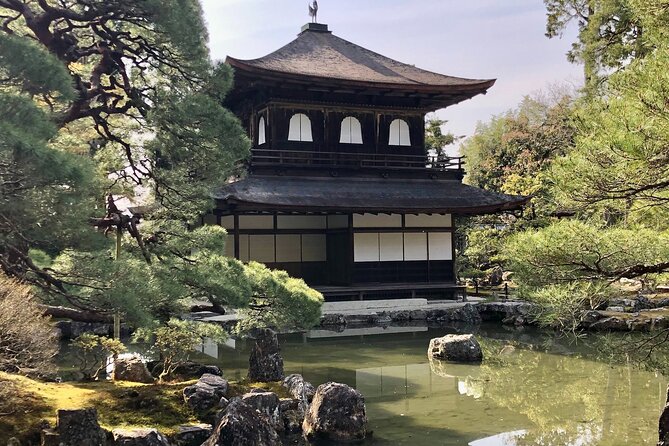
Ginkakuji Temple, often called the Silver Pavilion, is one of the tour’s longer stops. About 45 minutes is allowed for the temple grounds, and that time includes lunch at a nearby restaurant. Admission to Ginkakuji is included.
The temple is known for its understated beauty rather than glittering decoration. Its gardens, moss, gravel patterns, and hillside setting reward a slower look. Forty-five minutes is enough to walk through the main grounds, take photographs, and listen to the guide, though it remains a compact visit.
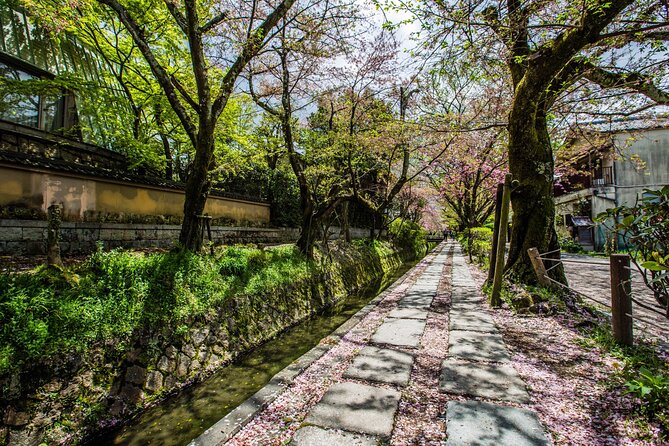
Lunch is a real value point. Kyoto sightseeing can become inconvenient when you need to find food during peak hours, especially near a major attraction. Having a meal arranged keeps the day moving and removes one decision from your hands.
Still, you should set realistic expectations. The meal is convenient, not presented as a special food tour. One disappointed customer found the lunch location too ordinary and too close to the busiest street near Ginkakuji. Other outings included a well-liked local ramen or udon stop, so the exact meal experience may depend on the day, group, and guide.
Dietary requirements need to be shared ahead of time. Do not wait until the morning of the tour if you have allergies or strict food needs.
The Philosopher’s Path by bicycle
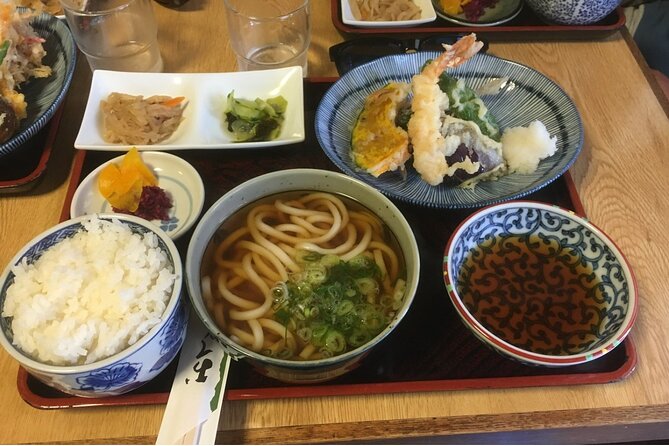
After lunch, you cycle along the Philosopher’s Path for about 45 minutes. This famous route follows a canal between Ginkakuji and Nanzenji and is especially appealing during cherry blossom season.
Cycling here gives you a pleasant change of pace. You are not simply checking off another temple. You are moving through one of Kyoto’s most scenic urban corridors, with water, trees, small lanes, and traditional-looking homes nearby. The path can also be crowded, so the guide may need to adjust speed or stop briefly.
This is one place where a private visit can offer more flexibility. The group schedule does not guarantee long photo stops. One family had to request extra time for pictures during full bloom. If blossoms or seasonal scenery are a major reason for your trip, tell the guide early and ask how much stopping time is realistic.
Nanzenji reveals Kyoto’s grander side
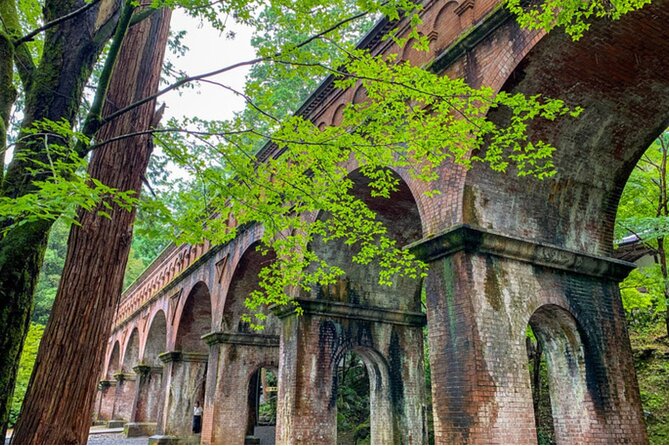
Nanzenji receives about 45 minutes, with time to walk the grounds. It is one of Kyoto’s most impressive Zen temple complexes, with broad spaces, substantial gates, and a calm sense of scale.
The stop is valuable after the narrower Philosopher’s Path. You move from a leafy canal route into a larger religious complex where the architecture has room to breathe. The brick aqueduct near Nanzenji is also a memorable visual feature and helps explain why this temple area feels different from the city’s many smaller shrines.
As with the other stops, the time is a sampler. You can see the principal areas, but you should not expect a long garden study or a full temple tour. The guide’s explanations matter here. Strong guides have been praised for mixing history, religion, humor, and practical advice. One weak experience had little storytelling, with the guide checking information on a phone. That contrast is worth keeping in mind when deciding how much cultural depth you need.
Heian Shrine and a ride through Gion
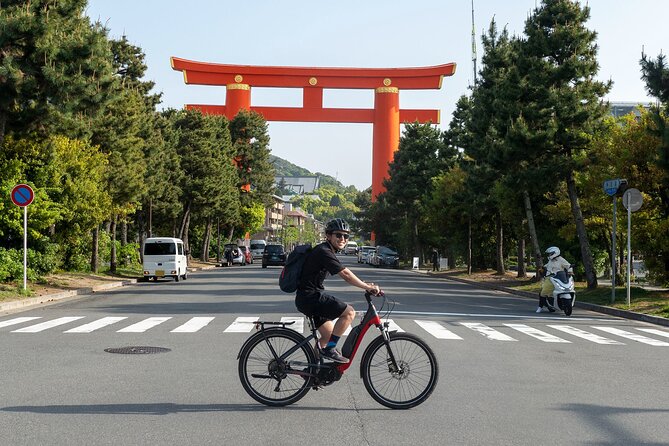
Heian Shrine follows, with about 35 minutes to stroll through its large courtyard. Its grand entrance and spacious grounds offer another architectural shift. The scale feels ceremonial and open, especially after the enclosed paths of the earlier temples.
The tour then rides through Gion for about 45 minutes. This is a chance to see the entertainment district from its backstreets rather than only from the most photographed lanes. You might glimpse a Maiko or Geiko, but that is not guaranteed, and you should never treat people working in the district as photo props.
The Gion section is one of the tour’s more authentic pleasures. You see how quickly Kyoto changes from major sightseeing sites to narrow residential and entertainment streets. At the same time, this is an area where you need to ride carefully. Crowds, pedestrians, taxis, and tight lanes require patience.
Higashi Honganji closes the loop
The final stop is Higashi Honganji Temple, about 15 minutes from the meeting point. You walk through its enormous wooden prayer halls, then stop at the company’s favorite cafe before returning to Cycle Kyoto.
This is a short visit, but it gives the day a strong finish. Higashi Honganji is less about a long checklist and more about the scale of its timber interiors and the sense of quiet found inside a working religious complex.
The cafe stop is a small but welcome touch after hours on a bicycle. Past outings have included coffee breaks that felt personal and local rather than like a standard chain stop. After the cafe, the activity ends back at the original meeting point.
What the $138.74 price really buys you
At $138.74 per person, this is not a cheap way to rent a bicycle. You are paying for an e-bike, helmet, guide, route planning, temple access at Ginkakuji, lunch, and a full day of movement between widely separated sights.
The value is strongest if you are new to Kyoto. A guide takes care of navigation and links places that would be awkward to combine on your own. You also gain access to backstreets and riverside routes that are easy to miss when you stick to trains and major roads.
The small group helps justify the price. With no more than eight people, the guide can answer questions and sometimes adjust the route or pace. Several outings were praised for customized stops, favorite cafes, food advice, and a friendly, almost personal feel.
The value drops if you mainly want long, detailed visits inside each temple. The schedule moves on quickly, and you may prefer independent sightseeing if you want to linger, take dozens of photographs, or read every sign. You could also rent a bicycle and ride parts of the route yourself for less, but you would take on navigation, restaurant planning, and route safety.
The tour is commonly booked about 37 days ahead, so it is sensible to reserve early during cherry blossom season and other busy periods. Free cancellation is available until 24 hours before the 8 a.m. start. Poor weather or failure to reach the minimum group size can lead to a new date, another experience, or a full refund.
Bikes, fitness, and practical comfort
You need to be at least 13 years old and 145 centimeters tall. A helmet and e-bike are provided, and the activity requires moderate physical fitness.
The size issue is not minor. One family arrived to find two bikes that were far too small for teenagers around 1.76 and 1.80 meters tall. The problem was eventually fixed, but a six to seven-hour ride demands a proper fit. If you have special sizing needs, raise them before arrival and check the bicycle carefully at the start.
You will ride in busy areas and may encounter uphill sections, uneven ground, and crowded paths. You should already feel comfortable braking and steering around other people. The e-bike reduces effort, but it does not make the route suitable for someone who is uneasy on a bicycle.
Wear practical clothing and shoes. Bring water if you prefer to carry your own, though some guides have thoughtfully supplied cold water and snacks. Public transportation is nearby, and the activity begins and ends at Cycle Kyoto.
Who should book this Kyoto ride?
I would choose this tour for a first or early day in Kyoto, especially if you want a broad sense of the city before returning to favorite areas on your own. It is also a good fit for couples, families with older children, and active adults who enjoy learning while moving.
The tour suits you best if you value variety over long temple visits. In one day, you see a major shrine, several temples, a river, a canal path, a famous shopping and entertainment district, and ordinary city streets.
I would think twice if you dislike traffic, need a slow walking pace, or want a food-focused experience. I would also be cautious if you expect every guide to deliver the same depth of cultural explanation. The strongest guides, including Indra, Jay, Juan, Paul, and Jaime, have been praised for warmth, humor, history, food tips, and safety. But the quality of the commentary can vary.
Should you book Early Bird E-Biking through East Kyoto?
Book it if you want to see a lot of Kyoto in one active day and like the idea of reaching major sights by backstreet, river, and canal routes. The e-bike makes a wide route practical, while lunch, a cafe stop, and a small group remove much of the day’s usual hassle.
Skip it if you want to linger at each temple or if cycling in traffic sounds stressful. For most reasonably confident riders, though, this is a strong introduction to eastern and southern Kyoto, with enough local texture to make the ride more than a checklist of famous names.
FAQ
Where does the tour start?
It starts at Cycle Kyoto, Higashikujō Nishisannōchō, Minami Ward, Kyoto, 601-8003, Japan.
What time does the tour begin?
The start time is 8:00 a.m.
Where does the tour end?
The activity ends back at the Cycle Kyoto meeting point.
How long does the experience last?
The tour lasts approximately six to seven hours.
How many people can join the tour?
The group has a maximum of eight participants.
Is lunch included?
Yes. The Ginkakuji portion includes a lunch stop at a nearby restaurant.
Is a bicycle provided?
Yes. An e-bike and helmet are provided.
What fitness level is required?
You should have a moderate level of physical fitness and feel comfortable cycling through busy areas, uphill sections, and places with uneven ground.
Are there age and height requirements?
The minimum age is 13 years old, and the minimum height is 145 centimeters.
Can I cancel for a full refund?
You can cancel at least 24 hours before the local start time for a full refund. Cancellations or changes made less than 24 hours ahead are not accepted for a refund.
What happens if bad weather cancels the tour?
If poor weather causes cancellation, you will be offered another date or a full refund.
Do I need to share dietary requirements?
Yes. Dietary requirements need to be provided ahead of time.
Just added in Kyoto
- The “Golden Route” and Ancient Japan by DIAMIR Erlebnisreisen – 14-Day Tour★ 2.0 · 2 reviews
- Japan: Castles & Cuisine by G Adventures – 6-Day Kyoto to Osaka Tour★ 4.5 · 4 reviews
- Cycle Japan by Explore! – 13-Day Kyoto to Tokyo Tour★ 4.7 · 12 reviews
- Cycle Japan by Intrepid Travel – 11-Day Kyoto to Tokyo Tour★ 4.8 · 2 reviews
- Classic Japan by Intrepid Travel – 11-Day Kyoto to Tokyo Tour★ 4.4 · 14 reviews
- Ancient & Modern Japan 14-Day Tour by Exodus Adventure Travels★ 4.4 · 40 reviews
- 5 Day Cultural Adventure of Kyoto, Nara & Osaka by Tourist Journey★ 2.5 · 2 reviews
- 12 Days Kinosaki Onsen Escape: A Journey Through Japan’s Timeless Towns by UME Travel★ 4.8 · 5 reviews
Kyoto Tours, compared.
![[Kyoto & Nara Day Tour] Sagano Scenic Railway & Nara Park & Fushimi Inari Taisha Thousand Torii Gates & Togetsukyo Bridge & Bamboo Grove & Kimono Forest (Departing from Osaka)](https://media.japanvisits.com/wp-content/uploads/kyoto-nara-day-tour-sagano-scenic-railway-nara-park-fushimi-inari-taisha-thousand-torii-gates-togetsukyo-bridge-bamboo-grove-kimono-forest-departing-from-osaka-k110001-400x257.jpg)
Fushimi Inari, Kinkakuji, Bamboo Grove 1 Day Bus Tour
Read our review →
Tea Ceremony in a Traditional Tea House in Kiyomizu
Read our review →
Gion Make Your Own Chopsticks with Engraving Option
Read our review →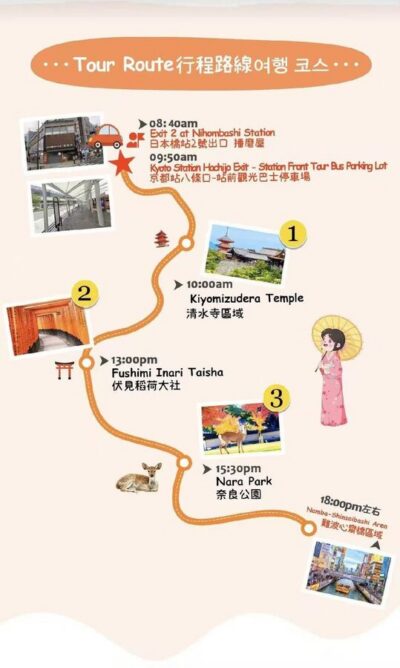
Kyoto Nara Day Trip │ Kiyomizu-dera Temple + Fushimi Inari-taisha Shrine + Nara Park (Departing from Osaka/Kyoto)
Read our review →
Kyoto Geisha Walking Tour: Gion District & Hidden Gems
Read our review →