Reviewed · KYOTO TOURS
Early Half Day to Kyoto Highlights
Kyoto rewards an early start. This five-hour walking and public-transport tour links Fushimi Inari Shrine, Arashiyama Bamboo Forest, and Kinkakuji, three of Kyoto’s biggest sights, before the day gets too crowded. I like the smart route and the chance to spend the afternoon on your own.
I also like the small group, capped at eight people, and the guide-led context about Shinto, Buddhism, Japanese society, and local history. The main drawback is the pace: three major sights in one morning leaves little room for wandering, shopping, or sitting down for a slow meal.
In This Review
- Key points before you book
- Why this route works in only five hours
- Meeting at Kyoto Tower Sando
- Fushimi Inari and the thousand red gates
- Arashiyama Bamboo Forest for scenery and context
- Kinkakuji, Kyoto’s Golden Pavilion
- The guide and the small-group advantage
- What the $94.71 price really covers
- Who should choose this Kyoto morning
- Practical details that affect your morning
- Is this early Kyoto tour worth booking?
- FAQ
- Where does the tour begin?
- What time does the tour start?
- How long does the experience last?
- Which major sights are included?
- Does the tour use public transportation?
- Is public transportation included in the price?
- Is Kinkakuji admission included?
- How large is the group?
- Is an English-speaking guide included?
- Where does the tour end?
- Can I cancel for a full refund?
Key points before you book
- Starts at 8:00 am near Kyoto Station: The meeting point is Starbucks Coffee at Kyoto Tower Sando, a practical place to begin your day.
- Three headline sights in five hours: You visit Fushimi Inari Shrine, the Arashiyama Bamboo Forest, and Kinkakuji Temple.
- Early timing helps: The schedule is designed to reach the famous red gates and bamboo paths before the heaviest crowds.
- Small group, maximum eight people: You get more chances to ask questions and keep the group moving.
- Extra costs are clear: Public transport costs ¥1,300 per person, and Kinkakuji charges a ¥500 entrance fee.
- The guide matters here: Indra is praised for keeping the schedule, explaining the sites clearly, and making the tour feel personal.
Why this route works in only five hours
Kyoto’s most famous sights are spread across different parts of the city. Fushimi Inari is south of central Kyoto, Arashiyama is west of the city center, and Kinkakuji is in the northwest. Connecting all three on your own is possible, but it takes careful planning and several public-transport trips.
This tour handles that planning for you. You walk between sights and use public transport between districts, while the guide keeps an eye on the clock. That matters because Kyoto’s major attractions are easy to underestimate. A single shrine can take much longer than expected once you stop for photos, climb a little farther, or pause to work out where you are.
The early start is the heart of the plan. You meet at 8:00 am, then head out before the main rush. It does not guarantee quiet paths, especially at famous photo spots, but it gives you a better chance of seeing the red torii gates and bamboo grove with some breathing room.
You return to Kyoto Station Building at the end. That makes the tour useful on a first full day in Kyoto, when you want an organized introduction but do not want to give up the entire day.
A few more options to weigh up in Kyoto
- PERFECT KYOTO 1-Day Bus Tour
★ 5.0 · 13,518 reviews - [Kyoto & Nara Day Tour] Sagano Scenic Railway & Nara Park & Fushimi Inari Taisha Thousand Torii Gates & Togetsukyo Bridge & Bamboo Grove & Kimono Forest (Departing from Osaka)
★ 4.9 · 10,942 reviews - Kyoto: Fushimi Inari, Kinkakuji, Bamboo Grove 1 Day Bus Tour
★ 4.8 · 4,316 reviews
Meeting at Kyoto Tower Sando
The tour begins at Starbucks Coffee in Kyoto Tower Sando, inside the Kyoto Tower Building near Kyoto Station. The listed address is in Shimogyo Ward, and the meeting point is close to public transport.
Arrive with enough time to locate the correct Starbucks. Kyoto Station is large, and Kyoto Tower Sando can take a few minutes to find if you are unfamiliar with the station area. Your booking details include a picture of the meeting point, so check that before leaving your hotel.
The gathering itself is scheduled for 15 minutes. This is not a sightseeing stop. It is your chance to meet the English-speaking local guide and get ready for a morning that includes walking, stairs, and public transport.
Wear comfortable shoes. The tour description does not promise a flat route, and both Fushimi Inari and the bamboo forest involve walking. Bring water and keep your belongings easy to manage on trains and streets.
Fushimi Inari and the thousand red gates
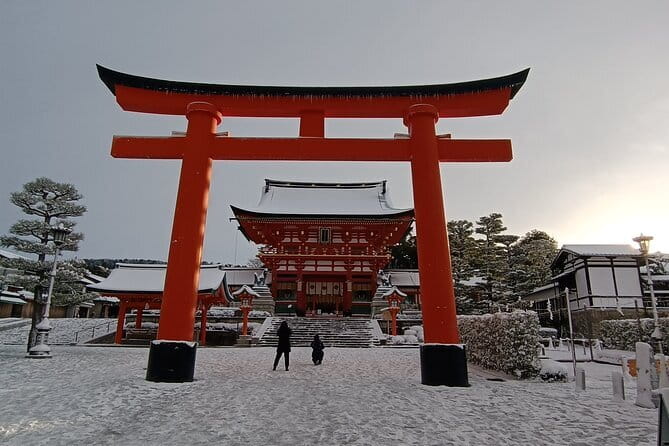
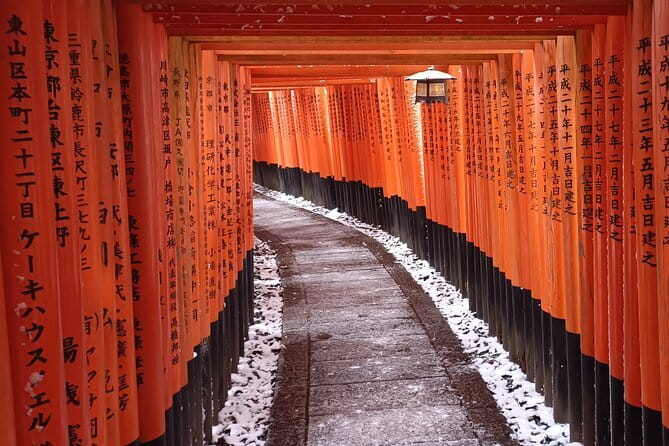
Fushimi Inari-taisha is the first major stop, with about 90 minutes set aside for the visit. Its rows of red torii gates are among Japan’s most recognized sights, but the shrine is more than a photo stop.
The guide explains Shinto, one of the key parts of Japanese culture. That background helps you read the site with more care. The gates, shrine buildings, and religious customs make more sense when you understand that Shinto is closely tied to sacred places, ritual, and respect for the natural world.
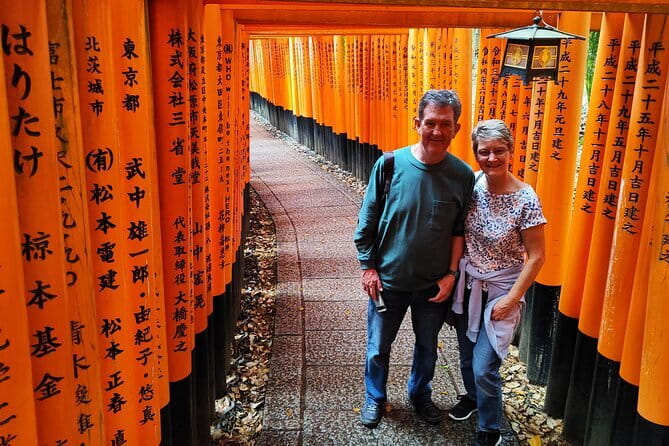
The main attraction is the long sequence of torii gates. They create a striking path up the wooded slopes, with the color and repeated shapes changing as you walk. You do not need to complete the entire mountain route to appreciate the shrine, and a 90-minute visit keeps this stop manageable within a half-day schedule.
The tradeoff is that Fushimi Inari can still be crowded, even early in the morning. The tour is built to reduce that problem, not erase it. You should also expect a fair amount of walking, and the route may feel brisk if you want to linger at every shrine feature.
I value having a guide here because it is easy to walk through the gates, take pictures, and miss the meaning of the place. The tour gives you a short cultural lesson while you are looking at the site itself, rather than saving all the explanation for a talk at the end.
Arashiyama Bamboo Forest for scenery and context
The second major stop is Arashiyama Bamboo Forest, with about 90 minutes to explore. This is one of Kyoto’s most photographed places, and the tall bamboo creates a very different mood from Fushimi Inari’s red gates.
The forest is beautiful, but its fame means the paths can be busy. Early timing helps, though you should not expect a private walk through the grove. The best approach is to enjoy the setting without treating the visit as a race for one perfect photograph.
The tour also uses this stop to discuss Japanese society. That is a useful choice. Arashiyama is not only about plants and scenery. It is a place where nature, tourism, local life, and public space meet, and a guide can help you notice how people use and value the area.
Ninety minutes gives you time to walk through the bamboo area and take in the surroundings. It does not provide much spare time for a long meal, extensive shopping, or a broad visit around every part of Arashiyama. If you want a slower day in this district, you may prefer to return separately.
The transport between Fushimi Inari and Arashiyama is one reason this tour can be worth the price. You do not have to work out the best connection while watching the clock. The public-transport cost is paid separately, but the guide handles the practical rhythm of moving between Kyoto’s far-flung sights.
A completely different kind of day out:
- Kyoto: Tea Ceremony in a Traditional Tea House in Kiyomizu
★ 4.9 · 3,519 reviews - Kyoto: Gion Make Your Own Chopsticks with Engraving Option
★ 5.0 · 3,465 reviews - Kyoto Nara Day Trip │ Kiyomizu-dera Temple + Fushimi Inari-taisha Shrine + Nara Park (Departing from Osaka/Kyoto)
★ 4.7 · 3,408 reviews - Kyoto Geisha Walking Tour: Gion District & Hidden Gems
★ 4.7 · 3,273 reviews
Kinkakuji, Kyoto’s Golden Pavilion
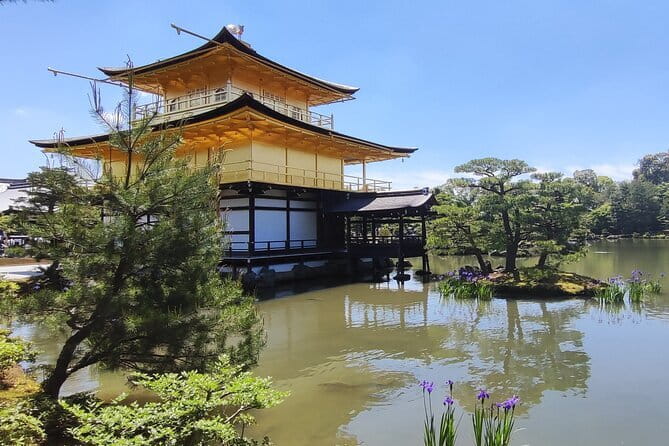
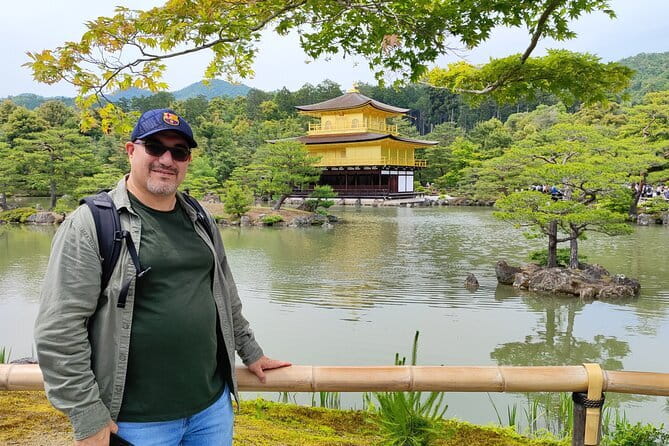
Kinkakuji is the final major sight, with about 90 minutes scheduled for the temple. The tour description calls it the second most visited tourist spot in Japan, and the Golden Pavilion is certainly one of Kyoto’s signature views.
The temple’s gold-covered exterior reflected over the pond makes a powerful first impression. The grounds are designed for a set viewing route, so this is not a place where you freely wander into every building. You follow the visitor path, pause at the main viewpoints, and continue through the grounds.
The guide explains Buddhism in Japan and the temple’s history. That gives the stop more substance than a quick photograph. You learn why the temple matters while seeing the architecture and setting that draw people there.
Kinkakuji is the only stop with a separate admission fee. The entrance cost is ¥500 per person, not included in the tour price. Keep this amount ready so the visit stays smooth.
The 90-minute slot is generous enough for the main grounds and an explanation from the guide. Still, the temple can be busy, and the route is more controlled than at a shrine or forest. If your ideal visit means sitting quietly beside the pond for a long time, the group schedule may feel restrictive.
The guide and the small-group advantage
The guide can make or break a fast Kyoto tour. Here, Indra receives particularly strong praise for being friendly, informative, enthusiastic, and good at storytelling. Just as important, he is described as someone who knows how to plan the day and keep the schedule intact.
That practical skill is valuable. The tour covers three major areas, so a guide who watches the time prevents one stop from taking over the whole morning. Indra is also praised for answering questions and making adjustments when possible, which is easier with a group of no more than eight people.
A small group changes the feel of the morning. You can ask about Shinto, Buddhism, Japanese society, or the sights in front of you without trying to speak over a large crowd. The group size may also make meeting up at stations and gates less cumbersome.
The guide speaks English well, according to the tour information. Still, keep your expectations realistic. This is a five-hour highlights tour, not a private seminar on Kyoto. The value comes from clear explanations, route planning, and cultural context delivered while you visit the sites.
What the $94.71 price really covers
The advertised cost is $94.71 per person. For that price, you receive the guided experience and the route planning, with a local English-speaking guide leading a small group through three major sights.
You must add ¥1,300 per person for public transportation and ¥500 for Kinkakuji admission. Gratuity is also not included. That means the actual cost is higher than the headline figure, so you should budget for the two listed expenses before booking.
The price makes the most sense if you value time and organization. Doing the same route alone may cost less in guiding fees, but you must plan connections, monitor the clock, find each entrance, and research the cultural background in advance. The tour’s strongest value is not simply getting you to the sights. It is making a difficult half-day route manageable.
It is less appealing if you already know Kyoto well, prefer to explore at your own pace, or want to spend half a day in just one district. You are paying for structure. If structure is what you need, the cost is easier to justify.
Who should choose this Kyoto morning
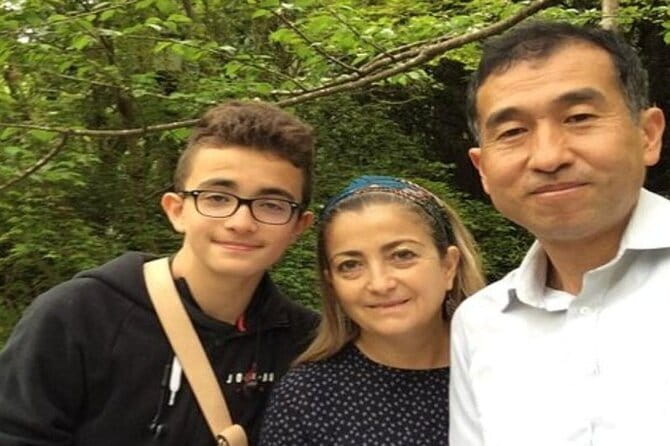
I would recommend this tour to first-time Kyoto visitors who want to see the city’s famous sights without giving up an entire day. It is also a good fit if you are staying near Kyoto Station or need to return there after the tour.
The tour suits people who enjoy walking and want explanations rather than a simple transfer between photo stops. The small group is helpful for solo visitors, couples, and families who prefer a more personal setting than a large bus tour.
It may also work well for visitors with a short Kyoto stay. You get a taste of three very different places: a Shinto shrine, a bamboo-filled natural setting, and a Buddhist temple. That range gives you a useful first look at Kyoto’s religious and cultural character.
I would hesitate to recommend it to anyone who wants a relaxed morning. The schedule is efficient, but it is not slow. You will be moving between districts, walking at each stop, and following the group’s timetable.
Practical details that affect your morning
The tour starts at 8:00 am and lasts about five hours. It ends back at the starting point, the Kyoto Station Building area, so you still have the afternoon for lunch, shopping, another temple, or a separate activity.
Confirmation is provided at booking, and the tour operates near public transportation. Most people can participate, but you should be comfortable walking for extended periods and keeping to a schedule.
The mobile ticket is convenient. Keep it easy to access at the meeting point, and check the booking details for the meeting-point picture before you leave.
Free cancellation is available if you cancel at least 24 hours before the local start time. Cancellations made less than 24 hours before departure are not refunded, and changes within that period are not accepted. The tour requires good weather, so a weather cancellation offers either another date or a full refund.
Is this early Kyoto tour worth booking?
Book it if you want Kyoto’s biggest sights handled in one efficient morning. The early start, small group, public-transport route, and strong guide performance make this a practical choice for first-time visitors. Indra’s careful timing and clear explanations add real value, especially at Fushimi Inari and Kinkakuji.
Skip it if you want long, unhurried visits or plan to focus closely on Arashiyama alone. Also remember to add ¥1,300 for transport, ¥500 for Kinkakuji, and gratuity to the $94.71 price.
For most visitors with limited time, I think the tour earns its place on the schedule. You see three major Kyoto sights, learn what makes them important, and still have an afternoon left to follow your own interests.
FAQ
Where does the tour begin?
It begins at Starbucks Coffee in Kyoto Tower Sando, inside the Kyoto Tower Building near Kyoto Station in Kyoto’s Shimogyo Ward.
What time does the tour start?
The tour starts at 8:00 am.
How long does the experience last?
It lasts approximately five hours.
Which major sights are included?
The tour visits Fushimi Inari-taisha Shrine, Arashiyama Bamboo Forest, and Kinkakuji Temple, also known as the Golden Pavilion.
Does the tour use public transportation?
Yes. The tour combines walking with public transportation between Kyoto’s highlights.
Is public transportation included in the price?
No. Public transportation costs ¥1,300 per person and is paid separately.
Is Kinkakuji admission included?
No. Kinkakuji admission costs ¥500 per person and is not included.
How large is the group?
The tour has a maximum of eight participants.
Is an English-speaking guide included?
Yes. An experienced local guide with a good command of English is included.
Where does the tour end?
The tour ends back at the meeting point near Kyoto Station.
Can I cancel for a full refund?
Yes, if you cancel at least 24 hours before the experience’s local start time. Poor weather cancellations offer a different date or a full refund.
Just added in Kyoto
- The “Golden Route” and Ancient Japan by DIAMIR Erlebnisreisen – 14-Day Tour★ 2.0 · 2 reviews
- Japan: Castles & Cuisine by G Adventures – 6-Day Kyoto to Osaka Tour★ 4.5 · 4 reviews
- Cycle Japan by Explore! – 13-Day Kyoto to Tokyo Tour★ 4.7 · 12 reviews
- Cycle Japan by Intrepid Travel – 11-Day Kyoto to Tokyo Tour★ 4.8 · 2 reviews
- Classic Japan by Intrepid Travel – 11-Day Kyoto to Tokyo Tour★ 4.4 · 14 reviews
- Ancient & Modern Japan 14-Day Tour by Exodus Adventure Travels★ 4.4 · 40 reviews
- 5 Day Cultural Adventure of Kyoto, Nara & Osaka by Tourist Journey★ 2.5 · 2 reviews
- 12 Days Kinosaki Onsen Escape: A Journey Through Japan’s Timeless Towns by UME Travel★ 4.8 · 5 reviews
Kyoto Tours, compared.
![[Kyoto & Nara Day Tour] Sagano Scenic Railway & Nara Park & Fushimi Inari Taisha Thousand Torii Gates & Togetsukyo Bridge & Bamboo Grove & Kimono Forest (Departing from Osaka)](https://media.japanvisits.com/wp-content/uploads/kyoto-nara-day-tour-sagano-scenic-railway-nara-park-fushimi-inari-taisha-thousand-torii-gates-togetsukyo-bridge-bamboo-grove-kimono-forest-departing-from-osaka-k110001-400x257.jpg)
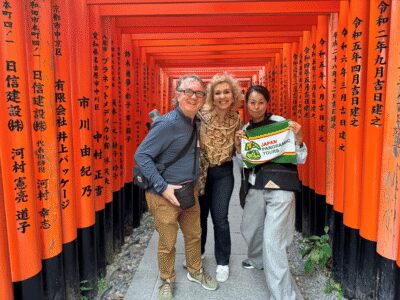
Fushimi Inari, Kinkakuji, Bamboo Grove 1 Day Bus Tour
Read our review →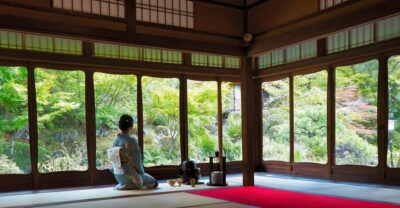
Tea Ceremony in a Traditional Tea House in Kiyomizu
Read our review →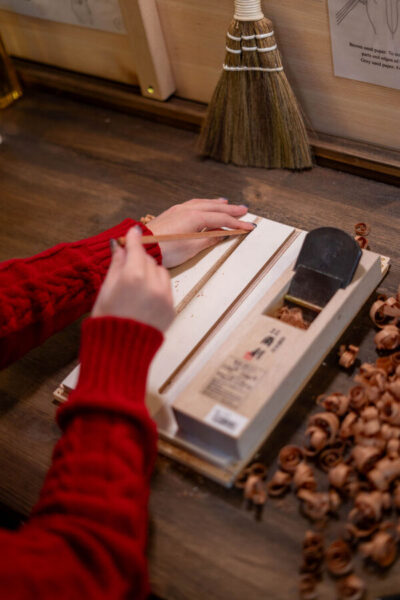
Gion Make Your Own Chopsticks with Engraving Option
Read our review →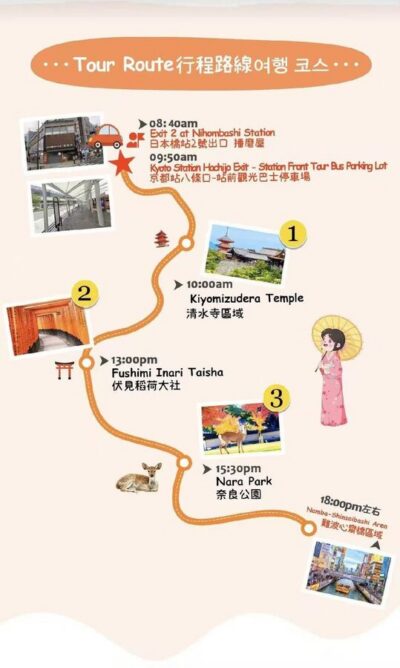
Kyoto Nara Day Trip │ Kiyomizu-dera Temple + Fushimi Inari-taisha Shrine + Nara Park (Departing from Osaka/Kyoto)
Read our review →
Kyoto Geisha Walking Tour: Gion District & Hidden Gems
Read our review →