
Reviewed · CASTLES AND HISTORIC SITES
Full Tokyo: Meiji Shrine, Imperial Palace, Asakusa & Skytree
Tokyo in one long, useful sweep. This seven-hour tour links the city’s big sights by train, from the Hachiko Statue and Shibuya Crossing to Meiji Shrine, Asakusa, and Tokyo Skytree. I like the smart route through central Tokyo, especially with train tickets handled for you. I also like the mix of quiet shrine grounds, imperial architecture, old Buddhist tradition, pop culture, and high-rise views.
The main trade-off is pace. You cover a lot of ground, and some stops may feel more like photo calls than full visits. The Imperial Palace portion is short, and lunch and free time in Asakusa can feel rushed if the group needs to stay together. At $69 per person before any selected extras, this is best for a first day in Tokyo when you want orientation more than deep exploration.
In This Review
- Key points to know before booking
- Starting at Hachiko and crossing Shibuya
- Meiji Shrine, Tokyo’s quiet urban retreat
- Seeing the Imperial Palace from the outside
- A quick look at Akihabara’s electric side
- Two hours in Asakusa and Senso-ji
- Riding Tokyo’s trains with a guide
- Tokyo Skytree and the final view
- What the $69 price really buys
- Who should book this Tokyo day tour?
- Should you book it?
- FAQ
- Where does the tour meet?
- How long does the tour last?
- Which languages are offered?
- Are train tickets included?
- Is lunch included?
- Is Tokyo Skytree admission included?
- Where does the tour end?
- Is the tour suitable for wheelchair users?
Key points to know before booking
- Start beside the Hachiko Statue: Meet your English or Spanish-speaking guide at Hachiko Square in Shibuya, a handy place to begin a first look at Tokyo.
- Seven hours on foot and by train: Transfers are part of the experience, with train tickets included between the main stops.
- Meiji Shrine gets the fullest visit: The guided stop lasts about 70 minutes, giving you time for the forest walk and Shinto setting.
- Asakusa is your longest stop: Plan on roughly two hours for Senso-ji, lunch if selected, and time around the old temple district.
- Skytree admission depends on your package: You enter the observation deck only if you purchased that option in advance.
- The route is not wheelchair suitable: Comfortable shoes, water, sunscreen, a hat, and a camera are sensible choices.
Starting at Hachiko and crossing Shibuya
Your meeting point is next to the Hachiko Statue at Hachiko Square. This is one of Tokyo’s easiest landmarks to find, but the area can be crowded, so arriving with a little extra time is wise. Hachiko’s story, a loyal dog remembered in bronze, gives the square a human touch before you face one of Tokyo’s most famous public spaces.
The Shibuya portion focuses on the famous crossing and the surrounding energy. You get a view of the intersection, one of the busiest pedestrian crossings in the world, and a chance to take photographs before moving on. The schedule allows a transfer of about 40 minutes at the start, followed by a scenic drive or pass through Shibuya.
Here is the important distinction: this is not a long Shibuya neighborhood walk. One report described the stop as a very quick drive-by rather than the 30 minutes suggested by the schedule. If you want time for department stores, street photography, or the surrounding lanes, return to Shibuya on your own.
Still, the stop works well as an introduction. You see how Tokyo can shift from orderly to wonderfully chaotic in a few seconds, then return to calm as soon as the signal changes.
More Castles and Historic Sites in Tokyo
- Tokyo: Imperial Palace and Shogun Historical Walking Tour
★ 5.0 · 2,251 reviews - Tokyo Castle & Imperial PalaceーShogun Walking Tour
★ 4.7 · 1,068 reviews - Tokyo: Samurai Ninja Museum Guided tour and Experience
★ 4.6 · 1,010 reviews
Meiji Shrine, Tokyo’s quiet urban retreat
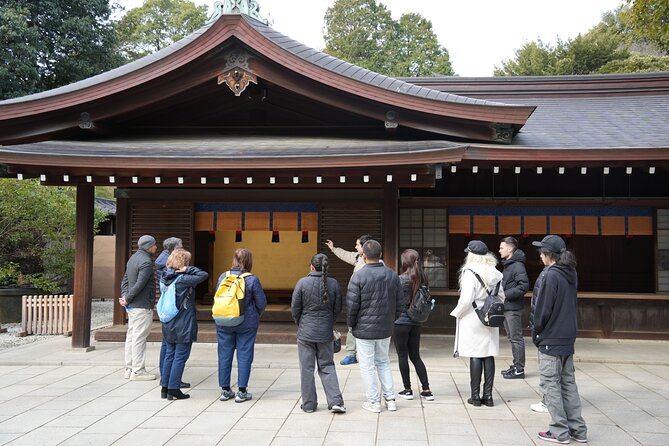
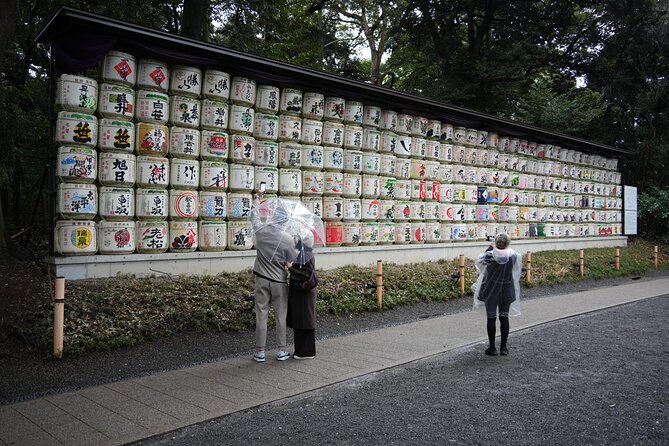
The tour gives Meiji Shrine about 70 minutes, making it one of the more substantial stops. That time matters. You can walk beneath the tall trees, pass through the shrine approach, and learn how Shinto worship fits into Japanese life without being hurried through in a few photographs.
The contrast with Shibuya is the point. Within a short train journey, traffic noise gives way to a wooded religious setting. The shrine feels spacious and restrained, with a calm that comes from its surroundings as much as its buildings.
Your guide can explain the basic customs as you go. Watch how people approach the shrine, make an offering, and show respect. You do not need a long lecture to appreciate the place, but a few clear explanations turn a pretty walk into a useful cultural visit.
An early start can improve this part of the day. One 8 a.m. departure reached Meiji Shrine before the crowds grew, and that made the visit especially pleasant. Starting early also gives you a better chance of enjoying the paths at a slower pace, although the entire day will still require steady walking.
Seeing the Imperial Palace from the outside
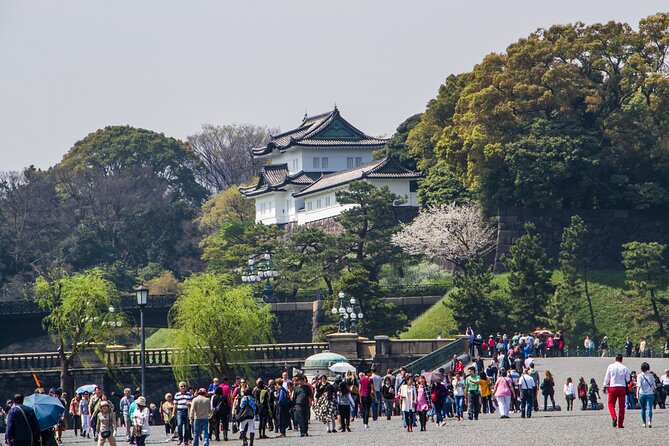
After Meiji Shrine, you take another train journey of about 45 minutes toward the Imperial Palace. The scheduled guided visit is listed at around 30 minutes, and the focus is on the exterior and nearby surroundings rather than entry into the palace buildings.
This is a photo stop with some context, not a palace tour. You can photograph the impressive outer walls and enjoy the open space around the palace grounds. The location offers a useful reminder that modern Tokyo grew around an imperial center, even if you do not enter the private sections.
Keep your expectations in check. A report from the tour described the actual visit as closer to 20 minutes, so you may not get the full hour some descriptions might suggest. If the palace is high on your personal list, set aside separate time to explore more of the grounds.
That short stop is not necessarily a flaw for someone trying to see Tokyo in one day. The palace exterior is easy to combine with other sights, and the tour avoids spending too much of your day in one area. But you should not book this expecting an extensive palace history lesson.
A quick look at Akihabara’s electric side
The next transfer takes about 35 minutes, and the route passes through Akihabara. This district is known for technology, anime, manga, games, and colorful pop culture shops. Here, the tour offers a scenic drive or pass through rather than a long stop.
That makes Akihabara more of a sampler. You get a sense of its bright, high-energy character, but you will not have time to browse electronics, visit specialty stores, or study the district at street level. If those interests matter to you, plan a separate visit.
Even a short look helps round out the day. Meiji Shrine shows a quiet spiritual side of Tokyo, while Akihabara points toward the city’s modern entertainment culture. The contrast is one of the route’s best ideas, even though the time in Akihabara is limited.
More Temples and Shrines in Tokyo
- Tokyo: Meiji Shrine, Asakusa, Skytree Bus Tour and Cruise
★ 4.7 · 1,986 reviews - Tokyo: Asakusa Walking Tour with Sensoji Temple Visit
★ 4.8 · 1,583 reviews - Nikko: Kegon Falls, Lake Chuzenji & Toshogu Temple
★ 4.6 · 1,577 reviews - Tokyo: Nikko Toshogu Shrine and Kegon Waterfall Tour
★ 4.5 · 1,266 reviews
Two hours in Asakusa and Senso-ji
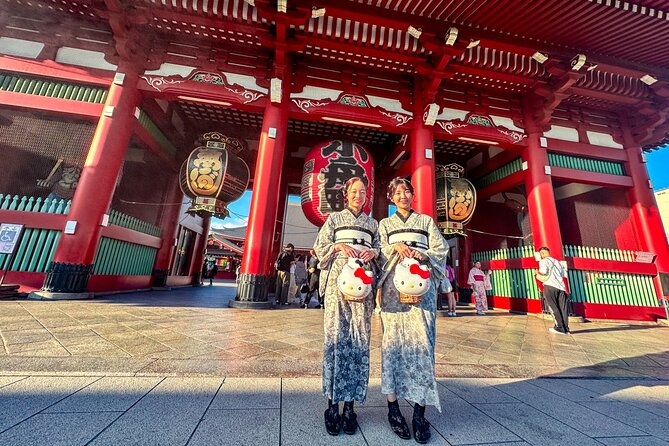
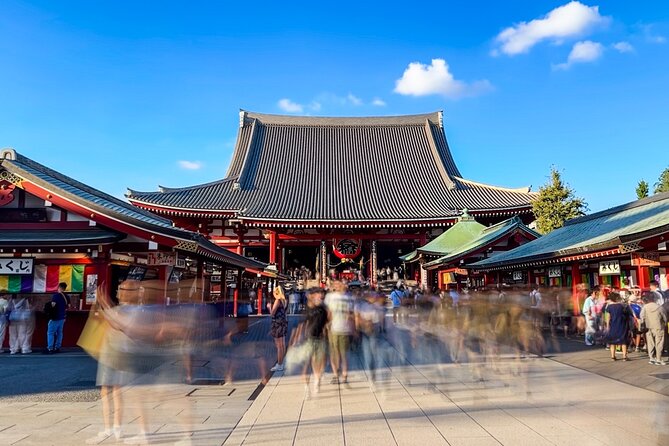
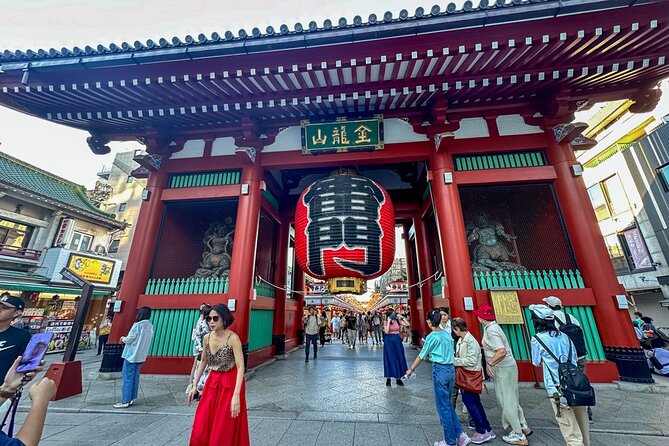
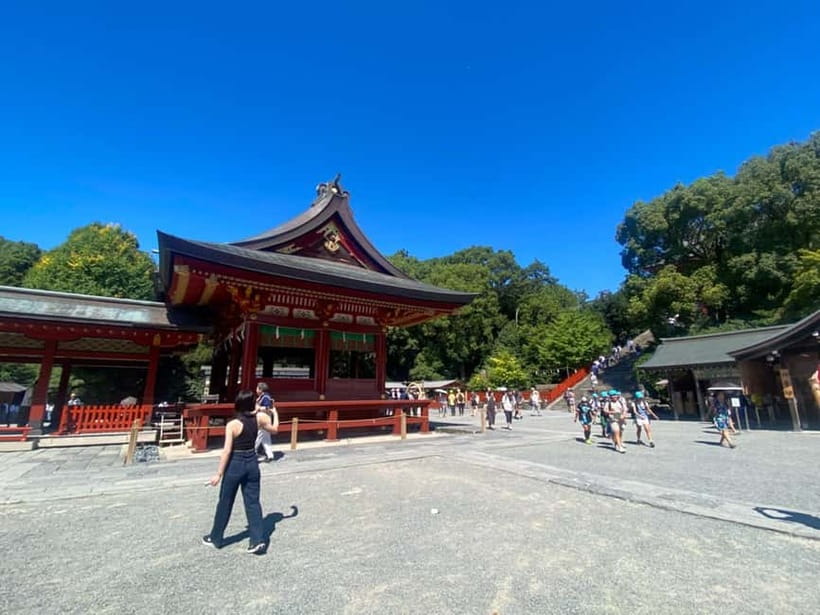
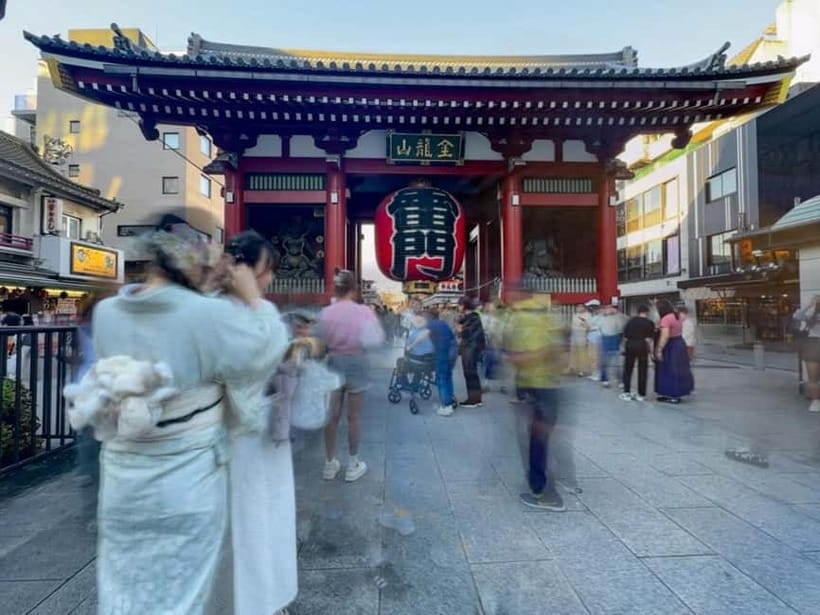
Asakusa is where the tour slows down. You have about two hours for lunch, Senso-ji Temple, and free time. This is the old Tokyo stop, and Senso-ji is the city’s oldest and best-known Buddhist temple.
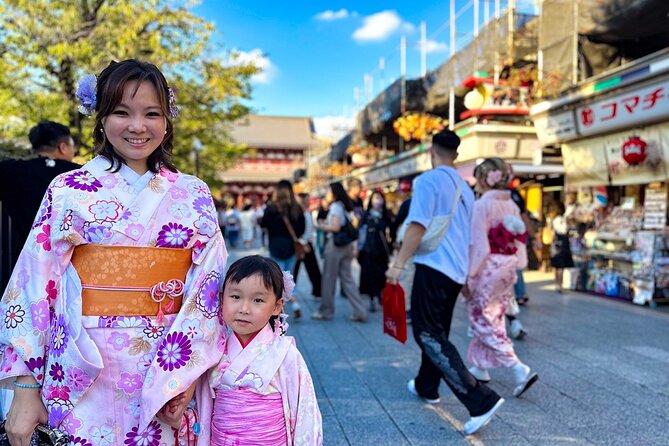
The approach to Senso-ji can be lively, with shops and food stands leading toward the temple. Take time to look beyond the main gate and the large central buildings. The details, incense, worshippers, and steady flow of people make this more than a quick landmark photograph.
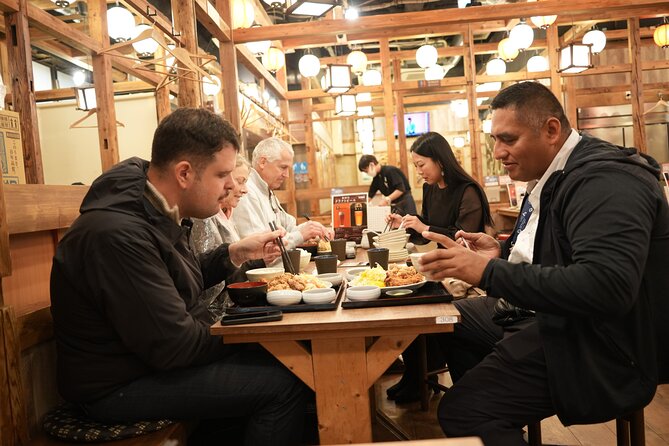
The schedule gives you some freedom here, but the exact balance depends on your selected lunch option and the group’s pace. The included meal, if you choose that package, is served at a local restaurant. One person described the meal as delicious and generous, while another found lunch acceptable but hurried because the group needed to reunite with people who had more free time.
That is useful advice: lunch can save you the work of finding a restaurant, but it may reduce your time around Senso-ji. If the temple matters more to you than a scheduled meal, check the available package and be ready to use your free time carefully.
The tour’s treatment of Senso-ji also appears less detailed than Meiji Shrine. One person wanted more explanation of the temple and a clearer guide to what they were seeing. I would listen closely at the first briefing, then use your free time to inspect the temple grounds at your own pace.
Asakusa is also a good place to notice the difference between Shinto and Buddhism. Meiji Shrine is a Shinto sanctuary in a forested setting. Senso-ji is a Buddhist temple in a dense historic district. Seeing both in one day gives you a useful framework for understanding two major parts of Japanese religious life.
Riding Tokyo’s trains with a guide
The train rides are not just a way to fill gaps between sights. They are a practical lesson in moving around Tokyo. Transfers are included, and the guide manages the tickets between stops, which can remove a layer of stress on a first visit.
The listed travel times include about 40 minutes at the start, 45 minutes between Meiji Shrine and the palace, 35 minutes toward Akihabara and Asakusa, and another 30 minutes before the final stop. That is a substantial part of a seven-hour day.
You should expect station walking, changes in pace, and periods standing or moving with the group. Comfortable shoes are essential. Bring water, sunscreen, and a hat, especially in warm weather. There is no promise of a seat on every train, and the route is not suitable for wheelchair users.
A strong guide can make these transfers worthwhile. Jorg and Melody were praised for being welcoming, and Jorg also gave useful advice about train travel in Japan. Oliver received high marks for handling a New Year’s Eve visit, when the group saw local shrine and temple customs in action. Other positive comments singled out Erik, George, and Burt, with Burt praised for making each stop feel important and easy to understand.
Guide quality will naturally vary by departure. The official languages are English and Spanish, and the guide is expected to explain the sights while keeping the group together. The best experience will depend heavily on how much cultural detail your guide adds during the rides and at each stop.
Tokyo Skytree and the final view
The day ends at Tokyo Skytree, unless you choose the drop-off at Asakusa. If you purchased the Skytree option, you can go up to the observation deck for wide views over Tokyo. This is the grand visual finish: after seeing separate districts from street level, you look out over the full city at once.
The view is weather-dependent, so a clear day matters. Even without perfect conditions, the height gives you a striking sense of Tokyo’s size and density. The observation deck is a strong reason to select the add-on if this is your first visit or if you enjoy city views.
Pay close attention to the admission rule. You can enter Skytree only if you bought the ticket option in advance. The tour ends at Skytree, and you should not assume admission will be available at the end of the day. If you do not select that option, your final drop-off can be Tokyo Skytree or Asakusa, but you will not go inside the tower.
That ending also affects your plans. Skytree is not your return point unless you choose it, so check where you want to finish before booking. If you still have evening plans in Asakusa, ending there may be more convenient. If you want the city panorama, select Skytree and allow time afterward to continue from that area.
What the $69 price really buys
At $69 per person, the base price is reasonable for a seven-hour introduction if you value structure and help with transport. Train tickets between the stops are included, and you receive a bilingual guide through several parts of Tokyo that are spread across the city.
The value is weaker if you mainly want long visits at a few sights. Shibuya and Akihabara are brief, the Imperial Palace stop may be shorter than expected, and the day includes several train rides. You are paying for a guided route, orientation, and logistics rather than museum-style depth.
Lunch and Skytree admission depend on the option you choose. Compare the final price before booking. Lunch may be convenient and, in at least one case, very well received, but it can also compress your Asakusa time. Skytree can provide the day’s best view, but it is an extra cost unless your package includes it.
The free-cancellation policy gives you some protection: you can cancel up to 24 hours before departure for a full refund. You can also reserve now and pay later. Those terms help if your Tokyo plans are still changing, but they do not change the basic question of value. Decide if you want breadth or depth.
Who should book this Tokyo day tour?
I would recommend it to a first-time visitor with one free day who wants to see several famous areas without working out Tokyo’s train system alone. It also suits you if you prefer a guide who can explain customs, manage transfers, and keep a mixed-language group moving.
It works particularly well for people who want both old and new Tokyo. In one day, you see the Hachiko Statue, Shibuya Crossing, a Shinto shrine, the Imperial Palace exterior, Akihabara, a Buddhist temple, and a modern observation tower.
I would be cautious if you walk slowly, use a wheelchair, dislike fixed schedules, or want extended time at Senso-ji and the Imperial Palace. The route covers a lot, but it does not linger everywhere. You may prefer separate visits if your priorities are shopping in Akihabara, exploring Shibuya, or studying temple architecture.
Should you book it?
Book this tour if you want a well-organized first look at Tokyo and accept that some stops are brief. Choose the lunch option for convenience, and choose Skytree if the panorama is a priority. Start early if possible, wear comfortable shoes, and treat Asakusa as your best chance for unhurried personal exploration.
Skip it if $69 feels high for a half-day of guided sightseeing plus free time, or if you expect a detailed lecture at every landmark. The strongest parts are the route, the train help, Meiji Shrine, and the possible Skytree finish. The weak points are the short Shibuya, Imperial Palace, and Akihabara visits. Know that balance before you buy, and this can be a useful Tokyo orientation rather than an all-purpose city tour.
FAQ
Where does the tour meet?
Meet your guide next to the Hachiko Statue at Hachiko Square in Shibuya.
How long does the tour last?
The experience lasts seven hours. Starting times vary, so check availability when booking.
Which languages are offered?
The live guide service is offered in English and Spanish.
Are train tickets included?
Yes. Train tickets for transfers between the itinerary points are included.
Is lunch included?
Lunch is included only if you select the lunch option. Drinks are not included.
Is Tokyo Skytree admission included?
Admission is included only if you select the Skytree option. You must have purchased that option in advance to enter the observation deck.
Where does the tour end?
The tour offers drop-off at Tokyo Skytree or Asakusa. The itinerary ends at Tokyo Skytree, but entry is available only with a previously purchased Skytree ticket.
Is the tour suitable for wheelchair users?
No. The experience is not suitable for wheelchair users. Comfortable shoes are recommended because the day includes walking and train transfers.
Just added in Tokyo
- A One-of-a-Kind Sushi Experience in a Special Place of Japan★ 5.0 · 15 reviews
- Tokyo Cute Bento Cooking Class – Make a Kawaii Character Lunchbox★ 5.0 · 126 reviews
- Japanese Home Cooking Class & Walk in Todoroki Temple Tokyo★ 5.0 · 88 reviews
- Japan Tokyo Tower Observatory Deck E-Ticket★ 4.0 · 34 reviews
- Catch a Baseball Game in Tokyo with a Local – Tickets Included★ 5.0 · 24 reviews
- JDM Experience with Fast&Furious RX-7 (English speaking Driver)★ 5.0 · 57 reviews
- Tokyo Private Day Tour by Car with English speaking Driver Guide★ 4.0 · 29 reviews
- Japan Classic 10 Day – One Life Adventures★ 5.0 · 129 reviews
Castles and Historic Sites, compared.
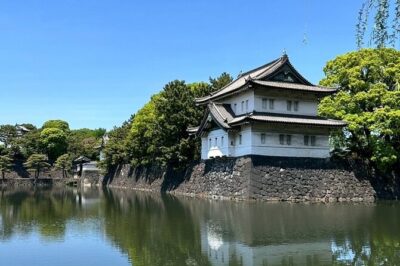
Imperial Palace and Shogun Historical Walking Tour
Read our review →
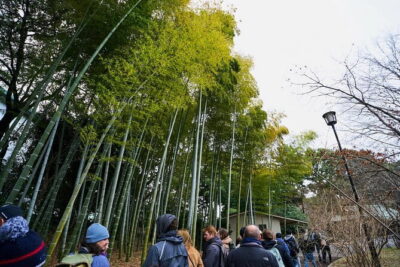
Tokyo Castle & Imperial PalaceーShogun Walking Tour
Read our review →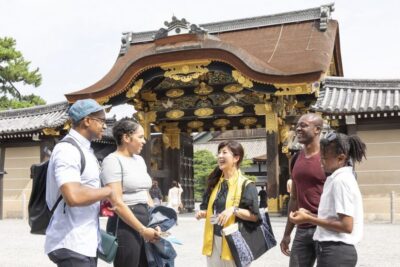
Nijo-jo Castle and Ninomaru Palace Guided Tour
Read our review →
Samurai Ninja Museum Guided tour and Experience
Read our review →Browse the lists this tour appears in