
Reviewed · MARKETS AND FOOD HALLS
Half-Day Local Tokyo Tour in Adachi Market and Shibamata
Tokyo still has quiet corners. This 4.5-hour outing pairs Adachi Fish Market, Tokyo’s only market devoted to marine products, with the old-fashioned streets and temples of Shibamata. I like the market’s local feel and the small group size, capped at eight people. I also like that the one-way train fare to Shibamata is included. The main drawback is an early 8:00 a.m. start, and food costs extra.
This is a good choice if you have already seen Tokyo’s major sights or want a less polished side of the city. Guides such as Kaori, Mutsuko, Megumi, Masayo, Yumi, Mana, Yoshimi, and Fumiko have been praised for clear explanations, friendly manner, and help with local customs. The tour is not a private car experience, but walking and rail travel are part of its appeal.
In This Review
- Key points at a glance
- Why Adachi Fish Market is the right first stop
- The small-group advantage in a working market
- Taking the train from Senju Ohashi to Shibamata
- Meeting Futen No Tora at Shibamata Station
- Walking the 200 meters of Taishakuten-Sando
- Seeing the carved walls of Shibamata Taishakuten
- Yamamototei and the meeting of Japanese and Western styles
- What the guide can add to the morning
- Who should book this Tokyo tour?
- Practical details before you reserve
- Should you book it?
- FAQ
- Where does the tour start?
- Where does the tour end?
- How long does the experience last?
- Is train fare included?
- Are food and drinks included?
- How many people can join the tour?
Key points at a glance
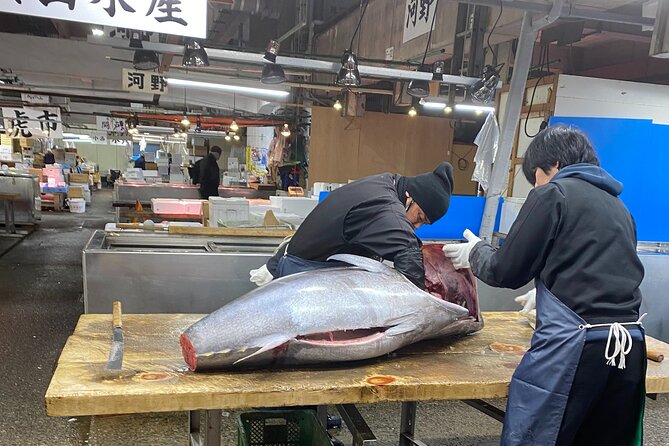
- Adachi Fish Market before the crowds: See fresh sashimi, sushi, tuna, and other seafood in a market used for marine products rather than a sightseeing show.
- A maximum of eight people: The small group makes it easier to ask questions and stay together on narrow streets and inside historic sites.
- Shibamata’s 200-meter old-style street: Browse Japanese sweets shops, buckwheat noodle shops, and other traditional storefronts between the station and temple.
- Taishakuten’s carved temple panels: The main hall is surrounded by precise wood carvings connected with the Lotus Sutra.
- Yamamototei’s Japanese-Western design: See a striking building with Western touches, including the distinctive Nagayamon gate.
- A useful half-day format: The tour ends at Shibamata Station, leaving your afternoon open for more Tokyo sightseeing.
Why Adachi Fish Market is the right first stop
The tour begins at 8:00 a.m. near Senju Ohashi Station in Adachi City. That early hour is practical here. A fish market is best experienced while the day’s trade is active, and you avoid the heavy tourist traffic associated with Tokyo’s better-known markets.
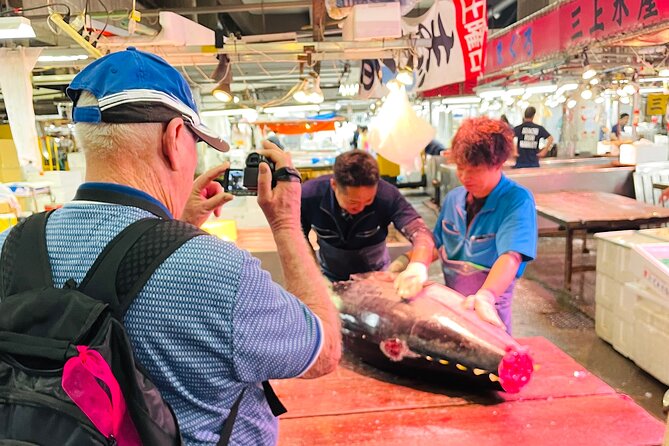
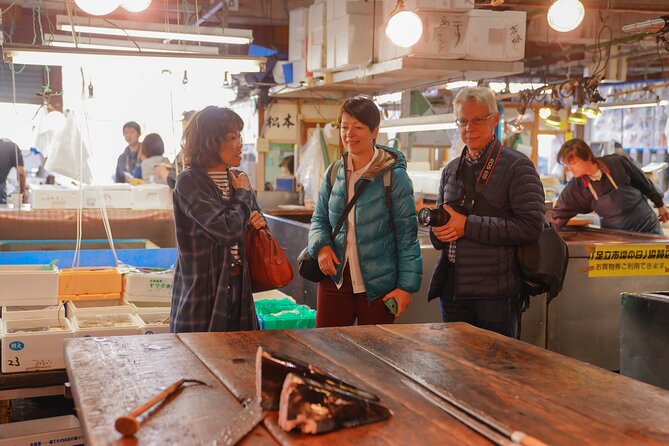
Adachi Fish Market is described as the only specialized marine products market in Tokyo. That gives it a different character from a general food hall or a market designed mainly for sightseeing. You can expect stalls with fresh seafood, including sashimi and sushi, along with the working atmosphere of a place focused on fish.
One especially useful detail comes from a family group that saw enormous tuna and a wide range of seafood during the visit. You may not see the exact same display on your morning, since market stock changes, but the comment gives you a sense of the scale and variety that can make this stop memorable.
Your guide adds the context that is difficult to get from walking through the aisles alone. The guides who have led this experience, including Mana, Megumi, Masayo, and Fumiko, have been praised for explaining local customs and answering questions. That matters in a market, where you may otherwise notice only the largest fish or the busiest stall.
Food and drinks are not included. This is worth noting before you arrive. If you want to buy seafood or have a snack, you should budget separately, and the tour price does not promise a meal or tasting.
More Markets and Food Halls in Tokyo
- Tokyo Tsukiji Fish Market Food and Culture Walking Tour
★ 5.0 · 3,184 reviews - Tokyo: Tsukiji Fish Market Food and Walking tour
★ 5.0 · 1,724 reviews - Senkyaku Banrai Toyosu Manyo Club Onsen Experience in Tokyo
★ 4.7 · 1,690 reviews
The small-group advantage in a working market
The group limit is eight people, with at least two people required per booking. This is a sensible format for a market visit. A huge group would be awkward around stalls and would make it harder to hear explanations.
I like the chance to ask direct questions about what you are seeing. The comments about Kaori’s clear language and informative presentations are particularly useful for visitors who want more than a quick walk past the seafood counters. A good guide can explain what makes a market item notable, how the space fits into daily life, and what local etiquette to follow.
Still, keep your expectations realistic. This is a short guided visit of about one hour, not a full culinary tour. The market is one part of a broader morning, and the tour does not include private transportation, hotel pickup, or drop-off.
Taking the train from Senju Ohashi to Shibamata
After the market, the experience continues by rail. The one-way train fare from Senju Ohashi Station to Shibamata Station is included, which removes one small but useful task from your morning. You do not need to arrange a private vehicle unless you pay an additional fee for taxi, private car, or bus transport.
The train connection is part of the local feel. Rather than moving between attractions in a sightseeing coach, you shift from one Tokyo district to another using ordinary public transportation. That helps you see the tour as a connected city experience instead of two unrelated stops.
The listed price is $91.96 per person. That is not a bargain basement price for a half-day outing, especially since meals are extra. The value comes from the guide, the very small group, the market access and explanation, the temple visit, the Yamamototei stop, and the included rail fare.
For a solo visitor, a couple, or a family that wants a structured morning, the cost may be reasonable. If you are comfortable navigating Tokyo independently and only want to see Shibamata’s main street, you could spend less on your own. You would, however, give up the guide’s explanations and the organized market visit.
Meeting Futen No Tora at Shibamata Station
The Shibamata portion begins at the station, where you pass the bronze statue of Futen No Tora. The character is known in Japan as Mr. Tora from the Otoko wa Tsuraiyo film series, and Shibamata is presented as his fictional home.
The stop takes only about five minutes, but it gives the neighborhood an immediate sense of identity. This is not simply an old street preserved for visitors. It is also tied to a much-loved fictional character and to a familiar image of nostalgic Tokyo.
If you know nothing about the film series, the statue may not carry the same emotional weight. Your guide can help explain why it matters, and the stop works well as a quick introduction before the walk toward Taishakuten.
A completely different kind of day out:
- Tokyo Disney Resort – Tokyo Disneyland & Tokyo DisneySea Park Tickets
★ 4.8 · 99,488 reviews - SHIBUYA SKY Ticket
★ 4.7 · 46,509 reviews - JR Whole Japan Rail Pass
★ 4.8 · 29,150 reviews - Mt Fuji and Hakone 1-Day Bus Tour Return by Bullet Train
★ 5.0 · 26,383 reviews
Walking the 200 meters of Taishakuten-Sando
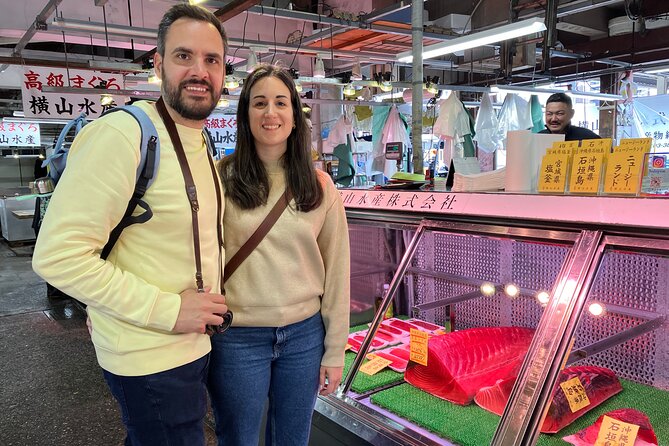
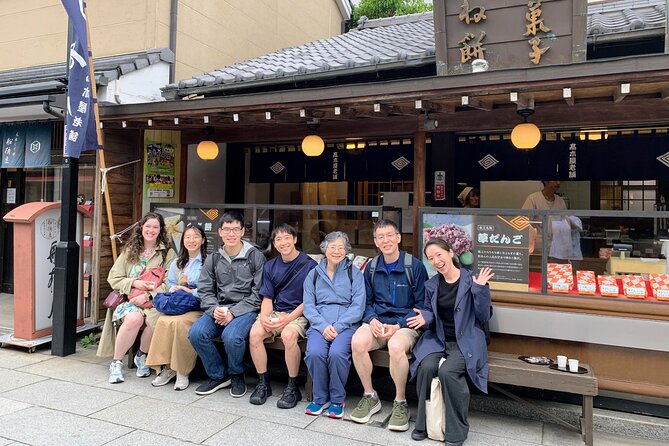
From Shibamata Station, you follow Taishakuten-Sando for roughly 200 meters. This is one of the most enjoyable parts of the tour because the route has a clear sense of place without requiring a long walk.
The street is lined with old-style shops, including Japanese sweets stores and buckwheat noodle shops. The route is short, but it gives you a look at the kind of traditional commercial street that can be easy to miss in central Tokyo.
I would not treat this as a major shopping excursion. The scheduled walk is about 20 minutes, so there is limited time for browsing or eating. Instead, pay attention to the storefronts, food traditions, and the change in mood from the fish market.
This is also where the tour’s two halves begin to make sense together. Adachi offers working seafood commerce in the morning. Shibamata offers a slower, nostalgic town center shaped by shops, religion, and local culture.
Seeing the carved walls of Shibamata Taishakuten
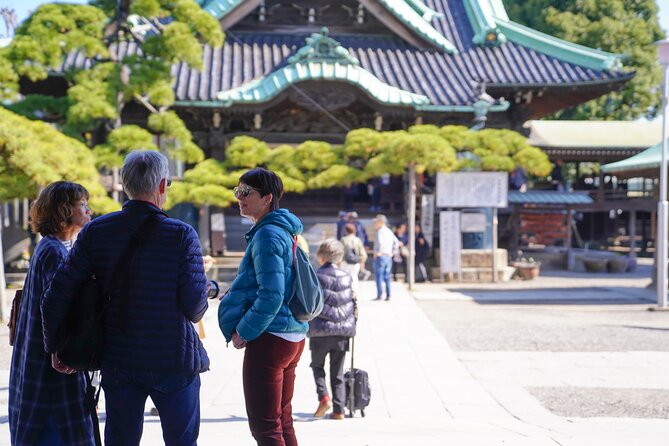
The visit to Shibamata Taishakuten, also called Taishakuten Daikyoji Temple, lasts about 40 minutes. The main attraction is the wood carving around the main hall. The panels depict stories connected with the Lotus Sutra and are installed closely around the building.
The carvings are described as intricate and precise. You will want to give yourself time to look closely rather than treating the temple as a quick photo stop. Details in religious architecture are often easy to miss when you are on your own, so this is another place where the guide’s explanation adds value.
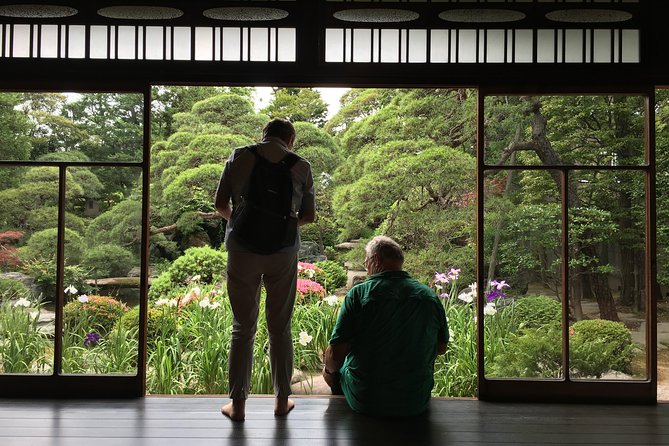
The temple also has a garden associated with ikebana, the Japanese art of flower arranging. The combination of carved wood and arranged natural elements gives the visit a different rhythm from the market and shopping street.
The temple entrance itself is listed as free within the stop details. The tour includes local taxes and a professional guide, but food, drinks, and hotel transfers are not included. The supplied information separately identifies admission to Yamamototei as included, so you should not assume every possible temple-related activity carries no additional charge.
Yamamototei and the meeting of Japanese and Western styles
The final scheduled stop is Yamamototei, with about 30 minutes allotted. This two-story building combines Japanese and Western architectural elements in a carefully composed design.
The Nagayamon gate is singled out as especially unusual because of its Western-style features. That makes Yamamototei a useful counterpoint to Taishakuten. You see not only traditional religious architecture, but also a building that shows how Japanese and Western design were combined in a more personal and decorative setting.
The stop is included in the tour price. It also brings the outing to a calm finish after the market and the station-to-temple walk. Since the experience ends at Shibamata Station, you can continue exploring on your own or use the station for your next destination.
The timing is fairly tight. The listed stops total around three hours and five minutes, leaving the rest of the 4.5-hour schedule for walking, transfers, and movement between sites. You should expect an organized pace rather than a morning with unlimited time at each place.
What the guide can add to the morning
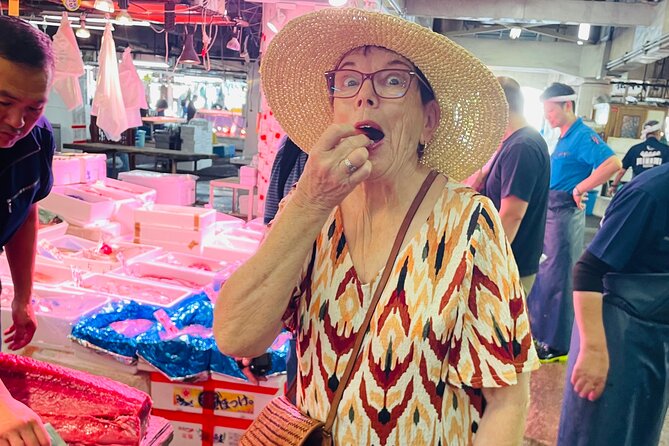
The strongest theme in the feedback is the quality of the guides. Kaori has been praised for clear, easy-to-understand explanations and a personable approach. Mutsuko was described as friendly and full of local charm, especially during the market visit.
Megumi helped one family of six make sense of the market and surrounding area. Masayo was noted for explaining local culture and customs, while Yumi was praised for making the walk informative and enjoyable. Mana led a visit that covered the seafood market, the train journey, and Taishakuten.
These details suggest that the guide is not just there to lead the way. The guide is central to the value of the experience. You are paying for interpretation, local orientation, and a smoother morning in places that may not be obvious to first-time visitors.
Guide assignments can change, so you should not book on the assumption that you will receive one particular person. Still, the repeated praise for different guides points to a consistent strength in the experience: friendly, attentive instruction rather than a rigid script.
Who should book this Tokyo tour?
I would recommend this tour to you if you fit one or more of these descriptions:
- You have already visited Tokyo’s major central districts.
- You want a morning focused on local food culture and older neighborhoods.
- You prefer a guide who can explain customs and architecture.
- You like small groups rather than large bus tours.
- You are comfortable starting early and using public transportation.
- You want to see a different part of Tokyo without planning every train and stop yourself.
Families can also find good value here. A group of six enjoyed the outing, and the eight-person limit keeps the experience manageable. Children who are interested in fish, trains, statues, or temple carvings may have plenty to look at, though the tour does involve walking and an early start.
I would think twice if your main goal is to eat a full breakfast at a market. Food is not included, and the market visit lasts about an hour. I would also reconsider if you want a flexible private itinerary, since the tour follows a set route and requires a minimum of two people per booking.
The attraction is not spectacle. It is the contrast between a real seafood market and a nostalgic town with a famous temple. That makes the outing especially useful for visitors who want Tokyo to feel less like a checklist of famous places.
Practical details before you reserve
The meeting point is Senju Ohashi Station in Adachi City, with an 8:00 a.m. start. The tour ends at Shibamata Station, not back at your hotel, so plan the rest of your day from that side of Tokyo.
The experience lasts approximately 4 hours and 30 minutes. It is limited to eight people, and most people can participate. Confirmation is received within 48 hours of booking, subject to availability.
The price includes local taxes, a professional guide, the small-group walking tour, and the one-way train fare from Senju Ohashi to Shibamata. It does not include food, drinks, hotel pickup, hotel drop-off, or private transportation.
Free cancellation is available up to 24 hours before the start time for a full refund. Cancellations or changes made less than 24 hours before the start time are not accepted for a refund, and the cut-off uses Tokyo local time.
Should you book it?
Book this tour if you want a guided look at lesser-seen Tokyo, especially if fresh seafood, traditional streets, temple details, and local stories appeal to you. The small group and included rail fare make the morning easy to manage, while the guides add the cultural context that independent visitors may miss.
Skip it if you want a food tasting tour, a private vehicle, or a relaxed late start. For everyone else, the combination of Adachi Fish Market and Shibamata offers a well-balanced half-day, with enough structure to be useful and enough local character to feel distinct from central Tokyo.
FAQ
Where does the tour start?
The tour starts at Senju Ohashi Station in Adachi City, Tokyo, at 8:00 a.m.
Where does the tour end?
The tour ends at Shibamata Station in Katsushika City, Tokyo.
How long does the experience last?
The tour lasts approximately 4 hours and 30 minutes.
Is train fare included?
Yes. The one-way train fare from Senju Ohashi Station to Shibamata Station is included.
Are food and drinks included?
No. Food and drinks are not included in the tour price.
How many people can join the tour?
The tour requires at least two people per booking and allows a maximum of eight participants.
Just added in Tokyo
- Private homevisit for whole cultual experience, 20min from Tokyo★ 5.0 · 20 reviews
- Yanaka and Asakusa Walk around DOWNTOWN TOKYO like a local★ 5.0 · 36 reviews
- Yokohama/Kamakura Private Tour by Car- English speaking Driver★ 5.0 · 15 reviews
- Yanaka Historical Walking Tour in Tokyo’s Old Town★ 5.0 · 182 reviews
- 3-Hour Tokyo Pub Crawl Nightlife Welcome Guided Tour in Shibuya★ 5.0 · 209 reviews
- Official Japan Go-Kart Through Shibuya / Shinjuku (IDP Required)★ 5.0 · 92 reviews
- Tokyo private transfer from/to Tokyo Ports★ 4.5 · 26 reviews
- 2 Hours Mochi &Nerikiri Making & Matcha Class in Bunkyo★ 5.0 · 21 reviews
Markets and Food Halls, compared.
Tokyo Tsukiji Fish Market Food and Culture Walking Tour
Read our review →

Senkyaku Banrai Toyosu Manyo Club Onsen Experience in Tokyo
Read our review →
Nishiki Market Brunch Walking Tour (7 Tastings + Brunch)
Read our review →
Tokyo Sushi Making Class in Tsukiji with Professional Chef
Read our review →

Tsukiji Fish Market Guided Tour and Sushi Making with Pro Chef
Read our review →Browse the lists this tour appears in