Reviewed · KYOTO TOURS
Hammer Pattering Experience of Ring
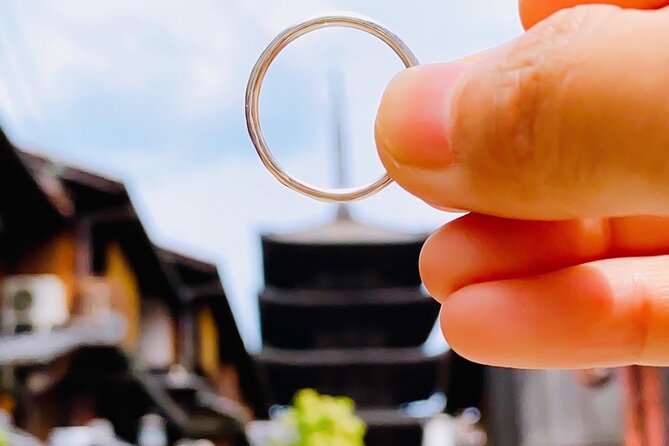
Make a ring, not just a purchase. This one-hour Kyoto workshop lets you shape the look of a finished ring using the Japanese hammering style called Tankin. I like the hands-on work and the chance to choose your material, thickness, shape, and texture. I also like that you take the finished ring home the same day. The main point to understand is that this is a ring-finishing class, not a full jewelry-making course with soldering.
The setting is private to your group, which keeps the lesson personal and less awkward for first-time craft students. The staff explain each step, help with sizing, polish and clean the ring at the end, and take a commemorative photo. The workshop is a strong pick for couples, families, and anyone wanting a small Kyoto keepsake, though the finished ring begins as an already welded or polished circle.
In This Review
- Key points before you book
- What the Kyoto ring workshop really involves
- Choosing your material, shape, and texture
- The hammering stage takes center place
- Final polishing and taking the ring home
- Why the private format helps
- Price, timing, and value at $21.68
- Getting to Itoaware Kyoto
- Who will enjoy this most
- A few practical points before booking
- Should you book the Hammer Pattering Experience of Ring?
- FAQ
- Where does the ring-making activity take place?
- How long does the workshop last?
- How much does the experience cost?
- What can I customize?
- Do I make the ring from raw metal?
- Is welding included?
- Can I take the ring home the same day?
- Is this a private activity?
- What is the cancellation policy?
Key points before you book
- You hammer the texture into a ready-made ring: This is the central detail. You do not cut, bend, or solder a strip of metal into a circle.
- Tankin gives the ring its handmade character: Special hammers and tools create the pattern and surface texture.
- You choose several design details: Material, thickness, shape, and texture can be selected before you begin.
- The ring is ready the same day: Staff polish and clean it during the final stage, so you can take it home after roughly 60 minutes.
- The workshop is private for your group: You do not share the activity with unrelated participants.
- The price is $21.68 per person: That is reasonable for a personal craft session and a finished souvenir, especially when compared with the cost of buying a sterling silver ring separately.
What the Kyoto ring workshop really involves
The name may suggest that you will build a ring from raw metal. That is not what happens here. The ring has already been welded or polished, and your role is to customize its surface with hammer work.
That distinction matters. If your dream is to learn jewelry construction from start to finish, including cutting metal, shaping a band, soldering, and joining the ends, this activity will feel limited. One four-star assessment made exactly that point: the class is fun, but it is not the kind of workshop where you contour and solder a strip yourself.
If you see the activity as a short craft lesson with a finished object at the end, the format makes much more sense. You are learning how repeated hammer strikes change metal, while making design choices that give the ring a personal look.
The Japanese technique is called Tankin. Here, it is used to add patterns and texture rather than to build the ring itself. You work with special hammers and tools, and the staff remain available throughout the process. That support is useful because a small change in the angle or force of each strike can affect the final surface.
A few more options to weigh up in Kyoto
- PERFECT KYOTO 1-Day Bus Tour
★ 5.0 · 13,518 reviews - [Kyoto & Nara Day Tour] Sagano Scenic Railway & Nara Park & Fushimi Inari Taisha Thousand Torii Gates & Togetsukyo Bridge & Bamboo Grove & Kimono Forest (Departing from Osaka)
★ 4.9 · 10,942 reviews - Kyoto: Fushimi Inari, Kinkakuji, Bamboo Grove 1 Day Bus Tour
★ 4.8 · 4,316 reviews
Choosing your material, shape, and texture
The first part of the session is about deciding what you want the ring to look and feel like. You can select the material, thickness, shape, and texture. The supplied details do not provide a complete menu of choices, so you should expect the available options to be explained at the shop rather than assume every finish or metal is always in stock.
Silver and gold are mentioned in the experience feedback, with one family noting that the price seemed especially fair in light of normal sterling silver costs. If the exact metal is important to you, confirm the current choices before booking. The same applies to band width and surface styles.
This selection stage is more important than it first appears. A narrow ring with a light texture will have a different feel from a thicker band with strong hammer marks. You are not simply decorating a generic souvenir. You are choosing the basic character of something you may wear often.
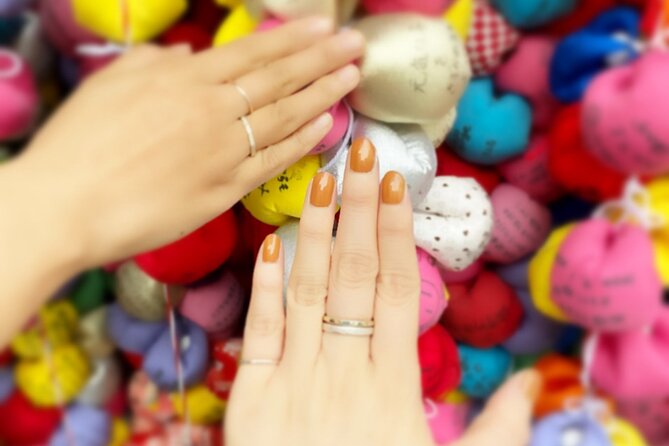
For couples, this can be a nice shared decision. You can choose matching materials but different textures, or select similar bands with small differences. One couple had each ring engraved with Kyoto as a reminder of their honeymoon stop. Engraving is not described as a standard part of the workshop, so treat that as a special possibility to ask about rather than a guaranteed inclusion.
The hammering stage takes center place
Once the ring choice is made, the main work begins. You use the tools provided to create texture on the surface. The staff show you how the process works, then help you as you continue.
The appeal is in the small variations. Machine-made jewelry tends to repeat the same pattern perfectly. Hammered metal keeps traces of the maker’s hand. Even if you follow a simple design, the finished surface should carry evidence that you made it during your time in Kyoto.
This is also where patience helps. The task may sound easy, but good texture depends on control. You do not need advanced craft skills, since the staff guide you, but you should expect to pay attention rather than simply tap at random.
The workshop is described as suitable for most people, and the private format gives your group room to ask questions. That is particularly helpful for families. A family of four, including two boys, enjoyed the short lesson and left with rings to keep. The one-hour length also makes this easier to fit between other Kyoto plans than a long craft course.
Still, the session is not a full technical apprenticeship. You get an introduction to hammer texturing, not a lengthy study of Japanese metalworking. That is a fair trade for the low price and short duration, but it is worth knowing before you arrive.
Final polishing and taking the ring home
The workshop ends with staff completing the finishing work. Skilled craftsmen polish and clean the ring, then help bring it to its final condition. You can take it home on the day of the activity.
This final step adds real value. You are not leaving with a rough object and a list of instructions for finishing it later. The shop handles the last cleaning and polishing, giving you a wearable souvenir before you continue sightseeing.
The finishing stage also provides a practical check on the ring. Staff can help with sizing during the class, and that is worth taking seriously before the final polish. A ring that looks good but does not fit comfortably is not much of a keepsake.
You should also make sure the reservation has the correct number of participants. The activity specifically asks you to check that the number of people attending matches the booking. That is a small detail, but it matters when each person needs a ring and a place at the worktable.
A completely different kind of day out:
- Kyoto: Tea Ceremony in a Traditional Tea House in Kiyomizu
★ 4.9 · 3,519 reviews - Kyoto: Gion Make Your Own Chopsticks with Engraving Option
★ 5.0 · 3,465 reviews - Kyoto Nara Day Trip │ Kiyomizu-dera Temple + Fushimi Inari-taisha Shrine + Nara Park (Departing from Osaka/Kyoto)
★ 4.7 · 3,408 reviews - Kyoto Geisha Walking Tour: Gion District & Hidden Gems
★ 4.7 · 3,273 reviews
Why the private format helps
Only your group participates in the activity. That makes the workshop feel more like a personal appointment than a large class, and it is one of the best reasons to choose this experience for a couple or small family.
A private session lets the staff adjust their help to your group. Beginners can take their time with the hammering, while a family can work at a pace that suits the children. It also makes the commemorative photo more natural, since the staff can focus on your group rather than manage a crowded room.
The feedback repeatedly highlights the staff’s friendly attitude, clear explanations, patience, and sense of humor. I would consider that a major part of the experience. In a craft class, a kind instructor can turn a slightly uneven first attempt into a fun result. The staff at Itoaware Kyoto are described as going beyond the basic instruction to help participants through the whole process.
That said, private does not mean highly customized teaching in the sense of a long one-to-one lesson. The activity lasts about an hour, so the guidance must stay focused. You will get help with the process, but not an extended study of metalwork.
Price, timing, and value at $21.68
At $21.68 per person, this is priced as an accessible activity rather than a luxury jewelry appointment. You receive a private one-hour experience, a ring you customize yourself, staff assistance, final polishing and cleaning, and a same-day souvenir.
I think the value is strongest if you want both an activity and a physical reminder of Kyoto. Buying a ring gives you an object. Making the texture yourself gives the object a story, even though the ring’s basic construction is completed before you begin.
The price also compares well with the family experience described in the feedback. Four people can take part without committing to a long or costly day of craft instruction. For a couple, the cost is modest enough to work as a honeymoon or anniversary activity, particularly if you plan to mark the rings with a Kyoto reference and can confirm that option with the shop.
The price does not mean you should expect a fully custom fine-jewelry piece. The available materials, sizes, and finishes are not fully listed, and the standard process focuses on hammer texture. If you want a rare gemstone, a complex setting, or a ring built from raw metal, this is not the right format.
The experience is booked an average of eight days ahead. That does not guarantee that every date fills, but it is a useful signal to reserve before your Kyoto schedule is fixed. Confirmation is sent within 48 hours, subject to availability.
Getting to Itoaware Kyoto
The meeting point is Itoaware Kyoto at 91-5 Hoshinocho, Higashiyama Ward, Kyoto, postal code 605-0853. The activity begins and ends at this same location.
The shop is near public transportation, which helps when you are building a day around several Kyoto stops. Still, the supplied information does not give a precise station, walking time, or route. Check the address and allow enough time to find the exact entrance, especially if you are coming from another appointment.
Because the workshop lasts about one hour, it works well as a planned stop rather than an open-ended activity. You know where you start, where you finish, and that the ring should be ready to take with you at the end. That makes it easier to pair with other sightseeing, provided you leave a sensible cushion for transport.
For questions before the visit, the shop asks you to contact it through Instagram direct message at @itoaware.kyoto. Use that channel for current questions about material choices, sizing, engraving, or any other detail not clearly provided at booking.
Who will enjoy this most
I would recommend the workshop to you if you want a short, creative activity with a useful keepsake. It suits couples particularly well, since making two rings creates a shared memory without taking up half a day. The honeymoon couple who added Kyoto to their rings found a way to connect the object directly to their trip.
Families can also do well here. The lesson is short, the staff provide support, and the end result gives children something tangible to bring home. The activity says most people can participate, though very young children may need close help with the tools. No specific minimum age is provided, so confirm if that matters for your family.
It is also a good fit for solo visitors who prefer making something over shopping for another souvenir. The private format means a solo booking would not place you in a large mixed group, although the price is charged per person and the activity is designed for your participating group.
You may want to skip it if you are mainly interested in the engineering of jewelry. The absence of welding is the key limitation. You will not learn to join the ends of a metal strip or build the ring from its first stage.
A few practical points before booking
The activity allows service animals, and it is near public transportation. Most people can participate, but the available information does not provide detailed accessibility notes about seating, workshop height, or tool adaptations. Contact the shop directly if you need those specifics.
Free cancellation is available when you cancel at least 24 hours before the local start time. Cancellations made within 24 hours are not refunded, and changes during that window are not accepted. Keep that cutoff in mind if your Kyoto plans are likely to shift.
I would also double-check the participant count before paying. Every person who joins needs to be included in the reservation, and the shop specifically asks you to confirm that the booking number matches the number attending.
The experience currently carries a 4.8 rating, with 100 percent recommendation shown from 20 ratings. The most praised points are consistent: friendly staff, clear instruction, an enjoyable process, and a ring that feels personal without costing much. The main criticism is also consistent with the activity description: this is texture work on a prepared ring, not complete ring construction.
Should you book the Hammer Pattering Experience of Ring?
Book it if you want a low-cost Kyoto craft activity, a private one-hour session, and a finished ring to take home that day. It is especially appealing for couples, families, and anyone who values a souvenir made during the trip rather than picked from a shelf.
Before booking, set the right expectation. You will choose the ring’s main features and hammer its texture, but you will not weld or form the band from raw metal. If that sounds like a fair and enjoyable trade, the friendly support, same-day finishing, and $21.68 price make this an easy activity to fit into a Kyoto visit.
FAQ
Where does the ring-making activity take place?
It takes place at Itoaware Kyoto, 91-5 Hoshinocho, Higashiyama Ward, Kyoto, 605-0853, Japan.
How long does the workshop last?
The work takes approximately one hour.
How much does the experience cost?
The listed price is $21.68 per person.
What can I customize?
You can choose the material, thickness, shape, and texture of the ring before customizing it with hammering tools.
Do I make the ring from raw metal?
No. The ring has already been welded or polished. The workshop focuses on adding patterns and texture with hammers.
Is welding included?
No. Welding work is not included in the experience.
Can I take the ring home the same day?
Yes. Staff polish and clean the ring during the final stage, and you can take it home that day.
Is this a private activity?
Yes. Only your group participates in the activity.
What is the cancellation policy?
You can cancel for a full refund up to 24 hours before the local start time. Cancellations or changes made less than 24 hours before the start are not accepted or refunded.
Just added in Kyoto
- The “Golden Route” and Ancient Japan by DIAMIR Erlebnisreisen – 14-Day Tour★ 2.0 · 2 reviews
- Japan: Castles & Cuisine by G Adventures – 6-Day Kyoto to Osaka Tour★ 4.5 · 4 reviews
- Cycle Japan by Explore! – 13-Day Kyoto to Tokyo Tour★ 4.7 · 12 reviews
- Cycle Japan by Intrepid Travel – 11-Day Kyoto to Tokyo Tour★ 4.8 · 2 reviews
- Classic Japan by Intrepid Travel – 11-Day Kyoto to Tokyo Tour★ 4.4 · 14 reviews
- Ancient & Modern Japan 14-Day Tour by Exodus Adventure Travels★ 4.4 · 40 reviews
- 5 Day Cultural Adventure of Kyoto, Nara & Osaka by Tourist Journey★ 2.5 · 2 reviews
- 12 Days Kinosaki Onsen Escape: A Journey Through Japan’s Timeless Towns by UME Travel★ 4.8 · 5 reviews
Kyoto Tours, compared.

![[Kyoto & Nara Day Tour] Sagano Scenic Railway & Nara Park & Fushimi Inari Taisha Thousand Torii Gates & Togetsukyo Bridge & Bamboo Grove & Kimono Forest (Departing from Osaka)](https://media.japanvisits.com/wp-content/uploads/kyoto-nara-day-tour-sagano-scenic-railway-nara-park-fushimi-inari-taisha-thousand-torii-gates-togetsukyo-bridge-bamboo-grove-kimono-forest-departing-from-osaka-k110001-400x257.jpg)
Fushimi Inari, Kinkakuji, Bamboo Grove 1 Day Bus Tour
Read our review →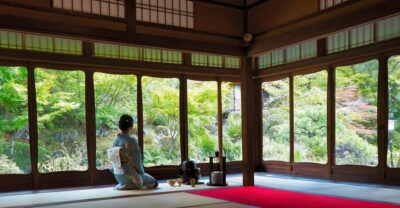
Tea Ceremony in a Traditional Tea House in Kiyomizu
Read our review →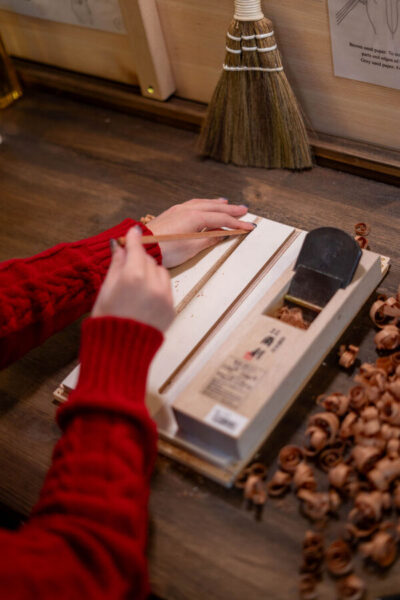
Gion Make Your Own Chopsticks with Engraving Option
Read our review →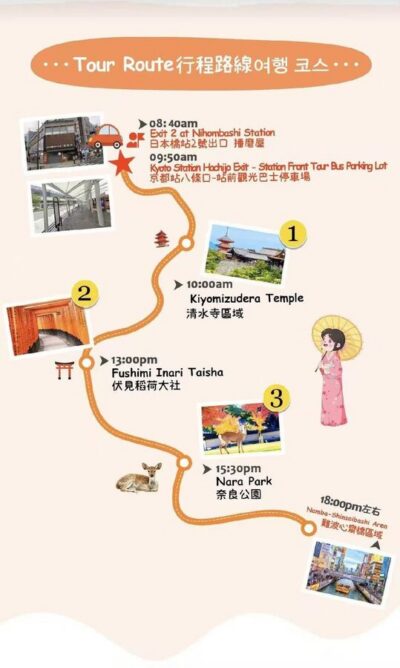
Kyoto Nara Day Trip │ Kiyomizu-dera Temple + Fushimi Inari-taisha Shrine + Nara Park (Departing from Osaka/Kyoto)
Read our review →
Kyoto Geisha Walking Tour: Gion District & Hidden Gems
Read our review →