Reviewed · KYOTO TOURS
Hidden Kyoto E-Biking tour
Kyoto rewards those who pedal beyond the main sights. This half-day ride pairs Kinkakuji and Kitano Tenmangu with quiet lanes, small Zen spaces, and temples that are easy to miss on foot. I like the quality e-bikes, which make Kyoto’s hills manageable, and the guides, especially Yuta, Michael, Sean, and Henry, who bring history and local customs to life. The main consideration is that some guides spend a long time talking, so the tour can feel more like a history lesson than nonstop sightseeing.
The route covers roughly 7 to 8 kilometers and lasts about 3 hours and 45 minutes. It is an excellent first Kyoto activity if you want to get your bearings, but it is not the right pick if you dislike cycling, sitting to listen, or moving at a group pace.
In This Review
- Five things to know before you book
- Why this Kyoto bike tour works so well
- Starting at NORU in Kamigyo Ward
- Kinkakuji, the Golden Pavilion
- Daitokuji and a calmer temple setting
- Kitano Tenmangu and Kyoto’s local character
- Koto-in and the pleasure of a slower pace
- Zuihoin and the Zen finish
- The rides between the temples
- The guides make or break the day
- Is $116 a fair price?
- Who should book this ride?
- Booking details that matter
- Should you book the Hidden Kyoto E-Biking tour?
- FAQ
- How long does the Hidden Kyoto E-Biking tour last?
- How far do you ride?
- What sights are included?
- Are the bike and helmet included?
- What is the minimum age?
- How many people can join the tour?
- Where does the tour start and finish?
- Can I cancel for a refund?
Five things to know before you book
- Quiet Kyoto is the real attraction: The ride uses calmer backstreets and introduces you to parts of the city that can be tiring to reach on foot.
- The e-bikes handle the hills: Included electric bikes reduce the effort, including on steeper sections.
- Famous sights anchor the route: Kinkakuji and Kitano Tenmangu give you two major Kyoto landmarks, while Daitokuji, Koto-in, and Zuihoin add a quieter side of the city.
- Guides shape the experience: Yuta, Michael, Sean, and Henry have been praised for clear English, storytelling, cultural context, and practical advice.
- It is a small-group ride: The maximum group size is eight, which makes roadside stops and questions much easier than on a large bus tour.
Why this Kyoto bike tour works so well
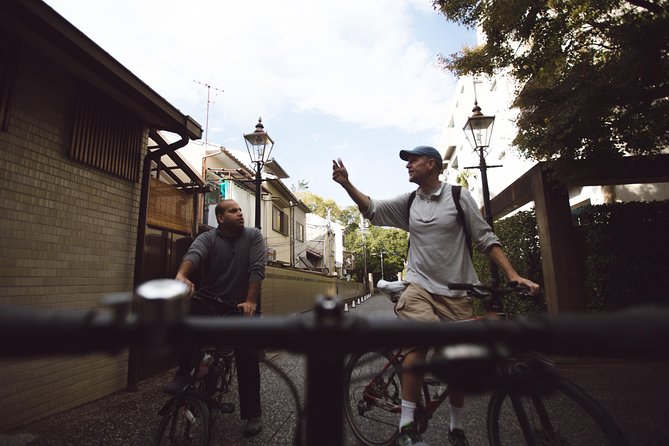
Kyoto is compact on a map but slow to explore. Temples and shrines are spread across neighborhoods, and a day of walking can leave you worn out before you reach the quieter places. A bicycle changes the rhythm. You move through residential streets, cross short distances without waiting for trains, and see the city between the famous stops.
This NORU tour begins at the company’s bicycle shop in Kamigyo Ward. You receive a rental bike, helmet, and water, then get ready for a morning or afternoon route through northern Kyoto. The ride is described as easy and safe, though the inclusion of hills and descents means you should be comfortable controlling a bicycle.
The electric assistance matters. It does not turn the ride into a motorized sightseeing trip, but it takes the strain out of climbs and lets you enjoy the streets instead of concentrating on your legs. One rider who had not cycled for ten years managed the route, and a parent and 13-year-old child also completed it successfully.
The route details vary slightly, describing the ride as 4.3 miles or 4.9 miles, roughly 7 to 8 kilometers. Either way, this is a relaxed half-day outing, not an endurance ride.
A few more options to weigh up in Kyoto
- PERFECT KYOTO 1-Day Bus Tour
★ 5.0 · 13,518 reviews - [Kyoto & Nara Day Tour] Sagano Scenic Railway & Nara Park & Fushimi Inari Taisha Thousand Torii Gates & Togetsukyo Bridge & Bamboo Grove & Kimono Forest (Departing from Osaka)
★ 4.9 · 10,942 reviews - Kyoto: Fushimi Inari, Kinkakuji, Bamboo Grove 1 Day Bus Tour
★ 4.8 · 4,316 reviews
Starting at NORU in Kamigyo Ward
You meet at NORU Kyoto Bike Tours, at 429-22 Takigahanacho, Kamigyo Ward. The shop is near public transportation, but you should still allow time to find it. You must arrive 15 minutes before departure, and the group leaves at scheduled morning and afternoon times, including 8:30, 9, 12:30, and 1 p.m.
The opening briefing is important. You will be fitted with a foldable rental bike and helmet, and the guide provides the basic training needed to use the e-bike. Even if you ride regularly, take this part seriously. Kyoto streets can be calm one moment and busy the next, and you will want to understand the controls before setting off.
The small group size is a real advantage here. With no more than eight participants, the guide can keep an eye on the group and explain how to handle turns, stops, and hills. It also makes conversation possible. Guides have been praised for answering questions and adjusting their explanations to the interests of the group.
Kinkakuji, the Golden Pavilion
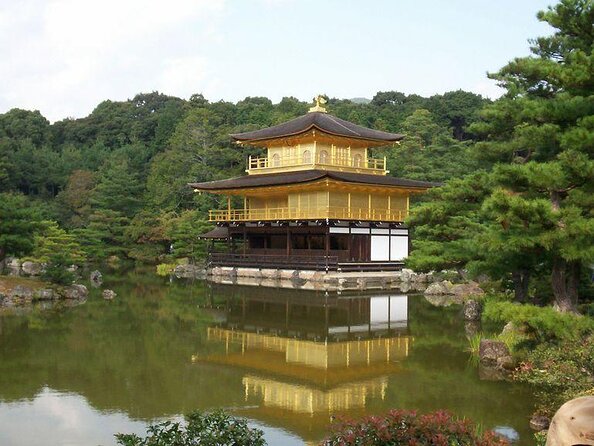
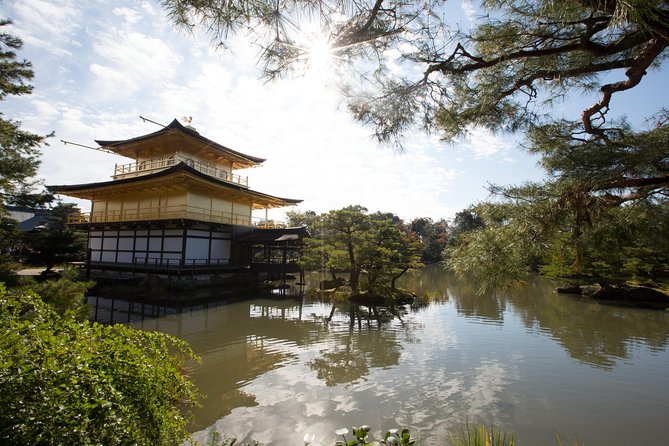
Kinkakuji is the route’s best-known stop and the one most likely to draw a crowd. The UNESCO-listed temple is famous for its gold-covered upper stories reflected in a pond, making it one of Kyoto’s most recognizable views.
The value of arriving by bicycle is not that you avoid the famous sight altogether. You will still encounter the popular side of Kyoto here. Instead, the bike gives the visit a wider frame. You arrive after passing through local streets, and you leave with quieter parts of the city ahead.
Your guide adds context about Japanese religious traditions and the distinction between Shinto and Buddhism. That background helps explain why Kyoto has so many shrines and temples, and why the spaces feel different even when both are part of a single sightseeing day.
Expect this stop to be more public and busy than the later locations. If your main goal is a long, silent temple visit, the schedule may feel brief. If you want Kinkakuji included without giving up the rest of the day to major attractions, the balance is sensible.
Daitokuji and a calmer temple setting
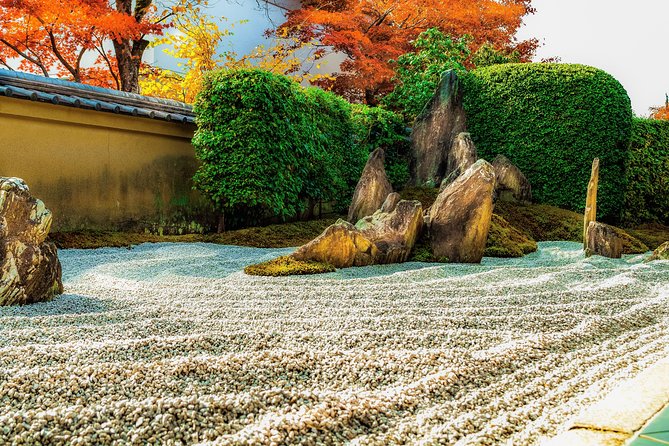
The Daitokuji Temple Complex offers a different mood. It is associated with Zen Buddhism and is made up of a group of subtemples, giving the area a more spacious and contemplative feel than a single major landmark.
This is where a strong guide can make a large difference. Yuta has been praised for explaining Zen teachings in an accessible way, while other guides have connected the temples to Japanese history, customs, and daily life. The best explanations do not simply list dates. They help you understand why gardens are arranged as they are, how visitors should behave, and what details to notice.
Do not expect to visit every part of the complex. A 3-hour-45-minute tour has to keep moving, and temple access can vary. The appeal is the setting and the interpretation, not an exhaustive survey of every building.
For many people, this is where the ride begins to feel different from a standard Kyoto checklist. You have already seen a major landmark, but now the pace slows and the setting becomes more personal.
A completely different kind of day out:
- Kyoto: Tea Ceremony in a Traditional Tea House in Kiyomizu
★ 4.9 · 3,519 reviews - Kyoto: Gion Make Your Own Chopsticks with Engraving Option
★ 5.0 · 3,465 reviews - Kyoto Nara Day Trip │ Kiyomizu-dera Temple + Fushimi Inari-taisha Shrine + Nara Park (Departing from Osaka/Kyoto)
★ 4.7 · 3,408 reviews - Kyoto Geisha Walking Tour: Gion District & Hidden Gems
★ 4.7 · 3,273 reviews
Kitano Tenmangu and Kyoto’s local character
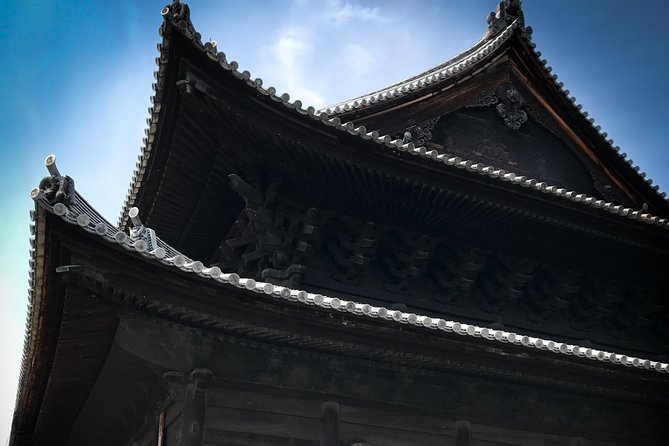
Kitano Tenmangu is a major Shinto shrine dedicated to Sugawara no Michizane, a scholar and government official associated with learning. The shrine adds a useful contrast to the Buddhist temples on the route.
Your guide may explain the visual and ritual differences between a shrine and a temple, including how to approach each kind of sacred place. The cultural guidance is one of the strongest parts of this experience. You learn not only what you are seeing, but also how to behave respectfully while visiting.
The shrine is also a good place to appreciate the city’s layers. Kyoto is not just a collection of old buildings preserved for sightseeing. Religious sites remain part of local life, and the route lets you move between major monuments and ordinary neighborhoods without a large vehicle separating you from the surroundings.
This stop may be especially useful early in your Kyoto stay. The explanations about Shinto, Buddhism, geisha and maiko culture, samurai history, and temple etiquette provide a framework for later visits around the city.
Koto-in and the pleasure of a slower pace
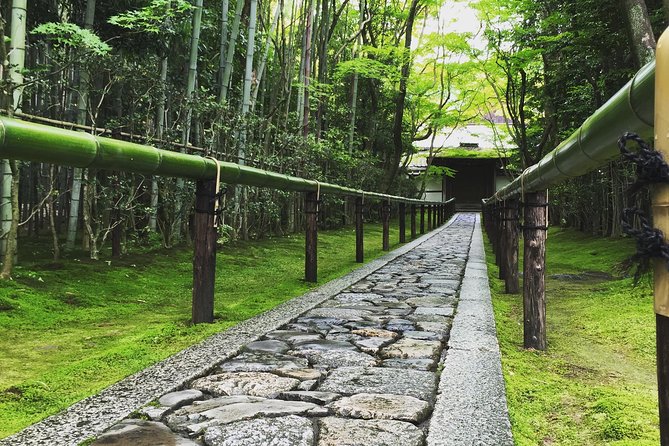
Koto-in is one of the quieter stops and fits the tour’s title best. Its appeal is not the grand scale of Kinkakuji, but the intimate setting and the chance to appreciate a smaller Zen environment.
The approach by bicycle is part of the experience. You move along backstreets instead of spending the entire day on crowded pedestrian routes. The shift from traffic and tour groups to a quieter temple entrance can be surprisingly effective.
The gardens and paths invite a slower look, though the amount of time available depends on the group and the guide’s schedule. This is one reason I would not book the tour if you want to linger at every site. You are sampling several places, not spending an hour at one garden.
The tradeoff is worthwhile for anyone who wants variety. In one outing, you see a famous pavilion, a large temple complex, a Shinto shrine, and smaller Zen spaces. That range gives you a much better feel for Kyoto than visiting several similar-looking attractions.
Zuihoin and the Zen finish
Zuihoin provides another quiet Zen setting and is listed as the final itinerary stop. The tour’s Zen elements have been described as a lovely closing touch, especially after the bustle of the better-known attractions.
This is also where the guide’s style matters most. Some guides, including Yuta, have been praised for connecting Zen ideas to the physical spaces around you. Others, such as Michael, have been valued for storytelling and historical detail. The best version of this stop gives you time to look, then offers just enough explanation to sharpen your attention.
One caution: a minority of visitors found that their guide spoke for too long at certain stops. If you prefer to explore independently, you may find the commentary heavy. If you enjoy history and cultural explanation, the same feature will likely be a highlight.
The rides between the temples
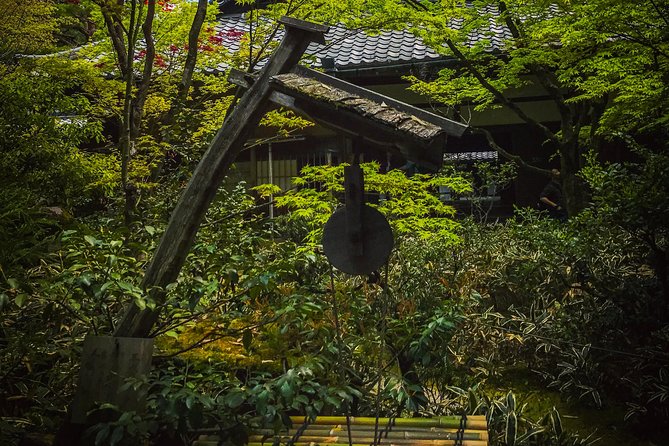
The stretches between stops are not filler. They are the part of Kyoto you cannot see from a tour bus. You pass quiet residential roads, small lanes, and ordinary views that show how the city works beyond its postcard attractions.
Several people have described the route as peaceful and safe, with very few tourists in some sections. The e-bikes make it possible to include hills without turning the outing into a physical challenge. You still need to pedal and pay attention, but the electric support reduces the effort.
There are also descents and some steep sections. That does not make the ride extreme, but it does mean you should have basic bicycle confidence. A guide can help you, and the group is limited to eight, yet the tour cannot remove every element of road riding.
Rain is another practical factor. The ride has gone ahead in drizzly conditions, and guides have supplied rain gear in some cases. You should still bring your own raincoat or poncho and weatherproof gloves if rain is expected. If poor weather causes cancellation, you are offered another date or a full refund.
The guides make or break the day
The guide quality is the most praised part of this experience. Yuta is frequently singled out for fluent English, clear explanations, and a warm approach to Zen Buddhism, tea culture, geisha and maiko traditions, and temple etiquette.
Michael has been praised as an engaging storyteller, with one description noting his background as a Japanese history teacher. Sean has been appreciated for broad cultural knowledge, careful support in bad weather, and useful restaurant recommendations. Henry has been valued for his long experience in Japan and his ability to explain local culture.
The exact guide depends on the departure. You should not book expecting a particular person unless the operator confirms that in advance. Still, the pattern is clear: this is not simply a bike rental with a map. The route is built around interpretation.
That strength comes with a small downside. A guide who loves Japanese history can sometimes talk longer than you want. One direct criticism was that too much time was spent listening instead of exploring. If you prefer concise commentary, say so politely or choose a self-guided cycling option.
Is $116 a fair price?
At $116 per person, this is not the cheapest way to ride around Kyoto. You are paying for an e-bike, helmet, water, an English-speaking route coordinator, a small group, and nearly four hours of guiding.
The value is strongest if you want several things in one package: transport between northern Kyoto sights, help with hills, cultural explanation, and access to quieter streets. A regular bicycle might cost less, but it would not provide the same assistance or commentary. A private guide would likely cost more, especially for a similar amount of time.
The price is harder to justify if you only want to see Kinkakuji and Kitano Tenmangu. You could visit major sights on your own using public transportation. The tour earns its keep through the connections between those places and the lesser-known temples and lanes.
The near-perfect rating, 99 percent recommendation rate, and 5.0 rating from 1,844 reviews indicate very strong satisfaction. I would treat those figures as evidence of consistency, not a guarantee that every guide’s pace will suit you.
Who should book this ride?
I would recommend it most strongly to first-time visitors who want a quick orientation to northern Kyoto. The tour introduces religious sites, neighborhood streets, local customs, and restaurant ideas that can help shape the rest of your stay.
It also suits returning visitors. If you have already seen the major central temples, the quieter route and smaller sites offer a fresh way to spend a morning or afternoon.
Families with teenagers can consider it, since the minimum age is 13. One parent and a 13-year-old enjoyed the ride together. Older adults can also manage it if they are comfortable on a bicycle, and e-bike assistance helps with the climbs.
I would hesitate to recommend it to anyone who cannot ride, dislikes hills, or hopes to wander freely at each temple. Participants who choose not to ride are not refunded, so be honest about your comfort level before booking.
The tour ends back at NORU, which makes planning simple. You do not have to arrange a pickup at a distant temple, and you can continue to lunch or another Kyoto sight afterward.
Booking details that matter
Free cancellation is available until 24 hours before the local start time. Changes or cancellations inside that window are not accepted, and missed departures are nonrefundable, so arriving 15 minutes early is essential.
The tour requires good weather and a minimum number of participants. If NORU cancels for weather or because the minimum is not met, you can choose another date or receive a full refund.
Bring clothing suited to the forecast. A raincoat or poncho and weatherproof gloves are sensible in wet weather. Food and drinks are not included, although some outings have included a charming tea and sweets stop. Treat that as part of the route’s local flavor rather than a guaranteed meal.
Should you book the Hidden Kyoto E-Biking tour?
Book it if you want to see Kyoto at street level, learn how Shinto and Buddhism differ, and reach several northern temples without exhausting yourself. The strongest reasons are the e-bike assistance, small group, calm backstreets, and guides who can turn a short ride into a meaningful introduction to Japanese culture.
Skip it if you want a purely active ride with little commentary, or if you need a slow, independent visit at each temple. For most visitors who enjoy history and can ride a bicycle, this is a smart use of half a day and one of the better ways to get beyond Kyoto’s usual sightseeing circuit.
FAQ
How long does the Hidden Kyoto E-Biking tour last?
The tour lasts approximately 3 hours and 45 minutes.
How far do you ride?
The route is described as roughly 7 to 8 kilometers, or about 4.3 to 4.9 miles.
What sights are included?
Stops include Kinkakuji Temple, Daitokuji Temple Complex, Kitano Tenmangu Shrine, Koto-in, and Zuihoin.
Are the bike and helmet included?
Yes. A rental bike, rental helmet, and water are included in the tour price.
What is the minimum age?
The minimum age is 13.
How many people can join the tour?
The maximum group size is eight participants.
Where does the tour start and finish?
The tour starts at NORU Kyoto Bike Tours, 429-22 Takigahanacho, Kamigyo Ward, Kyoto. It ends back at the same meeting point.
Can I cancel for a refund?
You can cancel at least 24 hours before the local start time for a full refund. Cancellations or changes made less than 24 hours before departure are not accepted. If the operator cancels because of poor weather or an insufficient number of participants, you are offered another date or a full refund.
Just added in Kyoto
- The “Golden Route” and Ancient Japan by DIAMIR Erlebnisreisen – 14-Day Tour★ 2.0 · 2 reviews
- Japan: Castles & Cuisine by G Adventures – 6-Day Kyoto to Osaka Tour★ 4.5 · 4 reviews
- Cycle Japan by Explore! – 13-Day Kyoto to Tokyo Tour★ 4.7 · 12 reviews
- Cycle Japan by Intrepid Travel – 11-Day Kyoto to Tokyo Tour★ 4.8 · 2 reviews
- Classic Japan by Intrepid Travel – 11-Day Kyoto to Tokyo Tour★ 4.4 · 14 reviews
- Ancient & Modern Japan 14-Day Tour by Exodus Adventure Travels★ 4.4 · 40 reviews
- 5 Day Cultural Adventure of Kyoto, Nara & Osaka by Tourist Journey★ 2.5 · 2 reviews
- 12 Days Kinosaki Onsen Escape: A Journey Through Japan’s Timeless Towns by UME Travel★ 4.8 · 5 reviews
Kyoto Tours, compared.
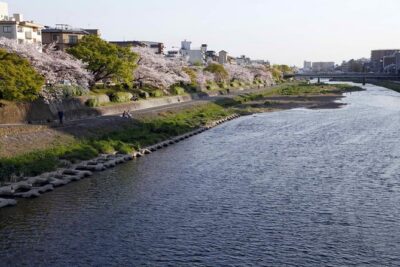
![[Kyoto & Nara Day Tour] Sagano Scenic Railway & Nara Park & Fushimi Inari Taisha Thousand Torii Gates & Togetsukyo Bridge & Bamboo Grove & Kimono Forest (Departing from Osaka)](https://media.japanvisits.com/wp-content/uploads/kyoto-nara-day-tour-sagano-scenic-railway-nara-park-fushimi-inari-taisha-thousand-torii-gates-togetsukyo-bridge-bamboo-grove-kimono-forest-departing-from-osaka-k110001-400x257.jpg)
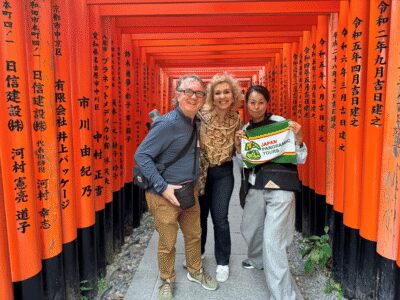
Fushimi Inari, Kinkakuji, Bamboo Grove 1 Day Bus Tour
Read our review →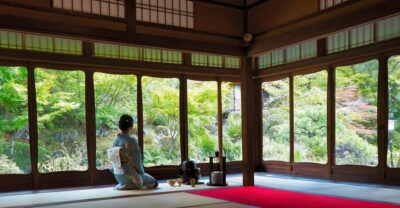
Tea Ceremony in a Traditional Tea House in Kiyomizu
Read our review →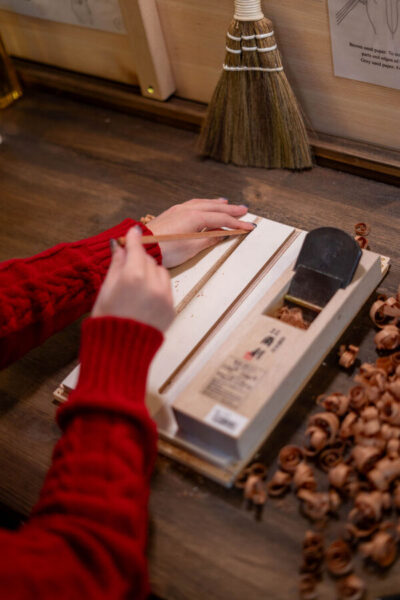
Gion Make Your Own Chopsticks with Engraving Option
Read our review →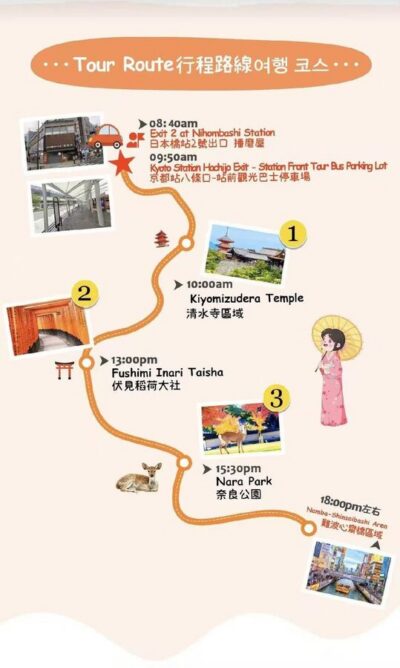
Kyoto Nara Day Trip │ Kiyomizu-dera Temple + Fushimi Inari-taisha Shrine + Nara Park (Departing from Osaka/Kyoto)
Read our review →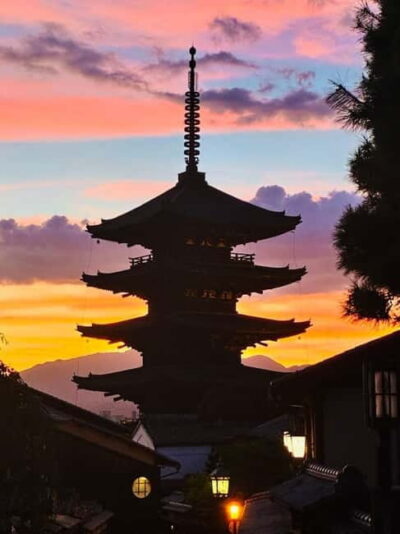
Kyoto Geisha Walking Tour: Gion District & Hidden Gems
Read our review →