
Reviewed · WALKING TOURS
Hiroshima and Miyajima 1 Day Walking Tour
Two famous places, one thoughtful day. This private Hiroshima tour brings together Miyajima and Itsukushima Shrine with the Atomic Bomb Dome, Peace Memorial Park, and Peace Memorial Museum. I like the way it links beauty, religion, and painful modern history without treating them as separate worlds. I also like the flexible guide service, with guides such as Miyuki, Aya, Joe, and Momoko praised for adjusting the pace and explaining Hiroshima in personal, human terms. The main drawback is the schedule: eight hours of walking, stairs, ferries, trains, buses, and museum time can be tiring, especially if you want a slow visit at every stop.
At $143.99 per person, this is not the cheapest way to see Hiroshima. But the price includes local transport, the round-trip ferry to Miyajima, admissions to Itsukushima Shrine and the Peace Memorial Museum, and a private English-speaking guide for your group. Lunch is extra, and the tour is non-refundable unless the operator cancels it for poor weather or an insufficient number of bookings.
In This Review
- Key points to know before booking
- Why this pairing works so well
- Miyajima: an island start with a strong sense of place
- Itsukushima Shrine: architecture built for the sea
- Returning to Hiroshima for the Atomic Bomb Dome
- Peace Memorial Park: time to reflect
- The Peace Memorial Museum: the day’s most difficult hour
- What the guides add to the experience
- Walking, transport, food, and the real pace
- Who should book this private day tour
- Should you book it?
- FAQ
- How long does the Hiroshima and Miyajima tour last?
- Is the tour private?
- Is transportation included?
- Are the shrine and museum admission fees included?
- Is lunch included?
- Can the schedule be customized?
Key points to know before booking
- Miyajima and Hiroshima in one day: You see the island’s shrine and torii gate, then visit the city’s main peace sites.
- Private guiding: Only your group participates, so the day can be adjusted around your interests, walking speed, and schedule.
- Transport is included: The price covers the local train, local bus, and round-trip ferry between Hiroshima and Miyajima.
- The guides are a major strength: Miyuki, Aya, Joe, Sachi, Aki, and others are praised for clear English, personal stories, and practical help.
- Expect a full walking day: Stairs and frequent movement are part of the experience, though guides can adapt the pace.
- Lunch is your responsibility: You can ask the guide for help choosing a place, but food is not included.
Why this pairing works so well
Hiroshima is a city best understood through contrasts. Miyajima gives you sacred architecture, sea views, island walks, and the famous floating torii gate. Hiroshima’s Peace Memorial Park and museum then ask you to slow down and consider the human cost of war.
Seeing both in one day creates a clear emotional arc, though it is also demanding. You will move from ferry to train, from shrine corridors to museum exhibits, and from open island space to quiet memorial grounds. The day is not a casual stroll with long breaks. It is a focused introduction to two of western Japan’s most important places.
The private format matters here. You are not tied to the interests of a large group. If you want more time at the museum, need a slower pace, or prefer to visit Miyajima first, the guide can often adjust the order. Joe, for example, prepared detailed plans around specific requests and changed the timing when weather conditions shifted. Mei also adapted the day around a tight travel schedule and helped fit in an okonomiyaki lunch.
That flexibility does not mean every change is free. You can skip a stop or replace it with another place, but unused admission or transport costs are not refunded. New attractions may bring extra ticket and transport fees.
More Walking Tours in Hiroshima
- Hiroshima Historical Walking Tour – Why A-Bomb was Dropped
★ 4.8 · 893 reviews - Hiroshima Peace (Heiwa) Walking Tour at World Heritage Sites
★ 5.0 · 872 reviews - Hiroshima City 4hr Private Walking Tour with Licensed Guide
★ 5.0 · 437 reviews
Miyajima: an island start with a strong sense of place
Miyajima is less than an hour from Hiroshima, reached by a ferry included in the tour price. The crossing is one of the day’s pleasures because it gives you a clear break from the city and brings you toward the island’s famous waterfront shrine.
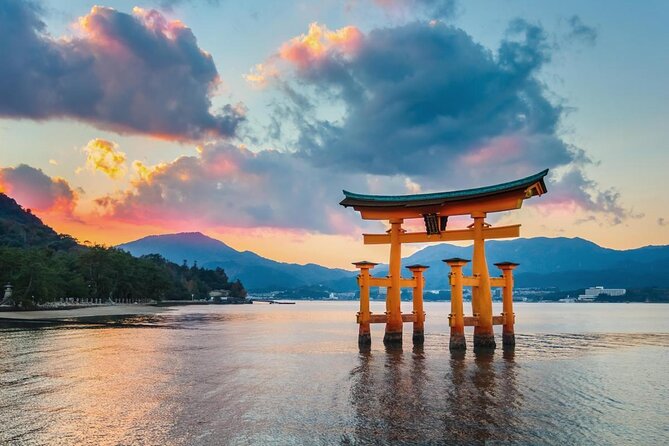
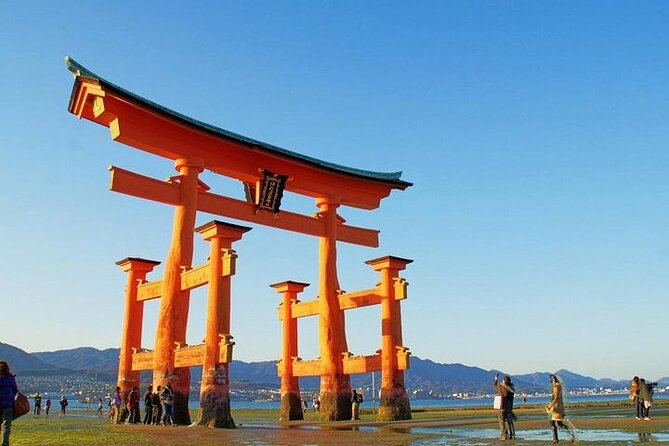
The island is formally called Itsukushima, but most people know it as Miyajima. Its giant torii gate is the familiar image, especially when high tide makes it appear to float offshore. The view is beautiful, but the setting is more than a photo stop. The gate marks the approach to a sacred island and helps explain why the shrine was built out over the water.
You have about 90 minutes at Miyajima before spending another hour at Itsukushima Shrine. That is enough for a well-led first visit, but not enough to wander every path or linger everywhere. If your priority is relaxed island time, you may find the schedule brisk.
The island also offers food and small treats that can make the visit feel more personal. Several guides helped with local food choices, and maple leaf-shaped cakes were a repeated favorite. Aya suggested food for a picnic, while Joe treated his group to traditional maple leaf cakes. These details are not included as formal tour benefits, but they show how a good guide can turn transit time and snack stops into part of the cultural experience.
Itsukushima Shrine: architecture built for the sea
Itsukushima Shrine is the heart of Miyajima. Its long, red-orange corridors and waterfront setting give it a character unlike the memorial sites in central Hiroshima. Admission is included, so you do not need to handle that cost separately.
Your guide can explain how the shrine, gate, island, and religious traditions fit together. This is where the private format earns its keep. Without a guide, you can admire the colors and position of the buildings, but you may miss why the shrine’s relationship with the water matters.
The one-hour visit gives you time to see the principal areas and ask questions. It is also a place where crowds and tide conditions can affect the feel of the visit. The tour description specifically highlights the floating appearance of the torii at high tide, so the exact visual effect depends on the day and the water level.
Some groups also visited a temple and reached high views over the island. That extra experience may depend on your guide, timing, weather, and physical ability, so do not treat it as guaranteed. Still, it is worth telling your guide in advance if you want more scenery, shopping, religious sites, or food.
Returning to Hiroshima for the Atomic Bomb Dome
After Miyajima, the day turns toward Hiroshima’s peace sites. Local train and bus costs are included, and the guide manages the movement between the island and the city. That saves you from working out each connection while also keeping an eye on the clock.
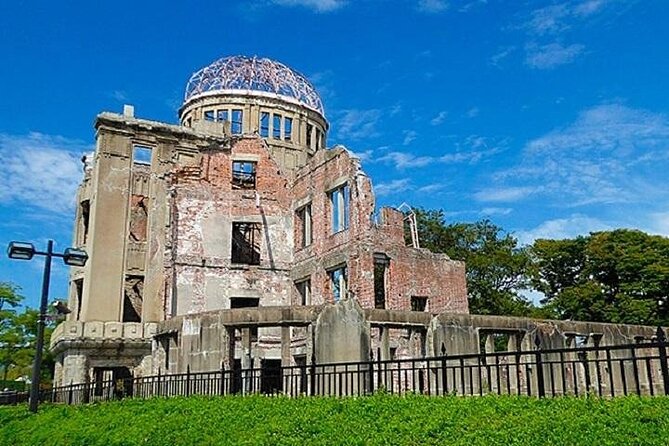
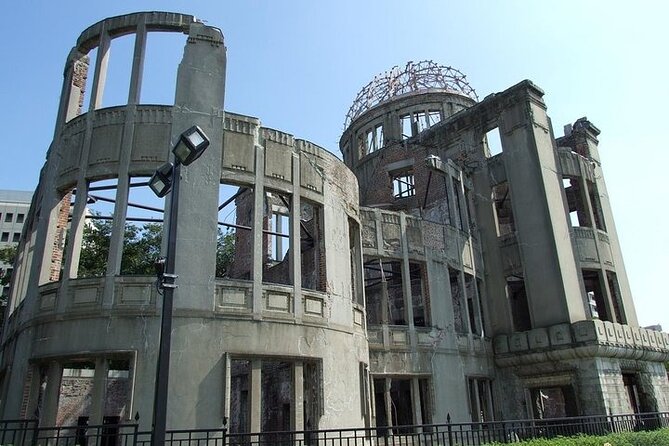
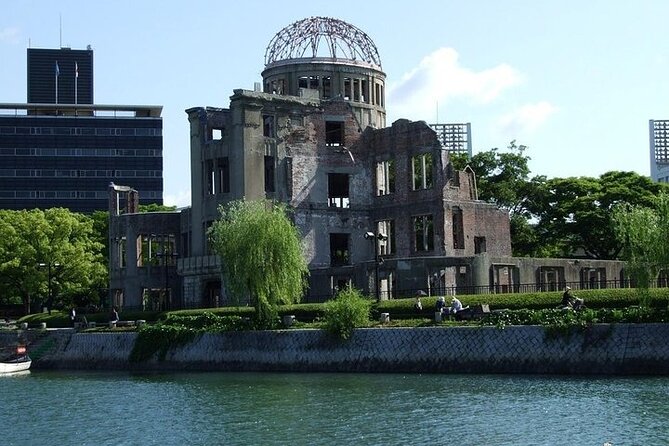
The Atomic Bomb Dome is a short visit, listed at about 30 minutes. The building is preserved in its damaged state and has become a symbol of Hiroshima’s call for peace. You can see the structure from outside and listen as the guide explains what happened there and why the site remains important.
Half an hour is enough to pause and take in the building, but it is not enough for a long, quiet examination of every angle. The emotional weight comes less from the length of the stop than from the transition into the larger Peace Memorial Park.
This portion of the tour can be sobering. Joe’s passion for the subject was especially praised, while Miyuki and Aya added personal connections and stories about Hiroshima. A guide who can explain the facts with care makes a real difference here. The goal is not simply to collect another landmark. It is to understand why this place remains a focus for prayer and peace.
A completely different kind of day out:
- Peaceful Hiroshima & Miyajima UNESCO 1 Day Bus Tour
★ 5.0 · 5,309 reviews - Hiroshima Peace Memorial Museum Ticket
★ 4.8 · 2,727 reviews - Hiroshima: Hiroshima and Miyajima UNESCO Sites 1-Day Tour
★ 4.9 · 2,330 reviews - Hiroshima Peace Memorial Museum Admission
★ 4.6 · 1,308 reviews
Peace Memorial Park: time to reflect
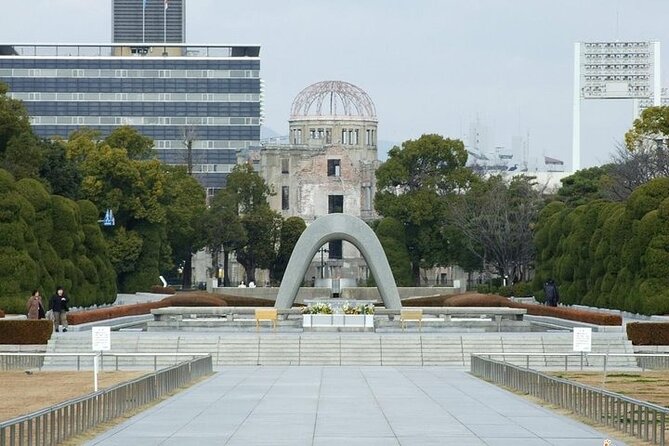
The Peace Memorial Park covers more than 120,000 square meters and contains many monuments and memorial spaces. You have about an hour here, which gives the guide room to explain the park’s main features and connect them with the Atomic Bomb Dome and museum.
This is a good part of the day to slow your pace. The park is open and spacious, but the subject matter is heavy. You may appreciate having a guide point out important locations rather than trying to identify everything alone.
The park also helps place Hiroshima’s story in a wider setting. The city is not presented only as a site of destruction. The memorials focus on those affected, the danger of nuclear weapons, and the hope for peace. Your guide can help you approach the site with respect and answer questions that may not be covered by a short label.
Because the tour is private, you can ask for more explanation or a quieter pace. You can also tell the guide if you need a short break. The overall day remains fixed at roughly eight hours, but the tone and speed can be shaped to your group.
The Peace Memorial Museum: the day’s most difficult hour
The Peace Memorial Museum is the most direct and emotionally intense stop. Admission is included, and the planned visit lasts about an hour.
The museum opened in 1955 and was designed by architect Tange Kenzo. Its exhibits deal with the atomic bombing and its effects on Hiroshima. You should expect a serious visit, not a light cultural attraction. The material can be distressing, and an hour may feel short if you want to read every display carefully.
That time limit is the clearest tradeoff of combining Hiroshima and Miyajima in one day. You get both major destinations, but you cannot give either one unlimited attention. If the museum is your main reason for visiting Hiroshima, a separate visit may suit you better.
For a first introduction, however, the guided format is useful. A guide can provide context before or after the museum and help you place what you see within the larger story of the city. One family described Momoko as especially considerate and attentive to every member of the group, while other groups valued guides who explained the museum in clear English.
You should also allow yourself some quiet time after leaving. The schedule moves on, but there is no need to treat this section like a checklist.
What the guides add to the experience
The strongest part of this tour is the human guidance. The listed guides include Aya, Joe, Sachi, Miyuki, Aki, Momoko, Riona, Mei, Kiyoshi, Hiro, Azusa, and Dobara. Several were praised for excellent English, careful pacing, and a willingness to change the day around personal interests.
Miyuki received especially warm praise for her English, kindness, and ability to connect with both adults and teenagers. She also shared personal stories about Hiroshima, which made the memorial visit more touching. Aya was praised for cultural tips, food advice, photographs, and her own connection to the bombing.
Joe, also identified as Masahiko Joguchi, appears particularly strong at planning. He met groups at Hiroshima Station, prepared detailed schedules, handled changes caused by weather, and helped combine sightseeing with food and shopping. One group even added an illuminated Japanese garden after dark, though that kind of extra stop is not guaranteed.
Sachi took a group to less familiar places, while Azusa adjusted the pace for older members. Aki was praised for being considerate during a day with substantial walking and stairs. These examples show what you should ask for before the tour: more history, more food, fewer stairs, extra photographs, a slower pace, or particular shopping interests.
The quality of the day depends heavily on the guide assigned to you. The overall record is excellent, with a five-star rating and 100 percent recommendation rate from 43 reviews, but communication before the tour was a concern for at least one person. Send your requests in advance and confirm the meeting details clearly.
Walking, transport, food, and the real pace
This is called a walking tour, but you will not walk the whole distance. The day uses a local train, a local bus, and a round-trip ferry. Those connections are included, which removes a layer of planning and makes the $143.99 price easier to assess.
You should still be fit enough for a long day on your feet. One direct assessment described walking and stairs as significant, though manageable for people who exercise regularly. If you have older members in your group, say so before the tour. Azusa and other guides have shown they can slow the pace, but the attractions themselves still involve movement.
Lunch is not included. That gives you freedom to choose, but it also means you need to budget for food and avoid letting a long lunch squeeze the schedule. Guides helped groups find Hiroshima-style okonomiyaki, picnic food, and dinner recommendations. Mei arranged a restaurant where one group could watch Japanese pancakes being made in front of them.
The transport, admissions, and guide are the main value here. If you are comfortable navigating Hiroshima and Miyajima alone, you can spend less by arranging the day yourself. The tour makes more sense if you value clear explanations, private pacing, language support, and help connecting several transport legs.
Who should book this private day tour
I would recommend it most strongly to first-time visitors with only one full day for Hiroshima. You see the city’s essential peace sites and the island’s most famous shrine without having to choose between them.
It also suits families and mixed-age groups. Momoko was praised for engaging with an entire family, and Azusa adapted the pace for older friends. Teenagers and young adults may also respond well to a guide who can make the subject personal rather than presenting only dates and facts.
Food-focused visitors can benefit from asking for restaurant and snack advice. The tour can include cultural details beyond the major sights, but you need to raise those interests before the day begins.
I would be more cautious if you dislike structured days, need extensive free time, or want to study every museum display slowly. I would also think twice if your group cannot manage a full day of walking and stairs. The private format helps, but it does not turn an eight-hour sightseeing day into a restful outing.
The experience is non-refundable and cannot normally be changed after booking. If poor weather cancels the tour, you are offered another date or a full refund. The same applies if the minimum number of bookings is not reached. Since changes requested by you may not qualify for a refund, confirm your schedule before paying.
Should you book it?
Book this tour if you want a guide to carry the practical load while giving Hiroshima’s difficult story the attention it deserves. The best reasons are the private format, included transport and admissions, strong guide feedback, and the rare chance to combine Miyajima with the Peace Memorial sites in one carefully managed day.
Skip it if you prefer to travel slowly, spend several hours in the museum, or keep your plans open. At $143.99 per person plus lunch, it is a value purchase for personal guidance and convenience, not a bargain transport package.
For most first-time visitors with limited time, I think the balance works. Ask for your preferred pace, food interests, and must-see locations before the day begins, then arrive at the meeting point on time. That preparation gives your guide the best chance to make a packed day feel personal rather than rushed.
FAQ
How long does the Hiroshima and Miyajima tour last?
The tour lasts approximately eight hours.
Is the tour private?
Yes. Only your group participates in the private tour or activity.
Is transportation included?
Yes. The price includes the local train in Hiroshima, local bus fare in Hiroshima, and a round-trip ferry between Hiroshima and Miyajima.
Are the shrine and museum admission fees included?
Yes. Admission to Itsukushima Shrine and the Hiroshima Peace Memorial Museum is included. The Atomic Bomb Dome and Peace Memorial Park do not require an included admission ticket.
Is lunch included?
No. Lunch is not included in the tour price.
Can the schedule be customized?
Yes. You can request changes in advance, and the guide may also help adjust the schedule on the tour day. You can skip or replace a stop, but unused fees are not refunded. Adding another location may require extra admission and transportation costs.
Just added in Hiroshima
- Hiroshima Peace Memorial Museum Ticket★ 4.8 · 2,727 reviews
- Hiroshima Peace Memorial Museum Admission★ 4.6 · 1,308 reviews
- Private Full Day Hiroshima Tour★ 4.5 · 29 reviews
- The Peace Memorial to Miyajima : Icons of Peace and Beauty★ 4.5 · 31 reviews
- Shore Excursion from Hiroshima Port : Private Tour in Hiroshima★ 5.0 · 17 reviews
- Hiroshima & Miyajima All-Inclusive Tour w/Licensed guide Pancho★ 5.0 · 54 reviews
- Hiroshima Country Cycling: Explore Rural Life 1 HR from City★ 5.0 · 22 reviews
- Hiroshima Saijo Sake Tasting Tour with visit to 7 Breweries★ 5.0 · 104 reviews
Walking Tours, compared.
Kyoto Geisha Walking Tour: Gion District & Hidden Gems
Read our review →
Tokyo Tsukiji Fish Market Food and Culture Walking Tour
Read our review →
Gion Magical Night Walking Tour with Geisha Trivia
Read our review →
Imperial Palace and Shogun Historical Walking Tour
Read our review →
Gion Geisha District Walking Tour – Stories of Geisha
Read our review →
Shinjuku Local Bar and Izakaya Guided Walking Tour
Read our review →
Browse the lists this tour appears in