
Reviewed · DINING EXPERIENCES
Hiroshima: Food and Culture Guided Walking Tour with Dinner
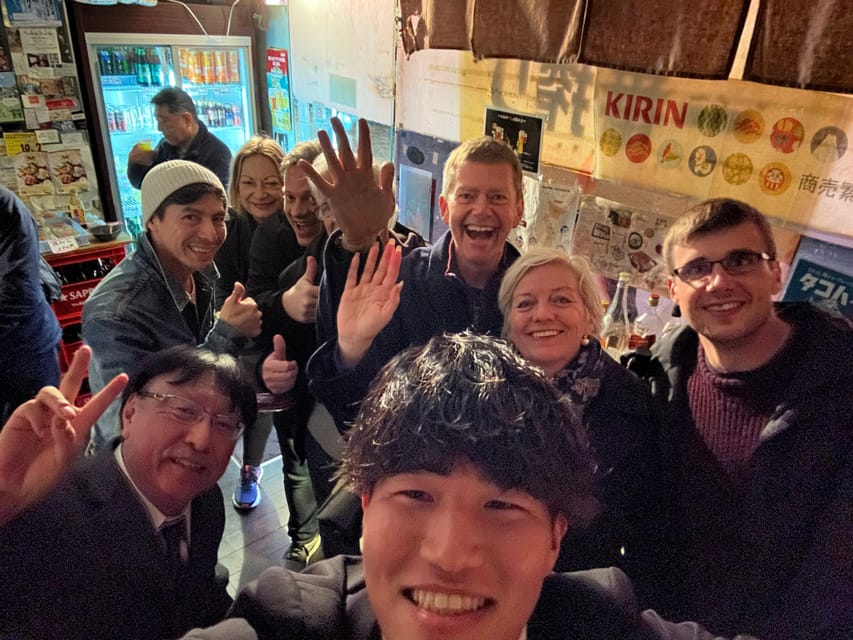
Good food opens doors in Hiroshima. This three-hour evening walk takes you from Don Quijote in Hatchobori through Hondori Shopping Street and Nagarekawa Dori, stopping at three small local restaurants along the way. You get a full dinner, three drinks, and a look at the casual nightlife that can be hard to find on your own.
I especially like the three-stop format, which keeps the evening moving and lets you compare different kinds of food and rooms. I also like the friendly, personal guiding style associated with Ken, also called Kensuke, and Alex on some departures. The main thing to consider is that the meal is built around tachinomi restaurants, so some standing and quick restaurant visits are part of the deal.
This is a good fit if you want more than okonomiyaki and are happy to try dishes without knowing exactly what will arrive. It is less suitable if you need a long seated dinner, dislike unfamiliar foods, or want a fixed menu.
In This Review
- Key points at a glance
- Starting at Don Quijote in Hatchobori
- Hondori Shopping Street after dark
- First restaurant: start with small plates and a drink
- Second restaurant: more variety without over-ordering
- Hiroshima specialties and the chance of okonomiyaki
- Nagarekawa Dori and Hiroshima’s evening atmosphere
- Third restaurant: finish with local conversation
- What the $94 price really covers
- Dietary needs, age limits, and comfort
- Who will enjoy this Hiroshima food tour most
- Practical booking advice
- Should you book it?
- FAQ
- How long does the Hiroshima food tour last?
- Where does the tour meet and finish?
- How many restaurants are included?
- How many drinks are included?
- Is the tour suitable for children?
- Can the tour accommodate food allergies or dietary preferences?
Key points at a glance
- Three restaurants in three hours: You move between small local venues instead of spending the whole evening in one dining room.
- At least ten different dishes: Expect seafood, tempura, grilled, steamed, and simmered food, with the exact menu changing by season.
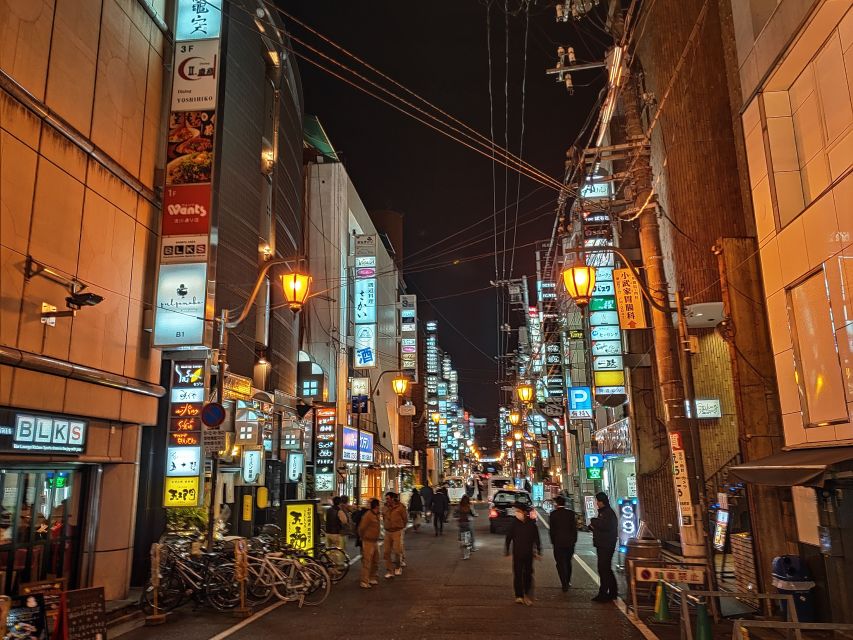
- Hiroshima nightlife on foot: The route includes Hondori Shopping Street and Nagarekawa Dori, two useful areas for seeing the city after dark.
- Three included drinks: Choose beer, sake, cocktails, spirits, or non-alcoholic drinks, with one included at each stop.
- English-speaking local guide: Ken, Kensuke, or Alex can help explain dishes, customs, and the practical details of ordering.
- Small-group feel: Private and small-group options are available, which can make unfamiliar restaurants feel much easier to enter.
Starting at Don Quijote in Hatchobori
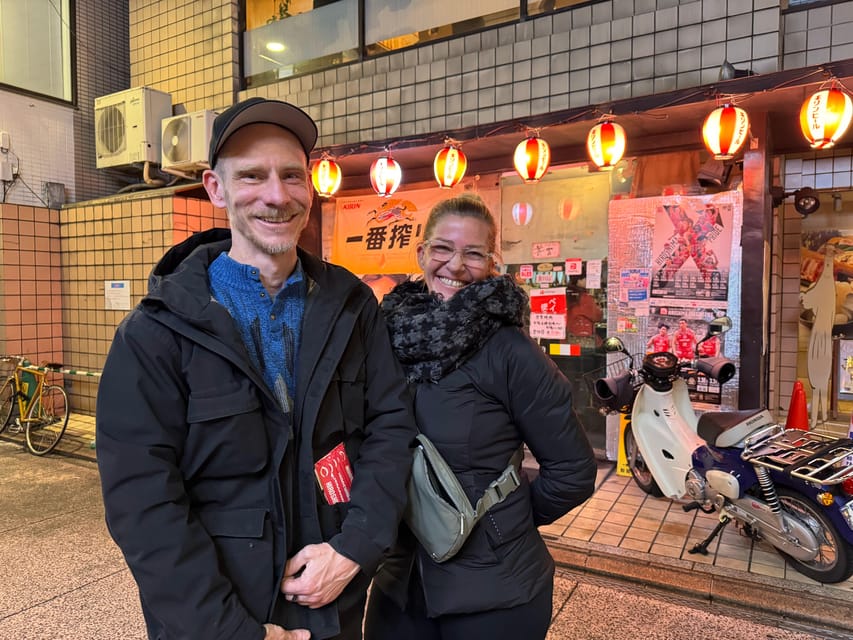
The meeting point is on the street in front of Don Quijote Hiroshima Hatchobori store. That is a practical landmark in the center of town, though the meeting itself is outdoors rather than inside the shop. Give yourself enough time to locate the correct side of the building and find your guide before the group sets off.
The first part of the evening helps you switch from sightseeing mode to dinner mode. You walk toward Hiroshima Hondori Shopping Street, a central pedestrian area filled with shops and evening activity. The walk takes about 30 minutes and gives your guide time to explain the neighborhoods, local eating habits, and what you are likely to encounter at the restaurants.
I like this opening because it provides context before the food begins. Instead of being dropped into a restaurant with a plate you cannot identify, you have a chance to ask questions and learn how the evening will work.
More Walking Tours in Hiroshima
- Hiroshima Historical Walking Tour – Why A-Bomb was Dropped
★ 4.8 · 893 reviews - Hiroshima Peace (Heiwa) Walking Tour at World Heritage Sites
★ 5.0 · 872 reviews - Hiroshima City 4hr Private Walking Tour with Licensed Guide
★ 5.0 · 437 reviews
Hondori Shopping Street after dark
Hondori is not a museum-style attraction. Its value is the everyday city scene: shops, signs, people heading out for dinner, and the feel of Hiroshima’s central shopping area in the evening. You are not simply being transported between restaurants. The walk connects the food to the part of town where people actually spend their nights.
The route can also help you get your bearings for the rest of your stay. If you are staying near central Hiroshima, you may want to return to Hondori on your own for shopping or a meal. Your guide may also point out nearby attractions and offer food suggestions for later in your visit.
This section is best viewed as a neighborhood introduction, not a major sightseeing stop. If you want long explanations at each landmark, you may find the walking portion fairly light. The emphasis is on food, conversation, and nightlife.
First restaurant: start with small plates and a drink
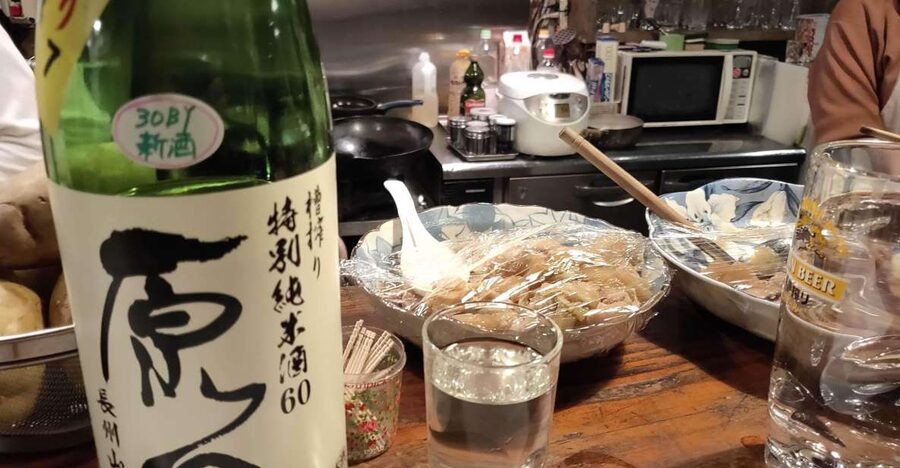
The first restaurant stop lasts about 30 minutes. You receive one included drink, which can be beer, sake, a cocktail, a spirit, or a non-alcoholic option. The food arrives as small plates, and the aim is variety rather than one large main course.
You might find fresh seafood, grilled items, tempura, or something you would not have thought to order without help. At least ten dishes are served across the full evening, but the exact selection depends on the season and which restaurants are available that night.
This is where the guide adds real value. A dish may look simple but have a particular way of eating it, or its name may tell you something about local food customs. Ken and Kensuke are repeatedly praised for explaining food clearly while keeping the mood easy and social. Alex also leads some tours and has been noted for including the whole group in the conversation.
The tachinomi style is important to understand. At these casual places, you may stand at a counter or table while sharing small dishes. That can feel more social and informal than a standard restaurant, but it is not ideal if you need to sit throughout dinner.
Second restaurant: more variety without over-ordering
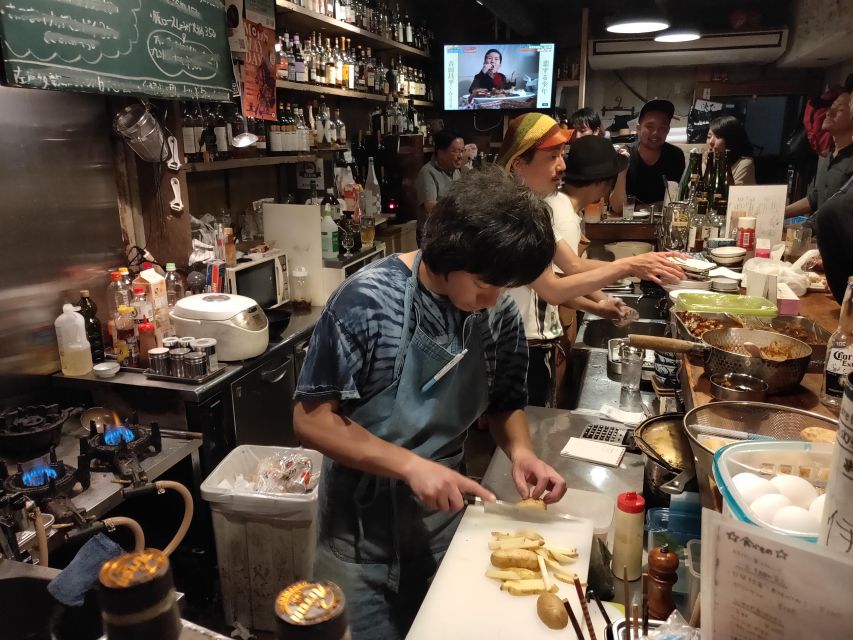
The second restaurant follows the same basic rhythm: another drink, another group of dishes, and a short walk or transition between venues. Spending less than 30 minutes at many stops prevents the meal from becoming heavy or repetitive.
The menu can include steamed foods, slow-simmered dishes, chicken, fish, and other small plates. Some foods may be familiar, while others are selected precisely because you might overlook them on a menu. I see this as one of the tour’s strongest features. You get a broad taste of local eating rather than a polished, narrow sample built only around famous dishes.
Several parts of the evening are designed for curious eaters. You should be willing to taste first and decide afterward. Not every bite will suit every person, and one participant specifically noted that some more unusual dishes were not a personal favorite. Still, the overall meal was plentiful, and the point is to try something outside your normal order.
The pacing also helps with portion control. Ten or more dishes can sound like too much, but the food is spread across three restaurants. One account describes tasting around 15 dishes without finding the quantity excessive, especially after a light lunch. I would still avoid eating a large meal beforehand.
A completely different kind of day out:
- Peaceful Hiroshima & Miyajima UNESCO 1 Day Bus Tour
★ 5.0 · 5,309 reviews - Hiroshima Peace Memorial Museum Ticket
★ 4.8 · 2,727 reviews - Hiroshima: Hiroshima and Miyajima UNESCO Sites 1-Day Tour
★ 4.9 · 2,330 reviews - Hiroshima Peace Memorial Museum Admission
★ 4.6 · 1,308 reviews
Hiroshima specialties and the chance of okonomiyaki
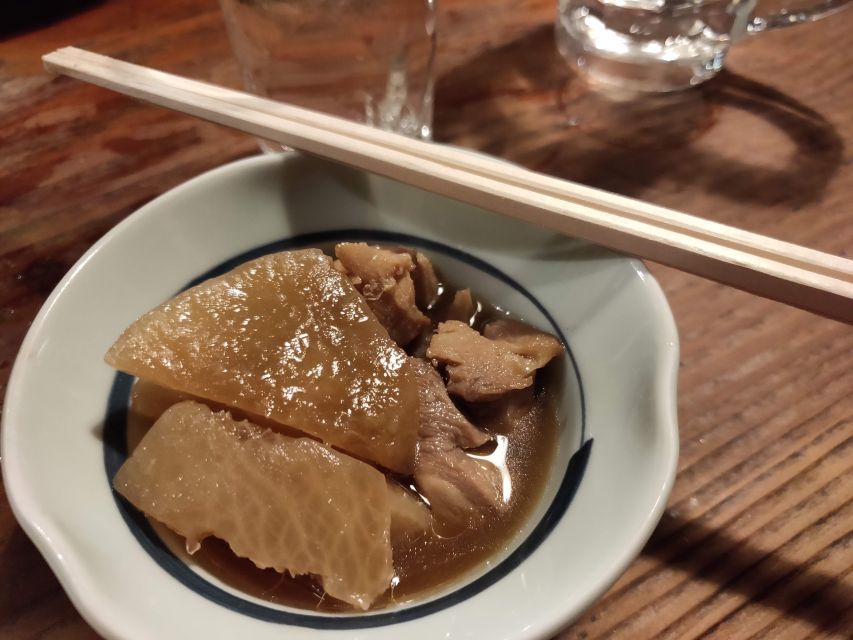
The exact food changes, but Hiroshima-style okonomiyaki is often part of the evening. That is a major reason to choose this tour if you have only one night in the city. Okonomiyaki is one of Hiroshima’s best-known local foods, and trying it alongside seafood, grilled dishes, and smaller izakaya plates gives you a more rounded picture of the city’s cooking.
The tour is not presented as a fixed okonomiyaki tasting, so you should not book it expecting a particular restaurant or exact recipe. Restaurant availability, season, and local conditions can change the route. Still, the food accounts make clear that okonomiyaki can be a highlight, and one stop may include several versions or preparations.
I appreciate this flexible approach. A rigid menu is easy to advertise, but a local food walk works better when the guide can use restaurants that are open and suitable that evening. The tradeoff is that you cannot know every dish in advance.
Nagarekawa Dori and Hiroshima’s evening atmosphere
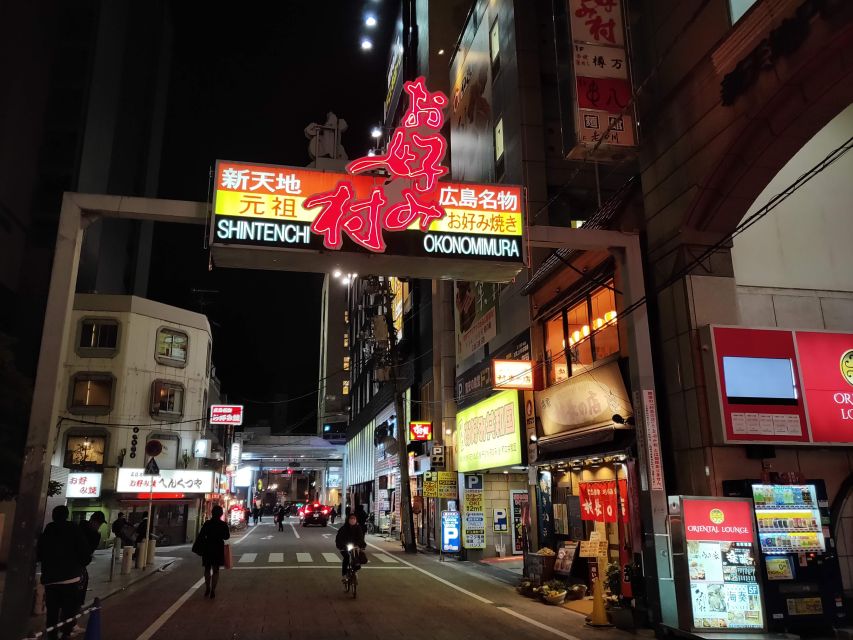
After the first two restaurant visits, the route reaches Nagarekawa Dori. This is Hiroshima’s main entertainment district, where the city’s evening dining and bar scene becomes more apparent. The walk lasts about 30 minutes and gives you a look at a different side of central Hiroshima than the shopping street.
For me, this part matters because food and nightlife are tied together in Japan. Small restaurants, counters, drinking spots, and late meals are not separate tourist attractions. They are part of how people socialize after work and meet friends.
Your guide can make this area less intimidating. Small local places may have limited English signage, compact counters, and menus that are not obvious to a first-time visitor. Entering with someone who can communicate in English and Japanese removes much of the guesswork.
Do not expect a formal nightlife tour with time inside several bars. The route uses Nagarekawa as part of the walk between food stops. The main event remains dinner.
Third restaurant: finish with local conversation
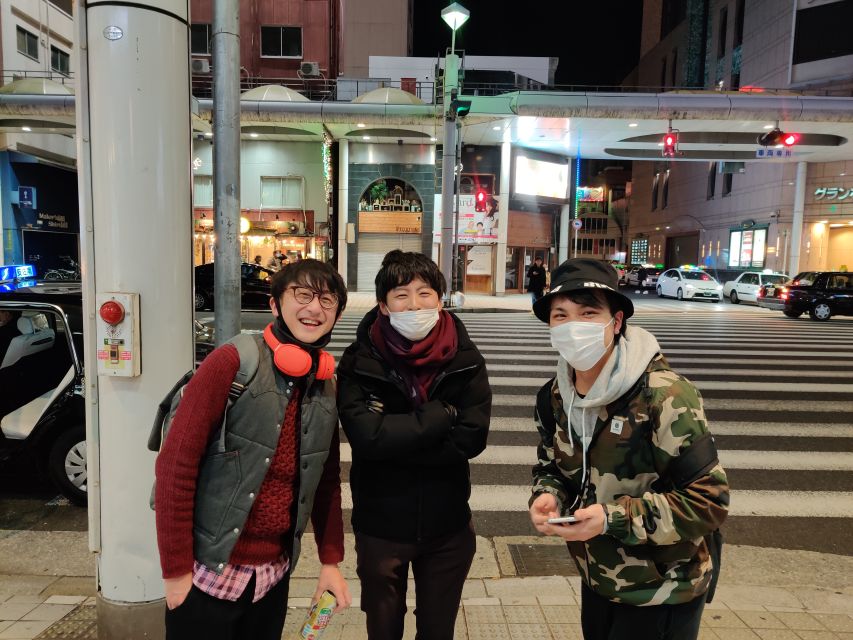
The final restaurant provides your third included drink and another group of dishes. By this point, the meal feels more like a shared evening than a sequence of tastings. You have had time to meet the rest of the group, compare reactions, and ask broader questions about life in Hiroshima.
One especially memorable possibility is meeting a restaurant owner with a sumo background. On one evening, the owner showed photographs from a former sumo career and provided a treasured autograph. That kind of encounter cannot be promised, but it illustrates the personal nature of the places used on the tour.
This final stop may be seated, although all or part of the evening can involve standing. Most stops are short, often under 30 minutes, so you are unlikely to settle into one restaurant for a long, conventional dinner. I would think of the format as a guided izakaya crawl with a full meal, rather than a restaurant reservation with a guide attached.
What the $94 price really covers
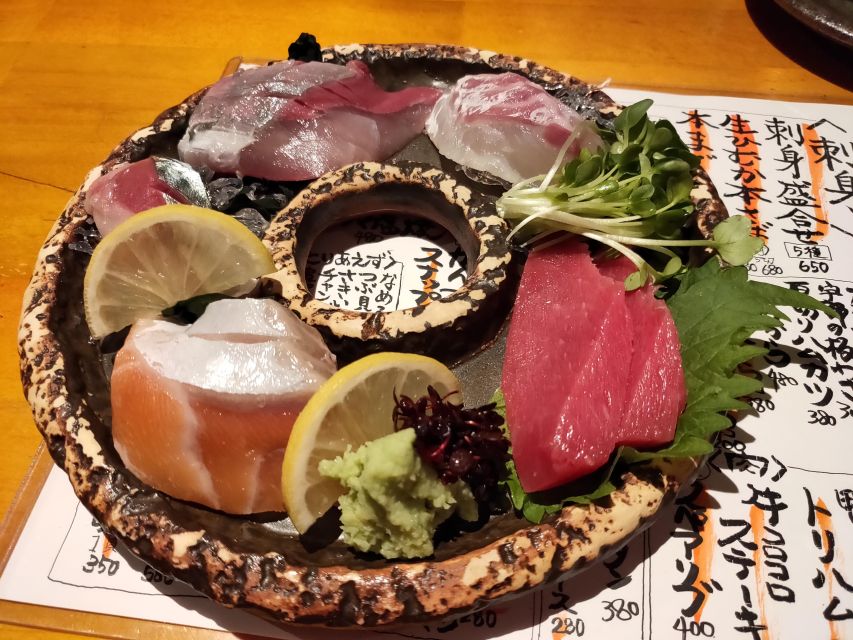
At $94 per person, the tour is not the cheapest way to eat in Hiroshima. You could certainly buy individual dishes and drinks for less if you already know where to go and can read the menus or communicate easily.
The value comes from the combination of three restaurant entries, at least ten dishes, three drinks, and a guide who handles the social and practical side of the evening. The tour takes you to places you might hesitate to enter alone, including small backstreet restaurants that may not be obvious to an international visitor.
Additional drinks are not included. They generally cost around 500 yen each and are paid directly to the restaurant. Three drinks are included in total, one at each stop, and non-alcoholic choices are available. If you drink alcohol, remember that Japan’s legal drinking age is 20.
For a short visit, the price can make sense. You are paying for dinner, local access, translation help, neighborhood orientation, and the chance to try a wide range of dishes in one evening. If your main goal is simply to eat a large amount of one favorite food, you may get better value by dining independently.
Dietary needs, age limits, and comfort
The local partner will try to accommodate food restrictions and preferences, but you should communicate them before the tour. One participant with allergies was able to receive many dishes that were suitable, which is encouraging, though no food tour can promise that every restaurant or dish will work for every allergy.
Because the menu changes, I would not assume that a specific substitute will always be available. Make your restrictions clear when booking and remind the guide at the meeting point.
All participants must be at least 13 years old, and children under 13 cannot join. The minimum drinking age is 20, but non-alcoholic beverages are available for younger participants who meet the 13-plus age requirement.
Comfort also matters. Tachinomi restaurants involve standing at a counter or table, and the tour includes about an hour of walking in total. At least one restaurant is usually seated, but you should be prepared for a casual setup rather than a formal, fully seated dinner.
Who will enjoy this Hiroshima food tour most
I would recommend this tour to you if:
- You want to try local foods but feel unsure about ordering alone.
- You enjoy small dishes and tasting several different things.
- You want to see central Hiroshima at night, not only its daytime sights.
- You like meeting a guide and other people over food.
- You have only one evening in Hiroshima.
- You are comfortable with standing, walking, and an evening that changes pace often.
I would hesitate to recommend it if you need a guaranteed menu, a quiet meal, or a long seated dinner. It may also be a poor fit for very selective eaters, since the tour’s pleasure comes from trying dishes you might otherwise skip.
The guide’s personality is a major part of the value. Ken is described as friendly, funny, attentive, and easy to talk with, while Kensuke is noted for his clear explanations and relaxed manner. Alex also leads some departures. Guide assignment can vary, but the strongest pattern is a personal host who stays involved rather than simply pointing out restaurants.
Practical booking advice
The tour lasts three hours, but allow extra time before and after if you have evening plans. It begins and ends at Don Quijote Hiroshima Hatchobori store, and hotel pickup and drop-off are not included.
Restaurant stops, timing, and the route may change. That is normal for a food walk built around local businesses, but it means you should avoid booking a tight theater reservation or train connection immediately afterward.
Private and small-group options are available. A small group may be especially useful if you are shy about entering unfamiliar restaurants, have dietary questions, or want more time to speak with the guide.
Solo bookings need one extra bit of attention. If the minimum of two participants is not reached, you may be offered another date, asked to pay a 3,000-yen solo supplement, or given a full refund. Check this before finalizing plans if you are traveling alone.
Free cancellation is available up to 24 hours before the tour for a full refund, and you can reserve now and pay later. Those policies help if your Hiroshima schedule is still changing.
Should you book it?
Book this Hiroshima food and culture tour if you want a sociable night of local dishes, casual restaurants, and useful city orientation. The strongest reasons are the range of food, the three-stop structure, and the guide’s help with places you might never find or enter by yourself.
I would choose it early in a Hiroshima visit, ideally on your first or second evening. You can learn what foods you like, ask for restaurant suggestions, and return to Hondori or Nagarekawa later with more confidence.
Skip it if you want complete control over the menu or cannot comfortably stand and walk. For most curious eaters, though, $94 is a fair price for dinner, drinks, and a guided introduction to Hiroshima’s everyday food scene.
FAQ
How long does the Hiroshima food tour last?
The tour lasts three hours, including the walks and three restaurant visits.
Where does the tour meet and finish?
It meets on the street in front of Don Quijote Hiroshima Hatchobori store and returns there at the end.
How many restaurants are included?
You visit three different local restaurants. All or part of the meal may take place in tachinomi-style venues, where you stand at a counter or table.
How many drinks are included?
Three drinks are included, with one drink at each restaurant. You can choose alcoholic or non-alcoholic beverages. Extra drinks are not included and generally cost about 500 yen each.
Is the tour suitable for children?
Participants must be at least 13 years old. Children under 13 cannot join. The legal drinking age in Japan is 20, and non-alcoholic drinks are available.
Can the tour accommodate food allergies or dietary preferences?
The local partner will do their best to accommodate restrictions and preferences. You should provide this information in advance, and the exact dishes may change with the season and restaurant availability.
More Dinner Experiences in Hiroshima
- Deep Backstreet Osaka Tours (Option to add Dinner)
★ 5.0 · 1,290 reviews - Osaka: Deep Backstreets Walking Tour with Dinner Option
★ 4.9 · 902 reviews - Sumida River: Japanese Traditional Yakatabune Dinner Cruise
★ 4.6 · 779 reviews - Kyoto Gion Cultural Walk & Geisha Show with Dining Options
★ 5.0 · 518 reviews
More Dining Experiences in Hiroshima
- Dinner Cruise on HANAIKADA (Raft-Type Boat) with Scenic View of Miyajima
★ 5.0 · 21 reviews - Tokyo Bar Hopping Tour in Shinjuku (All-You-Can-Drink + Dinner)
★ 5.0 · 3,587 reviews - Tokyo: Sumo Show and Dining Experience
★ 4.8 · 2,742 reviews - Tokyo: Samurai Restaurant Show Ticket with 2 Drinks
★ 4.5 · 1,307 reviews
Just added in Hiroshima
- Hiroshima Peace Memorial Museum Ticket★ 4.8 · 2,727 reviews
- Hiroshima Peace Memorial Museum Admission★ 4.6 · 1,308 reviews
- Private Full Day Hiroshima Tour★ 4.5 · 29 reviews
- The Peace Memorial to Miyajima : Icons of Peace and Beauty★ 4.5 · 31 reviews
- Shore Excursion from Hiroshima Port : Private Tour in Hiroshima★ 5.0 · 17 reviews
- Hiroshima & Miyajima All-Inclusive Tour w/Licensed guide Pancho★ 5.0 · 54 reviews
- Hiroshima Country Cycling: Explore Rural Life 1 HR from City★ 5.0 · 22 reviews
- Hiroshima Saijo Sake Tasting Tour with visit to 7 Breweries★ 5.0 · 104 reviews
Dining Experiences, compared.
Tokyo Bar Hopping Tour in Shinjuku (All-You-Can-Drink + Dinner)
Read our review →
Deep Backstreet Osaka Tours (Option to add Dinner)
Read our review →
Deep Backstreets Walking Tour with Dinner Option
Read our review →
Sumida River: Japanese Traditional Yakatabune Dinner Cruise
Read our review →
Kyoto Gion Cultural Walk & Geisha Show with Dining Options
Read our review →Kyoto Gion Cultural Walk & Geisha Show with Dining Options
Read our review →Browse the lists this tour appears in