
Reviewed · TEMPLES AND SHRINES
Hiroshima & Miyajima 6.5h Guided Tour – Dome, Park & Shrine
Two sides of Hiroshima meet here. This 6.5-hour tour links the spiritual beauty of Miyajima with the sobering Atomic Bomb Dome and Peace Memorial Park, giving you a clear sense of the area in one well-organized outing. I like the small group of no more than 10 people, which makes it easier to ask questions and stay close to your guide. I also like the mix of train, ferry, walking, shrine, shopping street, and museum.
The main drawback is time. Miyajima receives about two hours of sightseeing, while the Peace Memorial Museum gets roughly one hour. That is enough for an introduction, but not enough for a leisurely island visit and a slow museum visit on a busy day. You will also pay for public transportation and meals separately.
Guides are a major strength. Shion, a Hiroshima local with family ties to the 1945 bombing, has made a particularly strong impression through his personal stories and care. Rie, Bo, Rei, Hayato, Shion, Lena, Angel, and Kana have also been praised for clear explanations, warm manners, and practical help. The experience costs $96 per person, plus transport and food, and offers good value if you want the main sights without working out every train and ferry connection yourself.
In This Review
- Key points to know before booking
- Meeting your guide at Hiroshima Station
- Train and ferry travel to Miyajima
- Itsukushima Shrine and the changing torii gate
- Omotesando Street, oysters, and momiji manju
- Returning to Hiroshima and the Atomic Bomb Dome
- Peace Memorial Park and its monuments
- One hour inside the Peace Memorial Museum
- How the guides shape the experience
- Is $96 a fair price?
- Who should choose this Hiroshima tour?
- Practical tips for a smoother day
- Should you book it?
- FAQ
- Where does the tour meet?
- How can I recognize the guide?
- How long does the tour last?
- What transportation does the tour use?
- Are transportation fares included?
- Is the Peace Memorial Museum always included?
- Is the tour suitable for wheelchair users?
- What happens if the weather is rainy?
Key points to know before booking
- Two UNESCO World Heritage Sites in one tour: See the Atomic Bomb Dome and Itsukushima Shrine in the same day.
- Public transport is part of the experience: You travel by train and ferry, so expect walking, stairs, stations, and changing pace.
- Small groups make a difference: With up to 10 people, it is easier to hear the guide and ask about sensitive subjects.
- The museum can feel rushed: One hour gives you a strong introduction, but busy conditions may call for more time.
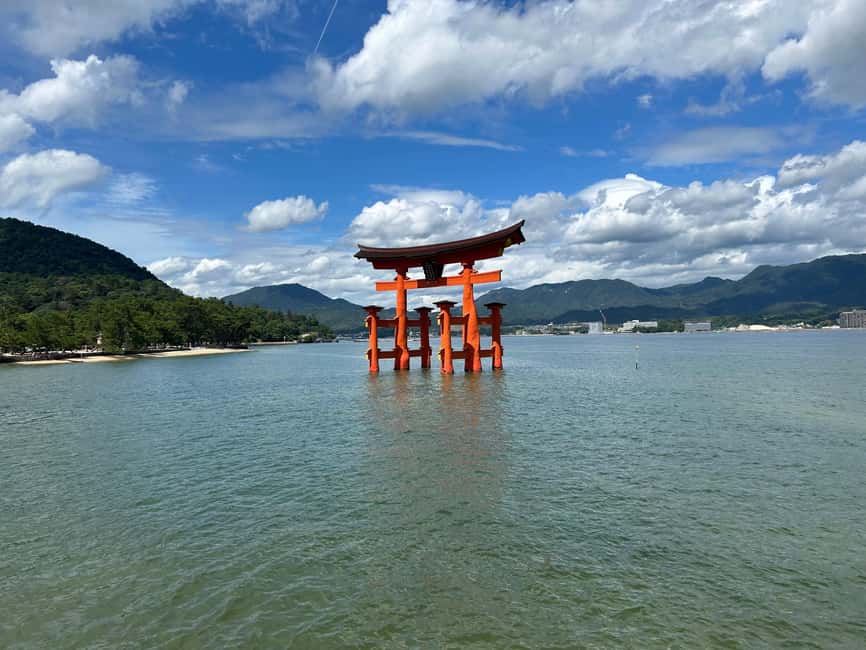
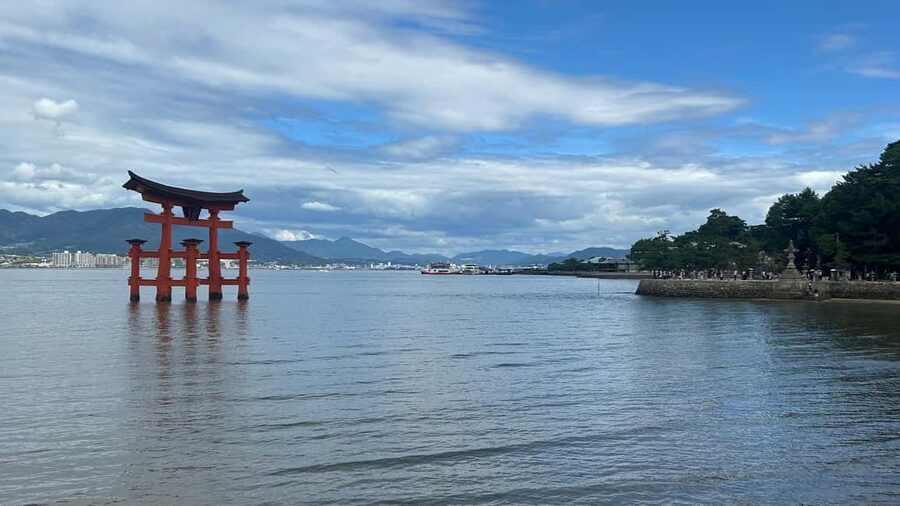
- Tides change the torii view: The famous gate may appear surrounded by water or accessible from the shore, depending on the tide.
- Bring yen and good shoes: Transport fares, snacks, and purchases are not included, and the day involves extended walking.
Meeting your guide at Hiroshima Station
The tour begins at Hiroshima Station’s North Exit, also called the Shinkansen Exit, on the second floor. Do not go to the South Exit, which serves the tram and bus side of the station.
The meeting place is unusually easy to identify. Look for the benches between the JR Green Ticket Office, called Midori no Madoguchi, and the Starbucks directly opposite it. Your guide will have a bright fluorescent green band attached to their bag.
This detail matters because Hiroshima Station can feel confusing when you are moving between bullet trains, local trains, buses, and trams. Arrive with enough time to find the correct exit. If you come through the Shinkansen area, follow signs for the North Exit rather than heading down toward the street-level transport connections.
You should bring Japanese yen in cash. The tour price does not include transportation, meals, or shopping, and the instructions specifically call for cash. Since you are traveling by train and ferry, keep your ticket money easy to reach rather than buried in your luggage.
More Temples and Shrines in Hiroshima
- Hiroshima and Miyajima Day Trip with Itsukushima Shrine & Ferry
★ 5.0 · 378 reviews - Miyajima: Cultural Experience in Zen Temple
★ 5.0 · 258 reviews - Day Trip to Hiroshima & Miyajima with Itsukushima Shrine
★ 4.6 · 124 reviews
Train and ferry travel to Miyajima
The first ride takes about 25 minutes by train, followed by a ferry ride of about 15 minutes. These transfers are not wasted time. They let you watch Hiroshima give way to the water and prepare for a very different setting on Miyajima Island.
The tour uses public transportation, so this is not a coach excursion where you simply sit back and step out at each stop. You will walk through the station, board the train, move with the group, and board the ferry. I like this approach because it shows you how to reach Miyajima on your own later, but it requires comfortable shoes and a little energy.
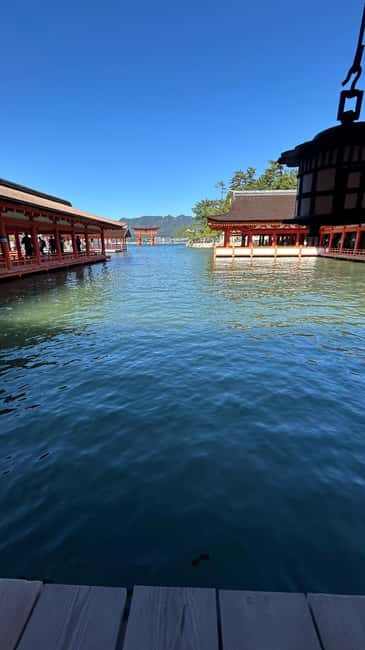
The ferry is one of the pleasant moments of the day. It gives you a short scenic ride toward the island and a chance to see the famous torii gate from the water, although the exact view depends on the tide. At high water, the gate may appear to float offshore. At lower water, the shore around it can look quite different.
Do not treat the ferry crossing as a guarantee of a perfect floating-gate photograph. Tide levels control the scene, and weather can change the mood quickly. The tour operates in rain or sunshine, so bring suitable clothing and rain gear when needed.
Itsukushima Shrine and the changing torii gate
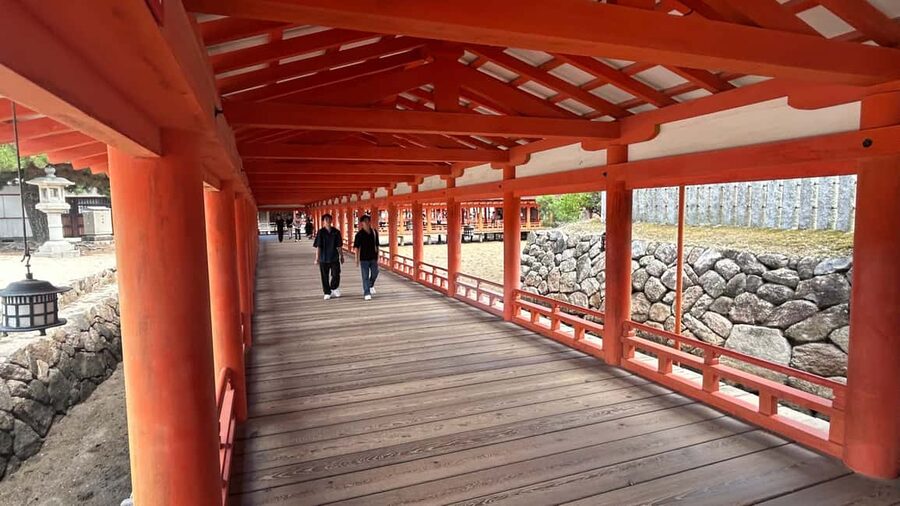
The tour allows about 80 minutes at Itsukushima Shrine, including a guided visit, sightseeing, and photo time. This is the longest single stop, and rightly so. The shrine is the heart of Miyajima, with its red structures and sea-facing setting creating one of Japan’s most recognizable views.
Your guide can explain the religious importance of the island and the meaning of the shrine’s design rather than leaving you with a quick photograph and a name to remember. The setting is spiritual, but it is also active and popular, so expect other people around the approach and shrine grounds.
Crowds can affect this part of the day. One person on the tour chose not to enter because the line was too long, and guide Shion used the time to show other sights instead. That is useful flexibility, but it also points to the limits of a fixed schedule. If the shrine is busy, you may have to choose between waiting, making a shorter visit, or seeing more of the island with your guide.
The 80-minute slot should suit you if this is your first visit and you want the main shrine experience. It may disappoint you if you hope to linger over every building, take many photographs, or explore beyond the central area. Tide conditions, queues, and the group’s pace all affect how much time you actually spend inside.
Omotesando Street, oysters, and momiji manju
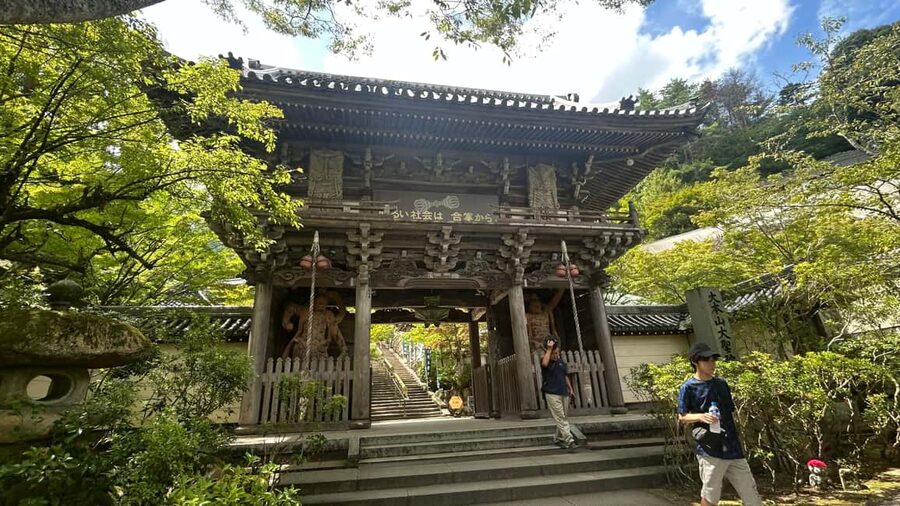
After the shrine, you get about 45 minutes around Miyajima Omotesando Shopping Street. This is the liveliest part of the island visit, with shops, food, and a steady flow of people moving between the ferry area and the shrine.
The street is a good place to sample local specialties. Oysters are associated with the area, and momiji manju, a maple-leaf-shaped sweet, is a popular treat to look for. Meals are not included, so this is your chance to buy a snack or make a quick food stop with your own yen.
Forty-five minutes passes quickly. You can browse, taste something, and pick up a small souvenir, but you will not have time for a long meal and broad shopping tour. Keep an eye on the meeting instructions and do not wander too far from the group.
Miyajima is beautiful even when crowded, and the island adds welcome contrast to the serious memorial sites later in the day. One visitor described the gardens and shrine area as a spiritual lift after the Peace Museum. On this schedule, however, you see only a compact slice of the island. If Miyajima is your main reason for visiting Hiroshima, plan a separate day or return on your own.
A completely different kind of day out:
- Peaceful Hiroshima & Miyajima UNESCO 1 Day Bus Tour
★ 5.0 · 5,309 reviews - Hiroshima Peace Memorial Museum Ticket
★ 4.8 · 2,727 reviews - Hiroshima: Hiroshima and Miyajima UNESCO Sites 1-Day Tour
★ 4.9 · 2,330 reviews - Hiroshima Peace Memorial Museum Admission
★ 4.6 · 1,308 reviews
Returning to Hiroshima and the Atomic Bomb Dome
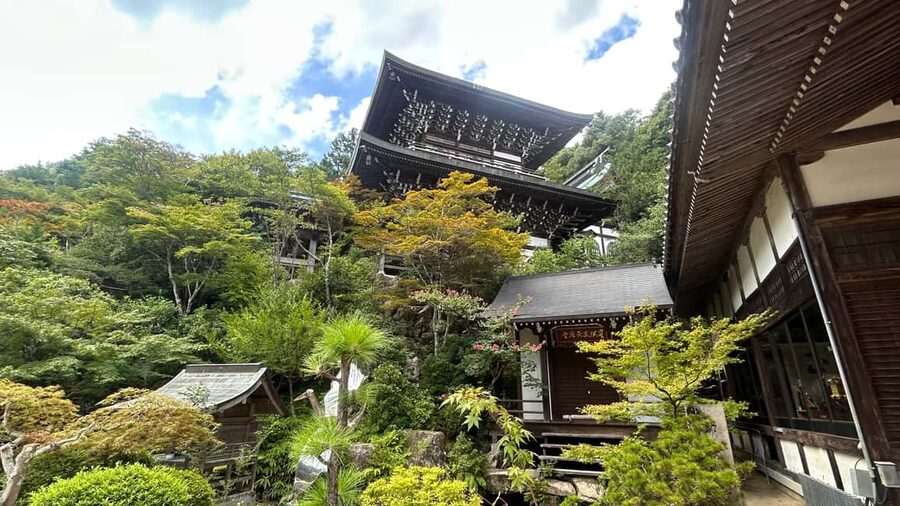
The return involves another ferry, taking about 15 minutes, followed by a train ride of roughly 45 minutes. The longer return train period gives your legs a rest, though the full day still involves plenty of walking and public transport.
Back in Hiroshima, the tour begins its more solemn section at the Atomic Bomb Dome. The visit lasts about 30 minutes and includes guided sightseeing and photo time. The ruined building is direct and difficult to ignore. Its damaged structure is a physical reminder of the atomic bombing on August 6, 1945, and its location beside the river makes the surrounding city feel close rather than distant from the event.
The Dome is best approached with context. A guide can explain what you are seeing and connect it to the wider memorial area, helping you avoid treating it as just another striking building. Several guides, including Bo and Hayato, have been praised for explaining the bombing and Hiroshima’s past with clarity and care.
Thirty minutes is enough to look at the Dome from different angles and hear its basic story. It is not a long architectural visit, and there is no need for one. The power here comes from pausing, looking closely, and understanding why this particular structure was preserved.
Peace Memorial Park and its monuments
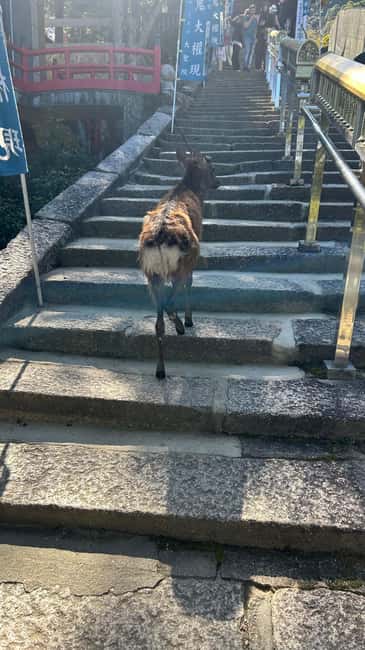
You then walk through Hiroshima Peace Memorial Park for about 40 minutes. This is not simply a green break between attractions. The park contains monuments connected with the victims, remembrance, and the city’s message of peace.
A guide is especially useful here because the memorials can seem abstract when you are moving through them alone. You may recognize the Children’s Peace Monument or the Cenotaph from photographs, but the explanations help tie each place to people and events rather than leaving you with a list of names.
The tone changes sharply from Miyajima. That contrast is one of the tour’s strongest features, but it can also feel emotionally demanding. The island’s shrine, food, and sea views offer a gentle beginning. The Dome and park then ask you to slow down and face a painful part of modern history.
Keep your expectations measured. The park visit is guided and focused, not an open-ended period for wandering. If you like to read every plaque or sit quietly at each monument, you may want extra time after the tour ends.
One hour inside the Peace Memorial Museum
The Peace Memorial Museum is scheduled for about one hour and is often the emotional center of the day. Exhibits provide insight into the bombing, its victims, and the human effects that followed. This is not a light museum stop, and you should allow yourself some quiet time afterward if possible.
The one-hour visit gives you a meaningful introduction, but it may feel short. The museum can be busy, and one hour may allow only a brisk look at the exhibits. A few people have wished for more time here, especially after moving quickly through the museum on a crowded day.
I would book this tour if you want the guide’s framing and a first visit to the museum. I would not book it expecting to study every display in detail. If the museum matters most to you, return independently with more time, or treat the tour as an orientation before a longer visit.
The tour finishes at the museum, which is practical if you want to continue there on your own. It also means you do not return to Hiroshima Station with the group. If you have a train to catch, allow time for your own journey afterward. One guide, Shion, went out of his way to help a participant reach a train back to Kyoto on time, but you should still plan carefully rather than rely on a last-minute rescue.
The museum closes from February 16 through February 21. During those dates, the museum visit is skipped while the rest of the tour continues. If the museum is essential to your Hiroshima plans, check the dates before booking.
How the guides shape the experience
The guides receive the strongest praise, and that praise is easy to understand from the format. A 10-person group allows for direct conversation, and the route gives the guide many chances to explain both local customs and difficult history.
Shion is a Hiroshima local and a descendant of families who survived the bombing as well as relatives who lost their lives. His family connection adds a personal layer, but his value is not only emotional. He has also been praised for practical help, strong English, local recommendations, and quick adjustments when queues or schedules change.
Bo has been praised for excellent English and for speaking Chinese and Japanese as well. Rie has been described as warm, organized, and gracious. Rei helped a participant find a pharmacy, which shows the sort of small practical assistance that can matter during a long day. Lena, Angel, Hayato, and Kana have also been praised for friendliness, clear information, and keeping the group moving.
English is the listed tour language. One participant found the guide’s English somewhat difficult to follow, although the day remained informative and well paced. That is a fair reminder that guide assignments can vary. The overall guide record is very strong, but no tour can promise that every guide will communicate in exactly the same style.
Is $96 a fair price?
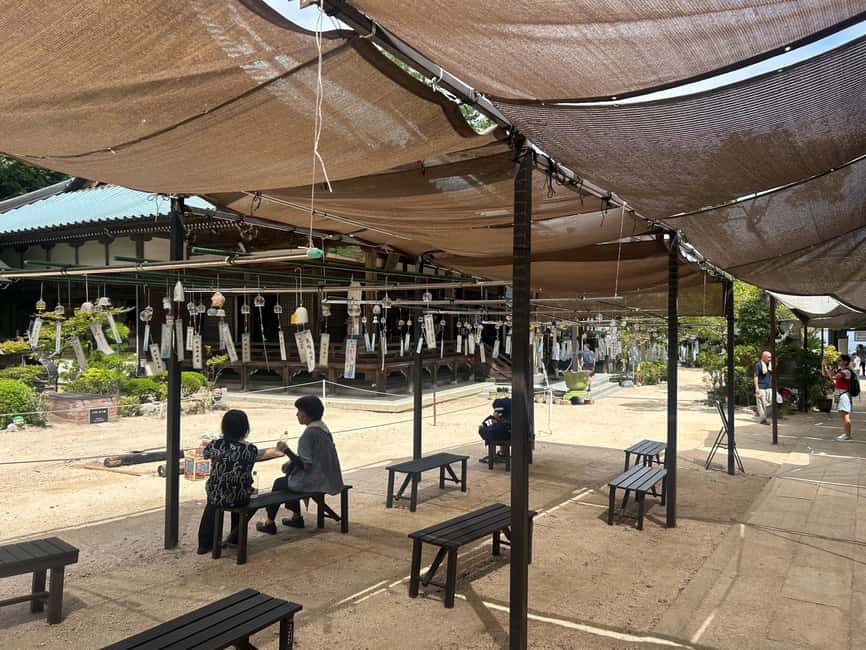
At $96 per person, this is not the cheapest way to visit Hiroshima and Miyajima. You still pay for train and ferry fares, food, and any personal purchases. The price makes more sense if you value the guide’s explanations, the small group, and the ease of moving between two major areas in one day.
You are paying for structure as much as admission. The route connects Hiroshima Station, Miyajima, the Dome, the park, and the museum without requiring you to research train timings, ferry connections, entrances, or the order of visits. Admission fees are included, though transportation is not, so read the inclusions carefully.
The strongest value comes when you have limited time in Hiroshima. In one 390-minute outing, you see the island shrine, the shopping street, the Dome, the park, and the museum. The tradeoff is that none of these receives unlimited time.
I think the price is reasonable for a first-time visitor who wants a guided overview and prefers not to manage public transport alone. It is less appealing if you are comfortable navigating Japan, want a long Miyajima hike, or plan to spend several hours inside the museum.
Who should choose this Hiroshima tour?
This tour suits you best if:
- You have one day or less for Hiroshima and Miyajima.
- You want historical explanations rather than sightseeing alone.
- You are comfortable with trains, ferries, and extended walking.
- You prefer a small group over a large coach.
- You want a guide who can answer questions and offer local advice.
- You are visiting both sites for the first time.
It is not suitable for children under six, people with mobility impairments, wheelchair users, or anyone bringing large luggage. Electric wheelchairs and oversize bags are not allowed. The route includes public transportation and walking, so pack light and wear shoes that can handle a full day.
The experience also works well for solo visitors and couples who want company without joining a huge group. Families with older children should consider the emotional weight of the Peace Museum and the practical demands of the walking schedule.
Practical tips for a smoother day
Arrive at the North Exit early enough to find the benches between the JR Green Ticket Office and Starbucks. The fluorescent green band on the guide’s bag is your visual cue.
Bring cash in Japanese yen for transport, snacks, oysters, momiji manju, and other purchases. Meals are not included, and the 45-minute shopping stop is better for a quick bite than a drawn-out restaurant visit.
Wear comfortable walking shoes and carry rain gear. The tour runs in wet weather, and the ferry crossing remains part of the plan. Check the tide if the floating torii gate is a top priority, but remember that the tide may not match the photograph you have in mind.
Keep your luggage at your accommodation or in suitable storage before meeting the group. Large bags are not allowed, and carrying them through stations and onto ferries would make the day harder anyway.
You can cancel up to 24 hours ahead for a full refund, and the reserve-now, pay-later option gives you some flexibility when your Japan schedule is still changing.
Should you book it?
Book this tour if you want a well-paced first look at Hiroshima and Miyajima, with a local English-speaking guide to explain both the shrine and the memorial sites. The route is efficient, the group is small, and the guides have repeatedly shown warmth, flexibility, and strong command of Hiroshima’s story.
Skip it if you want to spend most of the day on Miyajima, take your time in the museum, or travel at a slower pace. For most first-time visitors with limited time, though, the combination is hard to beat. Go in knowing that the day is full, the museum portion is brief, and the emotional shift from island beauty to wartime memory is powerful.
FAQ
Where does the tour meet?
Meet at Hiroshima Station’s North Exit, also called the Shinkansen Exit, on the second floor. Wait on the benches between the Midori no Madoguchi JR Green Ticket Office and the Starbucks opposite it.
How can I recognize the guide?
The guide will have a bright fluorescent green band attached to their bag.
How long does the tour last?
The tour lasts 390 minutes, or 6.5 hours. Starting times depend on availability.
What transportation does the tour use?
The route uses public trains and ferries. The listed journey includes a 25-minute train ride, a 15-minute ferry ride to Miyajima, another 15-minute ferry ride on the return, and a 45-minute train ride back to Hiroshima.
Are transportation fares included?
No. Transportation fares are not included. Bring Japanese yen in cash for trains, ferries, food, and purchases.
Is the Peace Memorial Museum always included?
The museum visit is skipped from February 16 through February 21 because the museum is closed. The rest of the tour continues as planned.
Is the tour suitable for wheelchair users?
No. The tour is not suitable for wheelchair users, people with mobility impairments, or electric wheelchair users.
What happens if the weather is rainy?
The tour operates rain or shine. Bring suitable clothing and rain gear, and wear comfortable shoes for the extended walking.
Just added in Hiroshima
- Hiroshima Peace Memorial Museum Ticket★ 4.8 · 2,727 reviews
- Hiroshima Peace Memorial Museum Admission★ 4.6 · 1,308 reviews
- Private Full Day Hiroshima Tour★ 4.5 · 29 reviews
- The Peace Memorial to Miyajima : Icons of Peace and Beauty★ 4.5 · 31 reviews
- Shore Excursion from Hiroshima Port : Private Tour in Hiroshima★ 5.0 · 17 reviews
- Hiroshima & Miyajima All-Inclusive Tour w/Licensed guide Pancho★ 5.0 · 54 reviews
- Hiroshima Country Cycling: Explore Rural Life 1 HR from City★ 5.0 · 22 reviews
- Hiroshima Saijo Sake Tasting Tour with visit to 7 Breweries★ 5.0 · 104 reviews
Temples and Shrines, compared.
![[Kyoto & Nara Day Tour] Sagano Scenic Railway & Nara Park & Fushimi Inari Taisha Thousand Torii Gates & Togetsukyo Bridge & Bamboo Grove & Kimono Forest (Departing from Osaka)](https://media.japanvisits.com/wp-content/uploads/kyoto-nara-day-tour-sagano-scenic-railway-nara-park-fushimi-inari-taisha-thousand-torii-gates-togetsukyo-bridge-bamboo-grove-kimono-forest-departing-from-osaka-k110001-400x257.jpg)
Kyushu One-Day Tour: Yufuin no Mori Train & Yufuin Town & Nyoirin-ji Temple & Dazaifu & Hell Hot Springs (Departing from Fukuoka)
Read our review →
Fushimi Inari, Kinkakuji, Bamboo Grove 1 Day Bus Tour
Read our review →
Tea Ceremony in a Traditional Tea House in Kiyomizu
Read our review →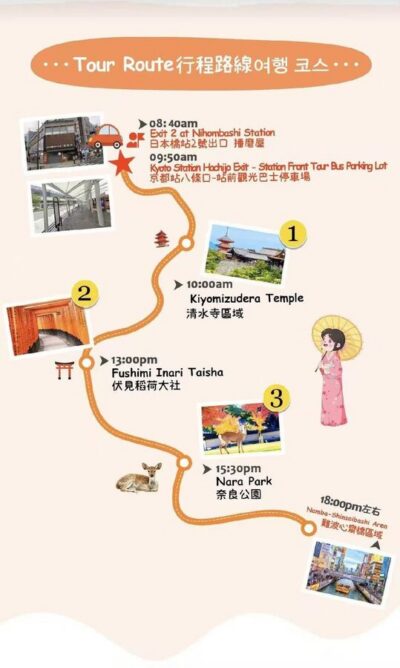
Kyoto Nara Day Trip │ Kiyomizu-dera Temple + Fushimi Inari-taisha Shrine + Nara Park (Departing from Osaka/Kyoto)
Read our review →
Browse the lists this tour appears in