
Reviewed · SAKE TASTINGS
Historic Kanda Sake Tasting at Tokyo’s Oldest Shop (1596)
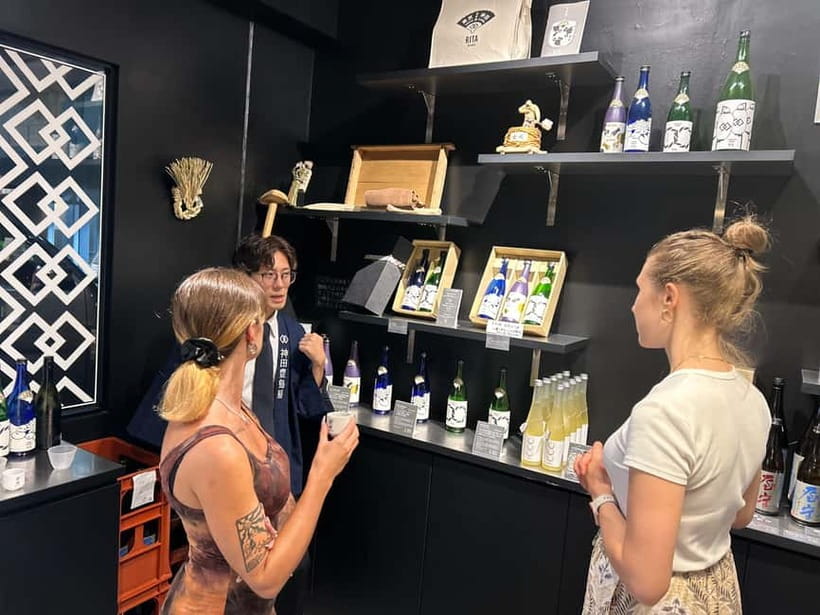
Sake tells Tokyo’s story in small cups. This two-hour Kanda experience combines a visit to a shop founded in 1596 with guided tasting, making it a useful introduction to Japanese sake rather than a simple bar stop. I especially like the small group of up to 10 and the chance to taste bottles sold at the shop itself.
I also like the local angle. You walk through Kanda’s West Exit shopping street, learn why the area is closely tied to office-worker drinking culture, and receive recommendations for nearby izakayas. The main consideration is that food is not included, so you should eat before arriving, and the tasting pours are modest at about 10 to 20 milliliters each.
In This Review
- Key points to know before booking
- Why Kanda is a smart place for a sake tour
- Meeting at NewDays Kanda South Entrance
- A 20-minute walk through Kanda’s West Exit shopping street
- Entering Toshimaya Rita-Shop, founded in 1596
- Seven sake tastings in 10 to 20 milliliter pours
- What the guide adds to the tasting
- Why the $38 price can make sense
- Who will get the most from this experience
- Practical tips for a smoother visit
- Should you book the Kanda sake tasting?
- FAQ
- How long does the sake tasting tour last?
- Where does the tour meet?
- How many types of sake will I taste?
- How large is the group?
- Do I need to bring identification?
- Is food included?
Key points to know before booking
- A shop founded in 1596: Toshimaya Rita-Shop gives the tasting a genuine historical setting.
- Seven small pours: The included tastings let you compare styles without committing to full glasses.
- Kanda beyond the station: A short walk introduces one of Tokyo’s long-running drinking districts.
- English-speaking local guide: Recent tours led by Fumino-san received especially warm praise for clear English and useful Tokyo advice.
- Strict meeting rule: The guide can wait only five minutes, and late arrivals cannot join midway.
- Adults only: You must be at least 20 and bring a passport or valid identification for age verification.
Why Kanda is a smart place for a sake tour
Kanda is not the Tokyo most first-time visitors picture. It is not mainly about grand temples or neon entertainment. Instead, the area is closely linked with everyday city life, including the after-work drinking habits of Japanese salarymen.
That makes it a good setting for learning how sake fits into modern Tokyo. You are not tasting in an isolated classroom with no connection to the city around you. You begin near Kanda Station, walk through a local shopping street, and then move into a shop with centuries of sake-selling history.
I like this combination because the setting gives the tasting some meaning. You can learn about the drink while also seeing the kind of neighborhood where people have long met for food, conversation, and a cup of something fermented.
The experience lasts two hours, which is enough time for explanation and comparison without taking up half your day. You return to the station area at the end, so it is easy to continue sightseeing or make your way to dinner.
More Sake Tastings in Tokyo
- Sake Tasting Masterclass in Shinjuku (8+ Varieties with a Pro)
★ 5.0 · 271 reviews - Tsukiji: Outer Market Walking Tour & Sake Tasting Experience
★ 4.9 · 81 reviews - Tsukiji: Unlimited Sake Tasting Experience
★ 4.9 · 67 reviews
Meeting at NewDays Kanda South Entrance
The tour begins outside NewDays at the South Entrance of Kanda Station. NewDays is a convenience store, so do not expect a large tour office or a formal visitor center. The guide will hold a sign identifying the sake tasting tour.
This is a meeting point where precision matters. The guide can wait only five minutes, and you cannot join after the group has left. Give yourself extra time to find the correct station exit, especially if you are unfamiliar with Tokyo’s rail stations.
You need to bring a passport or another valid form of identification. Japan’s legal drinking age is 20, and your age will be checked before you take part. This rule applies even if you look clearly over 20, so do not leave your passport at the hotel unless you have another accepted ID.
Wear comfortable shoes and comfortable clothes. The walk is not presented as a strenuous outing, but you will spend time moving through the Kanda area and standing during the tasting.
A 20-minute walk through Kanda’s West Exit shopping street
The first part of the outing is a guided visit through Kanda’s West Exit shopping street. It takes about 20 minutes, so this is an introduction rather than a long neighborhood tour.
The value here is context. Your guide can point out how Kanda functions as a drinking area and explain its connection with Japanese office workers. That helps you understand the practical side of local drinking culture, where sake is often enjoyed with food and conversation rather than treated only as a special-occasion drink.
You should keep your expectations in check. This short walk does not promise a long list of monuments or major sightseeing sights. Its purpose is to connect the station, the neighborhood, and the sake shop before the tasting begins.
That short format suits you if you want a focused activity. If you are hoping for a full walking tour of Kanda, you will need to explore more on your own afterward.
Entering Toshimaya Rita-Shop, founded in 1596
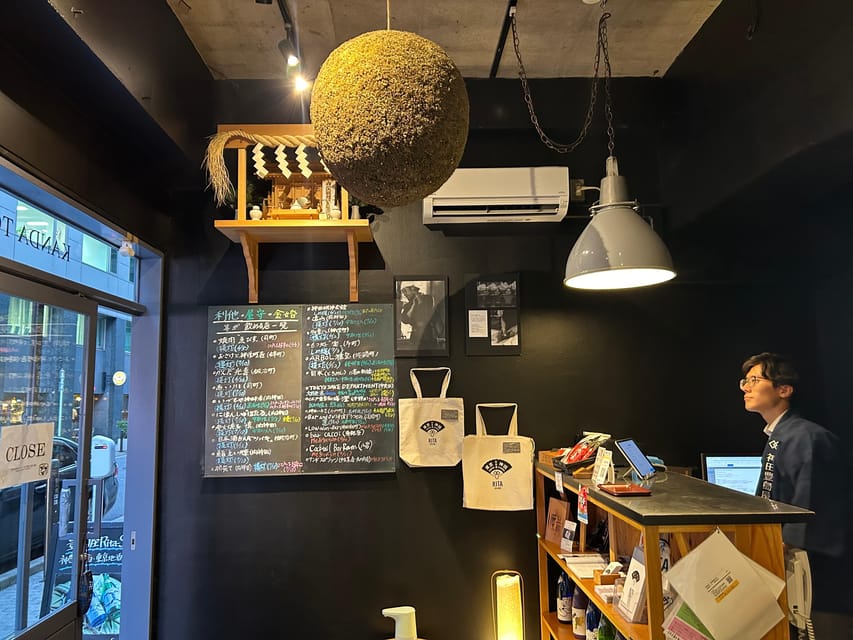
The central stop is Toshimaya Rita-Shop, described as Tokyo’s oldest sake shop, established in 1596. The shop’s age gives the experience a sense of place that a generic tasting room cannot easily provide.
You first spend time taking in the shop and learning about its past. The emphasis is not only on drinking. You are introduced to the business, its long connection with sake, and the role the shop plays in the activity.
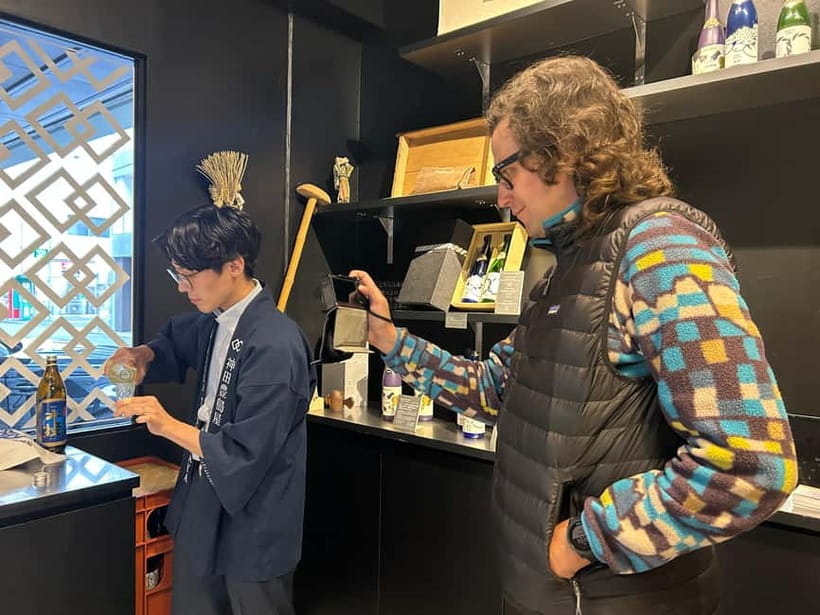
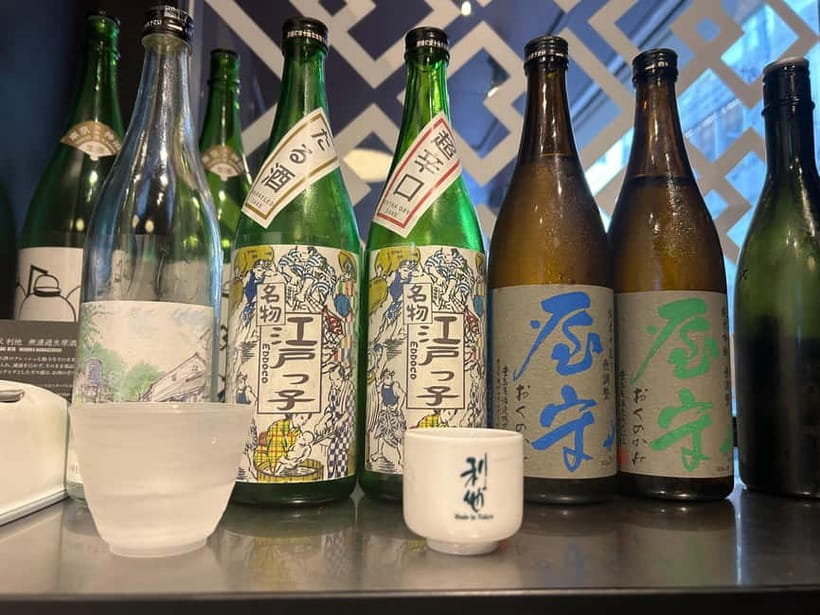
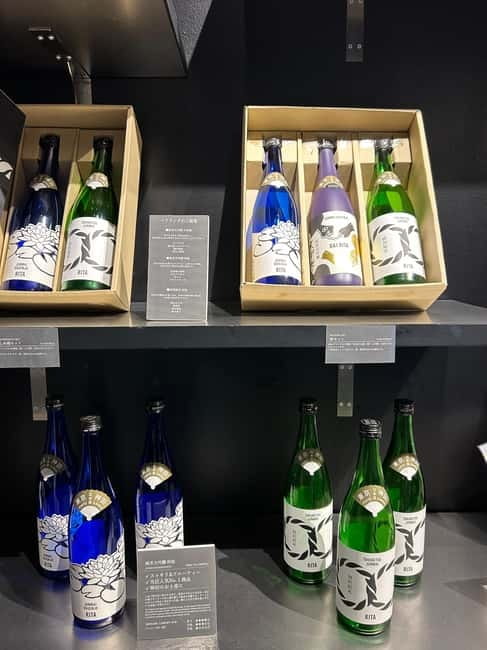
A useful detail is that the bottles selected for tasting are sold at this shop. If one becomes your favorite, you can purchase it before leaving. That makes the tasting practical: you are not sampling products that you cannot find again.
The shop is also your final browsing stop. After the neighborhood introduction and tasting, you return there to look around and shop. This gives you time to decide if you want a bottle, rather than forcing you to make a quick purchase in the middle of the explanations.
The exact selection can change with the season and timing. That is worth remembering if you arrive with a particular bottle or label in mind. The strength of the activity is comparison, not a fixed menu guaranteed on every date.
A completely different kind of day out:
- Tokyo Disney Resort – Tokyo Disneyland & Tokyo DisneySea Park Tickets
★ 4.8 · 99,488 reviews - SHIBUYA SKY Ticket
★ 4.7 · 46,509 reviews - JR Whole Japan Rail Pass
★ 4.8 · 29,150 reviews - Mt Fuji and Hakone 1-Day Bus Tour Return by Bullet Train
★ 5.0 · 26,383 reviews
Seven sake tastings in 10 to 20 milliliter pours
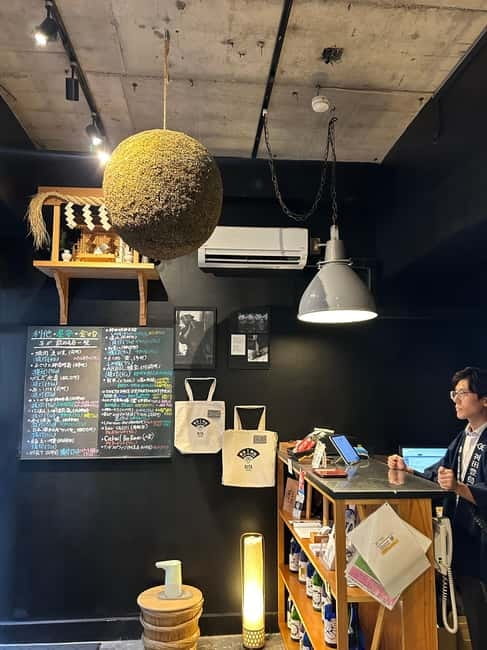
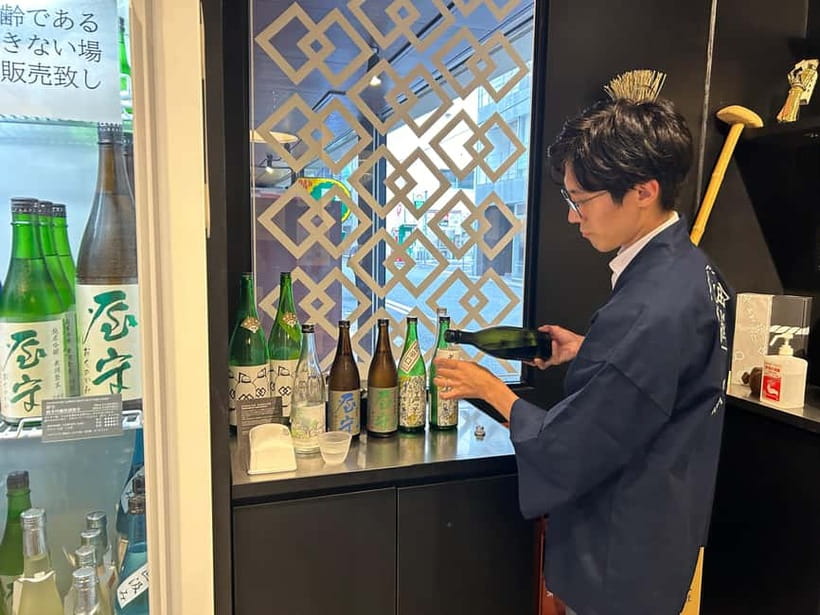
The tasting is the heart of the experience. The included program provides seven sake tastings, while the general description also refers to around six types. The safest expectation is to prepare for a small flight, with the exact number and selection dependent on the day and season.
Each pour is about 10 to 20 milliliters. That is enough to compare aromas, textures, and flavors, but it is not a series of full drinks. You can try several styles without feeling that you must finish large glasses.
I see this as a good design for beginners. Sake can seem confusing when you face a shop shelf filled with unfamiliar labels. A guided comparison gives you a starting point. You can ask questions as you taste and begin to notice which varieties suit your preferences.
It also works for people who already know sake. One of the strongest parts of the experience is the opportunity to ask specific questions. Recent feedback praised Fumino-san for explaining production, history, and differences between types in clear English, while also handling more detailed questions comfortably.
The tasting may include different flavors and styles, but the supplied information does not promise a fixed set of categories. Your guide will explain what is being poured on your date. This seasonal flexibility is useful because the selection reflects what the shop has available, though it means you cannot plan around a particular label.
If you find a sake you enjoy, you can buy it at the shop. I would treat that as an option rather than an obligation. One German participant felt that the opportunity to purchase at the end was expected for the price and perfectly acceptable, but you should still set your own budget before you arrive.
What the guide adds to the tasting
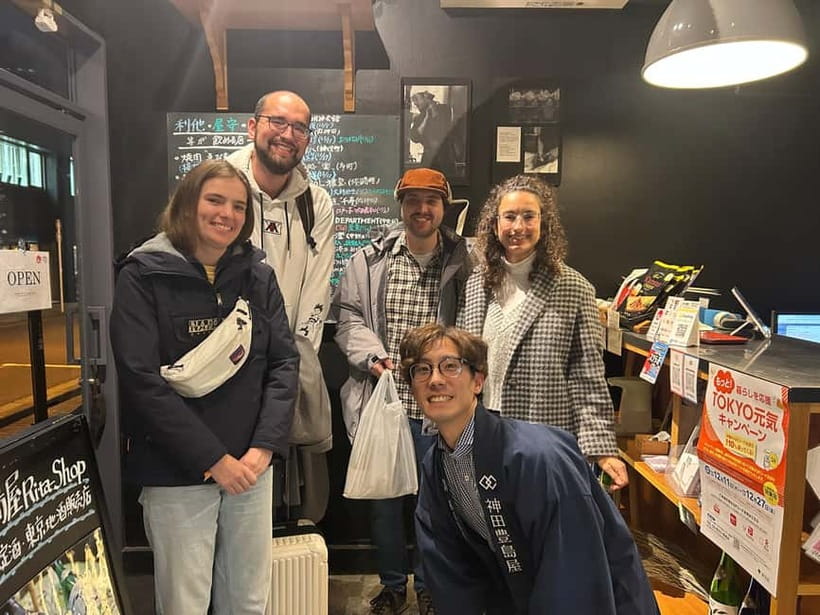
The guide is a major part of the value. You are not simply handed seven cups and left to guess what you are drinking. An English-speaking local guide explains the shop, the sake, and the neighborhood, then answers questions during the tasting.
Fumino-san received particularly strong praise for her friendly manner, beautiful English, and practical Tokyo recommendations. That matters because sake vocabulary can be difficult to explain across languages. Clear interpretation helps you understand not just what is in the cup, but how the varieties differ.
The guide also shares suggestions for nearby places where you can continue drinking sake or visit an izakaya. These recommendations are one of the most useful extras for a visitor who wants to eat and drink locally after the tour.
The experience is limited to 10 participants, and some departures may be much smaller. One recent group had only three people, which allowed for a more personal session and plenty of room for questions. A small group also makes it easier to hear the explanations and avoid the anonymous feeling of a large tasting crowd.
Of course, group size can vary. A full group of 10 will feel less private than a group of three, but it remains small by typical tour standards.
Why the $38 price can make sense
At $38 per person, this is not the cheapest way to drink sake in Tokyo. You could buy a bottle or a glass for less, especially if your only goal is alcohol.
The price makes more sense when you count what is included: a guide, a neighborhood walk, a historical shop visit, seven small tastings, explanations in English, local recommendations, and time to browse the shop. You are paying for understanding and access to a focused setting, not just for the liquid.
The tasting portions are deliberately small, so the value is in variety rather than volume. If you expect a long evening of drinking, this will feel limited. If you want a compact lesson before choosing what to order or buy later, the format is much stronger.
Food is not included. You should eat before the tour, particularly because sake on an empty stomach can be an uncomfortable plan. You can then use the guide’s izakaya suggestions for a proper meal afterward.
The ability to reserve now and pay later adds useful flexibility to a Tokyo schedule. Free cancellation is available up to 24 hours before the start for a full refund, according to the booking terms. Still, the strict five-minute meeting rule means flexibility does not extend to arriving late.
Who will get the most from this experience
I would recommend this tour most strongly if you fall into one of these groups:
- You are new to sake and want an approachable introduction.
- You enjoy Japanese food and want to understand what to order with it.
- You like small historic businesses more than polished tourist attractions.
- You want English explanations and the chance to ask detailed questions.
- You have an evening free in Kanda and want local dining suggestions.
- You are already familiar with sake but enjoy comparing several bottles in a small group.
It is also a good choice for a final Tokyo day or evening. The activity is short, the meeting point is near a major station, and the shop visit leaves you with a possible bottle to take home.
You should skip it if you are under 20, pregnant, feeling ill with a cold, or looking for a food-centered tour. It is also not ideal if you dislike shopping opportunities attached to tastings. The final chance to browse and buy is part of the design, though you are free to purchase nothing.
Practical tips for a smoother visit
Eat something before you arrive. Food is not included, and the tour itself focuses on sake rather than a meal.
Bring your passport or valid ID. Age verification is required, and the legal drinking age is 20.
Arrive early at NewDays outside Kanda Station’s South Entrance. Five minutes is the maximum waiting period, and joining halfway is not allowed.
Wear shoes and clothing that keep you comfortable while walking and standing. Avoid bringing food, since food is not allowed during the activity.
Keep an open mind about the tasting list. The sake changes with the season and timing, so the most useful approach is to compare what is available rather than chase a promised label.
If you like one of the pours, note its name before leaving. You can purchase sake at the shop, and writing down your favorite will make the choice easier once several varieties have blurred together.
Should you book the Kanda sake tasting?
Book it if you want a compact, personal introduction to sake with a real connection to Tokyo history. The combination of a shop founded in 1596, seven small tastings, a Kanda neighborhood walk, and English guidance gives the $38 price solid value for curious drinkers.
The strongest reasons to go are the small group, the chance to ask questions, and the local recommendations for izakayas and sake bars. Fumino-san’s clear English and friendly teaching style are especially reassuring if you worry that sake terminology will be hard to follow.
Do not book it expecting a full meal, large pours, or a long sightseeing tour. This is a focused two-hour lesson and tasting. For adults who want to understand what they are drinking and then continue exploring Kanda on their own, it is an easy activity to recommend.
FAQ
How long does the sake tasting tour last?
The tour lasts two hours, including the Kanda neighborhood walk, the visit to Toshimaya Rita-Shop, the sake tasting, and time to browse the shop.
Where does the tour meet?
The meeting point is outside NewDays at the Kanda Station South Entrance. NewDays is a convenience store, and the guide will hold a sign identifying the sake tasting tour.
How many types of sake will I taste?
Seven tastings are included. The selection may change based on the season and timing, and the general description refers to around six types, so the exact selection can vary.
How large is the group?
The tour is a small-group activity limited to 10 participants. Some departures may be smaller.
Do I need to bring identification?
Yes. Participants must be at least 20 years old, and the guide will verify your age. Bring a valid passport or ID card.
Is food included?
No. Food is not included, and food is not allowed during the activity. Eating before the tour is recommended.
Just added in Tokyo
- A One-of-a-Kind Sushi Experience in a Special Place of Japan★ 5.0 · 15 reviews
- Tokyo Cute Bento Cooking Class – Make a Kawaii Character Lunchbox★ 5.0 · 126 reviews
- Japanese Home Cooking Class & Walk in Todoroki Temple Tokyo★ 5.0 · 88 reviews
- Japan Tokyo Tower Observatory Deck E-Ticket★ 4.0 · 34 reviews
- Catch a Baseball Game in Tokyo with a Local – Tickets Included★ 5.0 · 24 reviews
- JDM Experience with Fast&Furious RX-7 (English speaking Driver)★ 5.0 · 57 reviews
- Tokyo Private Day Tour by Car with English speaking Driver Guide★ 4.0 · 29 reviews
- Japan Classic 10 Day – One Life Adventures★ 5.0 · 129 reviews
Sake Tastings, compared.
3-Hour Kyoto Insider Sake Brewery Tour with Tastings & Pairings
Read our review →
Arashiyama Bamboo, Temple, Monkeys, or Secret Sake Brewery
Read our review →
Insider Sake Brewery Tour with Sake and Food Pairing
Read our review →
1.5-Hour Kyoto Insider Sake Experience with 7 Tastings & Pairings
Read our review →
Sake Tasting Masterclass in Shinjuku (8+ Varieties with a Pro)
Read our review →
Insider Sake Experience with 7 Tastings and Snacks
Read our review →
Private Tea Ceremony and Sake Tasting in Kyoto Samurai House
Read our review →Browse the lists this tour appears in