
Reviewed · SAKE TASTINGS
Kyoto: Insider Sake Experience with 7 Tastings and Snacks
Sake makes more sense after one good lesson. This 90-minute Kyoto tasting turns an unfamiliar drink into something you can choose with confidence, using side-by-side pours, simple brewing explanations, and Japanese snack pairings. I especially like the hands-on bottle-reading practice and the way the food changes the flavor of each sake. I also like that the session is held in a dedicated tasting room rather than a noisy bar.
The main consideration is that this is a tasting class, not a full meal or brewery visit. You get small otsumami snacks, not dinner, and seven generous tastings can feel strong if you arrive hungry or are not used to alcohol. The experience costs $66 per person, which is fair for the instruction and amount of sake, but less appealing if you only want a quick drink.
In This Review
- Key points to know before booking
- Why a sake class helps in Kyoto
- Entering the dedicated tasting room
- The opening lesson: how sake is made
- Seven tastings, served as a comparison
- Reading a sake bottle without guessing
- Otsumami shows why pairing matters
- Hot, cold, and ordering with confidence
- Is $66 a fair price?
- Timing, rules, and who should book
- Who will get the most from it?
- Should you book the Kyoto sake experience?
- FAQ
- How long does the Kyoto sake experience last?
- How many sake tastings are included?
- Is the experience offered in English?
- What food is included?
- Can vegetarian food be provided?
- Can children join the experience?
- What is Japan’s legal drinking age for this activity?
- What happens if I arrive by car or bicycle?
Key points to know before booking
- Seven pours with a useful range: Compare dry, crisp, sweet, fruity, and other styles side by side.
- Bottle labels become less mysterious: You practice finding the information that helps you order or buy sake in Japan.
- Food changes the drink: Otsumami pairings show why a sake you dislike on its own may work well with food.
- A real lesson, not just a flight: The guide explains rice polishing, brewing, ingredients, quality, and serving temperature.
- Friendly English-speaking hosts: Guides such as Mayo, Kotaro, Kiyomi, Greg, Rieko, Shogo, and Yui are praised for clear teaching and good humor.
- Plan around the alcohol rules: You must be at least 20 to drink, and anyone arriving by car or bicycle will receive non-alcoholic drinks only.
Why a sake class helps in Kyoto
Sake menus can be intimidating. They may list unfamiliar Japanese terms, rice-polishing percentages, serving temperatures, regions, and flavor descriptions that mean little if you have never compared the drinks in one sitting.
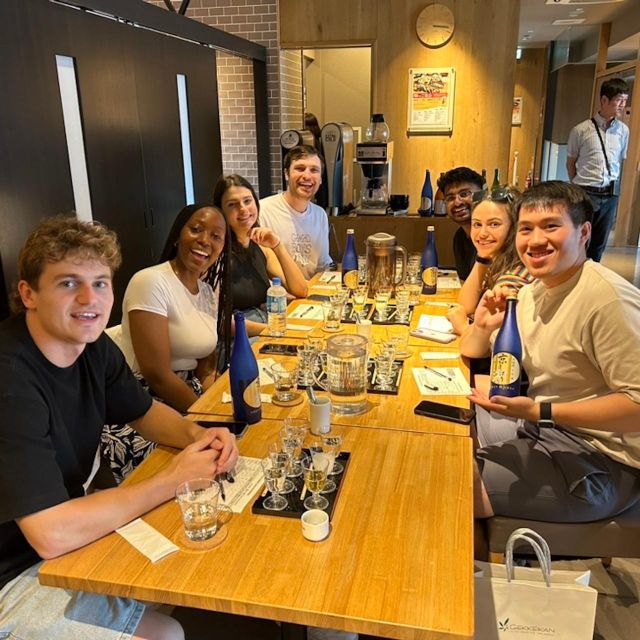
This experience gives you a practical framework. Instead of asking you to memorize a long list of sake categories, the guide helps you notice what is in the glass. You compare one pour with another, consider sweetness and dryness, and gradually work out what suits your own taste.
That personal part matters. Many first-time drinkers assume they either like sake or do not. A guided flight shows that sake is not one single flavor. You may prefer a clean, dry pour, a soft fruity style, or something fuller with food. The goal is not to turn you into a specialist. It is to help you order a drink you will actually enjoy later that evening.
More Sake Tastings in Kyoto
- 3-Hour Kyoto Insider Sake Brewery Tour with Tastings & Pairings
★ 5.0 · 917 reviews - Arashiyama Bamboo, Temple, Monkeys, or Secret Sake Brewery
★ 4.8 · 886 reviews - Kyoto: Insider Sake Brewery Tour with Sake and Food Pairing
★ 5.0 · 704 reviews
Entering the dedicated tasting room
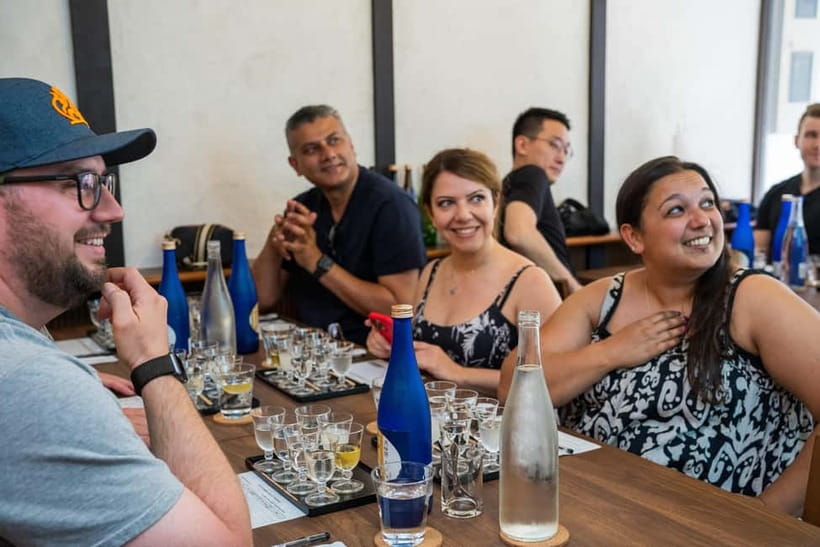
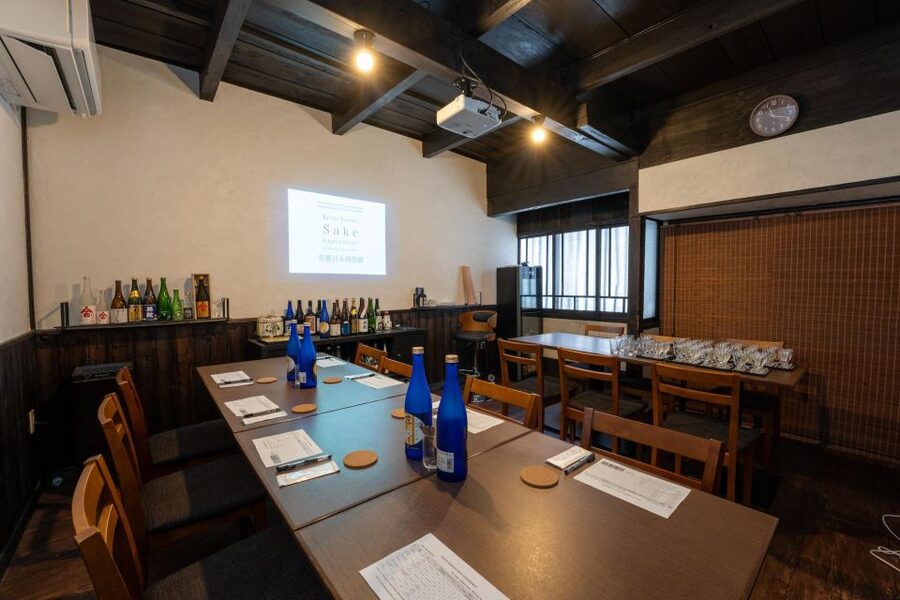
The meeting point is inside the venue, where you should speak with the staff at the counter after arriving. The tasting takes place in its own dedicated room, described by several participants as warm, intimate, cozy, and easy to find when using the supplied directions.
That setting suits the format. You are there to listen, ask questions, compare aromas and flavors, and handle the tasting notes without competing with a busy restaurant. The atmosphere is relaxed rather than formal, but this is still an organized class with a clear progression.
Group size can be small. One particularly positive experience had only four people, which made the session feel personal and gave everyone room to ask questions. The exact group size is not guaranteed, so do not assume every departure will be this intimate.
The hosts vary by date. Mayo is repeatedly praised for her humor and teaching style. Kotaro is described as friendly and clear, while Kiyomi receives praise for her patience and enthusiasm. Greg, Rieko, Shogo, Yui, and Mai are also named as engaging instructors. The common thread is practical teaching in English, not a stiff lecture.
The opening lesson: how sake is made
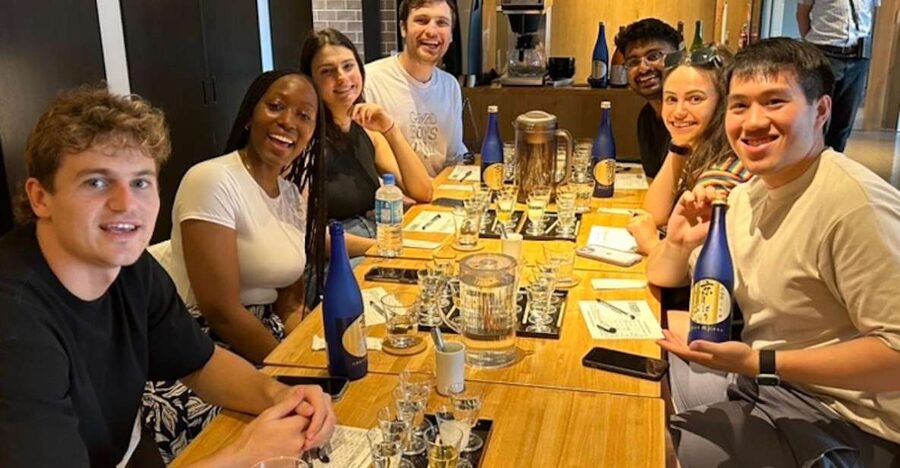
The first part explains the basic brewing process and what affects the final drink. You learn about the main ingredients and how brewing choices change flavor, quality, and style.
Rice polishing receives special attention. The guide may show examples of how much of the rice grain has been refined, helping you connect a technical detail on the bottle with the drink in front of you. This is useful because polishing percentages can look like dry numbers on a label until you taste the difference between selections.
The presentation is not meant to be a full brewing course. That is a strength for most people on holiday. The explanations are concise enough to hold your attention, yet substantial enough to make the tasting meaningful. You come away understanding why two bottles made from similar ingredients can taste so different.
You will also hear about regional differences and the way producers create different styles. The point is not to declare one style best. It is to give you clues that help you make sense of a menu.
Seven tastings, served as a comparison
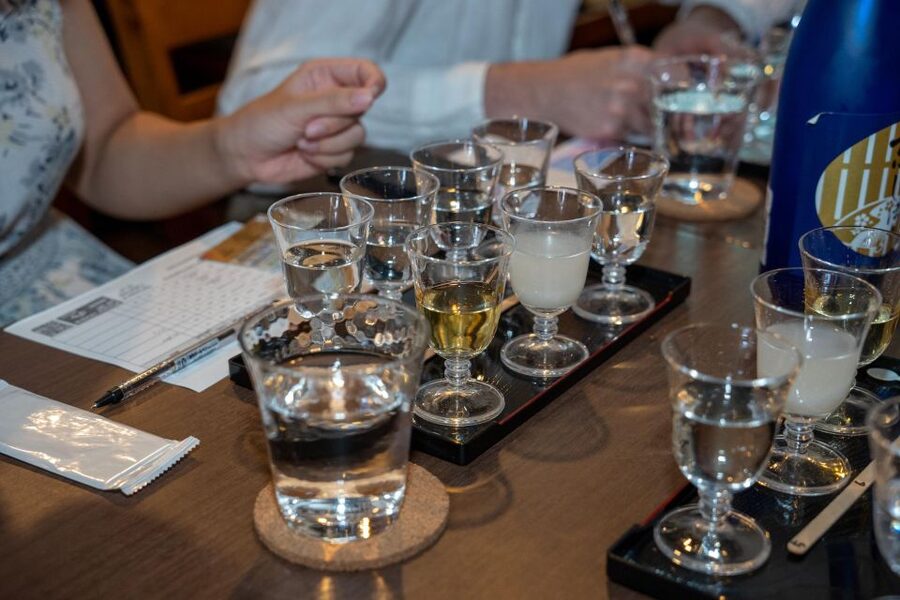
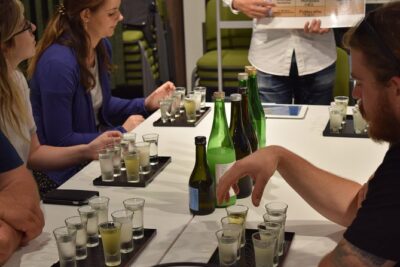
The central activity is a flight of sake. The experience is described as seven tastings, and the portions are considered generous by several people who attended. The listed inclusions also refer to 10 or more types selected by a certified sake sommelier, so the exact number of bottles or styles available on a given session may vary. If the precise lineup matters to you, ask the operator before booking.
The value comes from tasting side by side. A single glass can be pleasant, but comparison teaches you far more quickly. You might notice that one sake feels crisp and clean, while another seems sweeter, fruitier, rounder, or more powerful. The guide helps you put those differences into plain words.
The sequence also matters. The session moves in a logical order, allowing you to build on what you have just learned. You record preferences on a tasting note or card, which gives you something useful to refer to later.
I like this approach because it avoids the common tasting mistake of treating every pour as a test of expertise. You are not expected to identify a brewery or name a complicated aroma. You are learning to say, I prefer this style, and to understand why.
For a first sake tasting, seven samples are enough to show variety without turning the class into a blur. Still, pace yourself. Sake can be stronger in flavor and alcohol than some first-time drinkers expect.
A completely different kind of day out:
- PERFECT KYOTO 1-Day Bus Tour
★ 5.0 · 13,518 reviews - [Kyoto & Nara Day Tour] Sagano Scenic Railway & Nara Park & Fushimi Inari Taisha Thousand Torii Gates & Togetsukyo Bridge & Bamboo Grove & Kimono Forest (Departing from Osaka)
★ 4.9 · 10,942 reviews - Kyoto: Fushimi Inari, Kinkakuji, Bamboo Grove 1 Day Bus Tour
★ 4.8 · 4,316 reviews - Kyoto: Tea Ceremony in a Traditional Tea House in Kiyomizu
★ 4.9 · 3,519 reviews
Reading a sake bottle without guessing
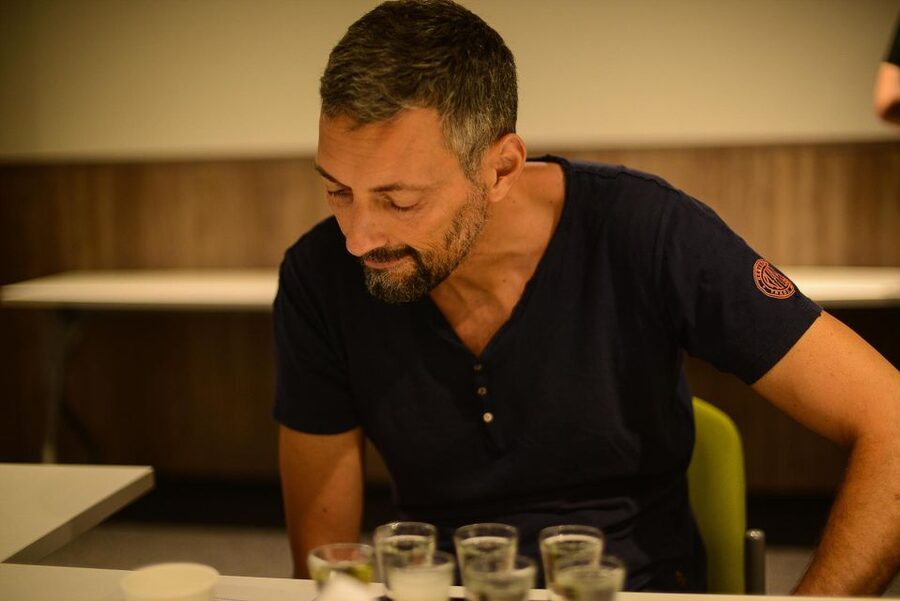
One of the most useful parts is the bottle-reading exercise. You work out where to find key information on a sake label, rather than simply hearing the guide describe it.
That skill pays off immediately in Japan. At a shop or restaurant, you can use the information on the bottle to make a more informed choice. You may still need help with Japanese writing, but you will know what kinds of details to look for and which questions to ask.
The tasting sheet acts as a small sake cheat sheet. It helps you remember which pours you liked and gives you a reference for future menus. This is more useful than a souvenir brochure because it connects directly to your own taste.
If you are planning to buy bottles during your trip, this class has extra value. You can leave with a better idea of what to seek out, rather than relying only on attractive packaging or a random recommendation.
Otsumami shows why pairing matters
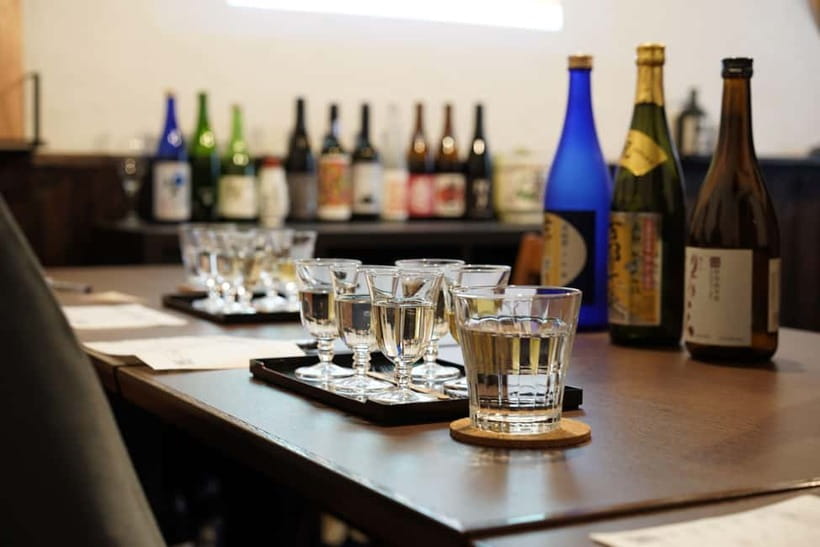
The food pairing is not an extra plate added at the end. It is part of the lesson. You first taste sake on its own, then try it with Japanese otsumami, or traditional small appetizers.
This can change your opinion quickly. A sake that seems unremarkable, sharp, or too strong by itself may work beautifully with a savory snack. Another may seem sweeter or more balanced once food is added.
Several people singled out this part as one of the best features. The pairing demonstrates the point far better than a lecture can. You learn that the right sake is not only about the drink itself. It also depends on what you are eating.
The snacks are not intended to replace lunch. One participant specifically advised eating beforehand, while another described the food portions as generous for a tasting. The sensible plan is to have a light meal before arriving, then treat the otsumami as guided samples.
Food preferences and allergies should be explained at the venue. Vegetarian substitutions have been accommodated successfully, with particularly good feedback about the replacement snacks. It is still wise to raise your needs as soon as you arrive.
Hot, cold, and ordering with confidence
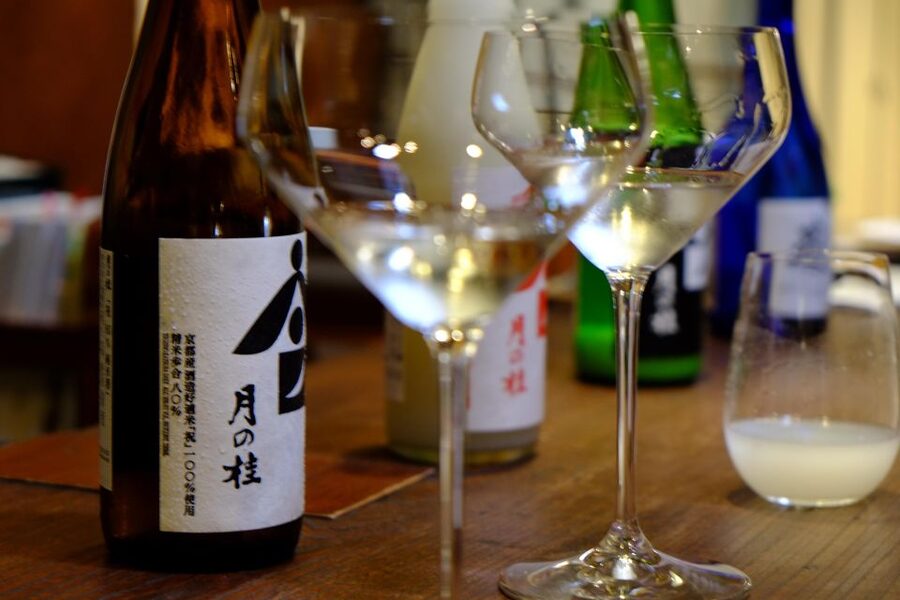
The class covers when sake is served warm or chilled, and which styles can work with foods such as sushi. This is valuable because serving temperature can alter how a sake tastes.
You may find that a style you prefer chilled is less appealing warm, or that another becomes more agreeable with food. The lesson gives you a starting point rather than a rigid set of rules. Your own taste remains the final judge.
The sushi advice is also practical. You learn to think about matching the character of the sake with the food, rather than ordering by price or choosing the first familiar-looking name on the menu.
By the end, you should be able to ask clearer questions in a restaurant: Is this dry or sweet? Is it usually served cold? Would it suit sushi or a heavier dish? Those simple questions can make an evening meal more enjoyable.
Is $66 a fair price?
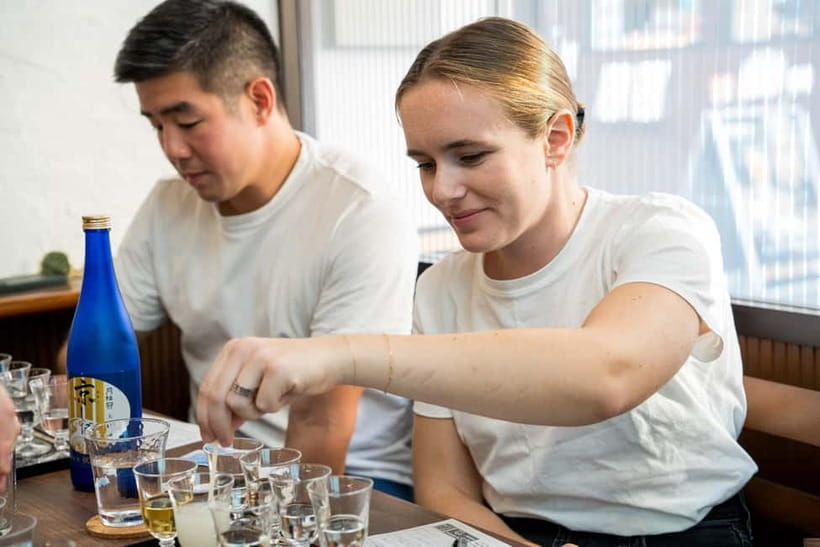
At $66 per person, this is not a budget drink stop. It is a short educational experience that includes a certified sake expert, seven tastings, otsumami, tasting notes, a cheat sheet, and use of a dedicated room.
I consider the price fair if you are new to sake or expect to order it several times during your Japan trip. The bottle-reading practice alone can save you from buying something you will not enjoy. The food pairing adds another layer that you would not necessarily get from a standard bar flight.
The value is weaker if you already know your favorite sake styles and only want to sample a few local bottles. It is also not the right choice if you want a full dinner, a visit to a working brewery, or a walking tour of Kyoto.
Some descriptions of the experience use the word insider, and that should be understood as insider guidance about sake rather than access to a secret production site. You spend the session in the tasting room, learning and drinking.
Timing, rules, and who should book
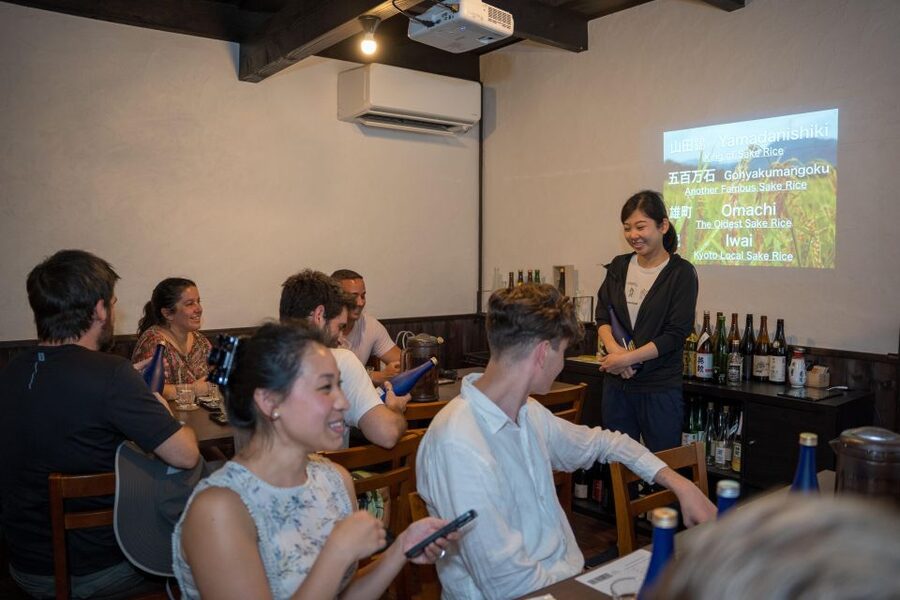
The experience lasts 90 minutes, with starting times shown according to availability. Arrive early enough to find the counter and speak with staff. Arriving more than 20 minutes late results in cancellation, with no indication that the tasting can be compressed or restarted.
You cannot participate in the alcoholic tasting if you arrive by car or bicycle. Non-alcoholic drinks are available for safety and legal reasons, but there is no refund if this prevents you from taking part.
Everyone who joins needs a reservation, including children and people who do not drink. The activity is not recommended for children, and people under 19 are listed as unsuitable. Japan’s legal drinking age is 20, and anyone under 20 will receive non-alcoholic drinks only.
Pregnant people should not book. Strong fragrances and bicycles are not allowed in the experience. These rules are easy to follow, but they matter because this is a close indoor tasting where alcohol and aromas are central to the lesson.
Free cancellation is available up to seven days before the experience for a full refund. Since the booking is strict inside that window, make sure your Kyoto schedule is settled before reserving.
Who will get the most from it?
I would choose this for:
- First-time sake drinkers who feel lost at Japanese restaurants
- Couples or friends who want an indoor Kyoto activity with a clear learning angle
- Food lovers curious about how drink and snack pairings affect taste
- People planning to buy sake bottles during their trip
- Anyone who prefers a small, calm class to a crowded nightlife setting
It also works for someone who thinks they dislike sake. The flight includes enough variety that you may find a style that suits you. The food pairing is especially helpful here.
I would skip it if you are looking for a brewery tour, a substantial meal, or a loose bar crawl. It is also a poor fit if one member of your party wants to attend without booking, since unreserved companions are not admitted.
Should you book the Kyoto sake experience?
Yes, if you want a useful introduction rather than a simple alcohol sampler. The strongest parts are the side-by-side comparison, bottle-reading practice, and food pairing. You leave with a clearer sense of your own preferences and a better chance of ordering well later in Japan.
Book it early if your Kyoto dates are tight, then arrive on time and eat something beforehand. For $66, you receive a focused lesson, seven substantial tastings, snacks, and advice you can use for the rest of your trip. That makes it a good-value choice for curious beginners, even if it is not a substitute for dinner or a brewery visit.
FAQ
How long does the Kyoto sake experience last?
The experience lasts 90 minutes.
How many sake tastings are included?
The experience is described as including seven tastings. The included services also refer to 10 or more types selected by a certified sake sommelier, so the exact selection can vary.
Is the experience offered in English?
Yes. A live English-speaking guide leads the tasting.
What food is included?
Traditional Japanese otsumami appetizers are included for food pairing. They are tasting snacks, not a full meal.
Can vegetarian food be provided?
You should tell the guide about food preferences or allergies at the site. Vegetarian substitutions have been accommodated.
Can children join the experience?
The activity is not recommended for children. All participants, including children and non-drinkers, need reservations, and people under 19 are listed as unsuitable.
What is Japan’s legal drinking age for this activity?
The legal drinking age in Japan is 20. People under 20 receive non-alcoholic drinks only.
What happens if I arrive by car or bicycle?
For safety and legal reasons, alcohol will not be served to anyone arriving by car or bicycle. Non-alcoholic drinks are available, but there is no refund if you cannot take part in the sake tasting.
Just added in Kyoto
- The “Golden Route” and Ancient Japan by DIAMIR Erlebnisreisen – 14-Day Tour★ 2.0 · 2 reviews
- Japan: Castles & Cuisine by G Adventures – 6-Day Kyoto to Osaka Tour★ 4.5 · 4 reviews
- Cycle Japan by Explore! – 13-Day Kyoto to Tokyo Tour★ 4.7 · 12 reviews
- Cycle Japan by Intrepid Travel – 11-Day Kyoto to Tokyo Tour★ 4.8 · 2 reviews
- Classic Japan by Intrepid Travel – 11-Day Kyoto to Tokyo Tour★ 4.4 · 14 reviews
- Ancient & Modern Japan 14-Day Tour by Exodus Adventure Travels★ 4.4 · 40 reviews
- 5 Day Cultural Adventure of Kyoto, Nara & Osaka by Tourist Journey★ 2.5 · 2 reviews
- 12 Days Kinosaki Onsen Escape: A Journey Through Japan’s Timeless Towns by UME Travel★ 4.8 · 5 reviews
Sake Tastings, compared.
3-Hour Kyoto Insider Sake Brewery Tour with Tastings & Pairings
Read our review →
Arashiyama Bamboo, Temple, Monkeys, or Secret Sake Brewery
Read our review →
Insider Sake Brewery Tour with Sake and Food Pairing
Read our review →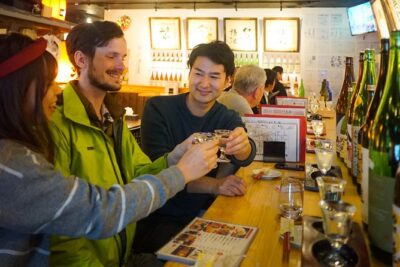
1.5-Hour Kyoto Insider Sake Experience with 7 Tastings & Pairings
Read our review →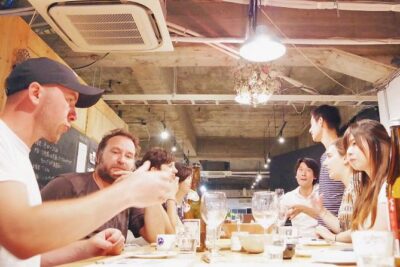
Sake Tasting Masterclass in Shinjuku (8+ Varieties with a Pro)
Read our review →
Private Tea Ceremony and Sake Tasting in Kyoto Samurai House
Read our review →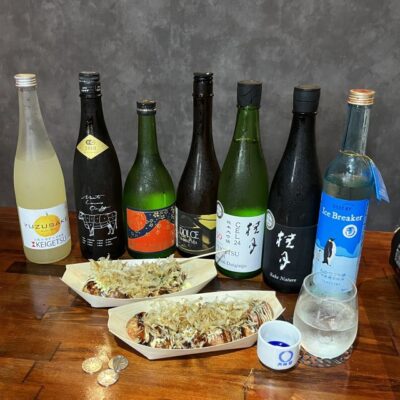
Browse the lists this tour appears in