
Reviewed · SAKE TASTINGS
3-Hour Kyoto Insider Sake Brewery Tour with Tastings & Pairings
Sake makes more sense after one good lesson. I like the way this three-hour experience joins the Gekkeikan Okura Sake Museum with a calm, guided tasting, and I especially like the practical help with bottle labels and food pairings. You do not just hear that sake is sweet or dry. You learn why it tastes the way it does.
The main drawback is that this is a drinking class, not a casual museum visit. You will taste 10 carefully selected sakes, so eat lunch or brunch first, and do not arrive by car or bicycle if you want alcohol served. The non-alcoholic option is available, but there is no refund if you cannot take part in the tasting.
In This Review
- Five things that make this Kyoto sake tour useful
- Why this three-hour format works
- Starting at Gekkeikan Okura in Fushimi
- The private room and ten-sake tasting
- Why the otsumami pairings matter
- What you will learn beyond sweet or dry
- Price, time, and what you get for $84.89
- Who should book, and who should think twice
- My call: book it for confidence, not just samples
- FAQ
- How long does the Kyoto sake tour last?
- How many sakes are included?
- Is food included?
- Can someone under 20 join?
- Can I arrive by car or bicycle?
- Where does the tour start and end?
Five things that make this Kyoto sake tour useful
- Ten distinct sake styles: The tasting is built to help you identify your own preferences, not simply sample one brewery’s standard bottle.
- A museum before the tasting: The Gekkeikan Okura visit gives you the brewing background needed to understand what is in your glass.
- Food changes the flavor: Traditional otsumami snacks show how sake works with Japanese food.
- Bottle-label guidance: You learn useful terms and characters for choosing sake in restaurants and shops later.
- Small-group instruction: The maximum group size is 12, which leaves room for questions and personal advice.
Why this three-hour format works

Sake can seem simple on a menu, but the category covers a wide range of aromas, textures, sweetness, acidity, serving styles, and brewing choices. A quick tasting may tell you what you liked that afternoon. This tour aims to give you a method you can use again.
I like the order of the experience. You first spend about 90 minutes at the Gekkeikan Okura Sake Museum. Then you spend another 90 minutes in a private tasting setting with a certified sake sommelier. That sequence matters. Once you have seen how rice, water, yeast, polishing, fermentation, and bottling affect the drink, the tasting becomes easier to follow.
You also get a sake cheat sheet and tasting notes. Those are small but useful souvenirs. They can help you remember which styles suited you, rather than relying on a vague memory of the clear one I liked in Kyoto.
The group is capped at 12 people. That is large enough for a social afternoon but still small enough to ask questions. Some sessions have been much smaller, even a private-feeling tasting with only one participant. Guides named in the feedback include Kyoko, Miyuki, Mai, Momo, Shogo, Shojo, Sayaka, Kotaro, and Greg. The repeated praise is for clear English, warmth, humor, and an ability to explain technical points without making the class stiff.
More Sake Tastings in Kyoto
- Arashiyama Bamboo, Temple, Monkeys, or Secret Sake Brewery
★ 4.8 · 886 reviews - Kyoto: Insider Sake Brewery Tour with Sake and Food Pairing
★ 5.0 · 704 reviews - Kyoto Sake Brewery & Tasting Walking Tour
★ 5.0 · 623 reviews
Starting at Gekkeikan Okura in Fushimi
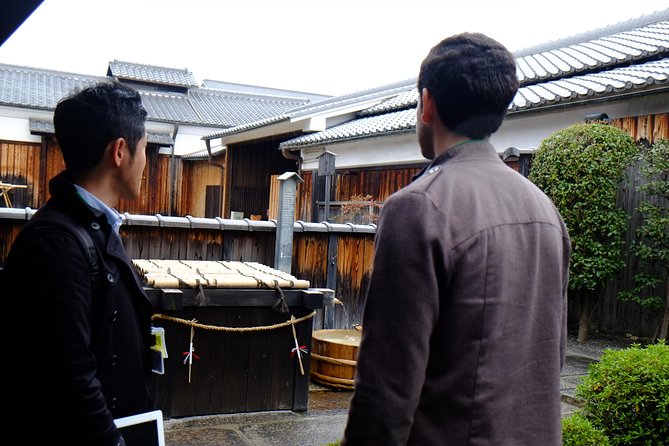
The tour begins at 697 Motozaimokuchō in Fushimi Ward, Kyoto. Fushimi is one of Kyoto’s important sake districts, so this is a fitting place to study the drink. The museum visit is not a walk through an active production floor. Sake breweries generally keep production areas closed for health and safety reasons, and the process is explained through the museum instead.
That limitation is worth knowing before you book. If you expect to watch workers brewing sake beside you, this is not that kind of visit. If you want clear context on how sake is produced, the museum fills that role well.
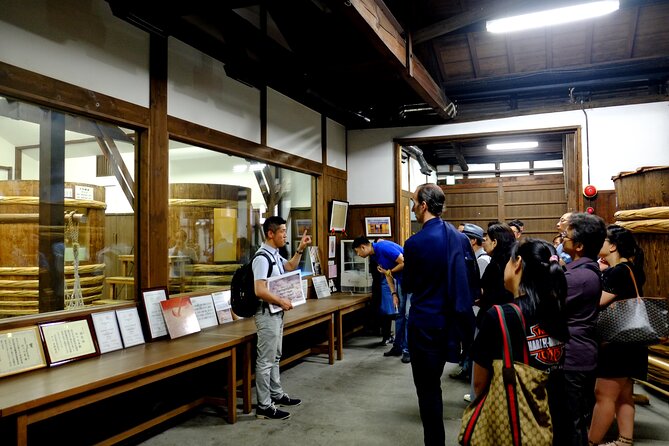
The Gekkeikan Okura Sake Museum focuses on one of Japan’s influential brewing names. Your guide explains the brewery’s background, the place of sake in Japanese culture, and the main choices involved in making it. The presentation covers the path from rice selection through brewing and bottling, with traditional tools and displays providing a physical sense of the work.
This part takes about 90 minutes, which gives the subject room to breathe. You are not rushed past a few labels and sent straight to the bar. The guide can explain how ingredients and brewing decisions affect aroma, body, balance, and finish.
I would pay close attention here even if your main goal is drinking. The museum sets up the tasting vocabulary. Terms that can seem abstract on a bottle label become easier to understand once you connect them to the production process.
The private room and ten-sake tasting
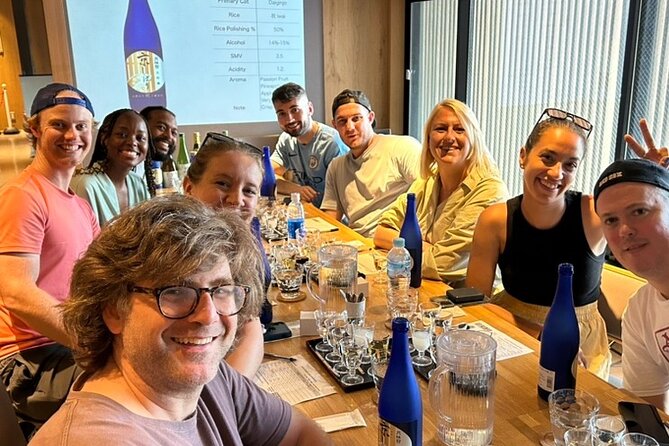
The second half takes place at the Kyoto Insider Sake Experience, at 271-1 Kurumamachi in Fushimi Ward. The setting is a private sake tasting room, a useful change from a noisy bar. You can focus on the glass, ask questions, and taste at a comfortable pace.
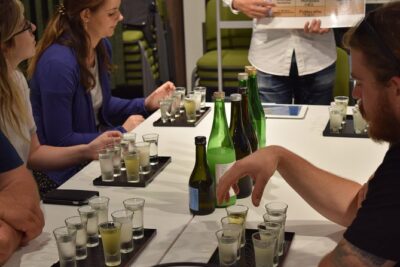
A certified sake sommelier leads the tasting. The stated aim is not to push one favorite style on you, but to help you work out your own. You compare 10 selected sakes and learn how to notice differences in aroma, flavor, balance, and texture.
This is where the tour earns much of its price. A standard tasting can leave you with a list of names. Here, the guide explains what to look for and helps connect each sample to a style. You may discover that you prefer a fragrant sake, a fuller and more savory one, a lighter drink, or something with a sweeter finish. The point is not to pass an exam. It is to leave with a better answer when a restaurant menu asks what you want.
Several guides also explain how to read sake labels. That is practical advice for the rest of your Japan trip. You may not remember every technical term, but recognizing a few key categories and label details can make buying a bottle far less intimidating.
The tasting has enough variety to challenge the idea that sake has one standard flavor. Some feedback describes sampling over 10 or even a dozen types, but the tour’s included details specify 10 carefully selected sakes. Plan for a generous tasting, not a single ceremonial sip.
Why the otsumami pairings matter
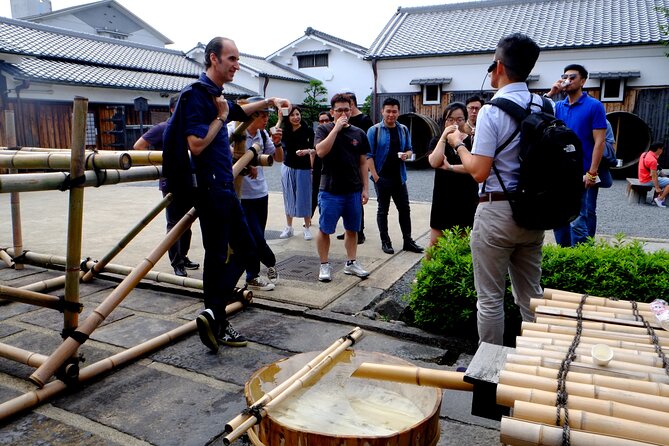
Japanese drinking culture often places food beside the glass, and the tour uses traditional otsumami snacks to make that point. These are small foods served with alcohol. They are not just something to nibble while the guide talks.
You taste sake with food and notice how the pairing changes the experience. A snack can soften a sharp note, highlight a savory quality, or make a sake seem sweeter or more balanced. This is especially valuable if you enjoy cooking or want to order more intelligently at Japanese restaurants.
The food is also one reason to eat before arriving. The snacks are pairings, not a full lunch or brunch. The tour recommends having a meal first, and I would follow that advice. Ten sake samples over 90 minutes can catch up with you, even when the session feels relaxed.
Vegetarian snacks are available if you tell the guide on site. The supplied information does not promise other dietary arrangements, so mention your needs as soon as you arrive and keep your expectations practical.
One especially useful lesson is that you may like a sake by itself but prefer another style with food. That is a better way to choose a bottle for dinner. Your favorite sipping sake is not automatically the best match for grilled, pickled, salty, or rich foods.
A completely different kind of day out:
- PERFECT KYOTO 1-Day Bus Tour
★ 5.0 · 13,518 reviews - [Kyoto & Nara Day Tour] Sagano Scenic Railway & Nara Park & Fushimi Inari Taisha Thousand Torii Gates & Togetsukyo Bridge & Bamboo Grove & Kimono Forest (Departing from Osaka)
★ 4.9 · 10,942 reviews - Kyoto: Fushimi Inari, Kinkakuji, Bamboo Grove 1 Day Bus Tour
★ 4.8 · 4,316 reviews - Kyoto: Tea Ceremony in a Traditional Tea House in Kiyomizu
★ 4.9 · 3,519 reviews
What you will learn beyond sweet or dry
The tour’s strongest teaching point is that sweet versus dry is only a starting point. Your guide explains the factors behind the flavor, then lets you test those ideas in the glass.
You learn about sake categories and the choices that shape them. The exact teaching sequence can vary by guide, but the experience is designed to cover the brewing process, flavor profiles, food matching, and bottle labels. That makes it suitable for a complete beginner, while still giving wine or beer drinkers something technical to chew on.
The guides use slides and props in some sessions, which helps turn a verbal explanation into something easier to remember. The best part is the chance to ask why two sakes taste so different when both are simply called sake.
I also like that the tone appears to stay informal. The guides are described as friendly, enthusiastic, witty, and professional, with Kyoko and Kotaro receiving particular praise for answering questions and explaining flavor profiles. Miyuki is repeatedly singled out for her humor and ability to make the process approachable.
Do not worry if you know no Japanese. The experience is designed for international participants, and the guides are described as speaking clear English. You will still need to pay attention, especially during the label lesson, but you are not expected to arrive with specialist vocabulary.
Price, time, and what you get for $84.89
At $84.89 per person, this is not the cheapest drink in Kyoto. It is also more than a basic brewery admission followed by a small sample. You are paying for roughly three hours, museum entry, a certified sake sommelier, 10 selected sakes, food pairings, a private room, tasting notes, and a structured lesson.
I consider that fair value if you genuinely want to understand sake. The tour combines admission and instruction, and the tasting portion is generous enough to show a real range. You also leave with information you can use at other restaurants and shops, which gives the experience value beyond the afternoon itself.
The price makes less sense if you only want a quick drink or already know sake well. The museum explanation may feel basic to an expert, and the teaching style is aimed at helping beginners build confidence. For most first-time sake drinkers, though, the educational part is the reason to choose this instead of an ordinary bar tasting.
The entire experience lasts about three hours. That is long enough to feel substantial but short enough to fit into a Kyoto day. Book it as a main afternoon activity rather than squeezing it between distant sights. You will start at one address and finish at another in Fushimi, with a small amount of walking involved, so wear comfortable shoes and allow time to move between the two locations.
Transportation to and from the attractions is not included. Hotel pickup and drop-off are not included either. You need to reach the starting point yourself and make your own way after the tasting.
Who should book, and who should think twice
I would recommend this experience to you if you are new to sake, enjoy food and drink education, or want to buy bottles with more confidence during your Japan trip. It is also a good choice for someone who enjoys wine or beer tastings and wants to compare how production choices affect the final drink.
It suits curious non-experts better than serious sake professionals. You get plenty of information, but the goal is clear, friendly instruction rather than an advanced certification class. One session even inspired a participant to consider an advanced tasting later, which suggests this tour works well as a first step.
You do not need to be a heavy drinker to enjoy it. One participant who rarely drinks still found the cooking and production angle worthwhile. The food pairings and museum displays give the afternoon more substance than alcohol alone.
I would think twice if you dislike structured tastings, cannot drink alcohol, or need a flexible booking. Under-20 participants receive only non-alcoholic drinks. Anyone arriving by car or bicycle will not be served alcohol for safety and legal reasons, and the ticket is non-refundable if that prevents participation.
The tour also requires a minimum number of participants and good weather. If the provider cancels for either reason, you are offered another date or experience, or a full refund. Your own cancellation or amendment is not refundable, so choose your date carefully.
My call: book it for confidence, not just samples
I would book this tour if sake is part of your Kyoto plans and you want to understand what you are ordering. The best payoff is not the number of glasses. It is the moment you can look at a menu, recognize a style, and choose with a reason.
The Gekkeikan museum gives the drink a cultural and production setting. The private tasting room lets you compare 10 styles without rushing. The otsumami pairings show how sake fits into a meal, and the cheat sheet gives you something to refer to later.
Skip it if you only want a short tasting, cannot drink, or need a refundable reservation. For everyone else, this is a well-shaped Fushimi afternoon that turns sake from a mystery into a drink you can order, pair, and enjoy on your own.
FAQ
How long does the Kyoto sake tour last?
The experience lasts approximately three hours. About 90 minutes are spent at the Gekkeikan Okura Sake Museum, followed by about 90 minutes of guided tasting and food pairing.
How many sakes are included?
The tour includes 10 carefully selected sakes chosen by a certified sake sommelier.
Is food included?
Yes. Traditional otsumami snacks are served as pairings with the sake. Vegetarian snacks are available if you tell the guide on site, and you are advised to eat lunch or brunch before the tour.
Can someone under 20 join?
People under 20 may participate, but they will only be served non-alcoholic drinks. Japan’s legal drinking age is 20.
Can I arrive by car or bicycle?
You may attend, but alcohol will not be served to anyone who arrives by car or bicycle. Non-alcoholic drinks are available, and no refund is provided if you cannot take part in the sake tasting.
Where does the tour start and end?
The tour starts at 697 Motozaimokuchō, Fushimi Ward, Kyoto, 612-8043, Japan. It ends at the Kyoto Insider Sake Experience at 271-1 Kurumamachi, Fushimi Ward, Kyoto, 612-8365, Japan. Transportation to and from the attractions is not included.
Just added in Kyoto
- The “Golden Route” and Ancient Japan by DIAMIR Erlebnisreisen – 14-Day Tour★ 2.0 · 2 reviews
- Japan: Castles & Cuisine by G Adventures – 6-Day Kyoto to Osaka Tour★ 4.5 · 4 reviews
- Cycle Japan by Explore! – 13-Day Kyoto to Tokyo Tour★ 4.7 · 12 reviews
- Cycle Japan by Intrepid Travel – 11-Day Kyoto to Tokyo Tour★ 4.8 · 2 reviews
- Classic Japan by Intrepid Travel – 11-Day Kyoto to Tokyo Tour★ 4.4 · 14 reviews
- Ancient & Modern Japan 14-Day Tour by Exodus Adventure Travels★ 4.4 · 40 reviews
- 5 Day Cultural Adventure of Kyoto, Nara & Osaka by Tourist Journey★ 2.5 · 2 reviews
- 12 Days Kinosaki Onsen Escape: A Journey Through Japan’s Timeless Towns by UME Travel★ 4.8 · 5 reviews
Sake Tastings, compared.
Arashiyama Bamboo, Temple, Monkeys, or Secret Sake Brewery
Read our review →
Insider Sake Brewery Tour with Sake and Food Pairing
Read our review →
1.5-Hour Kyoto Insider Sake Experience with 7 Tastings & Pairings
Read our review →
Sake Tasting Masterclass in Shinjuku (8+ Varieties with a Pro)
Read our review →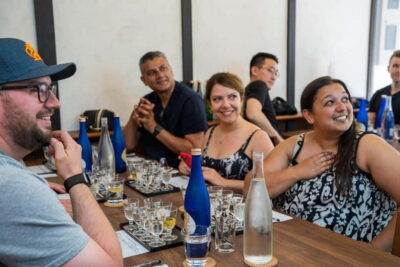
Insider Sake Experience with 7 Tastings and Snacks
Read our review →
Private Tea Ceremony and Sake Tasting in Kyoto Samurai House
Read our review →
Browse the lists this tour appears in