
Reviewed · WALKING TOURS
History of Hiroshima Group Walking Tour
Hiroshima asks you to slow down. This two-hour walking tour gives the Peace Memorial Park a clear human shape, linking its monuments to the bombing, the people lost, and the city’s message of peace. I especially like the guide’s Peace Studies background and the focus on personal stories rather than dates alone. I also like the compact route, which works well if you have only one day in Hiroshima. The main consideration is the pace: with nine stops in about two hours, some sites receive only a few minutes.
The tour costs $32.84 per person, which is fair for a small slice of guided context in a place that can be difficult to understand on your own. Guides such as Cva, Malek, Moe, Shiva, and Ali have been praised for clear English, warmth, humor, and thoughtful answers. The subject is painful, so the occasional light touch may not suit everyone, though it can help keep the walk human and bearable.
In This Review
- Key points before you book
- Why a guided walk helps in Hiroshima
- Starting at the Ten Gates of Peace
- The Mother and Baby in the Storm
- The Cenotaph and the names of the dead
- Inside the National Peace Memorial Hall
- The Rest House and its remarkable survival
- Sadako, paper cranes, and the Children’s Peace Monument
- Remembering Korean victims and survivors
- The Peace Bell and the Atomic Bomb Dome
- Ending at ground zero
- What $32.84 buys you
- Who should book this Hiroshima walk?
- Should you book the History of Hiroshima Group Walking Tour?
- FAQ
- How long does the History of Hiroshima Group Walking Tour last?
- Where does the tour begin?
- Where does the tour end?
- What sites are included?
- Is food included?
- Can children join the tour?
Key points before you book
- Nine important sites in about two hours, including the Cenotaph, Children’s Peace Monument, Peace Bell, and Atomic Bomb Dome.
- A guide with Peace Studies training explains the bombing and its effects from a peace and human perspective.
- The route stays within Hiroshima Peace Memorial Park, ending at the Atomic Bomb Hypocenter Monument.
- The Rest House offers a striking survival story, since the building remained standing only 170 meters from ground zero.
- Two children aged 0 to 10 can join free, useful for families booking together.
- The group can reach up to 30 people, so ask questions promptly and stay close to the guide.
Why a guided walk helps in Hiroshima
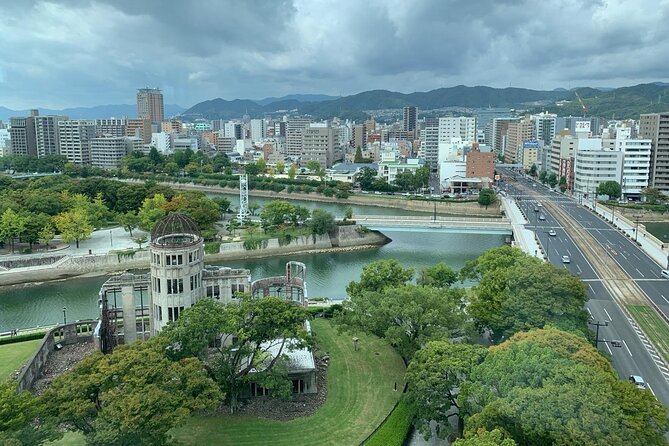
Hiroshima Peace Memorial Park is easy to reach and simple to walk through. The harder part is knowing what you are looking at. A bell, a cenotaph, or a damaged building can seem like a quiet park feature until someone explains the people and events behind it.
That is the value of this tour. Your guide gives the city’s wartime background, explains why Hiroshima was chosen for the atomic bombing, and connects the event to the wider course of world history. The emphasis is not only on destruction. You also learn how Hiroshima rebuilt itself as a symbol of peace and resilience.
I would not treat this as a substitute for every museum exhibit in the park. It is a guided introduction, not a full day of study. But for a first visit, it gives you an order and purpose. You move from one site to the next without spending your limited time wondering what deserves your attention.
The guide’s training in Peace Studies is especially useful here. Hiroshima can provoke strong political questions, and a good explanation needs more than a memorized timeline. The best parts of this walk appear to be the human stories, careful answers, and ability to explain the Japanese perspective before and after the bombing.
More Walking Tours in Hiroshima
- Hiroshima Historical Walking Tour – Why A-Bomb was Dropped
★ 4.8 · 893 reviews - Hiroshima Peace (Heiwa) Walking Tour at World Heritage Sites
★ 5.0 · 872 reviews - Hiroshima City 4hr Private Walking Tour with Licensed Guide
★ 5.0 · 437 reviews
Starting at the Ten Gates of Peace
The walk begins at Ristorante Mario, at 4-11 Nakajimacho in Naka Ward. From there, the guide takes the group to the Ten Gates of Peace. This opening stop sets the tone for the entire morning or afternoon.
Nine of the gates represent the nine letters of the word Hiroshima in Japanese. The tenth gate represents the world. Your guide uses this site to explain why the atomic bomb was dropped on Hiroshima and how that decision changed world history.
This is a useful opening because it gives you a frame before the memorials begin. Instead of moving straight into solemn monuments with no context, you first hear the central questions of the tour: what happened, why it happened, and how Hiroshima chose to respond.
The stop lasts about 20 minutes. That is enough time for an explanation and a few questions, though a group of up to 30 people may make individual discussion harder. If you have something important to ask, speak up early and remain close to the guide.
The Mother and Baby in the Storm
The Arashi no Naka no Boshi Statue, translated as Mother and Baby in the Storm, is a small stop with a heavy subject. It honors mothers who lost their lives while trying to save their children.
You spend only about five minutes here, so do not expect a long lecture. Instead, this monument adds a personal scale to the larger story. The atomic bombing is often discussed through military decisions, casualty figures, and political consequences. This statue brings the focus back to family life and the instinct to protect a child.
I find this kind of stop important because it prevents the walk from becoming a lesson made only of buildings and dates. It also prepares you for the Children’s Peace Monument later in the route.
The Cenotaph and the names of the dead
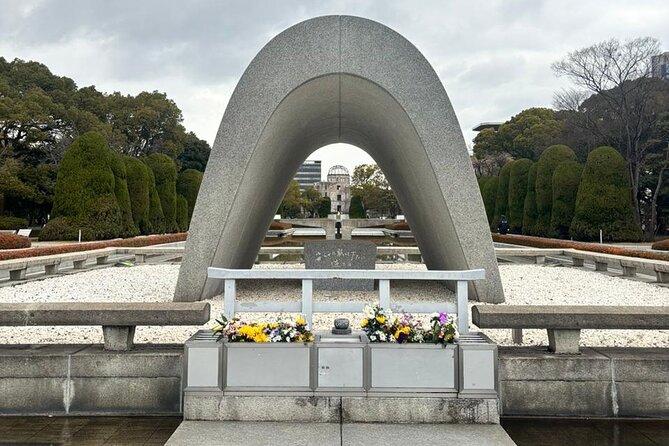
The Hiroshima Peace City Monument, commonly called the Cenotaph for the Atomic Bomb Victims, receives about 20 minutes. This is one of the central moments of the route.
The monument holds the names of people who died in the bombing. Your guide explains the meaning of the memorial and the way Hiroshima remembers its dead. The focus here is quiet and respectful. You are not simply photographing an architectural form. You are standing before a record of individual lives.
This is a good place to listen carefully and let the guide handle the larger explanation. The park has many visual symbols, but the list of names gives the tragedy its clearest weight. It reminds you that the bombing was not an abstract event. Every name belonged to a person, a family, and a daily life interrupted.
The stop can feel short if you want time for personal reflection. The guide must keep the group moving, so I would return later if you want to stand here without a schedule.
A completely different kind of day out:
- Peaceful Hiroshima & Miyajima UNESCO 1 Day Bus Tour
★ 5.0 · 5,309 reviews - Hiroshima Peace Memorial Museum Ticket
★ 4.8 · 2,727 reviews - Hiroshima: Hiroshima and Miyajima UNESCO Sites 1-Day Tour
★ 4.9 · 2,330 reviews - Hiroshima Peace Memorial Museum Admission
★ 4.6 · 1,308 reviews
Inside the National Peace Memorial Hall
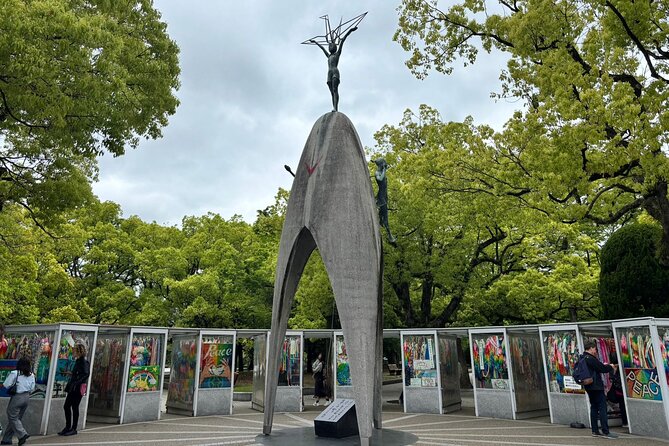
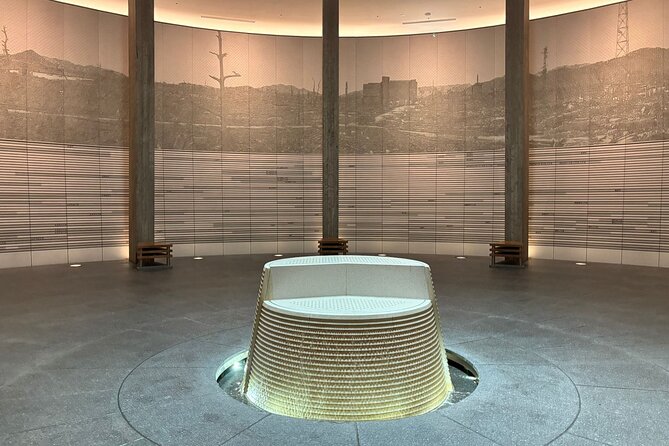
The Hiroshima National Peace Memorial Hall for the Atomic Bomb Victims provides a different view of the disaster. The listed visit lasts about 20 minutes, and the hall shows the destruction of the city.
This stop adds visual and institutional context to the outdoor monuments. The park can feel open and calm, while the hall helps you understand the scale of what happened to Hiroshima itself. The contrast matters. You leave the symbolic spaces of the park and spend time with a place designed to preserve memory and explain loss.
Twenty minutes is enough for an introduction, but it will not cover every detail. If you are drawn to the museum-like side of Hiroshima’s memorial work, plan additional independent time after the walk. The tour helps you know where to look, but the two-hour format cannot do all the work for you.
The Rest House and its remarkable survival
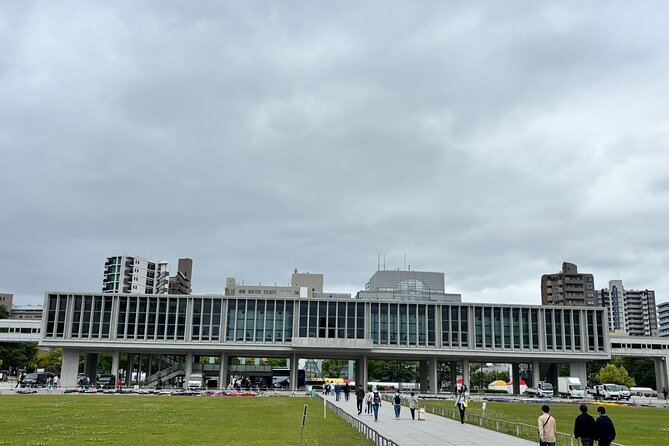
The Rest House of Hiroshima Peace Park is one of the route’s most striking physical reminders. The building survived the atomic bombing despite being only 170 meters from ground zero.
That distance is hard to grasp until you hear it while standing in the park. The structure gives you something concrete to consider: the blast was not a distant event that affected only one part of the city. Buildings close to the center were destroyed, while this one remained standing in some form.
The stop lasts about 15 minutes. Your guide explains the building’s survival and its place in the park. This is also a useful moment to connect the physical remains with the personal stories already discussed. Hiroshima’s memorial sites do not all communicate in the same way. Some remember people, some remember buildings, and some point toward future peace.
Sadako, paper cranes, and the Children’s Peace Monument
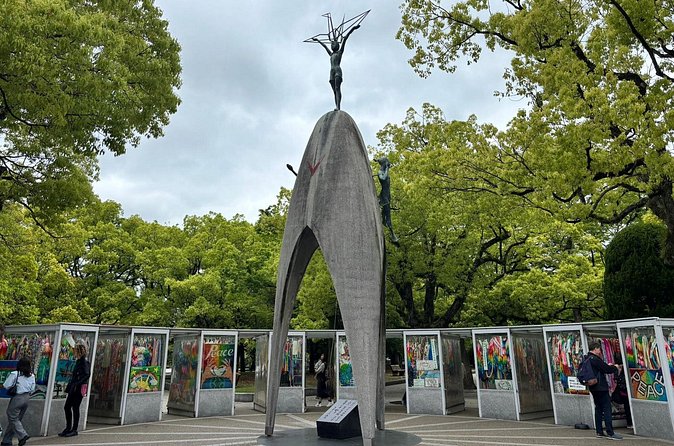
The Children’s Peace Monument is dedicated to Sadako and the other children who died in the bombing. You spend about 10 minutes here.
The monument is closely linked to the paper crane, now a widely recognized symbol of peace. Your guide explains the story behind that symbol and why it continues to matter in Hiroshima. This stop often speaks to families, but it is not only for children. It shows how an individual story became part of the city’s wider memorial culture.
I like that the route includes this monument after the Rest House. You have just considered a surviving structure. Now the attention turns back to children and the long effects of the bombing on ordinary families.
Ten minutes is a practical amount of time for a group walk, but you may want to linger. The monument can be emotionally difficult, especially if you are visiting with children. The guide’s tone matters here. Guides such as Cva have been praised for bringing warmth and occasional humor to a subject that can otherwise become overwhelming.
Remembering Korean victims and survivors
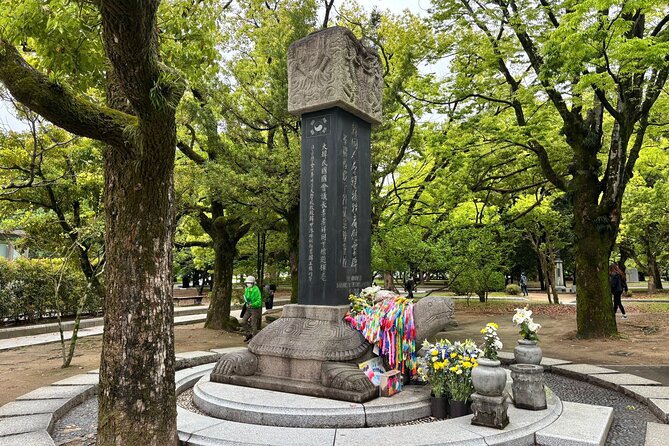
The Monument to Korean Victims and Survivors receives about five minutes. It honors Korean people affected by the bombing.
This is a brief stop, but it broadens the story beyond a single national viewpoint. Hiroshima’s wartime population included people from outside Japan, and the memorial park’s monuments reflect that fact. A visit here helps you see the bombing and its aftermath as a human tragedy that crossed nationality.
Because the stop is short, the explanation may be compact. Still, I consider it an important inclusion. A route that only visits the most famous sites can leave out groups whose experiences deserve recognition. This monument makes the memorial park’s story more complete.
The Peace Bell and the Atomic Bomb Dome
The Peace Bell is another five-minute stop. Its message is direct: peace should extend beyond Hiroshima and beyond any one country. Your guide explains the bell’s role and symbolism, giving you a brief pause before the final major site.
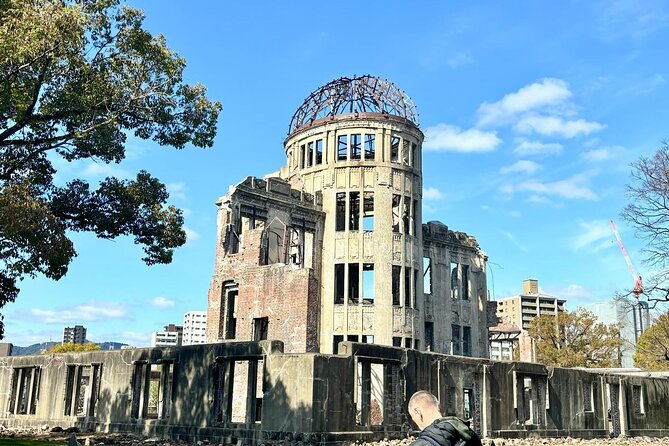
The Atomic Bomb Dome receives about 15 minutes. This damaged building is probably the most recognizable image in Hiroshima. It survived the bombing, though badly damaged, and now serves as a physical reminder of the city’s destruction.
The Dome works differently from the Cenotaph. The Cenotaph asks you to remember people. The Dome makes you look at a structure that endured the blast. Its exposed frame and ruined form are powerful, but the guide’s context prevents it from becoming only a dramatic photo stop.
The group does not spend a long time at the Dome, so you should not expect an extended architectural tour. You will receive the key explanation and have time to look closely. If you want photographs, take them efficiently and then listen. The final point is the meaning of the building, not just its appearance.
Ending at ground zero
The tour ends at the Hiroshima Atomic Bomb Hypocenter Monument, at 1-5-25 Otemachi. This marks the location identified as ground zero.
Ending here gives the walk a strong structure. You begin with the reasons and consequences of the bombing, move through memorials to mothers, victims, children, and Korean survivors, then finish at the physical point where the explosion occurred.
The end location is useful for planning the rest of your day. You can continue exploring Hiroshima from the city center, return to the Peace Memorial Park, or visit other sites nearby. The tour itself does not include lunch, so bring your own plan for food. No meal or food of any kind is included in the price.
What $32.84 buys you
At $32.84 per person, this is not the cheapest way to walk through the park, since the outdoor monuments themselves do not require an admission ticket. You are paying for the guide’s explanations, route planning, historical framing, and answers to questions.
That makes the value depend on how you like to visit difficult places. If you enjoy reading every plaque and building your own route, you can explore much of the park independently. If you have limited time or want help understanding the connections between sites, the fee is reasonable.
The tour is especially useful for a first visit. It helps you avoid treating the Peace Memorial Park as a list of photo stops. The guides have been praised for strong English, clear answers, friendly delivery, and an ability to use humor carefully. Ali, Cva, Malek, Moe, and Shiva are among the guide names associated with especially positive experiences, though your assigned guide may be different.
The group maximum is 30 people. That is manageable for a walking route, but it is not a private experience. You receive the strongest value by staying near the guide, listening during transitions, and asking focused questions.
Who should book this Hiroshima walk?
I would recommend it to first-time visitors, people with only a few hours in Hiroshima, and anyone who wants the park explained in plain language. It also suits families, since two children aged 0 to 10 can join free of charge.
The tour is a good fit if you want an introduction before spending more time at the memorial facilities. It is also helpful if you prefer stories and conversation to reading every sign alone.
I would hesitate only if you want a slow, private, highly detailed visit. Nine stops in roughly two hours means the route keeps moving. The emotional subject also demands attention and quiet, so this is not a casual sightseeing stroll, even though the walking itself is described as easy.
You receive confirmation when booking, and the meeting point is near public transportation. The activity requires good weather and a minimum number of participants. Cancellation is free up to 24 hours before the start time, while cancellations or changes within 24 hours do not receive a refund.
Should you book the History of Hiroshima Group Walking Tour?
Book it if you want clear context, human stories, and efficient use of time in Hiroshima Peace Memorial Park. The strongest reason to choose it is the guide-led connection between places that can otherwise feel disconnected: the Ten Gates of Peace, the Cenotaph, the Children’s Peace Monument, the Rest House, the Atomic Bomb Dome, and ground zero.
Skip it if you already know the park well or prefer to set your own pace. For most first-time visitors, though, $32.84 is a fair price for a thoughtful introduction to Hiroshima’s past and its continuing call for peace. Plan to return to any site that moves you. Two hours can open the door, but it cannot tell the whole story.
FAQ
How long does the History of Hiroshima Group Walking Tour last?
The tour lasts approximately two hours.
Where does the tour begin?
The meeting point is Ristorante Mario, 4-11 Nakajimacho, Naka Ward, Hiroshima, 730-0811, Japan.
Where does the tour end?
The tour ends at the Hiroshima Atomic Bomb Hypocenter Monument, 1-5-25 Otemachi, Naka Ward, Hiroshima, 730-0051, Japan.
What sites are included?
The route includes the Ten Gates of Peace, Mother and Baby in the Storm Statue, Cenotaph for the Atomic Bomb Victims, Hiroshima National Peace Memorial Hall, Rest House, Children’s Peace Monument, Monument to Korean Victims and Survivors, Peace Bell, and Atomic Bomb Dome.
Is food included?
No. Lunch and all other food are not included.
Can children join the tour?
Yes. Two children aged 0 to 10 can join free of charge.
Just added in Hiroshima
- Hiroshima Peace Memorial Museum Ticket★ 4.8 · 2,727 reviews
- Hiroshima Peace Memorial Museum Admission★ 4.6 · 1,308 reviews
- Private Full Day Hiroshima Tour★ 4.5 · 29 reviews
- The Peace Memorial to Miyajima : Icons of Peace and Beauty★ 4.5 · 31 reviews
- Shore Excursion from Hiroshima Port : Private Tour in Hiroshima★ 5.0 · 17 reviews
- Hiroshima & Miyajima All-Inclusive Tour w/Licensed guide Pancho★ 5.0 · 54 reviews
- Hiroshima Country Cycling: Explore Rural Life 1 HR from City★ 5.0 · 22 reviews
- Hiroshima Saijo Sake Tasting Tour with visit to 7 Breweries★ 5.0 · 104 reviews
Walking Tours, compared.
Kyoto Geisha Walking Tour: Gion District & Hidden Gems
Read our review →
Tokyo Tsukiji Fish Market Food and Culture Walking Tour
Read our review →
Gion Magical Night Walking Tour with Geisha Trivia
Read our review →
Imperial Palace and Shogun Historical Walking Tour
Read our review →
Gion Geisha District Walking Tour – Stories of Geisha
Read our review →
Shinjuku Local Bar and Izakaya Guided Walking Tour
Read our review →
Browse the lists this tour appears in