
Reviewed · COOKING CLASSES
Japanese Cooking and Udon Making Class in Tokyo with Masako
Come hungry and ready to knead. This private cooking class brings you into Masako’s home in Tokyo’s Adachi City to make udon noodles, tamagoyaki, tempura, and other Japanese dishes from scratch. I like the personal teaching, since only your group takes part, and I like the thoughtful extras: green tea on arrival, drinks with the meal, and your name written in Japanese calligraphy to take home.
The main drawback is the location, which is north of many central Tokyo sights and requires you to reach a residential meeting point in Senju. Masako also speaks limited English, so a translator is provided. The class does not accept children, and at $142 per person, it makes the most sense if you value a private home visit, a full meal, and hands-on instruction rather than just a quick cooking demonstration.
In This Review
- Key things to know before booking
- Arriving at Masako’s Tokyo home
- Kneading udon dough from scratch
- Tamagoyaki, tempura, and the Japanese home kitchen
- A private lesson with direct help
- The meal, drinks, and the value of eating what you prepare
- Calligraphy and the small personal touches
- What the class teaches you to make at home
- Timing, transport, and who will enjoy it most
- Is Masako’s udon class worth booking?
- FAQ
- Where does the Japanese cooking class take place?
- How long does the class last?
- Is the class private?
- What dishes can I learn to make?
- Are ingredients included?
- Are drinks included?
- Will the class be taught in English?
- Can children attend the class?
- Is hotel pickup included?
- Can I cancel for a refund?
Key things to know before booking
- Make udon from flour to bowl: You knead, rest, flatten, cut, and cook the dough yourself, learning the small details that affect texture.
- Expect more than noodles: The menu can include tamagoyaki, vegetable and shrimp tempura, udon soup, dashi, and other Japanese classics.
- Masako teaches in her own home: This gives the class a warm, everyday setting rather than a formal cooking school atmosphere.
- Calligraphy is part of the welcome and farewell: Masako writes your name in Kanji, and some participants receive personalized fans or other small gifts.
- The class is private and about two and a half hours: You get direct help, but the price is higher than a shared group lesson.
- Choose your menu in advance: Masako offers four meal choices, so send a message stating which menu you prefer.
Arriving at Masako’s Tokyo home
The class meets at 120-0034 Tokyo, Adachi City, Senju, 4-chome 27-5, Choenji. It ends at the same meeting point. The address is near public transportation, but you should allow time to find it, especially if you are coming from central Tokyo.
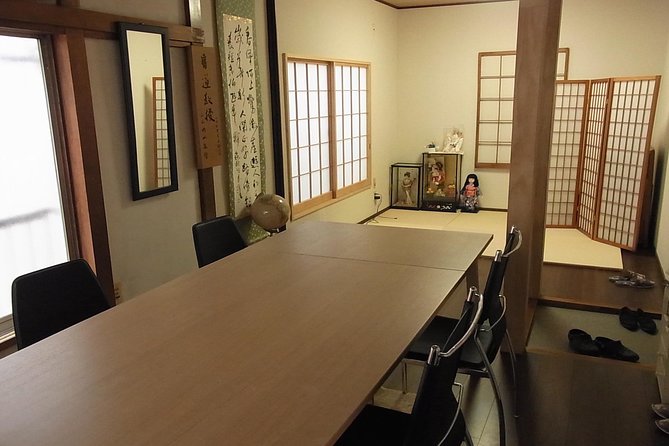
This is not a class attached to a famous market or a restaurant. You are going to a residential part of Tokyo and entering a private home. That changes the tone at once. Instead of watching a chef work behind a counter, you take part in a small household cooking session, with Masako guiding your hands and adjusting the work to your group.
I would plan this as a half-day outing rather than something to squeeze between two major sights. The class lasts about 2 hours and 30 minutes, and the journey to Adachi City adds time. The farther north setting is part of the appeal, but it is also the main practical consideration.
A cup of green tea begins the visit. Masako also writes your name in Kanji, a personal touch that gives you an immediate connection to Japanese writing and etiquette. She is a qualified calligraphy professional, so this is not simply a souvenir printed from a template.
More Cooking Classes in Tokyo
- Sushi Making Tokyo Roll and Authentic Japanese Sushi Class
★ 5.0 · 3,971 reviews - Tokyo: Roll and Authentic Sushi Making Class in Asakusa
★ 4.9 · 1,957 reviews - Tokyo Shinjuku Chopsticks Making Class
★ 5.0 · 1,763 reviews
Kneading udon dough from scratch
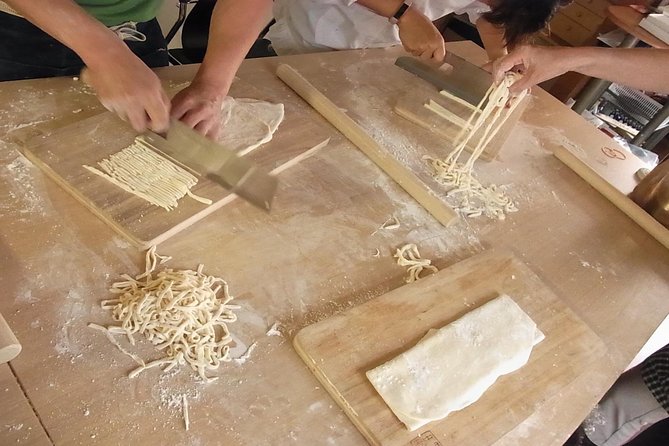
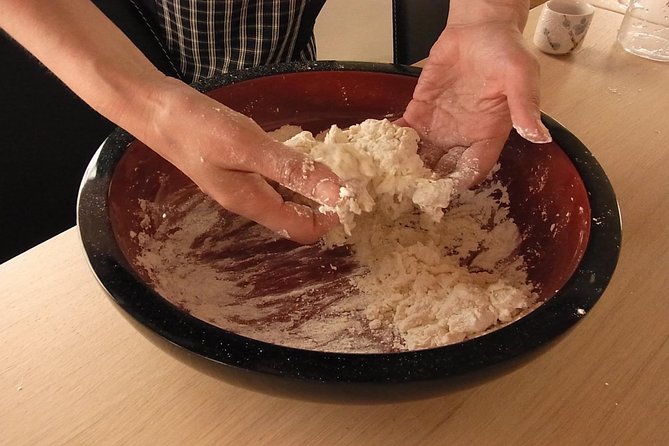
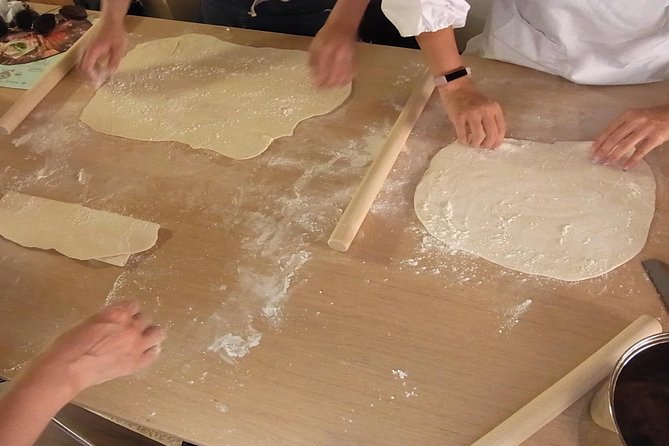
The heart of the class is the udon. You learn about the flour, water ratios, kneading, resting, flattening, and cutting. This is useful because udon looks simple on the plate, but the texture depends on several small choices before the noodles ever reach the pot.
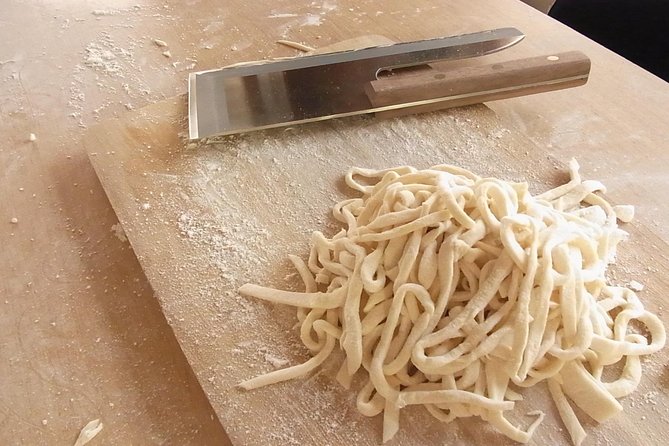
The dough requires real work. You may knead it by hand and learn how to develop the right texture without relying on a machine. You then flatten the dough and cut it into noodles. That hands-on process is more satisfying than simply being shown a finished recipe, and it gives you a method you can try at home.
The class is basic enough for people without much cooking experience. Masako explains each step and offers help as needed, which matters when several people are working at once. At the same time, experienced home cooks should still pick up useful details about flour, water, dough handling, and timing.
Once the noodles are cut, you cook them and prepare the accompanying soup. The finished bowl is a direct reward for the work. You are not taking the noodles home uncooked or watching someone else serve them. You eat what you make.
Tamagoyaki, tempura, and the Japanese home kitchen
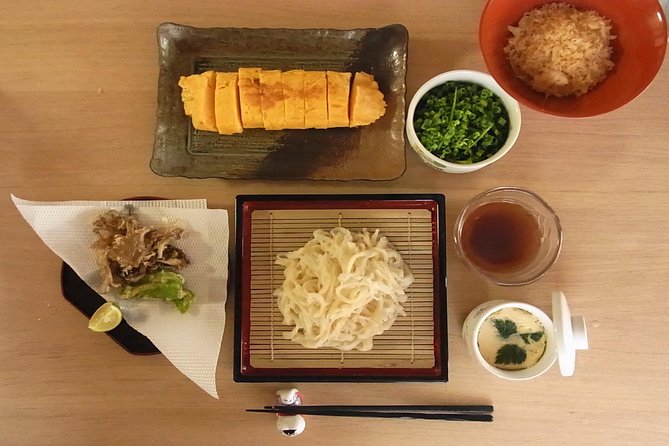
The exact menu depends on the choice you send to Masako, but the most frequently described combination includes udon, Japanese rolled omelet, and tempura. The omelet, known as tamagoyaki, may include egg, sugar, and miso. Each person can get a chance to make one, which turns a familiar Japanese side dish into a practical lesson.
Tamagoyaki is a good class dish because it rewards technique. The egg must be cooked and rolled in stages, and the shape improves with practice. Masako’s instruction helps you understand the movement rather than simply copying a finished omelet.
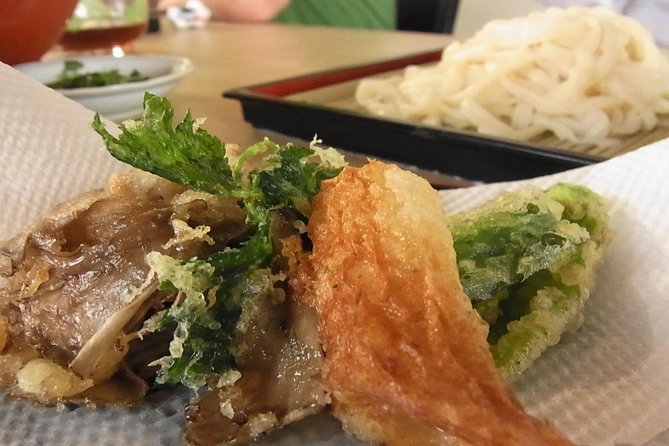
Tempura adds another kind of lesson. You may prepare vegetables and shrimp, then learn how to fry them. The class includes tips that can carry over to your own kitchen, though you should remember that cooking in a home setting means the scale and equipment may differ from what you use at home.
The meal can also include dashi, the stock used in many Japanese dishes. Learning how it fits into the udon soup gives you a better sense of how Japanese cooking builds flavor with a few carefully chosen ingredients.
The appeal here is not a long parade of complicated recipes. The dishes are approachable, nutritious, and realistic for a home cook. Masako’s stated aim is to teach food that you can prepare again after returning home. That makes the class more useful than a one-time food spectacle.
A private lesson with direct help
Because the class is private, only your group takes part. This is one of the strongest reasons to consider the price. You can ask questions freely, receive one-to-one help, and work at a pace that suits your group.
Private instruction also makes the session flexible. If one person is confident with dough but nervous about frying, Masako can give extra attention where it is needed. Families with adult children, couples, and small groups can share tasks without competing with a room full of strangers.
Communication deserves a clear note. Masako speaks limited English, and a translator will be present during the experience. Some people have found communication easy, while others have benefited from translation and demonstrations. You should be comfortable with a class that combines spoken instruction, visual examples, and help from a translator.
The atmosphere is warm and relaxed, but this remains a working kitchen. You will be handling dough, eggs, and hot oil. Follow Masako’s directions closely, especially during tempura preparation. Children are not accepted because of safety concerns, so this is intended for adults and older groups who can work safely in a home kitchen.
A completely different kind of day out:
- Tokyo Disney Resort – Tokyo Disneyland & Tokyo DisneySea Park Tickets
★ 4.8 · 99,488 reviews - SHIBUYA SKY Ticket
★ 4.7 · 46,509 reviews - JR Whole Japan Rail Pass
★ 4.8 · 29,150 reviews - Mt Fuji and Hakone 1-Day Bus Tour Return by Bullet Train
★ 5.0 · 26,383 reviews
The meal, drinks, and the value of eating what you prepare
At the end, you sit down and eat the dishes made during the class. This is a multi-course meal rather than a small tasting. Alcoholic beverages are included, along with the cooking class, ingredients, fees, and taxes.
That inclusion matters when judging the $142 price. You are paying for about two and a half hours of private instruction, all ingredients, a prepared meal, drinks, translation support, and the calligraphy keepsake. You also avoid the need to shop for ingredients or arrange a separate meal afterward.
Still, the price is not a bargain cooking lesson. If your only goal is to learn how to make noodles as cheaply as possible, a group class or a local cooking school may offer better value. Here, the extra cost buys privacy, personal attention, a home setting, and hospitality.
You should also arrive hungry. The food is the main event, and the meal can be generous. The combination of udon, omelet, tempura, and drinks can easily become one of your larger meals in Tokyo.
Calligraphy and the small personal touches
The calligraphy is more than a quick photograph at the start. Masako writes your name in Japanese characters, and the skill becomes part of the closing moment. Some groups have received individual fans with their names and symbols, origami gifts, or other thoughtful souvenirs.
These details are not guaranteed in the same form for every booking, so I would treat them as a welcome bonus rather than the reason to reserve. The stated offering is a name written in Kanji. The personalized fans and extra gifts have appeared as generous additions.
The calligraphy works well because it connects the cooking class to another part of Japanese culture. You leave with something small and personal, not just a recipe you may or may not repeat. It also gives Masako a chance to share a talent beyond cooking.
Her warmth is a major part of the visit. She welcomes people into her home, shares family recipes, and talks about Japanese food and daily life. The result feels closer to being invited into someone’s kitchen than attending a standard commercial lesson.
What the class teaches you to make at home
The best souvenir is probably the cooking technique. The recipes are not presented as difficult restaurant secrets. They are practical dishes built around basic ingredients and clear methods.
You can use the class to learn:
- How flour and water affect udon dough
- Why kneading and resting matter
- How to flatten and cut noodles evenly
- How to prepare a simple udon soup
- How to roll tamagoyaki in a pan
- How dashi supports Japanese flavor
- How to prepare vegetables and shrimp for tempura
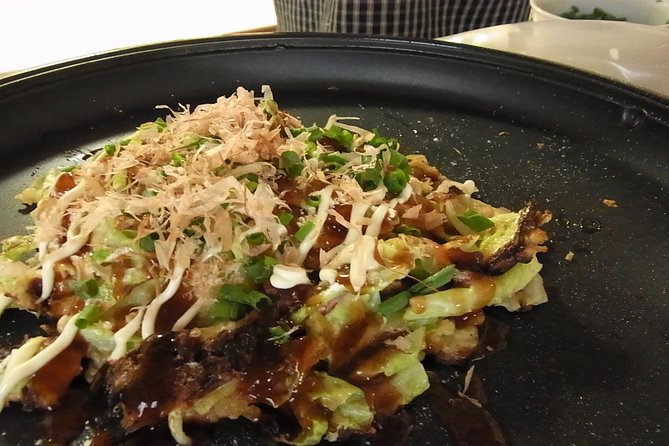
The class may also offer other Japanese dishes, including okonomiyaki. Since Masako has four menu choices, contact her before the class and state your preference. Do not assume every dish listed in a sample menu will appear automatically.
This advance choice is helpful, but it requires a little planning. If one person in your group has dietary restrictions, tell Masako early. She has been accommodating with dietary needs, but the ingredients and menu should be discussed before you arrive.
Timing, transport, and who will enjoy it most
The two-and-a-half-hour length gives enough time to cook, eat, and enjoy the calligraphy without making the session feel rushed. It is still a compact activity compared with a full-day food tour, so it can fit into a Tokyo itinerary if you plan the transport carefully.
The meeting point is in Adachi City, Senju, near public transportation. Hotel pickup and drop-off are not included. You will need to make your own way there and return from the same place after the class.
I would recommend this for:
- Couples wanting a private activity
- Adults who enjoy cooking or food culture
- Families with adult children
- People who want a home-based experience
- Anyone hoping to learn recipes they can repeat at home
- Visitors who appreciate small handmade souvenirs
I would think twice if you dislike hands-on cooking, have limited time in Tokyo, or want a class in a central sightseeing district. The trip to Senju is part of the experience, but it may feel inconvenient if your schedule is already packed.
The activity is booked, on average, about 52 days in advance. That suggests you should reserve early for a specific date, especially if you are traveling during a busy period. Confirmation is sent within 48 hours, subject to availability.
Free cancellation is available up to 24 hours before the start time for a full refund. Changes or cancellations made less than 24 hours ahead are not accepted, and the cut-off uses Tokyo local time.
Is Masako’s udon class worth booking?
I would book this class if you want personal contact, practical cooking skills, and a meal in a real Tokyo home. The strongest parts are the private format, the amount of food you prepare yourself, Masako’s patient teaching, and the calligraphy at the end.
The $142 price is fair for a private session that includes ingredients, drinks, taxes, a full meal, translation support, and a personal souvenir. It is less appealing if you are seeking a low-cost group workshop or need to stay near central Tokyo.
Choose your preferred menu in advance, mention dietary needs, allow extra time for the journey to Senju, and arrive ready to work. For many people, making udon from flour, then eating it with tempura and tamagoyaki, will be a far more lasting Tokyo memory than another restaurant meal.
FAQ
Where does the Japanese cooking class take place?
The class takes place at Masako’s home in Senju, Adachi City, Tokyo. The meeting address is 120-0034 Tokyo, Adachi City, Senju, 4-chome 27-5, Choenji.
How long does the class last?
The experience lasts approximately 2 hours and 30 minutes.
Is the class private?
Yes. Only your group participates in the activity.
What dishes can I learn to make?
The class can include udon noodles, udon soup, tamagoyaki, vegetable and shrimp tempura, and dashi. Other Japanese dishes, such as okonomiyaki, may also be possible. Masako offers four menu choices, so send her your preferred option before the class.
Are ingredients included?
Yes. All ingredients are included, so you do not need to shop before arriving.
Are drinks included?
Yes. Alcoholic beverages are included, along with the cooking class, fees, and taxes.
Will the class be taught in English?
Masako speaks limited English, and a translator will be present during the experience.
Can children attend the class?
No. Masako does not accept children for the cooking class because of kitchen safety concerns.
Is hotel pickup included?
No. Hotel pickup and drop-off are not included. The activity begins and ends at the meeting point in Senju.
Can I cancel for a refund?
You can cancel at least 24 hours before the start time for a full refund. Cancellations or changes made less than 24 hours before the experience are not accepted for a refund.
Just added in Tokyo
- Private Unforgettable Mt Fuji Tour with English Speaking Driver★ 5.0 · 142 reviews
- Private Kamakura plus Yokohama Tour – English Speaking Driver★ 4.5 · 28 reviews
- Luxury van Ride to famous car meet up spot Daikoku★ 4.5 · 148 reviews
- Private Harajuku Omotesando Architecture Walking Tour★ 5.0 · 67 reviews
- Private Tour to Mt Fuji and Hakone with English Speaking Driver★ 5.0 · 133 reviews
- Private Customizable Walking Tour of Tokyo★ 5.0 · 70 reviews
- Japanese Food Cooking Class in Asakusa, Tokyo★ 5.0 · 39 reviews
- Private Departure Transfer : Central Tokyo City to Haneda Airport★ 4.5 · 22 reviews
Cooking Classes, compared.
Sushi Making Tokyo Roll and Authentic Japanese Sushi Class
Read our review →
Roll and Authentic Sushi Making Class in Asakusa
Read our review →
Ramen Cooking Class at Ramen Factory in Kyoto
Read our review →
Sushi Making Class in a Happi Coat near a Famous Spot
Read our review →
Sushi Making Osaka Roll and Authentic Japanese Sushi Class
Read our review →
Tokyo Sushi Making Class in Tsukiji with Professional Chef
Read our review →
Ramen & Gyoza Cooking Class in Tokyo with Local Supermarket Visit
Read our review →Browse the lists this tour appears in