
Reviewed · COOKING CLASSES
Japanese Food Cooking Class in Asakusa, Tokyo
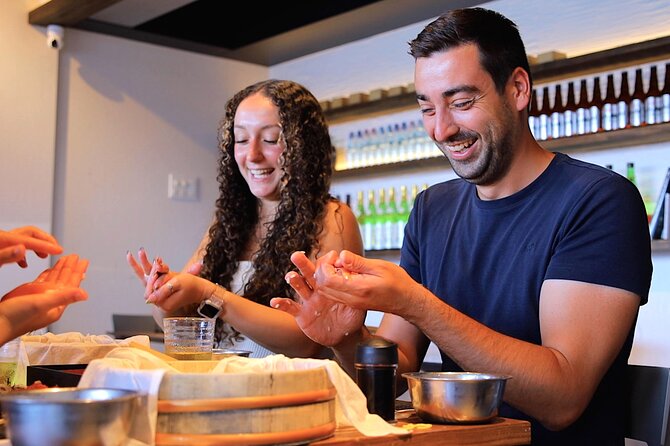
Sushi and matcha make a fine Tokyo pairing. This three-hour class brings together two hands-on Japanese traditions in Asakusa, only a few minutes from Sensoji Temple. You learn to prepare sushi with fresh ingredients, then make matcha in the traditional style with help from an English-speaking instructor.
I like the practical format: you do the work instead of simply watching a demonstration. I also like the friendly, patient teaching style praised in the feedback, especially from instructors such as Jun and Kazu. The main consideration is the unusual listed price of $85.87 per group of up to one, so you should confirm the final cost if you are booking for more than one person.
In This Review
- Key points at a glance
- Why this Asakusa class works well
- Starting with matcha in a one-hour session
- Making maki and nigiri with fresh ingredients
- The teachers make the difference
- A practical stop near Sensoji Temple
- Is $85.87 good value?
- Who should book this class?
- What to know before you go
- Final verdict: a tasty cultural lesson in Asakusa
- FAQ
- Where does the Japanese food cooking class meet?
- Where does the class finish?
- How long does the experience last?
- What activities are included?
- How long is the matcha session?
- How long is the sushi session?
- Is an English-speaking instructor included?
- Are ingredients and the meal included?
- Is hotel pickup available?
- How many people can join?
- Can children participate?
- Can I cancel for a full refund?
Key points at a glance
- Two Japanese food traditions in one class: Make sushi and whisk matcha during a single three-hour visit.
- A useful Asakusa location: The meeting point is at 2-chōme-17-9 Kaminarimon, a short walk from Sensoji Temple.
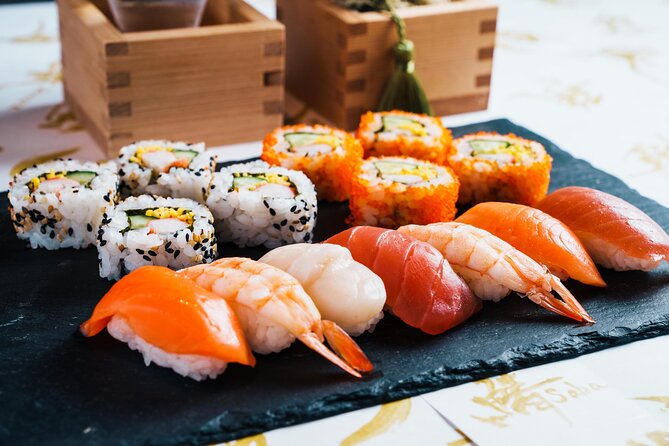
- Hands-on sushi practice: You learn both rolled sushi and nigiri, rather than only preparing one style.
- Patient English instruction: No previous cooking experience is needed, and the teachers guide you step by step.
- Good for families: Children took part successfully in one family booking, with ages seven and nine specifically enjoying the activity.
- A small-group setting: The maximum group size is 15 people, which should allow for direct help during the class.
Why this Asakusa class works well
Asakusa is one of Tokyo’s best areas for a traditional culture stop. Sensoji Temple, Kaminarimon Gate, and the surrounding streets give you plenty to see before or after class. This cooking experience fits neatly into that setting without asking you to spend a full day away from central Tokyo.
The appeal is simple: you leave with a meal you helped make and a better sense of two everyday Japanese customs. Sushi is not just about placing fish on rice, and matcha is not simply green tea stirred in a bowl. The class gives you a basic look at preparation, presentation, and technique in a setting designed for beginners.
I also appreciate the balance between instruction and eating. You are not left with a plate of ingredients and vague directions. The teaching is described as clear and step by step, with the instructors checking that you can follow along. That matters when you are handling sushi rice, rolling maki, or trying to shape nigiri for the first time.
The class is conducted in English, and the feedback repeatedly points to a warm teaching style. Jun is praised for being patient and funny, while Kazu helped a family with children aged seven and nine. Those details suggest an easygoing class rather than a formal culinary lesson.
More Cooking Classes in Tokyo
- Sushi Making Tokyo Roll and Authentic Japanese Sushi Class
★ 5.0 · 3,971 reviews - Tokyo: Roll and Authentic Sushi Making Class in Asakusa
★ 4.9 · 1,957 reviews - Tokyo Shinjuku Chopsticks Making Class
★ 5.0 · 1,763 reviews
Starting with matcha in a one-hour session
The first part lasts about one hour and focuses on matcha making. You learn how to whisk powdered tea in the traditional way, with the instructor showing you how the process works.
This is a good opening activity because it is calm and focused. Before the sushi work begins, you get a chance to handle the tools, follow a short sequence, and learn about a familiar part of Japanese culture. The experience is not presented as a full tea ceremony, so you should not book it expecting an elaborate formal ritual. It is a practical matcha lesson.
The value here is in learning the method. Matcha preparation depends on small movements and proper whisking, and a teacher can correct your technique more easily than a written recipe can. You get to try it yourself, which makes the custom easier to remember later.
The matcha portion also gives the class some variety. If you are traveling with children or friends who have different interests, not everyone has to spend the whole session focused on knife work and sushi rice. One person may enjoy the tea lesson, while another looks forward to making rolls.
The available details do not specify the exact tea utensils, sweets, or tasting menu. I would treat this part as an introduction to whisking matcha, not as a long ceremonial event. Its strength is the chance to participate in a recognizable Japanese tradition without needing prior experience.
Making maki and nigiri with fresh ingredients
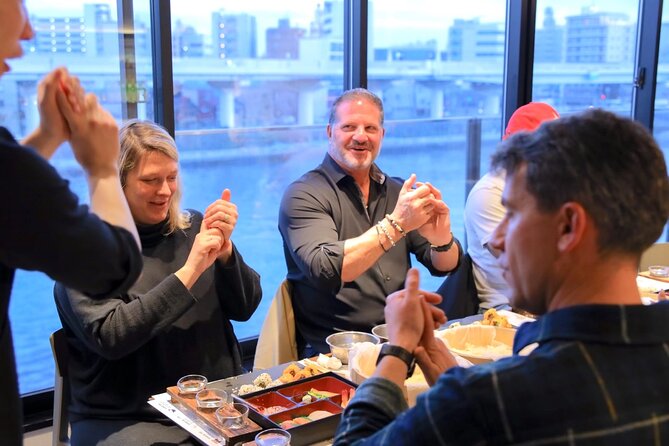
The sushi section lasts about one hour and 40 minutes. This is the longer part of the class, and it is where you get the most hands-on practice.
You learn how to make rolled sushi and nigiri. Maki requires you to work with the outer wrapping and arrange the filling before rolling it into shape. Nigiri is a different exercise, since the rice and topping need to come together in a compact form. Learning both gives you a better sense of how varied sushi preparation can be.
The ingredients for the cooking class and meal are included. The description also promises fresh ingredients, although it does not provide a full menu or identify each type of fish and filling. If you have food allergies or dietary restrictions, ask the provider before booking, since the available information does not explain substitutions.
The teaching style is the important part here. Several comments point to clear instructions that make the process easy to follow. One person specifically enjoyed learning how to properly make sushi, while another appreciated learning about sushi’s background as well as the preparation itself.
You should expect to make plenty of sushi rather than only one small sample. The completed food becomes part of the meal included with the class. That makes the $85.87 price easier to assess, since you are paying for instruction, ingredients, an English-speaking teacher, and food to eat, not just a short demonstration.
Still, this is an introduction, not professional chef training. You will learn useful techniques, but the class is designed for a broad audience. If you already make sushi at home, you may find the lesson basic. For most first-time cooks, that is exactly the point.
The teachers make the difference
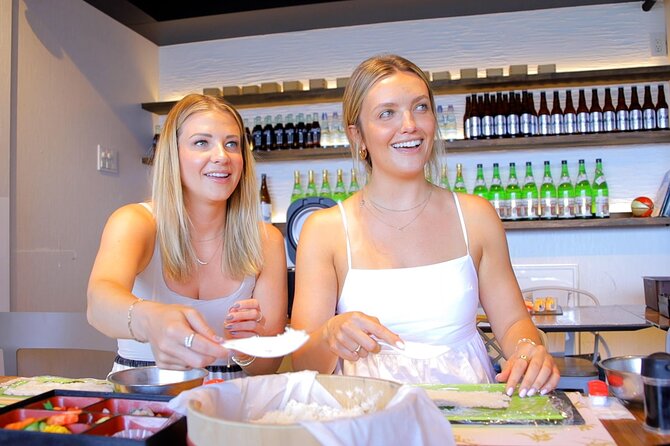
The strongest praise goes to the instructors. The available feedback describes the teachers as friendly, funny, patient, and clear. Jun is singled out for guiding participants through every step of making rolls and nigiri. Kazu receives similar praise for helping a family complete the class with two young children.
That combination matters. Food classes can become frustrating when the teacher moves too fast or assumes you already know how to handle the ingredients. Here, the repeated emphasis on patient instruction suggests that beginners receive close attention.
The maximum group size is 15 people. That is not a private lesson, and a group of 15 can feel fairly active during a practical class. Still, it is small enough that direct help should be possible, especially when the instructor is working through each stage with the group.
The class welcomes solo participants, friends, and families. The feedback from the family with seven- and nine-year-old children is particularly useful. The children were excited to eat sushi they had made themselves, which is often the best kind of cooking lesson for younger participants.
You should keep your expectations sensible. This is not described as a specialized course for serious food professionals, nor is there a private chef assigned to each person. Its appeal comes from approachable guidance and a relaxed atmosphere.
A completely different kind of day out:
- Tokyo Disney Resort – Tokyo Disneyland & Tokyo DisneySea Park Tickets
★ 4.8 · 99,488 reviews - SHIBUYA SKY Ticket
★ 4.7 · 46,509 reviews - JR Whole Japan Rail Pass
★ 4.8 · 29,150 reviews - Mt Fuji and Hakone 1-Day Bus Tour Return by Bullet Train
★ 5.0 · 26,383 reviews
A practical stop near Sensoji Temple
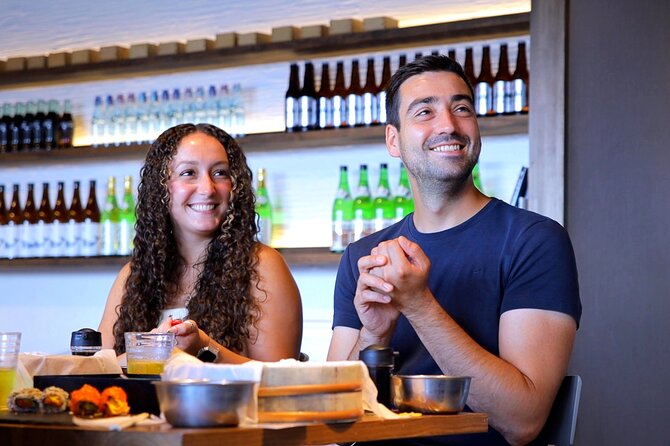
The meeting point is 2-chōme-17-9 Kaminarimon, Taito City, Tokyo 111-0034, Japan. The activity ends at the same place, so you do not need to arrange a separate return transfer.
The location is near public transportation and close to Sensoji Temple. That makes the class easy to pair with sightseeing in Asakusa. You could visit the temple and Kaminarimon area before class, then continue exploring afterward. The tour provider does not include hotel pickup or drop-off, so you are responsible for reaching the meeting point.
Because the class lasts about three hours, timing matters. It can fit comfortably into a morning or afternoon plan, but you should leave enough time to reach the address without rushing. Asakusa has plenty to see, and it is easy to underestimate how long you will spend around Sensoji.
A mobile ticket is included as a feature. Keep your booking details available on your phone when you arrive. Confirmation is sent within 48 hours of booking, subject to availability, so do not leave a last-minute reservation until the day before if your schedule is tight.
Is $85.87 good value?
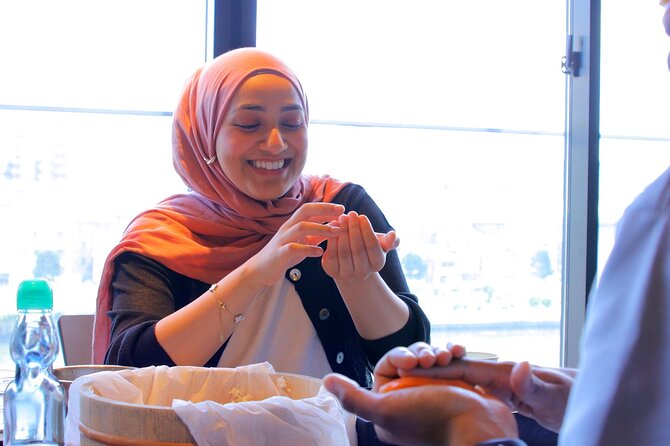
The displayed price is $85.87 per group of up to one. That wording is worth checking carefully before payment. If you are booking with friends or family, confirm how the provider prices additional people, since the supplied information does not clarify the cost for a larger party.
For one participant, the value depends on what you want from the experience. You receive about three hours of instruction, sushi ingredients, the meal you prepare, matcha instruction, and an English-speaking teacher. The class also offers a cultural component that a restaurant meal cannot provide.
I would not compare the price only with the cost of buying sushi. You are paying for a structured activity in central Tokyo, guidance from a local instructor, and the chance to practice techniques you can remember after your trip. If you only want to eat sushi, a restaurant will be simpler and likely cheaper. If you want to make it yourself, this class offers more.
The price is especially reasonable for a family or small group if the group rate applies as advertised. Children can take part, the food is prepared during the session, and the activity gives everyone something to do. Check the exact booking total before committing, since the listed group size is limited to one person.
Who should book this class?
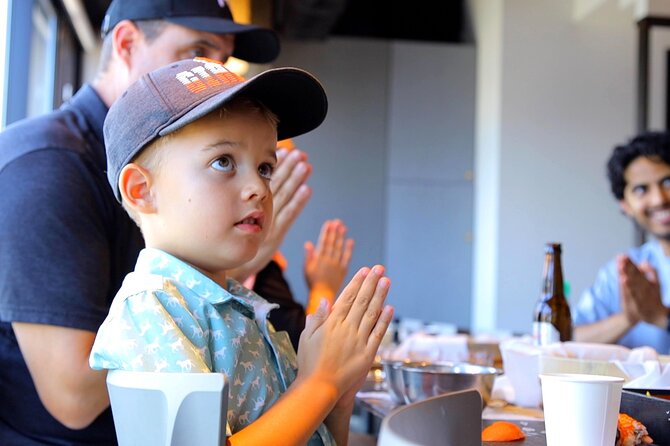
I would recommend it most strongly to first-time visitors who want a cultural activity with a clear food focus. It suits people who enjoy learning by doing and who want more than a photo stop at a temple.
Families are a strong match. The experience has no stated requirement for previous cooking skills, and the successful participation of children aged seven and nine provides useful evidence that younger cooks can enjoy it. The activity also gives children an immediate reward: they get to eat what they make.
Solo visitors can also fit in easily. The class is open to solo participants, and the maximum size of 15 means you are likely to share the session with other people rather than cook entirely alone.
Friends and couples may like the social side. You can compare your rolls, laugh at imperfect shapes, and share the meal afterward. The friendly atmosphere is a recurring strength, and the teachers are described as funny as well as helpful.
This class may be less suitable if you want an advanced sushi course, a formal tea ceremony, or a highly private setting. The information does not promise detailed knife skills, a professional kitchen, or a full traditional tea ritual. It is best understood as an accessible introduction to sushi and matcha.
What to know before you go
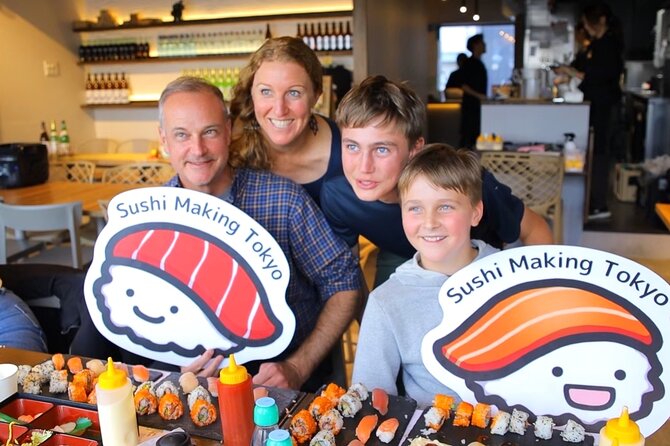
Plan your Asakusa sightseeing around the meeting point at Kaminarimon. Since the class ends where it begins, you can continue walking through the district without arranging transport back to your hotel.
Allow time for the full three-hour session. The two listed portions total roughly two hours and 40 minutes, and the overall experience is described as approximately three hours. Arriving late could make it harder to follow the step-by-step instruction.
Wear something comfortable for a practical food activity. The supplied details do not state a dress code, so there is no special outfit requirement mentioned. You should also tell the provider ahead of time about food concerns, since the ingredient list is not specified.
The activity is offered in English. That is useful for visitors who want to ask questions while learning the techniques, rather than simply copying a demonstration.
Free cancellation is available if you cancel at least 24 hours before the start time. Cancellations or changes made less than 24 hours before the experience are not refunded or accepted, and the cut-off follows Tokyo local time.
Final verdict: a tasty cultural lesson in Asakusa
Book this class if you want to make your own sushi, try traditional matcha preparation, and spend part of your day in the Sensoji area. The patient instruction, friendly teachers, included meal, and family-friendly format give it broad appeal.
I would be careful about two points: the exact charge for more than one person and any dietary requirements, since neither is fully explained in the available details. If those points work for your group, this is a practical and enjoyable way to add food culture to a Tokyo itinerary without giving up a full day of sightseeing.
FAQ
Where does the Japanese food cooking class meet?
It meets at 2-chōme-17-9 Kaminarimon, Taito City, Tokyo 111-0034, Japan.
Where does the class finish?
The activity ends back at the meeting point.
How long does the experience last?
The overall experience lasts approximately three hours.
What activities are included?
You take part in a matcha-making class and a sushi-making class.
How long is the matcha session?
The matcha-making portion lasts about one hour.
How long is the sushi session?
The sushi-making portion lasts about one hour and 40 minutes.
Is an English-speaking instructor included?
Yes. An English-speaking instructor is included.
Are ingredients and the meal included?
Yes. The ingredients used in the cooking class and the meal are included.
Is hotel pickup available?
No. Hotel pickup and drop-off are not included.
How many people can join?
The activity has a maximum of 15 participants. The listed price is $85.87 per group of up to one, so confirm the final price for your party before booking.
Can children participate?
Most people can participate, and the class has been suitable for a family with children aged seven and nine. No previous cooking experience is required.
Can I cancel for a full refund?
Yes, if you cancel at least 24 hours before the experience start time. Cancellations made less than 24 hours in advance are not refunded.
Just added in Tokyo
- Private Unforgettable Mt Fuji Tour with English Speaking Driver★ 5.0 · 142 reviews
- Japanese Cooking and Udon Making Class in Tokyo with Masako★ 5.0 · 35 reviews
- Private Kamakura plus Yokohama Tour – English Speaking Driver★ 4.5 · 28 reviews
- Luxury van Ride to famous car meet up spot Daikoku★ 4.5 · 148 reviews
- Private Tour to Mt Fuji and Hakone with English Speaking Driver★ 5.0 · 133 reviews
- Private Harajuku Omotesando Architecture Walking Tour★ 5.0 · 67 reviews
- Private Customizable Walking Tour of Tokyo★ 5.0 · 70 reviews
- Private Departure Transfer : Central Tokyo City to Haneda Airport★ 4.5 · 22 reviews
Cooking Classes, compared.
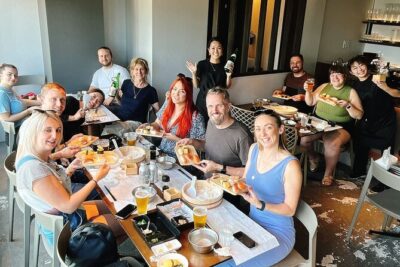
Sushi Making Tokyo Roll and Authentic Japanese Sushi Class
Read our review →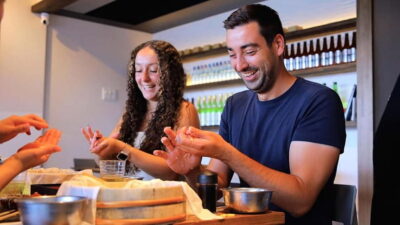
Roll and Authentic Sushi Making Class in Asakusa
Read our review →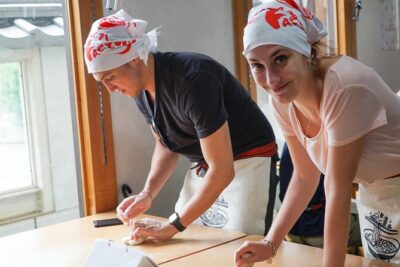
Ramen Cooking Class at Ramen Factory in Kyoto
Read our review →
Sushi Making Class in a Happi Coat near a Famous Spot
Read our review →
Sushi Making Osaka Roll and Authentic Japanese Sushi Class
Read our review →
Tokyo Sushi Making Class in Tsukiji with Professional Chef
Read our review →
Ramen & Gyoza Cooking Class in Tokyo with Local Supermarket Visit
Read our review →Browse the lists this tour appears in