Reviewed · KYOTO TOURS
Kioto: Gion Tour, recorrido a pie (Español/Castellano)
Gion reveals more than geisha doorways. This two-hour walk links Kyoto’s old entertainment quarters with bridges, shrines, statues, and quiet lanes that are easy to miss on your own. I especially like the small group of six or fewer, which gives you room to ask questions, and the guide’s focus on everyday Japanese life as well as formal history. The main consideration is that Hanamikoji-dori is not part of the route, and seeing a Maiko or Geiko is never promised.
The 3.3-kilometer route covers Pontocho, Gion-Kobu, and Gion-Higashi, three of Kyoto’s five hanamachi, or traditional geisha districts. I also like the chance to visit Yasaka Shrine and learn how the name Gion connects with the shrine and the famous Gion Festival. At $35 per person, the tour offers good value if you want context, clear Spanish explanations, and a local guide who welcomes questions rather than rushing you from photo stop to photo stop.
In This Review
- Key points at a glance
- Why this Gion walk is different
- Meeting the guide near Kyoto’s Disney Store
- Pontocho Alley and the Kamo River
- From Yamato-dori into Gion-Kobu
- Tatsumi Shrine and the bridges of Gion
- Gion-Higashi and Yasaka Shrine
- What you learn about Maiko and Geiko life
- The walking route and practical comfort
- Is $35 a fair price?
- Who should book this Gion experience?
- Should you book the Kyoto Gion tour in Spanish?
- FAQ
- How long is the Kyoto Gion walking tour?
- How far do you walk?
- What language is the tour offered in?
- How many people can join the group?
- Where is the meeting point?
- Which hanamachi are included?
- Is Hanamikoji-dori included?
- Will I see a Maiko or Geiko?
- Can the tour include the Gion Gallery?
- What happens during cherry blossom season?
Key points at a glance
- Three hanamachi in two hours: Walk through Pontocho, Gion-Kobu, and Gion-Higashi instead of seeing only one famous street.
- Spanish-speaking local guide: The tour is designed for Spanish speakers, with guides such as José and Juan praised for friendly, flexible explanations.
- A 3.3-kilometer city walk: Expect bridges, alleyways, preserved neighborhoods, shrines, statues, and traditional wooden Machiya houses.
- More than geisha spotting: The focus includes Maiko and Geiko routines, Kyoto’s past, Japanese customs, and daily life today.
- A clear limitation: Hanamikoji-dori is excluded, and a Maiko or Geiko sighting cannot be guaranteed.
- Cherry blossom adjustment: In late March and early April, the route may change to show flowering areas around Gion.
Why this Gion walk is different
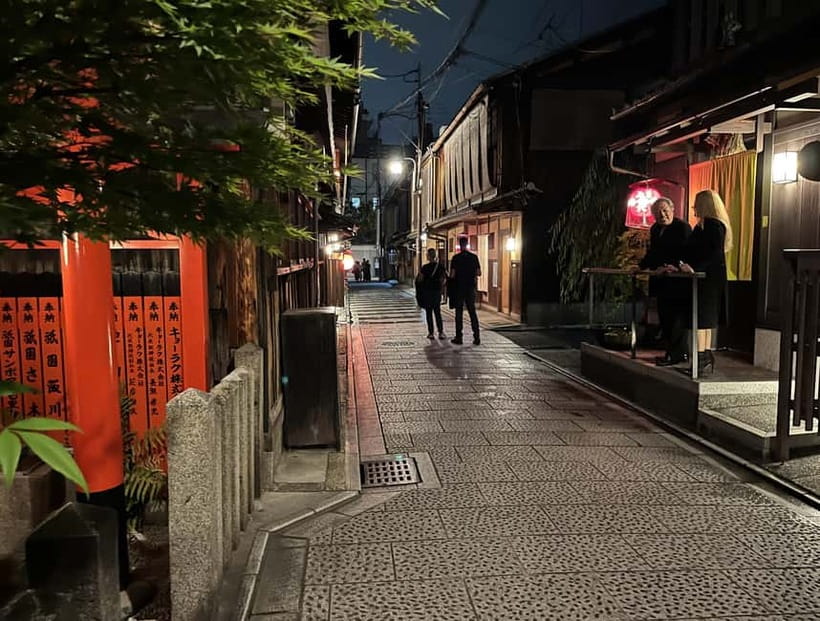
Many first visits to Gion begin and end with a quick look at a photogenic lane. This tour takes a wider view. You move between several traditional districts and hear how each area fits into Kyoto’s social and cultural life.
That matters because Gion is not a single street or a single attraction. It is a group of historic quarters, waterways, shrines, bridges, restaurants, theaters, and private establishments. Without an explanation, much of what you see can look like attractive old architecture. With a guide, the same doors, lanes, and buildings become clues to how the district works.
The tour also gives you time to ask about Japan beyond the official route. José is praised for explaining small details that change how you see Gion. Juan is described as especially good at pointing out lesser-known passages and explaining them clearly. Another guide, José, adjusted the timing when needed and could explain in English when a Spanish beginner needed extra help. The named guides may vary, but the useful feature is the open question-and-answer style.
This is not a private tour in the strict sense, since the group can include up to six people. Still, that is small enough to feel personal. You are less likely to lose a question in a crowd, and the guide can check that everyone understands.
A few more options to weigh up in Kyoto
- PERFECT KYOTO 1-Day Bus Tour
★ 5.0 · 13,518 reviews - [Kyoto & Nara Day Tour] Sagano Scenic Railway & Nara Park & Fushimi Inari Taisha Thousand Torii Gates & Togetsukyo Bridge & Bamboo Grove & Kimono Forest (Departing from Osaka)
★ 4.9 · 10,942 reviews - Kyoto: Fushimi Inari, Kinkakuji, Bamboo Grove 1 Day Bus Tour
★ 4.8 · 4,316 reviews
Meeting the guide near Kyoto’s Disney Store
The meeting point is directly in front of the Disney store at Kyoto Shijo-Kawaramachi. Kyoto has only one Disney store, so the location should be easy to identify. Look for the guide sitting outside with an iPad displaying the tour name in Spanish and the scheduled time.
This is a practical meeting place in central Kyoto, but give yourself enough time to find Shijo-Kawaramachi. The instructions are specific, and you should follow them closely rather than waiting near a different shop or landmark.
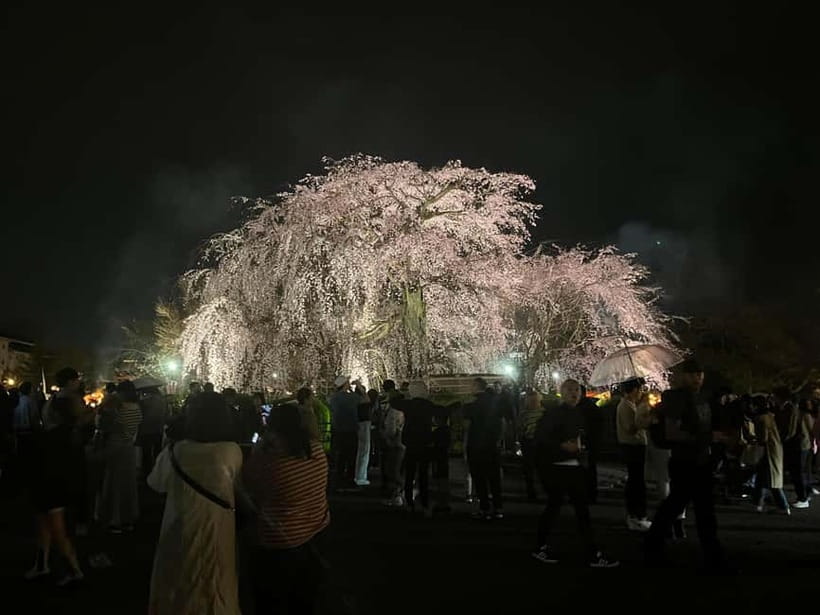
The available start times include 9:45 and 12:30, with other times dependent on availability. The morning and midday options affect the feel of the walk. An earlier start can offer a calmer beginning, while a later tour may bring more activity as the central districts come to life. Some tours take place at night, and the evening atmosphere can add a different mood to Gion, especially when traditional buildings are lit.
The tour lasts two hours, so you should arrive ready to walk. The route covers about two miles, or 3.3 kilometers. Comfortable shoes are important. Bring water, sunscreen, a hat, and an umbrella, since Kyoto weather can shift and the route is outdoors.
Pontocho Alley and the Kamo River
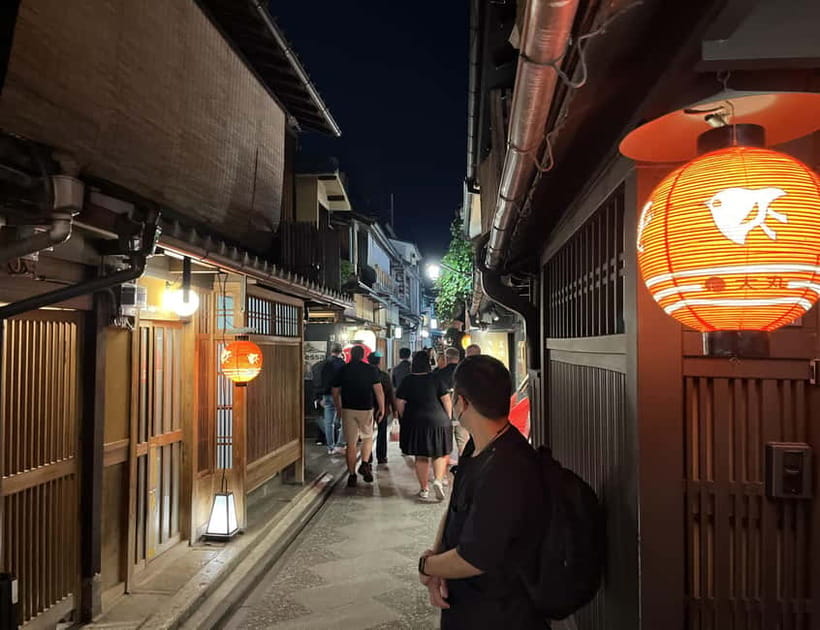
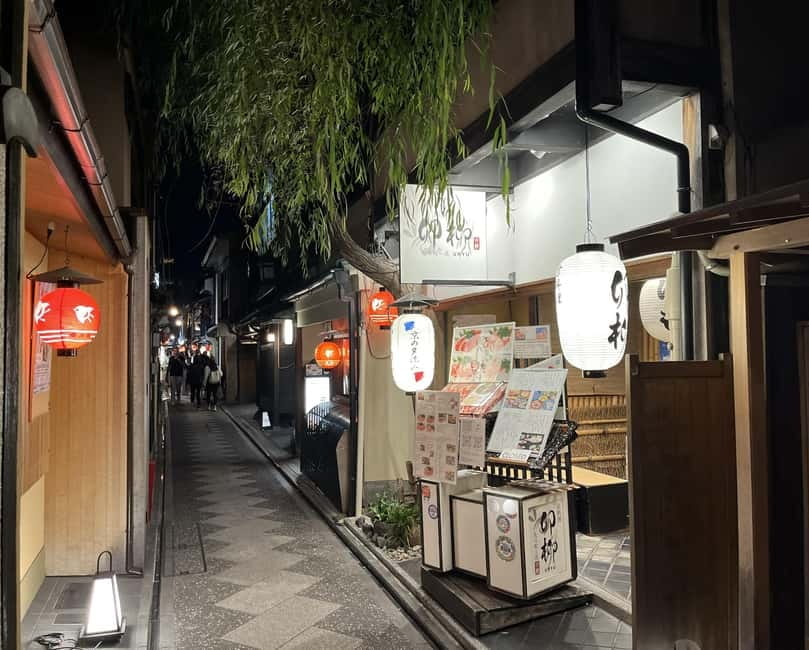
The walk begins with Pontocho Alley, one of Kyoto’s best-known traditional entertainment areas. Its narrow passage runs near the Kamo River and forms one of the three hanamachi visited during the tour.
Pontocho is a useful starting point because it introduces the relationship between architecture, nightlife, and traditional hospitality. The lane is compact, and the details can be easy to overlook when you are simply trying to move through it. Your guide can explain what makes the area important and how it relates to the other quarters you will see later.
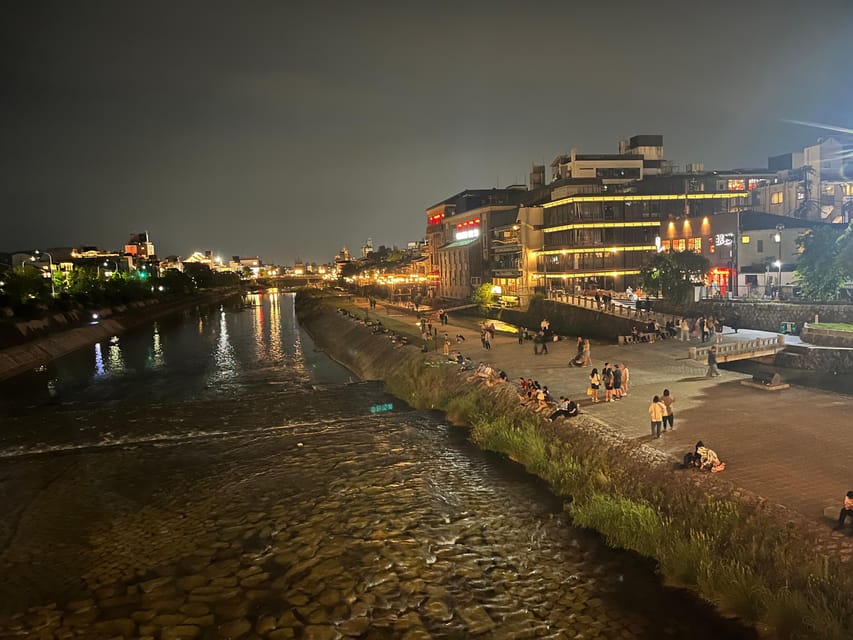
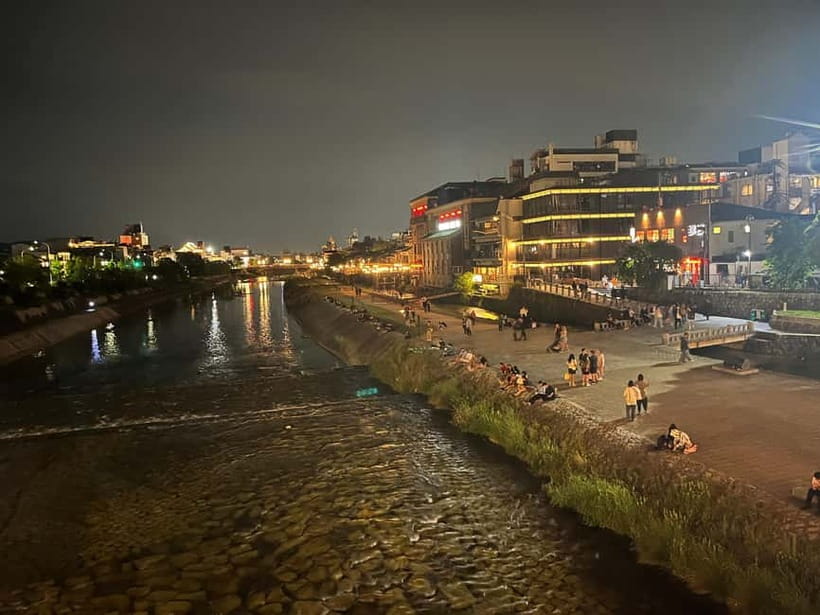
The route also includes Pontocho Kaburenjo, an important performance-related building connected with the district. You will then reach the Kamo River, where the scenery opens up after the tight alley. This change from a narrow traditional lane to a broad river setting helps you understand central Kyoto’s layout.
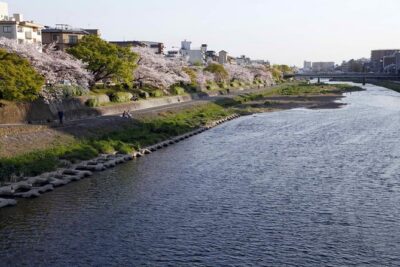
At the river, the route includes the Yagi-san and Kita-san statues and Sanjo Ohashi, the Sanjo Bridge. These are not simply places to stop for a photograph. They provide opportunities to connect Kyoto’s geography with its history and public spaces.
A guide is particularly useful here because the significance of a statue or bridge may not be obvious from its appearance. If you are curious about names, customs, or local stories, this is a good part of the walk to ask freely.
From Yamato-dori into Gion-Kobu
After the river area, the tour continues along Yamato-dori toward Gion-Kobu. This section leads you from central Kyoto into one of the traditional preserved neighborhoods associated with geisha culture.
Gion-Kobu is one of Kyoto’s hanamachi. You will learn about Maiko and Geiko, their routines, training, activities, and working life. The terms matter. The tour is not only about spotting people in traditional dress. It explains the structure and practices behind that world.
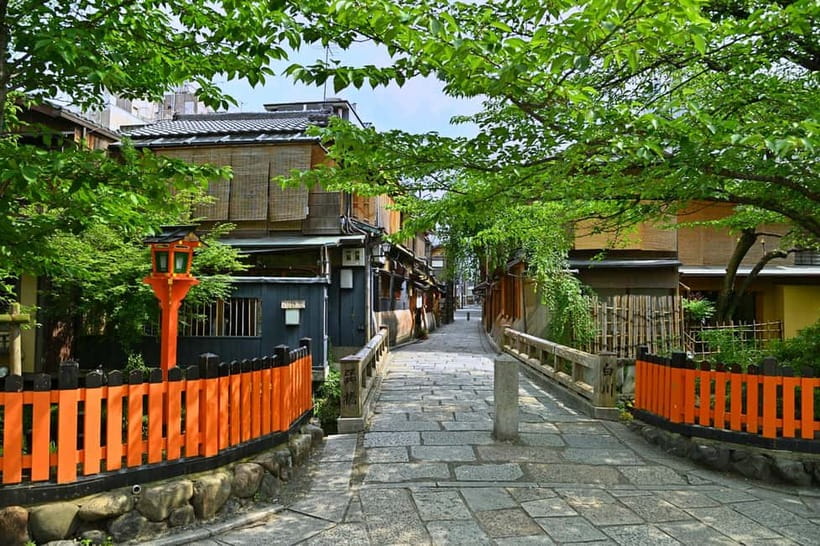
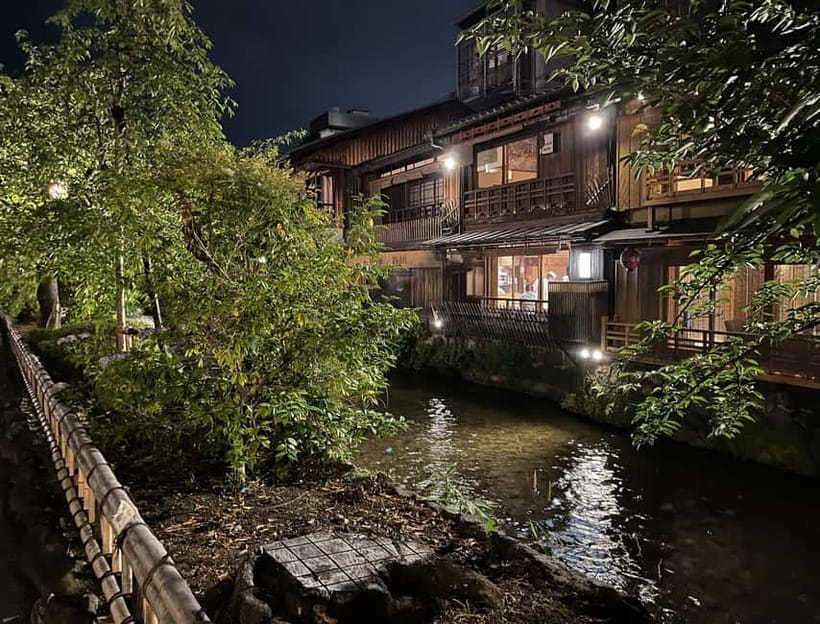
The route includes Gion-Shinbashi-dori and Gion Shirakawa, areas known for wooden Machiya houses and waterways. The architecture is one of the strongest reasons to take this walk. The houses have a narrow, restrained appearance from the street, and the overall setting shows how Kyoto preserved parts of its older urban character.
You should keep your expectations realistic. The route does not include Hanamikoji-dori, one of the streets most commonly associated with Gion. If that particular street is your main reason for booking, this tour may not match your plan. On the other hand, skipping it allows the walk to focus on several other areas rather than spending the full two hours in one heavily photographed location.
The guide also discusses national historical preservation in Gion-Kobu North. That context is valuable because preservation is not just about keeping old facades attractive. It affects how streets look, how buildings are maintained, and how traditional districts continue to function.
A completely different kind of day out:
- Kyoto: Tea Ceremony in a Traditional Tea House in Kiyomizu
★ 4.9 · 3,519 reviews - Kyoto: Gion Make Your Own Chopsticks with Engraving Option
★ 5.0 · 3,465 reviews - Kyoto Nara Day Trip │ Kiyomizu-dera Temple + Fushimi Inari-taisha Shrine + Nara Park (Departing from Osaka/Kyoto)
★ 4.7 · 3,408 reviews - Kyoto Geisha Walking Tour: Gion District & Hidden Gems
★ 4.7 · 3,273 reviews
Tatsumi Shrine and the bridges of Gion

Tatsumi Jinja is another stop on the route, followed by Tatsumi Bridge. These smaller points are exactly where a local guide can add value. They do not have the instant name recognition of Yasaka Shrine, but they help you see Gion as a working district with its own landmarks and customs.
Tatsumi Bridge is also part of the Gion-Shirakawa area, where the water, trees, and traditional buildings create some of the tour’s most attractive views. You may want time for photographs, but remember that this is a walking tour rather than a dedicated photo session. The guide’s explanations are the main product.
The group size helps here. With no more than six participants, you can pause for a question without causing the large crowd behind you to wait. That format also suits people who prefer conversation over a long prepared speech.
The route covers a fair distance in a short period. If you like a relaxed pace with long stops, the two-hour schedule may feel brisk. If you want to see a broad section of Gion and keep your day open for other sights, the pace should work well.
Gion-Higashi and Yasaka Shrine
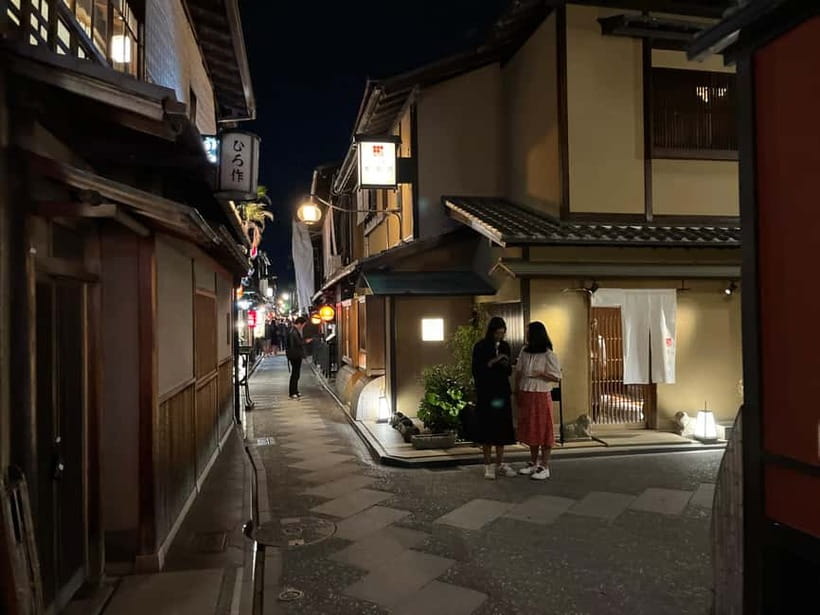
The third hanamachi is Gion-Higashi. Visiting three districts in one short walk gives you a useful comparison. You can ask how the areas differ, how they relate to the broader Gion district, and how traditional entertainment culture fits into present-day Kyoto.
The final major stop is Yasaka Shrine, formerly called Gion Shrine. The tour explains that the district’s name comes from this connection. If time allows, the guide also discusses the Gion Festival, one of Japan’s three most famous and important festivals.
The festival’s origins reach back more than 1,100 years, making Yasaka Shrine a strong place to connect religious tradition, public celebration, and the identity of the neighborhood. The guide can help you understand why the shrine matters beyond its bright buildings and open grounds.
The wording if time allows is important. The tour covers several districts and 3.3 kilometers, so the shrine explanation may depend on pace, group questions, and the day’s conditions. You should not assume that every stop will receive the same amount of time.
What you learn about Maiko and Geiko life
The tour’s subject is often described simply as geisha culture, but the content is broader. You learn about Maiko and Geiko lifestyles, daily routines, activities, and practices, along with Japanese and Kyoto history.
That approach is useful because the district can be misunderstood. A short explanation about clothing or makeup is interesting, but it does not tell you how the profession fits into Kyoto society. The guide’s personal experiences and knowledge of daily life in Japan add a present-day viewpoint to the older stories.
You can ask about almost anything connected with what you see or what interests you about Japan. The strongest praise for the guides focuses on this flexibility. José is described as warm, detailed, and able to make the walk entertaining. The guide repeatedly checks that questions are answered and that the group understands.
Spanish is the main language. One participant with beginner Spanish understood the guide well, and English was available for clarification in that particular group. You should book this as a Spanish tour, not as a guaranteed bilingual tour.
A Maiko or Geiko sighting is not guaranteed. This is worth treating as a firm rule, not a small footnote. The tour’s value should come from the history, streets, buildings, and explanations. If you happen to see one, consider it an extra rather than the goal.
The walking route and practical comfort
At two hours and 3.3 kilometers, the route is manageable for many people who are comfortable walking through city streets. The tour does not include additional services, so plan your own food, transport, and sightseeing around it.
Wear shoes that can handle continuous walking. Bring water, especially in warm weather, and use sunscreen and a hat when the route is sunny. An umbrella is also listed as a useful item, which makes sense for Kyoto’s changeable weather.
The route is outdoors and passes through public streets, bridges, and shrine grounds. The information provided does not promise a specific accessibility arrangement, so you should contact the provider if you have mobility needs or require a particular pace.
During cherry blossom season, roughly late March to early April, the route may change to show flowering areas around Gion. This can be a pleasant bonus, but it also means the exact sequence of stops may differ from the standard route.
For the 9:45 and 12:30 departures, you may extend the experience with a free visit to the Gion Gallery if you wish. Confirm the option with the guide on the day, since the tour description presents it as an available extension rather than a fixed part of every walk.
Is $35 a fair price?
At $35 per person, this is a sensible price for a two-hour guided walk in central Kyoto, especially if you want Spanish instruction. You are paying for a small group, a local guide, and interpretation that connects several districts rather than simply pointing out buildings.
The value is strongest for a first visit to Kyoto. You can return to Gion later with a better sense of what you are seeing, and you can ask practical questions about customs and daily life that a guidebook may not answer in the moment.
The value is weaker if you want a long stop at one famous street, a guaranteed geisha sighting, or entry to attractions. There are no additional services included, and Hanamikoji-dori is specifically not part of the route.
Free cancellation up to 24 hours before the tour and the reserve-now, pay-later option make it easier to fit into a changing Kyoto schedule. Check the available start times before booking, since the two-hour duration and meeting point need to fit with your other plans.
Who should book this Gion experience?
I would choose this tour if you want:
- Spanish explanations rather than an English-only walk
- A small group where questions are welcome
- A broad look at three hanamachi
- More context about Maiko, Geiko, Kyoto, and Japanese life
- A first orientation to Gion before exploring alone
- A guide who can explain small details instead of only naming landmarks
I would look elsewhere if you mainly want Hanamikoji-dori, guaranteed access to a geisha-related venue, or a private car and very little walking. You should also avoid treating the tour as a guaranteed photography opportunity.
The strongest feature is the guide’s personal style. The feedback repeatedly praises warmth, patience, flexibility, and the ability to explain subjects outside the planned route. That makes this a good fit if your questions often lead you beyond the basic script.
Should you book the Kyoto Gion tour in Spanish?
Yes, if you want a friendly, question-friendly introduction to Gion and can accept the route’s limits. The combination of Pontocho, Gion-Kobu, Gion-Higashi, Tatsumi Shrine, the Kamo River, and Yasaka Shrine gives you a wider view than a quick walk along one famous lane.
Book it for the stories and the setting, not for a guaranteed Maiko or Geiko sighting. At $35, the small Spanish-speaking group and thoughtful explanations make it a strong choice for first-time Kyoto visitors, Spanish speakers, and anyone who wants to understand what lies behind Gion’s wooden facades.
FAQ
How long is the Kyoto Gion walking tour?
The tour lasts two hours.
How far do you walk?
The route covers about 3.3 kilometers, or two miles.
What language is the tour offered in?
The live tour guide speaks Spanish. English clarification was provided for one Spanish beginner during a particular tour, but the experience is presented as a Spanish-language tour.
How many people can join the group?
The group is limited to six participants.
Where is the meeting point?
Meet in front of the Disney store at Kyoto Shijo-Kawaramachi. Look for the guide sitting outside with an iPad showing the tour name in Spanish and the scheduled time.
Which hanamachi are included?
The route visits Pontocho, Gion-Kobu, and Gion-Higashi. These are three of Kyoto’s five hanamachi.
Is Hanamikoji-dori included?
No. Hanamikoji-dori is not included in the route.
Will I see a Maiko or Geiko?
A Maiko or Geiko sighting cannot be guaranteed.
Can the tour include the Gion Gallery?
The 9:45 and 12:30 tours can include a free visit to the Gion Gallery if you want to extend the tour. Ask the guide about it on the day.
What happens during cherry blossom season?
From roughly late March to early April, the route may change slightly to show cherry blossoms around Gion.
Just added in Kyoto
- The “Golden Route” and Ancient Japan by DIAMIR Erlebnisreisen – 14-Day Tour★ 2.0 · 2 reviews
- Japan: Castles & Cuisine by G Adventures – 6-Day Kyoto to Osaka Tour★ 4.5 · 4 reviews
- Cycle Japan by Explore! – 13-Day Kyoto to Tokyo Tour★ 4.7 · 12 reviews
- Cycle Japan by Intrepid Travel – 11-Day Kyoto to Tokyo Tour★ 4.8 · 2 reviews
- Classic Japan by Intrepid Travel – 11-Day Kyoto to Tokyo Tour★ 4.4 · 14 reviews
- Ancient & Modern Japan 14-Day Tour by Exodus Adventure Travels★ 4.4 · 40 reviews
- 5 Day Cultural Adventure of Kyoto, Nara & Osaka by Tourist Journey★ 2.5 · 2 reviews
- 12 Days Kinosaki Onsen Escape: A Journey Through Japan’s Timeless Towns by UME Travel★ 4.8 · 5 reviews
Kyoto Tours, compared.
![[Kyoto & Nara Day Tour] Sagano Scenic Railway & Nara Park & Fushimi Inari Taisha Thousand Torii Gates & Togetsukyo Bridge & Bamboo Grove & Kimono Forest (Departing from Osaka)](https://media.japanvisits.com/wp-content/uploads/kyoto-nara-day-tour-sagano-scenic-railway-nara-park-fushimi-inari-taisha-thousand-torii-gates-togetsukyo-bridge-bamboo-grove-kimono-forest-departing-from-osaka-k110001-400x257.jpg)
Fushimi Inari, Kinkakuji, Bamboo Grove 1 Day Bus Tour
Read our review →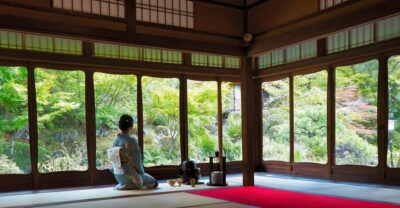
Tea Ceremony in a Traditional Tea House in Kiyomizu
Read our review →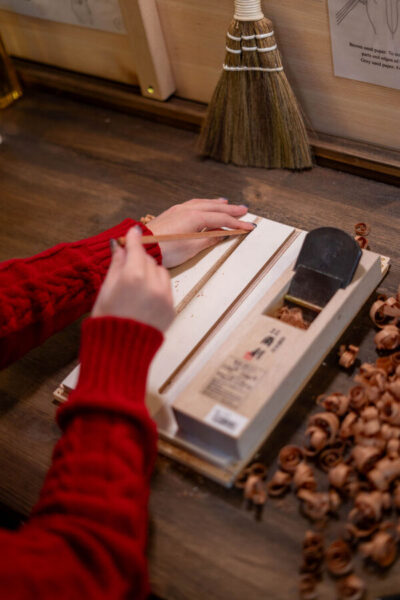
Gion Make Your Own Chopsticks with Engraving Option
Read our review →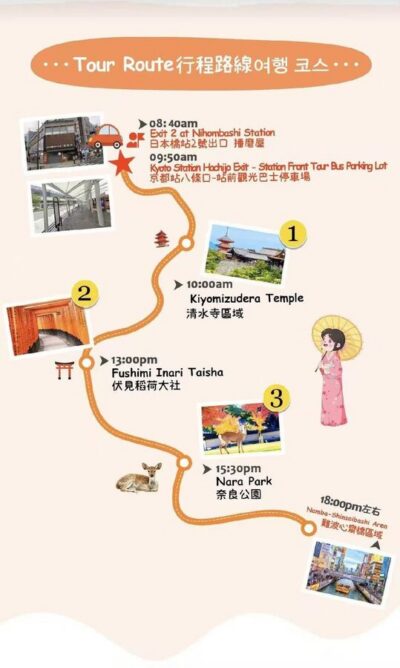
Kyoto Nara Day Trip │ Kiyomizu-dera Temple + Fushimi Inari-taisha Shrine + Nara Park (Departing from Osaka/Kyoto)
Read our review →
Kyoto Geisha Walking Tour: Gion District & Hidden Gems
Read our review →