
Reviewed · PRIVATE TOURS IN KYOTO
Kyoto 8hr Private Tour with Government-Licensed Guide
Kyoto rewards a well-chosen plan. This eight-hour private walking tour lets you pick four to six places from a long list of temples, shrines, markets, and historic districts, then shape the day around your interests. I like the freedom to focus on classic sights such as Fushimi Inari and Kiyomizu-dera, or choose quieter places such as Nanzenji and Ginkakuji. I also like having a licensed English-speaking guide who can explain what you are seeing instead of leaving you to decode every gate, garden, and Buddhist statue alone.
The main catch is that this is not a private vehicle tour. You meet your guide on foot, pay your own transportation and entrance fees, and spend the day walking. At $201.46 per person, the value depends on your group size and how much you want personal help with Kyoto’s complicated choices. For six adults, as one booking did, the cost buys a very useful private day. For one person, it is a much bigger splurge.
In This Review
- Key points to know before booking
- A private Kyoto day that avoids the one-size-fits-all problem
- What the eight hours really allow
- Fushimi Inari and Kiyomizu-dera: the strongest first-day pairing
- Gion, Higashiyama, and Kennin-ji for old Kyoto atmosphere
- Nijo Castle and the Imperial Palace: Kyoto’s political side
- Nishiki Market, Pontocho, and a taste of daily Kyoto
- The eastern temple route: Ginkakuji, Nanzenji, and Eikando
- The northern temples: Kinkakuji, Ryoanji, and Ninna-ji
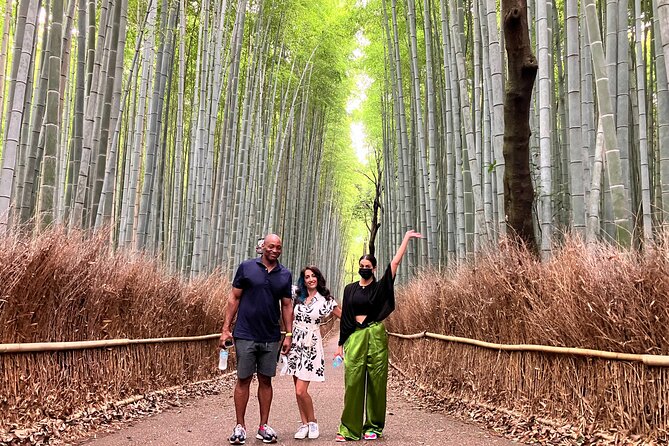
- Arashiyama: bamboo, bridges, and too many choices
- Northern and mountain options for a different Kyoto
- What the price buys you, and what it does not
- Guides and the human side of the day
- Practical limits and who should book
- Should you book the Kyoto private tour?
- FAQ
- How long is the Kyoto private tour?
- How many sights can I choose?
- Is the tour private?
- Is transportation included?
- Are temple entrance fees included?
- Is lunch included?
- Can I cancel for a full refund?
Key points to know before booking
- Choose four to six sights: Your guide helps build a private itinerary from more than 30 possible stops.
- Licensed English-speaking guides: Guides such as Karkoo Tanigawa, Ichiro, and Shu have been praised for being helpful, professional, and flexible.
- Walking is central: Pickup and drop-off take place on foot within a designated Kyoto area, with no private car included.
- Classic sights or quieter Kyoto: You can combine Kiyomizu-dera and Gion with places such as Tofuku-ji, Eikando, or Daitoku-ji.
- Fees are extra: Temple admissions, transportation, lunch, and personal spending are not included.
- Plan ahead: Reservations are recommended at least two weeks before the tour, and the experience is often booked well in advance.
A private Kyoto day that avoids the one-size-fits-all problem
Kyoto has too many worthwhile places for a standard sightseeing day. The city’s famous temples sit in different corners, and a plan that looks tidy on a map can turn into a tiring series of train rides, bus changes, and long walks.
This tour solves part of that problem by asking you to name three or four places you want to see. Your guide then develops a route around four to six sites. If you are unsure, you can ask for a suggested plan based on your interest in temples, architecture, gardens, food, or traditional culture.
That flexibility is the tour’s strongest feature. You can build a first-time Kyoto day around Fushimi Inari-taisha, Kiyomizu-dera, and Gion. You can also skip the most famous stops and focus on Zen temples, gardens, and quieter neighborhoods.
The experience is private, so only your group participates. That matters if you want to stop for photos, ask repeated questions, or adjust the pace. It also means there is no larger group waiting while you browse a market stall or pause in a temple garden.
More Private Tours in Kyoto
- Kyoto 6hr Private Tour with Government-Licensed Guide
★ 5.0 · 1,369 reviews - 10 Must-see Spots in Kyoto One Day Private Tour (up to 7 people)
★ 5.0 · 1,108 reviews - Kyoto 4hr Private Tour with Government-Licensed Guide
★ 5.0 · 629 reviews
What the eight hours really allow
Eight hours sounds generous, but Kyoto’s geography keeps the day from being unlimited. Fushimi Inari is in the southeast, Kinkakuji is in the north, and Arashiyama is far to the west. Trying to combine all three with several major temples would leave you rushing from one entrance to the next.
The listed timing gives you a useful clue. Major sights such as Kiyomizu-dera, Eikando, and Sanjusangendo can deserve about 30 minutes or more in the plan, while many other stops are listed at 10 or 15 minutes. Those shorter periods make sense as photo stops or quick visits, not as full explorations.
I would choose one part of Kyoto and stay there as much as possible. An eastern Kyoto route could include Fushimi Inari, Kiyomizu-dera, Gion, and Kennin-ji. A western route could focus on Arashiyama, Tenryu-ji, the bamboo groves, and one or two nearby temples.
Ask your guide to be realistic about travel time. A private itinerary is useful only if it leaves room to enjoy each place.
Fushimi Inari and Kiyomizu-dera: the strongest first-day pairing
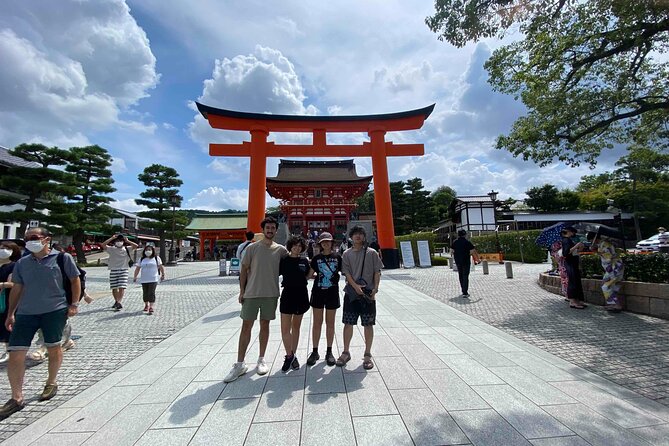
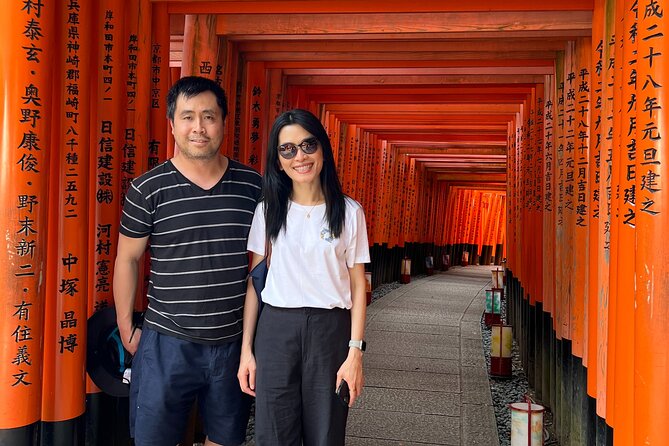
Fushimi Inari-taisha is famous for its long runs of orange torii gates climbing the wooded slopes. The shrine is free to enter, and even a short visit gives you the feel of the place. The supplied plan lists only 15 minutes, so you should clarify whether you are making a brief stop or walking farther up the mountain.
The shrine can be physically demanding if you continue uphill. Comfortable shoes matter, and you should not expect to cover the full route during a busy sightseeing day unless you make Fushimi Inari the main focus.
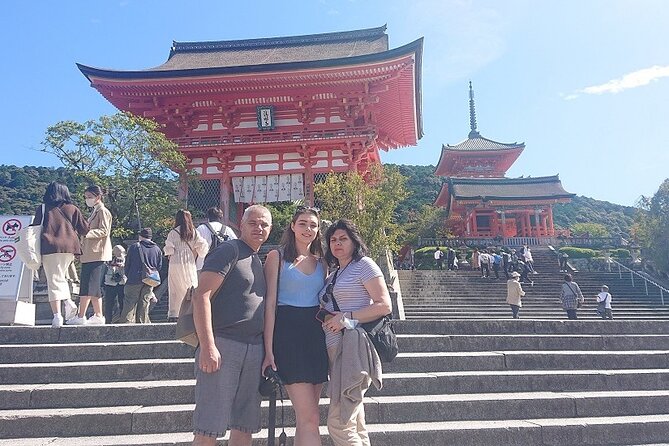
Kiyomizu-dera gives you a different view of old Kyoto. The temple rises above the Higashiyama area, close to the preserved streets leading toward Gion. Admission is not included, and the approach includes slopes and crowded shopping lanes.
A guide is particularly useful here because the site is more than a single photo platform. You can ask about the temple’s buildings, religious practices, and the surrounding traditional streets. The nearby Sannenzaka area was included in one especially successful day, along with the bamboo forest and Kinkakuji.
Gion, Higashiyama, and Kennin-ji for old Kyoto atmosphere
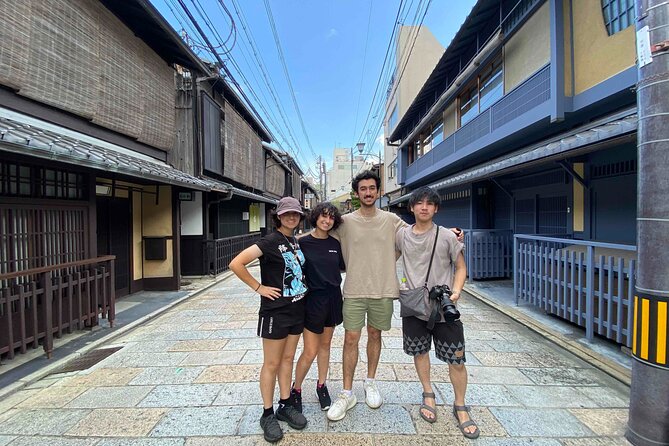
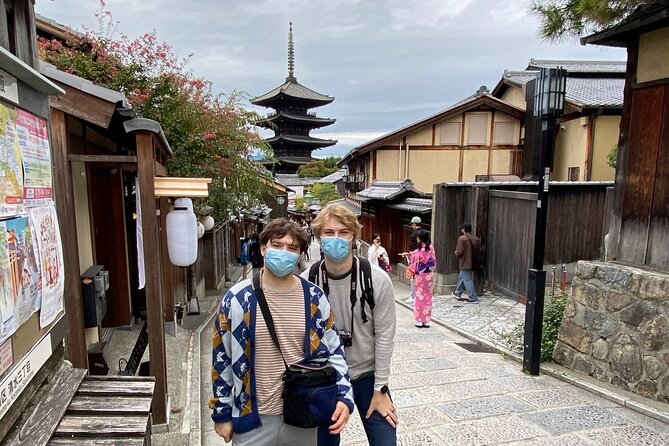
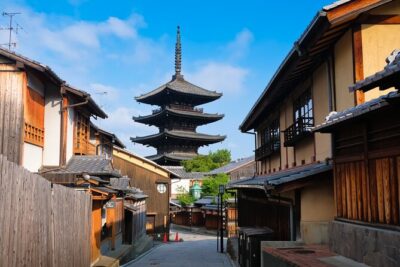
Gion is Kyoto’s best-known geisha district, with narrow lanes, traditional wooden buildings, tea houses, and restaurants. The area is easy to enjoy badly if you wander without a plan, since the most attractive lanes can be crowded and the customs around private properties require respect.
A guide can help you understand the difference between a public street, a restaurant district, and places where you should not stop for photographs. The tour description presents Gion as a place where a first-time visitor may appreciate help finding less obvious corners.
Higashiyama covers a broad historic area along Kyoto’s eastern mountains. It works well with Kiyomizu-dera because you can connect temple visits with a walk through traditional streets instead of treating every stop as a separate transportation problem.
Kennin-ji is close to Hanamikoji and Shijo streets. Its grounds offer dry gardens and a calmer break from the nearby commercial streets. The stated visit time is only one minute, which is clearly too brief for anyone hoping to appreciate the temple. Treat it as an optional stop unless your guide adjusts the schedule.
A completely different kind of day out:
- PERFECT KYOTO 1-Day Bus Tour
★ 5.0 · 13,518 reviews - [Kyoto & Nara Day Tour] Sagano Scenic Railway & Nara Park & Fushimi Inari Taisha Thousand Torii Gates & Togetsukyo Bridge & Bamboo Grove & Kimono Forest (Departing from Osaka)
★ 4.9 · 10,942 reviews - Kyoto: Fushimi Inari, Kinkakuji, Bamboo Grove 1 Day Bus Tour
★ 4.8 · 4,316 reviews - Kyoto: Tea Ceremony in a Traditional Tea House in Kiyomizu
★ 4.9 · 3,519 reviews
Nijo Castle and the Imperial Palace: Kyoto’s political side
Nijo Castle was built in 1603 as the Kyoto residence of Tokugawa Ieyasu, the first shogun of the Edo period. It gives your day a political and military counterpoint to Kyoto’s temples.
Admission is extra. The site can be a good choice if you want more than religious architecture, though you should allow enough time to walk through the grounds and interior areas rather than squeezing it into a quick photo stop.
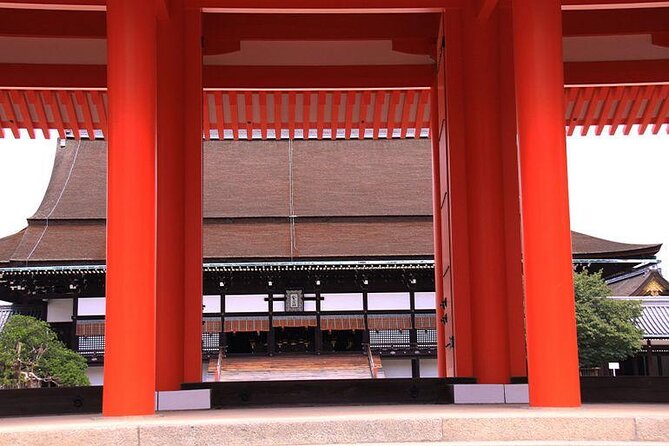
The Kyoto Imperial Palace served as the residence of Japan’s Imperial Family until 1868, when the capital moved to Tokyo. It sits within a large park, so this is another place where the advertised 15-minute stop may feel too short.
I would pair one of these sites with Gion or Nishiki Market rather than trying to see both plus several distant temples. That gives you architecture, history, and everyday food culture in one manageable part of the city.
Nishiki Market, Pontocho, and a taste of daily Kyoto
Nishiki Market runs for five blocks through a narrow shopping street lined with more than 100 shops and restaurants. It is known as Kyoto’s Kitchen, and it is the most practical choice on the menu for anyone who wants food to play a central role in the day.
The market is free to enter, but anything you eat or buy costs extra. It is not simply a place to race through taking pictures. You might find pickles, seafood, sweets, and other local products, but the narrow passage can make browsing slow when it is busy.
Pontocho is another compact stop. The narrow alley runs between Shijo-dori and Sanjo-dori, just west of the Kamogawa River, and is lined with restaurants. It is especially atmospheric later in the day, but restaurant spending is not part of the tour price.
A market and Pontocho pairing works well for people who care about food. Still, neither stop needs a long formal explanation, so I would use the guide’s time to ask for local context and practical advice rather than expect a full meal tour.
The eastern temple route: Ginkakuji, Nanzenji, and Eikando
Ginkakuji, the Silver Pavilion, began as the retirement villa of shogun Ashikaga Yoshimasa in 1482. Despite its name, it is not covered in silver. The appeal lies in its Zen setting, garden design, and connection to the Higashiyama hills.
Nanzenji has spacious grounds at the foot of the forested eastern mountains. It is one of Kyoto’s major Zen temples and offers room to slow down after tighter streets and crowded landmarks.
Nearby Eikando, formally Zenrinji, is famous for autumn color and evening illumination. The suggested visit time is 30 minutes, making it one of the more sensible longer stops in the full list.
This cluster is a strong choice for repeat visitors or anyone who prefers gardens and temple spaces to famous photo spots. It is also more coherent geographically than attempting to cross the entire city.
Tofuku-ji, in southeastern Kyoto, is another useful eastern option. It is especially known for autumn color and has a large Zen complex. Pairing it with Fushimi Inari is practical because both are in the southeast, though entrance fees remain separate.
The northern temples: Kinkakuji, Ryoanji, and Ninna-ji
Kinkakuji is Kyoto’s Golden Pavilion, with gold leaf covering its upper two floors. The building is visually striking, but the visit is usually centered on the view from the garden rather than a long interior exploration. Admission is extra, and the suggested time is only 10 minutes.
Ryoanji is home to Japan’s most famous rock garden. Its simple arrangement invites quiet attention, though the short listed time again suggests a quick visit. If the garden is a major reason for booking a guide, ask for enough time to sit and look rather than merely pass through.
Ninna-ji is a World Heritage temple and the head temple of the Omuro school of Shingon Buddhism. It provides a broader religious and architectural setting than the single-view appeal of Kinkakuji.
Kinkakuji, Ryoanji, and Ninna-ji make a logical northern route. Add Arashiyama only if your guide confirms that the travel time will not consume the day.
Arashiyama: bamboo, bridges, and too many choices
Arashiyama has long attracted people for its natural setting and remains one of Kyoto’s most popular areas. The Togetsukyo Bridge is its best-known landmark, and the bamboo paths offer an easy walk through tall groves.
The area also contains a remarkable number of temples and gardens. Tenryu-ji is the main temple, a World Heritage site and the most important temple in the district. Okochi Sanso Garden, the former villa of actor Okochi Denjiro, sits beyond the bamboo groves and includes several gardens and buildings.
For quieter visits, consider Jojakkoji, Nisonin, or Gio-ji. Jojakkoji has small buildings, moss, and maple trees. Nisonin has a larger, more formal feel. Gio-ji is known for its moss garden and thatched structures.
Further north, Adashino Nenbutsuji contains stone statues connected with memorial rites, while Otagi Nenbutsu-ji is known for 1,200 distinctive stone rakan figures. These sites offer a calmer side of Saga, but each extra stop adds walking time.
Arashiyama deserves its own day if you want bamboo, Tenryu-ji, the bridge, and several smaller temples. For an eight-hour private tour, choose two or three.
Northern and mountain options for a different Kyoto
Daitoku-ji is a large walled Zen complex in northern Kyoto, with nearly two dozen subtemples. It is a good choice for people interested in Zen institutions and temple compounds, though entrance arrangements can differ between individual subtemples.
Myoshin-ji is another large complex, with about 50 subtemples in addition to its main buildings. Its size makes a guide helpful, but a short stop will only provide an introduction.
Shugakuin Imperial Villa offers a different kind of setting. Built in the 17th century by Emperor Gomizuno, it includes Upper, Middle, and Lower Villas and is managed by the Imperial Household Agency. Admission is not included, and the tour description does not promise special access, so confirm the practical arrangements before choosing it.
Kibune and Kurama offer a mountain escape north of central Kyoto. Kibune developed around Kifune Shrine in a forested valley, while Kurama is known for Kurama-dera and its hot spring. These places are attractive for a slower, more rural day, but they are poor companions for faraway western Kyoto sights.
What the price buys you, and what it does not
The price is $201.46 per person. That includes a licensed local English-speaking guide and planning for a private day, but not transportation, temple admissions, lunch, or other personal costs.
The math improves as your group grows. A booking for six adults receives private attention without the cost being calculated as six separate small-group tours, and the guide can adjust explanations to the group’s interests. For a couple, the price is easier to justify if you value personal planning and cultural explanation. Solo visitors should compare it with joining a group tour or using public information independently.
You are also paying for decision-making. Kyoto’s attractions are spread across the city, and choosing four to six sites that fit together can save wasted time. The price is less attractive if you want only a quick introduction to one neighborhood or prefer to explore independently.
Bring a transportation card and local currency if possible. Having both ready helped one group of six begin without delay. The tour does not cover fares, so this small preparation makes the day easier.
Guides and the human side of the day
The strongest praise centers on the guides. Karkoo Tanigawa was described as helpful and accommodating for a group of six adults. Another booking used Ichiro and Shu over two days and found both professional and well informed.
Those names matter because a private tour depends heavily on the individual guide. Once your reservation is made, a guide contacts you to plan the route. Use that exchange well. Tell the guide how much walking your group wants, which sights matter most, and if food, gardens, architecture, or religious history should shape the day.
Kaeko, who responded to one group, highlighted a route including the bamboo forest, Kinkakuji, Sannenzaka, and Kiyomizu-dera. That combination shows how the tour can balance major sights with a walk through one of Kyoto’s most photogenic old streets.
The tour is conducted in English, and the guide is licensed locally. That does not remove every practical issue, but it gives you a direct person to ask when temple customs, route choices, or public transportation become confusing.
Practical limits and who should book
You should book at least two weeks ahead, especially since the experience is commonly reserved well before the visit. Confirmation is provided at booking, and free cancellation is available until 24 hours before the start time. Changes made inside that 24-hour window are not accepted.
This is a walking tour, with meet-up and drop-off on foot in a designated Kyoto area. Most people can participate, and service animals are allowed, but the route may include hills, temple steps, and long stretches between sights.
I would recommend it for:
- First-time Kyoto visitors who want help making sensible choices
- Families or friends who want a private pace
- Groups of four to six people who can share the cost
- People interested in temples, gardens, food, or traditional neighborhoods
- Visitors who want a guide but do not need a private car
I would be cautious about booking it if you want to see a very large number of distant attractions in one day. The long list of possible stops is a planning tool, not a promise that you can visit them all.
Should you book the Kyoto private tour?
Book this tour if you want a flexible day with a real guide and are willing to walk, pay extra admissions, and keep the itinerary focused. The best value comes from a group that can share the cost and from travelers who want context rather than a simple ride between photo stops.
Choose four to six sights in one area. For a first visit, I would consider Fushimi Inari, Kiyomizu-dera, Gion, and either Nishiki Market or Kennin-ji. For gardens and Zen, choose Ginkakuji, Nanzenji, Eikando, and Tofuku-ji. For western Kyoto, build the day around Arashiyama and resist the urge to add half the city.
With a five-star rating from 51 reviews and a 100 percent recommendation rate, the experience has a strong record. The practical test is simple: if personalized planning and an accommodating guide are worth $201.46 per person, this is a sensible way to make Kyoto feel less scattered and more meaningful.
FAQ
How long is the Kyoto private tour?
The tour lasts approximately eight hours.
How many sights can I choose?
The experience includes a customizable itinerary covering four to six sites from the available list.
Is the tour private?
Yes. Only your group participates, and multiple tour groups cannot be combined.
Is transportation included?
No. Transportation fees are not included, and there is no private vehicle. You meet and finish with the guide on foot within the designated Kyoto area.
Are temple entrance fees included?
No. Entrance fees are extra. The guide’s entry fees are covered only for sights listed in the available tour choices.
Is lunch included?
No. Lunch and other personal expenses are not included.
Can I cancel for a full refund?
Yes. You can cancel at least 24 hours before the experience start time for a full refund. Cancellations or changes made less than 24 hours before the start time are not accepted for a refund.
Just added in Kyoto
- The “Golden Route” and Ancient Japan by DIAMIR Erlebnisreisen – 14-Day Tour★ 2.0 · 2 reviews
- Japan: Castles & Cuisine by G Adventures – 6-Day Kyoto to Osaka Tour★ 4.5 · 4 reviews
- Cycle Japan by Explore! – 13-Day Kyoto to Tokyo Tour★ 4.7 · 12 reviews
- Cycle Japan by Intrepid Travel – 11-Day Kyoto to Tokyo Tour★ 4.8 · 2 reviews
- Classic Japan by Intrepid Travel – 11-Day Kyoto to Tokyo Tour★ 4.4 · 14 reviews
- Ancient & Modern Japan 14-Day Tour by Exodus Adventure Travels★ 4.4 · 40 reviews
- 5 Day Cultural Adventure of Kyoto, Nara & Osaka by Tourist Journey★ 2.5 · 2 reviews
- 12 Days Kinosaki Onsen Escape: A Journey Through Japan’s Timeless Towns by UME Travel★ 4.8 · 5 reviews
Private Tours in Kyoto, compared.
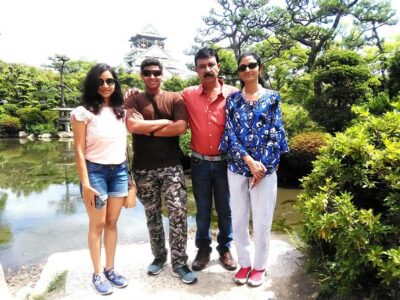
Kyoto 6hr Private Tour with Government-Licensed Guide
Read our review →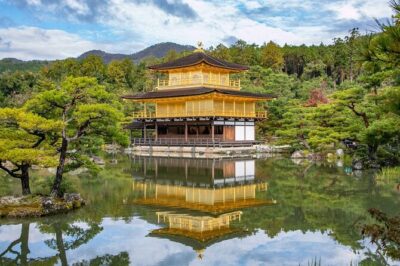
10 Must-see Spots in Kyoto One Day Private Tour (up to 7 people)
Read our review →
Kyoto 4hr Private Tour with Government-Licensed Guide
Read our review →
Private Kyoto Tour with Licensed Guide & Vehicle (Max 15 persons)
Read our review →
Kyoto Customized Private Tour: See Top Attractions in 1 Day
Read our review →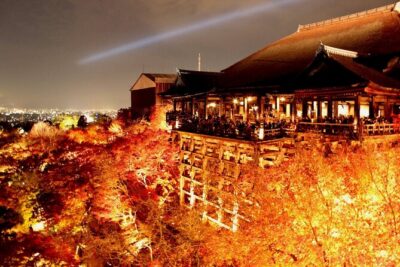
Explore Kyoto | Private Tour – Local English Driver(guide option)
Read our review →
Highlights & Hidden Gems With Locals: Best of Kyoto Private Tour
Read our review →Browse the lists this tour appears in