
Reviewed · PRIVATE TOURS IN KYOTO
Kyoto Customized Private Tour: See Top Attractions in 1 Day
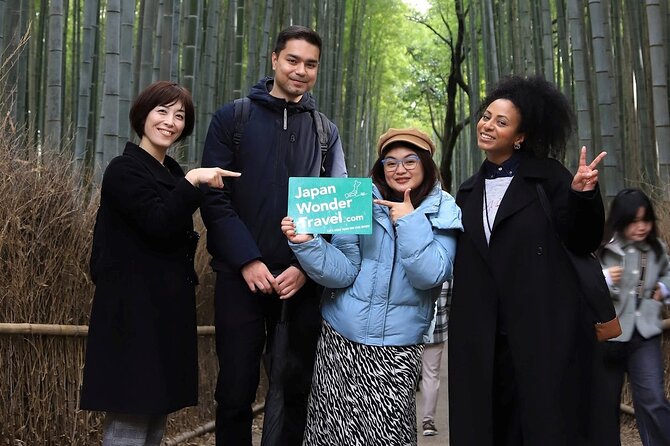
Kyoto rewards a sensible plan. This private tour gives you one. I like the freedom to choose two or three stops for a half-day or three to four for a full day, rather than being dragged through a fixed route. I also like the personal guide service, especially when you want help with trains, local customs, food, or adjusting the pace. The main catch is cost: at $132.65 per person before entrance fees, transport, and lunch, the value depends heavily on how well your guide uses the hours.
The tour is designed for first-time visitors who want Kyoto’s big sights without spending a day puzzling over maps and train connections. It can also suit returning visitors with a sharper interest, such as Zen gardens, food markets, architecture, or traditional neighborhoods. Just clarify the transport costs and your preferred sights before you begin.
In This Review
- Key points to know before booking
- A private Kyoto plan instead of a sightseeing race
- Kinkaku-ji, the Golden Pavilion, and the price of fame
- Fushimi Inari and the famous torii gates
- Kiyomizu-dera, Sannenzaka, and Ninenzaka
- Gion and Pontocho after the temples
- Nishiki Market, Kyoto’s kitchen
- Nijo Castle and Kyoto’s samurai past
- Arashiyama, Tenryu-ji, and the bamboo grove
- Ryoan-ji and Kyoto’s quiet Zen side
- The eastern route: Philosopher’s Path, Nanzen-ji, and Ginkaku-ji
- The guides make or break the day
- What $132.65 really gets you
- Who should book this Kyoto tour?
- Final verdict: book it for flexibility, not for a checklist
- FAQ
- How long does the Kyoto customized private tour last?
- Can I choose the attractions?
- Is hotel pickup available?
- Are entrance fees included?
- Is transportation included?
- Is lunch included?
- Is this a private activity?
- What should I wear?
Key points to know before booking
- Choose your own route: Select from Kinkaku-ji, Fushimi Inari, Kiyomizu-dera, Gion, Arashiyama, Nishiki Market, Nijo Castle, and more.
- Private means personal pacing: Only your group joins, so you can ask questions, change priorities, and discuss mobility needs.
- Four hours is short: A half-day generally covers two or three places, not every famous sight in Kyoto.
- Transport and admission cost extra: You pay for your own and your guide’s transportation, along with temple or castle entry fees and lunch.
- Guides are the heart of the experience: Guides such as Kiyoto, Toshi, Takuma, Yuka, Mika, Saeko, and Hiro have earned praise for clear explanations and flexibility.
- Expect plenty of walking: Comfortable shoes matter, and the tour runs in rain or shine.
A private Kyoto plan instead of a sightseeing race
Kyoto is not a city where the main sights sit in one tidy row. Fushimi Inari is in the south, Kinkaku-ji is in the northwest, and Arashiyama lies farther west. Add Kiyomizu-dera, Gion, or Nijo Castle, and travel time can eat up a large part of your day.
That is where a private guide helps. At the agreed start time, you discuss what interests you most and shape the route around it. You might focus on major temples, combine a market with old streets, or avoid places you have already seen.
I would arrive with a short priority list, not a wish list of ten attractions. For four hours, choose two major areas that work well together. For eight hours, three or four stops are realistic. A guide can help with the order, but no one can make Kyoto’s distances disappear.
The private format is especially useful for families, couples, and small groups with different interests. One person can ask about Buddhist practice, another about Japanese food, and a child can take a break without holding up a coach full of strangers.
More Private Tours in Kyoto
- Kyoto 6hr Private Tour with Government-Licensed Guide
★ 5.0 · 1,369 reviews - 10 Must-see Spots in Kyoto One Day Private Tour (up to 7 people)
★ 5.0 · 1,108 reviews - Kyoto 4hr Private Tour with Government-Licensed Guide
★ 5.0 · 629 reviews
Kinkaku-ji, the Golden Pavilion, and the price of fame
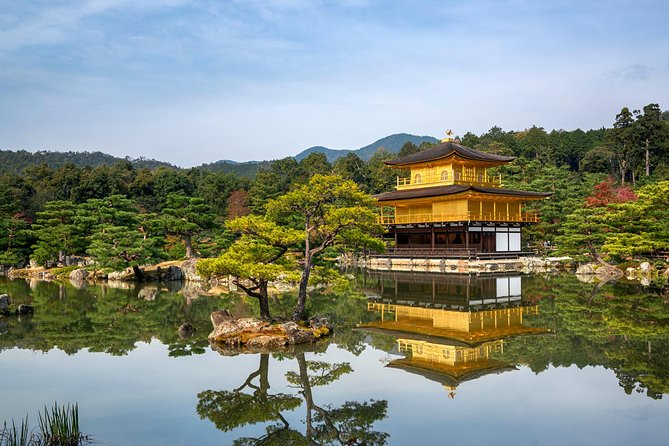
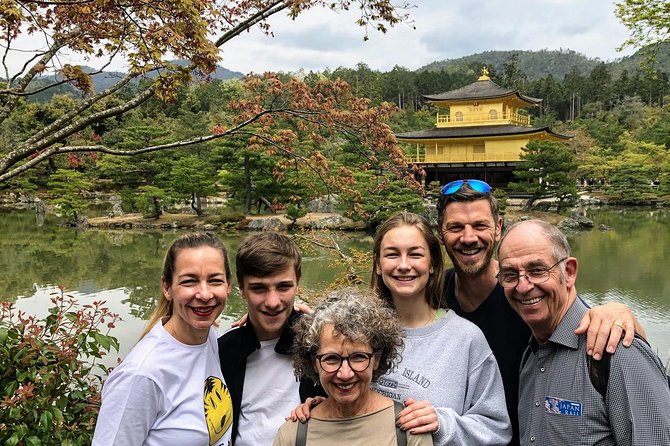
Kinkaku-ji is one of Kyoto’s most recognizable sights. Its gold-covered upper levels reflect across a pond surrounded by trees, creating the famous image you probably came to see. The visit is visually rewarding, but it follows a set path and can feel crowded at popular times.
The suggested stop is about 30 minutes, with admission extra. That is enough for the main view and a walk along the grounds, but not for a slow visit. If you care about temple architecture, gardens, or photography, tell your guide before the day begins so the timing does not become a quick photo stop.
Kinkaku-ji works well with Ryoan-ji because both are in the northwest. Pairing them is more sensible than crossing the whole city to Fushimi Inari afterward. Your guide may recommend a different order based on your hotel, opening times, and the rest of your plan.
Fushimi Inari and the famous torii gates
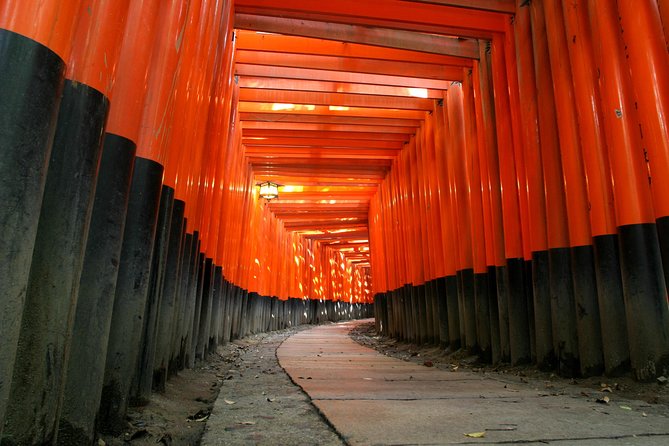
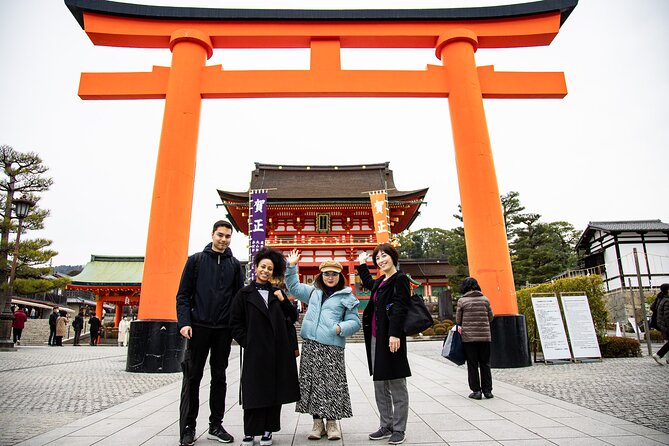
Fushimi Inari Taisha is free to enter and known for its long rows of orange torii gates climbing through the wooded hills. Even a short visit gives you the visual experience of walking beneath the gates, but the full route continues much farther than most first-time visitors expect.
The planned time is about 45 minutes. That makes this a taste of Fushimi Inari, not a complete hill walk. If you want to go higher, say so clearly. You may need to reduce the number of other stops, especially on a half-day tour.
This shrine is a good choice for visitors who want an atmospheric place with strong visual appeal. It is less suitable if steep paths or extended walking are difficult. Saeko received specific praise for adjusting a route around mobility concerns, but you should still discuss your needs in advance.
Kiyomizu-dera, Sannenzaka, and Ninenzaka
Kiyomizu-dera is one of Kyoto’s major Buddhist temples, known for its broad wooden stage and views over the eastern side of the city. The temple’s setting and architecture make it a strong choice for a first visit, though the approach can be crowded and involves walking uphill.
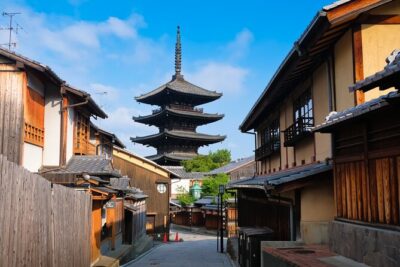
The nearby Sannenzaka and Ninenzaka streets add an important second layer. Their traditional wooden buildings, tea shops, and small stores give you a better sense of old Kyoto than a temple courtyard alone. Allow about 30 minutes for Kiyomizu-dera and 45 minutes for the two historic streets, with temple admission extra.
This is one of the best combinations for a half-day route, provided you are happy to stay in eastern Kyoto. You can see a major temple, walk through traditional streets, and continue toward Gion without wasting time crossing the city.
A completely different kind of day out:
- PERFECT KYOTO 1-Day Bus Tour
★ 5.0 · 13,518 reviews - [Kyoto & Nara Day Tour] Sagano Scenic Railway & Nara Park & Fushimi Inari Taisha Thousand Torii Gates & Togetsukyo Bridge & Bamboo Grove & Kimono Forest (Departing from Osaka)
★ 4.9 · 10,942 reviews - Kyoto: Fushimi Inari, Kinkakuji, Bamboo Grove 1 Day Bus Tour
★ 4.8 · 4,316 reviews - Kyoto: Tea Ceremony in a Traditional Tea House in Kiyomizu
★ 4.9 · 3,519 reviews
Gion and Pontocho after the temples
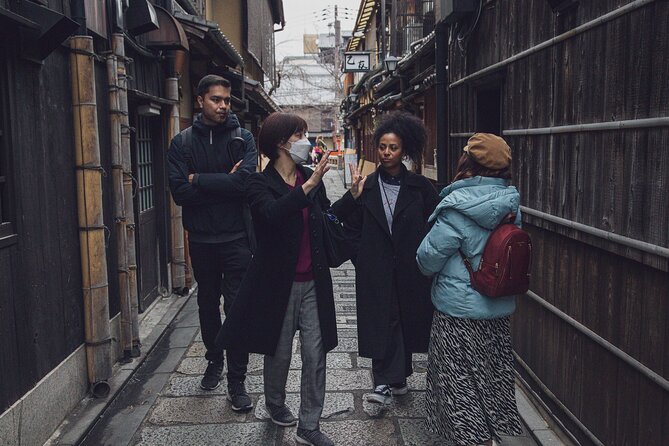
Gion is Kyoto’s best-known traditional entertainment district, with wooden machiya houses, tea houses, and narrow lanes. A guide can explain the area’s connection to geisha culture and help you appreciate the neighborhood without treating it like a stage set.
The listed visit is about 30 minutes. That is enough for a brief walk and orientation, but not for a long evening stroll. Be respectful around private buildings and avoid treating people working in the district as photo props.
Pontocho offers another atmospheric stop along the Kamo River, with a narrow dining lane lined with traditional establishments. It is a useful place to ask your guide for dinner ideas, although lunch during the tour is not included. Several guides, including Toshi and Kiyoto, were praised for offering restaurant suggestions after the formal sightseeing ended.
Nishiki Market, Kyoto’s kitchen
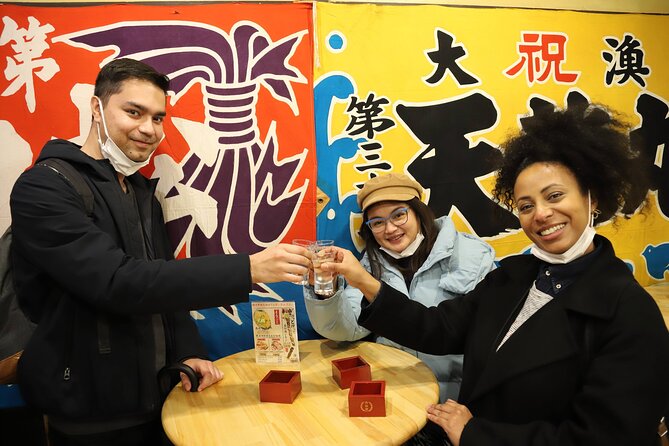
Nishiki Market is a compact food district with a long history and a wide mix of Japanese ingredients, snacks, pickles, sweets, and prepared foods. The suggested visit is 45 minutes, and entry is free.
This is the right choice if you want to taste your way through Kyoto or learn about local cooking. It also gives your day a break from temple architecture. You pay for anything you eat, so keep some room in both your schedule and your budget.
Nishiki Market can be crowded, and the narrow lanes are not ideal for a large group. A private guide can help explain unfamiliar foods and point you toward things that fit your preferences. If food matters more to you than checking off another temple, I would choose Nishiki over trying to squeeze in one more distant sight.
Nijo Castle and Kyoto’s samurai past
Nijo Castle offers a different side of Kyoto. Built in 1603 as a residence for Tokugawa Ieyasu, it is associated with the political power of the shoguns rather than the quiet rhythm of a Zen temple.
Inside, you can see detailed artwork and gold-leaf ceilings. The castle’s famous nightingale floors are designed to make a birdlike sound underfoot, adding a memorable detail to the visit. Admission is extra, and the suggested time is about 45 minutes.
Nijo Castle works well for anyone interested in political history, samurai rule, art, and grand interiors. It is also conveniently placed in central Kyoto compared with some of the outlying temples. I would not combine it with both Arashiyama and Fushimi Inari during a short tour. Kyoto traffic and transfers can turn an ambitious plan into a series of rushed exits.
Arashiyama, Tenryu-ji, and the bamboo grove
Arashiyama is on the western edge of Kyoto and is best treated as its own area. The Bamboo Forest Street is free to enter and usually takes about 45 minutes for a basic visit. The bamboo is impressive, but the path is not a remote wilderness trail. You are walking through a popular public route.
Tenryu-ji, a major Zen temple and UNESCO World Heritage site, gives the area more depth. Its gardens are a major reason to visit, and one guide, Naomi, was praised for making the temple gardens a highlight. Admission is extra.
If Arashiyama is your priority, combine the bamboo grove with Tenryu-ji and avoid adding Fushimi Inari or Kinkaku-ji. One guest said Osamu continued beyond the four-hour period to guide the group through the bamboo forest, but do not assume extra time is included. Confirm the planned duration before booking.
Ryoan-ji and Kyoto’s quiet Zen side
Ryoan-ji is famous for its dry rock garden, a carefully arranged composition that invites a quiet pause rather than a long checklist. The temple gained international attention after Queen Elizabeth II praised the garden, but its appeal does not depend on royal approval.
The suggested visit is about 30 minutes, with admission extra. That is enough to see the central garden, though you may want longer if you enjoy sitting and looking rather than simply taking a picture.
Ryoan-ji pairs naturally with Kinkaku-ji because both are in the northwest. It can also suit a visitor who has already seen Kyoto’s most photographed streets and wants a calmer setting. Ask your guide to explain how Zen gardens are viewed and used, rather than settling for a few facts from a signboard.
The eastern route: Philosopher’s Path, Nanzen-ji, and Ginkaku-ji
The eastern Kyoto choices offer a slower, more reflective day. The Philosopher’s Path follows a canal for about two kilometers near Ginkaku-ji, the Silver Pavilion. It is a walking route rather than a single ticketed attraction, so it needs more time than the one-minute sample entries suggest.
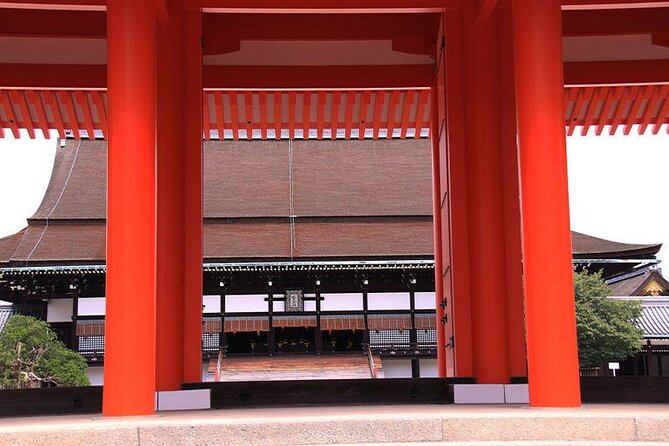
Nanzen-ji is a major Rinzai Zen temple, and Ginkaku-ji is known for its refined gardens and quiet appearance. Admission is extra at the temples. The Imperial Palace, by contrast, is free to enter and offers a look at Japan’s imperial past in the former capital.
These stops are better for a full-day plan or a focused half-day in eastern Kyoto. They are poor companions for Fushimi Inari and Arashiyama unless you are comfortable seeing each place very briefly. A good guide should help you choose depth over a frantic collection of photographs.
The guides make or break the day
The strongest part of this experience is the human element. Kiyoto was praised repeatedly for fluent English, local knowledge, photography advice, and finding ways around long lines. Takuma earned praise for explaining historical context while leaving room for questions. Toshi was described as organized, friendly, and good at helping groups avoid the worst crowds.
Other positive experiences highlight Yuka’s efficient use of different transport modes, Mika’s ability to keep a child engaged, and Saeko’s care with mobility needs. Hiro was praised for explaining Shinto and Buddhist customs, while Mitsuhiko helped a group handle transfers and even assisted with planning another evening activity.
That pattern tells you what to hope for: not just a person who points at a temple, but someone who can connect the building to Japanese culture and help you move through the city. Still, guide quality can vary. One unhappy solo guest felt rushed, received only basic explanations, paid unexpected transport costs, and was left to find the return route alone. Another group ended a four-hour tour after two hours because the explanations at Kinkaku-ji and Nijo Castle felt too thin.
So ask direct questions at the start. Confirm the route, the finish point, how much time you want at each sight, and who pays each transport fare. If interpretation matters to you, say that you want context, not just directions.
What $132.65 really gets you
The price is $132.65 per person, with group discounts available. The fee covers the private guiding service, but not admission fees, local transportation for you or the guide, or lunch for either of you.
That can be fair value for a small group that wants help with planning and navigation. A guide who saves you from a bad route, explains unfamiliar customs, and adjusts the day around your interests may be worth more than the simple cost of train tickets. The value is weaker for a solo visitor on a four-hour tour, especially if the route is rushed or the commentary is limited.
The private format also means you are not paying for a large bus operation. You have the guide’s attention, and group discounts may make the per-person price easier for families or friends. Build the extra costs into your budget before deciding.
Pickup is offered, and the published start point is the Kyoto Tourist Information Center, Kyo-Navi, on the second floor of the Kyoto Station Building. The activity information also describes hotel pickup and drop-off, so confirm the exact arrangement for your accommodation. The listed end point returns to the meeting point, though some individual arrangements may finish elsewhere.
Who should book this Kyoto tour?
I would recommend it to a first-time visitor with limited time, a family that wants a flexible pace, or a small group that values conversation over a standard group route. It is also useful if you want to combine sightseeing with practical help, such as finding a restaurant, navigating trains, or explaining a salon visit in Japanese.
I would be cautious if you want a long, slow temple visit, a serious mountain walk at Fushimi Inari, or a very low-cost experience. You must choose carefully because a half-day cannot cover Kyoto’s entire menu.
The published score is 4.9 from 342 ratings, with 97 percent recommending the experience. The praise centers on friendly guides, clear English, flexible planning, useful transport help, and thoughtful local suggestions. The weaker experiences point to the exact risks you should manage: rushed timing, shallow explanations, unclear transport charges, and an incomplete finish.
Final verdict: book it for flexibility, not for a checklist
This is a strong choice when you want Kyoto shaped around your interests instead of a fixed sightseeing script. I especially like the ability to pair places that make geographic sense, such as Kinkaku-ji with Ryoan-ji or Kiyomizu-dera with Gion, while letting a local guide explain what you are seeing.
Book it if you will communicate clearly and choose a realistic route. For the best result, request a full day if you want several major areas, ask for an English-speaking guide if needed, and confirm all extra costs. If you do that, this private Kyoto tour can give you a useful first look at the city without wasting precious hours on the wrong train or an overstuffed plan.
FAQ
How long does the Kyoto customized private tour last?
The tour lasts approximately four to eight hours. A half-day generally includes two or three selected stops, while a full day generally includes three or four.
Can I choose the attractions?
Yes. You discuss your interests with the guide and choose from attractions such as Kinkaku-ji, Fushimi Inari, Ryoan-ji, Arashiyama, Gion, Kiyomizu-dera, Nishiki Market, Nijo Castle, Tenryu-ji, the Imperial Palace, Nanzen-ji, and Ginkaku-ji.
Is hotel pickup available?
Pickup is offered, and the tour information describes hotel pickup and drop-off. The published meeting point is the Kyoto Tourist Information Center, Kyo-Navi, in Kyoto Station Building, so confirm the exact pickup plan when booking.
Are entrance fees included?
No. Entrance fees for places such as Kinkaku-ji, Ryoan-ji, Kiyomizu-dera, Nijo Castle, Tenryu-ji, Nanzen-ji, and Ginkaku-ji are not included.
Is transportation included?
No. Transportation fees for you and the guide are not included in the tour price.
Is lunch included?
No. Lunch for you and the guide is not included.
Is this a private activity?
Yes. Only your group participates in the private tour.
What should I wear?
A moderate amount of walking is included, so comfortable walking shoes are recommended. The tour operates in rain or shine.
Just added in Kyoto
- The “Golden Route” and Ancient Japan by DIAMIR Erlebnisreisen – 14-Day Tour★ 2.0 · 2 reviews
- Japan: Castles & Cuisine by G Adventures – 6-Day Kyoto to Osaka Tour★ 4.5 · 4 reviews
- Cycle Japan by Explore! – 13-Day Kyoto to Tokyo Tour★ 4.7 · 12 reviews
- Cycle Japan by Intrepid Travel – 11-Day Kyoto to Tokyo Tour★ 4.8 · 2 reviews
- Classic Japan by Intrepid Travel – 11-Day Kyoto to Tokyo Tour★ 4.4 · 14 reviews
- Ancient & Modern Japan 14-Day Tour by Exodus Adventure Travels★ 4.4 · 40 reviews
- 5 Day Cultural Adventure of Kyoto, Nara & Osaka by Tourist Journey★ 2.5 · 2 reviews
- 12 Days Kinosaki Onsen Escape: A Journey Through Japan’s Timeless Towns by UME Travel★ 4.8 · 5 reviews
Private Tours in Kyoto, compared.
Kyoto 6hr Private Tour with Government-Licensed Guide
Read our review →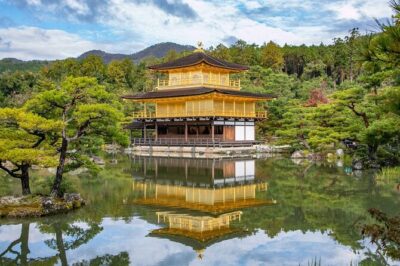
10 Must-see Spots in Kyoto One Day Private Tour (up to 7 people)
Read our review →
Kyoto 4hr Private Tour with Government-Licensed Guide
Read our review →
Private Kyoto Tour with Licensed Guide & Vehicle (Max 15 persons)
Read our review →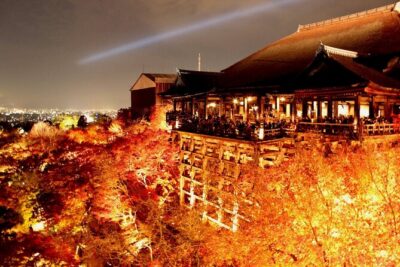
Explore Kyoto | Private Tour – Local English Driver(guide option)
Read our review →
Highlights & Hidden Gems With Locals: Best of Kyoto Private Tour
Read our review →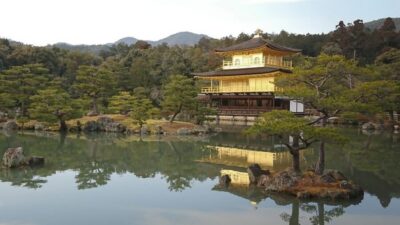
Browse the lists this tour appears in