
Reviewed · PRIVATE TOURS IN KYOTO
Private Kyoto Tour with Licensed Guide & Vehicle (Max 15 persons)
Kyoto rewards a smart plan. This private six-hour tour lets you move between major temples, old districts, and food streets by car, with an English-speaking licensed guide shaping the day around your interests. I especially like the door-to-door pickup and the chance to choose three or four sights instead of following a fixed route. The private vehicle also saves time and energy, especially when Kyoto’s buses are crowded and its train connections do not line up neatly.
I also like how much the guides can add beyond simple transport. Guides such as Ken, Michi, Noriko, Yuka, Haru, and Tomy have been praised for adjusting the pace, explaining customs, taking photos, and helping with lunch choices. The main caution is the price: at $634.72 per group of up to two people, it is costly for a couple, and entrance fees, lunch, and personal spending are extra. It becomes easier to justify for a family or group sharing the vehicle.
In This Review
- Key points before you book
- What six hours in a private Kyoto car really gives you
- Fushimi Inari and southern Kyoto
- Nijo Castle, the Imperial Palace, and central Kyoto
- Gion, Pontocho, and Higashiyama on foot
- Kiyomizu-dera and eastern temple country
- Northern Kyoto: Kinkaku-ji, Ryoan-ji, and Ninna-ji
- Arashiyama and Kyoto’s western edge
- Northern mountains: Kibune, Kurama, and Shugakuin
- Guides, drivers, and the human side of the tour
- Is $634.72 a fair price?
- Practical details that affect your day
- Who should book this Kyoto tour?
- FAQ
- How long is the private Kyoto tour?
- How many places can I visit?
- Is transportation included?
- Is a guide included?
- Are entrance fees included?
- Is lunch included?
- Can a group larger than two people book?
- Can I cancel for a full refund?
- Should you book it?
Key points before you book
- Pick three or four Kyoto sights: The tour is customizable, but six hours is not enough to visit every location on the long menu.
- Private vehicle and driver: Hotel or other pickup is offered, helping you avoid confusing bus routes and crowded public transport.
- Licensed English-speaking guide: Your guide can explain temple customs, local history, food, and neighborhood life along the way.
- Good for a busy first day: You can combine places such as Fushimi Inari, Nijo Castle, Nishiki Market, and Kinkaku-ji.
- Entry fees are separate: Carry some Japanese yen for temples, castles, and other paid sites.
- Strong but not perfect service record: The overall score is 4.9 from 417 ratings, with 98 percent recommending the experience, though guide quality and planning can vary.
What six hours in a private Kyoto car really gives you
The biggest benefit here is not simply comfort. It is the ability to connect different parts of Kyoto without spending half the day checking bus numbers or waiting at crowded stops.
Kyoto’s famous sights are spread across the city. Fushimi Inari is in the south, Kinkaku-ji is in the north, Arashiyama is in the west, and Ginkaku-ji and Nanzen-ji sit along the eastern mountains. A private vehicle can link two or three of these areas far more easily than public transport.
Still, keep your expectations sensible. The tour offers a choice of three or four places from a long list, not a 22-stop grand tour. The stops are generally described as short visits, often around 15 minutes, although some guides and groups spend longer at major temples. If you want time for gardens, prayer, photos, shopping, or a proper meal, choose fewer stops.
I would settle your priorities before pickup. A first visit might focus on Fushimi Inari, Kiyomizu-dera, Nijo Castle, and Nishiki Market. A temple-focused day could pair Kinkaku-ji with Ryoan-ji, Arashiyama, and Tenryu-ji. Trying to fit Fushimi Inari, Arashiyama, Kibune, and Kinkaku-ji into one day would create too much time in the car.
More Private Tours in Kyoto
- Kyoto 6hr Private Tour with Government-Licensed Guide
★ 5.0 · 1,369 reviews - 10 Must-see Spots in Kyoto One Day Private Tour (up to 7 people)
★ 5.0 · 1,108 reviews - Kyoto 4hr Private Tour with Government-Licensed Guide
★ 5.0 · 629 reviews
Fushimi Inari and southern Kyoto
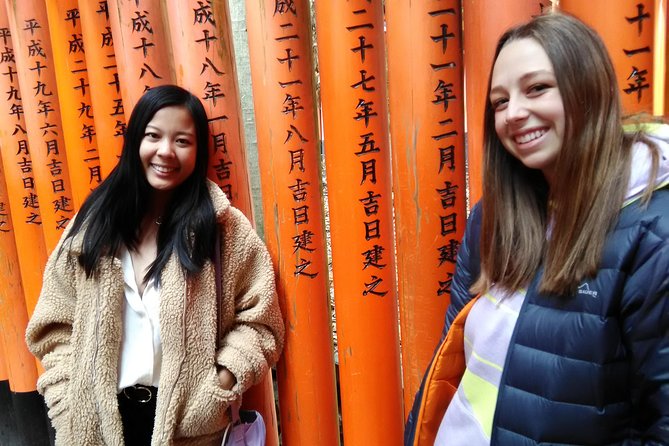
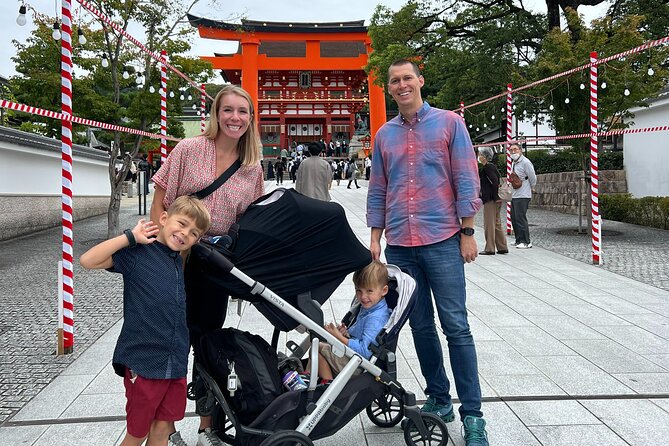
Fushimi Inari-taisha is one of Kyoto’s most recognizable sights, with long rows of orange torii gates climbing the wooded hillside. It is free to enter, which helps keep the day’s added costs down.
The important practical point is time. You can walk through the lower gates and take memorable photos fairly quickly, but the full mountain route takes much longer. A short stop gives you the famous first section, not the complete hike. Tell your guide if you want to walk farther, since that choice affects the rest of the schedule.
Nearby Tofuku-ji offers a different mood. This large Zen temple is especially known for autumn color, and its grounds give you a quieter temple setting than Fushimi Inari’s most photographed entrance. Toji, another southern Kyoto choice, dates to the early Heian period and is noted for its large temple grounds and five-story pagoda. Entrance charges apply at some of these sites.
A private car is useful in this part of town because you can avoid doubling back. But the vehicle cannot remove crowds from the shrine itself. Fushimi Inari is popular at nearly all hours, so your guide’s value lies in pacing, background, and knowing how far to walk, not in promising an empty shrine.
Nijo Castle, the Imperial Palace, and central Kyoto
Nijo Castle gives you a clear connection to the Tokugawa shoguns. Built in 1603 as Tokugawa Ieyasu’s Kyoto residence, it includes formal spaces and famous nightingale floors designed to make a soft sound underfoot.
A quick exterior look is not enough to understand the castle. If you want the interior rooms and grounds, allow time and pay the entrance fee. This is one of the stops where a rushed 15-minute visit may feel thin.
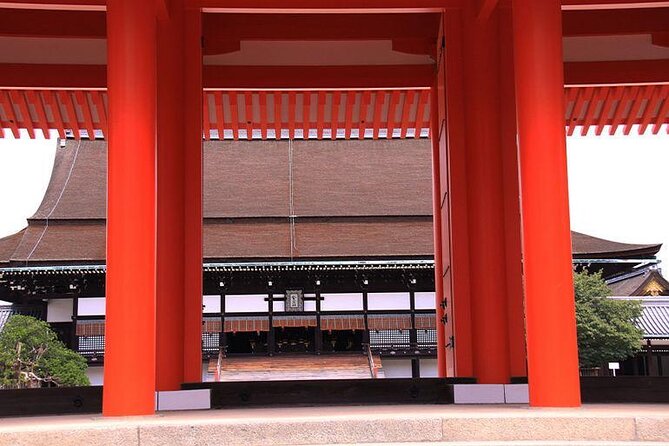
The Kyoto Imperial Palace offers a different story. It served as the Imperial Family’s residence until 1868, when the capital moved to Tokyo. Its spacious grounds provide a break from tight lanes and crowded shopping streets, though the site is spread out and deserves more than a quick photograph.
Nishiki Market is a practical choice if food matters to you. The narrow, five-block street has more than 100 shops and restaurants, selling the ingredients and prepared foods that earned it the nickname Kyoto’s Kitchen. I would use this stop for lunch or small tastings, not just a fast walk-through.
Food needs planning here. Lunch is not included, and the price of a meal depends on what you choose. One guide, Michi, was praised for staying beyond the scheduled end to help find a particular food and join an okonomiyaki lunch. That kind of help can make the market more useful, but you should not assume extra time is guaranteed.
Gion, Pontocho, and Higashiyama on foot
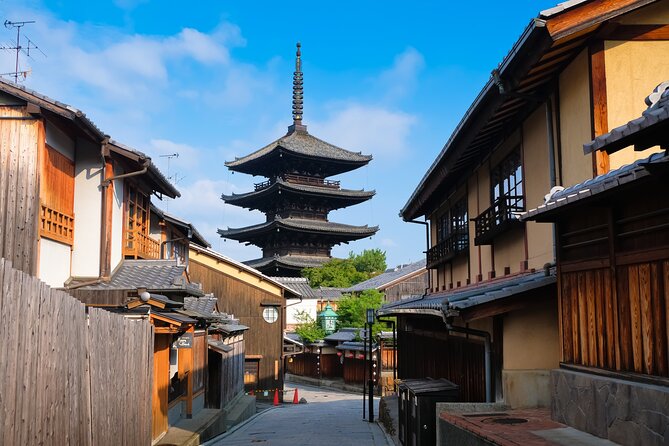
Gion is best experienced slowly. The narrow lanes, traditional buildings, and teahouse streets offer a glimpse of old Kyoto, but the area is not a stage set for visitors. You should remain polite, avoid blocking doorways, and never treat working geisha or maiko as photo props.
A guide helps you understand what you are seeing and reduces the chance of getting lost in the side streets. The stop is free, but the value comes from interpretation rather than admission.
Pontocho, one block west of the Kamogawa River, is another atmospheric old lane, known for restaurants packed into a narrow passage between Shijo-dori and Sanjo-dori. It is better suited to an evening meal than a 15-minute daytime stop, so I would choose it only if you want a quick look or have a dining plan afterward.
Higashiyama gives you the historic atmosphere between the eastern mountains and central Kyoto. Its lanes connect naturally with Kiyomizu-dera, but walking can involve slopes, stairs, and dense crowds. Noriko was praised for adjusting routes for a traveler who needed less walking and fewer stairs. That shows why you should explain mobility needs before the tour begins, not after reaching the temple entrance.
A completely different kind of day out:
- PERFECT KYOTO 1-Day Bus Tour
★ 5.0 · 13,518 reviews - [Kyoto & Nara Day Tour] Sagano Scenic Railway & Nara Park & Fushimi Inari Taisha Thousand Torii Gates & Togetsukyo Bridge & Bamboo Grove & Kimono Forest (Departing from Osaka)
★ 4.9 · 10,942 reviews - Kyoto: Fushimi Inari, Kinkakuji, Bamboo Grove 1 Day Bus Tour
★ 4.8 · 4,316 reviews - Kyoto: Tea Ceremony in a Traditional Tea House in Kiyomizu
★ 4.9 · 3,519 reviews
Kiyomizu-dera and eastern temple country
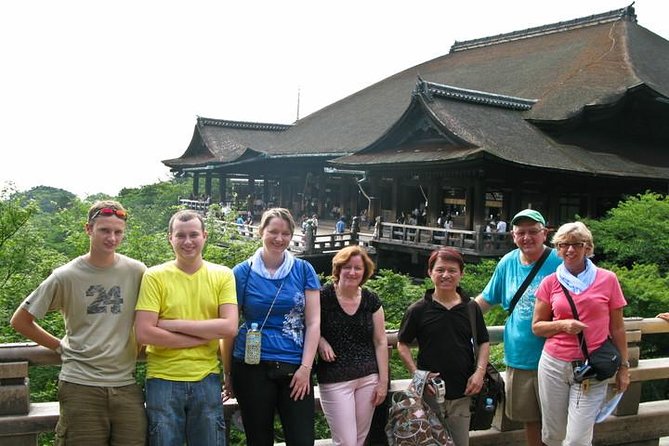
Kiyomizu-dera is one of Kyoto’s essential sights. Its wooden stage and hillside setting make it a strong choice for a first visit, but the approach through Higashiyama can be crowded and tiring.
The temple charges admission. You will get more from the stop if your guide explains the buildings, religious practices, and views rather than simply pointing out the main stage. The advertised schedule describes a guided visit of about an hour, while the stop list also shows 15-minute entries. Treat the exact time as flexible and confirm your priorities with the guide.
Ginkaku-ji, the Silver Pavilion, sits along the eastern mountains. It began as the retirement villa of shogun Ashikaga Yoshimasa in 1482 and later became a Zen temple. Despite its name, the pavilion is not covered in silver. The gardens and carefully arranged paths are the real attraction, and admission is extra.
Nanzen-ji adds spacious temple grounds and the striking Nanzenji Suirokaku aqueduct. It is one of Japan’s important Zen temples and a good pick if you want a calmer setting than Kiyomizu-dera. Kennin-ji, close to Hanamikoji and Shijo streets, offers pleasant grounds and dry landscape gardens. It may suit you if you want a central temple without committing to a long cross-city drive.
Northern Kyoto: Kinkaku-ji, Ryoan-ji, and Ninna-ji
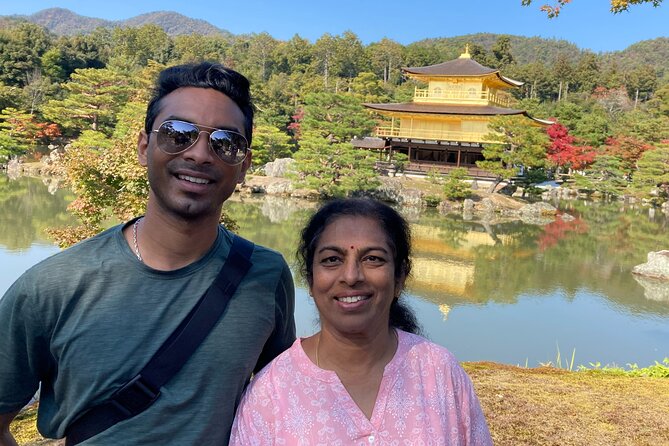
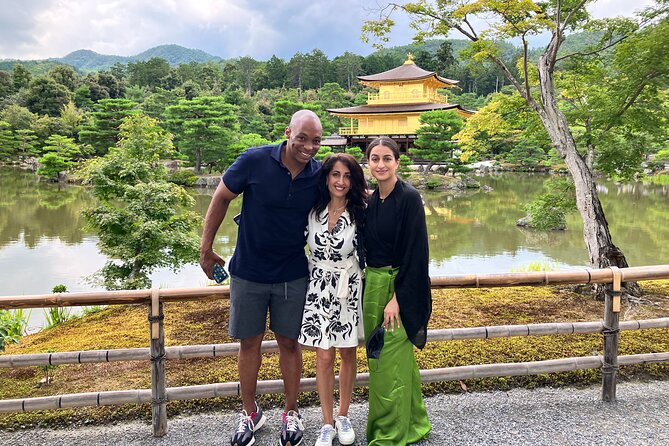
Kinkaku-ji, the Golden Pavilion, is the visual showstopper. The top two floors are covered in gold leaf, and the pavilion reflects in the surrounding pond when conditions cooperate.
It is also one of the most crowded stops. You may share the path with school groups and large tour parties, particularly in good weather. The grounds have a set route, so your guide cannot change the basic flow, but can explain the site and help you find worthwhile photo positions. Admission is not included.
Ryoan-ji is home to Japan’s best-known rock garden. Its quiet simplicity can be powerful, but the meaning is not obvious at a glance. Your guide can give you context, then let you sit with the garden rather than rushing you away after a photograph. Admission is extra.
Ninna-ji is a World Heritage temple and the head temple of the Omuro School of the Shingon sect. It was founded in 888 and offers another major religious site in northern Kyoto. Because these temples are in the same broad area, pairing them with Kinkaku-ji makes more sense than combining them with a distant southern or western stop.
Arashiyama and Kyoto’s western edge
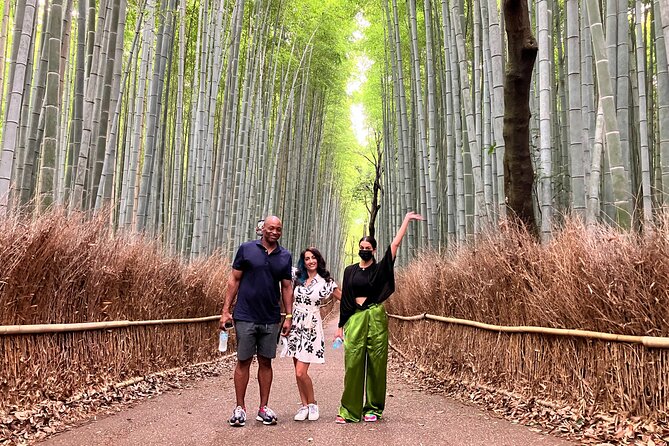
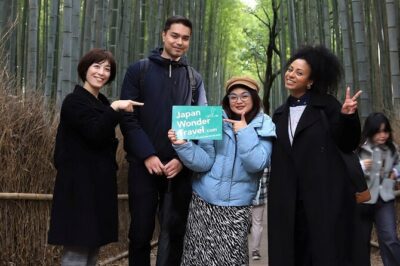
Arashiyama has long attracted visitors for its scenery and temple grounds. Today it is touristy, with the famous bamboo area drawing large numbers of people. A private vehicle gets you closer to the district, but it does not turn the bamboo path into a quiet country lane.
Tenryu-ji is the key temple here. It was ranked first among Kyoto’s five great Zen temples and is now a World Heritage site. Its garden and temple setting make it worth choosing on a western Kyoto day.
Daikaku-ji began as Emperor Saga’s detached palace in the early 800s. It offers a more reflective alternative to the busiest parts of Arashiyama. If you want bamboo, a major Zen temple, and a second historic site, Arashiyama can fill most of the six hours on its own.
Katsura Imperial Villa is one of Japan’s finest examples of architecture and garden design, while Yoshimine-dera sits in Kyoto’s western mountains and is built along a hillside. These are attractive choices for repeat visitors or anyone who prefers gardens and mountain settings. They are not sensible add-ons to an already packed central Kyoto route.
Northern mountains: Kibune, Kurama, and Shugakuin
Kibune is a small forested mountain town developed around Kifune Shrine. Kurama, less than an hour from central Kyoto, is known for Kurama-dera and its hot spring.
These locations offer a different side of Kyoto, with mountain air and rural surroundings rather than famous city monuments. The tradeoff is distance. Choosing Kibune or Kurama means giving up several central sights, and the tour’s six-hour limit makes this a full theme for the day.
Shugakuin Imperial Villa, built in the 17th century for Emperor Gomizuno, includes Upper, Middle, and Lower Villa areas and is managed by the Imperial Household Agency. It is a specialized choice for architecture and garden enthusiasts. Check the day’s access arrangements with the agency before treating it as your main stop, since the supplied tour details do not promise admission or reserved entry.
Guides, drivers, and the human side of the tour
The best part of this experience is the guide-driver combination. The driver handles Kyoto’s roads and parking while the guide walks with you, explains sites, answers questions, and adjusts the day.
Several guides have been praised for clear English, humor, patience, and cultural explanations. Haru tailored a day to a family and used humor while explaining the sights. Tomy was praised for arranging a manageable route, helping with lunch, and pointing out interesting things between stops. Yuka was described as enthusiastic, and Ken as polite, flexible, and good at explaining Kyoto.
That said, the experience is not identical with every guide. One poor day included weak attention to the group’s preferences and an itinerary that felt poorly assembled. Another guest found the guide pleasant but uninspiring. This is the main risk with a guide-led private tour: the vehicle and route may be excellent, but the quality of the day depends heavily on the person assigned.
You can reduce that risk by sending a clear wish list before the tour. State your must-see site, walking limits, food needs, preferred pace, and interest in temples, shopping, gardens, or neighborhoods. Do not simply say show us everything. That invites an exhausting route.
The agency can provide only a limited number of car seats and booster seats, and rear-facing car seats are not available. Service animals are allowed, most people can participate, and you should contact the provider directly about child seating needs.
Is $634.72 a fair price?
The listed rate is $634.72 per group of up to two people. It covers the licensed local English-speaking guide and private vehicle, but not entry tickets, lunch, or personal costs. A group of four or more can share the cost, making the price easier to defend than it is for a couple.
For two people, I would compare the cost with what you value most. You are paying for private transport, a driver, a guide, hotel pickup, route planning, and the time saved between distant sights. You are not paying for luxury meals or included temple admissions.
The value is strongest if you have one day in Kyoto, are arriving by train from Tokyo, have older relatives, are traveling with children, or simply do not want to manage buses. One family arriving by bullet train at 9:14 a.m. and leaving at 4:01 p.m. managed Kinkaku-ji, Nijo Castle, Nishiki Market, and Fushimi Inari at a moderate pace. That is a useful example of what the service can do when the route is planned carefully.
For a couple staying several nights, public transport plus a self-guided plan will cost much less. You may still choose this tour for convenience, but the financial case is weaker.
Practical details that affect your day
Pickup is offered, and the activity is private, so only your group participates. The maximum group size is listed as 15, although the quoted price covers up to two people. Confirm the vehicle arrangement and final group size when booking.
Allow extra money for admission. Nijo Castle, Kiyomizu-dera, Kinkaku-ji, Ginkaku-ji, Ryoan-ji, Ninna-ji, Nanzen-ji, Tofuku-ji, Tenryu-ji, and other temple or imperial sites may require tickets. Carry a small amount of cash, since this makes short stops easier.
Communication about the pickup point matters. One otherwise successful day began with confusion over the meeting time and place. Make sure you have the exact hotel entrance, station exit, and pickup time in writing.
Free cancellation is available until 24 hours before the start time. Changes or cancellations inside that window are not refunded, and the cut-off follows local Kyoto time.
Who should book this Kyoto tour?
I would recommend it to first-time visitors with limited time, families, small groups, people carrying tired legs from a busy Japan itinerary, and anyone who wants a guide to explain what they are seeing. It is also useful if you need a route adjusted for a wheelchair or reduced walking, though you should discuss access needs ahead of time.
I would not choose it if you want a slow temple day, long meals, a full mountain hike, or the lowest possible cost. Six hours passes quickly, and Kyoto’s major sites need real walking time. The best plan is three or four carefully chosen stops, not a frantic checklist.
FAQ
How long is the private Kyoto tour?
The tour lasts approximately six hours.
How many places can I visit?
The tour includes a customizable walking tour with your choice of three or four sites from the available options.
Is transportation included?
Yes. A private vehicle and driver are included, and pickup is offered.
Is a guide included?
Yes. The tour includes a licensed local English-speaking guide.
Are entrance fees included?
No. Entrance fees are generally separate. Guide entry fees are covered only for sights listed under the tour’s included expectations.
Is lunch included?
No. Lunch and personal expenses are not included.
Can a group larger than two people book?
The quoted price is for a group of up to two people, while the activity allows a maximum of 15 participants. Larger groups should confirm the applicable pricing and vehicle details.
Can I cancel for a full refund?
Yes, if you cancel at least 24 hours before the experience start time. Cancellations or changes made less than 24 hours before the start time are not refunded.
Should you book it?
Book this private Kyoto tour if time and ease matter more than price. Ask for a focused route, name your top three or four sights, and tell the agency about walking, food, child-seat, or accessibility needs before the day begins.
For a couple on a generous budget, it is a convenient but expensive shortcut. For a family or small group, the cost spreads better, and the private car can turn a difficult Kyoto day into a well-paced introduction to the city.
Just added in Kyoto
- The “Golden Route” and Ancient Japan by DIAMIR Erlebnisreisen – 14-Day Tour★ 2.0 · 2 reviews
- Japan: Castles & Cuisine by G Adventures – 6-Day Kyoto to Osaka Tour★ 4.5 · 4 reviews
- Cycle Japan by Explore! – 13-Day Kyoto to Tokyo Tour★ 4.7 · 12 reviews
- Cycle Japan by Intrepid Travel – 11-Day Kyoto to Tokyo Tour★ 4.8 · 2 reviews
- Classic Japan by Intrepid Travel – 11-Day Kyoto to Tokyo Tour★ 4.4 · 14 reviews
- Ancient & Modern Japan 14-Day Tour by Exodus Adventure Travels★ 4.4 · 40 reviews
- 5 Day Cultural Adventure of Kyoto, Nara & Osaka by Tourist Journey★ 2.5 · 2 reviews
- 12 Days Kinosaki Onsen Escape: A Journey Through Japan’s Timeless Towns by UME Travel★ 4.8 · 5 reviews
Private Tours in Kyoto, compared.
Kyoto 6hr Private Tour with Government-Licensed Guide
Read our review →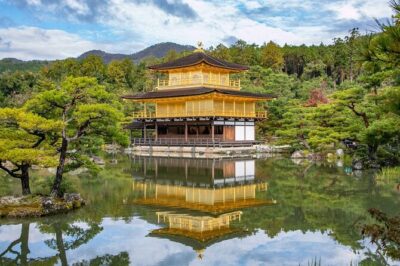
10 Must-see Spots in Kyoto One Day Private Tour (up to 7 people)
Read our review →
Kyoto 4hr Private Tour with Government-Licensed Guide
Read our review →
Kyoto Customized Private Tour: See Top Attractions in 1 Day
Read our review →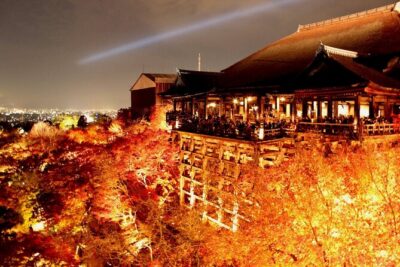
Explore Kyoto | Private Tour – Local English Driver(guide option)
Read our review →
Highlights & Hidden Gems With Locals: Best of Kyoto Private Tour
Read our review →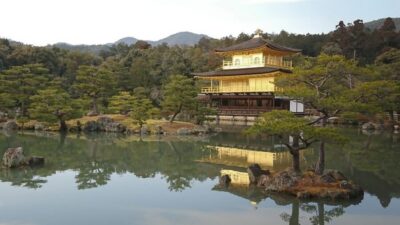
Browse the lists this tour appears in