Reviewed · KYOTO TOURS
Kyoto Afternoon Tour from Kyoto or Osaka
Kyoto packs centuries of worship into a single afternoon. I like this tour because it joins Fushimi Inari’s red torii gates with the quiet power of Sanjusangendo, then finishes at Kiyomizu-dera above the city. I also like having an English-speaking guide and bus transportation, since Kyoto traffic and crowded temple districts can make three major sights hard to manage alone.
The trade-off is time. About 30 minutes at the first two stops can feel brisk, and a late arrival at Kiyomizu-dera may leave you with dusk instead of daylight. Guides such as Yoshi, Momo, Donna-San, Amy, Jessie, and others have earned warm praise for being funny, helpful, and well organized, but your experience will depend partly on traffic, crowds, and the day’s guide.
In This Review
- Key points to know before booking
- Three Kyoto icons in one afternoon
- Fushimi Inari and the walk to the torii gates
- Sanjusangendo and its 1,001 statues
- Kiyomizu-dera and Kyoto from the hillside
- What the guide adds to a short tour
- Is $82.58 a fair price?
- Walking, crowds, and practical planning
- Who should book this Kyoto afternoon tour?
- Should you book it?
- FAQ
- How long does the Kyoto Afternoon Tour last?
- Where does the tour meet?
- What sites does the tour visit?
- Are entrance fees and transportation included?
- Is hotel pickup and drop-off included?
- How much walking is involved?
Key points to know before booking
- Three major Kyoto sights in 4 hours 40 minutes: A practical introduction if your time in Kyoto is short.
- Fushimi Inari’s famous Senbon Torii: You get the signature red gates, but the walk from the parking area takes about 15 minutes each way.
- Sanjusangendo’s 1,001 Kannon statues: This is the tour’s most focused cultural stop and one of Japan’s most memorable temple interiors.
- Kiyomizu-dera with city views: The final visit includes the historic shopping lane and the temple’s broad terrace.
- Transportation and admission are included: The price of $82.58 is easier to justify if you value convenience.
- A quick, sometimes crowded pace: Plan on walking, stairs, and limited time for shopping or quiet contemplation.
Three Kyoto icons in one afternoon
This is a sightseeing sampler, not a slow temple walk. In less than five hours, you visit a major Shinto shrine, one of Japan’s longest wooden buildings, and Kyoto’s best-known hilltop temple.
That mix is the tour’s main strength. You see different sides of Japanese religious life without spending your afternoon figuring out train connections, bus routes, entrance fees, and crowded approaches. The guide adds basic context about customs, architecture, and Kyoto’s role as Japan’s capital from 794 to 1868.
You meet at the Avanti Tour Desk near Kyoto Station in the afternoon. The office can be hard to locate inside the large building, so arrive early. One passenger lost time after being dropped on the wrong side of the station, and Kyoto Station is not a place where you want to begin in a hurry.
The tour is conducted in English with a national government licensed guide interpreter. The advertised maximum is 40 people, though one account described a group of about 50. A large group can make it harder to hear, especially at busy sites, but strong guides work hard to keep everyone together. Yoshi, Momo, Amy, Jessie, and Donna-San received especially warm praise for clear explanations, humor, and care with the group.
A few more options to weigh up in Kyoto
- PERFECT KYOTO 1-Day Bus Tour
★ 5.0 · 13,518 reviews - [Kyoto & Nara Day Tour] Sagano Scenic Railway & Nara Park & Fushimi Inari Taisha Thousand Torii Gates & Togetsukyo Bridge & Bamboo Grove & Kimono Forest (Departing from Osaka)
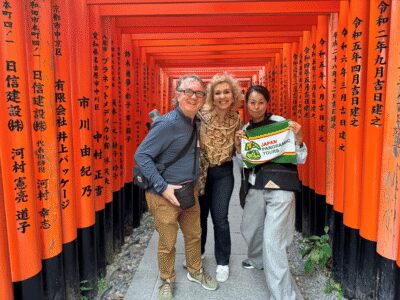
★ 4.9 · 10,942 reviews - Kyoto: Fushimi Inari, Kinkakuji, Bamboo Grove 1 Day Bus Tour
★ 4.8 · 4,316 reviews
Fushimi Inari and the walk to the torii gates
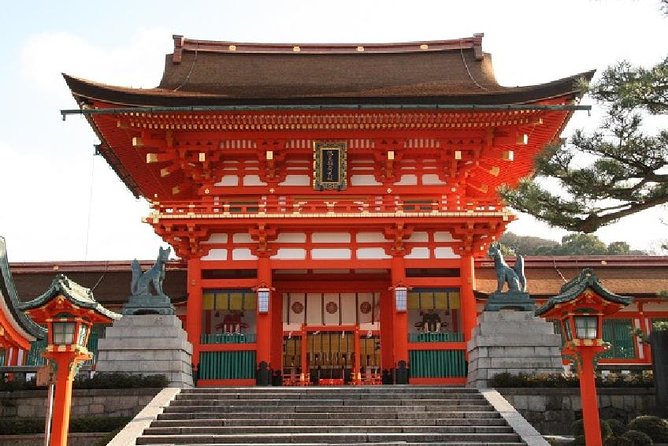
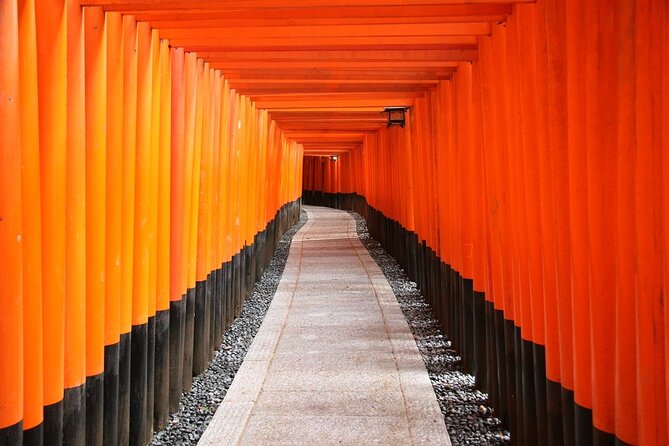
The first stop is Fushimi Inari Taisha, the head shrine of roughly 40,000 Inari shrines across Japan. Its famous Senbon Torii, or thousand red gates, create the classic Kyoto photograph.
You do not simply step off the bus beside the shrine. The walk from the parking area takes about 15 minutes each way. That matters in hot weather, for anyone with limited stamina, or if you are wearing uncomfortable shoes. The route is part of the outing, but it reduces the time available at the shrine itself.
The stop is scheduled for about 30 minutes, so expect a taste rather than a full exploration of Mount Inari. You can see the brilliant red gates and take photographs, but you will not have time to follow the torii trail far up the mountain.
The tour does not enter the Shin-en garden. That is worth knowing because the description refers to the shrine’s gardens and ponds, while the actual visit is more focused on the main shrine area and the torii gates. Keep your expectations centered on the striking entrance structures and the first section of the gate-lined path.
Crowds are common here. The narrow spaces beneath the torii can fill quickly, making photographs less peaceful than the images suggest. Still, this is an efficient way to see Kyoto’s most recognizable Shinto site, especially if you would otherwise spend time working out the train and walking route.
Sanjusangendo and its 1,001 statues
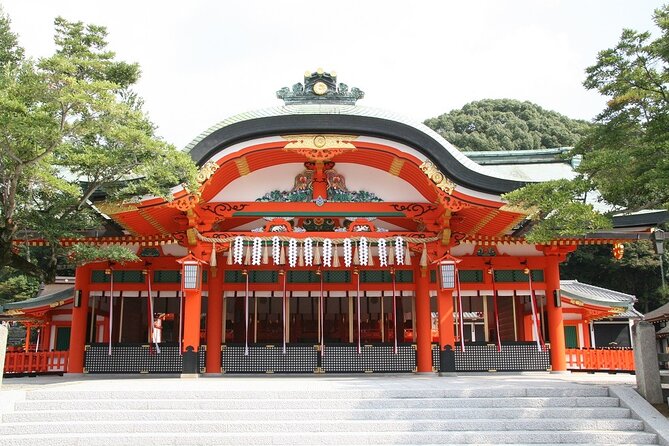
Sanjusangendo is the tour’s most unusual stop. The temple is famous for its wooden hall, which stretches about 394 feet, or 120 meters, making it the longest wooden structure in Japan.
Inside are 1,001 life-size statues of Kannon, the Buddhist bodhisattva of compassion, dating from the 13th century. The long hall and repeated figures create a very different mood from Fushimi Inari’s open-air torii. Here, the impact comes from scale, stillness, and the careful arrangement of the statues.
The visit lasts about 30 minutes. That is short, but it can work because the main experience is concentrated inside the hall. Several accounts singled out Sanjusangendo as the most intense or memorable part of the afternoon, and I can understand why. It gives you something that photographs cannot fully convey: the feeling of standing before row after row of solemn figures in a huge wooden space.
This stop also benefits most from a guide. A good explanation helps you understand what you are seeing rather than treating the hall as a quick photo stop. The tour includes admission, so you do not need to handle another ticket line.
The limitation is simple: you cannot linger. If you are deeply interested in Buddhist art, the temple deserves more time than the schedule allows. For a first look, though, this is a strong use of 30 minutes.
Kiyomizu-dera and Kyoto from the hillside
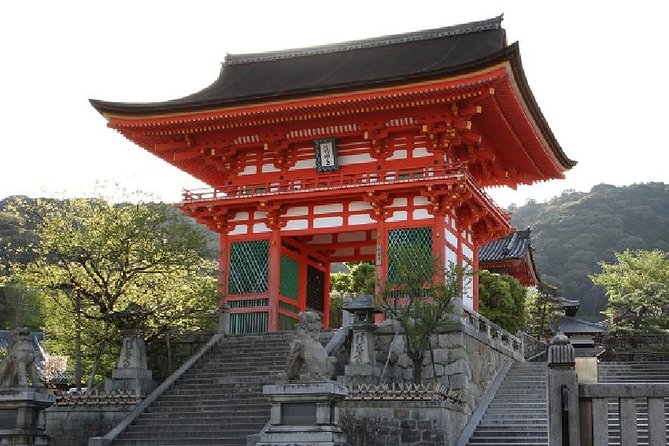
Kiyomizu-dera is the grand finale, and the tour allows about 1 hour and 10 minutes here. The approach is part of the attraction. You walk along the historic lane leading toward the temple, lined with pottery shops and other stores.
This section gives you a chance to browse, buy a small souvenir, or stop for a quick ice cream. It is also where the tour can feel most crowded. The lane and temple grounds are popular, and the mix of shoppers, worshippers, tour groups, and sightseers can make the approach noisy.
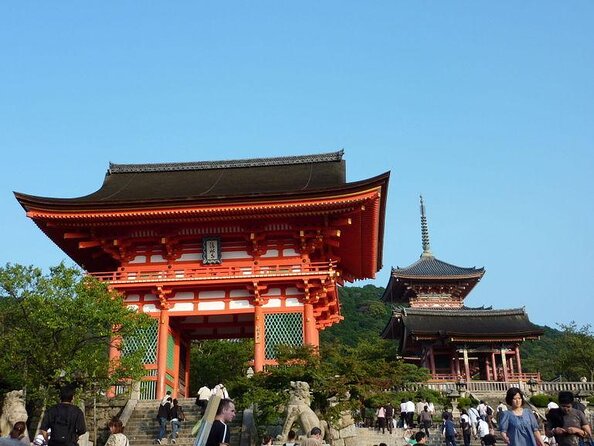
Kiyomizu-dera is a UNESCO World Heritage site, best known for its spacious wooden terrace and views over Kyoto. The temple sits high above the city on the foothills of Higashiyama, and the elevated walkways give you several angles for photographs.
The climb is not extreme, but it is real. One hot-weather visit found the walk strenuous, so wear shoes with good support and bring water. Food and drinks are not included, though you can purchase refreshments during the shopping portion if time allows.
Timing makes a major difference here. Some departures reach Kiyomizu-dera around 4:30 p.m., leaving only dusk and darkness by the end of the visit. That can be disappointing if you are hoping to see autumn foliage or the daytime panorama. In contrast, a well-timed afternoon can give you enough daylight for the terrace and the Kyoto view.
The schedule may change because of traffic and congestion. You cannot assume that the listed order or exact arrival time will remain fixed. If Kiyomizu-dera in daylight is your top priority, ask about the expected timing before you commit, then keep your expectations flexible.
A completely different kind of day out:
- Kyoto: Tea Ceremony in a Traditional Tea House in Kiyomizu
★ 4.9 · 3,519 reviews - Kyoto: Gion Make Your Own Chopsticks with Engraving Option
★ 5.0 · 3,465 reviews - Kyoto Nara Day Trip │ Kiyomizu-dera Temple + Fushimi Inari-taisha Shrine + Nara Park (Departing from Osaka/Kyoto)
★ 4.7 · 3,408 reviews - Kyoto Geisha Walking Tour: Gion District & Hidden Gems
★ 4.7 · 3,273 reviews
What the guide adds to a short tour
The strongest part of this experience is often the guide rather than the number of stops. A good guide turns a fast route into a coherent introduction to Kyoto.
The praised guides were described as friendly, funny, informative, professional, and attentive. Yoshi was especially appreciated for keeping the afternoon entertaining, while Momo was praised for her guidance at the sites. Donna-San received strong marks for making the outing feel easy, and Amy was noted for looking after a large group carefully.
That personal touch matters in Kyoto. Temples and shrines have customs that are not always obvious, and a short explanation can help you understand how the sites function as places of worship rather than simply as historic backdrops.
Still, guide quality can vary. One less favorable experience found it difficult to hear the guide in a group of about 50 and felt that some stops received little explanation beyond transportation. If you need detailed art history at every site, a private guide or a smaller specialist tour would likely suit you better.
The best way to improve your experience is to stay close to the guide, listen during the short walking sections, and ask questions when the group pauses. Do not expect a long lecture at each temple. The format favors clear highlights and practical organization.
Is $82.58 a fair price?
At $82.58 per person, this is not the cheapest way to visit the three sites. You can reach Kyoto’s shrines and temples by public transportation, and independent sightseeing gives you control over timing.
The tour earns its price through convenience. Admission fees and transportation are included, and you avoid planning a route between three busy locations. That is useful if you are visiting Kyoto from Osaka, spending only one day in the city, or traveling in hot and humid weather. One family specifically valued the air-conditioned bus because walking between all three sites would have been unpleasant.
The cost also buys structure. You meet at a central location, follow a set route, and receive an English explanation along the way. For a first afternoon in Kyoto, that can help you get your bearings quickly and decide which areas deserve a longer return visit.
The value drops if you already know Kyoto well or prefer unhurried visits. At Fushimi Inari and Sanjusangendo, 30 minutes goes quickly. Kiyomizu-dera receives more time, but some of that is spent walking the approach and browsing shops.
I would call the price reasonable for a short first visit, particularly when transport and admissions are included. I would not book it expecting a deep study of each monument.
Walking, crowds, and practical planning
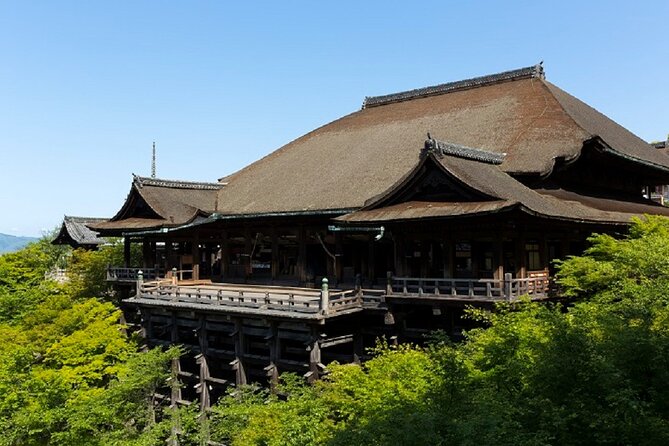
You should be comfortable walking for much of the afternoon. The route includes the walk from the parking area to Fushimi Inari, the approach to Kiyomizu-dera, temple grounds, and some uphill sections.
Crowds cannot be removed from this itinerary. Fushimi Inari and Kiyomizu-dera are among Kyoto’s most famous sights, and their narrow paths can feel packed. The guide can manage the schedule, but no tour operator can make these places quiet.
Seats on the bus may not be assigned. Children up to five years old may join free, but they do not receive a bus seat unless you book the child rate. Participants under 18 need written parental permission, and anyone under 15, or not yet enrolled in middle school, must be accompanied by a parent or guardian.
Most people can participate, and service animals are allowed. The tour operates near public transportation but does not include hotel pickup or drop-off, so you must make your own way to and from the meeting point.
Free cancellation is available until 24 hours before the start time. After that cutoff, the payment is not refunded and changes are not accepted.
Who should book this Kyoto afternoon tour?
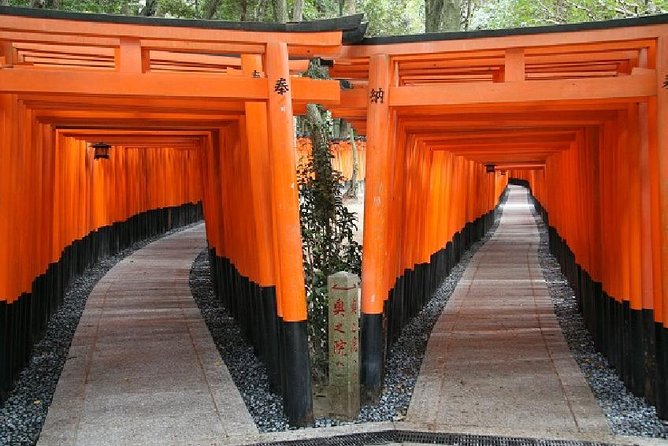
I would choose this tour if you have only one afternoon in Kyoto, are staying in Osaka, or want an organized introduction before exploring on your own. It is also a good fit if you value included transportation and prefer a guide to explain customs and key details as you go.
Families and first-time visitors can benefit from the simple plan. You see three important sites without the stress of building a route, and the half-day length leaves room for dinner or an evening walk afterward.
I would hesitate if you dislike crowds, need plenty of time for photographs, or want to explore Fushimi Inari’s mountain trail. I would also think twice if Kiyomizu-dera’s daylight view is your main reason for booking, since late timing and traffic can turn the final visit into a dusk stop.
Should you book it?
Book this tour for efficient coverage, friendly guiding, and easy transportation. Sanjusangendo is a particularly good reason to go, and the combination of Shinto shrine, Buddhist hall, and hilltop temple gives you a useful first picture of Kyoto.
Skip it if you would rather see fewer places at your own pace. Independent sightseeing will give you more time at each stop, but it will also require more planning. For a first Kyoto afternoon, $82.58 buys a sensible introduction, as long as you accept the crowds and the brisk schedule.
FAQ
How long does the Kyoto Afternoon Tour last?
The tour lasts approximately 4 hours and 40 minutes, although traffic and congestion can affect the timing.
Where does the tour meet?
You meet the guide in the afternoon at the Avanti Tour Desk near Kyoto Station.
What sites does the tour visit?
The tour visits Fushimi Inari Taisha Shrine, Sanjusangendo Temple, and Kiyomizu-dera Temple.
Are entrance fees and transportation included?
Yes. Admission fees, transportation costs, and the fee for the national government licensed English guide interpreter are included.
Is hotel pickup and drop-off included?
No. You must travel to the meeting point near Kyoto Station, and hotel pickup and drop-off are not included.
How much walking is involved?
You walk from the parking area to Fushimi Inari Shrine, about 15 minutes each way, plus walking around the temple grounds and along the uphill shopping lane toward Kiyomizu-dera.
Just added in Kyoto
- The “Golden Route” and Ancient Japan by DIAMIR Erlebnisreisen – 14-Day Tour★ 2.0 · 2 reviews
- Japan: Castles & Cuisine by G Adventures – 6-Day Kyoto to Osaka Tour★ 4.5 · 4 reviews
- Cycle Japan by Explore! – 13-Day Kyoto to Tokyo Tour★ 4.7 · 12 reviews
- Cycle Japan by Intrepid Travel – 11-Day Kyoto to Tokyo Tour★ 4.8 · 2 reviews
- Classic Japan by Intrepid Travel – 11-Day Kyoto to Tokyo Tour★ 4.4 · 14 reviews
- Ancient & Modern Japan 14-Day Tour by Exodus Adventure Travels★ 4.4 · 40 reviews
- 5 Day Cultural Adventure of Kyoto, Nara & Osaka by Tourist Journey★ 2.5 · 2 reviews
- 12 Days Kinosaki Onsen Escape: A Journey Through Japan’s Timeless Towns by UME Travel★ 4.8 · 5 reviews
Kyoto Tours, compared.
![[Kyoto & Nara Day Tour] Sagano Scenic Railway & Nara Park & Fushimi Inari Taisha Thousand Torii Gates & Togetsukyo Bridge & Bamboo Grove & Kimono Forest (Departing from Osaka)](https://media.japanvisits.com/wp-content/uploads/kyoto-nara-day-tour-sagano-scenic-railway-nara-park-fushimi-inari-taisha-thousand-torii-gates-togetsukyo-bridge-bamboo-grove-kimono-forest-departing-from-osaka-k110001-400x257.jpg)
Fushimi Inari, Kinkakuji, Bamboo Grove 1 Day Bus Tour
Read our review →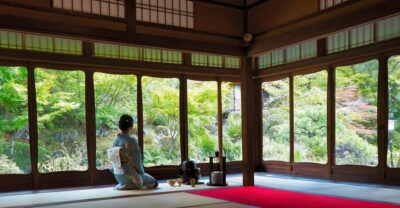
Tea Ceremony in a Traditional Tea House in Kiyomizu
Read our review →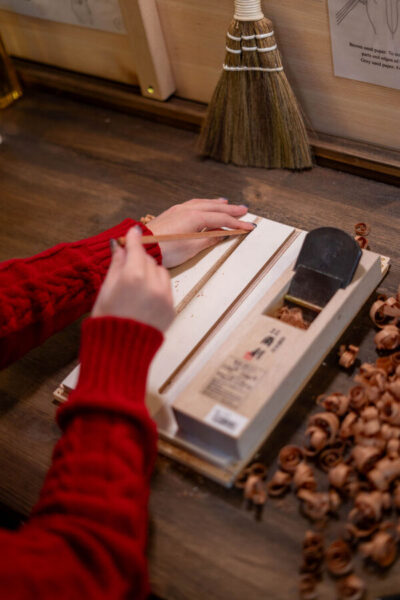
Gion Make Your Own Chopsticks with Engraving Option
Read our review →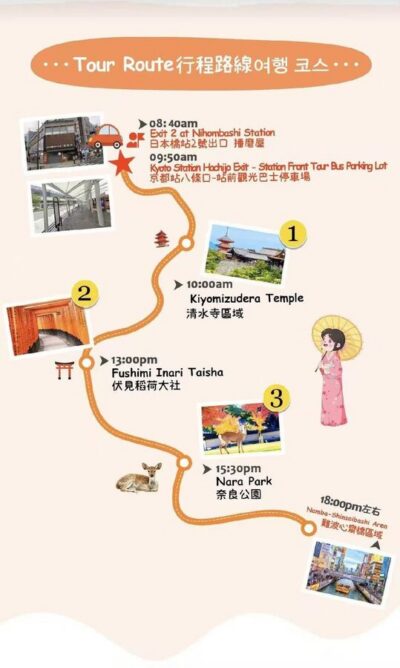
Kyoto Nara Day Trip │ Kiyomizu-dera Temple + Fushimi Inari-taisha Shrine + Nara Park (Departing from Osaka/Kyoto)
Read our review →
Kyoto Geisha Walking Tour: Gion District & Hidden Gems
Read our review →