Reviewed · KYOTO TOURS
Kyoto: Amanohashidate Ine Funaya Tour
Heaven really does have a bridge here. This long day trip takes you from Osaka or Kyoto to Amanohashidate’s pine-covered sandbar, then on to the boat houses of Ine. I especially like the mix of big coastal views and small-town Japan, plus the chance to feed seagulls during an optional bay cruise.
The air-conditioned bus makes places that are awkward to reach by public transport possible in one day, and the stop at Chion-ji adds a useful cultural layer. The tradeoff is time: with a 10-hour schedule and a listed 2.5-hour bus segment, you will spend a good part of the day on the road. Guide quality can also vary, so some visitors receive rich explanations while others get mainly escort service.
In This Review
- Key points to know before booking
- Why this northern Kyoto day trip is worth your time
- Getting started from Osaka or Kyoto
- Amanohashidate: Japan’s Bridge to Heaven
- Chion-ji Temple and the symbols of wisdom
- Ine’s boat houses and a working waterfront
- The one-hour pause that may feel uneven
- Food, tickets, and the real daily cost
- How the guide can shape the day
- Who should book this tour?
- Should you book the Amanohashidate and Ine tour?
- FAQ
- How long does the tour last?
- Where can I start the tour?
- Is transportation included?
- Are food and drinks included?
- Are entry tickets included?
- Can I take a boat ride in Ine?
- What languages are available for the guide?
- How much luggage can I bring?
- What happens if traffic or weather causes delays?
Key points to know before booking
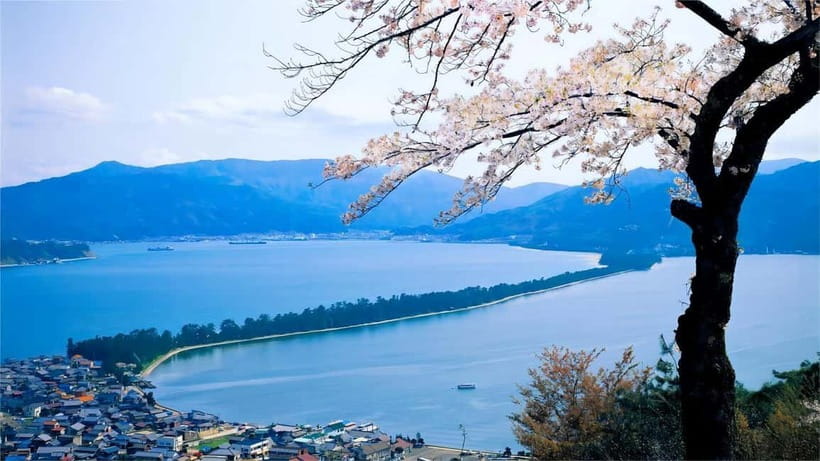
- Amanohashidate is the main event: Walk beside white beaches, pine trees, Miyazu Bay, the Aso Sea, and the Sea of Japan.
- Chion-ji has a clear purpose: This temple honors Manjushri, the Buddhist figure linked with wisdom and academic success.
- Ine feels different from central Kyoto: Its waterfront boat houses were built around fishing life, not sightseeing spectacle.
- The seagull cruise costs extra: You can buy a boat ride in Ine and feed birds around the bay.
- The bus saves serious planning time: Public transport connections make this northern Kyoto outing difficult to fit into a single day on your own.
- Budget for extras: Food, drinks, and entry tickets are not included, and one extra charge may apply to larger additional luggage.
Why this northern Kyoto day trip is worth your time
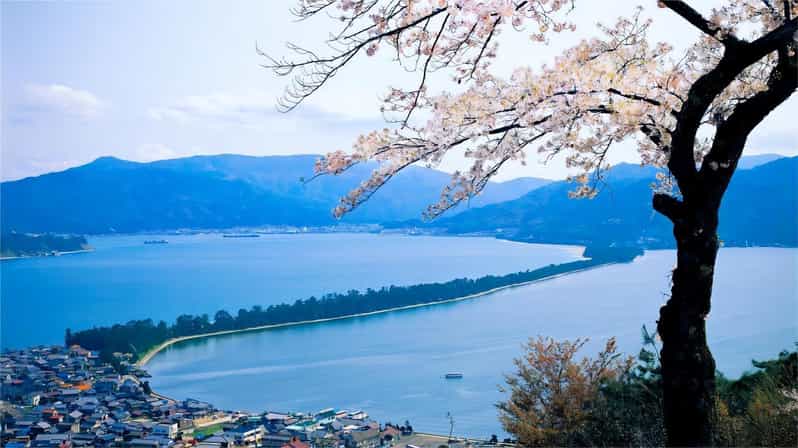
Amanohashidate and Ine sit far north of Kyoto, on the Japan Sea side of Honshu. They are not quick city-center stops that you can squeeze between a shrine and a shopping street. The appeal is the change of pace: pine trees, open water, fishing boats, sand, and a quieter coastal setting.
For $76 per person, the value comes mainly from transport and access. You get a guide, return transportation, and a full day covering several sites that would be hard to connect by public transit in one outing. The price is less attractive if you want a slow, independent visit with plenty of time for meals and side streets, since the schedule has to keep moving.
I would think of this as a scenic sampler. You get a strong first look at Amanohashidate and Ine, but not a leisurely stay in either place. That is a fair exchange for a long-distance day trip from Osaka or Kyoto.
A few more options to weigh up in Kyoto
- PERFECT KYOTO 1-Day Bus Tour
★ 5.0 · 13,518 reviews - [Kyoto & Nara Day Tour] Sagano Scenic Railway & Nara Park & Fushimi Inari Taisha Thousand Torii Gates & Togetsukyo Bridge & Bamboo Grove & Kimono Forest (Departing from Osaka)
★ 4.9 · 10,942 reviews - Kyoto: Fushimi Inari, Kinkakuji, Bamboo Grove 1 Day Bus Tour
★ 4.8 · 4,316 reviews
Getting started from Osaka or Kyoto
There are two listed starting points: Nippombashi Station and the Kyoto-Hachijoguchi Bus Loading Area. Your exact meeting place depends on the option you book, so read the final instructions carefully rather than relying only on the general location shown during checkout.
The supplier sends an email the day before with the pickup details, your guide’s contact information, and the bus license plate number. I would save that message before leaving your accommodation. It is particularly useful when several buses are gathered in the same area.
You meet the group directly and board the coach. Return transportation is included, and the bus is air-conditioned. The ride is a major part of the experience, so bring water, a phone charger, and something to occupy you between stops. Holiday traffic can stretch the day, and the schedule may change because of traffic, weather, holidays, or crowd levels.
One piece of luggage is free for each person. An additional piece larger than 20 inches costs $16, so this is better suited to a day bag than to a full suitcase transfer.
Amanohashidate: Japan’s Bridge to Heaven
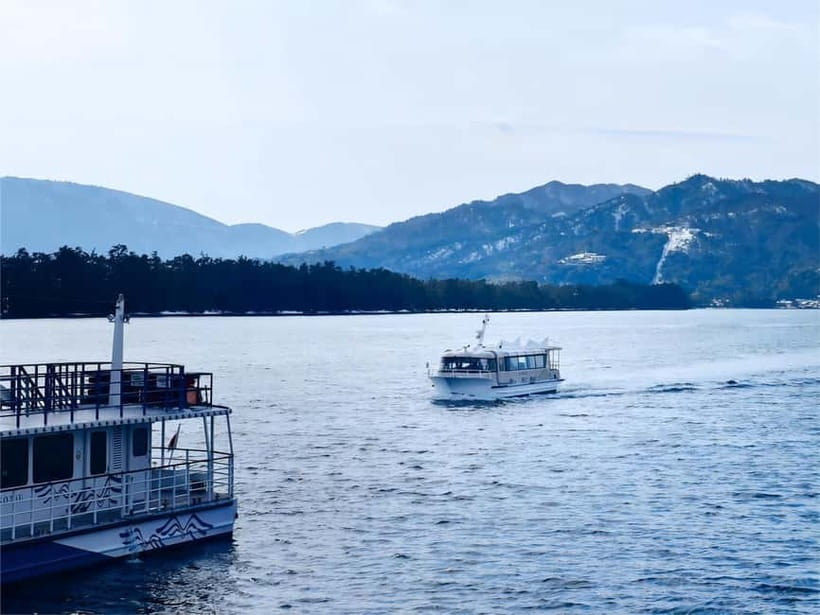
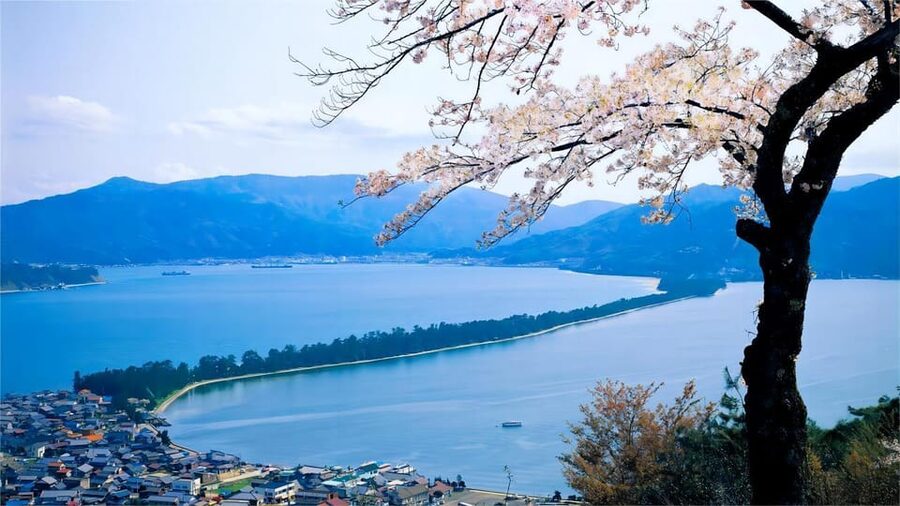
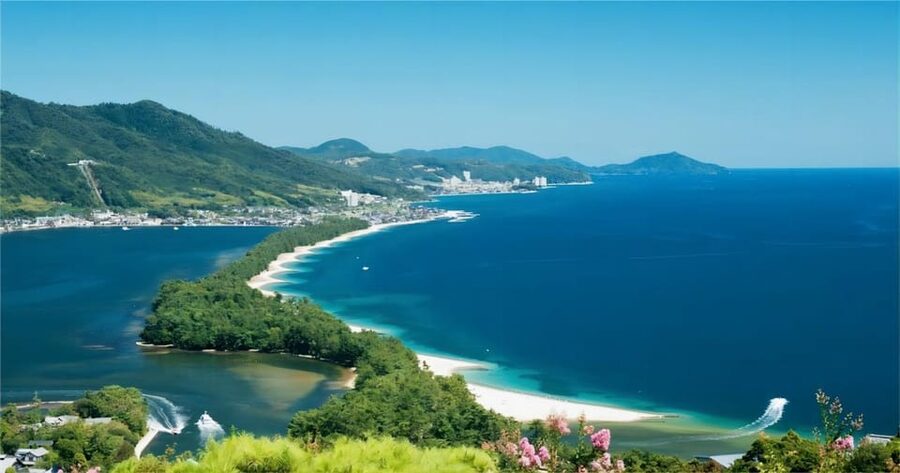
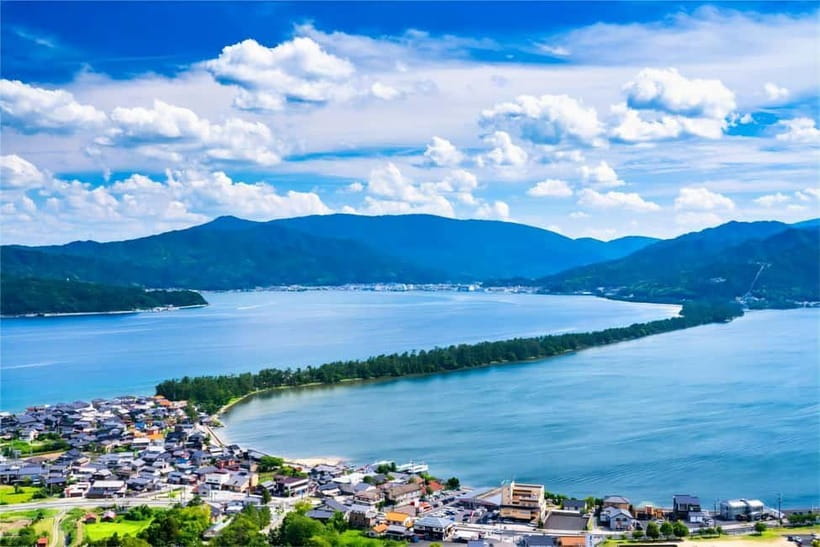
Amanohashidate translates as Bridge to Heaven, an apt name for a narrow sandbar reaching across Miyazu Bay. Pine trees cover much of its length, with white sandy beaches along the water. From the viewing areas, you can look toward the Aso Sea and the Sea of Japan.
This is a place for taking in the whole scene rather than checking off one building. The contrast is what makes it work: pale sand, dark green pines, and broad water on both sides. You can walk, take photographs, and enjoy free time during the roughly two-hour visit.
Amanohashidate is also counted among Japan’s Three Views, a traditional group of especially admired scenic places. That label matters less than the actual experience, which is refreshingly open after time spent in dense urban Kyoto or Osaka.
The main limitation is the weather. Rain can soften the views and make beach walking less pleasant, though the stop can still be worthwhile. One highly rated outing continued to be enjoyable in rainy conditions because the guide kept the group informed and upbeat. Still, if your main reason for booking is photography, keep your expectations flexible.
You should also expect the visit to include both guided information and independent time. That is useful for people who want a little structure but do not want a guide beside them every second. If you need a long, quiet walk across the full sandbar, ask how much free time is available on the day, since the schedule also includes the temple and Ine.
Chion-ji Temple and the symbols of wisdom
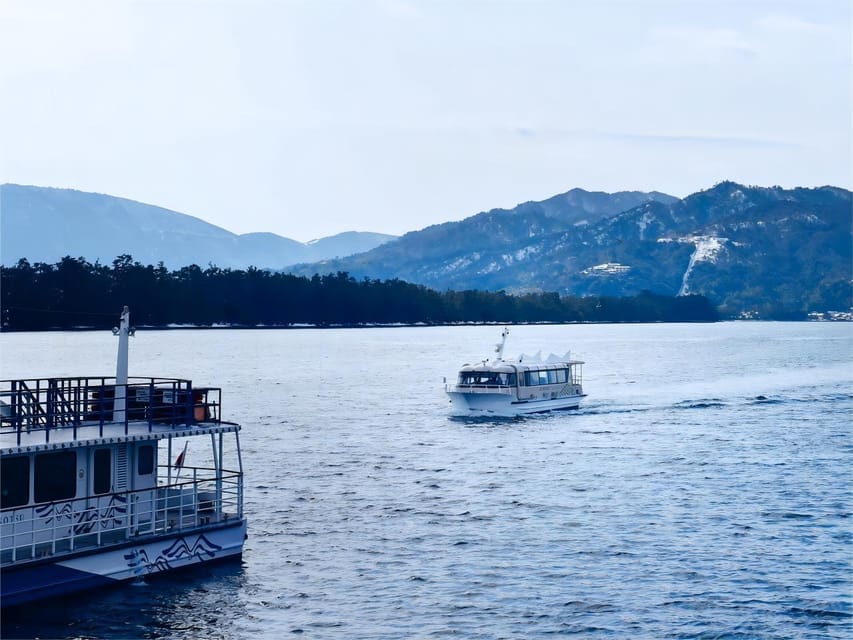
Chion-ji sits at the southern end of Amanohashidate, making it a natural next stop rather than a separate detour. The visit lasts about 30 minutes, so this is an introduction, not a long temple study.
The temple is dedicated to Manjushri, the Buddhist figure associated with wisdom. Students visit to seek help with their studies and exams, which gives the site a very human purpose. You are not just looking at an old religious complex. You are seeing a place tied to hopes for progress and academic success.
Pay attention to the ancient gate as you enter. The tour also points out a fan-shaped signed poem associated with advancement and improvement. These details are easy to miss if you walk through quickly, so this is one spot where a guide can add real value.
The short stop has a downside. If you enjoy temple architecture or want time for quiet reflection, 30 minutes may feel tight. Guide explanations also vary. Some visitors found the information useful and the guide attentive, while others felt they received limited historical detail or struggled with the guide’s English. The live tour is offered in English and Japanese, but clear communication may depend on the individual guide.
Jay received especially warm praise for being efficient, helpful, and responsive to questions. Fred was also described as bubbly and clear about the day’s plan, even in rainy weather. Those comments suggest that the best guide experience can make the tight schedule feel much easier.
A completely different kind of day out:
- Kyoto: Tea Ceremony in a Traditional Tea House in Kiyomizu
★ 4.9 · 3,519 reviews - Kyoto: Gion Make Your Own Chopsticks with Engraving Option
★ 5.0 · 3,465 reviews - Kyoto Nara Day Trip │ Kiyomizu-dera Temple + Fushimi Inari-taisha Shrine + Nara Park (Departing from Osaka/Kyoto)
★ 4.7 · 3,408 reviews - Kyoto Geisha Walking Tour: Gion District & Hidden Gems
★ 4.7 · 3,273 reviews
Ine’s boat houses and a working waterfront
After Amanohashidate and Chion-ji, the bus continues to Ine, a fishing town known for its waterfront boat houses. These buildings line the bay and are the visual signature of the town.
The boat houses are fascinating because they connect homes and fishing life directly with the water. From the shore, you can walk around, look at the waterfront buildings, browse shops, and find a restaurant. The setting feels more intimate than a major sightseeing district.
You can also pay for a boat ride around the bay. This is not included in the tour price, so carry enough cash. One practical warning comes from the payment arrangements: extra tickets may cost more than expected, and card payment may not always be accepted. A visitor who carried only limited cash had to skip a meal after paying for an extra admission.
The boat ride is a good optional add-on if you want to see the boat houses from the water. Feeding the seagulls makes it playful, and the bird activity has been one of the most praised parts of the day. The experience may also include eagles around the boat, adding a little drama to the cruise.
I would choose the boat ride if the weather is decent and you have room in your budget. It gives you a view that a walk along the waterfront cannot provide. If you prefer a quiet town visit, keep the money and use your time for shops and the shoreline instead.
The one-hour pause that may feel uneven
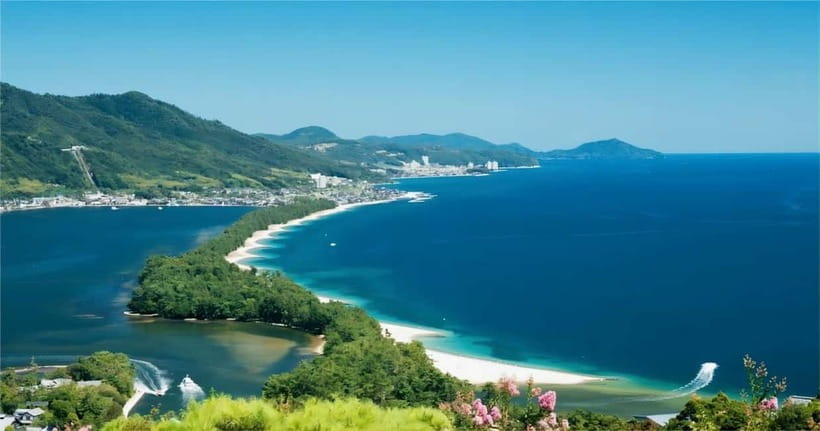
The schedule gives about one hour to the final Kyoto Prefecture stop, which appears to include time around the waterfront area and nearby sights. This is where the pacing may feel less balanced.
One detailed account found the hour in the lakeside town less interesting than Ine and suggested that 30 minutes would have been enough. That is useful advice if you are choosing between lingering at the boat houses and spending time at a less compelling stop. The exact flow can change with traffic and crowd levels, but you should not assume every minute is equally memorable.
The strength of this pause is flexibility. You can use it for photographs, a short walk, shopping, or a snack. The weakness is that an hour can feel long if the area does not appeal to you, especially after a full morning of coastal scenery.
I would treat this as breathing room rather than a headline attraction. It gives the group time to reset before the return journey, but it may not be the part you remember most.
Food, tickets, and the real daily cost
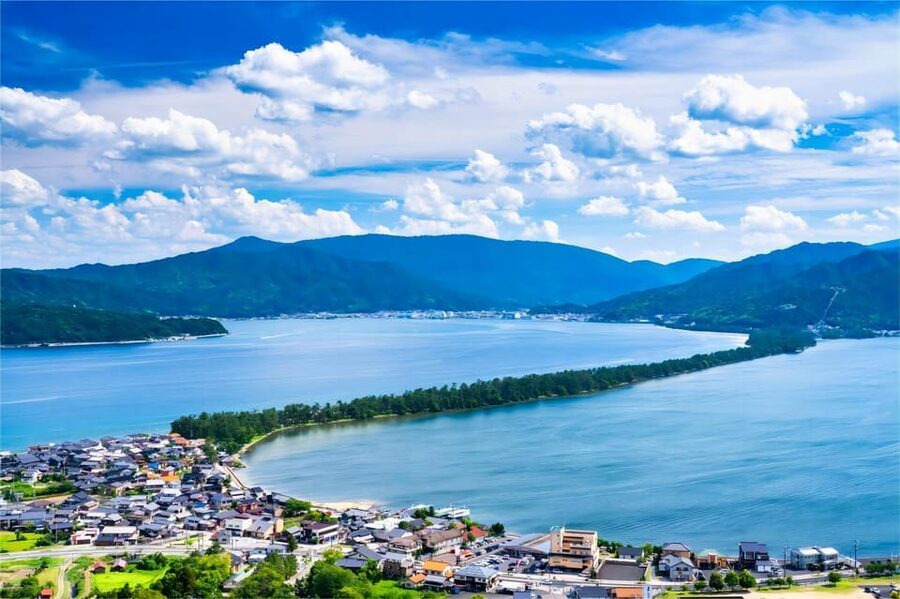
The $76 base price is reasonable for a 10-hour outing that includes transportation and a live guide. The distance is the key factor. You are paying to avoid piecing together long rail and bus connections, then trying to fit Amanohashidate and Ine into the same day.
Food and drinks are not included. Entry tickets are also separate, including any optional boat cruise. The amount of those extras is not specified in the supplied details, so do not arrive with only the tour price in your wallet.
I recommend bringing cash in Japanese yen, especially if you want the Ine cruise, snacks, or lunch. One person found that card payment was not available for an extra cost and had to go without food after spending the cash they carried. That is an avoidable problem.
The tour makes the most financial sense if you value convenience and want to see all three areas. It is less compelling if you already have easy access to a car, dislike fixed schedules, or want to spend most of the day eating and wandering at your own pace.
How the guide can shape the day
This experience is sold with a live English or Japanese guide, but the comments point to a noticeable difference between guides. Jay was praised for competence, efficiency, assistance with questions, and prompt communication through WhatsApp. He even recorded the boat departure and sent the video afterward.
Fred was praised for explaining the itinerary clearly and keeping the mood bright during rain. Those are practical strengths on a long day, when clear instructions matter as much as formal history.
At the same time, some people felt their guide gave too little background about the sites. Another person found the English difficult to understand and described the guide more as an escort than a full guide. I would book this for access and logistics first, and treat detailed historical teaching as a bonus rather than a guarantee.
Your best approach is to listen closely at Chion-ji and Amanohashidate, then ask direct questions when something catches your interest. The guide may be more useful for keeping everyone on time and directing you to the right bus than for giving a long lecture.
Who should book this tour?
I would recommend it to you if you are staying in Osaka or Kyoto and want to reach northern coastal sights without handling a complicated route. It suits first-time visitors who want a broad taste of Amanohashidate, a temple stop, and Ine in one day.
It also works well for photographers, coastal scenery fans, and anyone curious about traditional fishing towns. The white beaches, pine trees, bay views, and boat houses give you a welcome break from the usual city itinerary.
You may want to skip it if you have only a few days in Kyoto and still need to see the city’s major temples. The long bus ride and fixed schedule leave little room for spontaneous stops. It is also not ideal if you need guaranteed detailed English commentary, since guide clarity can vary.
Give yourself extra patience during holiday periods. Traffic may lengthen the day, and changes caused by weather or other conditions do not qualify for a refund. Free cancellation is available up to four days in advance, which gives you a useful planning window.
Should you book the Amanohashidate and Ine tour?
Book it if you want an efficient coastal escape and are happy to trade independence for transport, timing, and access. Amanohashidate supplies the grand views, Chion-ji adds a meaningful cultural stop, and Ine provides the most distinctive human-scale setting.
Bring cash, keep the day flexible, and check the pickup email the day before. If the optional boat ride fits your budget, it is likely the best extra, especially if you want to feed seagulls and see the boat houses from the bay.
At $76, this is a solid choice for a long-distance day trip. Just remember what you are buying: not a slow private exploration, but a well-organized introduction to three places that are difficult to combine on your own.
FAQ
How long does the tour last?
The tour lasts 10 hours, including transportation and visits to Amanohashidate, Chion-ji Temple, and Ine.
Where can I start the tour?
The two listed starting options are Nippombashi Station and the Kyoto-Hachijoguchi Bus Loading Area. The exact meeting point depends on the option booked.
Is transportation included?
Yes. Transportation to the sites and return transportation are included, along with a tour guide.
Are food and drinks included?
No. You need to pay separately for food and drinks.
Are entry tickets included?
No. Entry tickets are not included. The optional boat ride in Ine also requires a separate payment.
Can I take a boat ride in Ine?
Yes. You can pay for a boat ride around the bay. The cruise may allow you to feed seagulls and see other birds around the water.
What languages are available for the guide?
Live guiding is available in English and Japanese.
How much luggage can I bring?
Each person can bring one piece of luggage free of charge. An additional piece larger than 20 inches costs $16.
What happens if traffic or weather causes delays?
The schedule may change because of traffic, weather, holidays, or crowd levels. Holiday congestion can extend the day, and refunds cannot be requested for delays or cancellations caused by uncontrollable factors.
Just added in Kyoto
- The “Golden Route” and Ancient Japan by DIAMIR Erlebnisreisen – 14-Day Tour★ 2.0 · 2 reviews
- Japan: Castles & Cuisine by G Adventures – 6-Day Kyoto to Osaka Tour★ 4.5 · 4 reviews
- Cycle Japan by Explore! – 13-Day Kyoto to Tokyo Tour★ 4.7 · 12 reviews
- Cycle Japan by Intrepid Travel – 11-Day Kyoto to Tokyo Tour★ 4.8 · 2 reviews
- Classic Japan by Intrepid Travel – 11-Day Kyoto to Tokyo Tour★ 4.4 · 14 reviews
- Ancient & Modern Japan 14-Day Tour by Exodus Adventure Travels★ 4.4 · 40 reviews
- 5 Day Cultural Adventure of Kyoto, Nara & Osaka by Tourist Journey★ 2.5 · 2 reviews
- 12 Days Kinosaki Onsen Escape: A Journey Through Japan’s Timeless Towns by UME Travel★ 4.8 · 5 reviews
Kyoto Tours, compared.
![[Kyoto & Nara Day Tour] Sagano Scenic Railway & Nara Park & Fushimi Inari Taisha Thousand Torii Gates & Togetsukyo Bridge & Bamboo Grove & Kimono Forest (Departing from Osaka)](https://media.japanvisits.com/wp-content/uploads/kyoto-nara-day-tour-sagano-scenic-railway-nara-park-fushimi-inari-taisha-thousand-torii-gates-togetsukyo-bridge-bamboo-grove-kimono-forest-departing-from-osaka-k110001-400x257.jpg)
Fushimi Inari, Kinkakuji, Bamboo Grove 1 Day Bus Tour
Read our review →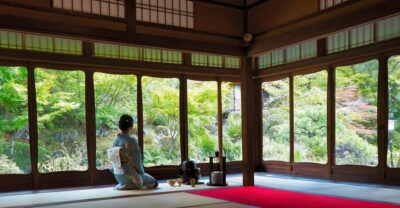
Tea Ceremony in a Traditional Tea House in Kiyomizu
Read our review →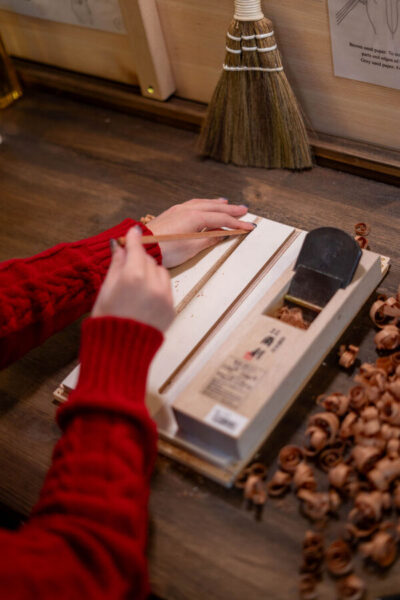
Gion Make Your Own Chopsticks with Engraving Option
Read our review →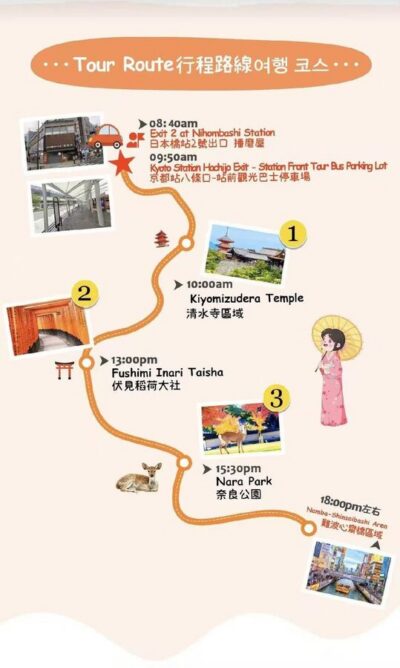
Kyoto Nara Day Trip │ Kiyomizu-dera Temple + Fushimi Inari-taisha Shrine + Nara Park (Departing from Osaka/Kyoto)
Read our review →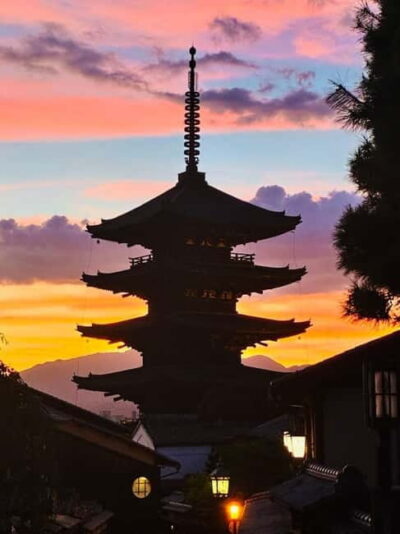
Kyoto Geisha Walking Tour: Gion District & Hidden Gems
Read our review →