Reviewed · KYOTO TOURS
Kyoto: Arashiyama Bamboo, Togetsukyo bridge, Sanso, and more
Bamboo, bridges, gardens, and tea. This compact Arashiyama walk brings together Kyoto’s most famous western sights in three hours, with an English-speaking guide to help you find the right lanes and understand what you are seeing. I especially like the small group size, limited to nine people, and the mix of major sights with quieter garden time at Okochi Sanso Villa.
The $26 price is appealing for a guided outing, especially if you want help organizing Arashiyama without giving up half a day. I also like that the route begins and ends at Randen Arashiyama Station, keeping the plan simple. The catch is that entrance fees for Tenryuji and Okochi Sanso are extra, and the route includes uneven uphill and downhill paths, so comfortable shoes are essential.
In This Review
- Key points to know before you go
- Starting at Randen Arashiyama Station
- Walking beneath the Sagano Bamboo
- Tenryuji Temple and its Zen garden
- Okochi Sanso Villa and a quieter garden walk
- Togetsukyo Bridge and mountain views
- Kimono Forest, where old Kyoto meets modern art
- What the guide adds to the experience
- Is $26 good value?
- Timing, clothing, and what to bring
- Who should book this Arashiyama walk?
- Should you book it?
- FAQ
- How long does the Arashiyama tour last?
- Where does the tour begin?
- Where does the tour end?
- Is the tour conducted in English?
- How large is the group?
- Are entrance fees included?
- Is hotel pickup provided?
- Can I have matcha tea during the tour?
- What should I bring?
- Is the tour suitable for people with mobility or health concerns?
Key points to know before you go
- The bamboo forest comes early: You start with Arashiyama’s best-known sight, when a guide can help you make sense of the surrounding lanes.
- Nine people is the maximum: A small group makes it easier to hear explanations and ask questions.
- Okochi Sanso adds calm: Its gardens provide a welcome change after the crowded bamboo paths.
- The bridge offers open views: Togetsukyo Bridge gives you a broad mountain-framed scene after the shaded forest.
- Costs are not all included: Tenryuji and Okochi Sanso entrance fees, food, drinks, and personal spending are separate.
- The route is not fully flat: Rocky sections and slopes can be tiring, particularly for anyone with limited mobility.
Starting at Randen Arashiyama Station
Your meeting point is Tully’s Coffee at Randen Arashiyama Station. Your guide waits there wearing a shirt with the local partner’s name, which should make the meeting fairly easy, but you still need to arrive at least 10 minutes early.
That early arrival matters. Guides wait a maximum of 10 minutes, so arriving at the stated time is risky. Arashiyama can be busy, and even a short delay finding the station or coffee shop could mean missing the walk.
The tour returns to the same coffee shop, a useful detail if you plan to continue exploring on your own. You can leave your afternoon open for more temples, riverside time, shopping, or a meal in the district without arranging a complicated final transfer.
This is a walking tour rather than a transportation tour. Hotel pickup and drop-off are not included, so you need to make your own way to Arashiyama. The practical benefit is a low-cost experience with a clear start and finish. The tradeoff is that you must handle the trip to the meeting point yourself.
A few more options to weigh up in Kyoto
- PERFECT KYOTO 1-Day Bus Tour
★ 5.0 · 13,518 reviews - [Kyoto & Nara Day Tour] Sagano Scenic Railway & Nara Park & Fushimi Inari Taisha Thousand Torii Gates & Togetsukyo Bridge & Bamboo Grove & Kimono Forest (Departing from Osaka)
★ 4.9 · 10,942 reviews - Kyoto: Fushimi Inari, Kinkakuji, Bamboo Grove 1 Day Bus Tour
★ 4.8 · 4,316 reviews
Walking beneath the Sagano Bamboo
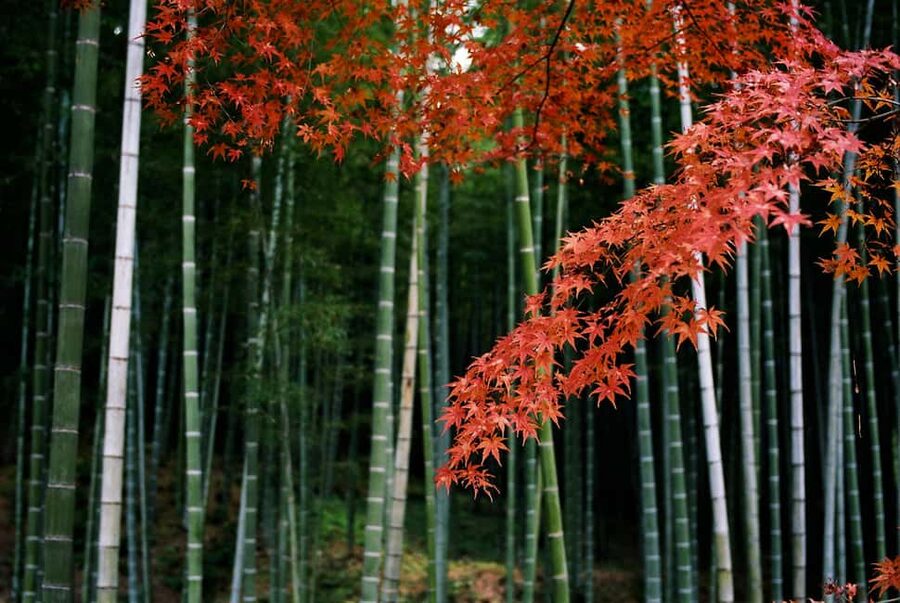
The Sagano Bamboo Forest is the headline sight, and rightly so. Tall bamboo rises on both sides of the path, creating a narrow green corridor that feels very different from Kyoto’s temple streets and city roads.
The famous section is not an isolated wilderness. It is a popular public route, and the experience depends greatly on timing, pace, and your guide’s knowledge of the surrounding lanes. The guide helps you move through the area without wasting time trying to guess which path leads next.
That local direction is more useful than it may sound. Arashiyama’s sights look close together on a map, yet the connections between them are not always obvious. One guide, Alex, was praised for choosing the right lanes and helping an older participant manage rocky uphill and downhill stretches. That gives you a good sense of the tour’s practical value: you are not simply following a straight line through the most crowded path.
Expect plenty of walking, uneven ground, and some slopes. The experience is not suitable for people with mobility impairments, heart problems, or respiratory issues. If you are generally comfortable walking but prefer a relaxed pace, tell the guide at the start.
The forest is also a place where a guide can add meaning without overloading you with facts. Guides including Yuko, Vincent, Gus, Micah, Mya, Boris, Ai, and Damien have been praised for explaining the temples, gardens, local culture, and language in a friendly way. Your assigned guide may differ, but the strongest part of this experience is clearly the human explanation alongside the scenery.
Tenryuji Temple and its Zen garden
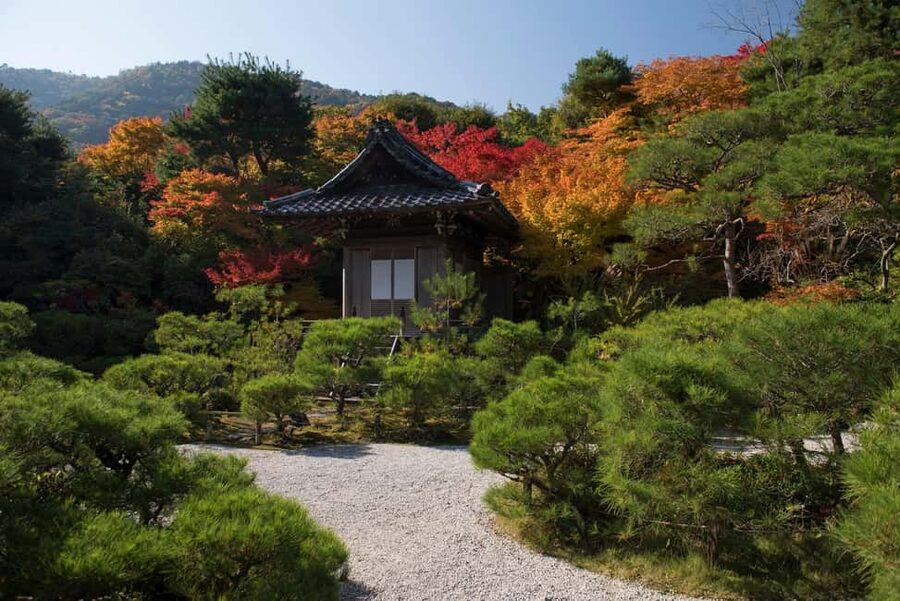
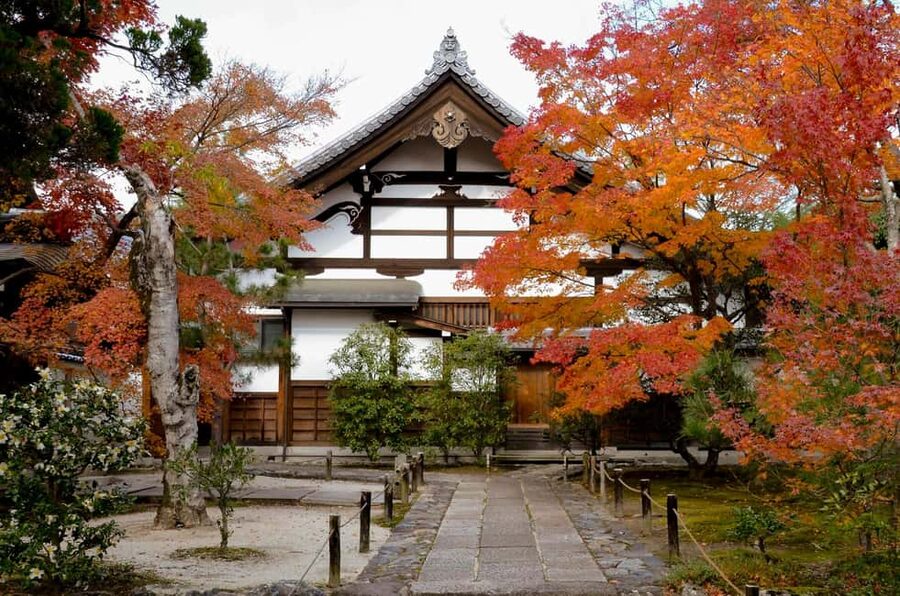
Tenryuji is a UNESCO-listed temple and one of Arashiyama’s essential cultural stops. The temple grounds are known for their Zen garden, which gives the route a slower, more reflective section after the sensory impact of the bamboo.
The garden is valuable because it shows how Japanese design uses space, water, plants, stones, and borrowed mountain views. You do not need to be a garden expert to appreciate the change in mood. The route moves from a narrow, vertical forest to an open and carefully arranged temple setting.
The entrance fee is not included, so keep cash available. The activity information specifically recommends bringing cash, and you should also plan for modest, respectful clothing on the temple grounds. Shorts or tank tops are discouraged, so dress in a way that works for both walking and religious sites.
Tenryuji is not just a quick photo stop. The guide can point out details that are easy to miss when you are moving from one famous attraction to another. Micah was praised for explaining both the temple buildings and the sights along the way, while Yuko helped make the gardens and the relationship between natural and designed spaces easier to understand.
Okochi Sanso Villa and a quieter garden walk
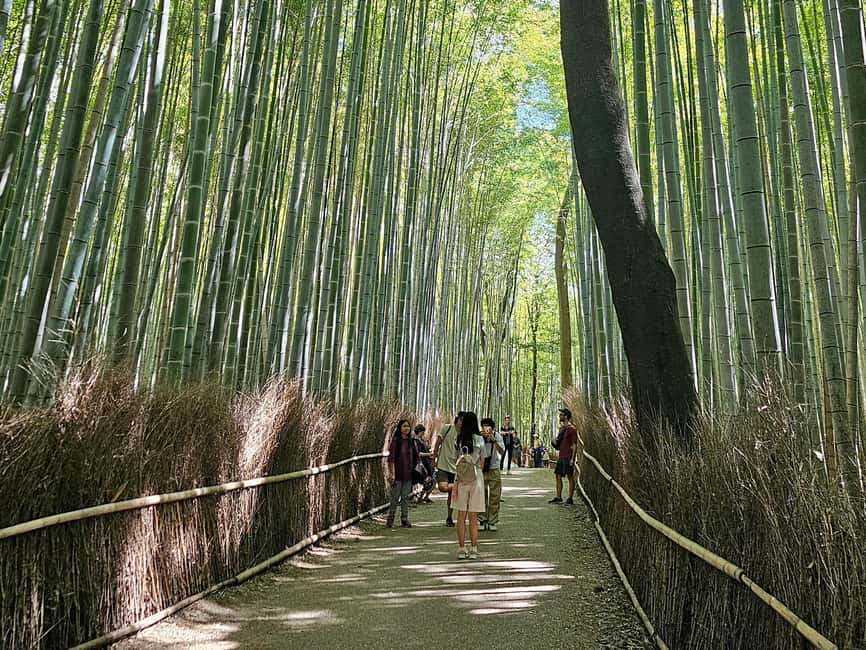
Okochi Sanso Villa is one of the most appealing parts of this route for anyone who wants a break from Arashiyama’s main paths. The villa is surrounded by serene gardens, and the visit shifts the focus from famous public scenery to a more private-feeling setting.
The garden walk includes uphill and downhill sections, so do not assume that a garden visit means flat pavement. One participant specifically described rocky slopes as a challenge, though the guide offered help. That is useful information for older walkers or anyone who needs steady footing.
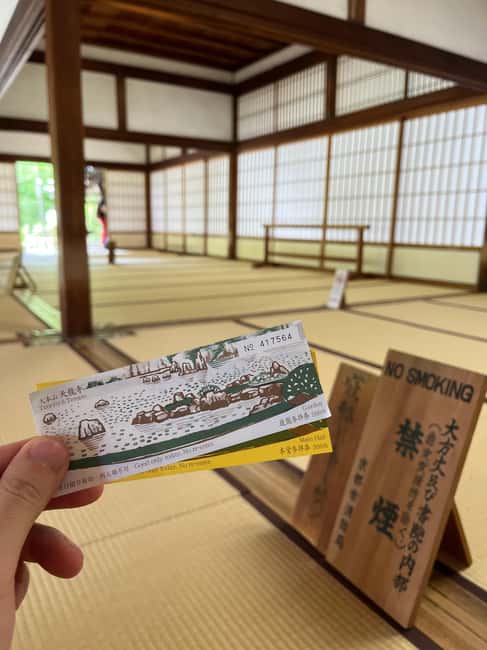
Entrance to Okochi Sanso is extra. You can also choose to buy traditional matcha tea and a sweet at the villa’s tea house, again at your own expense. This is optional, which keeps the basic tour affordable. If you enjoy sitting down with a warm drink after walking, it can be a pleasant addition. If not, you can simply continue with the garden visit.
I like this stop because it gives the three-hour route some breathing room. The bamboo forest is visually striking, but Okochi Sanso offers a more peaceful look at Kyoto’s garden tradition. It is the sort of place where you may appreciate the guide’s commentary, then want a few quiet moments to look around for yourself.
A completely different kind of day out:
- Kyoto: Tea Ceremony in a Traditional Tea House in Kiyomizu
★ 4.9 · 3,519 reviews - Kyoto: Gion Make Your Own Chopsticks with Engraving Option
★ 5.0 · 3,465 reviews - Kyoto Nara Day Trip │ Kiyomizu-dera Temple + Fushimi Inari-taisha Shrine + Nara Park (Departing from Osaka/Kyoto)
★ 4.7 · 3,408 reviews - Kyoto Geisha Walking Tour: Gion District & Hidden Gems
★ 4.7 · 3,273 reviews
Togetsukyo Bridge and mountain views
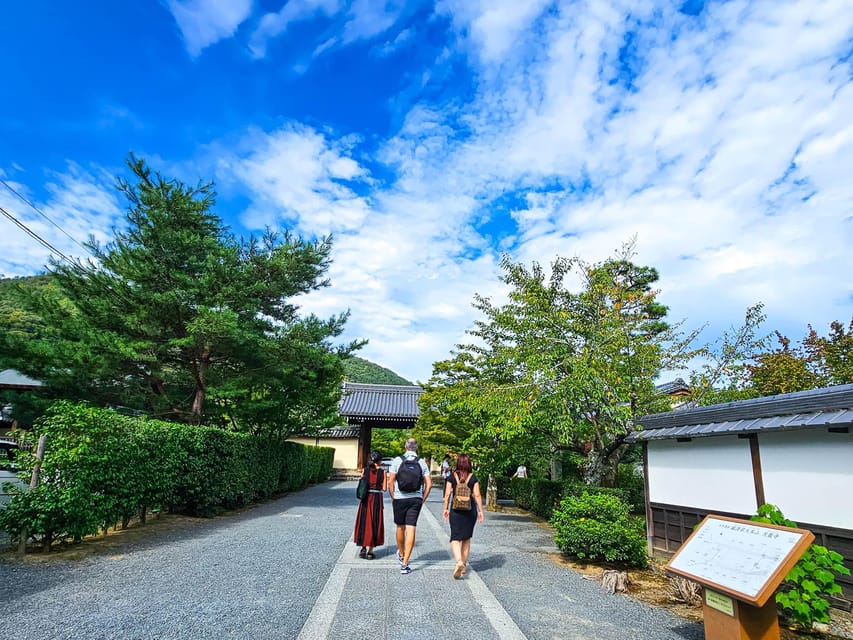
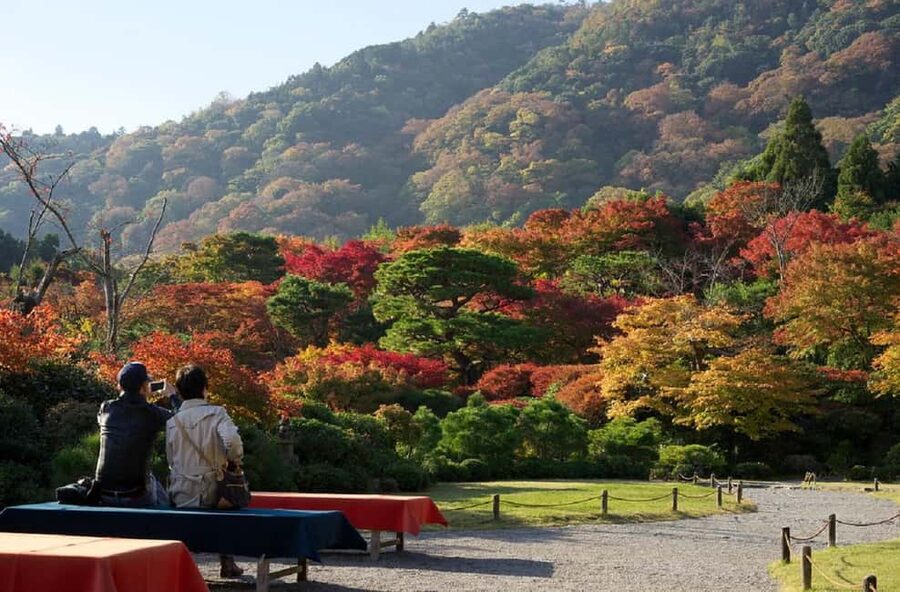
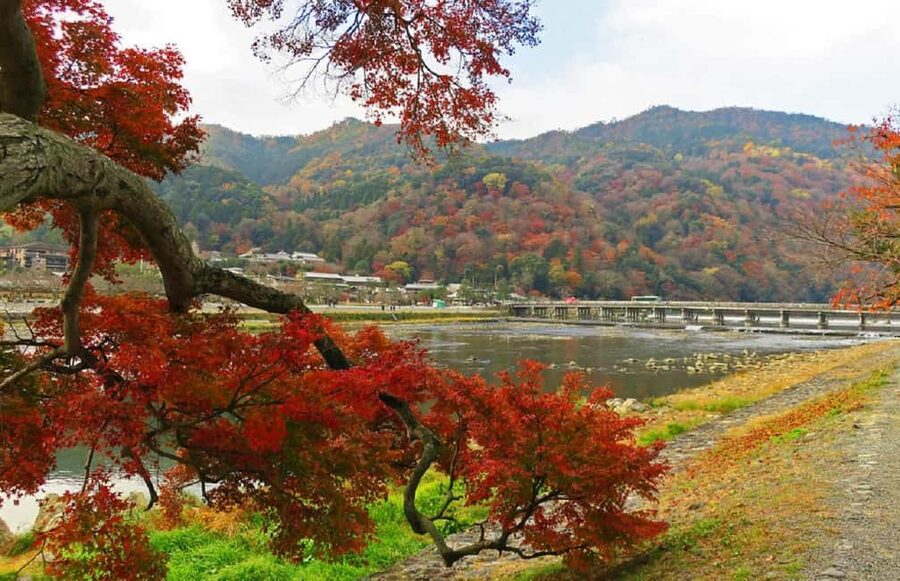
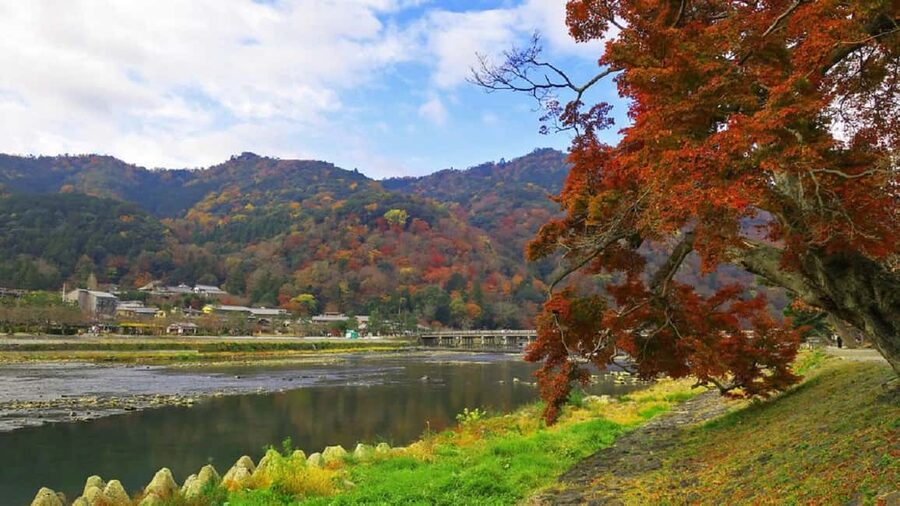
Togetsukyo Bridge brings a broad view after the enclosed bamboo paths. The bridge crosses the Katsura River and is framed by the mountains around Arashiyama, giving you one of the clearest photo opportunities on the walk.
The appeal here is the change in scale. In the forest, your view is close and vertical. At the bridge, the scene opens out toward the water and hills. It is an important visual pause, and your camera will get more use here than in the dimmer bamboo lanes.
The experience does not promise a long stop or a dedicated scenic picnic. Think of the bridge as one part of a moving walking route. Weather will affect the view, too. A cold, cloudy day can still make a fine outing, as Alex’s group discovered, but sunny conditions will naturally give the mountains more definition.
The bridge also helps you understand Arashiyama’s layout. Rather than treating each sight as a separate attraction, the tour links forest, temple, villa, river, and station into one walk through the district.
Kimono Forest, where old Kyoto meets modern art
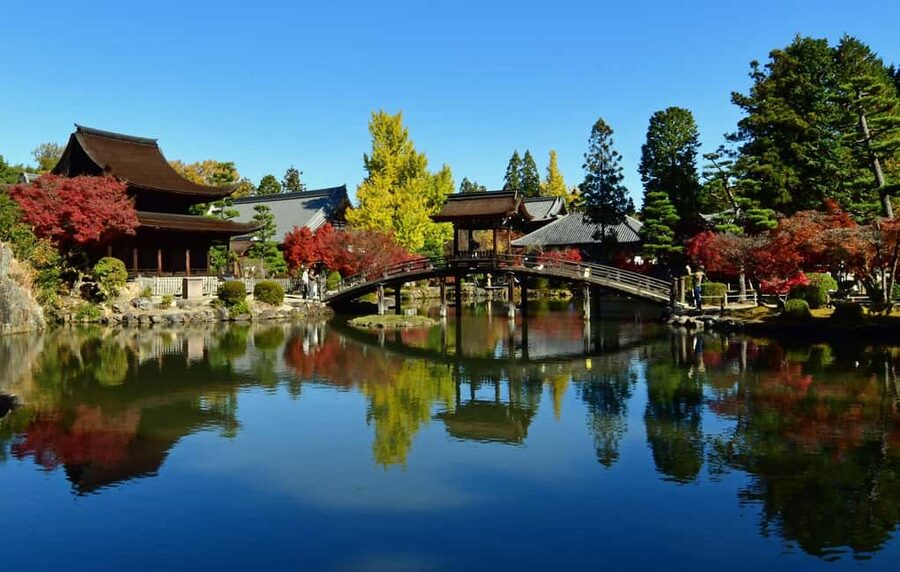
The final highlight is the Kimono Forest, a modern art installation at Randen Arashiyama Station. Its colorful pillars create a strong contrast with the bamboo, temple grounds, and traditional gardens you have just visited.
This is a smart ending because it brings you back to the starting station while offering one last photo stop. The installation is not an ancient monument, and that is precisely the point. Arashiyama is not only about preserved temples and old-style gardens. It also has contemporary public art woven into its transport hub.
The Kimono Forest is easy to fit into the route because you do not need a separate transfer. After the visit, you return to Tully’s Coffee, where the tour ends. You can then continue independently or use the station as your next departure point.
What the guide adds to the experience
The route is possible without a guide. You can find the bamboo forest, Togetsukyo Bridge, Tenryuji, Okochi Sanso, and the station on your own. The question is not access. It is how much time and attention you want to spend working out the order and meaning of the stops.
The guide adds three practical benefits:
- You get help with the confusing connections between nearby sights.
- You can ask questions about temples, gardens, culture, and local customs.
- You have someone to assist with photographs and the more awkward parts of the route.
Ai, for example, was praised for adjusting the schedule and taking photographs during a particularly small group outing. A guide may also adapt the pace or timing when the group is tiny, though the exact flexibility depends on the person leading your tour.
The small-group limit of nine is a real advantage. It is easier to hear in a garden or temple setting, and you are less likely to lose the guide in a crowded lane. Some departures may be much smaller. One outing effectively became a private tour because only one person attended, but you should treat that as a possibility rather than a promise.
The guides have received strong praise for being friendly, easy to understand, and willing to answer questions. Damien was noted for making the cultural and language explanations especially interesting, while Boris was described as relaxed and clear. The names vary, so book this for the route and format, not for a guarantee of one particular guide.
Is $26 good value?
At $26 per person, this is a low-cost way to organize a major Kyoto sightseeing walk. You receive three hours with an English-speaking guide and a small group, while the route covers several of Arashiyama’s best-known sights.
The price requires a little calculation. Tenryuji and Okochi Sanso entrance fees are not included, and neither are meals, drinks, tea, or personal expenses. You also pay for your own transportation to and from Arashiyama.
Even with those additions, the tour can be good value if you want structure and context. A self-guided visit may cost less, but you must research the route, navigate the lanes, and learn about the sites as you go. The tour is especially useful on a first visit or during a short Kyoto stay when you want a clear three-hour plan.
It is less suitable if you dislike group pacing or prefer to linger for a long time at one temple. The experience covers a lot in a short period, so it favors variety over extended contemplation.
Timing, clothing, and what to bring
The tour lasts three hours, but the exact starting time depends on availability. Check the available departures before booking and allow enough time to reach Randen Arashiyama Station.
Wear comfortable shoes with good support. You will walk on ordinary paths, but the route can include rocky sections and slopes. Sandals or stiff fashion shoes could make the garden portions unpleasant.
Bring a camera and cash. Cash is useful for the extra entrance fees and the optional matcha tea and sweet at Okochi Sanso. Meals and other drinks are not included, so plan those separately.
Dress modestly for Tenryuji. Avoid shorts or tank tops, particularly if you want to enter the temple grounds without worrying about whether your clothing is appropriate.
Free cancellation is available up to 24 hours before the activity for a full refund, and you can reserve now and pay later. Those terms are useful if your Kyoto schedule is still shifting, but you still need to arrive on time once you have booked.
Who should book this Arashiyama walk?
I would recommend it to a first-time Kyoto visitor who wants to see Arashiyama’s main sights without spending a full day planning the route. It also suits solo visitors and couples who value a guide for photographs, local context, and navigation.
The tour works well for people who enjoy walking and want a balanced mix of nature, architecture, gardens, river views, and modern art. The small group format should appeal to you if you want interaction without joining a large coach excursion.
I would think twice if you have limited mobility, breathing problems, or a heart condition. The rocky uphill and downhill sections are important, not a minor footnote. I would also skip it if your priority is a slow, unhurried visit to one temple or garden.
Should you book it?
Book this tour if you want a well-organized three-hour introduction to Arashiyama and appreciate having a guide explain what you are seeing. The route packs in the bamboo forest, Togetsukyo Bridge, Tenryuji, Okochi Sanso, and Kimono Forest without requiring you to solve the district’s confusing connections alone.
Before booking, budget for the two entrance fees and optional tea, wear proper walking shoes, and check that you can manage slopes and uneven ground. At $26, the tour offers particularly good value for a short Kyoto schedule, provided you want variety and guidance more than free time at each stop.
FAQ
How long does the Arashiyama tour last?
The tour lasts three hours.
Where does the tour begin?
It begins at Tully’s Coffee at Randen Arashiyama Station.
Where does the tour end?
The tour returns to Tully’s Coffee at Randen Arashiyama Station.
Is the tour conducted in English?
Yes. The tour includes an English-speaking live guide.
How large is the group?
The small group is limited to nine participants.
Are entrance fees included?
No. Entrance fees for Okochi Sanso and Tenryuji are not included.
Is hotel pickup provided?
No. Hotel pickup and drop-off are not included.
Can I have matcha tea during the tour?
You can optionally buy traditional matcha tea and a sweet at Okochi Sanso’s tea house. This costs extra.
What should I bring?
Bring comfortable shoes, a camera, and cash.
Is the tour suitable for people with mobility or health concerns?
The tour is not suitable for people with mobility impairments, heart problems, or respiratory issues. The route includes walking on rocky uphill and downhill paths.
Just added in Kyoto
- The “Golden Route” and Ancient Japan by DIAMIR Erlebnisreisen – 14-Day Tour★ 2.0 · 2 reviews
- Japan: Castles & Cuisine by G Adventures – 6-Day Kyoto to Osaka Tour★ 4.5 · 4 reviews
- Cycle Japan by Explore! – 13-Day Kyoto to Tokyo Tour★ 4.7 · 12 reviews
- Cycle Japan by Intrepid Travel – 11-Day Kyoto to Tokyo Tour★ 4.8 · 2 reviews
- Classic Japan by Intrepid Travel – 11-Day Kyoto to Tokyo Tour★ 4.4 · 14 reviews
- Ancient & Modern Japan 14-Day Tour by Exodus Adventure Travels★ 4.4 · 40 reviews
- 5 Day Cultural Adventure of Kyoto, Nara & Osaka by Tourist Journey★ 2.5 · 2 reviews
- 12 Days Kinosaki Onsen Escape: A Journey Through Japan’s Timeless Towns by UME Travel★ 4.8 · 5 reviews
Kyoto Tours, compared.
![[Kyoto & Nara Day Tour] Sagano Scenic Railway & Nara Park & Fushimi Inari Taisha Thousand Torii Gates & Togetsukyo Bridge & Bamboo Grove & Kimono Forest (Departing from Osaka)](https://media.japanvisits.com/wp-content/uploads/kyoto-nara-day-tour-sagano-scenic-railway-nara-park-fushimi-inari-taisha-thousand-torii-gates-togetsukyo-bridge-bamboo-grove-kimono-forest-departing-from-osaka-k110001-400x257.jpg)
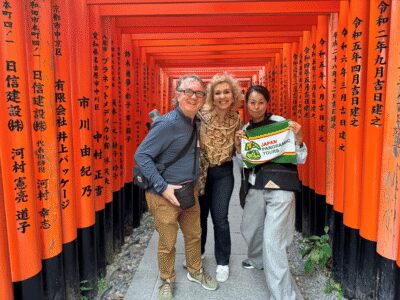
Fushimi Inari, Kinkakuji, Bamboo Grove 1 Day Bus Tour
Read our review →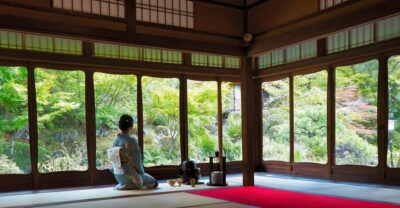
Tea Ceremony in a Traditional Tea House in Kiyomizu
Read our review →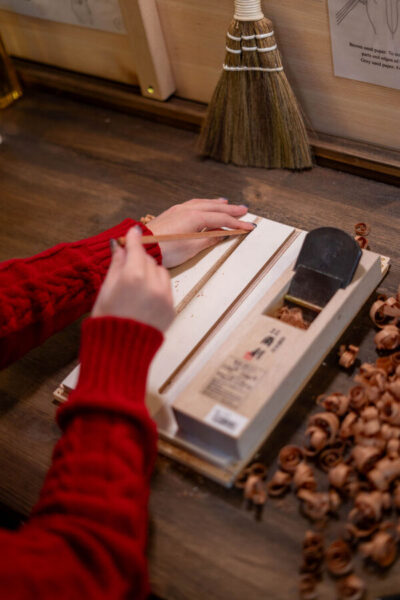
Gion Make Your Own Chopsticks with Engraving Option
Read our review →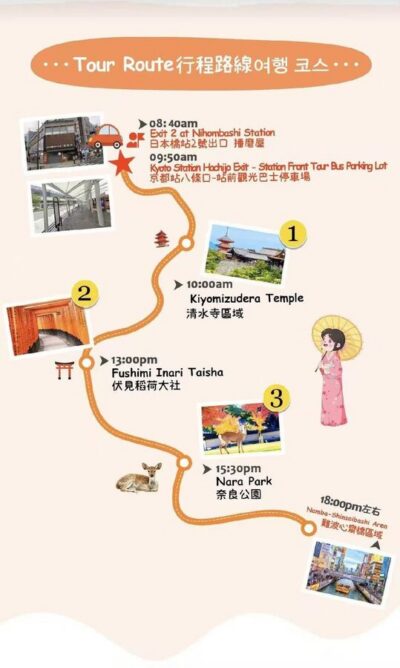
Kyoto Nara Day Trip │ Kiyomizu-dera Temple + Fushimi Inari-taisha Shrine + Nara Park (Departing from Osaka/Kyoto)
Read our review →
Kyoto Geisha Walking Tour: Gion District & Hidden Gems
Read our review →