Reviewed · KYOTO TOURS
Kyoto: Arashiyama Customized Rickshaw Tour & Bamboo Forest
The forest feels different from a seat. This private Arashiyama rickshaw tour gives you a smooth, close-up look at the bamboo grove, quiet lanes, shrines, gardens, and temples without asking you to fight through every crowd on foot. I especially like the exclusive rickshaw route through the bamboo and the guides’ habit of stopping for photos, so you can enjoy the scenery without turning every moment into a camera mission.
I also like the flexible tour lengths, from a quick 45-minute introduction to a 190-minute outing with more temples and side streets. Guides such as Koki, Aki, Shin, Yoshi, and Lucas have been praised for their English, humor, local tips, and care. The main consideration is price and space: at $51 per person, this is not the cheapest way to see Arashiyama, and two adults may find the 74-centimeter-wide seat snug.
In This Review
- Key points before you book
- Starting at Togetsu-kyo Bridge
- The bamboo forest without the full footpath struggle
- Nonomiya Shrine and Arashiyama’s quieter side
- Rakushisya cottage and the longer routes
- Why the guide matters so much
- Weather, seating, and comfort
- Choosing the right length
- Is $51 per person good value?
- A private tour that still needs realistic expectations
- Should you book this Arashiyama rickshaw tour?
- FAQ
- Where does the Arashiyama rickshaw tour begin?
- How long does the tour last?
- Is the rickshaw tour private?
- What languages are available?
- Can the route be customized?
- How many adults fit in one rickshaw?
- Can young children ride?
- Is the tour suitable for wheelchair and stroller users?
- Are snacks, drinks, or hotel pickup included?
Key points before you book
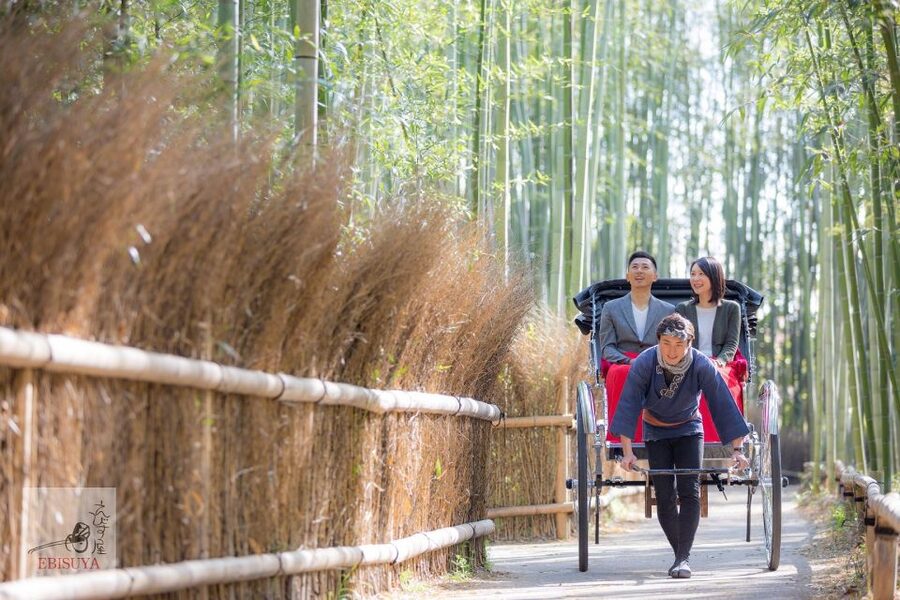
- A quieter bamboo-forest route: Rickshaws can use their own path through parts of the grove, away from the thickest foot traffic.
- Four tour lengths: Choose 45 minutes, 70 minutes, 130 minutes, or 190 minutes.
- Private attention: You ride in a private group, with the route adjusted to your interests.
- Excellent photo help: Guides stop at scenic points and take pictures for you.
- More than bamboo: Longer rides can include Nonomiya Shrine, Rakushisya cottage, Nison-in, other temples, shrines, and neighborhood lanes.
- Comfort in poor weather: Blankets and leg covers have helped riders stay warm and fairly dry in cold rain and snow.
Starting at Togetsu-kyo Bridge
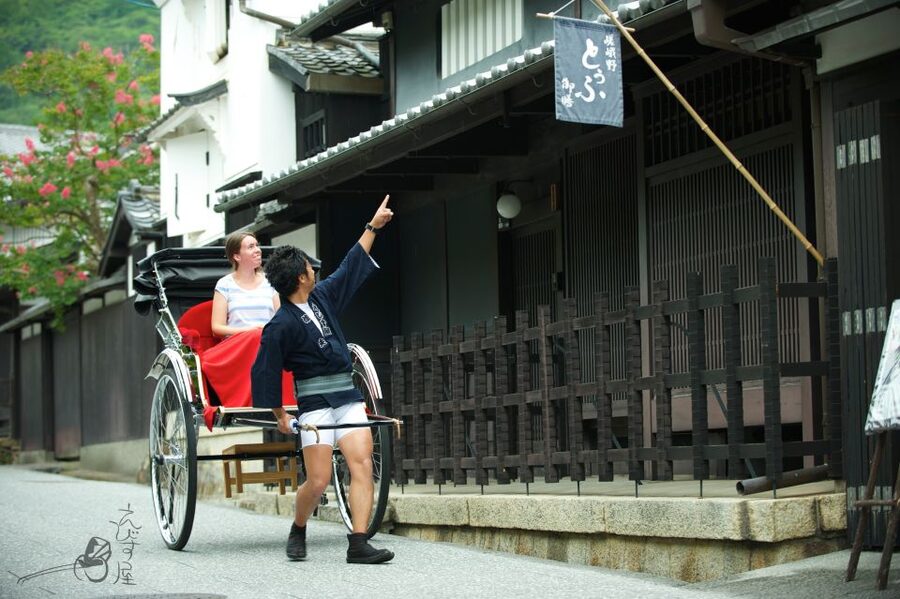
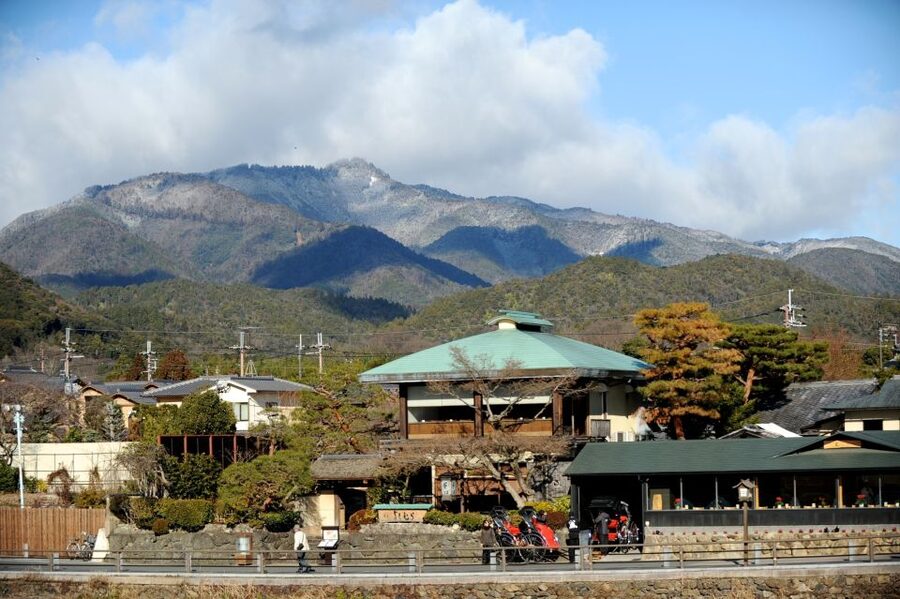
Your meeting point is near Togetsu-kyo Bridge, one of Arashiyama’s best-known sights. The bridge marks a scenic gateway into the district, and it is a useful place to begin because you are close to the river, the bamboo grove, temples, shops, and residential lanes.
The exact meeting point can vary with the option you book, so check your confirmation carefully. Do not assume every tour begins at the same spot beside the bridge.
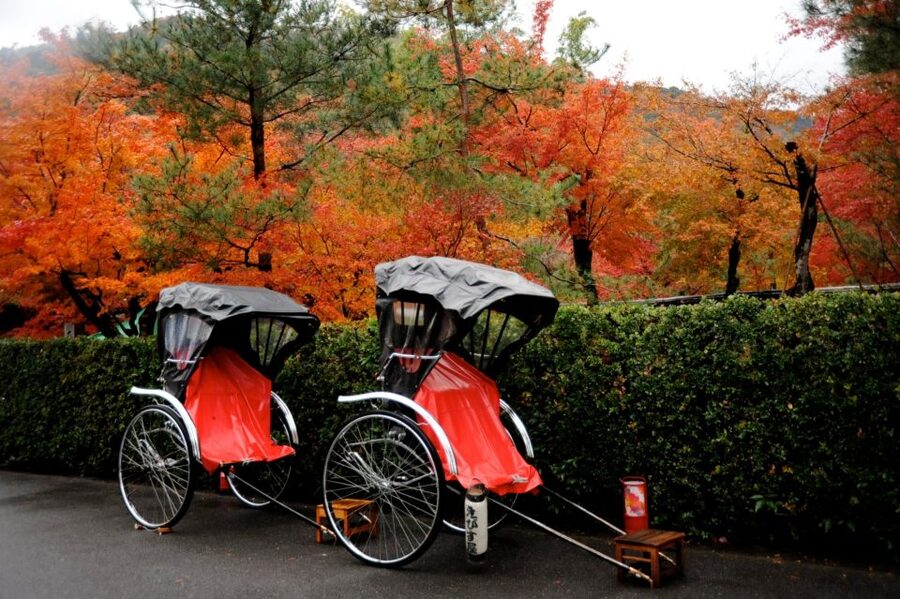
Your guide introduces you to the rickshaw, then pulls you through the district at a pace that lets you look around. This is a very different experience from a bus ride. You sit low, close to the street, while your guide points out details and answers questions as you move.
The ride itself is part of the appeal. You do not need to plan every turn or stare at a map. You can watch Arashiyama change from riverfront scenery to bamboo, gardens, shrines, and older residential streets.
A few more options to weigh up in Kyoto
- PERFECT KYOTO 1-Day Bus Tour
★ 5.0 · 13,518 reviews - [Kyoto & Nara Day Tour] Sagano Scenic Railway & Nara Park & Fushimi Inari Taisha Thousand Torii Gates & Togetsukyo Bridge & Bamboo Grove & Kimono Forest (Departing from Osaka)
★ 4.9 · 10,942 reviews - Kyoto: Fushimi Inari, Kinkakuji, Bamboo Grove 1 Day Bus Tour
★ 4.8 · 4,316 reviews
The bamboo forest without the full footpath struggle
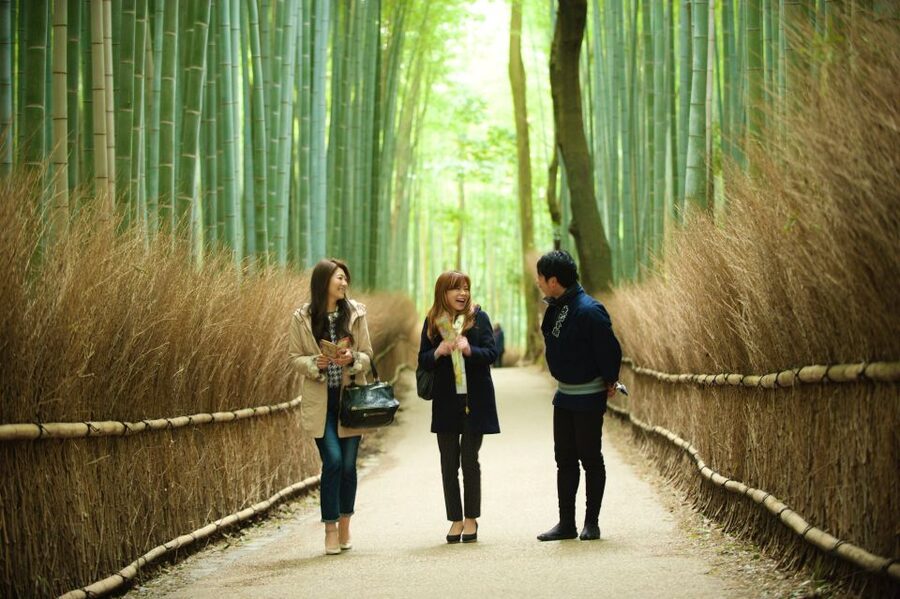
The bamboo grove is Arashiyama’s headline attraction, and it is easy to understand why. Tall stalks rise on both sides of the path, creating a narrow green corridor that feels calm even when the surrounding district is busy.
The ordinary pedestrian route can become crowded. A rickshaw gives you access to a separate route through the grove, which is one of the strongest reasons to book this experience. The path is not a magic guarantee of solitude, but it can feel much calmer than walking in the main stream of people.
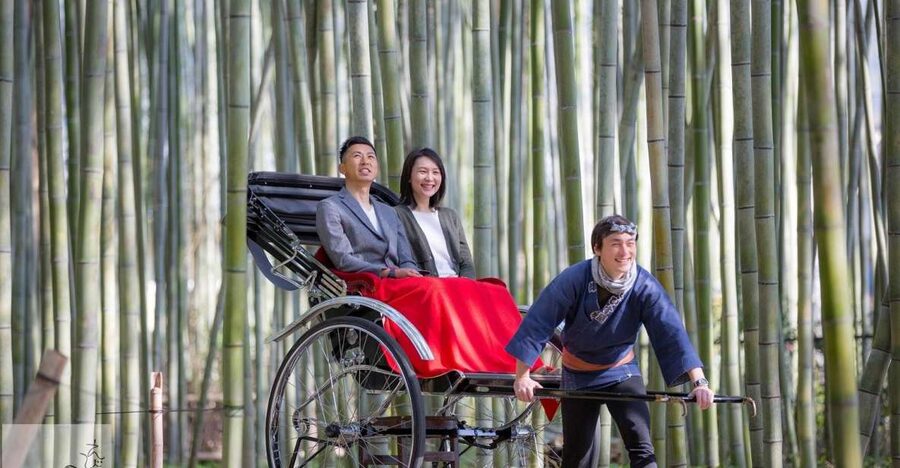
That difference matters. You can look upward at the bamboo, listen to the movement of the stalks, and take in the changing light instead of concentrating on avoiding other people. Your guide can also stop at good photo points, often producing better pictures than hurried self-timer shots.
Several guides have been praised for taking excellent photos. Koki, Aki, Shin, Yoshi, Toru, and Lucas are among the names associated with especially strong photo skills. You should still tell your guide what kind of pictures you want, including group shots, portraits, or quieter scenic images.
Selfie sticks are not allowed. That is a small but important packing note, particularly if you planned to rely on one for family photos.
Nonomiya Shrine and Arashiyama’s quieter side
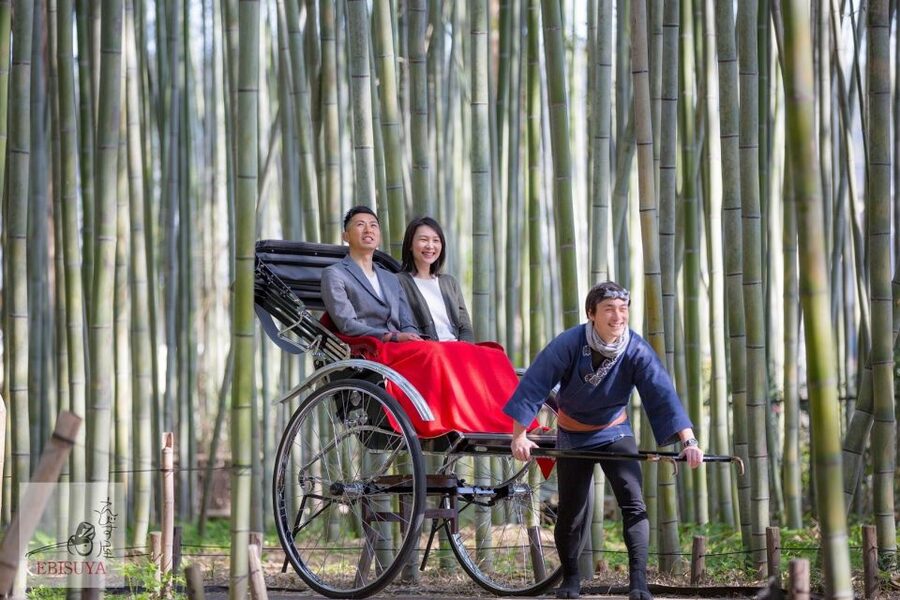
The route commonly continues to Nonomiya Shrine, a Shinto site with a more intimate feel than some of Kyoto’s larger religious complexes. Its connection with the bamboo grove makes it a natural stop, and your guide can explain the meaning of the shrine and the customs connected with it.
On the shortest 45-minute tour, this is generally the point at which you return toward the starting area. That option is best if bamboo is your main goal, your Kyoto schedule is tight, or you want a pleasant introduction rather than a full district tour.
I would not choose 45 minutes if you want several temple stops. The ride can show you the grove and nearby sights, but it leaves little time for a broad look at Arashiyama.
The rickshaw also lets you see local streets that are easy to miss when you follow the main sightseeing route. These lanes offer a less polished view of the area, with ordinary homes and quieter corners alongside temples and gardens. That mix gives the ride more character than a simple trip from one famous photo spot to another.
Rakushisya cottage and the longer routes
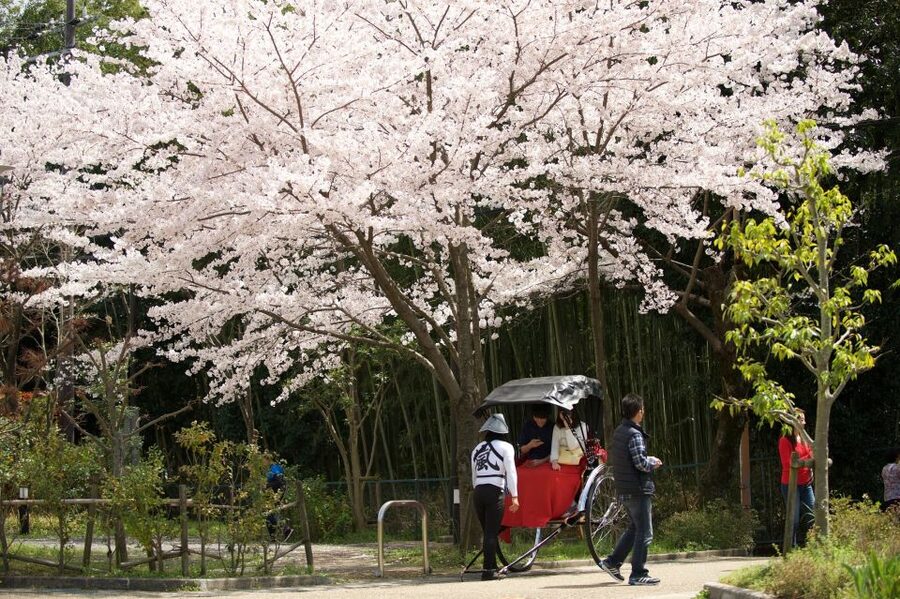
The longer options add more depth. Rakushisya is a rustic thatched cottage connected with one of Japan’s respected poets and haiku masters. Its modest appearance contrasts with the grander temple buildings nearby, and it gives the tour a literary link as well as a cultural one.
The 70-minute tour is a useful middle choice if you want more than the bamboo grove but do not want to spend half a day on one activity. It should suit couples and families who want extra neighborhood scenery and explanation while leaving time for another Arashiyama visit.
The 130-minute tour gives you a more complete outing. One guide named Shin was praised for taking riders through bamboo, temples, historic areas, and less crowded routes while explaining the meaning of the places along the way. This length makes sense if Arashiyama is a major part of your Kyoto day.
The full 190-minute tour is the best choice for a slower visit. It can include additional temples and shrines, Buddhist Nison-in, gardens, and paths that many people do not find on their own. Guides may also use less obvious entrances or routes, giving you access to spots that feel removed from the main sightseeing flow.
The tradeoff is time. Three hours and ten minutes is a serious commitment, especially if you also want to visit major sites independently. I would book the longest route only if you want the rickshaw ride to be one of the central activities of your day.
A completely different kind of day out:
- Kyoto: Tea Ceremony in a Traditional Tea House in Kiyomizu
★ 4.9 · 3,519 reviews - Kyoto: Gion Make Your Own Chopsticks with Engraving Option
★ 5.0 · 3,465 reviews - Kyoto Nara Day Trip │ Kiyomizu-dera Temple + Fushimi Inari-taisha Shrine + Nara Park (Departing from Osaka/Kyoto)
★ 4.7 · 3,408 reviews - Kyoto Geisha Walking Tour: Gion District & Hidden Gems
★ 4.7 · 3,273 reviews
Why the guide matters so much
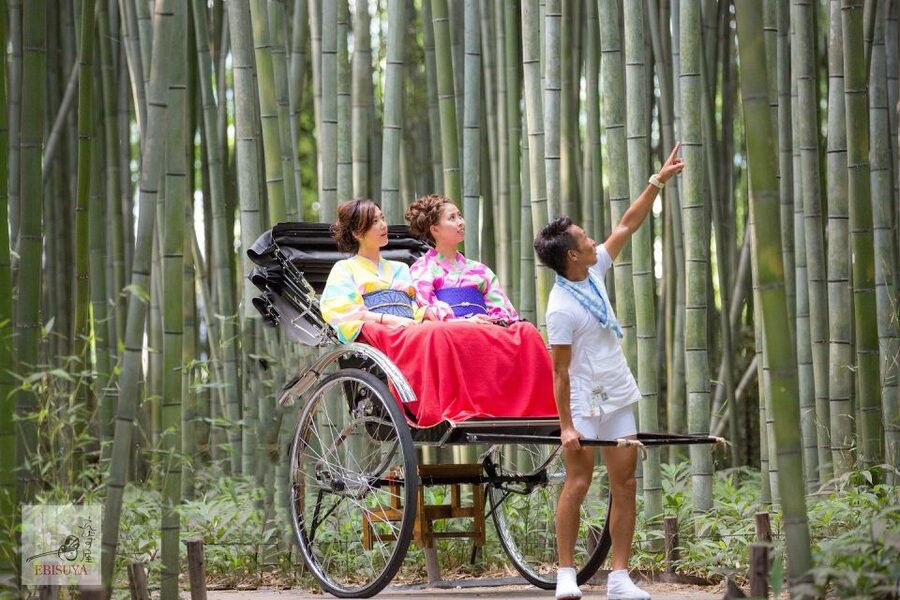
This tour works because the guide is doing several jobs at once. The driver is pulling the rickshaw, watching the road, explaining local culture, helping you choose stops, and often taking photos.
That calls for real physical effort. Some guides have continued cheerful conversation while pulling two adults uphill, in heat, rain, or snow. You may feel a little guilty watching the work, but the guides’ care and energy are repeatedly part of the experience.
The better guides do not simply recite facts. They ask what interests you, explain the places you pass, and adjust the outing to your pace. Yoshi has been praised for his English and recommendations around the Sago area. Kawai has helped riders with food and matcha suggestions. Aki has been singled out for engaging conversation and beautiful photos.
Names and guide assignments can change, so you cannot book a particular person unless the operator confirms it. Still, the repeated pattern is useful: expect a personal, conversational experience rather than a recorded commentary.
English and Japanese are available. If you want specific cultural questions answered, bring them up early. The route can be customized according to your interests, and your guide will have a better chance of shaping the ride if you explain what matters to you at the start.
Weather, seating, and comfort
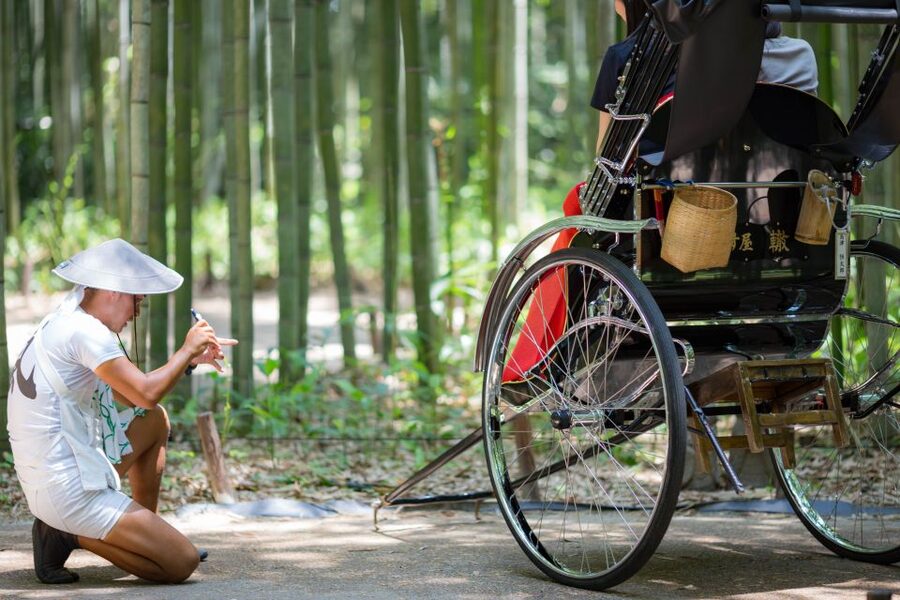
A rickshaw is open to the surroundings, so weather affects the ride. Yet the setup includes blankets, and guides have used rainproof covers over passengers’ legs. Riders have stayed comfortable during cold rain, snow, and heavy downpours.
That does not make the experience fully weatherproof. Wear sensible shoes and clothing for the season, and expect the possibility of damp or changing conditions. In summer heat, the physical work done by the guides can be impressive, but you should still consider your own comfort in warm weather.
Each rickshaw holds up to two adults. The seat is 74 centimeters wide, so two people can fit, but some pairs may prefer separate rickshaws for more personal space. That is worth considering if you are tall, broad-shouldered, carrying layers, or simply want a more relaxed seat.
Up to two children aged five or younger can ride with two adults, but they must sit on an adult’s lap. A five-year-old who uses one of the two seats must be booked as an adult and pay the full fare. Adult pricing applies from age six.
The activity is wheelchair and stroller-friendly. It is not suitable for people with back problems, and it is not recommended for pregnant women, especially during the first 16 weeks. The supplied guidance also says pregnant women should not take the tour, so ask the provider directly if your circumstances are unclear.
Choosing the right length
Here is how I would match each option to your day:
- 45 minutes: Best for a first look at the bamboo grove, Nonomiya Shrine, and nearby scenery. Choose this if you have limited time or want to avoid the busiest walking route.
- 70 minutes: A balanced option for bamboo, side streets, photos, and extra local context.
- 130 minutes: Best for first-time visitors who want temples, historic areas, and a fuller look at Arashiyama.
- 190 minutes: Best for people who want a leisurely private tour with more temples, shrines, gardens, and quieter areas.
A short tour does not mean a poor tour. Several people have enjoyed the 45-minute route, especially in rain or when crowds were heavy. It is simply more focused.
If you are already planning to spend a full day in Arashiyama, the 130-minute option may give you the best balance. You can see important areas with a guide, then walk on your own afterward. The full 190-minute route makes more sense if you want the guide to handle most of your sightseeing in the district.
Is $51 per person good value?
At $51 per person, this is a premium sightseeing activity rather than basic transportation. You are paying for a private ride, a local guide, route planning, cultural explanation, photo stops, and access to a rickshaw path that can help you avoid some foot traffic.
For two people, the cost buys a more personal experience than a large group tour. It also saves physical effort in a district where the most famous sights can require a fair amount of walking. The photo service adds practical value, particularly if you are traveling as a couple and usually struggle to get good pictures of both people together.
The value is weaker if you only want a ride and do not care about explanations or photos. You can walk around Arashiyama independently for less money, and walking gives you more freedom to stop wherever you like.
For a special occasion, a family outing, or a first visit to Kyoto, I think the price can be justified. It is also a strong choice for anyone who wants to see the bamboo grove but dislikes crowded pedestrian routes.
A private tour that still needs realistic expectations
Private does not mean the whole district belongs to you. Arashiyama remains a major Kyoto attraction, and the main areas can be busy. The separate rickshaw path helps, but you will still share parts of the route with other people.
The ride also does not replace visits to every temple. Some stops are viewed from the rickshaw or used as brief photo and explanation points. If you want extended time inside temple buildings or gardens, plan independent visits before or after the ride.
That is why customization matters. Tell the guide if you care most about bamboo, temples, gardens, local streets, photography, or history. A good guide can shape the balance, but you should not expect a full guided tour of every site in Arashiyama during the shorter options.
Should you book this Arashiyama rickshaw tour?
I would book it if you want an easy, personal way to experience the bamboo forest and nearby sights. It is especially good for couples, families, photographers, older visitors, and anyone who wants local explanation without joining a large group.
Choose 45 minutes for a focused bamboo visit, 70 minutes for a little more breathing room, 130 minutes for the best all-around introduction, and 190 minutes if Arashiyama deserves a large part of your day.
Skip it if your budget is tight, you prefer exploring entirely on foot, or you have back problems or pregnancy-related concerns. For everyone else, the combination of quieter bamboo access, strong photo help, flexible routing, and friendly guides makes this one of the more memorable ways to see Kyoto’s western edge.
FAQ
Where does the Arashiyama rickshaw tour begin?
The guide and rickshaw generally meet you near Togetsu-kyo Bridge in Arashiyama. The exact meeting point may vary by the option booked, so check the booking details.
How long does the tour last?
You can choose from four durations: 45 minutes, 1 hour and 10 minutes, 2 hours and 10 minutes, or 3 hours and 10 minutes.
Is the rickshaw tour private?
Yes. The experience is offered as a private group tour.
What languages are available?
The tour is available with a live guide speaking English or Japanese.
Can the route be customized?
Yes. The tour can be adjusted according to your interests, including bamboo, temples, shrines, gardens, and local neighborhood streets.
How many adults fit in one rickshaw?
A maximum of two adults can ride in one rickshaw. The seat is 74 centimeters wide, so separate rickshaws may be more comfortable for some passengers.
Can young children ride?
Up to two children aged five and under can ride with two adults, but the children must sit on an adult’s lap. A five-year-old using one of the two seats must be booked as an adult at the full fare.
Is the tour suitable for wheelchair and stroller users?
Yes. The activity is listed as wheelchair and stroller-friendly.
Are snacks, drinks, or hotel pickup included?
No. Snacks, drinks, and hotel pickup are not included.
Just added in Kyoto
- The “Golden Route” and Ancient Japan by DIAMIR Erlebnisreisen – 14-Day Tour★ 2.0 · 2 reviews
- Japan: Castles & Cuisine by G Adventures – 6-Day Kyoto to Osaka Tour★ 4.5 · 4 reviews
- Cycle Japan by Explore! – 13-Day Kyoto to Tokyo Tour★ 4.7 · 12 reviews
- Cycle Japan by Intrepid Travel – 11-Day Kyoto to Tokyo Tour★ 4.8 · 2 reviews
- Classic Japan by Intrepid Travel – 11-Day Kyoto to Tokyo Tour★ 4.4 · 14 reviews
- Ancient & Modern Japan 14-Day Tour by Exodus Adventure Travels★ 4.4 · 40 reviews
- 5 Day Cultural Adventure of Kyoto, Nara & Osaka by Tourist Journey★ 2.5 · 2 reviews
- 12 Days Kinosaki Onsen Escape: A Journey Through Japan’s Timeless Towns by UME Travel★ 4.8 · 5 reviews
Kyoto Tours, compared.
![[Kyoto & Nara Day Tour] Sagano Scenic Railway & Nara Park & Fushimi Inari Taisha Thousand Torii Gates & Togetsukyo Bridge & Bamboo Grove & Kimono Forest (Departing from Osaka)](https://media.japanvisits.com/wp-content/uploads/kyoto-nara-day-tour-sagano-scenic-railway-nara-park-fushimi-inari-taisha-thousand-torii-gates-togetsukyo-bridge-bamboo-grove-kimono-forest-departing-from-osaka-k110001-400x257.jpg)
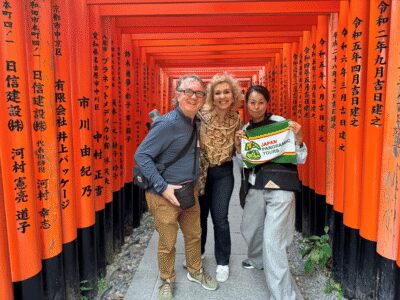
Fushimi Inari, Kinkakuji, Bamboo Grove 1 Day Bus Tour
Read our review →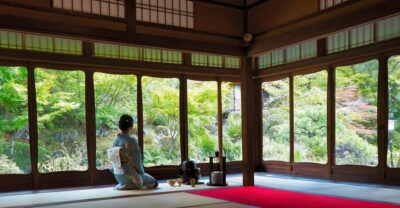
Tea Ceremony in a Traditional Tea House in Kiyomizu
Read our review →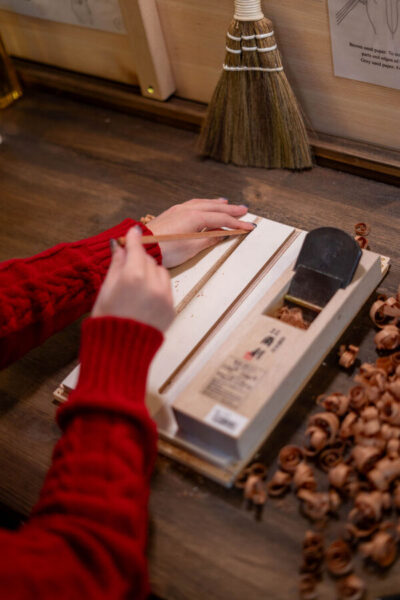
Gion Make Your Own Chopsticks with Engraving Option
Read our review →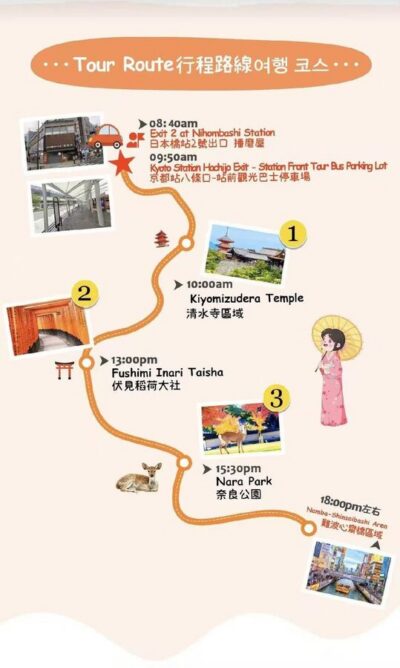
Kyoto Nara Day Trip │ Kiyomizu-dera Temple + Fushimi Inari-taisha Shrine + Nara Park (Departing from Osaka/Kyoto)
Read our review →
Kyoto Geisha Walking Tour: Gion District & Hidden Gems
Read our review →