
Reviewed · PRIVATE TOURS IN KYOTO
Kyoto Arashiyama & Sagano Bamboo Private Tour with Government-Licensed Guide
Bamboo is only the beginning. This six-hour private walking tour pairs Arashiyama’s famous groves with temples, gardens, river views, and quieter corners of western Kyoto. I like the freedom to shape the day around three or four sights, and I like having a government-licensed English-speaking guide to explain the customs, stories, and details you would likely miss alone.
The private format is especially useful for families or anyone who wants to ask plenty of questions. Guides such as Ken, Tomo, Satoko, Shoji, and Kazuo have been praised for adjusting the pace and finding calmer routes. The main drawback is cost: at $157.82 per person, you still pay entrance fees, transport, and lunch separately, and Arashiyama can be very crowded in peak seasons.
In This Review
- Key points before you book
- What this Arashiyama tour really offers
- Togetsukyo Bridge and the first look at Arashiyama
- Walking through the famous bamboo grove
- Tenryu-ji, Okochi Sanso, and garden time
- Jojakko-ji, Nisonin, and Gio-ji
- Adashino and Otagi Nenbutsu-ji
- Daikaku-ji and the quieter Sagano side
- Imperial villas, mountain temples, and remote choices
- The guide can make or break the day
- Price, timing, and the real value
- Who should book this Kyoto day?
- Should you book it?
- FAQ
- How long does the tour last?
- Is the tour private?
- How many sights can I visit?
- Is hotel pickup included?
- Is transportation included?
- Are entrance fees included?
- Is lunch included?
- Is the tour suitable for most people?
- What happens if the weather is poor?
Key points before you book
- The bamboo grove is part of a larger six-hour day, not the whole experience.
- You choose three or four sites, so the long list of places is a menu, not a promise to visit them all.
- Private guiding makes the tour flexible, with direct answers and a pace suited to your group.
- Transport is not included, and the tour is conducted on foot with fares paid for both you and your guide.
- The quieter temples of Sagano can offer a calmer experience than the central bamboo path.
- Spring, autumn, rain, and summer heat all change the day, with crowds, slippery paths, or humidity affecting comfort.
What this Arashiyama tour really offers
Arashiyama is one of Kyoto’s best-known sightseeing districts, and it has been drawing visitors since the Heian Period, from 794 to 1185. The setting explains its long appeal: wooded hills, the Katsura River, traditional temples, gardens, and a central bridge that looks especially fine against the mountains.
This is not a tour where you simply follow a guide from one famous photo stop to another. The useful part is the planning conversation before the day begins. You can say that you want temples, gardens, family-friendly sights, fewer crowds, or a certain amount of walking. Your guide can then suggest a workable combination.
That flexibility matters because the advertised stops cover a huge part of Kyoto. Shugakuin Imperial Villa, Katsura Imperial Villa, Kurama, Yoshimine-dera, and Kibune are not sensible additions to a tightly focused Arashiyama walk. Treat the full selection as possible choices, not a fixed route.
The experience begins with a meeting in Kyoto. Pickup and drop-off are on foot, and no private vehicle is provided. You and your guide are responsible for transport costs if trains, buses, or other local services are needed.
More Private Tours in Kyoto
- Kyoto 6hr Private Tour with Government-Licensed Guide
★ 5.0 · 1,369 reviews - 10 Must-see Spots in Kyoto One Day Private Tour (up to 7 people)
★ 5.0 · 1,108 reviews - Kyoto 4hr Private Tour with Government-Licensed Guide
★ 5.0 · 629 reviews
Togetsukyo Bridge and the first look at Arashiyama
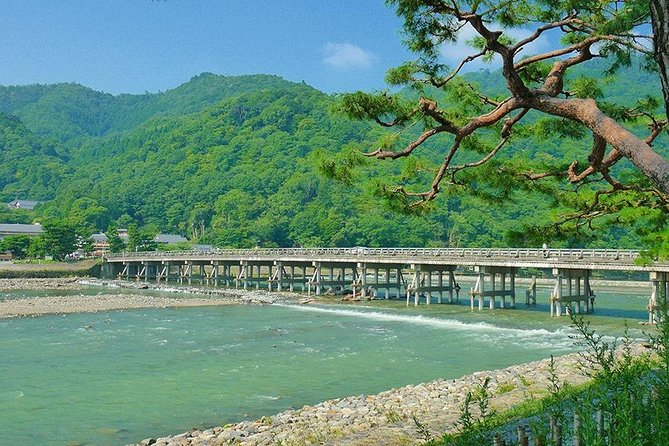
Togetsukyo Bridge is the natural starting point. Its name means Moon Crossing Bridge, and the current structure dates from the 1930s, though a bridge has occupied this area since the Heian Period.
You can take in the forested hills, the river, and the riverside park near the bridge. Cherry trees make this area particularly attractive in spring, but the same beauty brings heavy crowds during blossom season and autumn color season.
Your guide can help you understand how the bridge fits into Arashiyama rather than treating it as a quick photo stop. Nearby are small shops, restaurants, boat rentals, and access to Tenryu-ji and the bamboo grove.
The bridge itself is free. That is useful to know when estimating your day’s cost, since temple admissions can add up quickly.
Walking through the famous bamboo grove
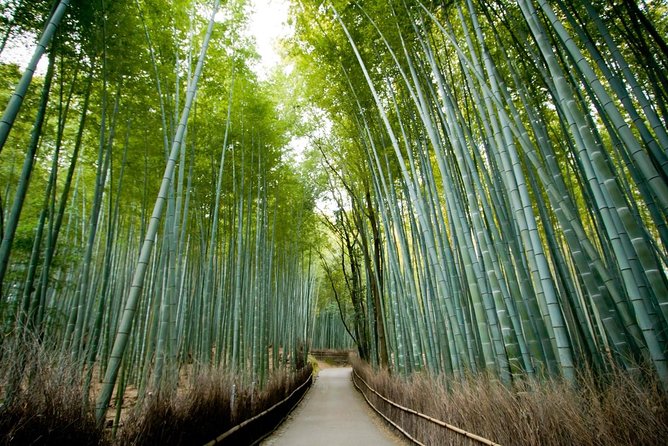
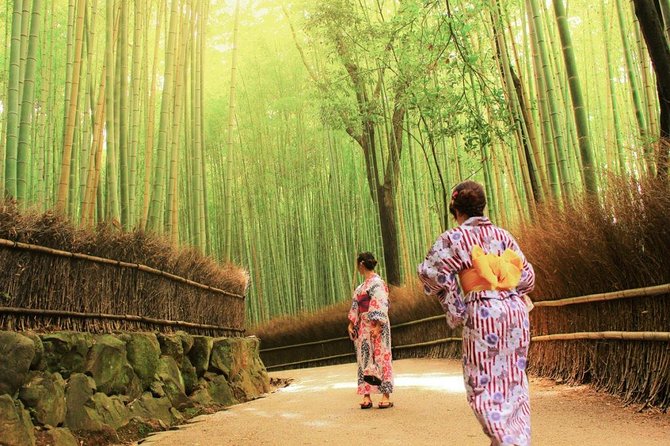
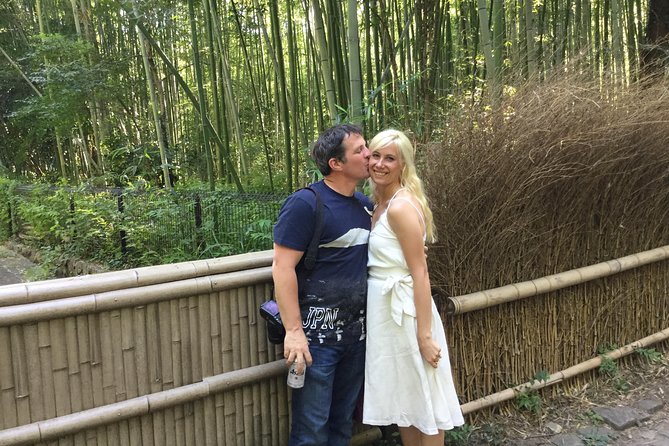
The Bamboo Forest Street is the image most people associate with Arashiyama. Tall stalks rise on both sides of the path, and a light breeze can make the bamboo sway and creak overhead.
The walk is lovely, but it is not a long attraction by itself. One past booking found that the grove could be seen in about an hour, with the rest of the value depending on which temples and side streets were added. That is a fair warning. If you only want the bamboo, paying for a six-hour private guide may not make financial sense.
The guide earns the fee by giving the grove context. Bamboo has been used in local workshops for baskets, cups, boxes, mats, and other household goods for centuries. You can also ask about etiquette, photography, and how to move through the busy path without blocking it.
For a quieter walk, ask to continue toward the less crowded Sagano temple area. The bamboo path is popular, but the surrounding lanes can feel much more peaceful.
Tenryu-ji, Okochi Sanso, and garden time
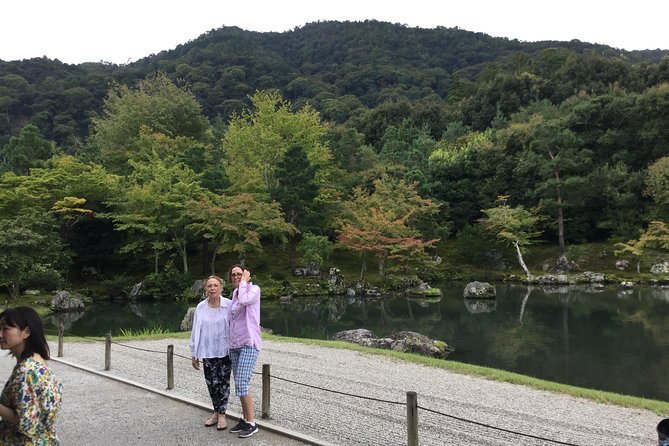
Tenryu-ji is the largest and most impressive temple in Arashiyama. Founded in 1339, it belongs to Kyoto’s five great Zen temples and is part of Kyoto’s UNESCO World Heritage collection.
The appeal is not limited to the buildings. Tenryu-ji has gardens with walking paths, and the grounds provide a useful pause after the crowded bamboo route. Entrance is not included, so ask your guide which admission costs apply before finalizing your choices.
Okochi Sanso Garden sits at the rear of the bamboo area. It was the former villa of actor Okochi Denjiro, who lived from 1896 to 1962. The grounds include several gardens, tea houses, gates, and living quarters, although the buildings can be viewed only from outside.
This is a good choice if you prefer careful garden design and quiet viewpoints to another large temple. It is also another paid stop, so it may be better to choose either Okochi Sanso or several smaller temples rather than trying to buy every admission in one morning.
A completely different kind of day out:
- PERFECT KYOTO 1-Day Bus Tour
★ 5.0 · 13,518 reviews - [Kyoto & Nara Day Tour] Sagano Scenic Railway & Nara Park & Fushimi Inari Taisha Thousand Torii Gates & Togetsukyo Bridge & Bamboo Grove & Kimono Forest (Departing from Osaka)
★ 4.9 · 10,942 reviews - Kyoto: Fushimi Inari, Kinkakuji, Bamboo Grove 1 Day Bus Tour
★ 4.8 · 4,316 reviews - Kyoto: Tea Ceremony in a Traditional Tea House in Kiyomizu
★ 4.9 · 3,519 reviews
Jojakko-ji, Nisonin, and Gio-ji
The smaller hillside temples north of the main bamboo grove give the day its best chance of feeling personal and unhurried.
Jojakko-ji was founded in 1596. Its paths and stairs pass through maple trees and moss, with views across Kyoto from several points. The buildings are modest, and that is part of the charm. You get a quieter setting than at Tenryu-ji, but you also need to handle uphill and downhill walking.
Nisonin dates from the ninth century and belongs to the Tendai sect. Its buildings are somewhat larger than those at Jojakko-ji, while trees shade the approach. The upper grounds offer city views.
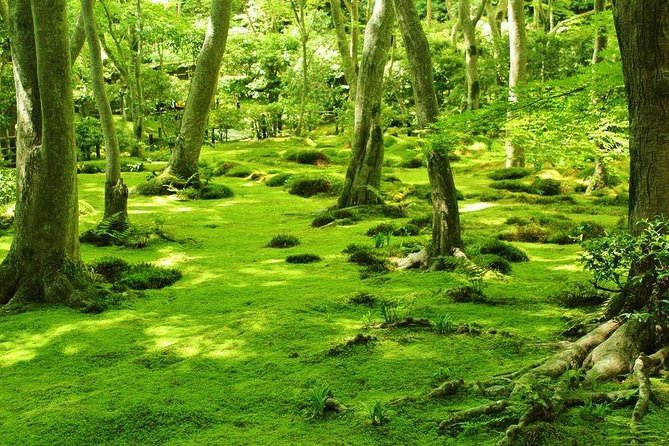
Gio-ji is smaller still and particularly known for its moss garden, tall maples, thatched gate, and small main hall. Its round window looking into the garden is one of the most memorable details in this part of Sagano.
I would choose Gio-ji for a group interested in gardens and atmosphere. I would choose Jojakko-ji if views matter most. Visiting all three can make a pleasant half-day, but the hills and stairs require steady footwear, especially in wet weather.
Adashino and Otagi Nenbutsu-ji
Adashino Nenbutsu-ji lies at the end of the Saga-Toriimoto Preserved Street. The temple was founded in the early ninth century after Kobo Daishi placed stone figures here for the souls of the dead. Today, hundreds of stone statues cover the grounds.
A short path behind the temple leads through another bamboo area. This can be a good alternative if you want a quieter bamboo walk than the central Arashiyama route.
About ten minutes farther north is Otagi Nenbutsu-ji, known for roughly 1,200 stone rakan figures. Each has a different face and expression. The statues were created in the 1980s and early 1990s, so this is not an ancient installation, but it has a warm and unusual character.
These two temples pair well together. They also show why a guide can help: their names are similar, their location is farther from the main bridge, and they are easy to skip if you only follow the most famous Kyoto route.
Daikaku-ji and the quieter Sagano side
Daikaku-ji began as the detached palace of Emperor Saga in the early 800s. It became a temple in 876 and has long been linked with the imperial family.
The temple played a role in major political events, including peace talks that reunited the Northern and Southern Imperial Courts after decades of civil war. Along with its temple buildings, you can see a large pond and pagoda.
Daikaku-ji suits you if you want architecture, imperial connections, and a less frantic setting. It is farther from the central bridge than Tenryu-ji, so including it may mean leaving out one or two smaller hillside temples.
The stop is listed twice in the possible schedule, just as Katsura Imperial Villa appears twice. That repetition does not mean you should expect two separate visits. It is best understood as a scheduling or supplier error, and you should confirm your final route before the tour.
Imperial villas, mountain temples, and remote choices
Shugakuin Imperial Villa was built between 1655 and 1659 for Emperor Gomizuno. It includes Upper, Middle, and Lower Villa areas, with traditional buildings and gardens. The surrounding farmland is still leased to local farmers.
Katsura Imperial Villa is one of Japan’s finest examples of garden and architectural design. Its present form was completed in 1645 for the Katsura family, members of the imperial household. Visits require joining an official tour, the garden follows a circular route around a pond, buildings are viewed from outside, and photographs are allowed only from marked spots. English tours are available.
These villas are valuable choices for a repeat visitor or anyone especially interested in imperial design. They are not quick casual stops, and the required tour arrangements make them harder to fit into an informal walking day. Admission is also extra.
Kurama-dera, Yoshimine-dera, and Kibune River belong in a different kind of Kyoto day. Kurama is a rural mountain town less than an hour from central Kyoto, known for Kurama-dera and Kurama Onsen. Yoshimine-dera spreads up a mountainside west of Kyoto and looks across the city. Kibune is a forested northern valley built around Kifune Shrine, where water reveals the message on certain paper fortunes.
These places can be rewarding, but they are not natural add-ons to a compact Arashiyama route. If you want one of them, tell the agency before booking and ask how the six-hour schedule and transport costs will work.
The guide can make or break the day
The strongest part of this experience is the private guide, not simply access to the bamboo. Kazuo has been praised for planning in advance, suggesting choices, answering questions, adjusting the pace, and helping a guest with previous injuries. Kazz has also been described as personable and flexible, with useful food suggestions.
Ken has provided a one-page sheet on Kyoto history and worked with families who wanted to add the monkey park. Tomo has been praised for avoiding crowds when possible, while Shoji combined the temple walk with a local lunch suggestion. Satoko was especially engaging with children.
These examples show what you should ask for. Tell the guide your walking limits, food interests, preferred temple style, and must-see sights. If you need a slow pace, say so early. This is a walking tour over six hours, and even a gentle route can become tiring in summer heat or on sloping temple paths.
The experience has received a 4.8 rating from 49 ratings, with 98 percent recommending it. That is a strong result, but it does not remove the need to communicate clearly. One booking had an ill-prepared guide who struggled with questions, so I would send a short list of interests in advance and confirm the guide’s plan.
Price, timing, and the real value
The price is $157.82 per person, with group discounts available. For two people, that is $315.64 before entrance fees, food, and local transport for you and your guide.
That is expensive for a bamboo walk. It can be fair value for a private six-hour day that saves research time, adapts to your group, and adds historical and cultural explanation. The more people in your party, the more attractive the private format may become if the group discount is substantial.
Lunch is not included. Entrance fees are not included. Transport is not included. There is no private vehicle. Build those costs into your budget before booking, especially if you want an imperial villa or several major temples.
You can cancel for a full refund up to 24 hours before the start time. Changes made within 24 hours are not accepted, and poor weather can lead to a new date or a full refund. The tour requires good weather, which matters for the outdoor walking route and slippery hills.
Who should book this Kyoto day?
I would recommend it to first-time Kyoto visitors who want Arashiyama but do not want to spend an evening planning temple routes. It also suits families, couples with specific interests, and anyone who values conversation over a fixed group schedule.
It is a particularly good fit if you want to combine the bamboo grove with Gio-ji, Otagi Nenbutsu-ji, Tenryu-ji, or another carefully chosen temple. The guide can help you avoid spending the whole day in the most crowded lane.
I would skip it if your only goal is a quick bamboo photograph. You can see the central grove without paying for a private six-hour experience. I would also think twice if you dislike walking, cannot manage hills and stairs, or want a private car and all admissions included.
Should you book it?
Book this tour if you want Arashiyama explained, not merely photographed. Choose three or four sights before the day begins, ask about entrance fees and transport, and request a pace that suits your group.
The best version of the tour is not a race through every place listed. It is a thoughtful route that combines the bamboo grove with one major temple and two quieter Sagano sights. With the right guide, you get better context, fewer wrong turns, and a more relaxed day in one of Kyoto’s busiest districts.
FAQ
How long does the tour last?
The tour lasts approximately six hours.
Is the tour private?
Yes. Only your group participates in the activity.
How many sights can I visit?
The tour includes a customizable walking tour of three or four sites from the available selection.
Is hotel pickup included?
Pickup is offered, but pickup and drop-off for this tour are conducted on foot. No private vehicle is provided.
Is transportation included?
No. Transportation fees for you and your guide are paid separately.
Are entrance fees included?
No. Entrance fees are paid separately. Guide entry fees are covered only for sights specifically listed among the included choices.
Is lunch included?
No. Lunch is not included, so you pay for your own meal.
Is the tour suitable for most people?
Most people can participate, and service animals are allowed. The experience is a walking tour, with some possible hills, stairs, and slippery paths in wet weather.
What happens if the weather is poor?
The experience requires good weather. If it is canceled because of poor weather, you can choose a different date or receive a full refund. You can also cancel up to 24 hours before the start time for a full refund.
Just added in Kyoto
- The “Golden Route” and Ancient Japan by DIAMIR Erlebnisreisen – 14-Day Tour★ 2.0 · 2 reviews
- Japan: Castles & Cuisine by G Adventures – 6-Day Kyoto to Osaka Tour★ 4.5 · 4 reviews
- Cycle Japan by Explore! – 13-Day Kyoto to Tokyo Tour★ 4.7 · 12 reviews
- Cycle Japan by Intrepid Travel – 11-Day Kyoto to Tokyo Tour★ 4.8 · 2 reviews
- Classic Japan by Intrepid Travel – 11-Day Kyoto to Tokyo Tour★ 4.4 · 14 reviews
- Ancient & Modern Japan 14-Day Tour by Exodus Adventure Travels★ 4.4 · 40 reviews
- 5 Day Cultural Adventure of Kyoto, Nara & Osaka by Tourist Journey★ 2.5 · 2 reviews
- 12 Days Kinosaki Onsen Escape: A Journey Through Japan’s Timeless Towns by UME Travel★ 4.8 · 5 reviews
Private Tours in Kyoto, compared.
Kyoto 6hr Private Tour with Government-Licensed Guide
Read our review →
10 Must-see Spots in Kyoto One Day Private Tour (up to 7 people)
Read our review →
Kyoto 4hr Private Tour with Government-Licensed Guide
Read our review →
Private Kyoto Tour with Licensed Guide & Vehicle (Max 15 persons)
Read our review →
Kyoto Customized Private Tour: See Top Attractions in 1 Day
Read our review →
Explore Kyoto | Private Tour – Local English Driver(guide option)
Read our review →
Highlights & Hidden Gems With Locals: Best of Kyoto Private Tour
Read our review →Browse the lists this tour appears in