Reviewed · KYOTO TOURS
Kyoto: Avoid the Crowds at the Hidden Gems of Arashiyama
Arashiyama rewards a slower walk. I love that this four-hour tour pairs the famous Togetsu Bridge and bamboo forest with quieter temples, and I like the chance to see 8,000 stone images at Adashino Nenbutsuji. The main drawback is the walking: the route covers a moderate distance and includes places that are not suitable for wheelchair users or people with mobility impairments.
You meet your guide at Saga Arashiyama Station, then follow a route through riverside views, forest paths, old houses, small shops, and two unusual Buddhist temples. Guides such as Megumi, Yoshi, Kana, Juraj, and Juliette have earned especially warm praise for their humor, patience, language skills, and ability to explain Japanese culture in clear, friendly English.
In This Review
- What makes this Arashiyama walk special
- Starting beside the Katsura River at Togetsu Bridge
- The bamboo forest, with realistic expectations
- Otagi Nenbutsuji and its 1,200 stone personalities
- Adashino Nenbutsuji, a quieter and more solemn stop
- Saga Toriimoto and old Kyoto streets
- Seiryoji Temple and the walk back
- How the guides shape the experience
- Is $83 a fair price?
- Walking demands and who should book
- Should you book this Arashiyama tour?
- FAQ
- Where does the tour meet?
- Where does the tour finish?
- How long does the experience last?
- How much does the tour cost?
- What languages are available?
- Are private tours available?
- Are temple admissions included?
- Is food included?
- What should I bring?
- Is the tour suitable for wheelchair users?
What makes this Arashiyama walk special
- The bamboo forest is only one small part of the experience: You see the famous grove, then move into quieter Okusaga.
- Otagi Nenbutsuji has 1,200 playful stone figures: Each statue has a different face and personality.
- Adashino Nenbutsuji offers a more solemn atmosphere: Its grounds contain about 8,000 stone images and pagodas.
- Saga Toriimoto keeps old Kyoto in view: Traditional Japanese houses line the preserved street, with local shops along the way.
- Your guide adds cultural meaning: The tour covers Buddhist temples, local customs, food, language, and the history of Arashiyama.
- The price includes both temple admissions: At $83 per person, the main value comes from the small-group guide service and the route beyond the usual stops.
Starting beside the Katsura River at Togetsu Bridge
The tour begins in front of the ticket gate at Saga Arashiyama Station. Look for a guide holding a yellow DeepExperience sign. This meeting point is useful because the station is easy to identify, and you finish back there after the walk.
From the station, the first stop is Togetsu Bridge, Arashiyama’s best-known landmark. You only spend about five minutes here, so think of it as a first look rather than a long photo session. The bridge crosses the Katsura River, and the surrounding hills give you the classic Arashiyama view.
I like starting here because it gives you a quick sense of the district before the route turns toward quieter roads. If you want a picture with the bridge, be ready when you arrive. The short stop keeps the tour moving.
You then walk through Arashiyama toward the observatory in Arashiyama Park. The scenic section takes about ten minutes, but the value is not measured by the clock. Your guide can point out the connection between the river, wooded hills, temples, and old pilgrimage routes as you go.
A few more options to weigh up in Kyoto
- PERFECT KYOTO 1-Day Bus Tour
★ 5.0 · 13,518 reviews - [Kyoto & Nara Day Tour] Sagano Scenic Railway & Nara Park & Fushimi Inari Taisha Thousand Torii Gates & Togetsukyo Bridge & Bamboo Grove & Kimono Forest (Departing from Osaka)
★ 4.9 · 10,942 reviews - Kyoto: Fushimi Inari, Kinkakuji, Bamboo Grove 1 Day Bus Tour
★ 4.8 · 4,316 reviews
The bamboo forest, with realistic expectations
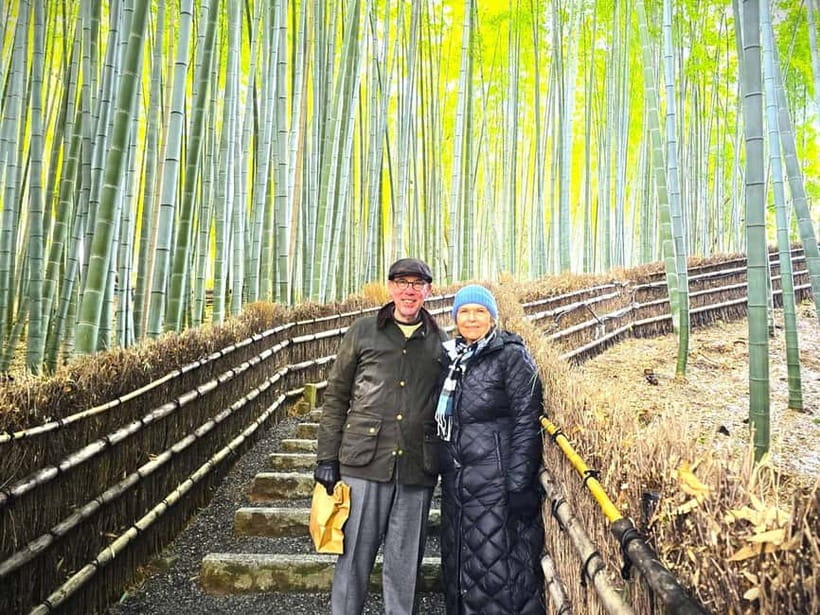
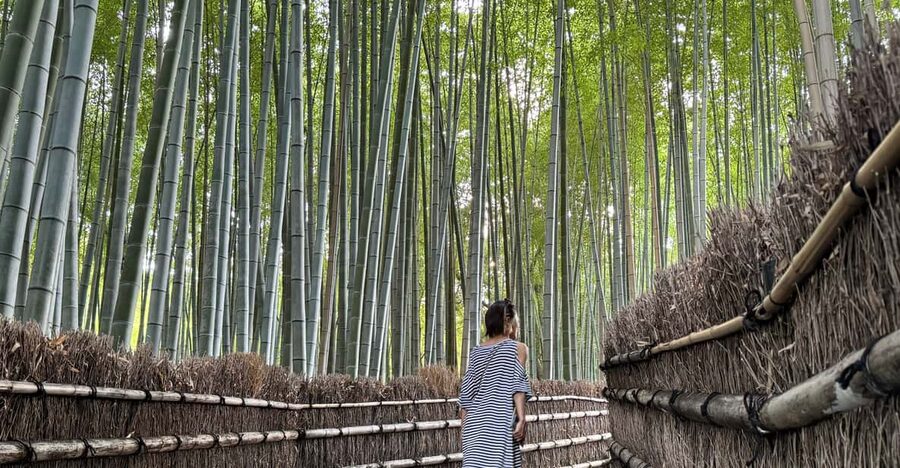
The bamboo forest is the stop most people picture when they hear Arashiyama. Here, you have about five minutes for a photo stop in front of the bamboo. It is a chance to take the familiar picture, but it is not a long forest walk.
That distinction matters. The bamboo grove is one of Kyoto’s busiest sights, and this tour does not promise an empty path. The tour’s quieter character comes later, after you leave the central Arashiyama sights. I would treat the bamboo stop as a brief classic moment, not the heart of the afternoon.
The short visit also helps the group avoid spending the entire tour in one crowded corridor. You get the photo, hear some context from your guide, and continue to places where there is more room to look around.
Bring a camera and water. Comfortable shoes are important from the start, since the route continues through temple grounds and preserved streets.
Otagi Nenbutsuji and its 1,200 stone personalities
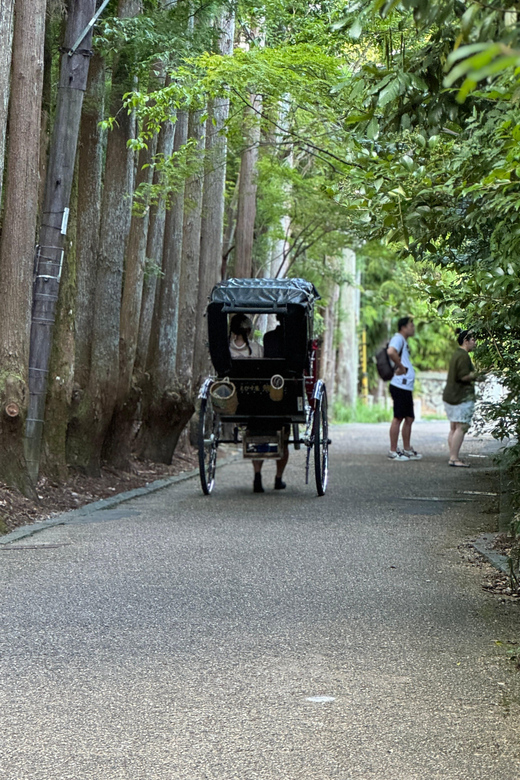
Otagi Nenbutsuji Temple is one of the best reasons to choose this route. Admission is included, and you spend about 30 minutes here. The temple is known for a collection of roughly 1,200 unique stone statues.
These figures are whimsical rather than formal. Their expressions vary, and the small differences invite you to look closely. Some appear cheerful, some comic, and some simply strange. This is a temple visit where you can enjoy Buddhist sculpture without feeling that you must stand silently in one fixed spot.
I find this stop especially good for families and anyone who enjoys small visual details. Children and teenagers may respond more quickly to the statues than to a long explanation of temple architecture. Adults get something too: the figures make the religious site feel personal and approachable.
The guide adds the useful layer. Several guides have been praised for explaining Buddhist philosophy, temple traditions, and Japanese customs in English. Juraj, for example, was noted for discussing Buddhist philosophy, temples, and different sects while also helping with communication in Japanese.
You should not rush this temple. Thirty minutes is enough for a proper look, but you will want to pause at more than a few statues. Keep your group together and listen for the guide’s meeting instructions before wandering off to take pictures.
Adashino Nenbutsuji, a quieter and more solemn stop
The next temple is Adashino Nenbutsuji, with about 8,000 stone images and pagodas. The scale changes the feeling of the tour. Otagi’s statues are playful and expressive, while Adashino’s many stone markers create a more serious place for reflection.
The two temples work well together. You see how religious sites can express different moods through stone, arrangement, and setting. A guide can help you understand what you are looking at instead of leaving you with only a collection of photographs.
The exact stop is listed for about 30 minutes, and admission is included. That makes the $83 price more appealing, since you are not paying extra at both temples. Still, the real benefit is the interpretation. Without a guide, it is easy to see thousands of stone figures and move on without understanding why they are there.
Lisa from the United States particularly valued this stop and the conversation about Japanese culture and history. Her guide, Yoshi, also helped her arrange a taxi afterward and recommended a curry restaurant. That kind of practical help can be useful, especially when a guide takes time to answer questions rather than simply reciting facts.
The temple visit may feel more peaceful than the bamboo grove, but you should still follow temple rules. Smoking is not allowed on the tour.
A completely different kind of day out:
- Kyoto: Tea Ceremony in a Traditional Tea House in Kiyomizu
★ 4.9 · 3,519 reviews - Kyoto: Gion Make Your Own Chopsticks with Engraving Option
★ 5.0 · 3,465 reviews - Kyoto Nara Day Trip │ Kiyomizu-dera Temple + Fushimi Inari-taisha Shrine + Nara Park (Departing from Osaka/Kyoto)
★ 4.7 · 3,408 reviews - Kyoto Geisha Walking Tour: Gion District & Hidden Gems
★ 4.7 · 3,273 reviews
Saga Toriimoto and old Kyoto streets
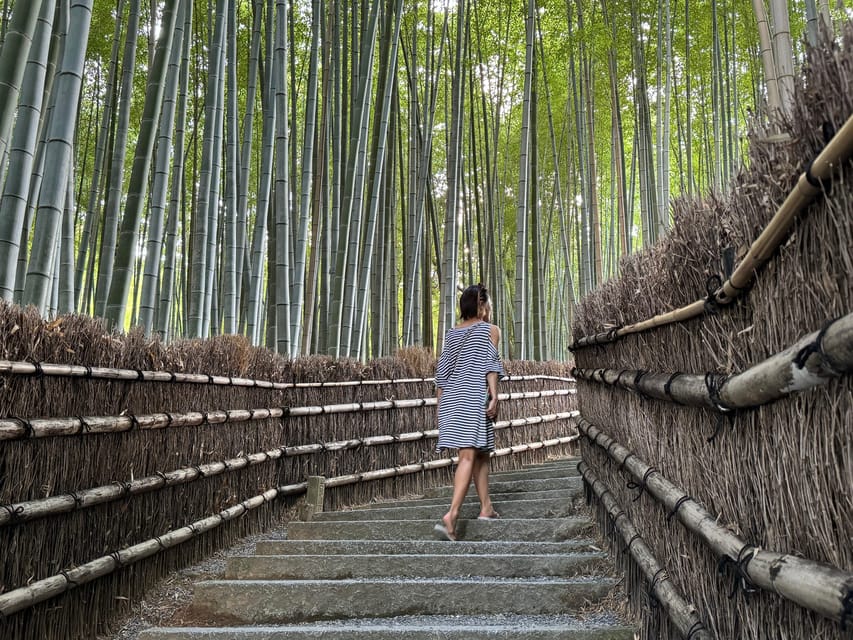
After Adashino Nenbutsuji, the route passes through Saga Toriimoto Preserved Street. This is one of the most rewarding parts for anyone who wants more than famous photo stops.
The street is lined with traditional Japanese houses, giving you a look at the older character of the Saga area. The tour allows about 30 minutes for a guided walk, with time to see local shops along the way. The planned visits include a cocoon dolls shop and a Washi paper shop.
These small stops add texture to the afternoon. A temple tells you about religion and ceremony. A paper shop or craft shop shows how everyday skills and local products fit into Japanese culture. You may not buy anything, but you can ask questions and see how the area presents its traditional arts.
Souvenirs are not included, so anything you purchase is extra. That is worth remembering if you are traveling with limited luggage or a careful budget. The shops are best treated as part of the cultural walk, not as required shopping stops.
The route through Saga Toriimoto also gives you a break from major landmarks. You can look at rooflines, wooden facades, and the shape of the street while your guide explains Okusaga and Arashiyama. This is where the tour’s promise to show another side of the district becomes most convincing.
Seiryoji Temple and the walk back
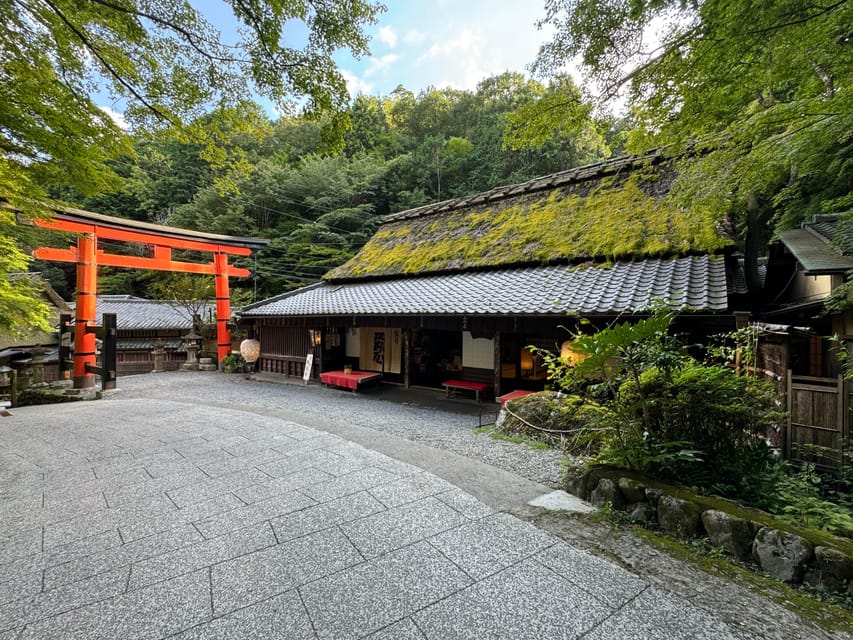
The final temple stop is Seiryoji, where you spend about 15 minutes. It comes after the older streets and gives the walk a final religious and architectural note before you return to Saga Arashiyama Station.
Fifteen minutes is not enough for a long visit, so keep your expectations in check. You get an introduction and a chance to look around, not an exhaustive examination of every building or object. The short stop works because the tour has already given you two longer temple visits.
From there, you finish at Saga Arashiyama Station. Ending where you began is practical. You can continue to another part of Kyoto, catch a train, or ask your guide for a suggestion. Yoshi’s help with a taxi and restaurant advice shows how a good guide may add useful local help beyond the formal stops.
How the guides shape the experience
This tour depends heavily on the guide. The route is pleasant on its own, but the difference between simply walking past temples and understanding them comes from the explanations.
English and Japanese are available. The guide names praised in the supplied feedback include Megumi, Yoshi, Kana, Juraj, Juliette, Akino, and Shino. Their strengths vary, but a common thread is warmth and conversation.
Megumi was described as friendly, cheerful, and funny. Kana helped explain Japanese culture, history, and religion during a walk that suited a family with teenagers. Juraj was praised for his fluent Japanese, clear English, and entertaining explanations.
Juliette guided in English and also spoke French, which may be useful for French-speaking visitors. One small-group experience was valued because it allowed plenty of questions and a relaxed exchange about language, food, and customs.
You should use that access. Ask about the temple symbols, local food, Japanese words, or customs that puzzle you. A private or small-group format gives you a better chance to shape the conversation than a large coach tour.
Is $83 a fair price?
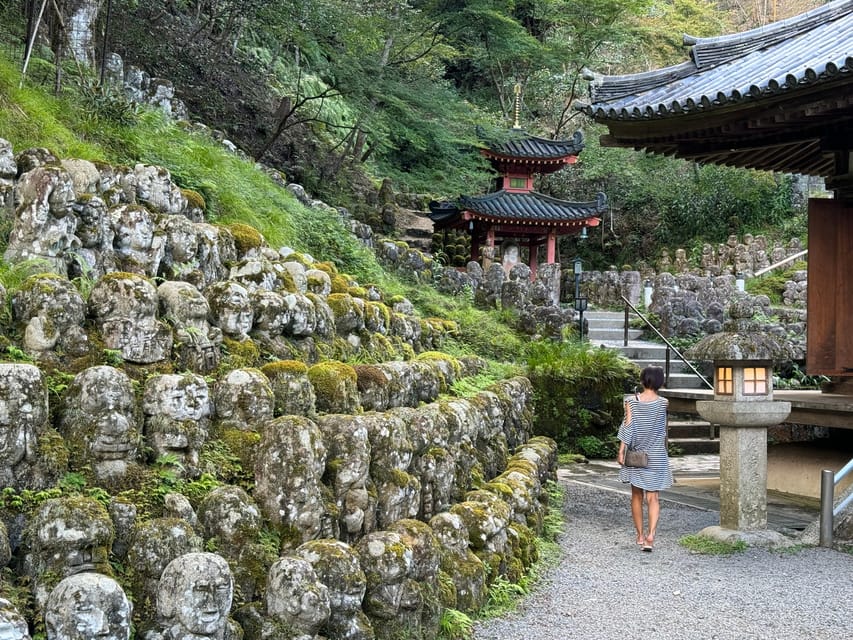
The cost is $83 per person for four hours. That is not a bargain-priced stroll, but the value is reasonable if you want a guide and plan to visit the two included temples.
The price covers:
- A local guide
- Admission to Otagi Nenbutsuji Temple
- Admission to Adashino Nenbutsuji Temple
Food, drinks, and souvenirs cost extra. Transportation to the meeting point is also not listed as included, so you should arrive at Saga Arashiyama Station on your own.
I would consider the tour good value for a first visit to Arashiyama if you want cultural explanation, a planned route, and help finding sights beyond the busiest center. The price is harder to justify if you only want to see the bamboo forest and Togetsu Bridge, since those can be visited without booking a four-hour tour.
Private and small-group options are available. A small group may give you a good balance between personal attention and cost, while a private tour suits you if you want to ask many questions or set the pace more closely around your interests.
Walking demands and who should book
The tour involves a moderate amount of walking. You move between the station, river, park, bamboo grove, temples, preserved street, shops, and final temple. Wear comfortable shoes, bring water, and avoid treating this as a short sightseeing loop.
The activity is not suitable for wheelchair users or people with mobility impairments. Temple grounds and historic streets may require steady walking, and the supplied information does not indicate that the route can be adapted for mobility needs.
I think the tour suits:
- First-time visitors who want the famous sights plus quieter stops
- People interested in Buddhism, Japanese customs, and local history
- Families with older children or teenagers who enjoy unusual statues and hands-on cultural details
- Visitors who prefer a private or small-group walk
- Photographers who want bamboo, river, old houses, and stone figures in one half-day
It may not suit you if you dislike walking, want a slow temple study with long pauses, or mainly want an uncrowded bamboo forest. The bamboo stop is brief, and the central grove can still be busy.
Should you book this Arashiyama tour?
Book it if you want Arashiyama to feel like more than a bridge and a bamboo photo. The strongest part is the progression from famous sights to Otagi Nenbutsuji, Adashino Nenbutsuji, Saga Toriimoto, and local craft shops.
I would book it for the guide access, especially if you enjoy asking questions about Buddhism, history, food, and daily customs. The included temple admissions help with the price, and the route ends conveniently at the same station where it starts.
Skip it if your plans are tight or if you only want the headline sights. Four hours and a moderate walk require a real part of your day. For most visitors who want a thoughtful introduction to Okusaga and the quieter side of Arashiyama, that time is well spent.
FAQ
Where does the tour meet?
Meet your guide in front of the ticket gate at Saga Arashiyama Station. The guide will hold a yellow sign with the DeepExperience logo.
Where does the tour finish?
The tour finishes back at Saga Arashiyama Station.
How long does the experience last?
The tour lasts four hours.
How much does the tour cost?
The listed price is $83 per person.
What languages are available?
Live guiding is available in English and Japanese.
Are private tours available?
Private and small-group options are available.
Are temple admissions included?
Admission to Otagi Nenbutsuji Temple and Adashino Nenbutsuji Temple is included.
Is food included?
No. Food and drinks are not included.
What should I bring?
Bring comfortable walking shoes, a camera, and water.
Is the tour suitable for wheelchair users?
No. The activity is not suitable for wheelchair users or people with mobility impairments.
Just added in Kyoto
- The “Golden Route” and Ancient Japan by DIAMIR Erlebnisreisen – 14-Day Tour★ 2.0 · 2 reviews
- Japan: Castles & Cuisine by G Adventures – 6-Day Kyoto to Osaka Tour★ 4.5 · 4 reviews
- Cycle Japan by Explore! – 13-Day Kyoto to Tokyo Tour★ 4.7 · 12 reviews
- Cycle Japan by Intrepid Travel – 11-Day Kyoto to Tokyo Tour★ 4.8 · 2 reviews
- Classic Japan by Intrepid Travel – 11-Day Kyoto to Tokyo Tour★ 4.4 · 14 reviews
- Ancient & Modern Japan 14-Day Tour by Exodus Adventure Travels★ 4.4 · 40 reviews
- 5 Day Cultural Adventure of Kyoto, Nara & Osaka by Tourist Journey★ 2.5 · 2 reviews
- 12 Days Kinosaki Onsen Escape: A Journey Through Japan’s Timeless Towns by UME Travel★ 4.8 · 5 reviews
Kyoto Tours, compared.
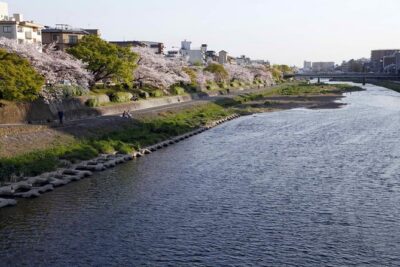
![[Kyoto & Nara Day Tour] Sagano Scenic Railway & Nara Park & Fushimi Inari Taisha Thousand Torii Gates & Togetsukyo Bridge & Bamboo Grove & Kimono Forest (Departing from Osaka)](https://media.japanvisits.com/wp-content/uploads/kyoto-nara-day-tour-sagano-scenic-railway-nara-park-fushimi-inari-taisha-thousand-torii-gates-togetsukyo-bridge-bamboo-grove-kimono-forest-departing-from-osaka-k110001-400x257.jpg)
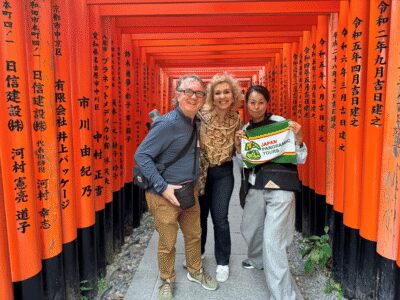
Fushimi Inari, Kinkakuji, Bamboo Grove 1 Day Bus Tour
Read our review →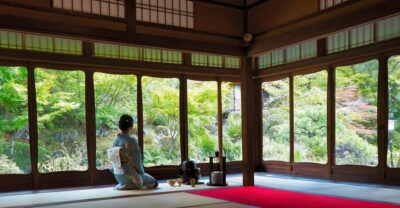
Tea Ceremony in a Traditional Tea House in Kiyomizu
Read our review →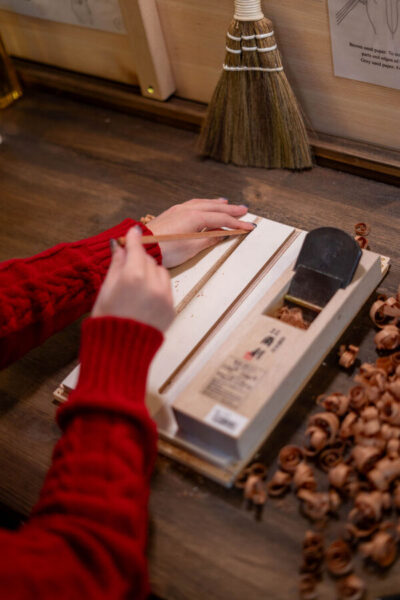
Gion Make Your Own Chopsticks with Engraving Option
Read our review →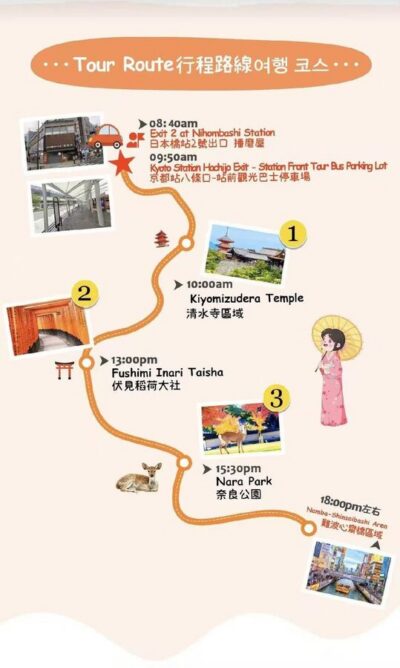
Kyoto Nara Day Trip │ Kiyomizu-dera Temple + Fushimi Inari-taisha Shrine + Nara Park (Departing from Osaka/Kyoto)
Read our review →
Kyoto Geisha Walking Tour: Gion District & Hidden Gems
Read our review →