Reviewed · KYOTO TOURS
Kyoto: Descending Arashiyama (Private)
Arashiyama rewards slow walking. This seven-and-a-half-hour private tour takes you beyond Kyoto’s famous bamboo path to quiet temples, moss gardens, stone Buddhas, a pottery studio area, and an Edo-period tea house. I especially like the route’s mix of major sights and less-visited stops, plus the way a guide handles the navigation while you focus on the scenery.
I also like the strong cultural variety: you move from Tenryu-ji’s Zen garden to Otagi Nenbutsu-ji’s 1,200 carved Buddhas, then through old lanes and woodland paths. The main drawback is cost. At $690 per group of up to four, it can be good value for a private day, but admission fees and tea or lunch costs come separately.
In This Review
- Key points at a glance
- Why this Arashiyama route works
- Togetsukyo Bridge sets the scene
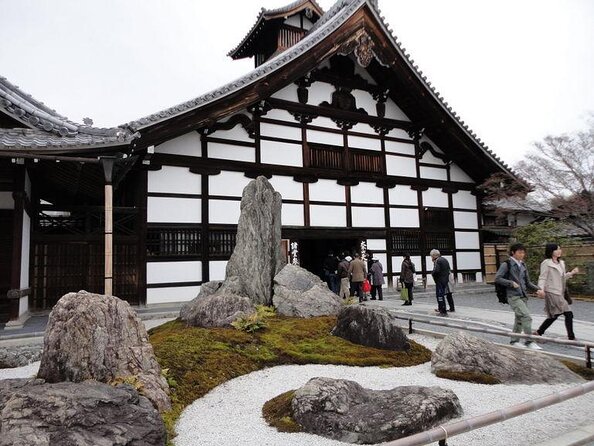
- Tenryu-ji brings Zen design into focus
- Otagi Nenbutsu-ji offers Arashiyama’s strangest faces
- An Edo-period tea break at Ayuchaya Hiranoya
- Adashino Nembutsu-ji adds a solemn note
- Gio-ji pairs moss with bamboo
- Okochi Sanso Garden earns its full hour
- The Sagano Bamboo Grove comes near the end
- What the $690 price really buys you
- Walking, timing, and practical comfort
- Who will get the most from this tour
- Should you book it?
- FAQ
- Where does the Kyoto Arashiyama tour begin?
- What time does the tour start?
- How long does the experience last?
- Where does the tour end?
- Is this a private tour?
- How much does the tour cost?
- Are admission tickets included?
- Is lunch included?
- Can I cancel for a full refund?
Key points at a glance
- Eight carefully linked stops: The route includes Togetsukyo Bridge, two major Zen sites, three atmospheric temple gardens, a tea house, and the Sagano Bamboo Grove.
- Otagi Nenbutsu-ji is the unusual highlight: Its 1,200 stone Buddha figures give you a very different temple visit from Kyoto’s grander, more formal sights.
- A guide saves time and wrong turns: Arashiyama’s sights are spread across the district, and the route works best when someone else handles the order and walking directions.
- The tour is private: Your own group participates, with the published price covering up to four people.
- Bring 5,000 yen in cash: Each person needs extra money for admission tickets, and lunch should cost no more than 1,500 yen per person.
- Expect a full walking day: The tour lasts about 7 hours 30 minutes and calls for moderate physical fitness.
Why this Arashiyama route works
Arashiyama is easy to underestimate. Many people arrive for one photograph in the bamboo grove, visit Tenryu-ji, and leave. That gives you the headline sights, but not much sense of how the district fits together.
This route moves from the riverfront into temple country and gradually toward the quieter northern end of Sagano. That is the point of the title, Descending Arashiyama: the day links places that are close enough to visit on foot but scattered enough to make planning awkward.
You start at Randen Arashiyama Station at 9:30 a.m. The meeting point is convenient for public transportation, and Togetsukyo Bridge is only the opening scene. From there, the route becomes more peaceful as you leave the central area behind.
The guide’s role matters here. You do not need to keep checking a map, deciding which lane to take next, or guessing how long each temple deserves. If Andrew is leading your day, you can also expect stories about garden design, symbolism, and the people connected with each place. His style, based on the available feedback, seems especially suited to visitors who want more than dates and names.
A few more options to weigh up in Kyoto
- PERFECT KYOTO 1-Day Bus Tour
★ 5.0 · 13,518 reviews - [Kyoto & Nara Day Tour] Sagano Scenic Railway & Nara Park & Fushimi Inari Taisha Thousand Torii Gates & Togetsukyo Bridge & Bamboo Grove & Kimono Forest (Departing from Osaka)
★ 4.9 · 10,942 reviews - Kyoto: Fushimi Inari, Kinkakuji, Bamboo Grove 1 Day Bus Tour
★ 4.8 · 4,316 reviews
Togetsukyo Bridge sets the scene
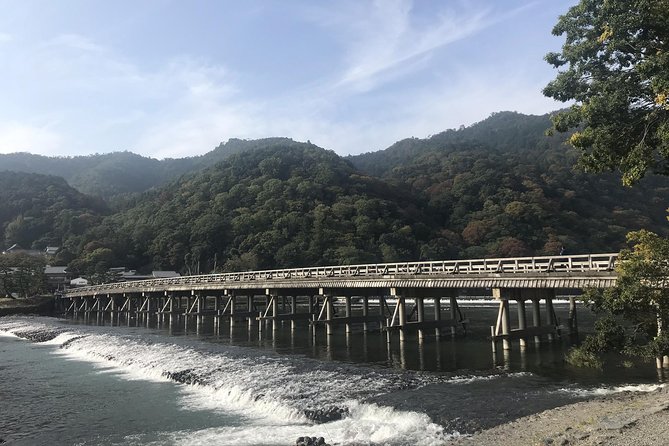
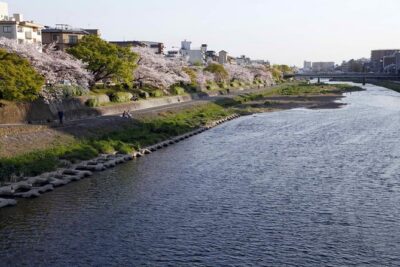
The 20-minute stop at Togetsukyo Bridge is brief, but it makes sense as a starting point. This is one of Kyoto’s most recognizable views, with the bridge spanning the Katsura River and the hills forming a natural backdrop.
You get time to orient yourself, take photographs, and see why Arashiyama became such a favorite retreat. The stop does not include an admission fee, so it also lets the morning begin without immediately reaching for your wallet.
Do not expect a long history lesson here. The value is visual and practical. You begin in the part of Arashiyama most people know, then move toward sights that feel more intimate and less crowded.
Tenryu-ji brings Zen design into focus
The first major temple is Tenryu-ji, one of Japan’s earliest Zen temples. The visit lasts about an hour, and admission is not included.
The garden is the main reason to linger. Its design is built around water, rocks, trees, and borrowed views of the surrounding hills. A good guide can help you notice how the garden controls your eye, rather than leaving you to see it as simply a pleasant green space.
This is also the tour’s most famous temple, so it may feel busier than the later stops. That is not a flaw, but it does create a contrast. Tenryu-ji gives you the polished, celebrated Arashiyama experience, while the northern temples offer more quiet and eccentric detail.
Budget the entry fee before you go. Since every admission comes from your own cash, the required 5,000 yen per person is an important part of the real cost.
Otagi Nenbutsu-ji offers Arashiyama’s strangest faces
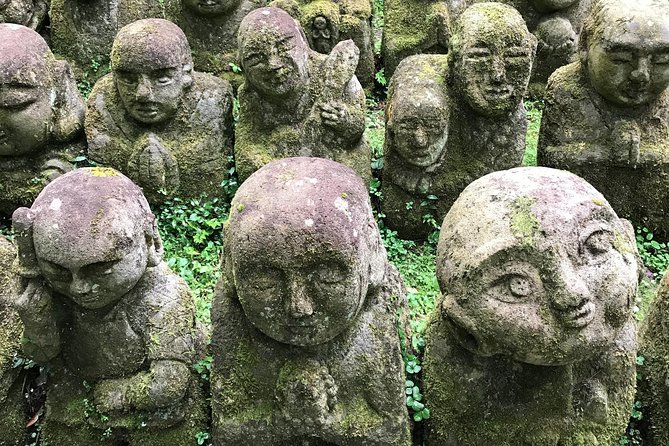
Otagi Nenbutsu-ji is the stop I would most want to protect on this tour. The temple grounds contain about 1,200 stone Buddha figures, each with a different expression and character.
This is not the usual grand Kyoto temple approach. The figures make the visit playful, personal, and slightly surprising. You can spend time looking from one carving to the next, noticing small differences that would be easy to miss without an hour set aside for the grounds.
The temple’s story reaches back to the Heian period, giving the guide plenty to explain about its age and place in Kyoto’s religious culture. It is also a good example of why a guided route can be more rewarding than a quick checklist visit. You have time to understand what you are seeing instead of photographing the statues and moving on.
Admission is extra. The temple is also one of the stops where walking matters, so comfortable shoes are a wise choice.
A completely different kind of day out:
- Kyoto: Tea Ceremony in a Traditional Tea House in Kiyomizu
★ 4.9 · 3,519 reviews - Kyoto: Gion Make Your Own Chopsticks with Engraving Option
★ 5.0 · 3,465 reviews - Kyoto Nara Day Trip │ Kiyomizu-dera Temple + Fushimi Inari-taisha Shrine + Nara Park (Departing from Osaka/Kyoto)
★ 4.7 · 3,408 reviews - Kyoto Geisha Walking Tour: Gion District & Hidden Gems
★ 4.7 · 3,273 reviews
An Edo-period tea break at Ayuchaya Hiranoya
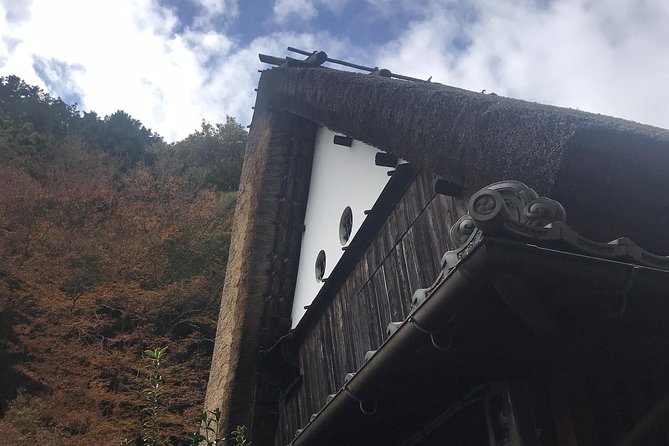
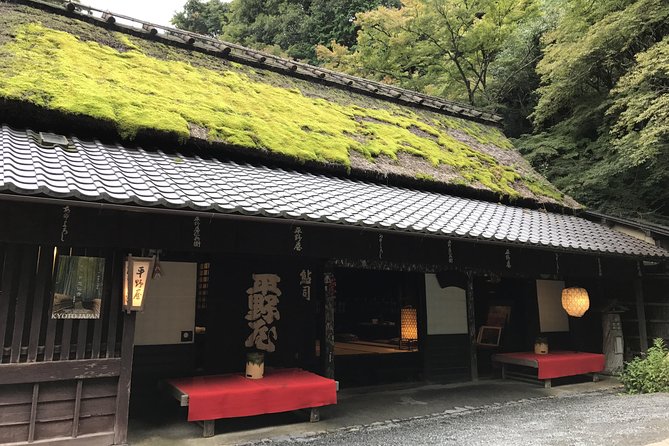
After the temple visits, Ayuchaya Hiranoya provides a slower hour. This cafe began in the Edo period, and the stop includes tea and sweets. The cost is not included, but lunch is expected to stay within 1,500 yen per person.
That budget suggests a modest meal rather than a long restaurant stop. You should see it as a chance to rest, enjoy a traditional setting, and let the morning’s sights settle in.
A tea stop also helps break up the walking. Seven and a half hours is a long outing, and the route gives you several chances to shift from standing and walking to sitting and listening. If you have dietary needs or want a more substantial meal, confirm the plan with the provider before booking, since the supplied details only specify tea, sweets, and a lunch limit.
Adashino Nembutsu-ji adds a solemn note
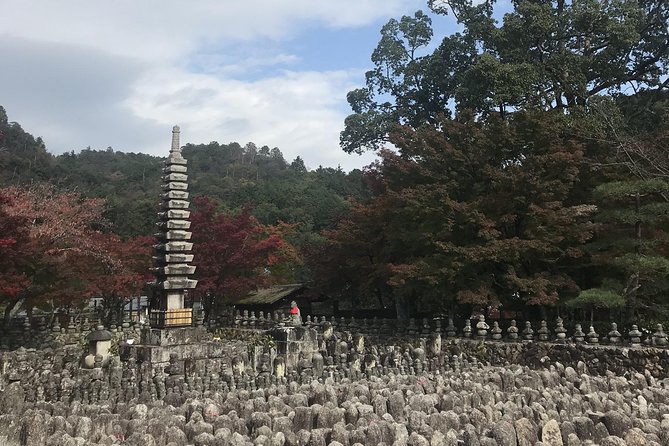
Adashino Nembutsu-ji changes the tone of the day. More than 8,000 memorial stones are gathered here from the surrounding mountains, creating a quiet place of remembrance.
The stop lasts about an hour and includes a small bamboo grove. It is not as expansive as the famous Sagano Bamboo Grove later in the day, but that is part of its appeal. Here, bamboo is woven into a temple setting rather than presented as the main attraction.
You may find this visit more reflective than scenic. The memorial stones give the site emotional weight, and the guide can help explain why they were brought together. This is one reason the route feels fuller than a standard bamboo-and-temple outing. It does not treat Arashiyama as a backdrop for photographs only.
Admission is extra, and the path between sites contributes to the moderate fitness requirement.
Gio-ji pairs moss with bamboo
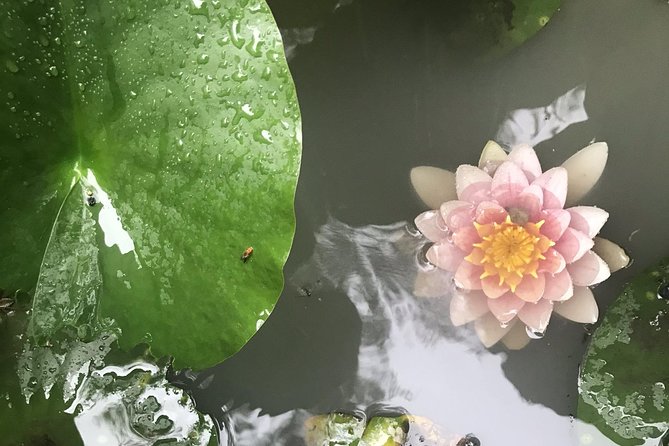
Gio-ji is a short 30-minute visit, but it may be one of the prettiest. The former nunnery was founded by two ex-geisha, and its moss garden is enclosed by bamboo.
The scale is small, so the stop does not need a full hour. Instead, you get a concentrated look at a garden where moss, shade, and bamboo create a soft, enclosed atmosphere.
This is a place to slow down. You will not find a long list of structures to inspect. The pleasure comes from texture and mood, especially after the more formal scale of Tenryu-ji and the solemn memorial stones at Adashino Nembutsu-ji.
The short visit also keeps the day moving. Still, the sequence includes several admissions, and the costs can add up. Keep your cash handy rather than treating the $690 price as all-inclusive.
Okochi Sanso Garden earns its full hour
Okochi Sanso Garden occupies the former estate of a well-known silent film actor. The visit lasts about an hour and is prized for its broad views across Arashiyama.
This is more than a quick viewpoint. The estate gives you gardens to explore, with the reward of seeing the district from above and beyond. After walking through enclosed temple grounds, the wider views provide a useful change of pace.
The name may be less familiar than Tenryu-ji, but the setting is one of the day’s strongest reasons to continue north. You get a sense of Arashiyama as a connected area of river, hills, trees, and temple grounds, rather than a series of unrelated attractions.
The route’s order is helpful here. You reach the garden after several quieter temple stops, so the views feel like a natural payoff. Admission is not included.
The Sagano Bamboo Grove comes near the end
The final major sight is the famous Bamboo Forest Trail, with about 30 minutes set aside for the walk. This timing is smart. You see the iconic path after visiting places that explain the area’s religious and cultural character.
The grove is beautiful, but it is also the stop most likely to feel crowded. Its fame brings people from every direction, and the path is not a private wilderness walk. A guide cannot remove the crowds, but can help you reach the trail without losing time earlier in the day.
Thirty minutes is enough to walk through a section, take photographs, and appreciate the height of the bamboo. It is not enough for a leisurely exploration of every nearby lane, so keep your expectations realistic.
I like that the tour does not make the bamboo grove the whole point. By the time you arrive, you have already seen moss gardens, memorial stones, a tea house, and hundreds of individual Buddha carvings. The famous path becomes one part of Arashiyama, not the entire story.
What the $690 price really buys you
The price is $690 per group of up to four people. That makes the arithmetic more favorable for a family or group of friends than for a solo visitor. The tour is private, so only your group participates, even though the general tour information also gives a maximum of seven people.
The main value is not admission bundling. Entry tickets are separate, each person must bring an additional 5,000 yen in cash, and tea, sweets, and lunch are also outside the tour price.
You are paying for a full day with a professional guide, a carefully ordered route, and private attention. That can be worthwhile if you want temple context, help with navigation, and access to places you might skip on your own. If you already know Arashiyama well and are happy using maps, the price will feel harder to justify.
For a group of four, the cost works out to $172.50 each before admissions and food. For one or two people, the private format is a much larger splurge.
Walking, timing, and practical comfort
The tour runs from 9:30 a.m. for approximately 7 hours 30 minutes and ends back at the meeting point. You should plan for a substantial day on foot, with movement between temples, gardens, and bamboo paths.
Moderate physical fitness is required. The information provided does not give a total walking distance, so I would not book this expecting a mostly seated sightseeing trip. Wear shoes that are comfortable for temple grounds and uneven paths, and keep your cash accessible for admissions.
Strollers can be available during the walks, but they cannot enter the sites. They can be stored at each site’s reception desk. This makes the tour possible for some families, though the repeated transfers and walking may still require extra patience.
The experience requires good weather. If poor weather cancels the tour, you are offered another date or a full refund. You can cancel for a full refund up to 24 hours before the start time, but changes or cancellations inside that window are not accepted.
Who will get the most from this tour
I would recommend it most strongly to first-time Kyoto visitors who want Arashiyama explained rather than simply photographed. It also fits families or small groups who value a private guide and want to share the cost.
The route suits you if you enjoy gardens, temples, cultural stories, and walking. It is less suitable if you want a relaxed half-day, dislike admission fees paid separately, or have difficulty with extended walking.
The guide seems to be a major part of the experience. Andrew is specifically associated with lively explanations of gardens, their possible meanings, and how they are created. He also appears to make an effort to build connections with people linked to the places visited. If he is your guide, expect the day to feel personal rather than scripted.
Should you book it?
Book this tour if you want to see the famous bamboo grove but care just as much about the places beyond it. Otagi Nenbutsu-ji, Adashino Nembutsu-ji, Gio-ji, and Okochi Sanso Garden give the day a much broader feel than a standard Arashiyama outing.
The private price makes the most sense for up to four people. Before committing, add the 5,000 yen per person admission fund, food, and tea to your budget. If that total works for you, the route offers a thoughtful way to see Arashiyama without spending your morning lost between temples.
Skip it if you prefer to explore at your own pace, want a low-cost self-guided day, or cannot manage several hours of walking. For everyone else, this is a strong choice, especially when the guide is Andrew and your priority is understanding the gardens and temples rather than rushing through a checklist.
FAQ
Where does the Kyoto Arashiyama tour begin?
It begins at the center of Randen Arashiyama Station, at 20-2 Tsukurimichi-cho in Kyoto.
What time does the tour start?
The tour starts at 9:30 a.m.
How long does the experience last?
It lasts approximately 7 hours 30 minutes.
Where does the tour end?
The activity ends back at the meeting point.
Is this a private tour?
Yes. Only your group participates. The price covers a group of up to four people, and the general group information lists a maximum of seven travelers.
How much does the tour cost?
The listed price is $690 per group of up to four people.
Are admission tickets included?
No. Each person must bring an additional 5,000 yen in cash for admission tickets.
Is lunch included?
No. Lunch is not included, and the provided guidance says lunch should not exceed 1,500 yen per person.
Can I cancel for a full refund?
Yes. You can cancel at least 24 hours before the local start time for a full refund. Cancellations or changes made less than 24 hours before the start are not accepted, and poor-weather cancellations offer another date or a full refund.
Just added in Kyoto
- The “Golden Route” and Ancient Japan by DIAMIR Erlebnisreisen – 14-Day Tour★ 2.0 · 2 reviews
- Japan: Castles & Cuisine by G Adventures – 6-Day Kyoto to Osaka Tour★ 4.5 · 4 reviews
- Cycle Japan by Explore! – 13-Day Kyoto to Tokyo Tour★ 4.7 · 12 reviews
- Cycle Japan by Intrepid Travel – 11-Day Kyoto to Tokyo Tour★ 4.8 · 2 reviews
- Classic Japan by Intrepid Travel – 11-Day Kyoto to Tokyo Tour★ 4.4 · 14 reviews
- Ancient & Modern Japan 14-Day Tour by Exodus Adventure Travels★ 4.4 · 40 reviews
- 5 Day Cultural Adventure of Kyoto, Nara & Osaka by Tourist Journey★ 2.5 · 2 reviews
- 12 Days Kinosaki Onsen Escape: A Journey Through Japan’s Timeless Towns by UME Travel★ 4.8 · 5 reviews
Kyoto Tours, compared.
![[Kyoto & Nara Day Tour] Sagano Scenic Railway & Nara Park & Fushimi Inari Taisha Thousand Torii Gates & Togetsukyo Bridge & Bamboo Grove & Kimono Forest (Departing from Osaka)](https://media.japanvisits.com/wp-content/uploads/kyoto-nara-day-tour-sagano-scenic-railway-nara-park-fushimi-inari-taisha-thousand-torii-gates-togetsukyo-bridge-bamboo-grove-kimono-forest-departing-from-osaka-k110001-400x257.jpg)
Fushimi Inari, Kinkakuji, Bamboo Grove 1 Day Bus Tour
Read our review →
Tea Ceremony in a Traditional Tea House in Kiyomizu
Read our review →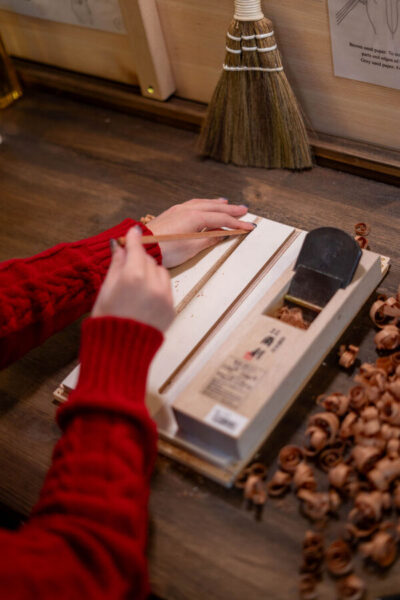
Gion Make Your Own Chopsticks with Engraving Option
Read our review →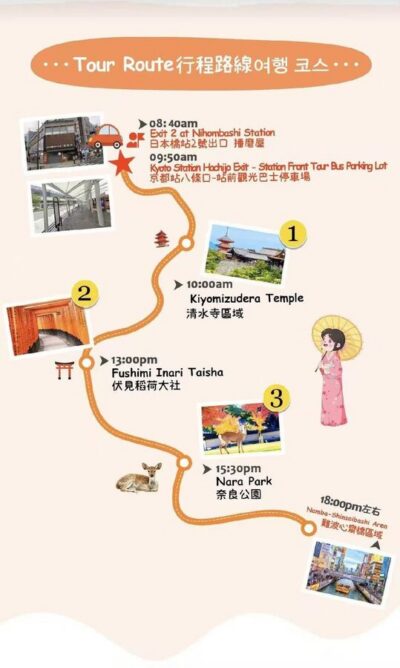
Kyoto Nara Day Trip │ Kiyomizu-dera Temple + Fushimi Inari-taisha Shrine + Nara Park (Departing from Osaka/Kyoto)
Read our review →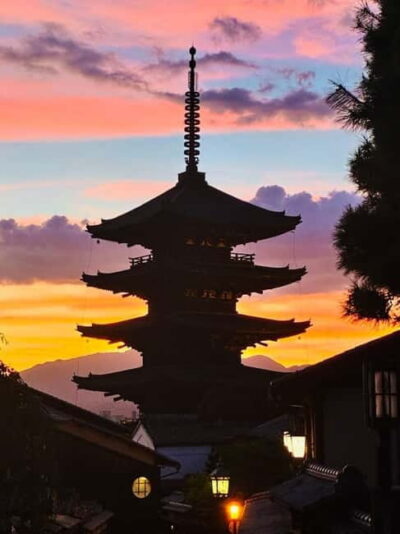
Kyoto Geisha Walking Tour: Gion District & Hidden Gems
Read our review →