
Reviewed · TEMPLES AND SHRINES
Kyoto Early Morning E Biking Tour Fushimi Inari Kiyomizu Temple
Beat Kyoto’s crowds early. This five-hour e-bike tour links Fushimi Inari, Sanjusangendo, and Kiyomizu-dera before the day gets busy. I like the included bicycle and the small group size, capped at eight people. I also like that an English-speaking guide adds context instead of leaving you to decode three major sights alone. The main concern is the admission wording: one booking reported paying ¥3,300 for three entries even though temple admission is listed as included.
You meet at the JR-Central Ticket Office inside Kyoto Station’s Shinkansen Hachijo Entrance and return there at the end. Guides Hiro and Rin have earned especially warm praise, with Rin also taking excellent photographs. You should have moderate fitness, and the tour requires good weather, so check the forecast before committing.
In This Review
- Key details that shape the morning
- Why an early start changes the experience
- Starting at Kyoto Station with an e-bike
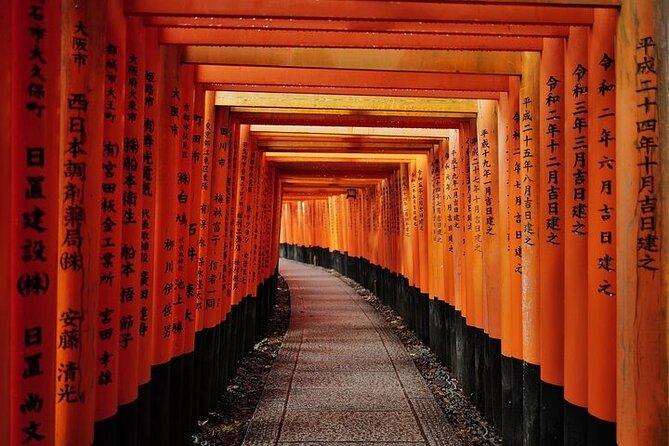
- Fushimi Inari and the Senbon Torii
- Sanjusangendo’s remarkable interior
- Kiyomizu-dera on Kyoto’s eastern hillside
- What the $67.41 price buys you
- Who will get the most from this ride
- Practical tips for a smoother morning
- Should you book the Kyoto early morning e-bike tour?
- FAQ
- Where does the Kyoto e-bike tour start?
- Where does the tour finish?
- How long does the tour last?
- What sights are included?
- Is an e-bike provided?
- Is a guide included?
- Are admission fees included?
- How many people can join the tour?
- Do I need a particular fitness level?
- What happens if the weather is poor?
Key details that shape the morning
- Three major Kyoto sights in about five hours: The route covers Fushimi Inari-taisha Shrine, Sanjusangendo Temple, and Kiyomizu-dera Temple in one concentrated outing.
- Early timing helps at Fushimi Inari: The famous red torii gates are far more pleasant before peak afternoon crowds gather.
- The e-bike handles Kyoto’s hills: Kiyomizu-dera sits on a hillside, so electric assistance matters when the route begins to rise.
- Small groups make questions easier: With a maximum of eight people, you have a better chance to hear the guide and ask about customs, art, and local history.
- Admission should be included, but verify it: The advertised inclusions cover temple entry, yet one person paid ¥3,300 for three entries to two temples.
- You return to Kyoto Station: That makes this useful on a morning before another Kyoto plan, provided you leave enough time after the five-hour activity.
Why an early start changes the experience
Kyoto’s best-known religious sites can feel very different at the start of the day. Fushimi Inari is famous for its thousands of vermilion gates, and the repeated rows create a striking passage through the wooded hillside. Later in the day, the narrow sections can become crowded enough to make the sight feel less peaceful.
This tour uses the morning to its advantage. You are not promised complete solitude, but an early departure gives you a better chance to see the gates without the heaviest foot traffic. That matters most at Fushimi Inari, where the appeal comes from the rhythm of the torii and the ability to walk at your own pace.
The early schedule also helps at Kiyomizu-dera. Its hillside setting gives you broad views over Kyoto, but the temple is one of the city’s most popular stops. Reaching it before the afternoon rush can make the wooden stage, temple grounds, and surrounding views easier to appreciate.
You should not expect a slow, contemplative day at each location. The tour lasts about five hours and includes three significant stops, each listed at roughly one hour. That is enough for a strong first look, not enough for every corner, ceremony, exhibit, and side path.
More Temples and Shrines in Kyoto
- [Kyoto & Nara Day Tour] Sagano Scenic Railway & Nara Park & Fushimi Inari Taisha Thousand Torii Gates & Togetsukyo Bridge & Bamboo Grove & Kimono Forest (Departing from Osaka)
★ 4.9 · 10,942 reviews - Kyoto: Fushimi Inari, Kinkakuji, Bamboo Grove 1 Day Bus Tour
★ 4.8 · 4,316 reviews - Kyoto: Tea Ceremony in a Traditional Tea House in Kiyomizu
★ 4.9 · 3,519 reviews
Starting at Kyoto Station with an e-bike
The meeting point is the JR-Central Ticket Office at the Kyoto Station Shinkansen Hachijo Entrance, on the first floor. This is a practical location if you are arriving by train, but Kyoto Station is large. Give yourself time to find the correct entrance and ticket office rather than arriving at the last minute.
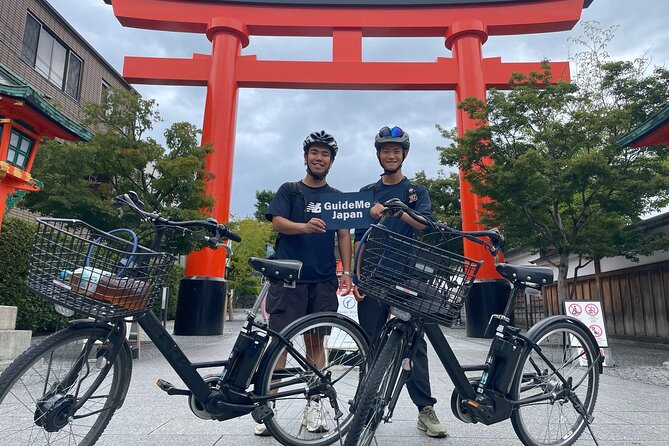
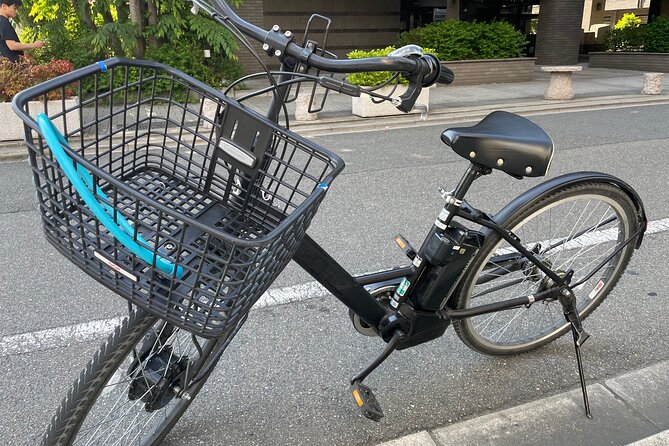
Your guide provides the e-bike, so you do not need to arrange a rental or locate a separate shop. That is one of the tour’s strongest practical features. Renting independently can take time, and you would also need to plan a route connecting three busy sights.
Electric assistance is useful in eastern Kyoto, especially near Kiyomizu-dera. The bike does not remove the need for fitness. You still need to ride, manage the bicycle, and walk around the temples and shrine. The stated requirement is moderate physical fitness, so this is not a sightseeing ride for someone wanting to avoid movement altogether.
The group limit of eight is another plus. A guide can usually keep a small party together more easily than a large one, and you can ask more specific questions. Rin was praised for explaining the history at Kiyomizu-dera, the Senbon Torii area, and Sanjusangendo. Hiro was described as personable and informative. Guide quality can vary by date, but these names give you a useful sense of the tour’s tone.
Fushimi Inari and the Senbon Torii
Fushimi Inari-taisha is the visual centerpiece of the morning. Its rows of red-orange torii gates are instantly recognizable, but seeing them in person gives you a better sense of scale. The gates form long corridors that lead up through the shrine area and wooded slopes.
The tour allows about one hour here. That is a sensible amount of time for walking through the most famous section, taking photographs, and hearing the guide explain the shrine. It is not enough to explore every part of the mountain route, so set your expectations accordingly.
I like this stop because it combines a major Kyoto sight with movement. You are not simply looking at a building from a courtyard. You walk through the gates and experience how the repeated structures change the light, color, and sense of direction around you.
The main challenge is that Fushimi Inari includes walking after you have already ridden. Wear shoes that can handle uneven or uphill paths. The early hour helps, but do not assume the site will be empty. Its popularity is precisely why the schedule begins early.
Admission to Fushimi Inari is listed as free. The tour description also says temple admission is included for the paid sites, so you should not normally expect to buy separate tickets during the morning. Still, because one booking reported paying ¥3,300 for three entries to two temples, ask the guide at the start how admission will be handled.
Sanjusangendo’s remarkable interior
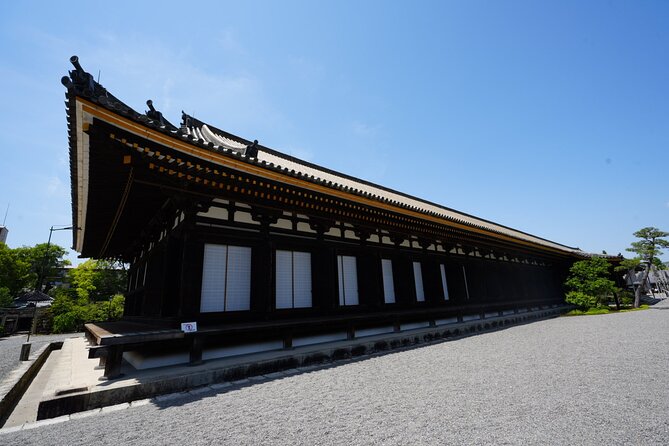
Sanjusangendo offers a sharp change of mood from the open-air torii gates. The temple is famous for its interior arrangement of 1,000 statues of Kannon, the goddess of mercy. The figures stand in formation, and each has its own expression and details.
This is the most art-focused stop on the route. If you enjoy sculpture, religious art, and quiet interiors, you may find this more absorbing than the other two sites. The guide can help explain what you are seeing, which is valuable because the visual effect is powerful but not always easy to understand without context.
The stop is scheduled for about one hour. That gives you time to take in the main hall and listen to explanations, though you will need to follow the group’s pace. Since the key attraction is inside, this visit also gives the morning some variety if the weather is less pleasant.
Photography rules and interior procedures can apply at religious sites, but specific rules for this tour are not provided. Follow your guide’s instructions and avoid assuming that every area allows photographs.
Sanjusangendo is also where the admission question matters. The information for this experience says temple admission is included, yet a person who took the tour reported paying for entries to two temples, totaling ¥3,300 for three admissions. That may have been a booking or website error, but you should clarify it before departure. Save your confirmation and ask whether any payment is expected.
A completely different kind of day out:
- PERFECT KYOTO 1-Day Bus Tour
★ 5.0 · 13,518 reviews - Kyoto: Gion Make Your Own Chopsticks with Engraving Option
★ 5.0 · 3,465 reviews - Kyoto Nara Day Trip │ Kiyomizu-dera Temple + Fushimi Inari-taisha Shrine + Nara Park (Departing from Osaka/Kyoto)
★ 4.7 · 3,408 reviews - Kyoto Geisha Walking Tour: Gion District & Hidden Gems
★ 4.7 · 3,273 reviews
Kiyomizu-dera on Kyoto’s eastern hillside
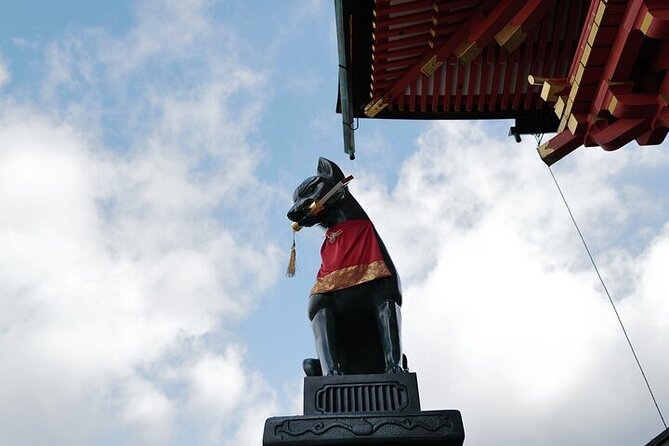
Kiyomizu-dera is the final major stop and one of Kyoto’s most recognizable temples. It sits on a hillside in eastern Kyoto, giving you views across the city and toward the surrounding area. The setting is a large part of its appeal, but the architecture and long history of the temple make the visit more than a photo stop.
The e-bike earns its keep here. Kyoto is not uniformly flat, and an electric bicycle makes the approach less demanding than a standard rental. You still need to leave the bike and walk through the temple grounds, so the assistance helps with the ride rather than replacing physical effort.
Plan on about an hour at Kiyomizu-dera. You can see the principal areas, look out over Kyoto, and hear the guide connect the building to the city’s religious traditions. If this is your first Kyoto visit, the stop gives you the kind of broad visual introduction that helps you understand the city’s eastern side.
The tradeoff is time. Kiyomizu-dera deserves a longer visit if you want to explore every hall, shop-lined approach, and nearby temple. This tour is best for a first survey. You can return later on foot or by public transportation if the temple becomes your favorite stop.
Rin received particular praise for both explanations and photography. That combination can be useful at Kiyomizu-dera, where there are many memorable viewpoints. Do not count on professional photographs as a formal included service, but the experience indicates that a guide may be willing and able to take good pictures during the tour.
What the $67.41 price buys you
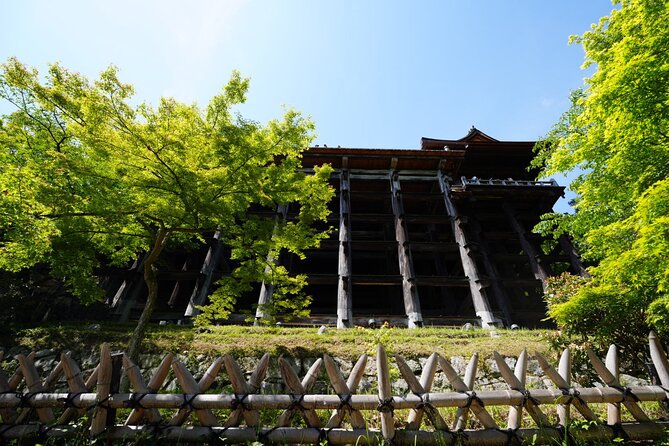
At $67.41 per person, the price is reasonable if you value structure, equipment, and a guide. The fee includes the e-bike, an English-speaking guide, and stated temple admission. You are also paying for a route that connects three major sights without requiring you to work out the order, rental, and navigation yourself.
The value is strongest for a first visit or a short stay. You can cover Fushimi Inari, Sanjusangendo, and Kiyomizu-dera in one morning, then use the rest of the day for another part of Kyoto. An independent visit might cost less in direct transport and admission, but you would need to arrange the bicycle and build the route yourself.
Food and drinks are not included. The tour lasts about five hours, so eat beforehand and carry whatever you need for the morning. There is no indication that a meal or refreshment stop is part of the schedule.
The admission discrepancy weakens the value slightly. Since the advertised information says admission is included but one person paid ¥3,300, I would confirm this in writing before booking or immediately after receiving confirmation. A clear answer protects you from an unpleasant surprise and tells you whether the listed price is truly all-inclusive.
The experience is booked an average of 23 days ahead, which suggests that you should not wait until the last moment if your dates are fixed. The rating is 4.9 from 14 ratings, with 100 percent recommending it. That is an encouraging record, though the sample is small, so I would still weigh the physical demands and ticket clarification carefully.
Who will get the most from this ride
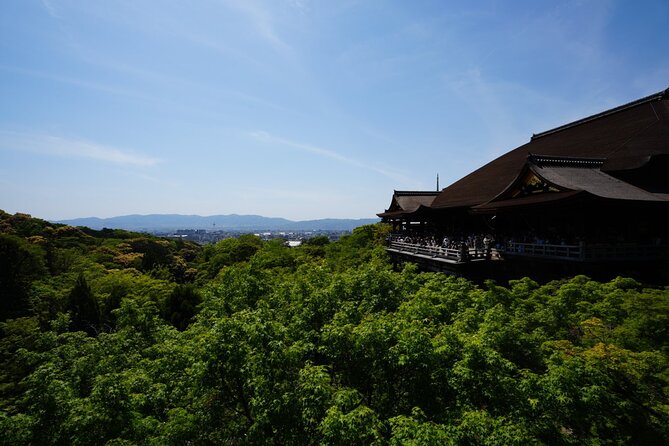
I would recommend this tour to you if you want a guided introduction to Kyoto’s major religious sights and prefer active transportation to buses or taxis. It works especially well for a first morning in the city, when you want to see famous places before spending the afternoon in another district.
It also suits anyone who finds ordinary bicycles tiring on hills. The electric motor makes the route more approachable, but you should still be comfortable riding and walking for several hours.
The tour may not suit you if you want long, unhurried visits. Each stop receives about one hour, and the morning covers a lot of ground. It may also be a poor fit if you have limited mobility or do not meet the stated moderate fitness level.
Families and mixed-age groups should consider the riding requirement individually. The available information does not give a minimum age, child-bike arrangement, or details about riding conditions, so ask the provider before booking if those points matter to you.
This is also not the right choice for a food-focused morning. Meals and drinks are excluded, and the main purpose is sightseeing, cycling, and guided interpretation.
Practical tips for a smoother morning

Arrive early at Kyoto Station. The meeting point is clear, but the station’s size can make a simple rendezvous take longer than expected.
Wear comfortable shoes and clothing suitable for both cycling and temple visits. You will switch between riding and walking, and Fushimi Inari and Kiyomizu-dera include uphill sections.
Check the weather before you book. The activity requires good weather, and poor conditions can lead to a different date or a full refund. You can cancel for a full refund up to 24 hours before the start time, but changes or cancellations inside that window are not accepted.
Keep your booking confirmation available on your phone. The ticket is mobile, and confirmation arrives when you book.
Ask about admission before the bicycle leaves Kyoto Station. The stated package includes temple fees, yet the reported ¥3,300 charge makes this worth settling at the beginning rather than at a ticket counter.
Use the guide. The strongest part of this experience is not simply getting from one sight to another. Hiro and Rin were praised for being friendly and informative, and Rin was also praised as a photographer. Ask about the statues, shrine customs, and the story behind each place instead of treating the tour as a moving checklist.
Should you book the Kyoto early morning e-bike tour?
Book it if you want an efficient, active morning with three of Kyoto’s essential sights, especially if crowds and hills worry you. The early start, small group, included e-bike, and strong guide feedback give it real value at $67.41.
I would hesitate only if you prefer extended temple visits, dislike cycling, or need a fully accessible experience. Most importantly, confirm the admission policy because the included-fee promise conflicts with one reported payment of ¥3,300.
For a first Kyoto visit with limited time, this is a sensible way to cover a lot before lunch. Just arrive ready to ride, walk, listen, and keep the morning moving.
FAQ
Where does the Kyoto e-bike tour start?
It starts at the JR-Central Ticket Office at Kyoto Station’s Shinkansen Hachijo Entrance, on the first floor.
Where does the tour finish?
The activity ends back at the original meeting point at Kyoto Station.
How long does the tour last?
The tour lasts approximately five hours.
What sights are included?
The route includes Fushimi Inari-taisha Shrine, Sanjusangendo Temple, and Kiyomizu-dera Temple.
Is an e-bike provided?
Yes. An e-bike is included in the tour price.
Is a guide included?
Yes. The tour includes an English-speaking guide.
Are admission fees included?
The tour information says temple admission is included. However, one booking reported paying ¥3,300 for three entries to two temples, so you should confirm the policy before departure.
How many people can join the tour?
The maximum group size is eight people.
Do I need a particular fitness level?
You should have moderate physical fitness. The experience combines cycling with walking at the sights, including hillside areas.
What happens if the weather is poor?
The experience requires good weather. If it is canceled because of poor weather, you are offered another date or a full refund.
Just added in Kyoto
- The “Golden Route” and Ancient Japan by DIAMIR Erlebnisreisen – 14-Day Tour★ 2.0 · 2 reviews
- Japan: Castles & Cuisine by G Adventures – 6-Day Kyoto to Osaka Tour★ 4.5 · 4 reviews
- Cycle Japan by Explore! – 13-Day Kyoto to Tokyo Tour★ 4.7 · 12 reviews
- Cycle Japan by Intrepid Travel – 11-Day Kyoto to Tokyo Tour★ 4.8 · 2 reviews
- Classic Japan by Intrepid Travel – 11-Day Kyoto to Tokyo Tour★ 4.4 · 14 reviews
- Ancient & Modern Japan 14-Day Tour by Exodus Adventure Travels★ 4.4 · 40 reviews
- 5 Day Cultural Adventure of Kyoto, Nara & Osaka by Tourist Journey★ 2.5 · 2 reviews
- 12 Days Kinosaki Onsen Escape: A Journey Through Japan’s Timeless Towns by UME Travel★ 4.8 · 5 reviews
Temples and Shrines, compared.
![[Kyoto & Nara Day Tour] Sagano Scenic Railway & Nara Park & Fushimi Inari Taisha Thousand Torii Gates & Togetsukyo Bridge & Bamboo Grove & Kimono Forest (Departing from Osaka)](https://media.japanvisits.com/wp-content/uploads/kyoto-nara-day-tour-sagano-scenic-railway-nara-park-fushimi-inari-taisha-thousand-torii-gates-togetsukyo-bridge-bamboo-grove-kimono-forest-departing-from-osaka-k110001-400x257.jpg)
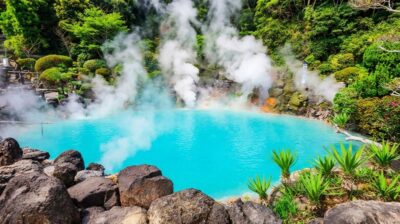
Kyushu One-Day Tour: Yufuin no Mori Train & Yufuin Town & Nyoirin-ji Temple & Dazaifu & Hell Hot Springs (Departing from Fukuoka)
Read our review →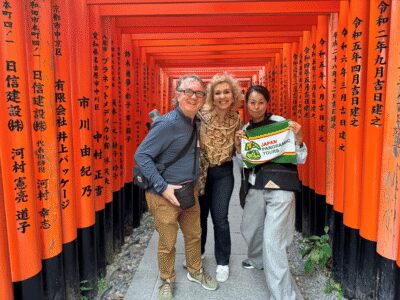
Fushimi Inari, Kinkakuji, Bamboo Grove 1 Day Bus Tour
Read our review →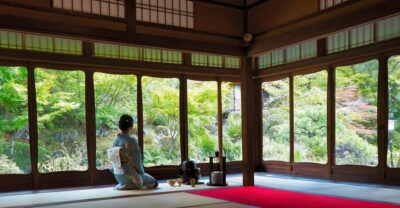
Tea Ceremony in a Traditional Tea House in Kiyomizu
Read our review →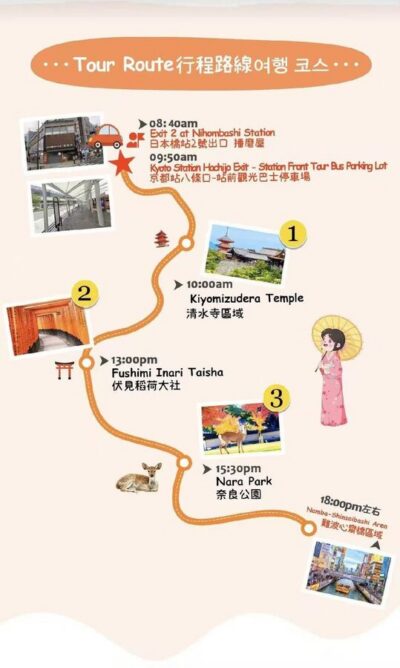
Kyoto Nara Day Trip │ Kiyomizu-dera Temple + Fushimi Inari-taisha Shrine + Nara Park (Departing from Osaka/Kyoto)
Read our review →
Browse the lists this tour appears in