
Reviewed · TEMPLES AND SHRINES
Kyoto: Early Morning Fushimi Inari Shrine – Beat the Crowds
Arrive early, and Fushimi Inari feels almost sacred. This 150-minute tour gives you a calm walk beneath the famous orange torii gates, plus the local stories that are easy to miss when you visit alone. I especially like the early start, which helps you avoid the daytime rush and summer heat. I also like the friendly guides, including Teppei, Akino, Hiro, Masa, Maru, Yoshi, and others who have earned strong praise for their warmth and care.
The main caution is the physical effort. You will walk uphill through a mountain shrine, and some people describe the full outing as a 2.5-hour mountain hike. Comfortable shoes are essential, and the tour is not suited to children under 10, people with mobility or heart problems, wheelchair users, or anyone with a low level of fitness.
In This Review
- Key points at a glance
- Why Fushimi Inari works best before breakfast
- Meeting your guide at JR Inari Station
- Through the first torii gates
- Walking uphill toward the mountain viewpoint
- The viewpoint and its reward
- The tucked-away fountain and lesser-known details
- What the guides add to the morning
- Is $70 a fair price?
- Who should book this Fushimi Inari tour?
- FAQ
- Where does the tour meet?
- How long does the experience last?
- What language is the tour offered in?
- Is the tour private or shared?
- What should I bring?
- Who should not join this tour?
- Should you book it?
Key points at a glance
- Early access matters: The orange torii gates are far more peaceful before the daytime crowds arrive.
- More than a photo stop: Your English-speaking guide explains Inari worship, torii gates, fox figures, and local customs.
- A mountain walk with a payoff: The route includes a viewpoint and a quieter fountain spot connected with a local legend.
- Guides make the difference: Teppei, Akino, Hiro, Masa, Maru, Yoshi, and other local guides are praised for kindness, clear explanations, and helpful travel advice.
- A small but special extra: You receive a souvenir unique to Inari and unavailable elsewhere.
- Good cancellation flexibility: You can cancel up to 24 hours before departure for a full refund and reserve now while paying later.
Why Fushimi Inari works best before breakfast
Fushimi Inari Taisha is one of Kyoto’s essential sights. Its long rows of orange torii gates climb Mount Inari, creating one of Japan’s most recognizable scenes. The shrine has been Japan’s most visited attraction since 2016, so popularity is not a minor issue here. By the middle of the day, the approach and lower paths can feel packed.
An early morning visit changes the mood. You get more room to walk, better chances for clean photographs, and a quieter setting for the shrine’s religious details. The cooler air also matters, especially in July and August. One participant who visited in late July specifically valued escaping both the crowds and the heat.
I would not promise complete solitude. Fushimi Inari is too famous for that, and the shrine remains active in the morning. Still, arriving early gives you the best practical chance of enjoying the torii tunnels without constantly stopping for groups in front of you.
The timing also makes sense for a day in Kyoto. The tour begins and ends at JR Inari Station, so you can continue to another part of the city afterward. You are not spending the whole morning on a long transfer or waiting for an attraction to open.
More Temples and Shrines in Kyoto
- [Kyoto & Nara Day Tour] Sagano Scenic Railway & Nara Park & Fushimi Inari Taisha Thousand Torii Gates & Togetsukyo Bridge & Bamboo Grove & Kimono Forest (Departing from Osaka)
★ 4.9 · 10,942 reviews - Kyoto: Fushimi Inari, Kinkakuji, Bamboo Grove 1 Day Bus Tour
★ 4.8 · 4,316 reviews - Kyoto: Tea Ceremony in a Traditional Tea House in Kiyomizu
★ 4.9 · 3,519 reviews
Meeting your guide at JR Inari Station
The meeting point is outside, across from the main entrance to JR Inari Station. Look for a bright yellow DeepExperience signboard. This is a useful detail because the station area can be confusing when you are sleepy and trying to find the right person before an early start.
Plan your train carefully. One participant arrived late after taking a local train instead of an express service from Kyoto Station. The local train stopped at the third stop, not the expected one, and the delay caused stress for the small group. The practical lesson is simple: check the train type and allow extra time.
The guide leads the group toward Fushimi Inari Taisha, which is close to the station. The tour is available as a private experience or in a small group. A small group can give you a social morning while keeping the guide’s explanations personal. A private booking is appealing if you want to ask many questions, move at your own pace, or have a photographer in the group.
The advertised price is $70 per person. That is more than the cost of visiting the shrine on your own, but the shrine itself is not the only thing you are paying for. The fee covers an English-speaking local guide, practical help, cultural background, photo assistance, a planned route, and a special Inari souvenir. For someone who would otherwise walk through the gates, take photos, and leave without understanding the symbols, the price can be fair.
If you are already comfortable researching Shinto customs and navigating Kyoto alone, you may prefer a self-guided visit. If you want context and a smoother morning, the added cost is easier to justify.
Through the first torii gates
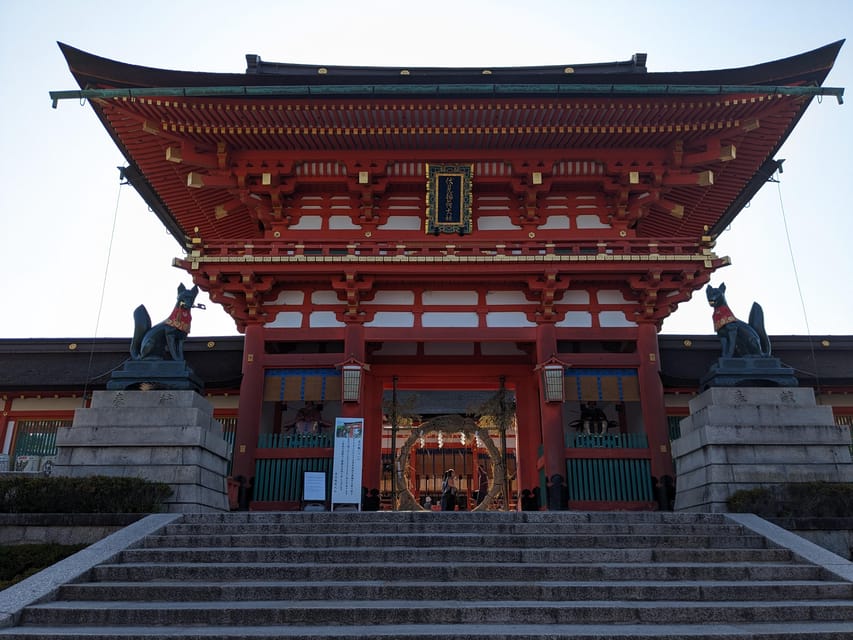
Fushimi Inari is dedicated to Inari, a Shinto deity associated with rice, prosperity, and business success. Fox figures appear throughout the shrine grounds because foxes are regarded as Inari’s messengers. Your guide explains these details as you move through the complex, giving meaning to the stone statues, offerings, and repeated religious symbols.
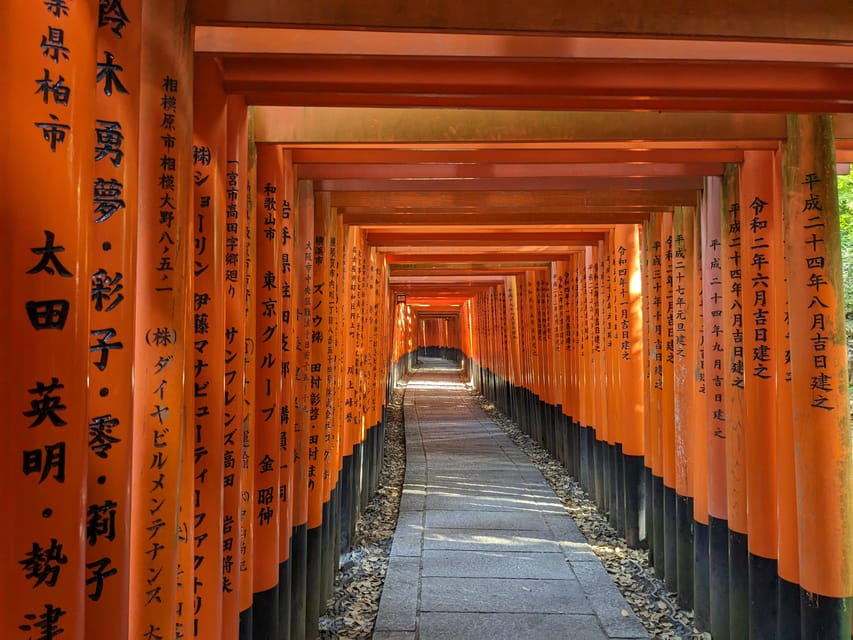
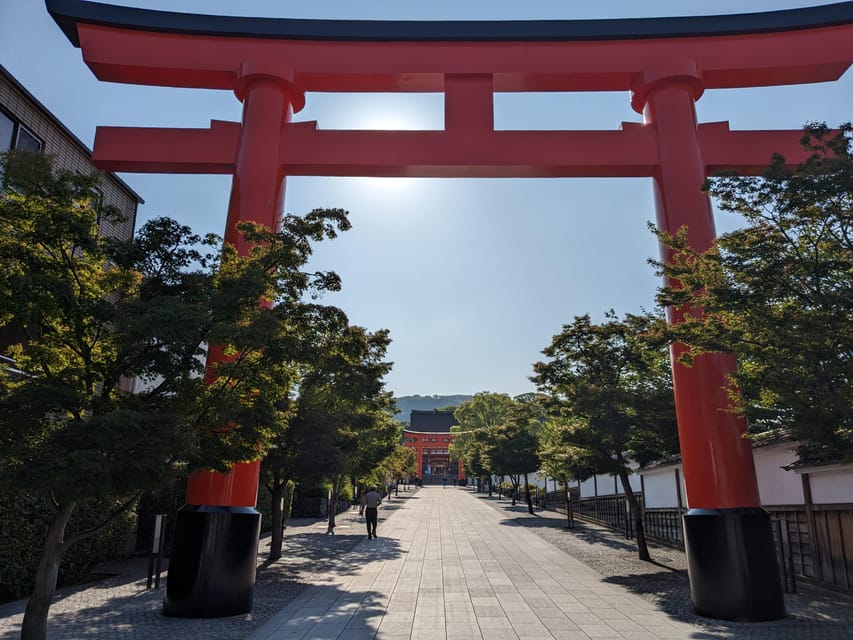
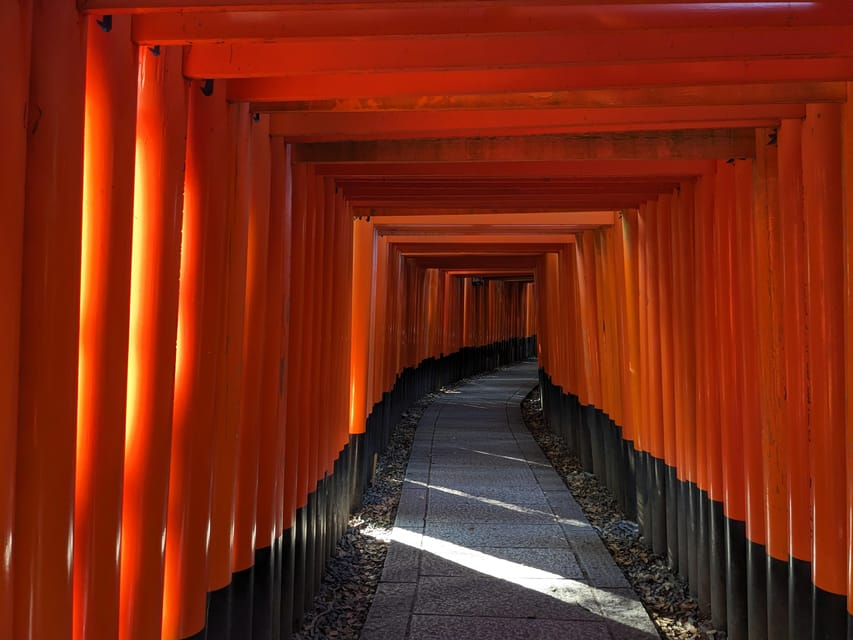
The lower shrine grounds offer the easiest walking and the most famous photographs. The orange gates are called torii, marking the boundary between ordinary space and sacred space. As you pass beneath them, the repeated pattern creates a tunnel effect that changes with the light and the angle of your camera.
This is where early timing pays off. The gates are still beautiful when crowded, but a stream of people can make it difficult to pause or take a clear photo. With fewer people around, you can stop without blocking the path and ask your guide about what you are seeing.
Hiro, one of the guides, is praised for explaining how to show respect at the main torii. That kind of instruction is useful because Japanese shrine etiquette can feel unfamiliar. You do not need to arrive as an expert, but learning when to bow, how to behave near worship spaces, and which areas deserve quiet attention helps you visit with greater care.
Your guide also points out the difference between simply passing through a gate for a photograph and understanding why thousands of gates were donated. The route becomes more than an orange corridor. It becomes a record of devotion, gratitude, and hopes for good fortune.
Walking uphill toward the mountain viewpoint
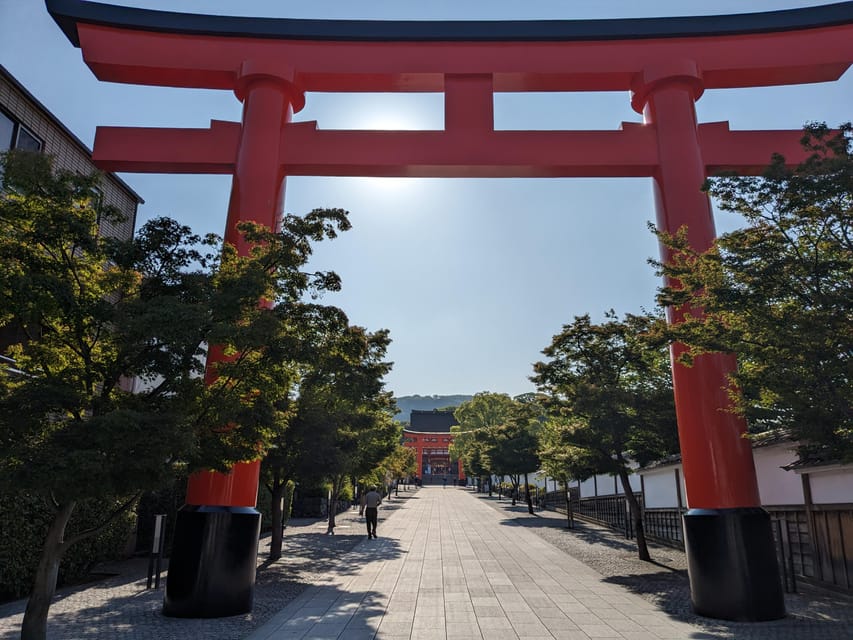
The tour includes a guided visit of Fushimi Inari Taisha for about 90 minutes, followed by a 30-minute viewpoint stop. In practice, you should expect a steady uphill walk and many stairs. The exact pace can vary with the group, but the experience is not a flat stroll around a city block.
The mountain setting is part of the appeal. Fushimi Inari is not simply a shrine with a famous entrance. The gates continue up Mount Inari, and the path gradually becomes quieter as you leave the busiest lower section. The repeated orange structures, trees, stone markers, and small worship areas give the walk a strong sense of place.
Several people found the climb more enjoyable than expected because the guides made it engaging. One participant’s daughter initially did not want to take on a 2.5-hour mountain walk, then considered it the best part of the family’s time in Japan. That does not mean the route is easy for everyone. It means the guide can turn a long climb into a series of discoveries rather than one tiring push toward the top.
Take the physical warnings seriously. The experience is not suitable for people with back problems, mobility impairments, heart problems, respiratory issues, or altitude sickness. It is also not recommended for people over 70 or those with low fitness. Baby strollers, baby carriages, luggage, and large bags are not allowed. Bring only what you need.
Wear shoes with good support and clothes that allow you to move comfortably. In warm weather, the early start is especially helpful, but you should still expect exertion. The tour description does not promise a full summit experience, so do not book it solely because you want to conquer the mountain. Book it for the combination of gates, culture, views, and guided walking.
A completely different kind of day out:
- PERFECT KYOTO 1-Day Bus Tour
★ 5.0 · 13,518 reviews - Kyoto: Gion Make Your Own Chopsticks with Engraving Option
★ 5.0 · 3,465 reviews - Kyoto Nara Day Trip │ Kiyomizu-dera Temple + Fushimi Inari-taisha Shrine + Nara Park (Departing from Osaka/Kyoto)
★ 4.7 · 3,408 reviews - Kyoto Geisha Walking Tour: Gion District & Hidden Gems
★ 4.7 · 3,273 reviews
The viewpoint and its reward
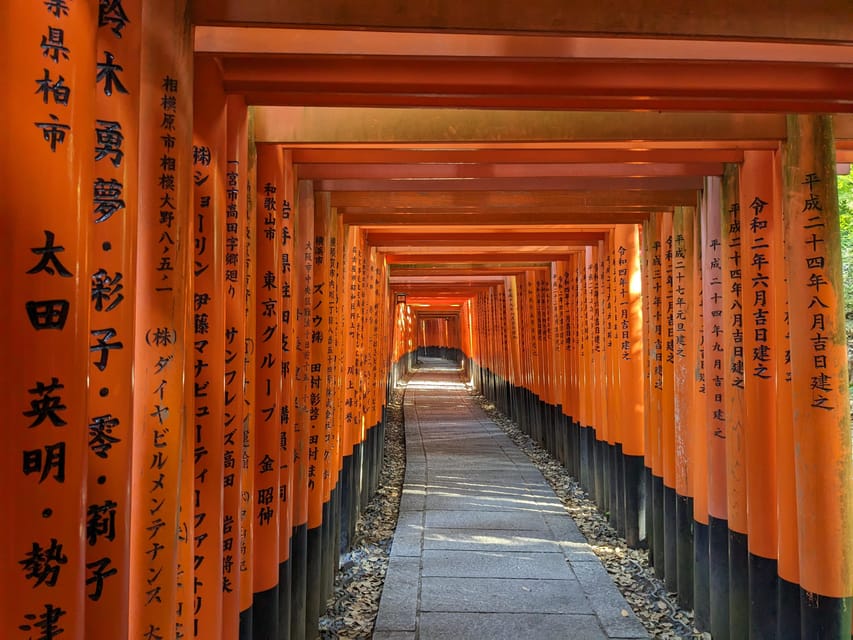
The viewpoint is scheduled for about 30 minutes. It gives you a reason to continue beyond the first famous torii tunnels, where many independent visitors stop for photos and turn around.
The views are one of the pleasures of the climb, but the exact sightline can depend on the weather. In clear conditions, you should expect a broader look over the Kyoto area rather than a dramatic mountain wilderness scene. The reward is also the quieter atmosphere and the feeling that you have moved beyond the most photographed section.
The viewpoint provides a natural pause. You can catch your breath, take photographs, and ask questions while the guide fills in more of the shrine’s background. If you are traveling with family or friends, it is also a useful place to take group photos without the same pressure found near the entrance.
The guides are often praised for helping with photographs. Maru, for example, is noted for taking beautiful pictures for the couple he was guiding. That may sound like a small service, but it matters when you are traveling as a pair and do not want every photograph to be a selfie.
The tucked-away fountain and lesser-known details
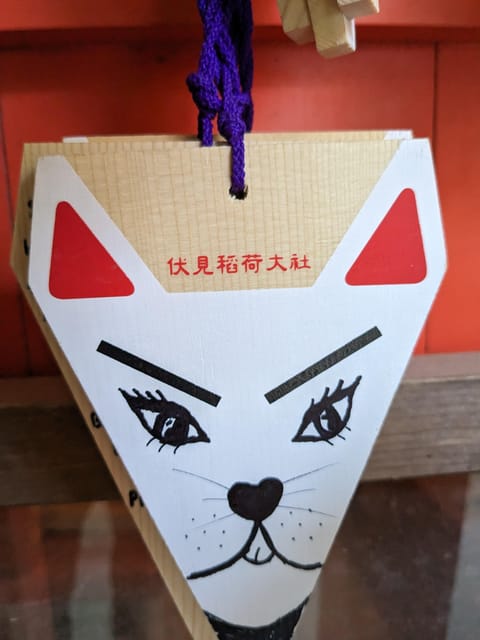
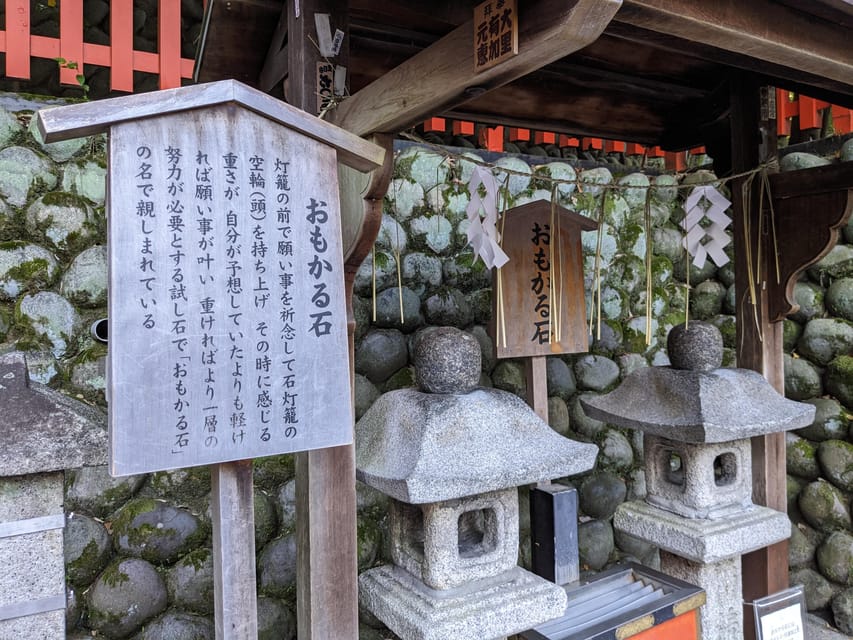
After the main shrine and viewpoint, the route includes about 30 minutes at a quieter spot. One especially memorable location is a small fountain connected with a local legend that it can cure illness. The point is not to treat the legend as medical advice. The value is seeing a part of Fushimi Inari that can be overlooked when you only follow the standard photo route.
This is where a local guide earns the fee. A map can show you the major gates, but it cannot easily explain why a small fountain matters, how people respond to it, or how the shrine fits into local religious life. Claudio, who took the tour with Hiro, particularly valued the small shrines, fox figures, traditional structures, and stories connected to the site.
The route also helps you understand that Fushimi Inari is a working place of worship, not just a backdrop for holiday photos. The guide can point out the difference between the large public areas and the smaller religious spaces where a quieter manner is appropriate.
Akino has also received praise for sharing practical suggestions for food and drinks in Kyoto and for the next stop in Hiroshima. Another participant appreciated that she helped the group get safely onto the train afterward. These touches are not guaranteed with every guide, but they show the kind of local help this tour can provide.
What the guides add to the morning
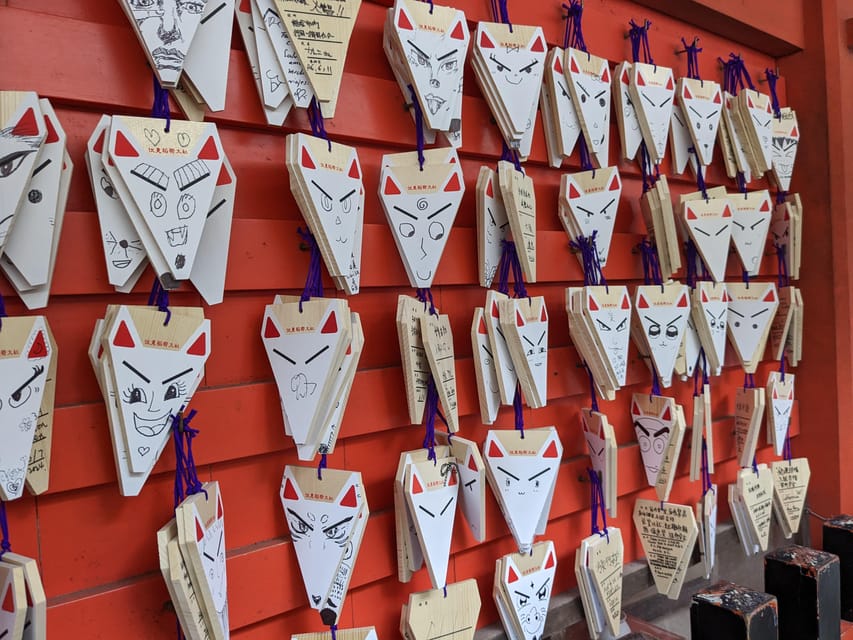
The strongest feature here is the human one. The guides are described as warm, patient, clear, and deeply connected to Kyoto. Teppei is repeatedly praised for combining good explanations with humor and kindness. One family even ranked him among the best guides they had used after taking about 50 tours.
That praise matters because a shrine tour can easily become a string of dates and definitions. A good guide makes you notice the fox messenger in your hand, the meaning of a torii, the correct way to pay respect, and the reasons local people continue to visit. The best moments come when you can stop and ask a question instead of simply following an audio guide.
The guides also appear to adjust to the group. Teppei handled a late arrival with patience, and participants describe him as careful about making everyone feel comfortable. Yoshi is praised for being friendly, generous, and highly personable. Masa is praised for being helpful and for sharing useful information as the group walked.
Guide quality can never be guaranteed in advance, and different people connect with different personalities. Still, the consistent praise for the team suggests that the company has several strong local hosts rather than relying on one standout person.
Is $70 a fair price?
At $70 per person, this is a mid-priced guided visit to a shrine that is free to enter on your own. That comparison should be made openly. If your only goal is to see the orange gates, you can do that without paying for a tour.
The value improves if you care about three things: avoiding the worst crowds, learning how to behave at a Shinto shrine, and seeing more than the entrance area. The route lasts 150 minutes, includes a viewpoint and a quieter stop, and gives you access to a guide who can answer questions and take photos.
The private or small-group format also matters. You are not joining a giant procession with a microphone and a flag. You have a better chance to hear the explanations and keep the pace manageable, though the climb still requires effort.
The special souvenir is a pleasant extra. It is described as unique to Inari and unavailable elsewhere. Do not book the tour for the gift alone, but it gives you a tangible reminder of the visit and adds something beyond the standard shrine photograph.
Free cancellation up to 24 hours before departure and the reserve-now, pay-later option reduce the risk of booking. Check the available start times before paying, since the early departure is central to the experience.
Who should book this Fushimi Inari tour?
I would recommend it most strongly to first-time visitors to Kyoto who want a clear introduction to Fushimi Inari. It also suits couples who want help taking photos, families with older children, and anyone interested in Japanese customs but unsure how to read a shrine on their own.
It is a good choice if you have limited time. You can see the main gates, walk into the mountain, learn the basics, and return to Inari Station in one morning. The station location makes it easy to continue your day elsewhere in Kyoto.
I would be more cautious if you dislike hills, stairs, heat, or guided conversation. The early hour may also be hard if you are dealing with jet lag, though the quiet shrine can make the effort worthwhile. Children under 10 cannot join, and the physical restrictions are broad, so check them carefully before booking.
FAQ
Where does the tour meet?
Your guide waits outside, across from the main entrance to JR Inari Station, holding a bright yellow DeepExperience signboard.
How long does the experience last?
The tour lasts 150 minutes, or two and a half hours. The shrine portion is about 90 minutes, followed by a viewpoint for 30 minutes and a quieter guided stop for another 30 minutes.
What language is the tour offered in?
The tour is offered in English with a live local guide.
Is the tour private or shared?
Private and small-group options are available.
What should I bring?
Bring comfortable shoes and comfortable clothes. Baby strollers, baby carriages, luggage, and large bags are not allowed.
Who should not join this tour?
The experience is not suitable for children under 10, wheelchair users, people with mobility, back, heart, or respiratory problems, people with altitude sickness, people with low fitness, or people over 70.
Should you book it?
Book this tour if you want Fushimi Inari at its most peaceful and want the shrine to make sense, not just look beautiful. The early start, local explanations, viewpoint, fox symbolism, etiquette guidance, photo help, and Inari souvenir make it a fuller visit than a quick walk beneath the first gates.
Skip it if you are happy exploring alone or cannot manage a sustained uphill walk. For everyone else, $70 is reasonable for a small-group or private morning, especially when you value the guides’ warmth and the chance to see Fushimi Inari before the crowds take over.
Just added in Kyoto
- The “Golden Route” and Ancient Japan by DIAMIR Erlebnisreisen – 14-Day Tour★ 2.0 · 2 reviews
- Japan: Castles & Cuisine by G Adventures – 6-Day Kyoto to Osaka Tour★ 4.5 · 4 reviews
- Cycle Japan by Explore! – 13-Day Kyoto to Tokyo Tour★ 4.7 · 12 reviews
- Cycle Japan by Intrepid Travel – 11-Day Kyoto to Tokyo Tour★ 4.8 · 2 reviews
- Classic Japan by Intrepid Travel – 11-Day Kyoto to Tokyo Tour★ 4.4 · 14 reviews
- Ancient & Modern Japan 14-Day Tour by Exodus Adventure Travels★ 4.4 · 40 reviews
- 5 Day Cultural Adventure of Kyoto, Nara & Osaka by Tourist Journey★ 2.5 · 2 reviews
- 12 Days Kinosaki Onsen Escape: A Journey Through Japan’s Timeless Towns by UME Travel★ 4.8 · 5 reviews
Temples and Shrines, compared.
![[Kyoto & Nara Day Tour] Sagano Scenic Railway & Nara Park & Fushimi Inari Taisha Thousand Torii Gates & Togetsukyo Bridge & Bamboo Grove & Kimono Forest (Departing from Osaka)](https://media.japanvisits.com/wp-content/uploads/kyoto-nara-day-tour-sagano-scenic-railway-nara-park-fushimi-inari-taisha-thousand-torii-gates-togetsukyo-bridge-bamboo-grove-kimono-forest-departing-from-osaka-k110001-400x257.jpg)
Kyushu One-Day Tour: Yufuin no Mori Train & Yufuin Town & Nyoirin-ji Temple & Dazaifu & Hell Hot Springs (Departing from Fukuoka)
Read our review →
Fushimi Inari, Kinkakuji, Bamboo Grove 1 Day Bus Tour
Read our review →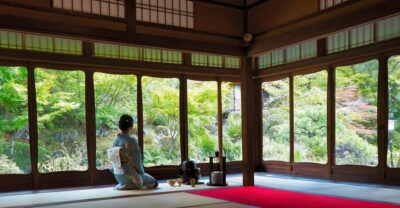
Tea Ceremony in a Traditional Tea House in Kiyomizu
Read our review →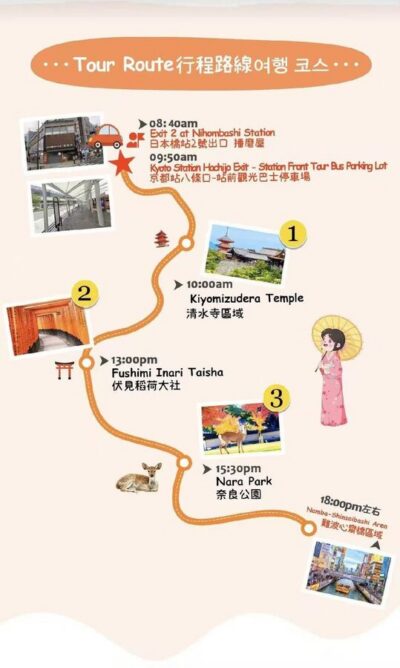
Kyoto Nara Day Trip │ Kiyomizu-dera Temple + Fushimi Inari-taisha Shrine + Nara Park (Departing from Osaka/Kyoto)
Read our review →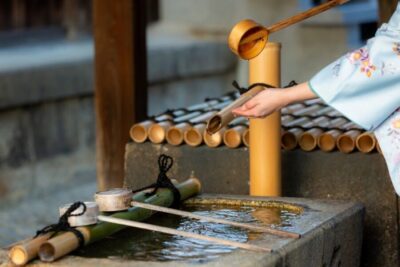
Browse the lists this tour appears in