Reviewed · KYOTO TOURS
Kyoto: Hop-on Hop-off Sightseeing Bus Ticket
Kyoto rewards a flexible plan. This bus links far-flung temples, markets, shrines, and palace grounds while letting you choose how long to stay. I like the freedom to hop off wherever your day leads, and I like the open-top view, which gives you a useful sense of Kyoto beyond its famous temple gates. The main catch is timing: buses can be 45 minutes or more apart, so a missed bus can slow your whole day.
At $27 per person, the ticket is a sensible choice if you plan to visit several stops, especially with the two-day option. It is less useful if you only want one or two temples, since taxis or regular city transport may be faster for a short list. The pre-recorded commentary comes in seven languages, though it is best treated as an orientation rather than a full history lesson.
In This Review
- Key points to know before you ride
- What this Kyoto bus ticket actually gives you
- Starting at Kyoto Station
- Kyoto Station to Nishihonganji
- Shijo Karasuma and Nishiki-ichiba Market
- Nijo Castle and the northwest route
- Kinkakuji, the Golden Pavilion
- Daitokuji and the Imperial Palace
- Ginkakuji and the eastern temples
- Gion, Gojozaka, and Kiyomizu-dera
- Sanjusangendo and the Kyoto National Museum
- Open-top views, commentary, and comfort
- One day or two days?
- Is the $27 price good value?
- Who should book this Kyoto bus pass?
- FAQ
- How long is the Kyoto hop-on hop-off ticket valid?
- Where can I first board the sightseeing bus?
- Which languages are available for the audio guide?
- Are temple and museum admission fees included?
- Can I bring food or drinks on the bus?
- Does the bus operate in bad weather?
- Should you book it?
Key points to know before you ride
- The route connects Kyoto Station with major sights: You can reach Nijo Castle, Kinkakuji, Ginkakuji, Kiyomizu-dera, Gion, and more without working out every train and bus connection.
- A two-day ticket gives Kyoto room to breathe: Use the first day to learn the routes, then return to your favorite areas on the second.
- Buses may be widely spaced: Some departures run about every 45 minutes, especially during quieter periods, so keep the timetable handy.
- The open top is weather dependent: You get broad city views in good weather, but direct sun, cold, rain, and severe weather can affect comfort or service.
- The audio guide is useful but brief: English, French, Japanese, Korean, Chinese, Spanish, and German are available, with commentary timed to the passing sights.
- Staff help is a major strength: Attendants and drivers are often praised for clear directions, friendly service, and help sorting out the red and blue routes.
What this Kyoto bus ticket actually gives you
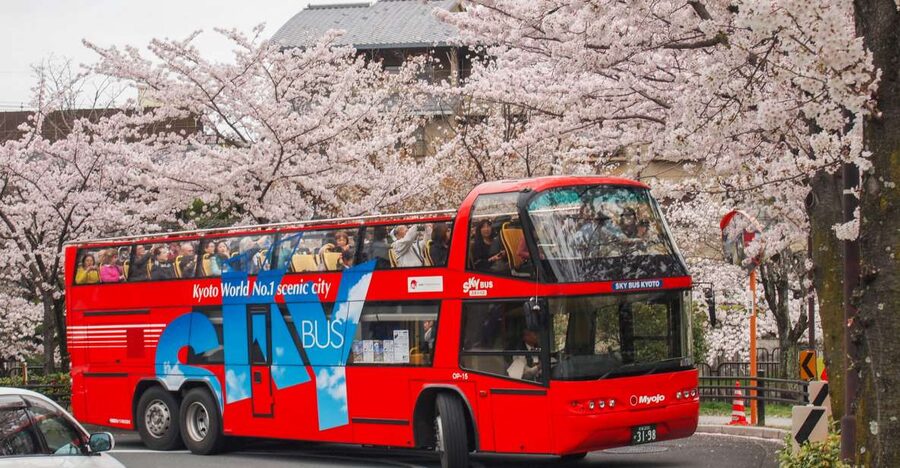
This is a sightseeing bus pass for one or two days, not an escorted temple tour. You show your mobile voucher when boarding, ride as far as you wish, and get off at any listed stop. When you are ready, you wait for the next bus and continue.
That distinction matters. You get transport and an overview of Kyoto, but entrance fees are separate. You also need to plan your temple visits, meals, and return times yourself. For many people, that is the appeal. Kyoto is spread out, and the bus gives you a simple framework without forcing you into a fixed group schedule.
The route passes two important clusters of sights. One side reaches the northwest, including Nijo Castle, Kitano-tenmangu Shrine, and Kinkakuji. The other heads east toward Ginkakuji, Heian-jingu, Gion, Kiyomizu-dera, Sanjusangendo, and the Kyoto National Museum.
The bus also calls at Kyoto Station, Nishihonganji, Shijo Karasuma near Nishiki-ichiba Market, Daitokuji, and the Kyoto Imperial Palace. You will not see every corner of the city, but you can cover a useful selection of its best-known areas.
A few more options to weigh up in Kyoto
- PERFECT KYOTO 1-Day Bus Tour
★ 5.0 · 13,518 reviews - [Kyoto & Nara Day Tour] Sagano Scenic Railway & Nara Park & Fushimi Inari Taisha Thousand Torii Gates & Togetsukyo Bridge & Bamboo Grove & Kimono Forest (Departing from Osaka)
★ 4.9 · 10,942 reviews - Kyoto: Fushimi Inari, Kinkakuji, Bamboo Grove 1 Day Bus Tour
★ 4.8 · 4,316 reviews
Starting at Kyoto Station
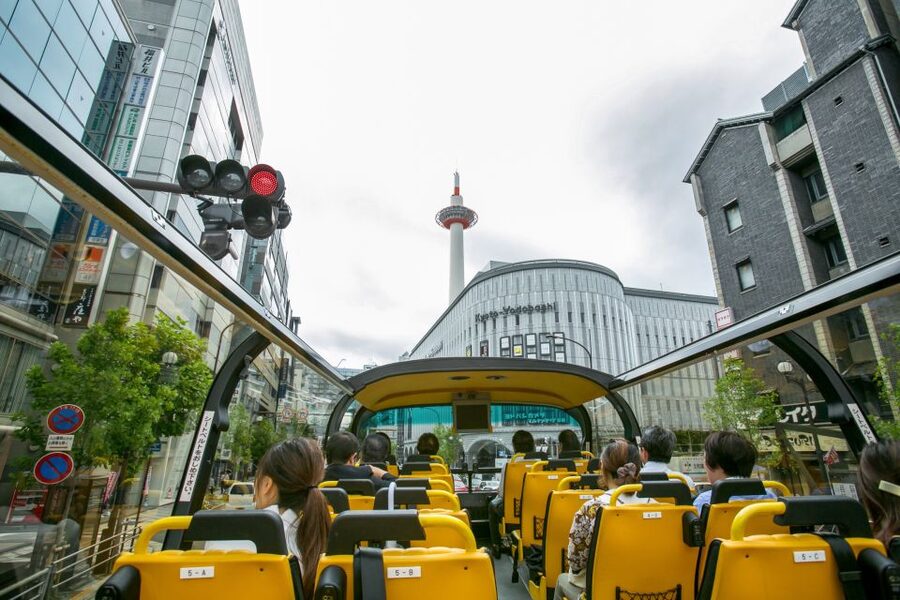
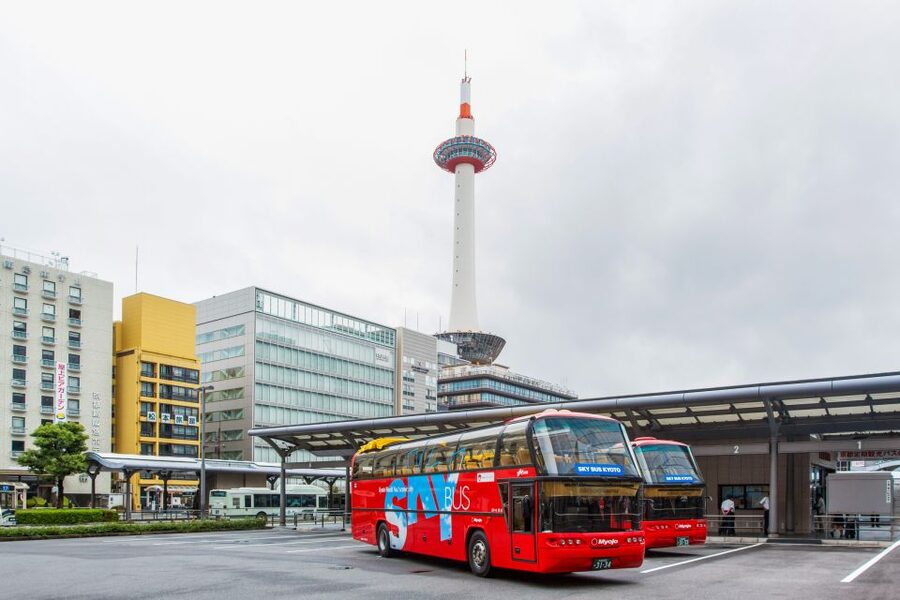
The first stop is in front of the Isetan department store, reached from the north central exit of Kyoto Station. This is a practical starting point because Kyoto Station is easy to reach and has restaurants, shops, restrooms, and places to wait before or after your ride.
I would arrive with the route information open on your phone. The red and blue routes can cause some initial confusion, particularly if you are trying to decide which bus reaches the next temple. Staff are generally willing to explain the system, but a quick look at the stop order will save time.
You can also board at any other stop. That makes the pass useful if you are staying near Gion, the shopping streets, or one of the eastern temple areas. You do not need to return to Kyoto Station each time.
Kyoto Station to Nishihonganji
Nishihonganji is one of Kyoto’s major Buddhist temple compounds and a quieter first stop than some of the more famous sights. The stop is listed near the Kyoto Tokyu Hotel, making it useful if you want to break up the ride soon after leaving the station.
This is a good place for a calmer introduction to Kyoto. You can visit the temple area, then continue toward the shopping and castle stops. The attraction is not as instantly recognizable as Kinkakuji, so people with limited time may prefer to stay on the bus.
The route through the central city also gives you a look at the contrast between traditional religious sites and modern streets. That change is part of the value of riding above street level. You are not simply moving between isolated monuments.
Shijo Karasuma and Nishiki-ichiba Market
The Shijo Karasuma stop puts you near Nishiki-ichiba Market, Teramachi-dori, and the Kawaramachi shopping area. This is one of the most useful stops for combining sightseeing with food and shopping.
Nishiki Market can take longer than expected. You might plan a quick look, then spend much of the morning sampling food, browsing shops, or walking through nearby arcades. That makes the bus gap important. If buses are roughly 45 minutes apart, do not leave the market at the last possible moment.
I like this stop because it adds ordinary city life to a temple-heavy route. Kyoto is not only imperial buildings and polished gardens. Here you get shops, snacks, crowds, and streets where people are going about their day.
A completely different kind of day out:
- Kyoto: Tea Ceremony in a Traditional Tea House in Kiyomizu
★ 4.9 · 3,519 reviews - Kyoto: Gion Make Your Own Chopsticks with Engraving Option
★ 5.0 · 3,465 reviews - Kyoto Nara Day Trip │ Kiyomizu-dera Temple + Fushimi Inari-taisha Shrine + Nara Park (Departing from Osaka/Kyoto)
★ 4.7 · 3,408 reviews - Kyoto Geisha Walking Tour: Gion District & Hidden Gems
★ 4.7 · 3,273 reviews
Nijo Castle and the northwest route
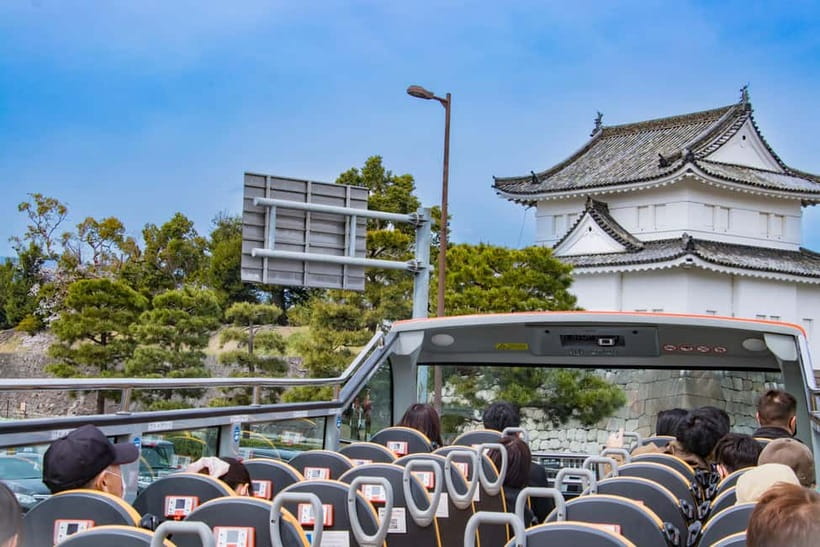
Nijo Castle is one of the route’s strongest stops. Its ornate gates, decorated interiors, and famous nightingale floors make it a substantial visit rather than a quick photo stop. Allow enough time to walk through the grounds before catching the next bus.
Nijo Castle is also a useful first major stop because it shows Kyoto’s political side. The eastern temple route focuses on religion and gardens, while Nijo Castle brings you into the world of shoguns and court power.
From here, the bus continues toward Kitano-tenmangu Shrine and Kamishichiken. Kitano-tenmangu is associated with scholarship and has a more local shrine atmosphere than some of Kyoto’s busiest landmarks. Kamishichiken, one of the city’s traditional entertainment districts, adds another layer to the route.
You should resist the temptation to treat each stop as a ten-minute photo break. Kyoto’s sites are often larger than they look from the road, and the next bus may not come quickly.
Kinkakuji, the Golden Pavilion
Kinkakuji is the headline stop for many people. The Golden Pavilion is visually striking, but the visit is not a private or quiet experience. The grounds can be crowded, especially during popular seasons, and the route’s convenience does not reduce the crowds inside the temple complex.
The bus stop is close enough to make the visit practical. You will still need to walk through the grounds and follow the visitor flow. Entrance is not included in the $27 ticket, and cash may be important. One useful warning is that Kinkakuji has been reported to accept cash only, with no ATM on the premises, so prepare before you arrive.
This is a place where expectations matter. You can get the famous view, but you should not expect to linger alone beside the pond. The bus gets you there efficiently; it cannot control how busy the temple is.
Daitokuji and the Imperial Palace
Daitokuji offers a different feel from Kinkakuji. It is a large temple complex with a number of sub-temples, though access to individual areas can vary. The stop works well for you if you want a less obvious addition to the northwest route.
The Kyoto Imperial Palace stop is listed near Doshisha University. The palace grounds give you open space and a strong sense of Kyoto’s former role as Japan’s imperial capital. It is a worthwhile contrast with the tighter streets and crowded temple approaches elsewhere.
These two stops may appeal most to people with a second day. On a one-day ticket, you may need to choose between spending more time at a few major sites or making short visits to several places. The pass gives you options, but it does not remove the need to make choices.
Ginkakuji and the eastern temples
Ginkakuji, the Silver Pavilion, is one of the best reasons to choose this service. The pavilion itself is more restrained than Kinkakuji, but the gardens and hillside paths are a major part of the visit.
The stop is also a gateway to the Philosopher’s Path area, though the full walk can take time. If Ginkakuji is high on your list, avoid squeezing it between two tight bus connections. A two-day ticket is much more comfortable here because you can give the temple and nearby streets the time they deserve.
The eastern route continues to Heian-jingu Shrine and Okazaki Park. Heian-jingu is known for its large vermilion entrance structures and broad grounds. Okazaki Park adds museums and cultural sites to the area, making this a good stop for a slower half-day.
The bus gives you a useful overview of how these eastern areas connect. You may find a site you want to revisit on foot after seeing it from the route.
Gion, Gojozaka, and Kiyomizu-dera
The Gion stop, near Kotowa-Kyoto Yasaka, places you close to one of Kyoto’s most atmospheric districts. Traditional facades, narrow lanes, restaurants, and Yasaka Shrine are all nearby, but the district rewards walking rather than a quick bus stop.
Gojozaka is the listed stop for Kiyomizu-dera and the Gion area. Kiyomizu-dera is one of Kyoto’s essential visits, with a broad wooden stage and views across the city. The approach involves an uphill walk through a busy shopping street, so comfortable shoes are a practical must.
This stop can consume a large part of your day. You may want to see the temple, browse the approach, and continue into Gion. Plan around the bus schedule instead of assuming you can walk out at the exact time the next bus arrives.
The ride itself can be especially pleasant here. From the upper deck, you get changing views of Kyoto streets and surrounding hills, although the best views depend on traffic, weather, and where you are sitting.
Sanjusangendo and the Kyoto National Museum
The final listed eastern stop combines Sanjusangendo with the Kyoto National Museum and is near the Hyatt Regency Kyoto. Sanjusangendo is famous for its long wooden hall and rows of Buddhist statues. It is a very different experience from the open grounds of Kiyomizu-dera or the garden setting of Ginkakuji.
The Kyoto National Museum gives you another option if you want indoor time, especially in hot, cold, or wet weather. Entrance fees are not included, so check the cost before committing your day to museum visits.
This stop also makes sense late in the day because it brings you toward central Kyoto and Kyoto Station. Still, do not rely on a last-minute bus if you have a train to catch. Traffic can affect even a well-run sightseeing route.
Open-top views, commentary, and comfort
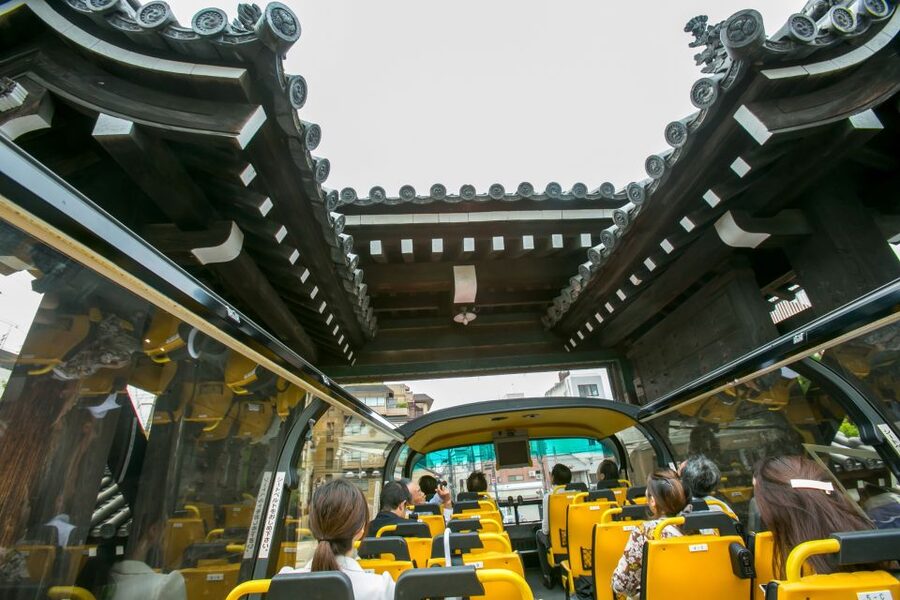
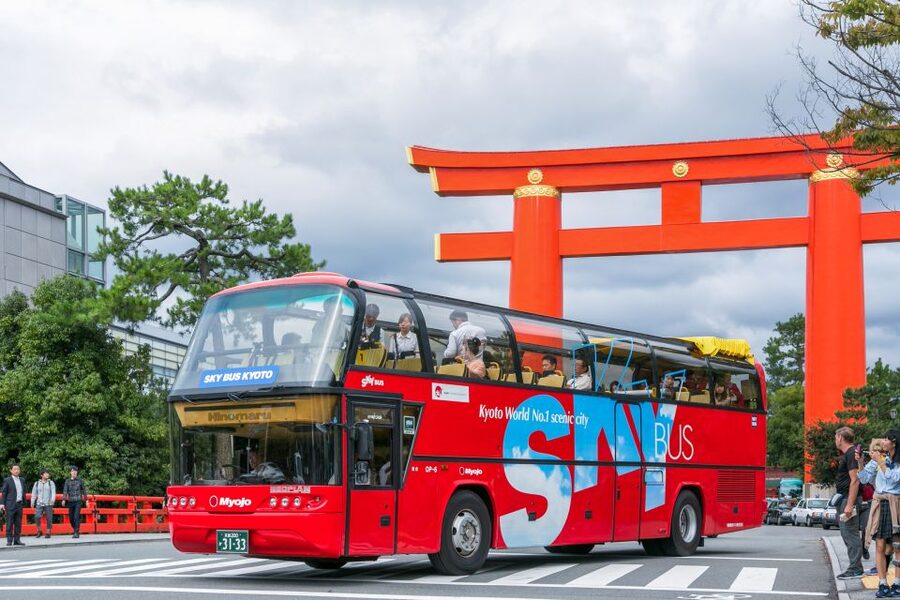
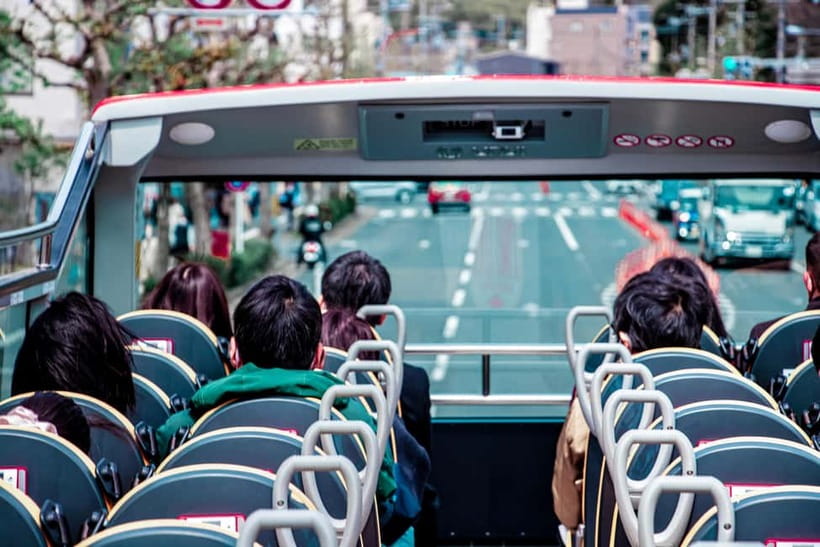
The upper deck is the main visual treat. You can see over some street-level obstructions and get a broad sense of Kyoto’s layout as the bus moves between districts. The roof is open, though part of the upper deck may be covered, so you can usually find some protection from harsh sun or light rain.
Direct sunlight is a real issue. Bring a hat, water in a plastic bottle, and sun protection. In cooler months, the wind can make the ride surprisingly cold. Wet-weather raincoats are provided, but umbrellas are not allowed on board.
The lower deck is the practical choice when the weather turns unpleasant. It is not as good for views, and one wet-day experience found sightseeing difficult from downstairs, but comfort may matter more than photos. Severe weather, including typhoons or thunderstorms, can stop the buses from operating.
The audio commentary is available in English, French, Japanese, Korean, Chinese, Spanish, and German. It gives short facts and points out sites as the bus approaches them. I would use it to get your bearings, not as a substitute for a temple guidebook.
There are a few limits. The commentary can cut off mid-sentence when the bus reaches a location, then switch to a directional announcement. Some riders also found background music louder than the spoken information. Bring your own notes if you want detailed history.
Food, alcohol, smoking, umbrellas, and selfie sticks are not allowed. Soft drinks with lids, including plastic bottles and lidded coffee cups, are permitted. Wi-Fi is listed as included but is temporarily suspended, so do not count on it for route planning.
One day or two days?
The one-day ticket works if you have a clear shortlist. You could focus on Nijo Castle and Kinkakuji, or spend the day on the eastern route with Ginkakuji, Heian-jingu, Gion, and Kiyomizu-dera. Trying to see every stop properly in one day will feel rushed.
I prefer the two-day ticket for a first visit. Use the first ride as an overview, perhaps completing a loop to understand the city and decide where to stop. Then use the second day for longer visits at the places that caught your interest.
That approach also protects you from Kyoto’s distances. Shopping at Nishiki Market may run long. Kiyomizu-dera may take more time than expected. A two-day pass lets you slow down rather than watch the clock.
Children aged five and under ride free when sitting on an adult ticket holder’s lap, with one child per paying adult. The information supplied does not list a separate accessibility setup, and one rider specifically wished for a ramp and more lower-deck seating, so anyone needing these features should confirm arrangements before booking.
Is the $27 price good value?
At $27, the pass can pay off quickly if you make several rides across both routes. Its real value is not simply the number of rides. It is the time and mental energy saved by avoiding a series of unfamiliar connections between widely separated sights.
For a first visit, that simplicity has real worth. Staff are often praised for friendly help, clear directions, and punctual departures. Drivers and attendants have helped people sort out stops, nearby shops, and onward routes. Names such as Miyuki, Casey, Lauren, and Frederick received special praise for their help or commentary, though service may vary by departure.
The drawbacks are equally clear. Long waits reduce the value of a one-day ticket. Traffic can slow the ride, and the bus is not always the fastest way to reach a single destination. The audio guide is limited, and temple admission costs extra.
I would compare your plans rather than automatically buying the pass. If you want three or four major sights spread across Kyoto, $27 is attractive. If you already know you only want Kinkakuji and Kiyomizu-dera, regular transport may be more efficient.
Who should book this Kyoto bus pass?
I recommend it most strongly to first-time visitors, short-stay visitors, families who want simple transport, and anyone uneasy about navigating Kyoto’s large stations. It is also helpful if you want an introductory ride before choosing which districts deserve more time.
It suits independent sightseeing because you decide when to get off. You are not tied to a guide’s walking pace, and you can mix temples with markets, museums, shopping, and meals.
I would be more cautious if you dislike waiting, need a fully narrated history tour, or plan to visit only one part of Kyoto. It is also less appealing in poor weather, when the upper deck loses its charm and service may be disrupted.
FAQ
How long is the Kyoto hop-on hop-off ticket valid?
You can choose a one-day or two-day ticket. The pass provides unlimited rides during the selected validity period.
Where can I first board the sightseeing bus?
The first stop is Kyoto Station. Leave through the north central exit, and the bus stop is directly in front of the Isetan department store. You can also board at any listed stop along the route.
Which languages are available for the audio guide?
The audio guide is available in English, French, Japanese, Korean, Chinese, Spanish, and German.
Are temple and museum admission fees included?
No. The ticket covers the bus and audio commentary, but entrance fees to attractions, food, and drinks are separate.
Can I bring food or drinks on the bus?
Food and alcoholic drinks are not allowed. You may bring soft drinks with lids, such as plastic bottles or lidded coffee cups.
Does the bus operate in bad weather?
Buses may not operate during severe weather such as typhoons or thunderstorms. The upper deck is open to direct sunlight, and raincoats are provided in wet weather.
Should you book it?
Book this pass if you want an easy first look at Kyoto and plan to visit several districts. The two-day ticket is the safer choice for a relaxed schedule, especially if Ginkakuji, Kiyomizu-dera, Kinkakuji, and Nijo Castle are all on your list.
Choose one day if your time is short and your priorities are clear. Skip it if you want the fastest point-to-point transport or a detailed guided tour. For most first-time visitors, the bus is a useful city overview, a practical way to reach major sights, and good value when you use it for more than a couple of rides.
Just added in Kyoto
- The “Golden Route” and Ancient Japan by DIAMIR Erlebnisreisen – 14-Day Tour★ 2.0 · 2 reviews
- Japan: Castles & Cuisine by G Adventures – 6-Day Kyoto to Osaka Tour★ 4.5 · 4 reviews
- Cycle Japan by Explore! – 13-Day Kyoto to Tokyo Tour★ 4.7 · 12 reviews
- Cycle Japan by Intrepid Travel – 11-Day Kyoto to Tokyo Tour★ 4.8 · 2 reviews
- Classic Japan by Intrepid Travel – 11-Day Kyoto to Tokyo Tour★ 4.4 · 14 reviews
- Ancient & Modern Japan 14-Day Tour by Exodus Adventure Travels★ 4.4 · 40 reviews
- 5 Day Cultural Adventure of Kyoto, Nara & Osaka by Tourist Journey★ 2.5 · 2 reviews
- 12 Days Kinosaki Onsen Escape: A Journey Through Japan’s Timeless Towns by UME Travel★ 4.8 · 5 reviews
Kyoto Tours, compared.
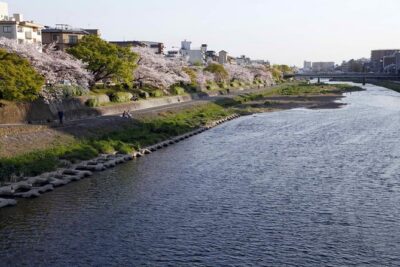
![[Kyoto & Nara Day Tour] Sagano Scenic Railway & Nara Park & Fushimi Inari Taisha Thousand Torii Gates & Togetsukyo Bridge & Bamboo Grove & Kimono Forest (Departing from Osaka)](https://media.japanvisits.com/wp-content/uploads/kyoto-nara-day-tour-sagano-scenic-railway-nara-park-fushimi-inari-taisha-thousand-torii-gates-togetsukyo-bridge-bamboo-grove-kimono-forest-departing-from-osaka-k110001-400x257.jpg)
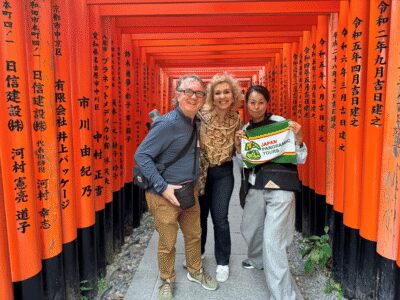
Fushimi Inari, Kinkakuji, Bamboo Grove 1 Day Bus Tour
Read our review →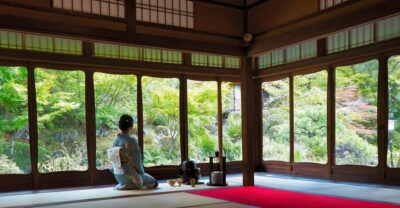
Tea Ceremony in a Traditional Tea House in Kiyomizu
Read our review →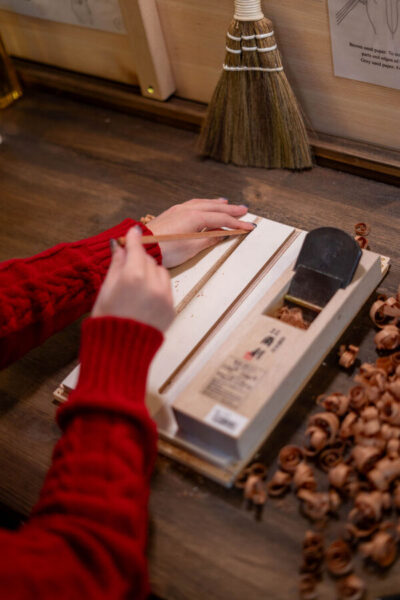
Gion Make Your Own Chopsticks with Engraving Option
Read our review →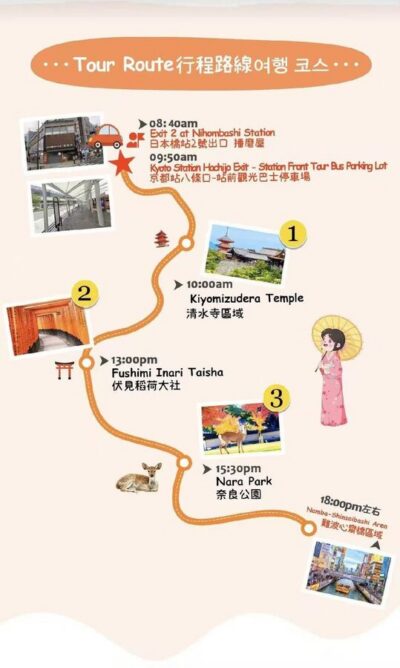
Kyoto Nara Day Trip │ Kiyomizu-dera Temple + Fushimi Inari-taisha Shrine + Nara Park (Departing from Osaka/Kyoto)
Read our review →
Kyoto Geisha Walking Tour: Gion District & Hidden Gems
Read our review →