
Reviewed · MARKETS AND FOOD HALLS
Kyoto: Local Food Tasting Tour at the Nishiki Market
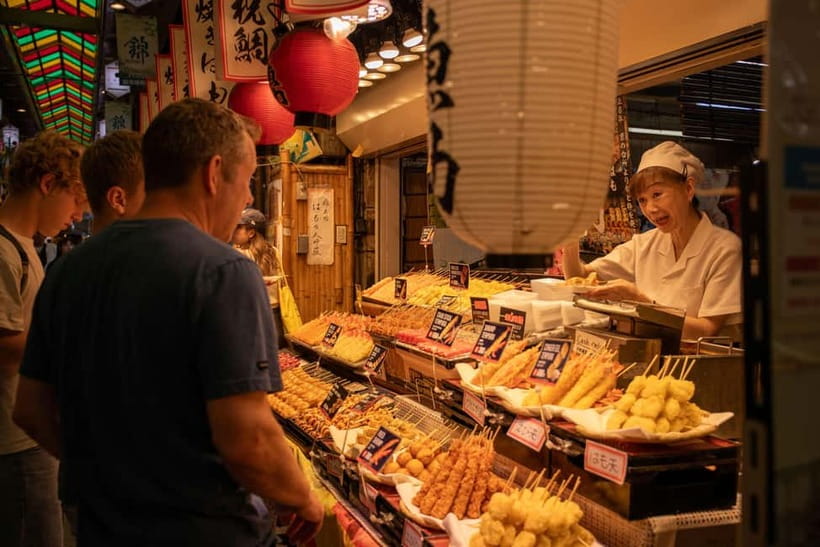
Arrive hungry, leave better oriented. This small-group food tour gives you a clear path through Nishiki Market, where 130 food stalls can otherwise feel like one long wall of tempting, unfamiliar choices. I like the mix of five substantial local tastes, including yuba, obanzai, hamo tempura, and wagyu steak skewers. I also like that the guide adds shrines, shopping arcades, and everyday cultural context instead of treating the market as a simple eating stop. The main drawback is practical: the tour cannot handle vegetarian, halal, kosher, gluten-free, or allergy-related diets.
The $78 price makes sense if you value guidance and want to sample foods you might skip on your own. Guides such as Ayu, Takuma, Toshi, Saki, and Miho have been praised for explaining dishes clearly, adapting the pace, and helping people navigate crowded lanes. Just remember this is a tasting walk, not a sit-down lunch, and you should wear good shoes and bring rain gear.
In This Review
- What makes this Kyoto food walk worthwhile
- Why Nishiki Market is easier with a guide
- The five tastings: a useful introduction to Kyoto food
- The route after eating: shrines and shopping streets
- What the guides add to the experience
- Three hours of tasting, walking, and browsing
- Is $78 good value?
- The optional tea ceremony near Nishiki Market
- Who should book this experience?
- Should you book the Nishiki Market food tour?
- FAQ
- How long does the Nishiki Market food tour last?
- How many people are in the group?
- What language is the tour offered in?
- Which foods are included?
- Is this a full lunch?
- Is the tea ceremony included?
- When does the tea ceremony begin?
- Can the tour accommodate dietary restrictions?
- What should I bring?
- Is the tour suitable for wheelchair users?
What makes this Kyoto food walk worthwhile
- A 400-year-old market with 130 stalls: Nishiki Market is large enough to overwhelm first-time visitors, so a guide helps you focus on the best-known local specialties.
- Five planned Kyoto foods: Tastings include yuba, obanzai, hamo tempura, wagyu steak skewers, and other selected bites.
- A food lesson with cultural context: You learn about Kyoto customs, ingredients, local cooking, and the role food plays in daily life.
- More than the market: The route adds Nishiki-Tenmangu Shrine, Shinkyogoku Shopping Arcade, Teramachi Street, and another small cultural stop.
- A genuinely small group: With a maximum of six participants, you can ask questions without shouting across a crowd.
- An optional tea ceremony: Select the tea ceremony version for a separate 90-minute session with kimono dressing and a tea master near Nishiki Market.
Why Nishiki Market is easier with a guide
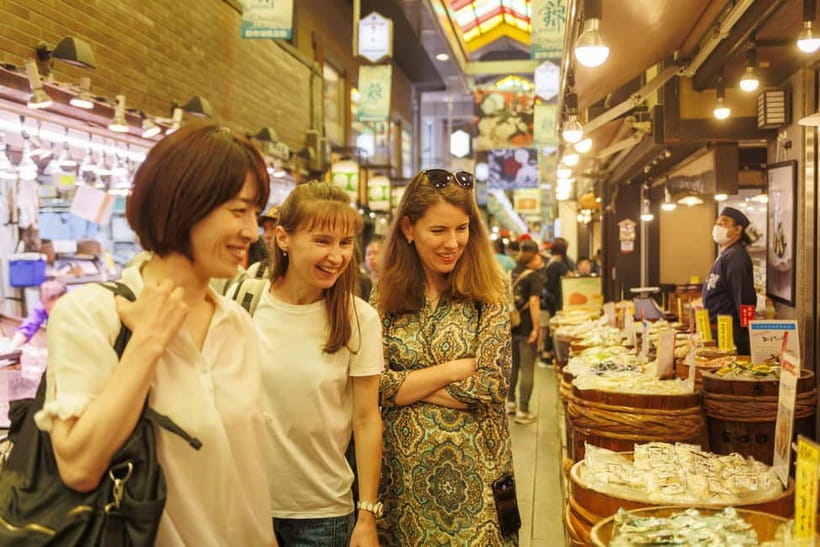
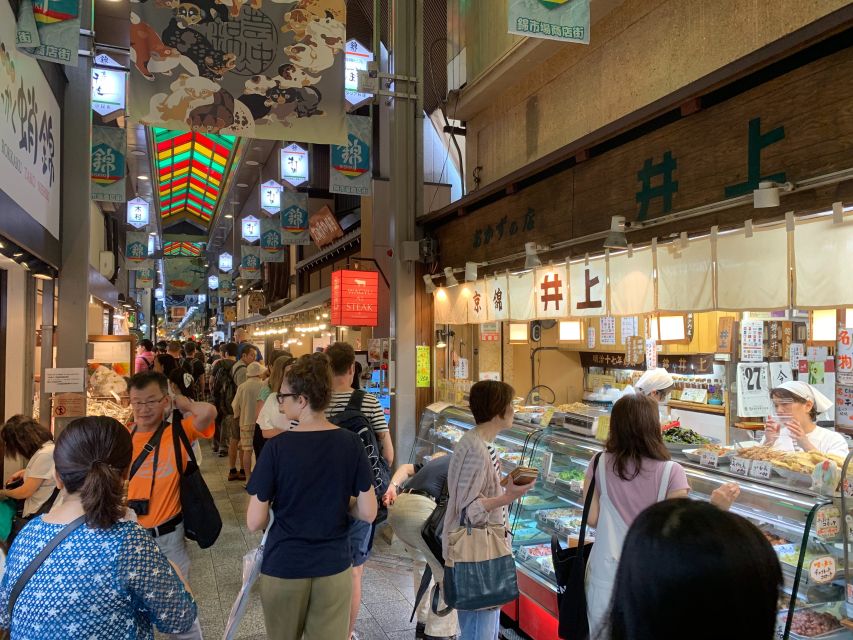
Nishiki Market is often called Kyoto’s Kitchen, and the nickname fits. The covered market stretches through a dense shopping area, with stalls selling prepared foods, seasonings, sweets, pickles, seafood, and local ingredients. The challenge is not finding food. It is knowing what is worth trying, how to eat it, and what its place is in Kyoto cooking.
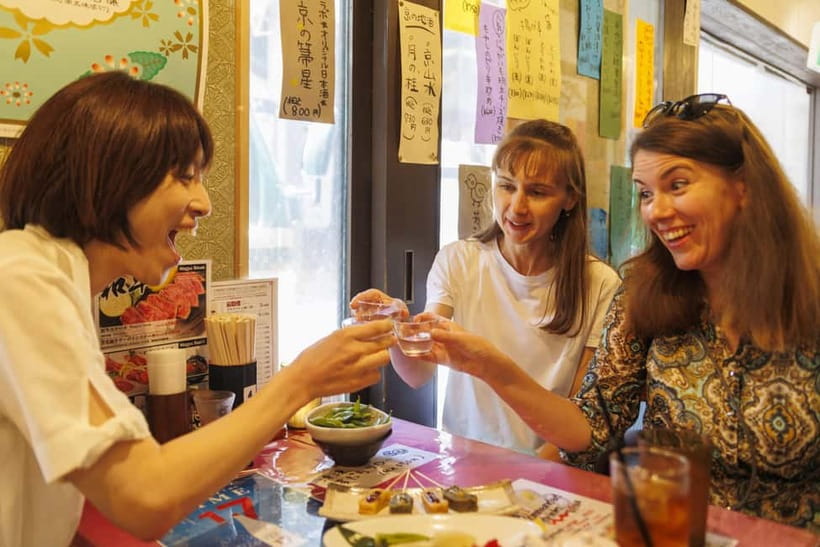
That is where this tour earns its keep. Your English-speaking guide leads you from shop to shop, explains what you are seeing, and handles the uncertainty of ordering unfamiliar items. You do not need to point at a tray and hope for the best.
The group limit of six matters here. Market lanes can be tight, and a large group would make the walk clumsy. In a smaller party, you can stop for questions, hear the explanation, and keep the visit moving. Several guides have also helped people with suggestions for the rest of their Kyoto visit, which adds useful value beyond the scheduled route.
Still, this is not a private custom food crawl. The stops and foods are selected in advance, and the tour cannot meet major dietary restrictions. If you have allergies or follow a strict diet, this is not the right booking.
More Food Tours in Kyoto
- Kyoto Night Foodie Tour in Gion (9+ dishes + 6 Sake tastings)
★ 5.0 · 1,762 reviews - Kyoto: Gion Food Tour 13 Dishes at 4 Eateries
★ 5.0 · 408 reviews - Kyoto Foodie Night Tour
★ 5.0 · 376 reviews
The five tastings: a useful introduction to Kyoto food
The included food is the heart of the experience. You receive five special local foods, along with smaller tastings such as Kyoto seasonings, crackers, Japanese-flavored honey, and other samples.
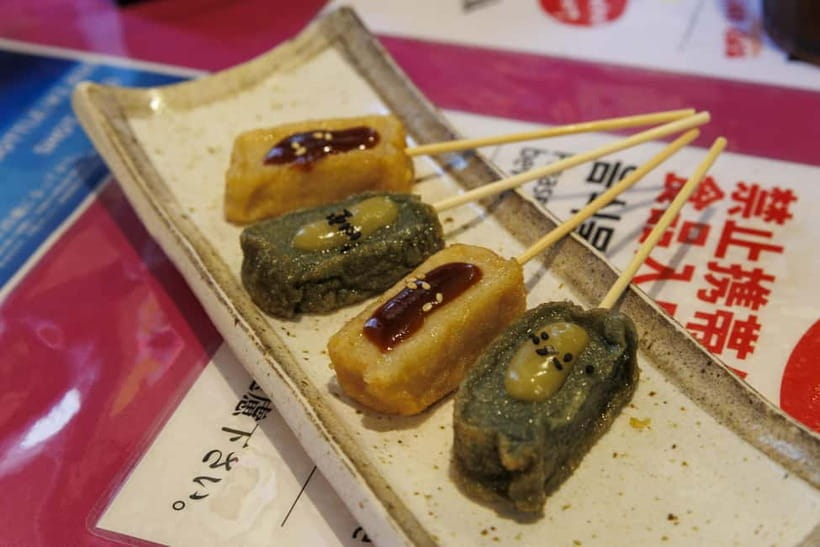
Yuba is one of the most useful introductions. This delicate tofu skin is associated with Kyoto cuisine and has a texture that many first-time visitors may not expect. A guide can explain what you are eating and why it matters, turning a quick sample into a small food lesson.
Obanzai, Kyoto-style home cooking, gives the tour a different angle. Market food is not only skewers and snacks. Obanzai reflects familiar, everyday cooking, often built around seasonal vegetables and simple preparation. It helps you see Kyoto food as more than restaurant fare.
Hamo tempura is another memorable stop. Hamo, or conger pike, is a local specialty that may not be obvious to someone browsing alone. Tempura makes it approachable, while the guide can add background about the dish and local eating habits.
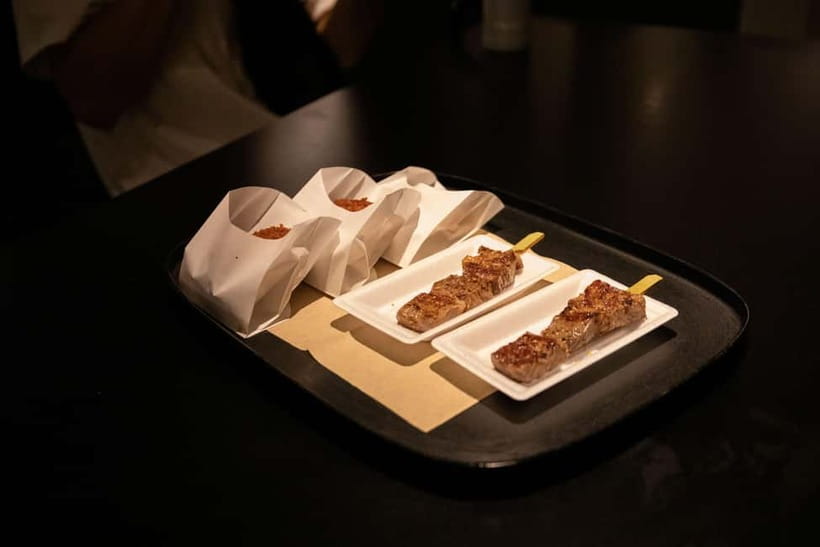
Wagyu steak skewers provide a richer, more immediately familiar bite. The skewer format keeps the tasting casual, and the portion fits the walking-tour style better than a full steak meal. It is a good contrast to tofu skin, home cooking, and lighter samples.
The fifth tasting and the smaller samples give the meal more range. Exact choices can vary, so you should not book this expecting a fixed restaurant menu. Think of it as a guided sampler that introduces flavors, textures, and shop specialties in small portions.
Food prices in Kyoto can climb quickly when you buy several samples on impulse. The advantage here is that your main tastings are included in the $78 cost, so you can explore without repeatedly wondering if each purchase is worth it. You may still want extra money for shopping or additional food, especially if something catches your eye.
The route after eating: shrines and shopping streets
The tour begins at one of three possible meeting points near Shijo Street. Check the exact location carefully before leaving, since finding the correct starting spot has caused confusion for some participants. One guide waited while a delayed pair found the meeting point, but you should not rely on that courtesy.
The main Nishiki Market visit lasts about 90 minutes. That is enough time for food stops, explanations, and a first look at the market, but not enough to inspect every stall. This is a good thing for most people. Trying to cover all 130 vendors would turn the visit into a tiring march.
After the market, the group visits Nishiki-Tenmangu Shrine for about 10 minutes. This gives you a quiet cultural pause after the narrow market lanes. Guides have used the shrine stop to explain local customs and the importance of religious sites in Kyoto, making the route feel more connected to the city.
The tour then moves to Shinkyogoku Shopping Arcade, with about 45 minutes for guided sightseeing and shopping. This is a useful change of pace. You can browse shops, look at small goods, and see how Kyoto’s commercial life continues beyond the market. If you enjoy buying edible souvenirs, this section may tempt you to spend more than planned.
The itinerary includes another 10-minute cultural stop described as a lesser-known site. Since the exact place is not specified, do not book the tour for one particular attraction. Treat it as an added pause selected by the guide.
The final major section is Teramachi Street Shopping District, which receives about 30 minutes. The route ends at one of three drop-off areas, including the original Shijo area, Nishiki Orizuruya, or Kyoto Takashimaya S.C. This makes the tour useful for continuing your afternoon nearby rather than sending you across town.
What the guides add to the experience
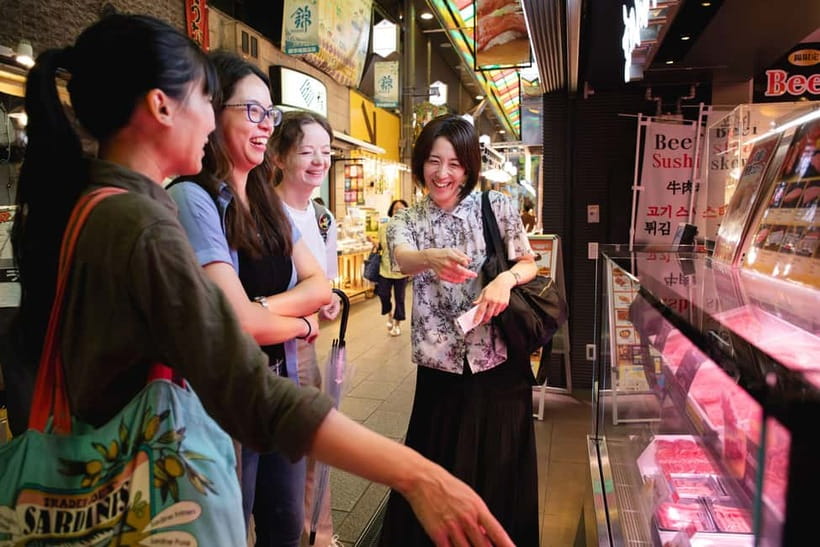
The strongest part of this tour is the guide-to-guest connection. Ayu has been praised for combining food explanations with a warm, easy pace. Takuma has helped families, answered many questions, and encouraged people to try foods they would not have ordered alone. Toshi has been noted for balancing food, culture, and history without making the walk feel like a lecture.
Saki’s market knowledge is especially useful for first-time visitors. She has been praised for finding foods participants might have missed, explaining them in plain terms, and paying attention to individual tastes. Miho’s calm manner has also been helpful in crowded sections, where a steady guide can make the market feel far less confusing.
The personal style varies by guide, as it should. Some focus more on cuisine, some on shrines and customs, and some offer broader Kyoto advice. That variety is part of the appeal, but it also means you should see the tour as a guided introduction rather than a perfectly identical performance every day.
Families can do well here. One parent took an 11-year-old who enjoyed trying unfamiliar food, and another family appreciated a guide who adjusted the pace for an older participant. The tour is still a walking activity, though, and it is not suitable for wheelchair users or people with mobility impairments.
More Markets and Food Halls in Kyoto
- Nishiki Market Brunch Walking Tour (7 Tastings + Brunch)
★ 5.0 · 1,355 reviews - Kimono Tea Ceremony at Kyoto Maikoya, NISHIKI
★ 5.0 · 911 reviews - Kyoto Nishiki Market Food and Culture Walking Tour
★ 5.0 · 412 reviews - Kyoto: Nishiki Market Tea Ceremony with Koto Performance
★ 4.8 · 294 reviews
Three hours of tasting, walking, and browsing
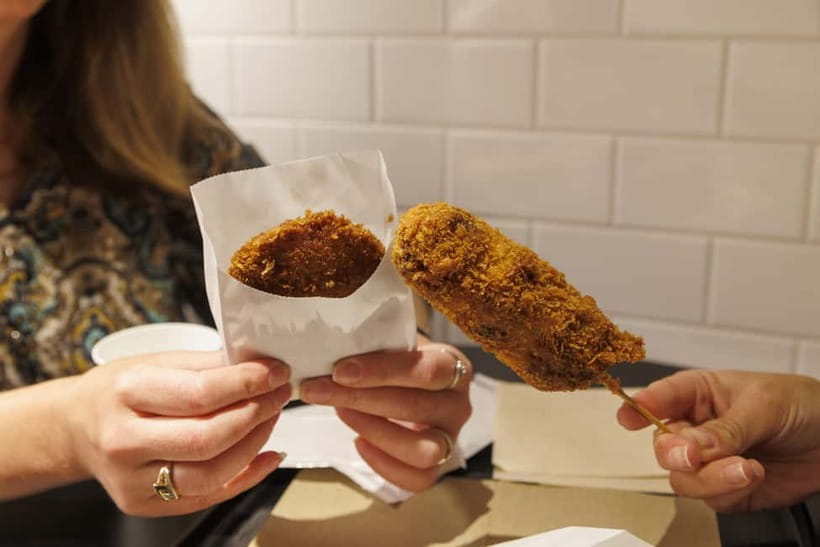
The advertised duration is three hours, also shown as 270 minutes. That wording is a little inconsistent, so allow roughly three to four hours in your day, especially if the group moves slowly or spends extra time at shops.
The pace combines walking, eating, and short explanations. One participant described the balance as just right, and that is the best way to think about the format. You are not rushing from bite to bite, but you are also not sitting down for long stretches.
Wear comfortable shoes. The route includes market lanes, shopping streets, shrine grounds, and ordinary city sidewalks. Rain gear is also sensible because the walk continues in wet weather unless the operator changes arrangements.
Do not bring luggage or a large bag. Crowded market passages are difficult enough without dragging a suitcase behind you, and large bags are not allowed. A small day bag is the practical choice.
Is $78 good value?
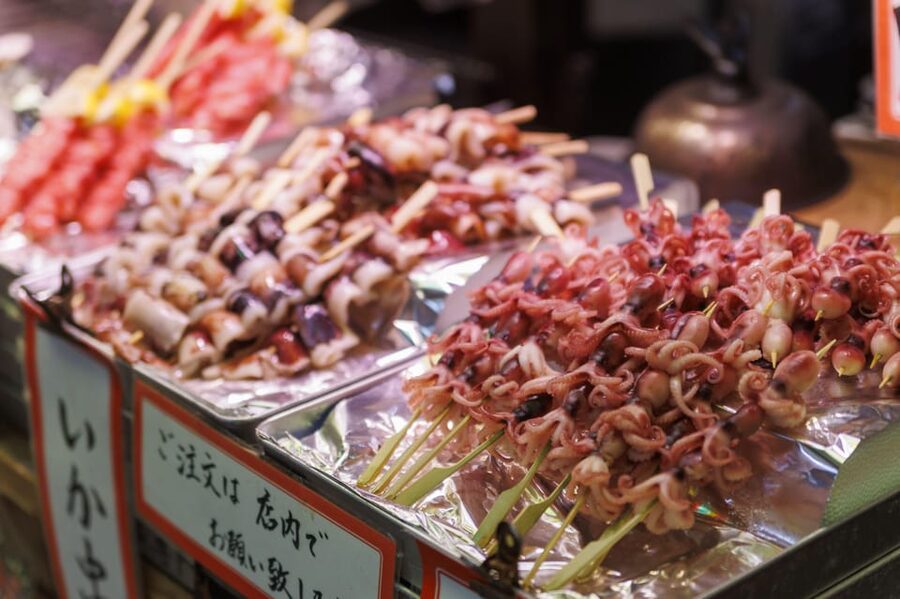
At $78 per person, this is not the cheapest way to wander Nishiki Market. You can enter the market without paying an admission fee, and you can buy individual snacks as you go.
The price becomes easier to justify when you value five included tastings, an English-speaking local guide, and a route that continues into nearby cultural and shopping districts. You are paying for selection, explanation, and confidence, not simply for food.
A guide also helps reduce the cost of mistakes. You are less likely to buy a disappointing sample just because the sign looks interesting, and you get to try foods that may be hard to identify from an English menu. The market becomes a place to learn rather than a row of decisions.
The tour is especially good value early in a Kyoto visit. You can return to Nishiki Market later with a better idea of what you liked, where to browse, and which foods deserve another try. One past participant enjoyed the experience enough to revisit the market independently afterward.
It is less useful if you already know Nishiki Market well, prefer to choose every dish yourself, or want a substantial meal. The food is spread across several stops, so you may finish satisfied but not ready to skip dinner.
The optional tea ceremony near Nishiki Market
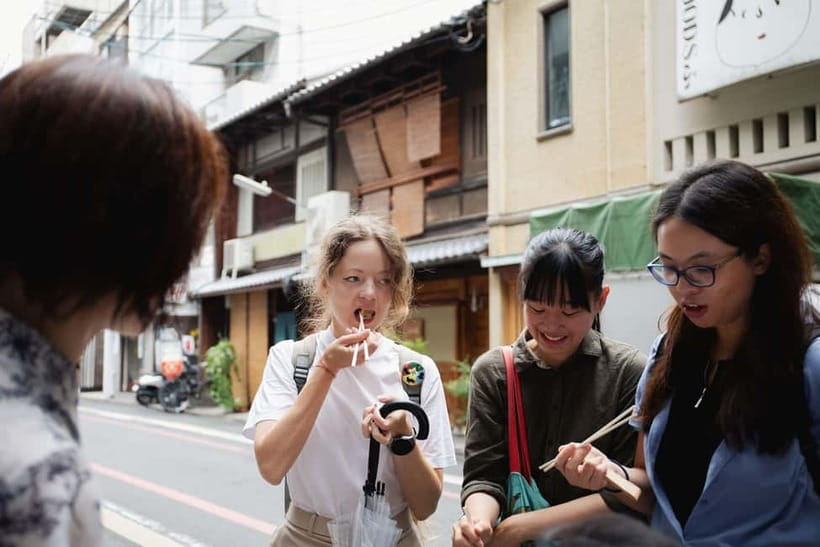
If you choose the tea ceremony option, the experience continues after the food tour. The tea ceremony begins at 2:00 PM, and you must make your own way to the venue near Nishiki Market.
The separate session lasts 90 minutes. It begins with professional kimono dressing, followed by a traditional tea ceremony led by a seasoned tea master. You learn the meaning behind the movements and gestures, then have time for commemorative photographs in the traditional setting.
This option adds a formal cultural experience to the casual market walk. It is a good match if you want more than food and shopping, but you should plan the timing carefully. Since you walk to the tea venue yourself, allow enough time after the market route.
Do not assume the tea ceremony is included in the basic booking. You need to select the version that specifically includes it.
Who should book this experience?
I would recommend this tour to first-time Kyoto visitors who want an easy introduction to local food. It also suits solo visitors, couples, families with older children, and anyone who feels uncertain about ordering at Japanese market stalls.
Food lovers who enjoy tasting small portions will get the most from it. The tour gives you variety without asking you to commit to a full serving of every unfamiliar dish. You can ask what something is before taking a bite, which is a small luxury in a market where labels may not help much.
It is also a good choice for people who like cultural background with their meals. The best moments are not only the bites themselves, but the explanations about food traditions, Kyoto customs, shrines, and daily life.
I would skip it if you need a special diet accommodated. The operator states that vegetarian, halal, kosher, gluten-free, and allergy-related requests cannot be handled. I would also choose another activity if walking is difficult or if you prefer a long restaurant lunch.
Small-group tours can vary in feel depending on the day. You might have the full six-person group, or you might find yourself in a much smaller party. Past participants have sometimes had near-private experiences, which allows more questions and a slower pace, but availability will depend on the booking date.
The tour has a 4.7 rating from 135 reviews, with repeated praise for friendly guides, clear explanations, good food choices, and a comfortable rhythm. The one useful criticism is that some people felt they could have explored the market alone. That is fair. You are paying for help, not access.
Should you book the Nishiki Market food tour?
Book it if you want to get your bearings fast, taste several Kyoto specialties, and learn what you are eating. The combination of yuba, obanzai, hamo tempura, wagyu skewers, shrine visits, and shopping streets gives you a well-rounded first look at this part of the city.
Skip it if you are confident navigating markets, have strict dietary needs, or want complete freedom over every stop. For most first-time visitors, though, the $78 cost is reasonable because the guide turns a crowded market into a manageable food lesson. Add the tea ceremony if you want a longer cultural afternoon and can reach the venue near Nishiki Market by 2:00 PM.
FAQ
How long does the Nishiki Market food tour last?
The activity is advertised as three hours, with the duration also shown as 270 minutes. Allow some flexibility in your schedule.
How many people are in the group?
The tour is limited to six participants, making it a small-group walking experience.
What language is the tour offered in?
The live tour guide speaks English.
Which foods are included?
The included tastings feature yuba, obanzai, hamo tempura, wagyu steak skewers, and other selected local foods. Smaller samples may include Kyoto seasonings, crackers, and Japanese-flavored honey.
Is this a full lunch?
No. It is a tasting walk with food served at several market stops rather than a single sit-down meal.
Is the tea ceremony included?
It is included only when you select the tea ceremony option while booking.
When does the tea ceremony begin?
The tea ceremony begins at 2:00 PM and lasts 90 minutes. You must make your own way to the venue near Nishiki Market.
Can the tour accommodate dietary restrictions?
No. The operator cannot accommodate vegetarian, halal, kosher, gluten-free, or allergy-related requests.
What should I bring?
Wear comfortable shoes and bring rain gear. Do not bring pets, luggage, or large bags.
Is the tour suitable for wheelchair users?
No. The experience is not suitable for wheelchair users or people with mobility impairments.
Just added in Kyoto
- The “Golden Route” and Ancient Japan by DIAMIR Erlebnisreisen – 14-Day Tour★ 2.0 · 2 reviews
- Japan: Castles & Cuisine by G Adventures – 6-Day Kyoto to Osaka Tour★ 4.5 · 4 reviews
- Cycle Japan by Explore! – 13-Day Kyoto to Tokyo Tour★ 4.7 · 12 reviews
- Cycle Japan by Intrepid Travel – 11-Day Kyoto to Tokyo Tour★ 4.8 · 2 reviews
- Classic Japan by Intrepid Travel – 11-Day Kyoto to Tokyo Tour★ 4.4 · 14 reviews
- Ancient & Modern Japan 14-Day Tour by Exodus Adventure Travels★ 4.4 · 40 reviews
- 5 Day Cultural Adventure of Kyoto, Nara & Osaka by Tourist Journey★ 2.5 · 2 reviews
- 12 Days Kinosaki Onsen Escape: A Journey Through Japan’s Timeless Towns by UME Travel★ 4.8 · 5 reviews
Markets and Food Halls, compared.
Tokyo Tsukiji Fish Market Food and Culture Walking Tour
Read our review →

Senkyaku Banrai Toyosu Manyo Club Onsen Experience in Tokyo
Read our review →
Nishiki Market Brunch Walking Tour (7 Tastings + Brunch)
Read our review →
Tokyo Sushi Making Class in Tsukiji with Professional Chef
Read our review →
Tsukiji Fish Market Guided Tour and Sushi Making with Pro Chef
Read our review →Browse the lists this tour appears in