
Reviewed · TEMPLES AND SHRINES
KYOTO-NARA: Giant Buddha Deer Pagoda “Geisya” (Italian, full day)
Two ancient capitals in one day. This is a strong choice if you want Nara’s Great Buddha, free-roaming deer, Kyoto’s Kiyomizu-dera, and Gion explained in Italian rather than visited alone. I especially like the small group capped at 15 people and the way the guide leaves room for questions, photos, and personal requests. I also like that trains, buses, entrance fees, and monument explanations are included.
The main consideration is the pace. You cover two cities, several train and bus rides, and major sights in one full day. The Nara visit is focused, and the afternoon includes only about an hour at Kiyomizu-dera and a short Gion walk. If you want long meals, quiet temple time, or serious shopping, this schedule may feel tight.
In This Review
- Key points to know before booking
- Why this full-day route works
- Meeting at Kyoto Station without confusion
- Todai-ji and Nara’s Great Buddha
- Feeding the deer in Nara Park
- The return to Kyoto and the midday break
- Walking the old route to Kiyomizu-dera
- Gion, geiko, and maiko culture
- The guide can make or break this experience
- Is $176 a fair price?
- Who should book this day trip?
- Should you book it?
- FAQ
- Where does the tour begin?
- How can I identify the meeting point?
- How long is the tour?
- What language is the tour conducted in?
- Is the tour accessible by wheelchair?
- How large is the group?
- Are train and bus fares included?
- Are temple admission fees included?
- Can I feed the deer in Nara?
- Where does the tour finish?
Key points to know before booking
- The tour begins at Kyoto Station: Meet between the four escalators near the cab terminal outside the north central entrance, with Kyoto Tower visible toward the upper left.
- The morning centers on Todai-ji: You will see Nara’s famous Great Buddha and learn about important monuments and Buddhist practice.
- Deer roam freely in Nara Park: Special deer cookies are sold in the park, letting you feed the animals under the guide’s direction.
- Italian is the main tour language: Guide Omae receives especially warm praise for fluent Italian, humor, clear explanations, and local insight.
- The afternoon shifts to eastern Kyoto: Kiyomizu-dera, its old pilgrimage streets, and the Gion-kobu area provide a sharp contrast with Nara.
- The route ends in Pontocho: You finish near one of Kyoto’s best-known dining and evening streets, though no meal is included.
Why this full-day route works
Kyoto and Nara are often paired because they show two different sides of Japan’s old capital culture. Kyoto presents refined temples, pilgrimage lanes, geiko and maiko traditions, and polished urban neighborhoods. Nara feels more open and spacious, with its park, deer, and monumental temple complex.
You begin in Kyoto, take a train for about 45 minutes, and then continue by bus for about 15 minutes to the Buddha temple. That transfer pattern matters. You are not paying for a private vehicle, but you also do not have to work out the rail connection, bus stop, temple entrance, or return route by yourself.
The day is built for first-time visitors who want a reliable introduction. The guide explains what you are seeing as you go, rather than leaving you to sort out the meaning of a large wooden gate, a Buddhist statue, or a shrine custom from a sign in English or Italian.
The group size helps here. With no more than 15 participants, you should have a reasonable chance to hear the guide and ask questions. It is still a group tour, so you will not have unlimited time at every stop, but the format is more personal than a large coach excursion.
More Temples and Shrines in Kyoto
- [Kyoto & Nara Day Tour] Sagano Scenic Railway & Nara Park & Fushimi Inari Taisha Thousand Torii Gates & Togetsukyo Bridge & Bamboo Grove & Kimono Forest (Departing from Osaka)
★ 4.9 · 10,942 reviews - Kyoto: Fushimi Inari, Kinkakuji, Bamboo Grove 1 Day Bus Tour
★ 4.8 · 4,316 reviews - Kyoto: Tea Ceremony in a Traditional Tea House in Kiyomizu
★ 4.9 · 3,519 reviews
Meeting at Kyoto Station without confusion
The meeting point requires careful attention. It is in the space between the four escalators in front of the cab terminal, not the bus terminal, just outside the north central entrance on the east side of Kyoto Station.
Use Kyoto Tower as your visual check. From the meeting area, it should appear in front of the station toward the upper left, not the right. This detail is useful because Kyoto Station is enormous, and a vague instruction such as meet by the north exit would not be enough.
You receive confirmation and more detailed meeting instructions the day before. Still, I would arrive early. The tour uses scheduled public transport, so a late arrival could affect the whole group.
Todai-ji and Nara’s Great Buddha
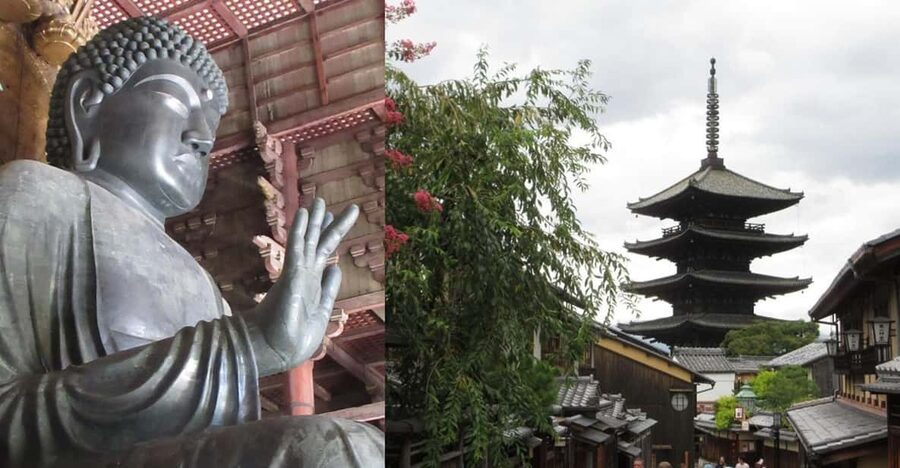
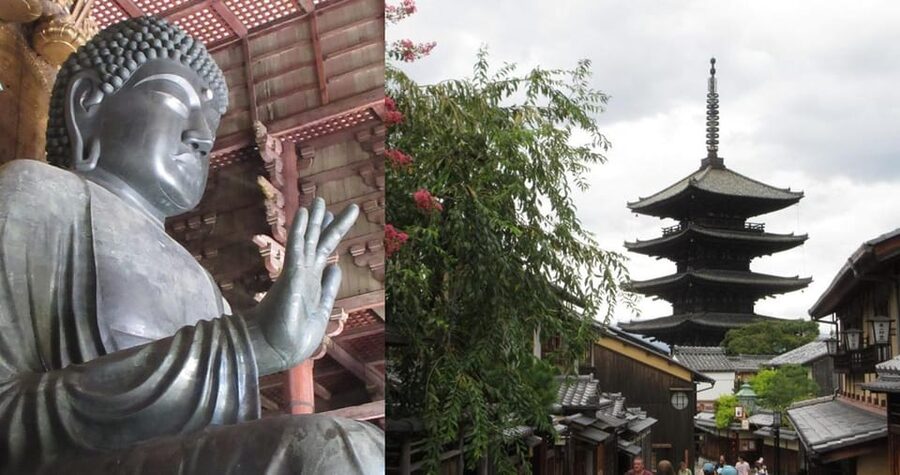
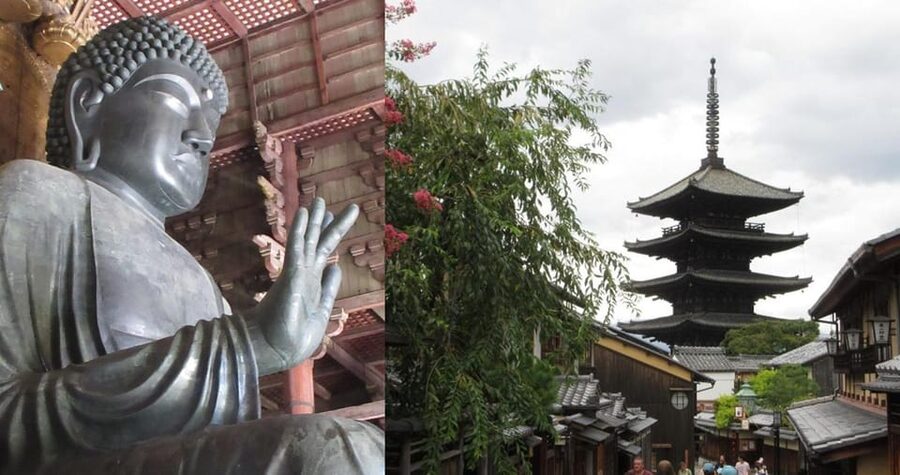
The first major stop is Todai-ji, one of Nara’s defining sights. The temple is famous for its enormous seated Buddha, one of the largest Buddhist statues in Japan. The scale is the first thing you notice, but the guide’s explanation is what gives the visit meaning.
The tour also covers monuments designated as national treasures of Japan. You can expect the guide to explain the temple’s religious role, important architectural features, and the traditions connected with Buddhist devotion. This is where a fluent Italian guide can make a real difference. Technical terms and religious customs are easier to follow when they are explained in your own language and tied to stories.
The visit lasts about 90 minutes. That is enough time for a guided look at the temple and some independent wandering, but not enough for a slow study of every building or a long shopping stop. If Todai-ji is your main reason for visiting Nara, stay close to the guide during the explanation, then use the remaining time for photos and a quick look around.
A particularly appealing feature is the focus on stories and legends connected with the monuments and objects. The guide is not limited to dates and names. Past participants singled out Omae for explaining local mythology, answering questions in polished Italian, and giving people space to explore independently.
Feeding the deer in Nara Park
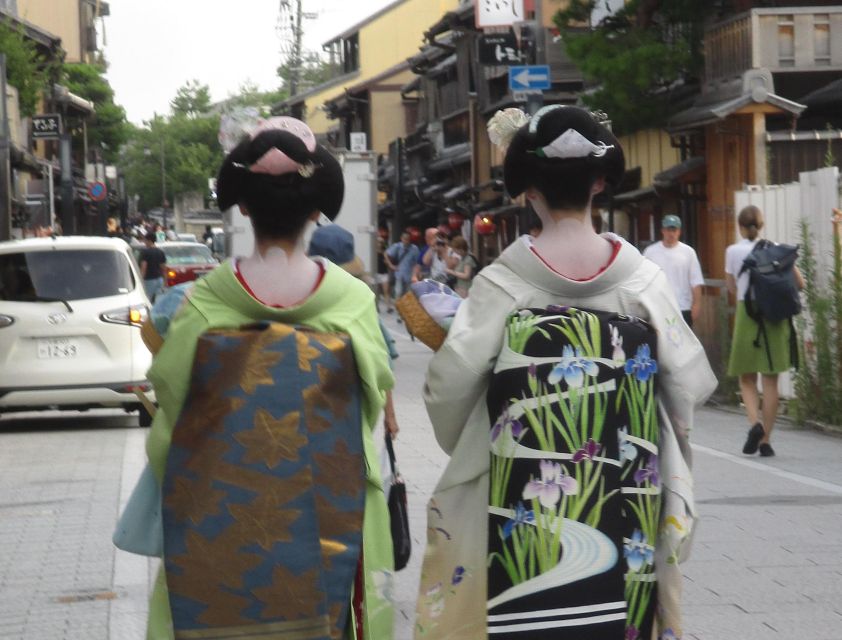
The park around Todai-ji is part of the experience, not just a path between the station and the temple. Tame deer move freely among the trees, paths, visitors, and historic sites. They have lived alongside local residents for centuries, and their presence gives Nara a character you will not find in central Kyoto.
Special cookies are sold at stalls in the park. You can feed the deer if you choose. This is a fun moment, especially for families, but keep your attention on the animals and your food. The guide can help you understand the local practice and handle the stop sensibly.
The route also includes Ukimido, a small scenic stop visited for about 10 minutes. The itinerary lists it as a visit, walk, and pass-by stop, so think of it as a brief addition rather than a long sightseeing session. It gives you another view of Nara’s park environment before the return journey.
Here is the tradeoff: Nara’s park is large, but this tour does not give you a full day to roam it. You will see the key area around Todai-ji and the deer, then return toward Kyoto. That is efficient, but independent visitors who want Kasuga Taisha, more forest paths, or a slower park walk would need more time than this tour allows.
A completely different kind of day out:
- PERFECT KYOTO 1-Day Bus Tour
★ 5.0 · 13,518 reviews - Kyoto: Gion Make Your Own Chopsticks with Engraving Option
★ 5.0 · 3,465 reviews - Kyoto Nara Day Trip │ Kiyomizu-dera Temple + Fushimi Inari-taisha Shrine + Nara Park (Departing from Osaka/Kyoto)
★ 4.7 · 3,408 reviews - Kyoto Geisha Walking Tour: Gion District & Hidden Gems
★ 4.7 · 3,273 reviews
The return to Kyoto and the midday break
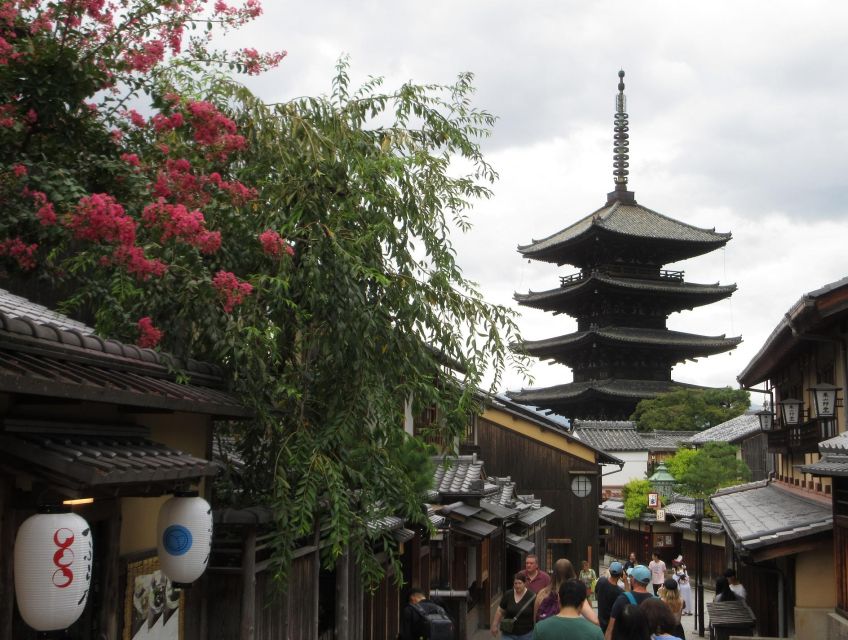
After Nara, you return by train for about 45 minutes. Back at Kyoto Station, there is a one-hour break before the afternoon section begins. The tour then uses a bus for about 15 minutes, followed by a 15-minute walk to Kiyomizu-dera.
The break gives you a useful pause after the morning’s walking and public transport. The available information does not specify a particular restaurant or meal arrangement, so plan to use this time for food, a drink, or a short rest near the station.
Do not treat the hour as a full lunch experience. Kyoto Station offers many food choices, but finding a table and eating comfortably can take time. If you need a substantial meal, move promptly.
The return to Kyoto also creates a clear change in mood. Nara’s temple and park feel spacious. The afternoon route brings you into narrow streets, shops, sweets, bars, and the steady flow of people heading toward Kiyomizu-dera.
Walking the old route to Kiyomizu-dera
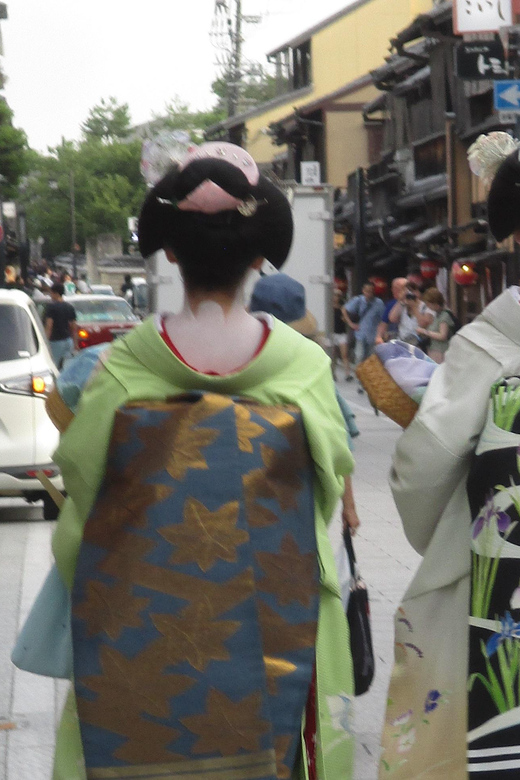
The walk to Kiyomizu-dera passes through an old pilgrimage area that has developed over many centuries. Today, the approach is lined with souvenir shops, sweet shops, and places to stop for refreshments. It is touristy, but that is part of the setting. Pilgrims and sightseers have been making their way toward the temple for generations.
Kiyomizu-dera is visited for about an hour with the guide. You will hear about the temple’s cultural, religious, and historical importance, along with the sights that deserve your attention. The guide can also answer questions, which is useful when you want more than a quick photograph from the famous temple complex.
The one-hour limit is the afternoon’s biggest constraint. Kiyomizu-dera has several areas worth seeing, and the approach streets can slow you down if you stop to browse. You will need to choose your priorities. Follow the guide for the main explanation, then use any free time for photos or a short shop visit.
The route is partly on foot, with the published schedule allowing about 20 minutes between Kiyomizu-dera and Gion. Wear comfortable shoes. The tour is wheelchair accessible, but a full day involving trains, buses, temple grounds, and city streets may still require practical planning for anyone with limited stamina.
Gion, geiko, and maiko culture
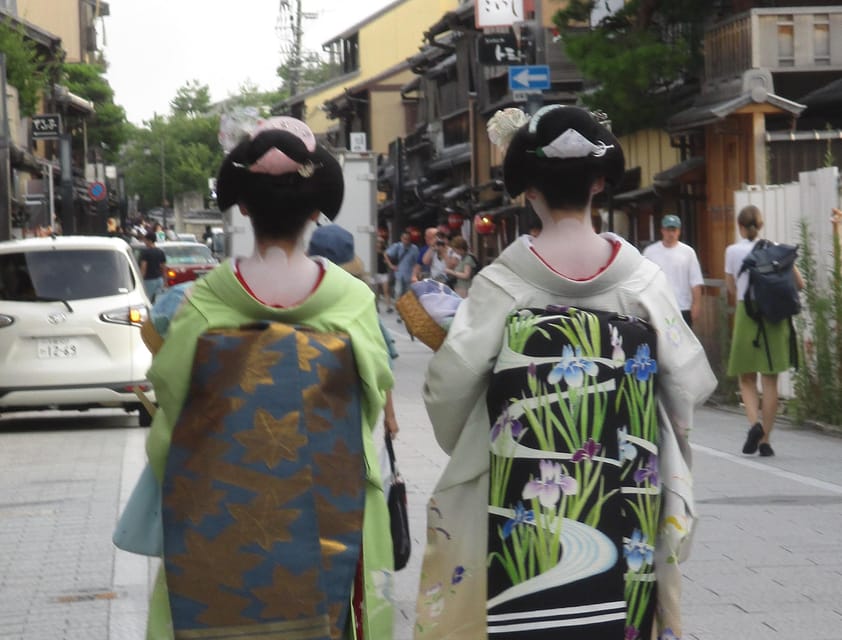
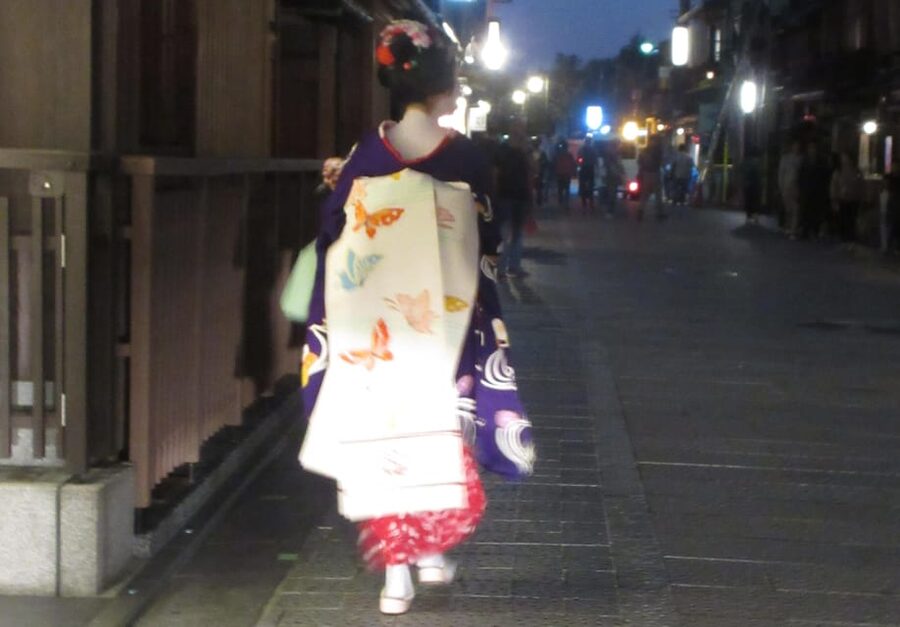
The final guided stop is Gion, specifically the Gion-kobu area associated with professional geiko and maiko artists. The listing uses the familiar term Geisya, but geiko and maiko are the more useful local terms to know.
This is not presented as a guaranteed performance or a private meeting with an artist. Instead, the guide explains the district, its traditions, and the role of the women who work there. That distinction matters. Gion is a living neighborhood, not a stage set created for sightseeing.
The Gion visit lasts about 20 minutes, followed by a 10-minute walk to Pontocho, where the tour ends. The short stop gives you orientation and context, but it is not enough for a broad exploration of the district. If you hope to spend the evening looking for restaurants or enjoying Kyoto nightlife, ending in Pontocho is convenient.
The guide’s local perspective is especially helpful here. A native Kyoto guide can explain the customs and history of the area without reducing it to costume spotting. You should also follow the guide’s advice about respectful photography and behavior around working artists and residents.
The guide can make or break this experience
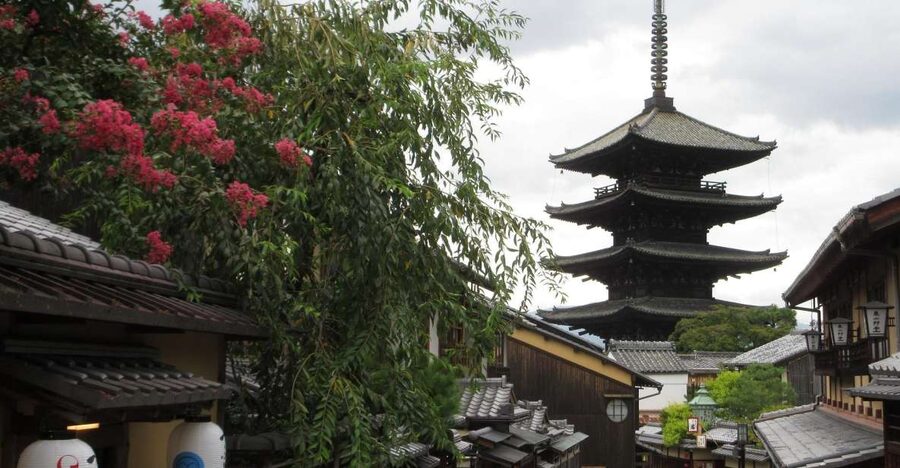
The strongest praise centers on Omae, the Japanese guide associated with many of the Italian-language departures. Participants describe Omae as prepared, friendly, funny, and able to speak excellent Italian after living in Italy for more than a decade.
That combination is important. You get a local guide who understands Japanese places firsthand, but can also explain them naturally to Italian speakers. The most useful guidance often comes in the small details: legends connected with temple objects, the meaning behind a religious practice, or the story of a neighborhood that a guidebook may skip.
The feedback is not entirely without reservation. One assessment found the guide precise and friendly but felt the tour could have included more for the price and available time. That is fair. You are buying interpretation and organization as much as extra sightseeing, and the day covers a lot of ground without lingering long at each place.
The experience also appears flexible within reason. The guide can assist with practical needs during the day, answer questions, and adjust the schedule or route when possible. Do not expect unlimited customization, since trains, buses, admission times, and a small group set real limits.
Is $176 a fair price?
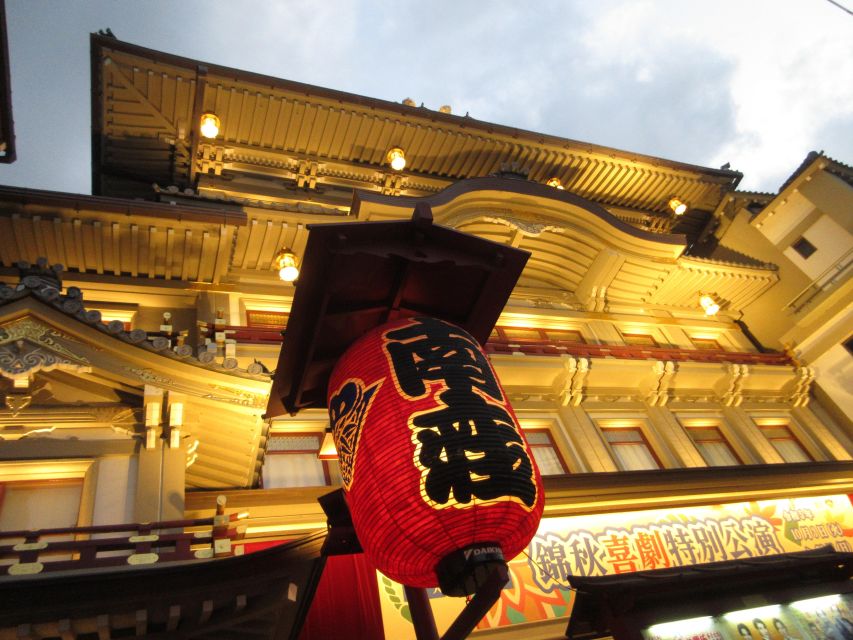
At $176 per person, this is not a budget day trip. The value depends on how much help you want.
The price includes scheduled train and bus fares, admission to the monuments in the program, Italian explanations, and practical help during the day. You also get a guide who handles the movement between Kyoto and Nara and provides cultural context at the major stops.
For a first visit, that can be worthwhile. You avoid researching the route, buying separate fares, finding the correct bus, and deciding how to connect Nara with an afternoon in Kyoto. The tour also gives you access to an Italian-speaking guide, which is the main feature that sets it apart.
The value is weaker if you are already comfortable with Japanese trains, can visit temples independently, and prefer a slow schedule. You are not paying for a private vehicle, a meal, or a long stay at each sight. You are paying for a guided, bilingual cultural route with transportation and admission handled.
The rating record is strong, with an overall score of 4.7 from 15 reviews. The repeated praise for Omae and the Italian explanations suggests that the guide quality is central to the price. If your Italian is good and you want cultural interpretation, the cost is easier to justify.
Who should book this day trip?
I would recommend it to Italian-speaking visitors making a first trip to Kyoto. It fits people who want to see both Nara and Kyoto highlights without spending a day reading transit maps or piecing together temple visits.
Families may also like it. One family outing was described as especially pleasant because of the attractive locations and the guide’s ability to keep the experience friendly and informative. The deer provide an obvious point of interest for children, while Todai-ji and Kiyomizu-dera give adults more cultural depth.
It suits independent-minded visitors who still want structure. You get guided explanations, but the guide appears willing to leave space for photos and personal exploration.
I would hesitate to recommend it to slow sightseers, serious photographers, or anyone hoping for an in-depth visit to either city. The schedule is full. You will see major highlights, but you will not have time to explore every corner of Nara Park, browse all the Kiyomizu shops, or spend a long evening in Gion.
Free cancellation up to 24 hours before departure and the option to reserve now and pay later make planning easier. Wheelchair accessibility is available, though the amount of walking and public transport still deserves attention when deciding if the route fits your needs.
Should you book it?
Book this tour if you want two historic Japanese cities in one day, need Italian explanations, and value a guide who can handle transport, temple admissions, questions, and practical help.
Skip it if your priority is a relaxed pace. The best reason to choose this experience is not simply the Great Buddha or the deer. It is the chance to understand Todai-ji, Kiyomizu-dera, and Gion through a local Italian-speaking guide, especially Omae, while someone else keeps the complicated day moving.
FAQ
Where does the tour begin?
It begins at Kyoto Station, in the space between the four escalators near the cab terminal outside the north central entrance.
How can I identify the meeting point?
Kyoto Tower should be visible in front of the station toward the upper left from the meeting area. The detailed confirmation information is sent the day before the tour.
How long is the tour?
It lasts one full day. The exact starting time depends on availability.
What language is the tour conducted in?
The live tour guide language is Italian.
Is the tour accessible by wheelchair?
Yes, the activity is described as wheelchair accessible.
How large is the group?
The tour is a small-group experience with no more than 15 participants.
Are train and bus fares included?
Yes. The scheduled train and bus fares used during the tour are included.
Are temple admission fees included?
Yes. Entrance fees for the monuments included in the program are covered.
Can I feed the deer in Nara?
Yes. Deer cookies are sold at special stalls in the park, so you can feed the tame deer if you choose.
Where does the tour finish?
The tour finishes in Pontocho after the guided visit to Gion and the final walk.
Just added in Kyoto
- The “Golden Route” and Ancient Japan by DIAMIR Erlebnisreisen – 14-Day Tour★ 2.0 · 2 reviews
- Japan: Castles & Cuisine by G Adventures – 6-Day Kyoto to Osaka Tour★ 4.5 · 4 reviews
- Cycle Japan by Explore! – 13-Day Kyoto to Tokyo Tour★ 4.7 · 12 reviews
- Cycle Japan by Intrepid Travel – 11-Day Kyoto to Tokyo Tour★ 4.8 · 2 reviews
- Classic Japan by Intrepid Travel – 11-Day Kyoto to Tokyo Tour★ 4.4 · 14 reviews
- Ancient & Modern Japan 14-Day Tour by Exodus Adventure Travels★ 4.4 · 40 reviews
- 5 Day Cultural Adventure of Kyoto, Nara & Osaka by Tourist Journey★ 2.5 · 2 reviews
- 12 Days Kinosaki Onsen Escape: A Journey Through Japan’s Timeless Towns by UME Travel★ 4.8 · 5 reviews
Temples and Shrines, compared.
![[Kyoto & Nara Day Tour] Sagano Scenic Railway & Nara Park & Fushimi Inari Taisha Thousand Torii Gates & Togetsukyo Bridge & Bamboo Grove & Kimono Forest (Departing from Osaka)](https://media.japanvisits.com/wp-content/uploads/kyoto-nara-day-tour-sagano-scenic-railway-nara-park-fushimi-inari-taisha-thousand-torii-gates-togetsukyo-bridge-bamboo-grove-kimono-forest-departing-from-osaka-k110001-400x257.jpg)
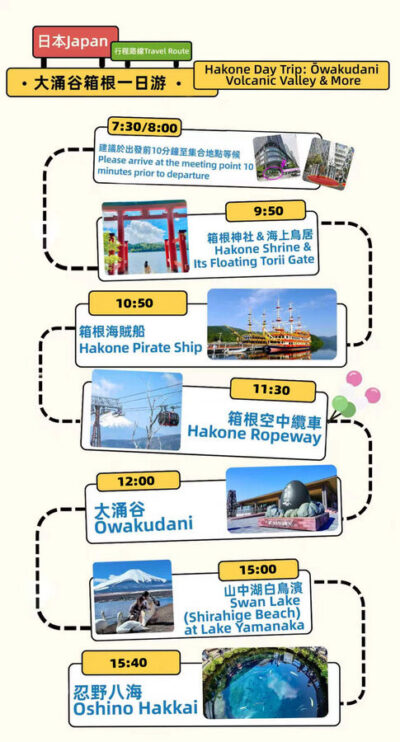
Kyushu One-Day Tour: Yufuin no Mori Train & Yufuin Town & Nyoirin-ji Temple & Dazaifu & Hell Hot Springs (Departing from Fukuoka)
Read our review →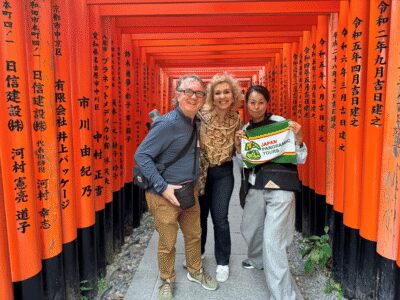
Fushimi Inari, Kinkakuji, Bamboo Grove 1 Day Bus Tour
Read our review →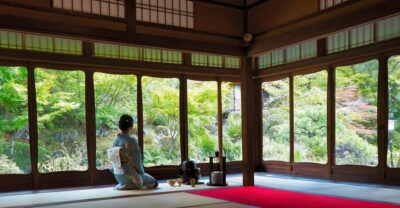
Tea Ceremony in a Traditional Tea House in Kiyomizu
Read our review →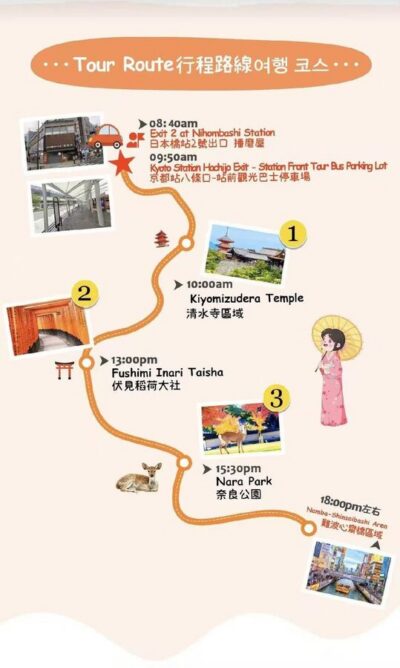
Kyoto Nara Day Trip │ Kiyomizu-dera Temple + Fushimi Inari-taisha Shrine + Nara Park (Departing from Osaka/Kyoto)
Read our review →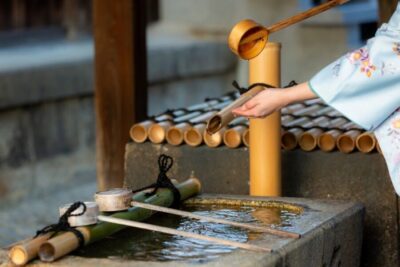
Browse the lists this tour appears in