
Reviewed · TEMPLES AND SHRINES
Kyoto: Nara, Todaiji, Kasuga Taisha Shrine Private Full Day
Deer, temples, lanterns, and old lanes make Nara an easy highlight from Kyoto. I like that this private day trip combines the city’s best-known sights with a guide who can explain the customs behind them, rather than leaving you to guess what you are seeing.
I especially like the simple train connection from Kyoto and the chance to visit Todaiji and Kasuga Taisha in one well-planned day. The main consideration is cost: at $183 per person, you also pay for your own train fare and lunch, so this makes the most sense if you value a private guide and structured sightseeing.
The tour has a strong 4.9 rating from 18 bookings, with repeated praise for friendly, clear guides. Akiko, Naoki, Vincent, Gustavo, and Alex are among the guides named in the feedback, and Gustavo is singled out for showing both famous spots and less obvious corners. Expect an active day with plenty of walking, uneven temple grounds, and little free time to wander at your own pace.
In This Review
- Key points to know before booking
- Meeting at Kyoto Station and taking the train to Nara
- Kofukuji introduces Nara’s imperial past
- Meeting Nara’s Sika deer in the park
- Todaiji and the Great Buddha
- Optional lunch at Kotoya Restaurant
- Lanterns and quiet beauty at Kasuga Taisha
- Naramachi’s merchant houses and narrow lanes
- What the $183 price really buys you
- Pace, walking, and who should book
- Should you book this Nara day trip?
- FAQ
- Where does the tour begin and end?
- How long does the experience last?
- Is transportation included in the price?
- Is lunch included?
- Which entrance fees are included?
- What languages are available?
- Is this a private group tour?
- What should I bring?
Key points to know before booking
- Todaiji’s Great Buddha: Enter one of Japan’s best-known Buddhist temples and see the immense bronze Daibutsu inside.
- Nara’s free-roaming Sika deer: The deer are linked to Shinto belief and are treated as sacred messengers of the gods.
- A private multilingual tour: English, French, and Spanish guiding is available, with the guide focused on your group.
- Two train rides included in the plan, not the price: The journey takes about an hour each way, and the guide helps you buy tickets.
- Lunch is optional: You can eat Nara specialties at Kotoya for about JPY 2,500 per person or bring your own food.
- Naramachi after the temples: Narrow lanes and preserved merchant houses offer a quieter look at old Nara.
Meeting at Kyoto Station and taking the train to Nara
Your day begins at the 7-Eleven Heart-In beside the Central Entrance of JR Kyoto Station. Look for a guide wearing a TripGuru shirt or carrying a TripGuru sign. Kyoto Station is large, so allow time to find the central entrance rather than arriving at the last minute.
The guide assists with buying the train ticket to Nara on the day of the tour. The listed fare is JPY 1,280 each way, although you can use a valid JR Pass. Transportation is not included in the $183 price, so keep cash or another accepted payment method ready.
The train ride takes about one hour. That is not a quick hop, but it is a straightforward way to connect Kyoto with Nara without arranging a separate transfer. I see the train setup as a practical strength for visitors who want a guide once they arrive but do not need a private vehicle.
You return to the same Kyoto Station meeting point after the day’s sightseeing. Since the full experience lasts about eight hours, check the exact departure time before booking and avoid scheduling a tight evening reservation in Kyoto.
More Temples and Shrines in Kyoto
- [Kyoto & Nara Day Tour] Sagano Scenic Railway & Nara Park & Fushimi Inari Taisha Thousand Torii Gates & Togetsukyo Bridge & Bamboo Grove & Kimono Forest (Departing from Osaka)
★ 4.9 · 10,942 reviews - Kyoto: Fushimi Inari, Kinkakuji, Bamboo Grove 1 Day Bus Tour
★ 4.8 · 4,316 reviews - Kyoto: Tea Ceremony in a Traditional Tea House in Kiyomizu
★ 4.9 · 3,519 reviews
Kofukuji introduces Nara’s imperial past
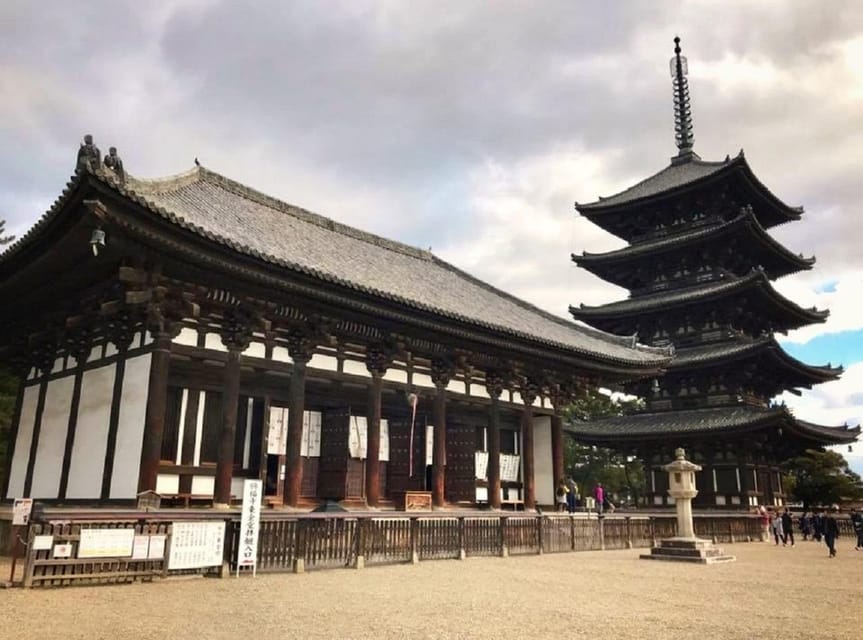
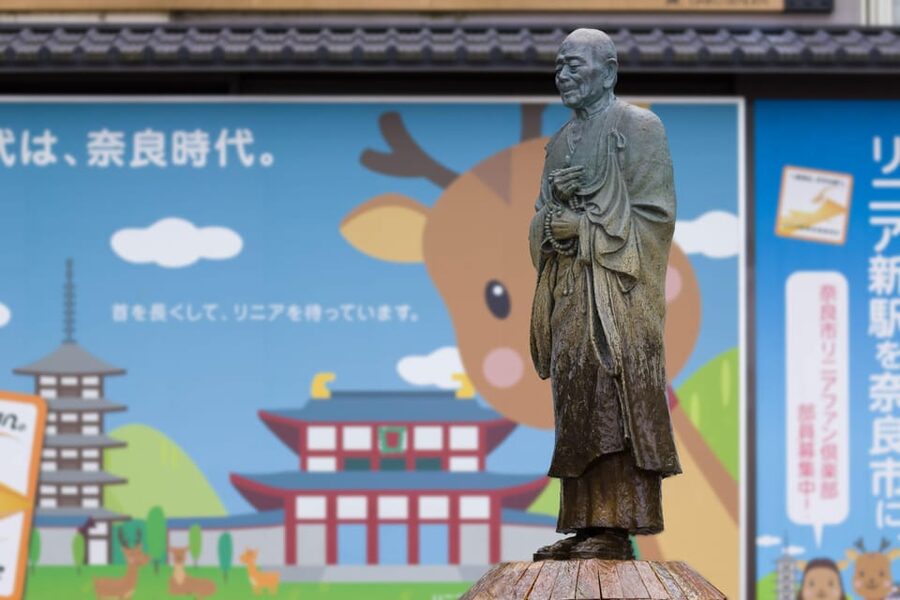
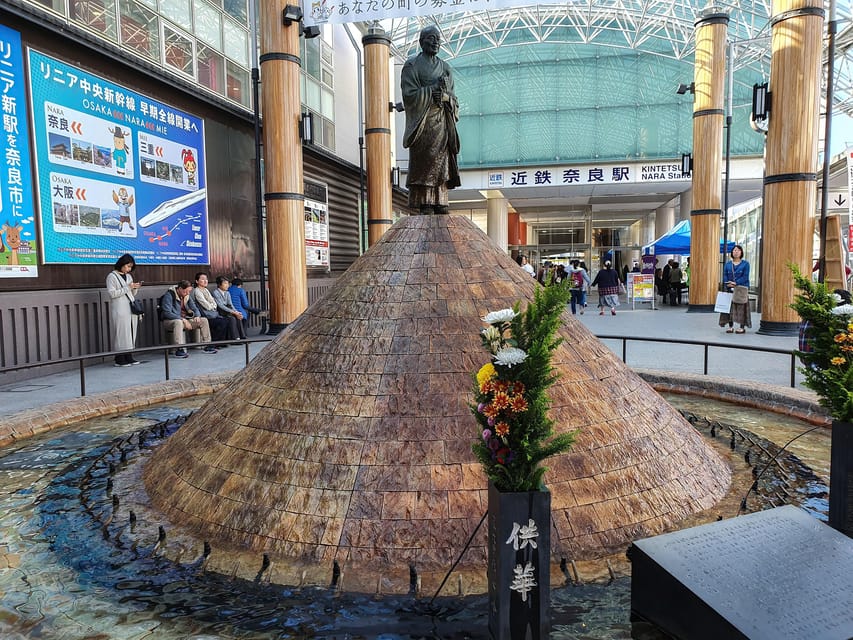
The first stop is Kofukuji, where you spend about 30 minutes on a guided visit. The tour also passes the Gyoki Statue, then uses the temple grounds to explain Nara’s role in Japanese history and the establishment of the Heijo-kyo imperial capital.
This opening stop gives the day some useful context. Nara was not chosen simply for its deer and famous Buddha. It was an imperial center, and Kofukuji helps connect the religious buildings you see with the city’s earlier political importance.
Thirty minutes is enough for an introduction, not an exhaustive temple visit. If you want to inspect every building or spend time taking photographs, the schedule may feel brisk. The benefit is that you do not spend the morning on one site and then rush through the rest of Nara.
Your guide’s role matters here. The strongest feedback repeatedly praises clear explanations and practical help, with Gustavo, Vincent, and Alex named for being especially friendly and well prepared. A good guide can turn a short temple stop into a useful primer for the rest of the day.
Meeting Nara’s Sika deer in the park
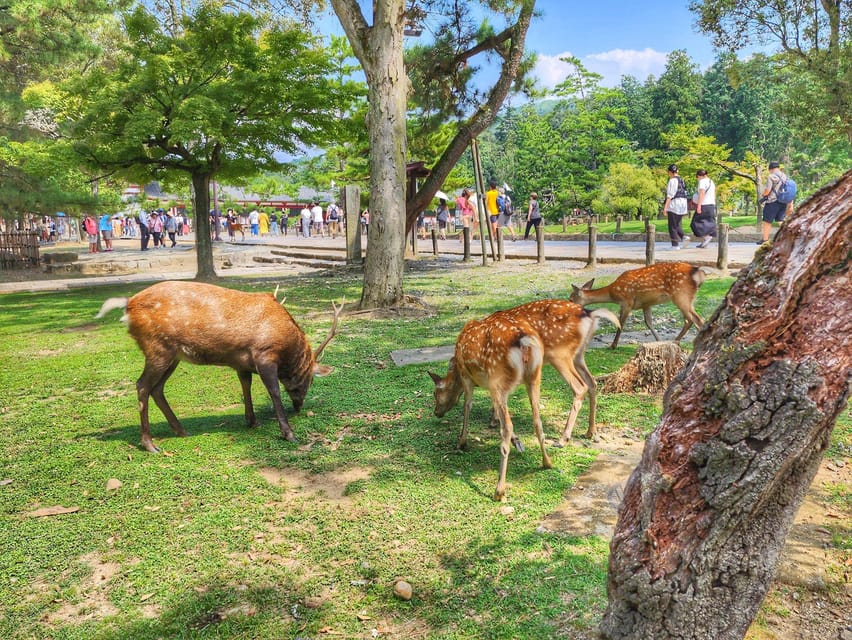
From Kofukuji, you walk into Nara Park for about 15 minutes. The timing listed for this stop is short, but the park also forms the setting for the route to Todaiji, so you will see more of its open green spaces as the morning continues.
The Sika deer are Nara’s famous symbol. In Shinto belief, they are considered sacred messengers of the gods, which gives their presence more meaning than a simple wildlife encounter. They move freely around the park and are accustomed to people, making it easy to take photographs at close range.
I like this part because it brings a playful change of pace after the temple history. You get wide-open space, greenery, and animals that are part of Nara’s cultural identity, not just a photo opportunity.
Still, keep your expectations sensible. The deer are free-roaming animals, not trained performers. Follow your guide’s instructions, keep your belongings secure, and remember that an animal comfortable around people can still behave unpredictably. The tour information specifically recommends bringing a camera, and you will want one here.
Todaiji and the Great Buddha
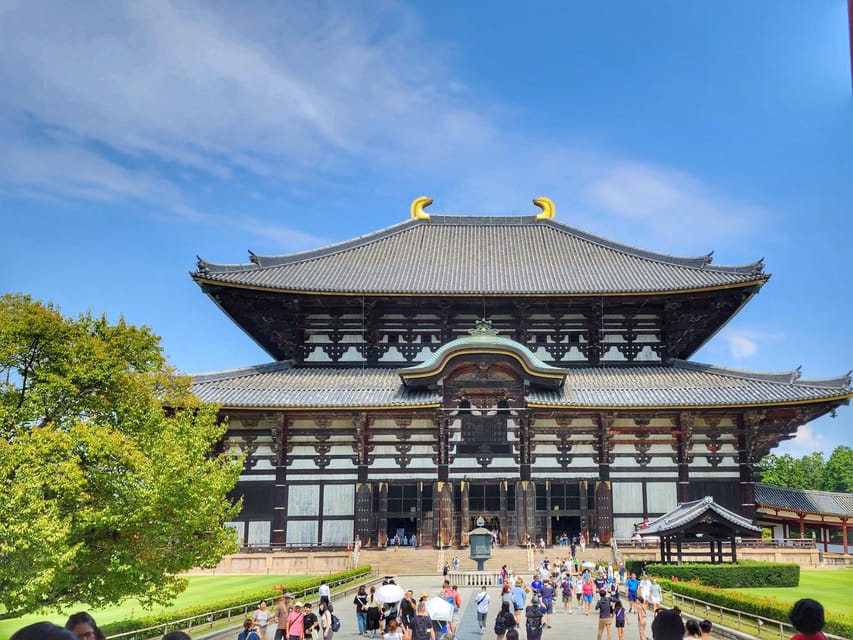
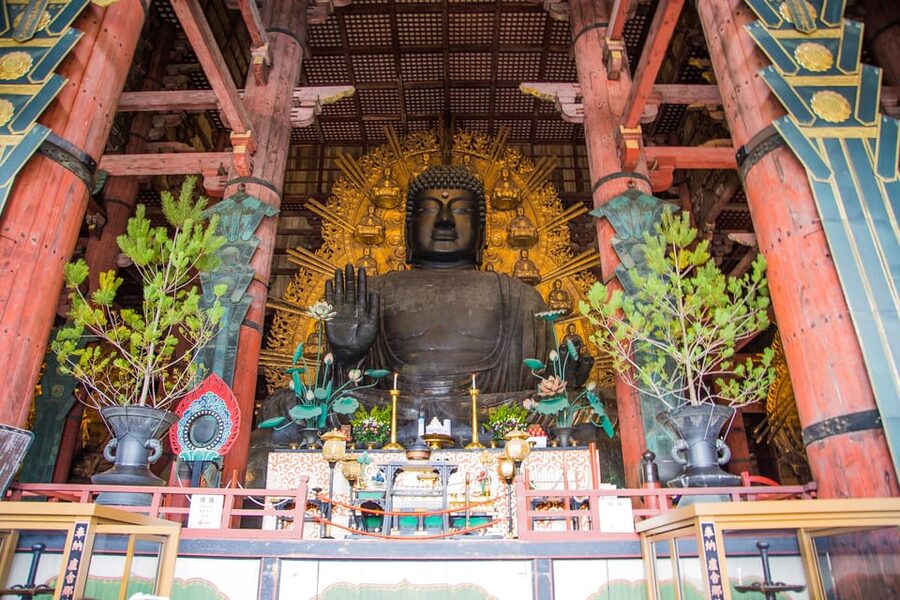
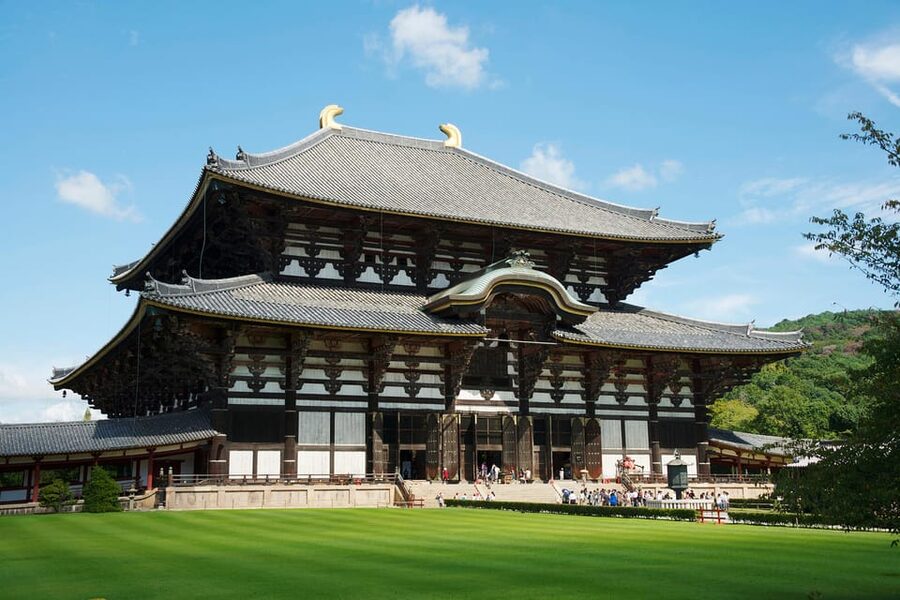
Todaiji is the day’s major sight. You spend about an hour on a guided visit to this UNESCO World Heritage Site, located within Nara Park.
Inside, you see the Great Buddha, or Daibutsu, one of Japan’s largest bronze Buddha statues. Its scale is the point. Even visitors who have seen many temples can find the statue memorable because the surrounding building and the figure work together to create a powerful sense of size.
The guide adds value by explaining what you are looking at and placing the temple within Nara’s religious and imperial story. That is especially useful at a major site where it is easy to walk in, take a picture, and leave without understanding its importance.
An hour is a fair amount of time for a first visit, though it is not enough for a slow, detailed study of every feature. The temple can also be one of the busiest parts of the day, and the open park paths mean you will be on your feet. Comfortable shoes are not a minor suggestion here.
If Todaiji is your main reason for visiting Nara, this private format makes sense. You can ask questions in your own language, including English, French, or Spanish, and the guide can adjust explanations to your interests. The feedback gives particular weight to friendly, clear guidance, which is exactly what helps at a large and significant temple.
A completely different kind of day out:
- PERFECT KYOTO 1-Day Bus Tour
★ 5.0 · 13,518 reviews - Kyoto: Gion Make Your Own Chopsticks with Engraving Option
★ 5.0 · 3,465 reviews - Kyoto Nara Day Trip │ Kiyomizu-dera Temple + Fushimi Inari-taisha Shrine + Nara Park (Departing from Osaka/Kyoto)
★ 4.7 · 3,408 reviews - Kyoto Geisha Walking Tour: Gion District & Hidden Gems
★ 4.7 · 3,273 reviews
Optional lunch at Kotoya Restaurant
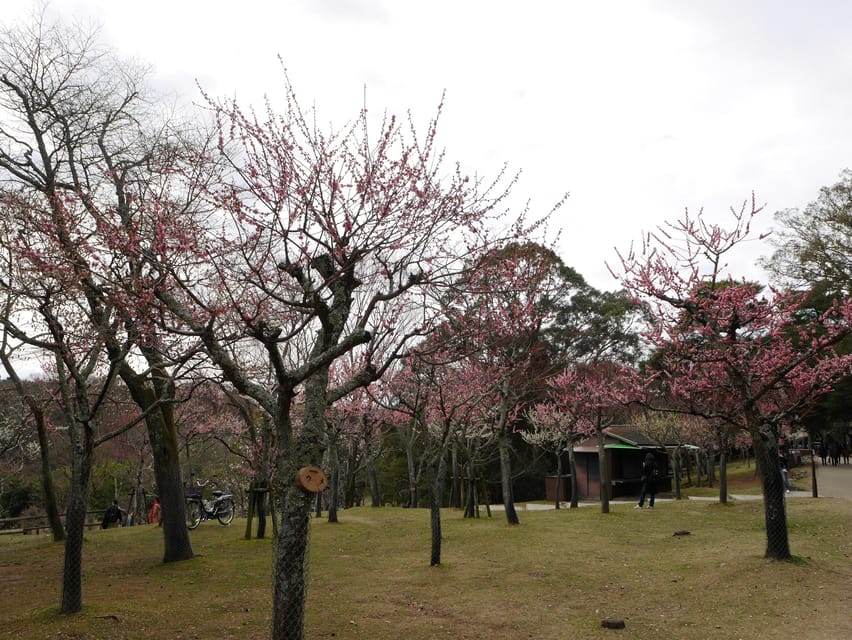
After Todaiji, the schedule allows an hour for lunch at Kotoya Restaurant. A traditional Japanese lunch is optional and costs about JPY 2,500 per person. You can also bring your own food.
This arrangement is useful because it gives you a choice. Kotoya provides a chance to try local Nara specialties without searching for a restaurant during a tightly timed day. At the same time, you are not forced to pay for a meal you may not want.
Budget at least the extra JPY 2,500 if you plan to eat at the restaurant. Since lunch is not part of the $183 cost, the true day-trip budget includes the train tickets and any personal purchases as well.
An hour gives you a proper pause between major sights. That matters on a full day with temple grounds, park paths, and old streets ahead. If you bring your own meal, confirm the day’s arrangements with the guide so you know where and when to eat.
Lanterns and quiet beauty at Kasuga Taisha
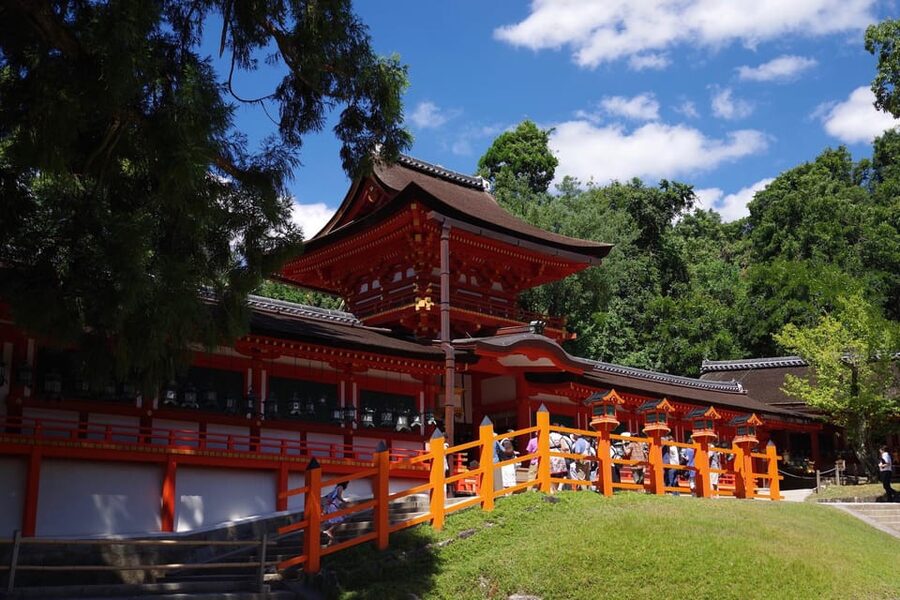
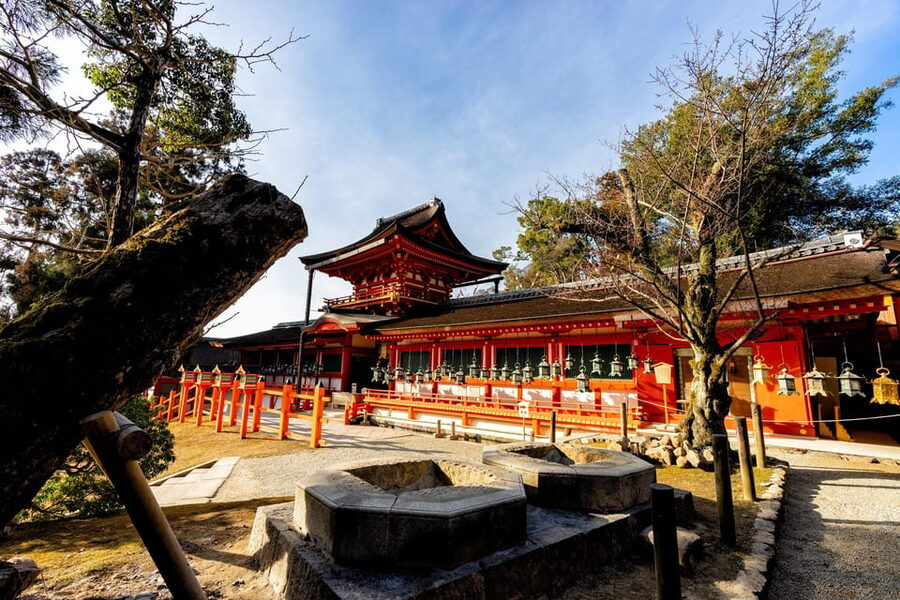
Kasuga Taisha follows lunch, with about an hour for a guided visit. The shrine is known for thousands of hanging lanterns, and their repeated shapes give the approach and buildings a distinctive look.
This stop changes the mood again. Todaiji is about the Great Buddha’s sheer scale. Kasuga Taisha offers a more detailed Shinto setting, with lanterns, wooded paths, and a closer look at shrine traditions. The contrast helps you understand that Nara’s appeal comes from several layers of religious culture, not one famous monument.
The tour information calls attention to the picturesque setting, and that is a good reason to keep your camera ready. The lanterns are the visual signature, but the route through the shrine grounds also rewards a slower pace.
The hour is enough for a guided introduction and photographs. It may feel short if you want to explore every corner or sit quietly for a long time. Still, the private format gives you a chance to ask questions and request a little more explanation about the shrine’s customs.
Naramachi’s merchant houses and narrow lanes
The final sightseeing stop is Naramachi, where you have about an hour to walk through narrow lanes lined with preserved traditional merchant houses.
Naramachi offers a useful change from grand temple grounds. Instead of monumental buildings and open parkland, you see the scale of everyday town life in the Edo period. The old houses and close lanes give this part of Nara a more intimate feel.
I consider Naramachi one of the tour’s best choices because it keeps the day from becoming a parade of major religious sites. You get a glimpse of how historic Nara worked as a town, not only as a place of temples and shrines.
The stop is described as a visit rather than a detailed house-by-house tour, so do not expect a long museum program. The value is in strolling, looking closely, and asking your guide about the buildings and the area. Gustavo’s praise for showing both well-known and less touristy places fits this part of the route especially well.
What the $183 price really buys you
At $183 per person, this is not the cheapest way to see Nara. You still pay for the train, and lunch at Kotoya costs about JPY 2,500 if you choose it. Personal expenses are also separate.
The price is easier to justify for a private group that wants a guide’s full attention. You are paying for a planned route, entrance fees to Todaiji and Kasuga Taisha, an English, French, or Spanish-speaking guide, and help handling the train tickets. Snacks are included as well.
If you are comfortable navigating Japanese trains, reading temple information, and planning your own route, an independent Nara day can cost less. You also gain more freedom to linger. This tour earns its price through convenience, interpretation, and the ability to ask questions throughout the day.
I would be more willing to pay for it if Nara is a priority but your Kyoto schedule is already full. The eight-hour plan covers the main sights without requiring you to research train connections, temple order, or lunch options. For a private group, that convenience can be worth more than the savings from going alone.
Pace, walking, and who should book
This is an active day. You walk through temple grounds, Nara Park, Kasuga Taisha, and Naramachi, with train travel at both ends. The tour is not suitable for pregnant women or people with mobility impairments, heart problems, or respiratory issues.
Comfortable shoes are essential. Bring cash for train tickets, lunch, and personal purchases, plus a camera for the deer, Buddha, lanterns, and traditional streets.
I would recommend this experience to first-time visitors to Nara, families or friends who want a private guide, and anyone who prefers historical explanation over simply collecting photographs. It also suits people who want language support in English, French, or Spanish.
You may want another plan if you need a slow pace, long shopping stops, or complete control over every minute. The itinerary can change, and the listed stop times are fairly structured. The tour gives you a strong overview, not an unhurried study of every temple and neighborhood.
The friendly guide feedback is a real strength. Akiko is praised for being helpful and flexible, Naoki for attentive kindness, Vincent for clear explanations, and Gustavo for answering questions about Nara and Japan beyond the scheduled sights. Guide quality can vary by date, but the pattern points to a service built around personal attention.
Should you book this Nara day trip?
Book it if you want the major Nara sights arranged into one private, guided day and you are happy to pay extra for ease and explanation. Todaiji, the sacred deer, Kasuga Taisha, and Naramachi make a well-rounded route, while the train ride keeps the connection from Kyoto simple.
Skip it if your priority is the lowest possible cost or a leisurely schedule. Remember to add the JPY 1,280 one-way train fare and optional JPY 2,500 lunch to the advertised price.
For most first visits, I like the balance: one grand temple, one important shrine, a park full of deer, and a historic neighborhood. It is a busy day, but it gives you a clear sense of why Nara deserves more than a quick photograph on the way to somewhere else.
FAQ
Where does the tour begin and end?
The tour begins and ends at the 7-Eleven Heart-In beside the JR Kyoto Station Central Entrance.
How long does the experience last?
The full experience lasts about eight hours, including the train journeys between Kyoto and Nara.
Is transportation included in the price?
No. The train fare is separate. The listed fare is JPY 1,280 each way, and a valid JR Pass can be used. The guide assists with buying the ticket.
Is lunch included?
No. You can choose a traditional lunch at Kotoya Restaurant for about JPY 2,500 per person or bring your own food.
Which entrance fees are included?
Entrance fees for Todaiji Temple and Kasuga Shrine are included.
What languages are available?
The live guide is available in English, French, or Spanish.
Is this a private group tour?
Yes. The experience is operated as a private group tour.
What should I bring?
Bring comfortable shoes, a camera, and cash. Cash is useful for the train fare, optional lunch, and personal expenses.
Just added in Kyoto
- The “Golden Route” and Ancient Japan by DIAMIR Erlebnisreisen – 14-Day Tour★ 2.0 · 2 reviews
- Japan: Castles & Cuisine by G Adventures – 6-Day Kyoto to Osaka Tour★ 4.5 · 4 reviews
- Cycle Japan by Explore! – 13-Day Kyoto to Tokyo Tour★ 4.7 · 12 reviews
- Cycle Japan by Intrepid Travel – 11-Day Kyoto to Tokyo Tour★ 4.8 · 2 reviews
- Classic Japan by Intrepid Travel – 11-Day Kyoto to Tokyo Tour★ 4.4 · 14 reviews
- Ancient & Modern Japan 14-Day Tour by Exodus Adventure Travels★ 4.4 · 40 reviews
- 5 Day Cultural Adventure of Kyoto, Nara & Osaka by Tourist Journey★ 2.5 · 2 reviews
- 12 Days Kinosaki Onsen Escape: A Journey Through Japan’s Timeless Towns by UME Travel★ 4.8 · 5 reviews
Temples and Shrines, compared.
![[Kyoto & Nara Day Tour] Sagano Scenic Railway & Nara Park & Fushimi Inari Taisha Thousand Torii Gates & Togetsukyo Bridge & Bamboo Grove & Kimono Forest (Departing from Osaka)](https://media.japanvisits.com/wp-content/uploads/kyoto-nara-day-tour-sagano-scenic-railway-nara-park-fushimi-inari-taisha-thousand-torii-gates-togetsukyo-bridge-bamboo-grove-kimono-forest-departing-from-osaka-k110001-400x257.jpg)
Kyushu One-Day Tour: Yufuin no Mori Train & Yufuin Town & Nyoirin-ji Temple & Dazaifu & Hell Hot Springs (Departing from Fukuoka)
Read our review →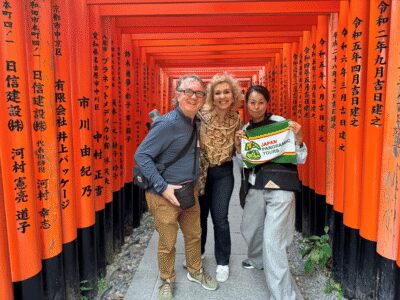
Fushimi Inari, Kinkakuji, Bamboo Grove 1 Day Bus Tour
Read our review →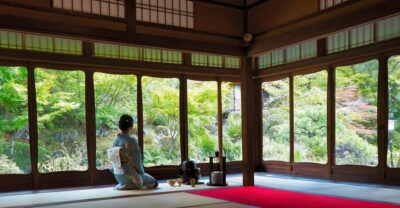
Tea Ceremony in a Traditional Tea House in Kiyomizu
Read our review →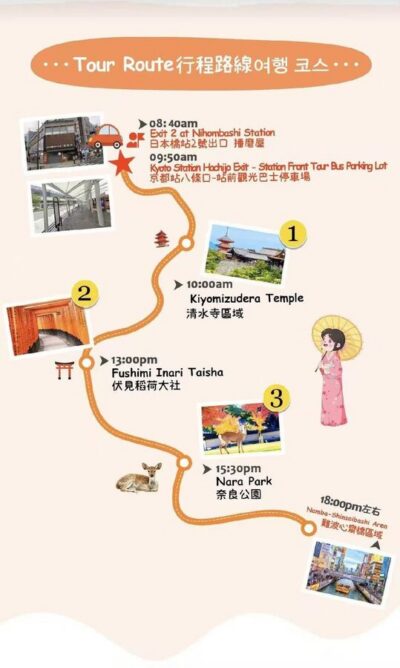
Kyoto Nara Day Trip │ Kiyomizu-dera Temple + Fushimi Inari-taisha Shrine + Nara Park (Departing from Osaka/Kyoto)
Read our review →
Browse the lists this tour appears in