Reviewed · KYOTO TOURS
Kyoto Night All-Inclusive Eats and Streets, Gion and Beyond
Kyoto tastes better after sunset. This three-hour evening outing brings together Yasaka Shrine and Gion’s lantern-lit streets with dinner at two local restaurants, giving you both the old city and its modern night scene in one compact tour. I like the small groups of no more than six, and I like that the guide handles the ordering, explanations, and restaurant choices. The main caution is smoking: some dining stops may allow indoor smoking.
The $92 price is fair if you value guidance, two drinks, and a broad meal rather than simply buying dinner. You should also expect small shared plates, not one large entrée at each stop. Guides such as Jamie, Laura, Ferdinand, Hugo, Maya, and Andres have earned repeated praise for making the evening relaxed, funny, and easy to follow.
In This Review
- Key points at a glance
- Why this Kyoto night tour works so well
- Starting beside Minamiza Theatre
- Yasaka Shrine after sunset
- Walking through Gion and its geisha traditions
- The Kamo River and Kyoto at street level
- First restaurant: a shared spread of local dishes
- Pontocho and Kiyamachi after dinner
- Second restaurant: more dishes, more conversation
- Food, drinks, and the $92 price
- The smoking issue and other practical limits
- Which guide might you get?
- Who should book this evening?
- Should you book it?
- FAQ
- How long does the Kyoto night food tour last?
- Where does the tour meet?
- What is included in the price?
- Is the tour suitable for children?
- Is the tour accessible for people with mobility impairments?
- Can I request the Kobe beef option?
Key points at a glance
- Two restaurant stops, one full evening meal: You sample several Japanese and Kyoto-style dishes instead of committing to one unfamiliar menu.
- Yasaka Shrine after dark: The shrine provides a calm, atmospheric opening before the tour moves into Gion’s entertainment streets.
- Gion explained with care: Your guide discusses geisha traditions and the customs of a district that is both historic and still active at night.
- Pontocho and Kiyamachi on foot: You see narrow nightlife streets, the Kamo River area, and places many first-time visitors would likely miss.
- Small groups change the mood: With a maximum of six participants, it is easier to ask questions and share food around a table.
- Two drinks are included: You can choose alcoholic or non-alcoholic drinks, while extra drinks cost more.
Why this Kyoto night tour works so well
Gion can be confusing after dark. It has elegant lanes, restaurants behind plain doors, traditional buildings, modern bars, shrines, and plenty of places that are difficult to understand from the outside. You can walk through it alone, of course, but a good guide helps you notice what you would otherwise pass by.
This experience works because it combines three useful introductions: Kyoto’s religious life, its geisha district, and its food culture. You begin near Minamiza Theatre, walk through historic areas, sit down for food, then continue toward Pontocho and the Kamo River before finishing with another meal stop.
I especially like the scale. Six people or fewer is small enough for a real conversation. Guides can answer individual questions, help explain unfamiliar dishes, and keep the group together without making the night feel like a moving lecture. Several guides have been praised for this personal touch. Jamie is described as warm and excellent at explaining local customs, while Laura has a gift for telling stories about Japanese traditions without making the evening heavy.
The tone also seems designed for first-time visitors. You get facts about the area, but the guide keeps things light. That matters in Gion, where a little context helps you behave respectfully without feeling as if you are being scolded.
A few more options to weigh up in Kyoto
- PERFECT KYOTO 1-Day Bus Tour
★ 5.0 · 13,518 reviews - [Kyoto & Nara Day Tour] Sagano Scenic Railway & Nara Park & Fushimi Inari Taisha Thousand Torii Gates & Togetsukyo Bridge & Bamboo Grove & Kimono Forest (Departing from Osaka)
★ 4.9 · 10,942 reviews - Kyoto: Fushimi Inari, Kinkakuji, Bamboo Grove 1 Day Bus Tour
★ 4.8 · 4,316 reviews
Starting beside Minamiza Theatre
The meeting point is in front of Minamiza Theatre, at street level by exit 6 of Gion Shijo Station. This is a practical location because it is easy to reach by train and sits directly beside one of Kyoto’s best-known traditional theater venues.
Arrive ready to walk. Comfortable shoes are important, since the evening includes several separate walking sections through Gion, along the Kamo River, and into Pontocho. The tour lasts three hours, and the walking is spread between restaurant visits rather than saved for one long march.
Starting near the theater also puts you in the right setting immediately. You are not beginning in a generic hotel district or at a distant bus stop. From the first minutes, you are close to the streets where Kyoto’s performance, dining, and night culture meet.
Yasaka Shrine after sunset
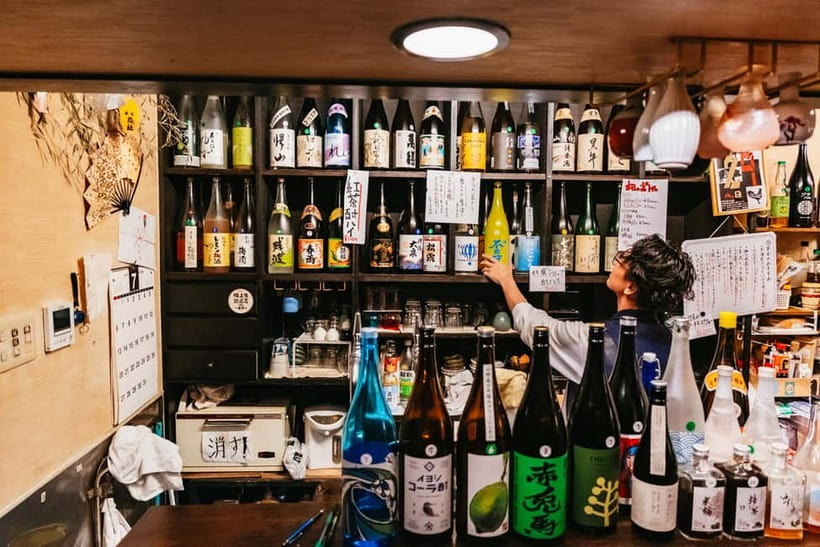
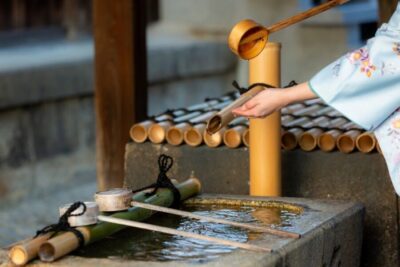
The first major stop is Yasaka Shrine, with about 15 minutes set aside for guided sightseeing. Its nighttime appearance is one of the strongest visual parts of the experience. The setting feels different after the day crowds thin, and your guide can explain the role of Shinto practice and the beliefs connected with the shrine area.
Do not expect a long temple visit here. This is a brief orientation stop, not an extended religious tour. Its value comes from timing and setting. You see one of Kyoto’s important sacred places in the evening, then move directly into the streets of Gion.
A guide can also help you tell the difference between Shinto and Buddhist traditions as you move around the neighborhood. One particularly enthusiastic account of the tour praised the way the guide connected the shrine and temple areas with Japanese beliefs. That kind of explanation gives the walk more meaning than a quick photo stop.
Walking through Gion and its geisha traditions
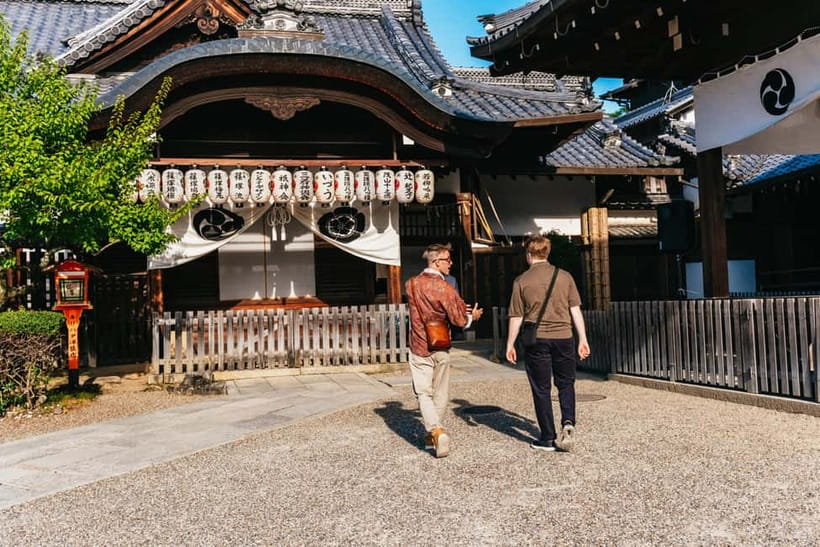
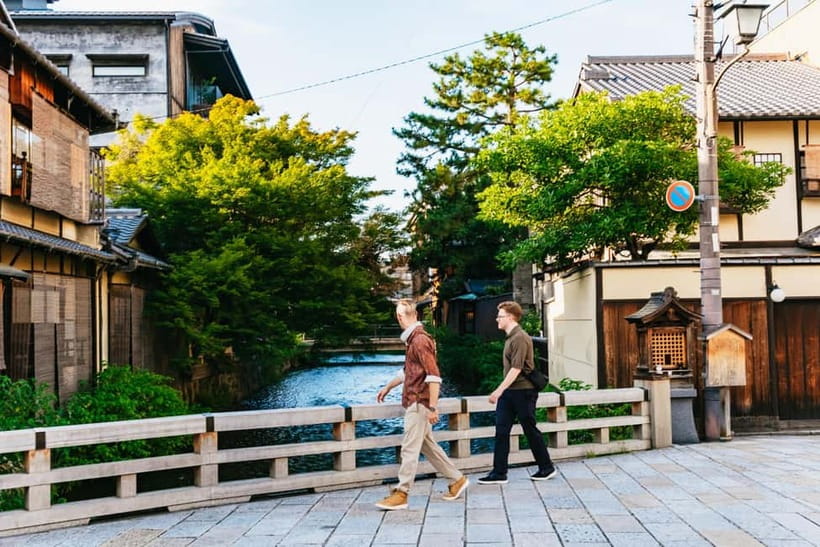
Gion is famous for geisha culture, but the district is often misunderstood. Your guide explains the traditions, the role of the entertainment houses, and the customs that shape the area. The goal is not to treat the district as a stage set, but to give you a clearer idea of how historic customs fit into present-day Kyoto.
That distinction is important. Gion is not frozen in the past. It is also a working entertainment district with restaurants, bars, businesses, and local residents. The tour presents both sides, so you get more than pretty lanes and guesses about who might be behind a sliding door.
The walking section is relatively short, about 15 minutes in the stated plan, but the guide’s commentary is the main point. Several guides have been singled out for explaining the area in an entertaining way. Ferdinand is repeatedly praised for his grasp of the geisha district and Japanese culture, while Andres is noted for getting the group talking and making people feel comfortable.
You should still be respectful. Gion is a place to observe quietly, not a set for intrusive photographs or loud group behavior. A guide is useful here because you can ask questions and learn how to read the neighborhood without treating it like a curiosity exhibit.
A completely different kind of day out:
- Kyoto: Tea Ceremony in a Traditional Tea House in Kiyomizu
★ 4.9 · 3,519 reviews - Kyoto: Gion Make Your Own Chopsticks with Engraving Option
★ 5.0 · 3,465 reviews - Kyoto Nara Day Trip │ Kiyomizu-dera Temple + Fushimi Inari-taisha Shrine + Nara Park (Departing from Osaka/Kyoto)
★ 4.7 · 3,408 reviews - Kyoto Geisha Walking Tour: Gion District & Hidden Gems
★ 4.7 · 3,273 reviews
The Kamo River and Kyoto at street level
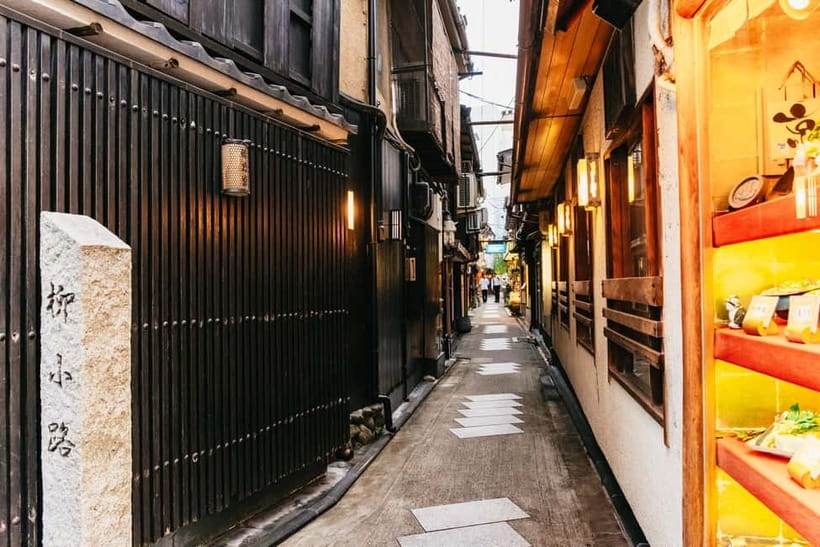
The route continues toward the Kamo River. The river section helps break up the close-packed lanes of Gion and gives you a broader view of the city. It also links the older district with the entertainment streets farther west.
The attraction here is not a formal monument. It is the change in atmosphere. You move from shrine grounds and narrow traditional streets toward the more social, restaurant-centered parts of central Kyoto. Your guide fills in the connections while you walk.
This is one reason the tour suits people who have just arrived in Kyoto. You begin to understand how the neighborhoods relate to one another instead of seeing each site as an isolated stop. The walking is also useful after dinner begins, since it gives you time to settle your appetite before the next round of food.
First restaurant: a shared spread of local dishes
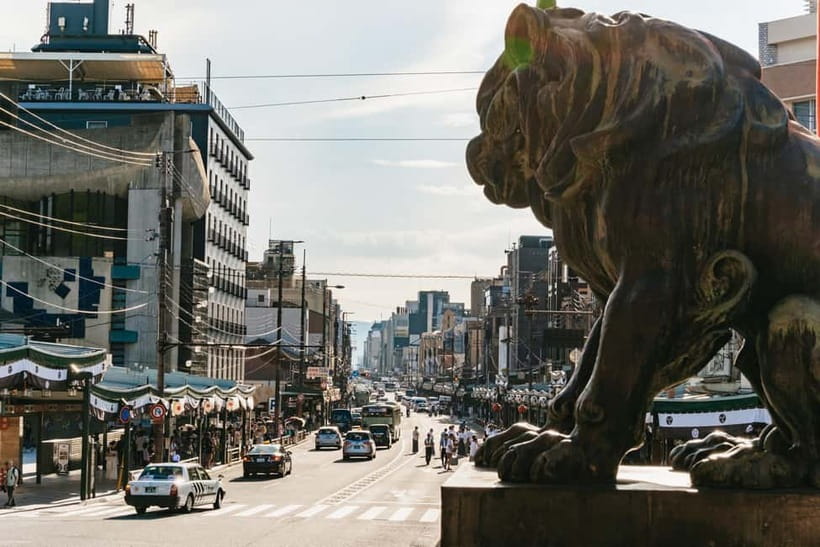
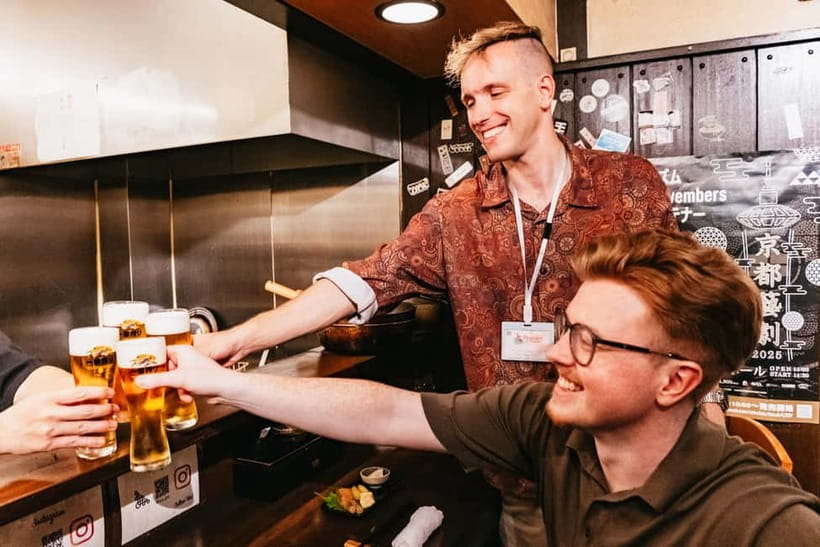
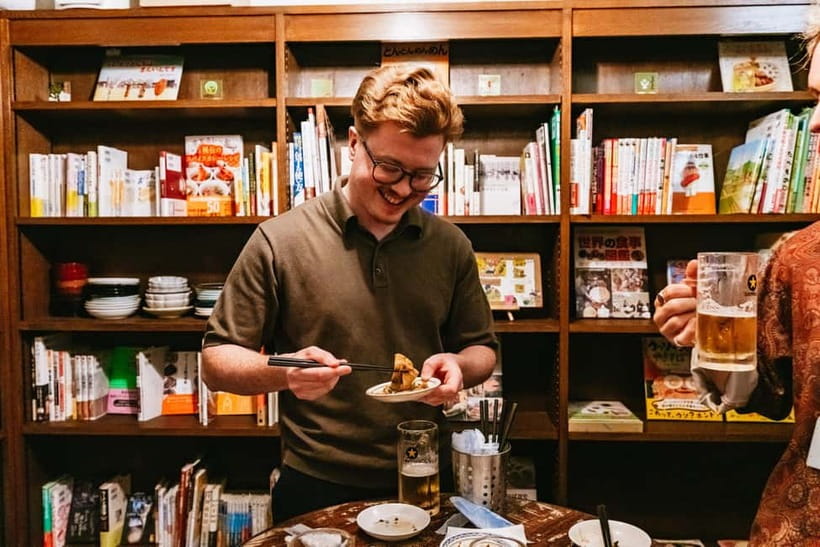
The first restaurant visit lasts about 45 minutes and includes dinner, beer, cocktails, spirits, or non-alcoholic drinks. The meal is built around many small plates, similar to a Japanese tapas format. That means variety is the point.
You might receive dishes that are unfamiliar or not immediately suited to your taste. That is part of the appeal. Rather than ordering one safe dish, you get a chance to sample food associated with Kyoto and the surrounding region. Guides explain what you are eating and can help the group decide how to share it.
The portion question deserves an honest note. Some people find the total amount generous and say they leave full, while one clear criticism is that the portions at individual stops can feel small. Both impressions can be true. The meal is spread across two restaurants, so the first stop should not be judged as a complete dinner by itself.
Pace yourself. One useful tip from a previous participant was not to eat too much at the first stop because more food follows. If you arrive very hungry, the small-plate format may seem modest at first. By the end, though, the combined meal should feel more substantial.
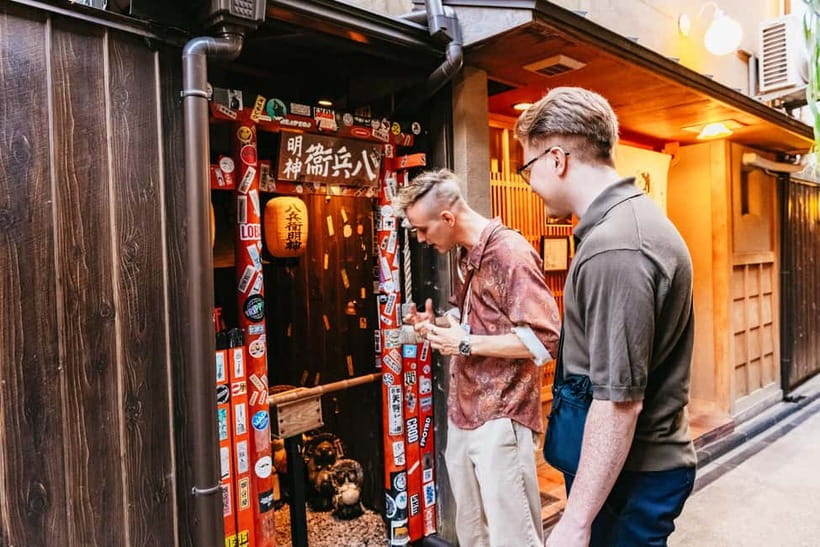
The restaurant choices are a major part of the value. You are not simply being taken to a large chain with an English menu. The stops have been described as small, local, and off the usual tourist path. That can make the meal feel more like an evening out with a local friend, especially when the guide orders a selection for the whole table.
The tradeoff is comfort and predictability. Small local eateries may have tighter seating, menus that change, and fewer facilities designed for international visitors. That is precisely why the guide matters, but it also means you should not expect a polished, standardized dining experience.
Pontocho and Kiyamachi after dinner
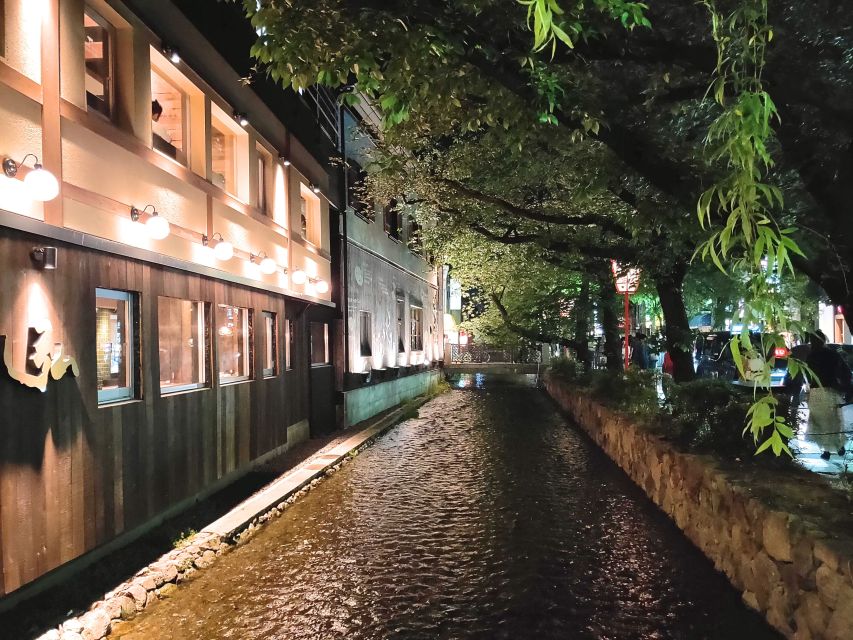
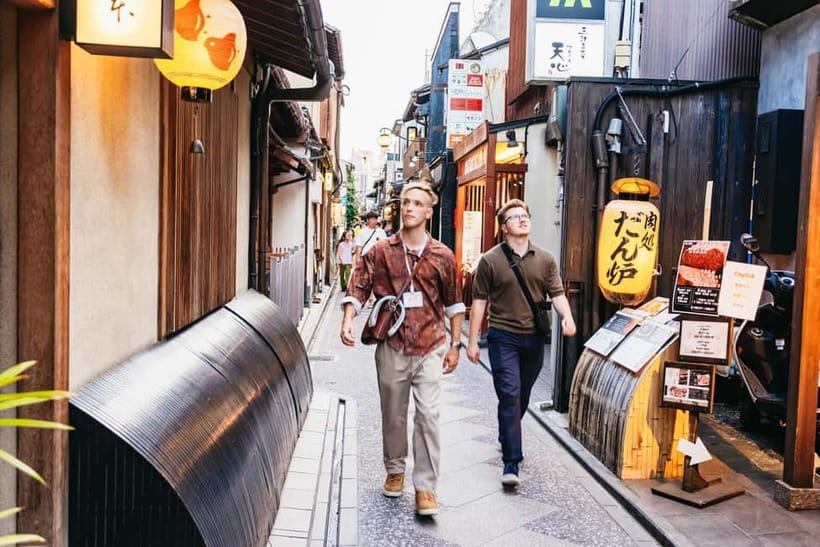
After the first restaurant, the walk continues through Pontocho for about 30 minutes, with Kiyamachi and other commercial streets included along the way. This is the modern counterpoint to Gion.
Pontocho is known for its narrow lane of restaurants and bars, while Kiyamachi adds more nightlife streets near the river. The tour gives you a look at how Kyoto spends its evenings beyond shrines and sightseeing attractions. You see the city as a place where people eat, drink, meet friends, and work late.
This section is particularly useful if you are nervous about entering nightlife areas on your own. A guide can point out the difference between a casual drinking spot, a traditional eatery, and a place that may not suit your plans. You also get a better sense of which streets are worth revisiting later.
The walk is not just a route between meals. It supplies the context that makes the restaurant stops more meaningful. You begin to see why some doorways are discreet, why the lanes are so narrow, and how old Kyoto and present-day entertainment share the same small area.
Second restaurant: more dishes, more conversation
The second restaurant stop lasts about 30 minutes and includes another round of dinner and drinks. Here, the food may be presented as another group of shared dishes, with the exact menu changing by season and restaurant availability.
That seasonal variation is worth keeping in mind. You should not book this expecting a fixed list of named dishes. The strength of the tour is the chance to try a selection chosen for the evening, not the promise of one exact menu.
Several accounts describe the two restaurants as genuinely different. One stop may feel like a small bar, while the other may be a more traditional eatery. This contrast gives you a fuller picture of Kyoto dining than two similar venues would.
The second stop is also where the social side of the tour often works best. By this point, the group has walked together, asked questions, and shared food. Small groups from different countries can quickly become part of the evening rather than simply people following the same guide.
Vegetarian alternatives and food restrictions have been accommodated in at least some cases, but you should communicate your needs when booking. The available information does not promise every dietary option at every restaurant, so specific requests should be clarified ahead of time.
Food, drinks, and the $92 price
At $92 per person, this is not the cheapest way to eat in Kyoto. You can certainly find less expensive meals if you order directly at casual restaurants. The tour’s value comes from combining dinner, two drinks, neighborhood guidance, cultural explanations, and access to places you might not feel confident entering alone.
Two drinks are included, and you can choose alcoholic or non-alcoholic options. Beer, cocktails, spirits, and sake have all been part of the dining experience described by participants. Extra drinks are not included, so keep that in mind if your ideal evening involves more than two.
The dinner is described as full across two restaurants, but the format is shared small plates. I would call it a broad tasting meal rather than a formal multi-course dinner. If you enjoy trying many things, the arrangement is strong value. If you want a large steak, a fixed menu, or complete control over each dish, it may feel less satisfying.
A Kobe beef option, or beef sourced nearby, is available for an additional charge when requested at least 10 hours ahead. This is a useful upgrade for serious meat lovers, but it is not part of the standard price. Ask for the supplement and availability before you count on it.
Gratuities are included, and tipping is not customary in Japan. That removes an awkward end-of-meal calculation and keeps the evening simple.
The smoking issue and other practical limits
The biggest practical drawback is the possibility of indoor smoking. At least two separate accounts specifically warn that one of the restaurant or bar stops permitted smoking, with one person describing smoke throughout the second venue and another noting smokers in the first restaurant.
If you do not smoke, have respiratory concerns, or are pregnant, contact the provider before booking and ask which venues are planned for your date. Restaurant availability can change, so the exact smoking situation may not be fixed.
The tour is not suitable for people with mobility impairments. You will walk between several stops, and comfortable shoes are essential. It is also limited to people aged 18 and over, making it an adult evening rather than a family activity.
The menu can change with the season and with restaurant availability. That is normal for a local food outing, but it means you should approach the meal with curiosity rather than a rigid checklist.
Which guide might you get?
The guide can shape the evening, and the range of names praised for this experience is encouraging. Jamie has been praised for explaining culture and keeping the group at ease. Laura is noted for her stories about Japanese traditions. Ferdinand receives repeated approval for his humor and explanations of Gion, while Hugo is described as friendly, entertaining, and well informed about the food and area.
Maya is praised for her enthusiasm and hospitality, and Andres for his humor, organization, and ability to explain both food and local customs. Other named guides include Lito, Brian, Damien, Kota, Diogo, Joshua, and Bryan.
You cannot choose a particular guide from the information provided, but the pattern is clear: the guide is not just there to lead the way. The best part of the evening depends on that person explaining the setting, ordering food for the group, and making conversation easy among people who have just met.
Who should book this evening?
I would recommend it most strongly for first-time visitors to Kyoto, solo visitors, couples who want a social evening, and anyone uneasy about ordering in small Japanese restaurants. It is also a smart early-trip activity because it can help you get your bearings in Gion, Pontocho, and Kiyamachi before exploring them alone.
Food lovers who enjoy shared plates will get the most from it. So will people who want local atmosphere more than a grand restaurant meal. The tour is less suited to anyone who needs guaranteed quiet dining, strict control over ingredients, a large individual portion, or a smoke-free venue.
Booking at least 10 hours ahead is important if you want the Kobe or nearby beef option. The tour allows free cancellation up to 24 hours before the start, and you can reserve now and pay later, which is helpful when your Kyoto schedule is still shifting. Spanish, French, and English guides are available, with private or small-group options.
Should you book it?
Book this tour if you want Kyoto explained as you walk, eat, and move through its night districts. The strongest reasons are the maximum six-person group, the two contrasting restaurant stops, and guides who make Gion’s customs understandable without turning the evening into a dry history lesson.
Skip it if smoking would ruin your night or if you want a large, fixed dinner with generous individual portions. For everyone else, $92 buys more than food. It buys a well-planned introduction to the streets, customs, and dining rooms that are easy to miss when you explore Kyoto on your own.
FAQ
How long does the Kyoto night food tour last?
The experience lasts three hours, with evening start times available depending on the date.
Where does the tour meet?
The meeting point is in front of Minamiza Theatre, at street level by exit 6 of Gion Shijo Station.
What is included in the price?
The price includes a full dinner served across two restaurants, two alcoholic or non-alcoholic drinks, and gratuities.
Is the tour suitable for children?
No. The experience is not suitable for children under 18.
Is the tour accessible for people with mobility impairments?
No. The experience is not suitable for people with mobility impairments, and comfortable walking shoes are recommended.
Can I request the Kobe beef option?
Yes. A Kobe beef or nearby-sourced beef option is available for an additional charge when requested at least 10 hours before the tour.
Just added in Kyoto
- The “Golden Route” and Ancient Japan by DIAMIR Erlebnisreisen – 14-Day Tour★ 2.0 · 2 reviews
- Japan: Castles & Cuisine by G Adventures – 6-Day Kyoto to Osaka Tour★ 4.5 · 4 reviews
- Cycle Japan by Explore! – 13-Day Kyoto to Tokyo Tour★ 4.7 · 12 reviews
- Cycle Japan by Intrepid Travel – 11-Day Kyoto to Tokyo Tour★ 4.8 · 2 reviews
- Classic Japan by Intrepid Travel – 11-Day Kyoto to Tokyo Tour★ 4.4 · 14 reviews
- Ancient & Modern Japan 14-Day Tour by Exodus Adventure Travels★ 4.4 · 40 reviews
- 5 Day Cultural Adventure of Kyoto, Nara & Osaka by Tourist Journey★ 2.5 · 2 reviews
- 12 Days Kinosaki Onsen Escape: A Journey Through Japan’s Timeless Towns by UME Travel★ 4.8 · 5 reviews
Kyoto Tours, compared.
![[Kyoto & Nara Day Tour] Sagano Scenic Railway & Nara Park & Fushimi Inari Taisha Thousand Torii Gates & Togetsukyo Bridge & Bamboo Grove & Kimono Forest (Departing from Osaka)](https://media.japanvisits.com/wp-content/uploads/kyoto-nara-day-tour-sagano-scenic-railway-nara-park-fushimi-inari-taisha-thousand-torii-gates-togetsukyo-bridge-bamboo-grove-kimono-forest-departing-from-osaka-k110001-400x257.jpg)
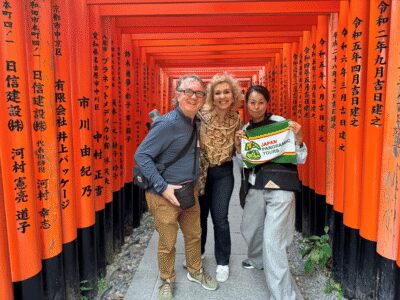
Fushimi Inari, Kinkakuji, Bamboo Grove 1 Day Bus Tour
Read our review →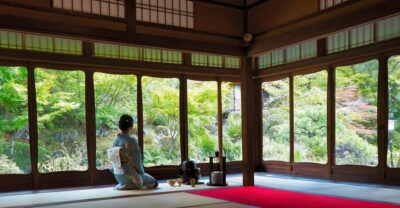
Tea Ceremony in a Traditional Tea House in Kiyomizu
Read our review →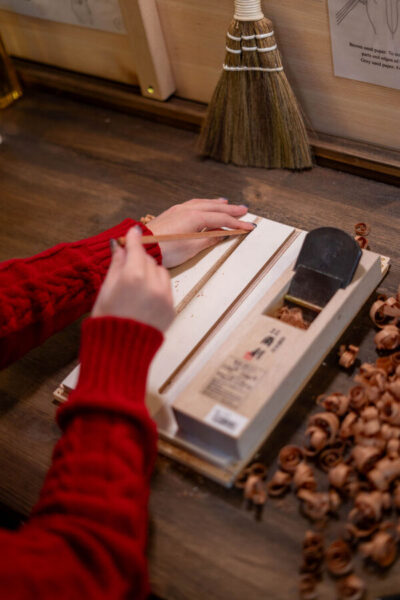
Gion Make Your Own Chopsticks with Engraving Option
Read our review →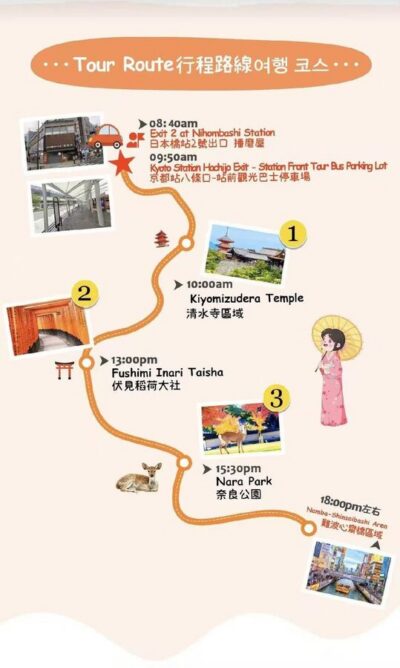
Kyoto Nara Day Trip │ Kiyomizu-dera Temple + Fushimi Inari-taisha Shrine + Nara Park (Departing from Osaka/Kyoto)
Read our review →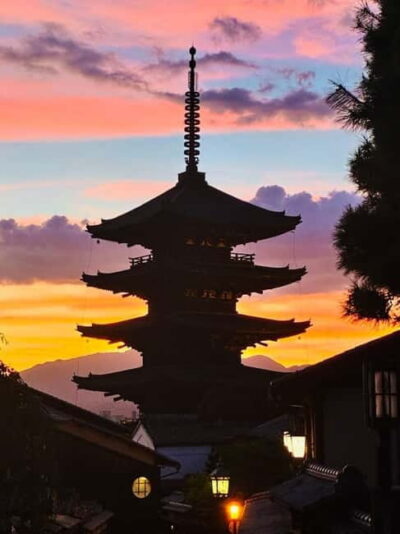
Kyoto Geisha Walking Tour: Gion District & Hidden Gems
Read our review →