Reviewed · KYOTO TOURS
Kyoto Nighttime All-Inclusive Eats and Streets, Gion and Beyond
Kyoto after dark tells a different story. This three-hour walk pairs Gion’s geiko tradition with small local restaurants, giving you more than a meal and a few pretty lanes. I especially like the mix of cultural context and regional dishes, plus the chance to see how old entertainment customs connect with today’s hostess clubs. The main caution is simple: this is a walking tour, and some food stops may be smoky or less comfortable than you expect.
The tiny group size is another strong point. With a maximum of six people, your guide can explain unfamiliar foods, help with dietary needs, and answer questions without shouting across a crowd. Guides such as Laura, Hugo, Joshua, Jamie, Maya, Brian, and Rin have been praised for their humor, English, local insight, and ability to adjust the evening.
At $119 per person, the cost is not bargain-basement Kyoto. But you receive dinner, two drinks, a cultural walk, and help finding places you might not locate on your own. I would treat this as a useful first-night orientation, especially if Japanese menus and nightlife customs feel like a lot to handle alone.
In This Review
- Five useful things to know before you book
- Why Kyoto nightlife needs a little explanation
- Meeting beneath the Minamiza Theater at 6:30pm
- Gion’s geiko lanes and evening economy
- The first food stop at about 7:30pm
- Pontocho, Kiyamachi, and Kawaramachi after dinner
- The second restaurant at about 9pm
- The guides make or break the evening
- Is $119 a fair price?
- Who will enjoy this Kyoto night walk?
- Should you book Kyoto Nighttime All-Inclusive Eats and Streets?
- FAQ
- How long does the Kyoto nighttime food tour last?
- Where does the tour begin?
- Where does the tour end?
- How many people can join?
- Are drinks included?
- Is dinner included?
- Can vegetarians join?
- What is the minimum age?
- Can I cancel for a refund?
Five useful things to know before you book
- Gion comes first: You begin with about an hour of walking and stories before sitting down to eat.
- Two restaurant stops are included: Expect regional dishes at small bars or restaurants, with one alcoholic or non-alcoholic drink at each stop.
- The focus goes beyond food: Your guide explains geiko, maiko, Kabuki, shrines, temples, and Kyoto’s changing evening economy.
- The group is genuinely small: The usual maximum is six people, with groups of up to eight accepted when everyone is on one reservation.
- The evening ends near Kawaramachi: You finish around 9:30pm at Kyoto-Kawaramachi Station, handy for continuing your night or returning to your hotel.
Why Kyoto nightlife needs a little explanation
Kyoto is easy to admire by day. Its temples, gardens, and lanes do much of the work for you. At night, the city asks more of you. Restaurant doors can be discreet, menus may be hard to read, and the social rules around geiko entertainment are not always clear to an outsider.
This tour gives you a frame for what you are seeing. In Kyoto, the preferred term is geiko rather than geisha, and younger apprentices are called maiko. Your guide explains those distinctions along with the traditions of Gion, the role of Kabuki, and the newer hostess-club culture that forms part of the modern evening economy.
That subject is unusual for a food walk. It also makes the experience more useful. You are not only moving from one plate to the next. You are learning how Kyoto’s older customs continue beside newer forms of nightlife.
The tone is intended to suit anyone aged 13 and older, so you do not need to worry about being taken into an adult-only setting. The minimum drinking age in Japan is 20, but non-alcoholic drinks are available.
A few more options to weigh up in Kyoto
- PERFECT KYOTO 1-Day Bus Tour
★ 5.0 · 13,518 reviews - [Kyoto & Nara Day Tour] Sagano Scenic Railway & Nara Park & Fushimi Inari Taisha Thousand Torii Gates & Togetsukyo Bridge & Bamboo Grove & Kimono Forest (Departing from Osaka)
★ 4.9 · 10,942 reviews - Kyoto: Fushimi Inari, Kinkakuji, Bamboo Grove 1 Day Bus Tour
★ 4.8 · 4,316 reviews
Meeting beneath the Minamiza Theater at 6:30pm
The meeting point is the Minamiza Theater, at the east end of Shijo Bridge near Gion Shijo Station. More precisely, the start is listed at the second-floor west lobby of the theater. Check the exact location before leaving your hotel, since this is a busy part of central Kyoto and several groups may gather nearby.
One practical complaint is worth taking seriously: the theater area can have several tours meeting at roughly the same place. Look for the correct guide and tour name rather than assuming the first group you see is yours.
The 6:30pm start gives you a useful transition from sightseeing to nightlife. You have time to finish the day’s temple visits, rest, and arrive without rushing. The drawback is that much of the opening walk takes place after sunset, so this is not the best choice if your priority is bright photography of Gion’s architecture.
Gion’s geiko lanes and evening economy
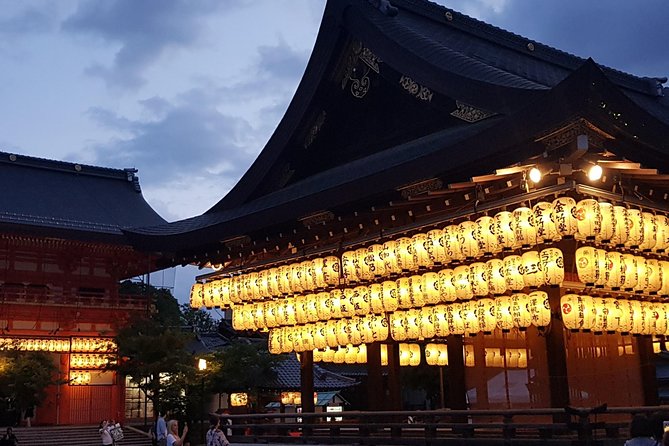
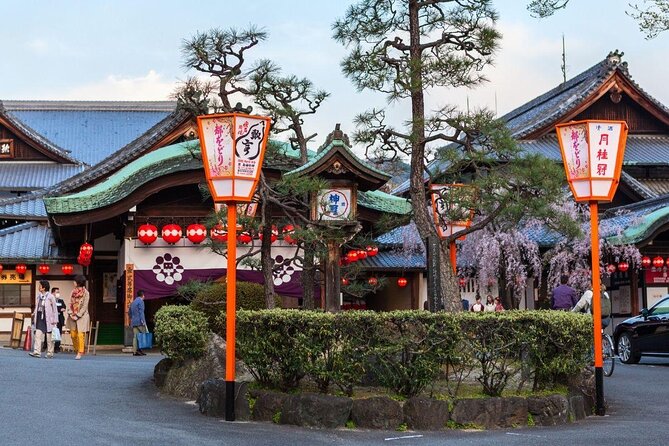
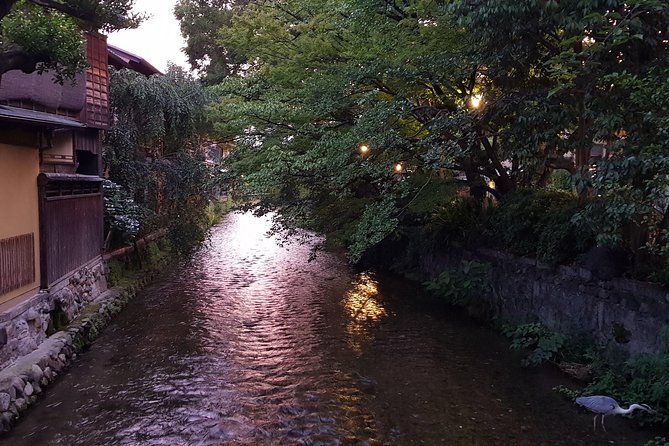
The first hour is an educational walk through Gion, on the east side of the Kamogawa River. The lanes are famous for wooden facades, traditional entertainment houses, and carefully protected streetscapes. Your guide points out what makes the district special instead of simply leading you through it in silence.
Several guide-led evenings have included visits to Shinto shrines, with explanations of how a shrine differs from a Buddhist temple. That small lesson can make later sightseeing easier. Kyoto is full of both kinds of religious sites, and knowing the difference helps you read the city rather than merely photograph it.
You may also hear about the etiquette around geiko and maiko. If you are lucky, you might see a geiko walking through the neighborhood, though no sighting should be treated as part of the schedule. The value is in learning how to view the district respectfully, not in chasing a sighting.
Gion after dark can feel quieter and less visually dramatic than expected. Narrow lanes and low lighting create atmosphere, but they are not ideal for photographs. I would bring a phone or camera for occasional shots, while keeping your main attention on the guide’s explanation and the details around you.
The first food stop at about 7:30pm
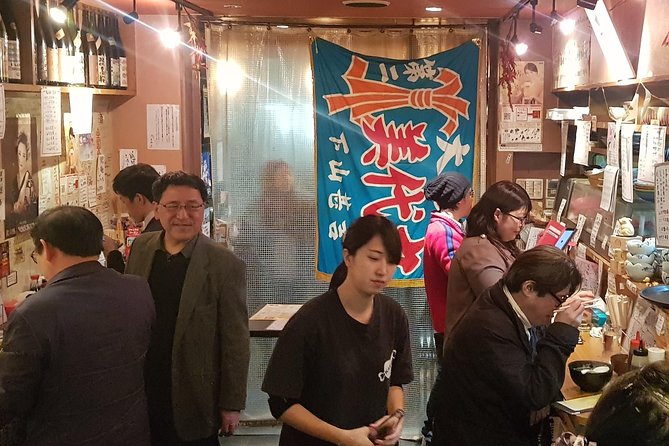
After roughly an hour on foot, you arrive at the first bar or restaurant. The format is casual and local, with regional specialties served alongside one included drink. Depending on the evening, that drink may be beer, sake, shochu, or a non-alcoholic option.
The food is meant to be sampled rather than consumed as one large course. That is a good design for Kyoto, where trying several small dishes is often more interesting than ordering one familiar meal. The portions have generally been described as enough to satisfy without leaving you uncomfortably full before the second stop.
A standing bar or compact izakaya can be part of the experience. These places may have limited seating, close quarters, and a quick local rhythm. That is part of the point, but it will not suit everyone. If you need a quiet table and a slow dinner, this format may feel rough around the edges.
Smoking is another possible issue. Smoking remains common in some Japanese bars, and one stop may allow it. The operator has acknowledged that a venue can occasionally be smoky. If this would ruin your evening, ask about the arrangement before booking or tell the guide clearly at the start.
Dietary needs are handled with advance notice. Vegetarians are specifically accommodated, and the evening has also worked well for pescatarian and gluten-free requirements. One vegetarian group found that its meals were changed without losing the sense of occasion. Still, send accurate details when booking rather than waiting until you sit down.
A completely different kind of day out:
- Kyoto: Tea Ceremony in a Traditional Tea House in Kiyomizu
★ 4.9 · 3,519 reviews - Kyoto: Gion Make Your Own Chopsticks with Engraving Option
★ 5.0 · 3,465 reviews - Kyoto Nara Day Trip │ Kiyomizu-dera Temple + Fushimi Inari-taisha Shrine + Nara Park (Departing from Osaka/Kyoto)
★ 4.7 · 3,408 reviews - Kyoto Geisha Walking Tour: Gion District & Hidden Gems
★ 4.7 · 3,273 reviews
Pontocho, Kiyamachi, and Kawaramachi after dinner
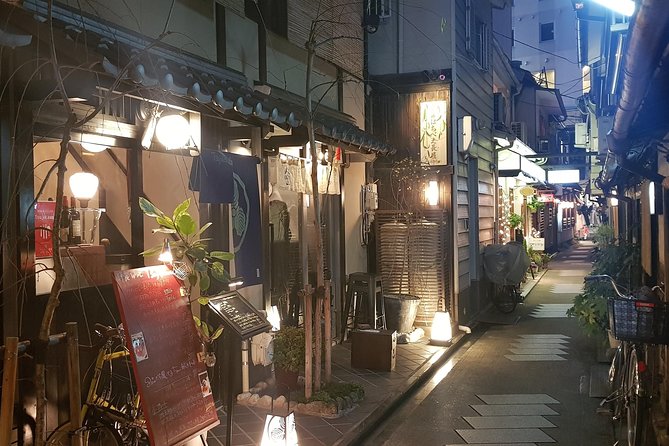
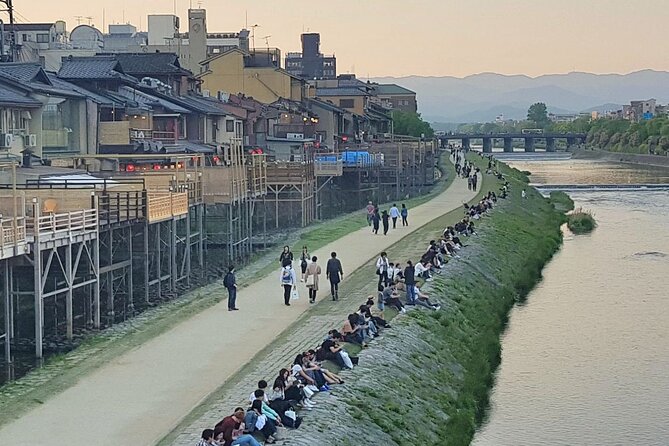
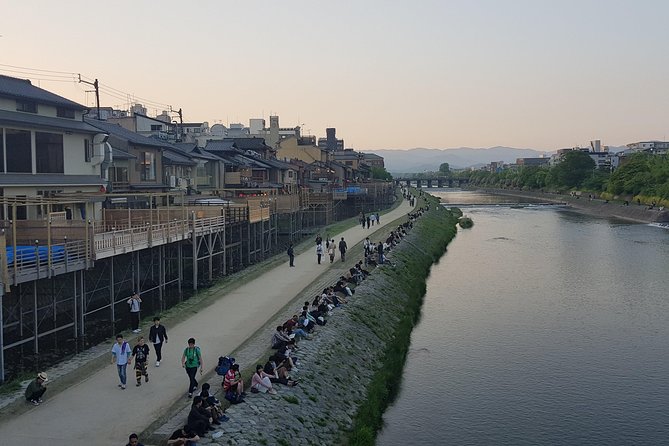
At about 8:15pm, you walk west across the Kamogawa River and through several different parts of central Kyoto. Pontocho is the classic section, known for its narrow lane and traditional restaurant fronts. It gives you a clear sense of how Kyoto protects an older style of dining and entertainment.
A few streets away, Kiyamachi and the Kawaramachi area feel younger and more current. The contrast is the lesson. Kyoto is not a museum that closes at sunset. It preserves old customs while also making room for present-day nightlife, shopping, bars, and restaurants.
This section also helps with orientation. If you do not read Japanese, central Kyoto’s restaurant streets can feel stressful after dark. A guide can show you the relationship between Gion, Pontocho, Kiyamachi, and Kawaramachi, making it easier to return later.
Expect plenty of walking. One three-star rating specifically noted that there was a lot of it, even though the food and guide were considered worthwhile. Wear comfortable shoes and avoid bringing anything that makes a three-hour urban walk awkward.
The second restaurant at about 9pm
The second stop provides more food and the second included drink. This is described as another carefully selected local venue, but the exact restaurants can change from evening to evening. That flexibility makes sense in Kyoto, where small restaurants have limited space and changing schedules.
The meal may include several dishes rather than a single main course. Wagyu has been available for some bookings, including one same-day request that required extra sourcing. Do not assume wagyu is guaranteed, but if it is important to you, state that clearly when reserving.
The mood at the second venue can differ from the first. One evening included bar seating that made group conversation difficult, even though the food was well received. This is a reminder that you are paying for access to local-style places, not a private dining room.
Food quality can also vary. Most praise has focused on delicious dishes, good portions, and restaurants that would be difficult to find alone. A few people found one stop poor and felt the restaurant choices needed improvement. That mixed picture is important: the tour’s strongest feature is the guide’s access and explanation, but the meal is not perfectly predictable.
The guides make or break the evening
The guide is the central ingredient here. The best evenings have been led by people who combine clear English with warmth and a real interest in Kyoto. Laura has been praised for her energy and for explaining geiko, maiko, shrines, and temples. Hugo has been appreciated for his humor, local knowledge, and ability to make a small group relax.
Joshua has received praise for strong explanations and practical recommendations for the rest of a Kyoto stay. Jamie has handled vegetarian and pescatarian needs well, and another group of eight found her flexible and easy to understand. Maya has helped with gluten-free food and added stories about the area. Brian and Rin have also been praised for restaurant choices and cultural explanation.
Guide quality can vary from one departure to the next. One very negative account described an unprepared guide and poor food, while another person praised the same general tour format for the guide’s insight and humor. The overall rating is 4.6 out of 5 from 464 ratings, with 90 percent recommending it, so the broad pattern is strongly positive. Still, do not book this expecting a scripted performance with identical stops every night.
The small group helps. A maximum of six means you can ask about an ingredient, request a slower explanation, or mention a food restriction without holding up a busload of people. If your entire reservation is one group, up to eight people may be accepted.
Is $119 a fair price?
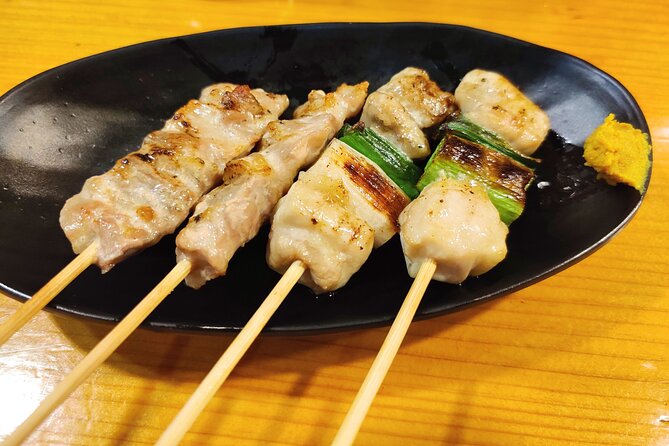
The price is $119 per person. That includes dinner at two stops, two alcoholic or non-alcoholic drinks, the walking portion, and a guide for about three hours. Drinks beyond those two are extra and must be bought directly from the restaurants.
The value depends on how you normally eat in Kyoto. If you are comfortable entering small Japanese bars, reading menus, ordering unfamiliar dishes, and finding Gion’s nightlife streets alone, you may see the price as high. Your food bill without the tour could be lower.
I think the cost makes more sense for a first evening, a first visit to Japan, or anyone who wants cultural explanation with dinner. The guide removes some of the guesswork and introduces you to places you might pass without noticing. You are also paying for a very small group, not a large coach experience.
Group discounts may be available, and mobile tickets make the booking side simple. The tour is near public transportation, with a 6:30pm start at Minamiza Theater and a 9:30pm finish at Kyoto-Kawaramachi Station.
Who will enjoy this Kyoto night walk?
I would recommend it most strongly to:
- First-time Kyoto visitors who want help reading the city after dark
- People who enjoy small dishes, casual bars, and local drinking customs
- Adults who want cultural context rather than a food crawl alone
- Families with teenagers aged 13 or older
- Vegetarians, pescatarians, and people with some dietary restrictions who provide details in advance
- Anyone who likes a small group and plenty of questions
I would be more cautious if you dislike walking, need guaranteed seating, avoid smoky venues, or want a fixed restaurant menu. It is also not ideal for serious photographers who want Gion in daylight.
The tour requires good weather. If poor weather causes cancellation, you are offered another date or a full refund. You can cancel for a full refund up to 24 hours before the start time. Gratuities are not customary in Japan, but a thank-you is welcome if your guide gives you a particularly good evening.
Should you book Kyoto Nighttime All-Inclusive Eats and Streets?
Book it if you want food plus a useful explanation of Kyoto’s nightlife, not just a succession of tastings. The best part is the combination of Gion’s older entertainment traditions, Pontocho’s preserved lanes, modern Kawaramachi, and two small restaurant stops.
I would book early in your Kyoto stay. That lets you use the guide’s restaurant suggestions and neighborhood advice later. Tell the operator about vegetarian, pescatarian, gluten-free, or other needs in advance, and wear shoes suited to walking.
Skip it if you want a polished dinner, guaranteed quiet seating, or complete control over every dish. For everyone else, the small group, two drinks, flexible food arrangements, and strong guide record make this a sensible way to meet Kyoto after sunset.
FAQ
How long does the Kyoto nighttime food tour last?
The experience lasts about three hours, from 6:30pm until approximately 9:30pm.
Where does the tour begin?
It begins at the Minamiza Theater in Kyoto’s Higashiyama Ward, near Gion Shijo Station. The specified meeting area is on the theater’s second-floor west lobby.
Where does the tour end?
The tour ends near Kyoto-Kawaramachi Station in the Kawaramachi area.
How many people can join?
The normal maximum is six people. Groups of up to eight may be accepted when everyone is part of the same reservation.
Are drinks included?
Yes. Two alcoholic or non-alcoholic beverages are included, with one served at each restaurant. Additional drinks cost extra.
Is dinner included?
Yes. Dinner at two restaurant or bar stops is included in the tour price.
Can vegetarians join?
Yes. Vegetarians can be accommodated. Other dietary requirements should be provided when booking.
What is the minimum age?
All participants must be at least 13 years old. The minimum drinking age in Japan is 20, and non-alcoholic beverages are available.
Can I cancel for a refund?
You can cancel at least 24 hours before the start time for a full refund. Cancellations and changes made less than 24 hours in advance are not accepted, and poor-weather cancellations offer either another date or a full refund.
Just added in Kyoto
- The “Golden Route” and Ancient Japan by DIAMIR Erlebnisreisen – 14-Day Tour★ 2.0 · 2 reviews
- Japan: Castles & Cuisine by G Adventures – 6-Day Kyoto to Osaka Tour★ 4.5 · 4 reviews
- Cycle Japan by Explore! – 13-Day Kyoto to Tokyo Tour★ 4.7 · 12 reviews
- Cycle Japan by Intrepid Travel – 11-Day Kyoto to Tokyo Tour★ 4.8 · 2 reviews
- Classic Japan by Intrepid Travel – 11-Day Kyoto to Tokyo Tour★ 4.4 · 14 reviews
- Ancient & Modern Japan 14-Day Tour by Exodus Adventure Travels★ 4.4 · 40 reviews
- 5 Day Cultural Adventure of Kyoto, Nara & Osaka by Tourist Journey★ 2.5 · 2 reviews
- 12 Days Kinosaki Onsen Escape: A Journey Through Japan’s Timeless Towns by UME Travel★ 4.8 · 5 reviews
Kyoto Tours, compared.
![[Kyoto & Nara Day Tour] Sagano Scenic Railway & Nara Park & Fushimi Inari Taisha Thousand Torii Gates & Togetsukyo Bridge & Bamboo Grove & Kimono Forest (Departing from Osaka)](https://media.japanvisits.com/wp-content/uploads/kyoto-nara-day-tour-sagano-scenic-railway-nara-park-fushimi-inari-taisha-thousand-torii-gates-togetsukyo-bridge-bamboo-grove-kimono-forest-departing-from-osaka-k110001-400x257.jpg)
Fushimi Inari, Kinkakuji, Bamboo Grove 1 Day Bus Tour
Read our review →
Tea Ceremony in a Traditional Tea House in Kiyomizu
Read our review →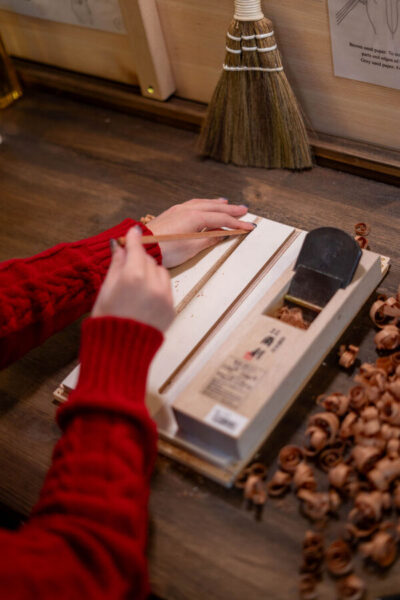
Gion Make Your Own Chopsticks with Engraving Option
Read our review →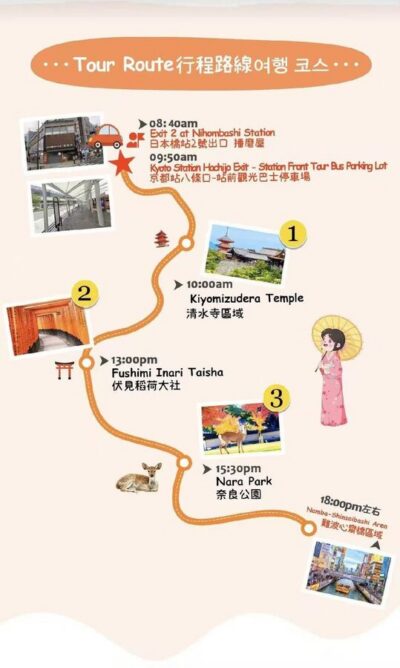
Kyoto Nara Day Trip │ Kiyomizu-dera Temple + Fushimi Inari-taisha Shrine + Nara Park (Departing from Osaka/Kyoto)
Read our review →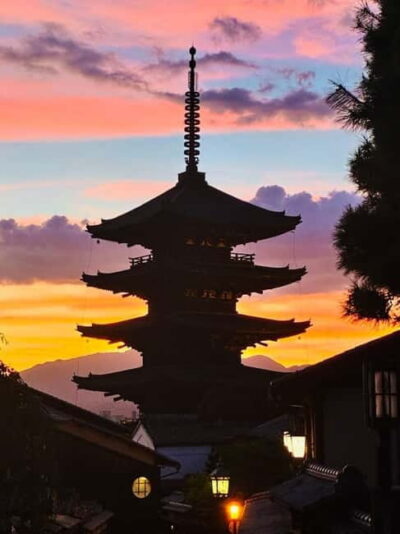
Kyoto Geisha Walking Tour: Gion District & Hidden Gems
Read our review →