
Reviewed · TEMPLES AND SHRINES
Kyoto: Nijo, Kinkaku-ji, Arashiyama, Kiyomizu & Fushimi Inari
Kyoto rewards a good plan. This full-day bus tour links six major sights in one long but efficient outing, from the Arashiyama Bamboo Grove to the vermilion gates of Fushimi Inari. I like the simple route, the helpful commentary, and the chance to cover ground without working out several train and bus connections yourself. I also like that you can choose a package with or without attraction tickets and lunch. The main catch is the pace: ten hours and 45 minutes is a lot of sightseeing, especially in Kyoto heat, and bilingual commentary may not suit everyone.
At $51.80 per person, the base price is appealing for a day that includes transportation and a guide. But you need to check your exact package before paying, since Kinkaku-ji, Nijo Castle, Kiyomizu-dera, and lunch may cost extra. Guides including Ángeles, Cesar, Paula, Alan, and Pastor have earned praise for their energy and organization, though one important warning appears repeatedly in the practical details: English and Spanish are delivered together, so the commentary may take longer and can be harder to follow.
In This Review
- Key points to know before booking
- Why this bus tour makes sense in Kyoto
- Arashiyama Bamboo Grove before the crowds
- Kinkaku-ji and the Golden Pavilion
- Nijo Castle and its famous wooden floors
- Kiyomizu-dera and the hillside views
- Fushimi Inari and the red torii gates
- The guide makes or breaks the day
- Is $51.80 good value?
- How to prepare for a ten-hour Kyoto day
- Who should book this Kyoto tour?
- FAQ
- Where does the tour start?
- Where does the tour end?
- How long does the tour last?
- Are attraction tickets included?
- Is lunch included?
- What languages does the guide speak?
Key points to know before booking
- Six famous Kyoto stops in one day: Arashiyama, Kinkaku-ji, Nijo Castle, Kiyomizu-dera, Fushimi Inari, and the return to Kyoto.
- Early start at 7:00 am: Meet at Hotel Keihan Kyoto Grande, near Kyoto Station, for the day’s first ride.
- Optional admission packages: The Golden Pavilion, Nijo Castle, and Kiyomizu-dera are included only when your selected option says they are.
- Bilingual English and Spanish guiding: Commentary is provided in both languages, which can be useful for mixed-language groups but may feel repetitive.
- Maximum group size of 30: This is not an intimate private outing, but the group is still manageable for a bus tour.
- Plan for heat and walking: Arashiyama, Kiyomizu-dera, and Fushimi Inari all involve outdoor walking, with limited time to rest on a packed day.
Why this bus tour makes sense in Kyoto
Kyoto’s famous sights are spread across the city. Arashiyama sits in the west, Fushimi Inari lies southeast, and the central temples and castle require their own transfers. You can visit them independently, but fitting all six into one day means careful planning, early starts, and a willingness to keep checking train and bus routes.
This tour trades independence for efficiency. You meet once at Hotel Keihan Kyoto Grande, then let the driver handle the movement between districts. That matters most if you have only a short stay in Kyoto, or if you want a broad first look before returning later to the places you liked best.
The schedule is ambitious. You leave at 7:00 am and return to the same meeting point after roughly ten hours and 45 minutes. That gives you a useful full-day overview, not a slow, reflective visit to each site. I would approach it as a highlight reel with time to walk around, take pictures, and hear context from the guide.
The bus holds up to 30 people. That keeps the operation more organized than a huge coach group, but you still need to stay alert at meeting points. Keep your guide’s instructions clear in your mind, especially when you are released for free time.
More Temples and Shrines in Kyoto
- [Kyoto & Nara Day Tour] Sagano Scenic Railway & Nara Park & Fushimi Inari Taisha Thousand Torii Gates & Togetsukyo Bridge & Bamboo Grove & Kimono Forest (Departing from Osaka)
★ 4.9 · 10,942 reviews - Kyoto: Fushimi Inari, Kinkakuji, Bamboo Grove 1 Day Bus Tour
★ 4.8 · 4,316 reviews - Kyoto: Tea Ceremony in a Traditional Tea House in Kiyomizu
★ 4.9 · 3,519 reviews
Arashiyama Bamboo Grove before the crowds
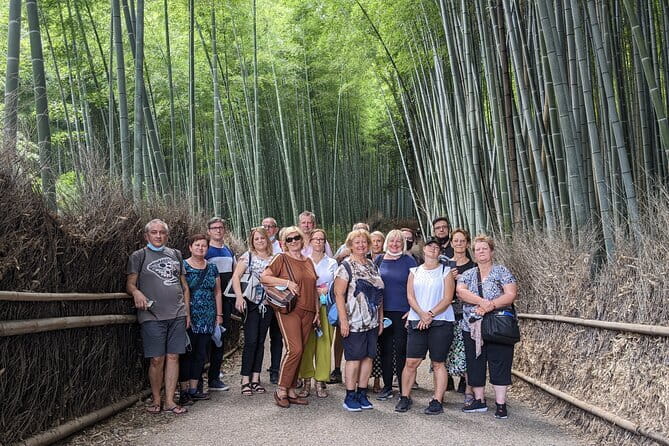
The first drive takes about 40 minutes, bringing you to Arashiyama. The Bamboo Grove is scheduled for about one hour and 20 minutes, and the tour describes early access before the main crowds arrive. That early timing is one of the smartest parts of the day.
The grove is famous for its tall green bamboo, narrow walking route, and striking photographs. It is not a large attraction with a long list of displays. The pleasure comes from walking beneath the stalks and seeing how the light changes along the path. Your guide can provide the setting and background, then give you room to make your own pictures.
Keep expectations sensible. Some nearby temples and attractions may not be open early, and the bamboo path itself is the main reason for this stop. One disappointed participant felt the early visit offered little beyond the grove. If you want a broader Arashiyama morning with temple interiors, river views, or a long café stop, this schedule will feel too limited.
The allotted time is enough for a proper walk, but you should not wander far from the meeting instructions. This is your first stop, and a late return can create problems for the rest of a tightly timed day.
Kinkaku-ji and the Golden Pavilion
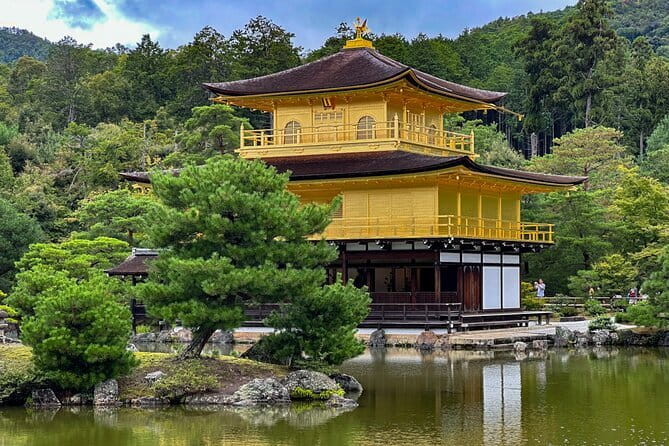
After Arashiyama, the bus travels for about 30 minutes to Kinkaku-ji, the Golden Pavilion. You get approximately 45 minutes here. The visit is short, but it covers the core experience: viewing the pavilion across its pond, walking through the surrounding grounds, and taking in the carefully framed scene.
Kinkaku-ji is one of Kyoto’s most recognizable sights. Its gold-covered upper levels reflect in the water, making it a natural photo stop. The grounds follow a set route, so this is not a place where you need a complicated plan. Move with the group, take your pictures, and listen for the guide’s explanation of the temple’s role and design.
Admission is not automatically included. You need a valid ticket if you want to enter the grounds, so check the package you selected. This distinction is easy to miss because the tour title makes the temple sound like a guaranteed part of the day, while the details say entry depends on the option purchased.
Forty-five minutes should work for a focused visit, but it leaves little spare time. If the grounds are crowded, you may need to keep moving. I would not count on a relaxed shopping stop or a long look at every garden feature.
Nijo Castle and its famous wooden floors

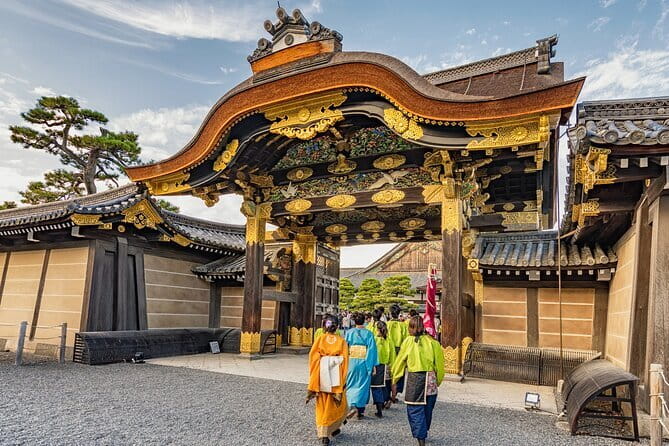
The next ride takes about 30 minutes to Nijo Castle, where the planned visit lasts around one hour and 30 minutes. This is a welcome change from the short Golden Pavilion stop because the castle has more space, architecture, and garden paths to absorb.
Nijo Castle is known for its ornate buildings and gardens. It also has the famous nightingale floors, designed to chirp underfoot as a security feature. Listen for that sound as you walk through the interior if the route and access allow it. The building gives you a more grounded sense of how power and ceremony worked in historic Kyoto.
Admission is optional here as well. The schedule says you can visit the castle if you purchased the ticket, so confirm this before departure. Without admission, you may have limited access to the central attraction, which would weaken the point of this stop.
The 90-minute window should give you time to see the main interior route and gardens without rushing quite as much as at Kinkaku-ji. Still, this is not a deep architectural tour. The guide’s commentary helps you understand what you are seeing, while the free time lets you set your own pace.
A completely different kind of day out:
- PERFECT KYOTO 1-Day Bus Tour
★ 5.0 · 13,518 reviews - Kyoto: Gion Make Your Own Chopsticks with Engraving Option
★ 5.0 · 3,465 reviews - Kyoto Nara Day Trip │ Kiyomizu-dera Temple + Fushimi Inari-taisha Shrine + Nara Park (Departing from Osaka/Kyoto)
★ 4.7 · 3,408 reviews - Kyoto Geisha Walking Tour: Gion District & Hidden Gems
★ 4.7 · 3,273 reviews
Kiyomizu-dera and the hillside views
From Nijo Castle, the bus takes roughly 30 minutes to Kiyomizu-dera. The stop is planned for about two and a half hours, the longest stretch of the day. That makes sense. Kiyomizu-dera is not just one building. The temple sits on a hillside, with approaches, viewpoints, surrounding streets, and several areas worth exploring.
The temple’s wooden stage offers broad views over Kyoto. The hillside setting also makes this one of the more atmospheric stops, but it requires walking and, in places, uphill movement. Wear shoes you can comfortably use for a full day and keep water with you.
You may have time to visit the main temple area, look out across the city, and explore the nearby approach. The exact balance depends on how quickly your group moves and how much time is lost to traffic or queues. A two-and-a-half-hour stop sounds generous, but lunch, photographs, temple visits, and walking can use it quickly.
Kiyomizu-dera admission is included only in packages that specify it. Do not assume that the lowest advertised fare covers every entrance. If the tour offers a premium option with lunch and tickets, compare the total cost with what you would spend buying each item yourself.
The heat warning matters most here. One account describes a very hot day with too few breaks, limited meal planning, and concerns about hydration. Kyoto summers can be punishing, and the long outdoor portions of this tour give you no good reason to arrive without water. Ask about the next meeting time before setting off, then take shade and rest whenever you can.
Fushimi Inari and the red torii gates
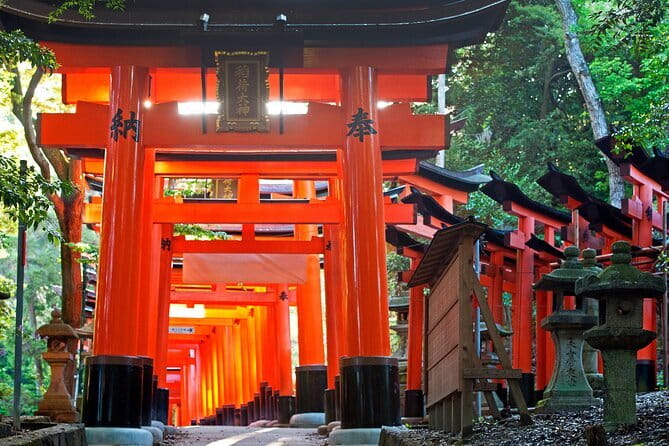
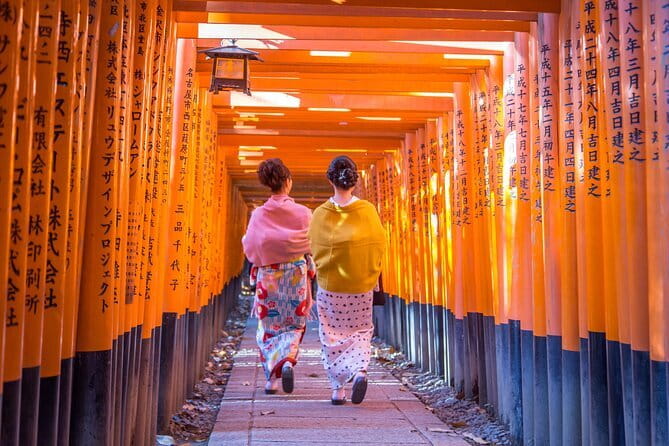
The final major stop is Fushimi Inari Taisha, reached after another ride of about 30 minutes. You have around 90 minutes to explore. Admission is free, and the shrine is known for its thousands of vermilion torii gates that climb the wooded mountain behind the main grounds.
You do not need to walk the entire mountain route to enjoy Fushimi Inari. The lower section gives you the classic tunnel-like photographs and a strong first impression. If you walk higher, the crowds may thin, but the route becomes more strenuous and your time is limited. Keep an eye on your watch. This is the last stop, but the bus still has to return to Kyoto.
Fushimi Inari works well at the end of the day because it does not require an entry ticket and gives you freedom to choose your effort level. You can stay near the shrine buildings, walk through a section of gates, or push farther uphill if your legs still have something left.
The stop also tests the limits of a packed itinerary. After Arashiyama, Kinkaku-ji, Nijo Castle, and Kiyomizu-dera, you may be tired. If your main goal is a quiet, complete visit to Fushimi Inari, come back independently on another morning. On this tour, think of it as a strong final taste.
The guide makes or breaks the day

Guide quality is one of the tour’s biggest strengths. Ángeles received praise for combining knowledge of Kyoto with genuine enthusiasm. Cesar was singled out for keeping a major one-day route organized. Paula earned approval for giving useful information while still allowing people to explore on their own. Alan and Pastor also helped make a long day enjoyable despite poor weather.
That balance matters. You do not want a guide talking every second while you are trying to see a temple, but you also do not want to be dropped at a gate with no idea what deserves attention. The best version of this tour gives you a short explanation, a clear meeting time, and freedom to look around.
The guide and driver work as a team. Several strong experiences credit both the commentary and the smooth transport, with the staff keeping their energy up through a full day.
There is one communication issue to consider. The tour is bilingual in English and Spanish. Commentary may be repeated in both languages, and at least one English-speaking participant found the English difficult to follow. If you need detailed historical explanation in clear, uninterrupted English, a single-language tour may suit you better.
Also stay close to the group. One poor experience involved a participant being left behind after asking the guide to wait and repeat information. That should not happen, but the practical lesson is simple: make sure the guide sees you, confirm meeting times, and do not assume the bus will search for late arrivals.
Is $51.80 good value?
The $51.80 starting price is attractive for transportation, a bilingual guide, and a full day connecting Kyoto’s major sights. You are paying for convenience as much as sightseeing. The bus saves you from arranging several separate journeys, and the guide adds context while you move between districts.
The price becomes harder to judge once admission fees and lunch are added. Kinkaku-ji, Nijo Castle, and Kiyomizu-dera are not included unless your option says they are. Lunch is included only with the Premium option. Compare the package choices carefully rather than assuming the headline price is the final cost.
I see the best value for someone staying in Kyoto briefly. You can get a useful first look at the city’s major landmarks in one day, then return independently to the places that deserve more time. If you have four or five days in Kyoto, you may prefer to split these sites across several mornings and afternoons.
The tour also has value for anyone who dislikes navigating unfamiliar transport. Kyoto’s routes are manageable, but the distances between these attractions can make independent planning tiring. Here, the driver handles the long jumps while you save your energy for the temples and paths.
How to prepare for a ten-hour Kyoto day
Start with the practical basics. Wear comfortable shoes, bring water, and carry sun protection in hot weather. You will spend much of the day walking outdoors, and the schedule provides limited room for long breaks.
Arrive ready for the 7:00 am departure at Hotel Keihan Kyoto Grande. The tour returns to the same meeting point, so this is useful if you are staying nearby or using Kyoto Station as your base.
Check your ticket package before the morning begins. Confirm whether it includes:
- Kinkaku-ji admission
- Nijo Castle admission
- Kiyomizu-dera admission
- Lunch
Keep your phone charged because the ticket is mobile. Save the meeting point and the guide’s instructions where you can find them quickly. The itinerary may change because of weather, traffic, road closures, or other conditions, so treat the listed times as a working plan rather than a guarantee.
The day is not designed for a slow lunch or spontaneous detours. If you need frequent rests, have mobility concerns, or dislike fixed schedules, consider visiting fewer sites independently. Most people can participate, but the length and walking demands are real.
Who should book this Kyoto tour?
I would choose this tour if you have limited time, want Kyoto’s best-known sights in one day, and prefer a guide and bus over independent route planning. It is especially useful as a first orientation to the city, with enough free time at each stop to take pictures and get a feel for the places.
I would be more cautious if you want quiet temple visits, single-language commentary, or long meals. The bilingual format can slow the explanations, and the packed schedule leaves little room for weather-related delays or extra rest.
Book it when efficiency matters most. Skip it when you already know Kyoto well and would rather spend half a day at one temple than sample six major places. At $51.80 before optional tickets and lunch, it is a sensible way to cover a lot of ground, provided you understand what the package includes and prepare for a long, active day.
FAQ
Where does the tour start?
The tour starts at 7:00 am at Hotel Keihan Kyoto Grande, located at 31 Higashikujō Nishisannōchō, Minami Ward, Kyoto 601-8003.
Where does the tour end?
The activity ends back at the original meeting point, Hotel Keihan Kyoto Grande.
How long does the tour last?
The tour lasts approximately 10 hours and 45 minutes.
Are attraction tickets included?
Tickets depend on the option you choose. Admission to Kinkaku-ji, Nijo Castle, and Kiyomizu-dera is included only when the selected package specifies it.
Is lunch included?
Lunch is included only in the Premium option. It is not included in the standard option.
What languages does the guide speak?
The tour uses a bilingual English and Spanish guide. The tour can have a maximum of 30 participants.
Just added in Kyoto
- The “Golden Route” and Ancient Japan by DIAMIR Erlebnisreisen – 14-Day Tour★ 2.0 · 2 reviews
- Japan: Castles & Cuisine by G Adventures – 6-Day Kyoto to Osaka Tour★ 4.5 · 4 reviews
- Cycle Japan by Explore! – 13-Day Kyoto to Tokyo Tour★ 4.7 · 12 reviews
- Cycle Japan by Intrepid Travel – 11-Day Kyoto to Tokyo Tour★ 4.8 · 2 reviews
- Classic Japan by Intrepid Travel – 11-Day Kyoto to Tokyo Tour★ 4.4 · 14 reviews
- Ancient & Modern Japan 14-Day Tour by Exodus Adventure Travels★ 4.4 · 40 reviews
- 5 Day Cultural Adventure of Kyoto, Nara & Osaka by Tourist Journey★ 2.5 · 2 reviews
- 12 Days Kinosaki Onsen Escape: A Journey Through Japan’s Timeless Towns by UME Travel★ 4.8 · 5 reviews
Temples and Shrines, compared.
![[Kyoto & Nara Day Tour] Sagano Scenic Railway & Nara Park & Fushimi Inari Taisha Thousand Torii Gates & Togetsukyo Bridge & Bamboo Grove & Kimono Forest (Departing from Osaka)](https://media.japanvisits.com/wp-content/uploads/kyoto-nara-day-tour-sagano-scenic-railway-nara-park-fushimi-inari-taisha-thousand-torii-gates-togetsukyo-bridge-bamboo-grove-kimono-forest-departing-from-osaka-k110001-400x257.jpg)
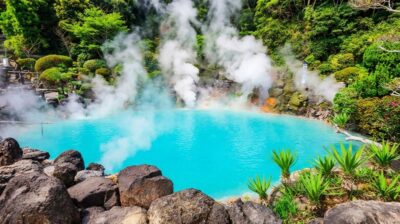
Kyushu One-Day Tour: Yufuin no Mori Train & Yufuin Town & Nyoirin-ji Temple & Dazaifu & Hell Hot Springs (Departing from Fukuoka)
Read our review →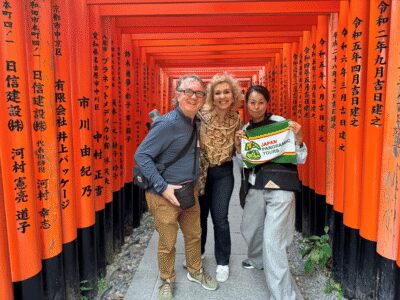
Fushimi Inari, Kinkakuji, Bamboo Grove 1 Day Bus Tour
Read our review →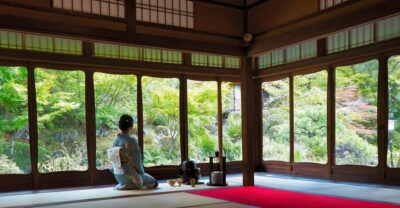
Tea Ceremony in a Traditional Tea House in Kiyomizu
Read our review →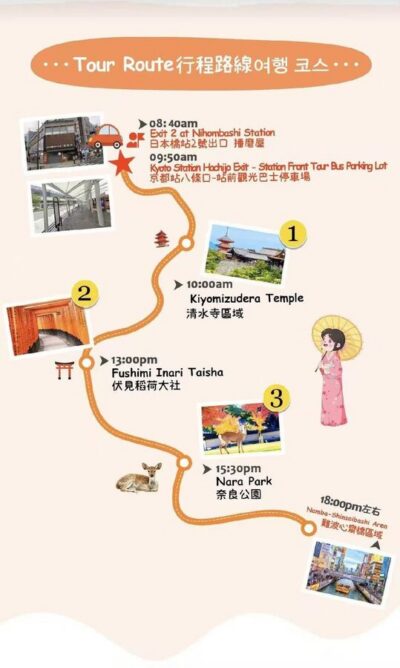
Kyoto Nara Day Trip │ Kiyomizu-dera Temple + Fushimi Inari-taisha Shrine + Nara Park (Departing from Osaka/Kyoto)
Read our review →
Browse the lists this tour appears in