
Reviewed · MARKETS AND FOOD HALLS
Kyoto: Nishiki Market Food Tour
Come hungry, but not rushed. Kyoto’s Nishiki Market Food Tour turns the city’s famous food street into a three-hour lesson in Japanese eating, shopping, and seasonal cooking. I like the small group size, limited to eight people, and the chance to visit about 10 family-owned stalls rather than simply walk past them. I also like that seasonal lunch, market tastings, and Japanese tea are included.
The main consideration is the price: at $173 per person, this is not a cheap snack crawl. You are paying for a guide, a planned tasting route, and cultural explanation as much as for the food. Comfortable shoes matter, and anyone with allergies or dietary needs should provide that information before the tour.
In This Review
- Key points at a glance
- Why Nishiki Market deserves a guided visit
- Meeting at Kawaramachi before the tasting begins
- Three hours through the Kitchen of Kyoto
- About 10 vendors, from seafood to sweets
- The included lunch changes the value equation
- Japanese tea and the meaning of seasonality
- The guides are a major part of the experience
- What the small group means in practice
- Is $173 per person a fair price?
- Who should book this Nishiki Market tour?
- Final verdict: book it for context, not just calories
- FAQ
- How long is the Nishiki Market Food Tour?
- Where does the tour meet?
- How do I reach the meeting point by train?
- Is hotel pickup included?
- How many people are in the group?
- What language is the tour conducted in?
- How many market vendors will I visit?
- Is lunch included?
- Are extra food and drinks included?
- Do I need to report allergies or dietary requirements?
Key points at a glance
- About 10 market stops: Visit family-owned shops and stalls for regional snacks, seafood, sweets, pickles, tea, and other Kyoto specialties.
- A small group of eight: The limited group makes it easier to hear the guide and ask questions in narrow market corridors.
- Seasonal lunch is included: The tour offers a regional lunch along with smaller tastings, so you get more than a few samples.
- Japanese tea is part of the experience: Tea adds useful context to Kyoto’s food traditions and gives the tasting pace a welcome pause.
- English-speaking guides vary: Past guides praised by name include Raquel, Sanae, Sae, Marie, Ida, Kohei, and Rosalia Yoshiko.
- A good first visit to Nishiki: Shopping time is included, but transportation, extra food, drinks, hotel pickup, and gratuity cost more.
Why Nishiki Market deserves a guided visit
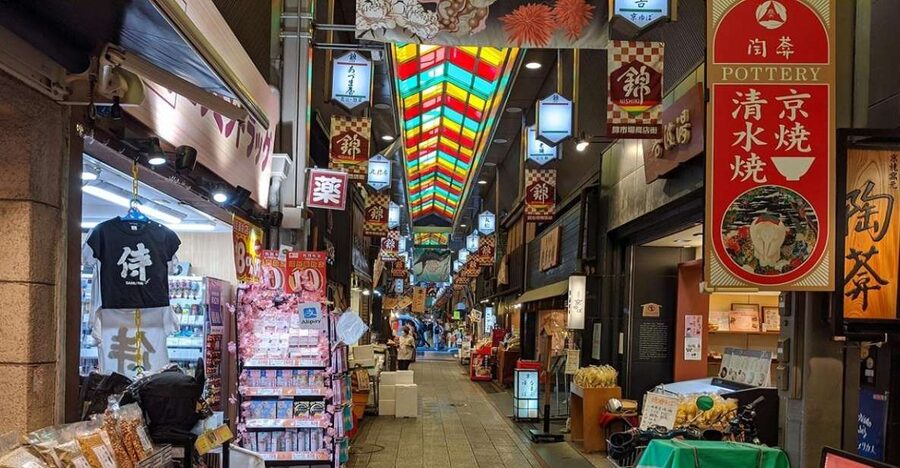
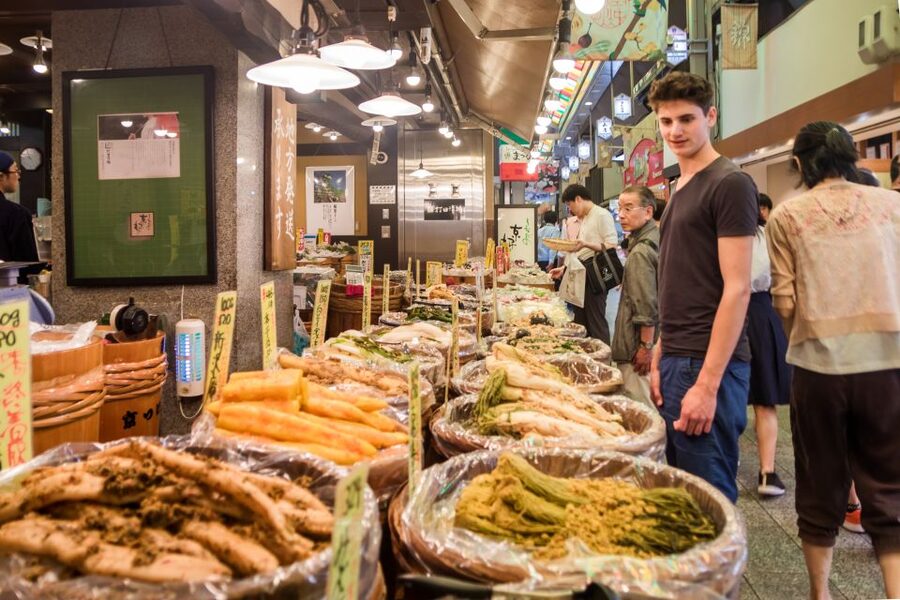
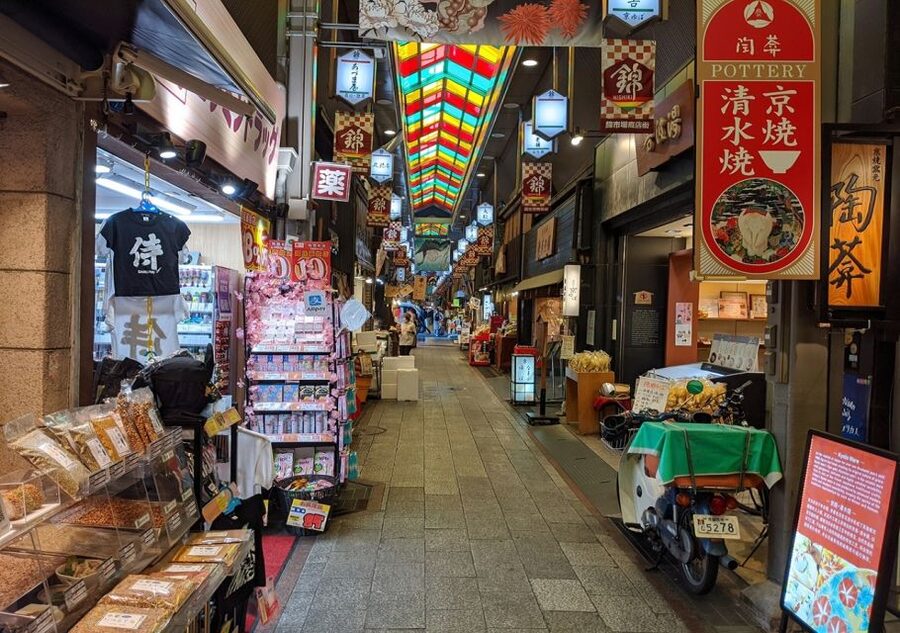
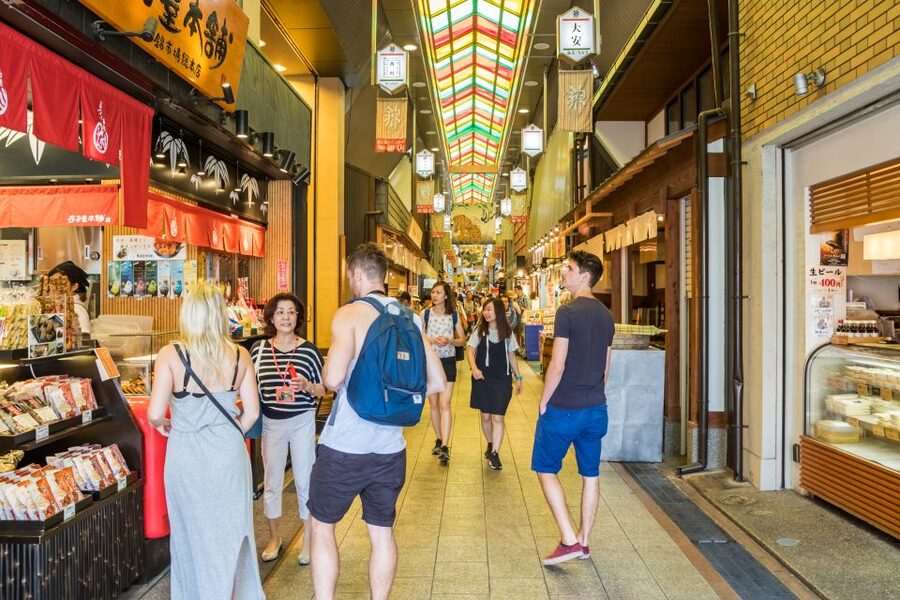
Nishiki Market is known in Kyoto as the Kitchen of Kyoto, and the nickname makes sense once you enter its long covered corridors. It is a place for buying and tasting, not just sightseeing. Displays focus on ingredients, prepared foods, snacks, tea, sweets, and items used in home cooking.
A first visit can be confusing. You may see an unfamiliar seafood item, a jar of pickles, or a dried ingredient and have no idea how it is used. A guide gives those foods a place in the larger picture. Instead of sampling at random, you learn why the item matters and how it fits Japanese cooking.
I especially like the focus on small, family-owned businesses. A market stall can reveal more about everyday food culture than a polished restaurant menu. The people selling the food, the way products are displayed, and the seasonal choices all help show how Kyoto eats.
The market is also a working shopping area. That means the corridors can feel close and busy, and you should expect to walk at the pace of the group. This is not a sit-down food tour with long breaks between courses. It is a moving meal with frequent stops.
More Food Tours in Kyoto
- Kyoto Night Foodie Tour in Gion (9+ dishes + 6 Sake tastings)
★ 5.0 · 1,762 reviews - Kyoto: Gion Food Tour 13 Dishes at 4 Eateries
★ 5.0 · 408 reviews - Kyoto Foodie Night Tour
★ 5.0 · 376 reviews
Meeting at Kawaramachi before the tasting begins
The tour meets in front of Lacoste at Naramonochi 375, on Shijo-dori in Kyoto’s Shimogyo Ward. The easiest rail access is Hankyu Kawaramachi Station, using Exit 9.
That meeting point is useful because it places you near a major shopping and transport area before the group heads toward Nishiki Market. I would allow extra time to find Exit 9 and the store frontage, especially if you are navigating Kyoto for the first time.
There is no included hotel pickup. You can arrange pickup for an additional charge, but most people should plan to reach the meeting point independently. Transportation costs are also not included, so factor in your own train, subway, bus, or taxi fare.
The tour requires at least two people per booking. That is worth checking if you are traveling alone. The group limit is eight, which keeps the outing more personal than a large coach-style food walk.
Three hours through the Kitchen of Kyoto
The route lasts three hours, giving the guide enough time to cover roughly 10 vendors without turning the experience into a race. The exact starting time depends on availability, so you should check the schedule before booking.
The first part is likely to help you get your bearings. Nishiki is a narrow market street with plenty to look at, and an English-speaking guide can explain how the market works while introducing the foods you will taste. The emphasis is not only on eating. You also learn how ingredients connect to Kyoto’s traditions and the changing seasons.
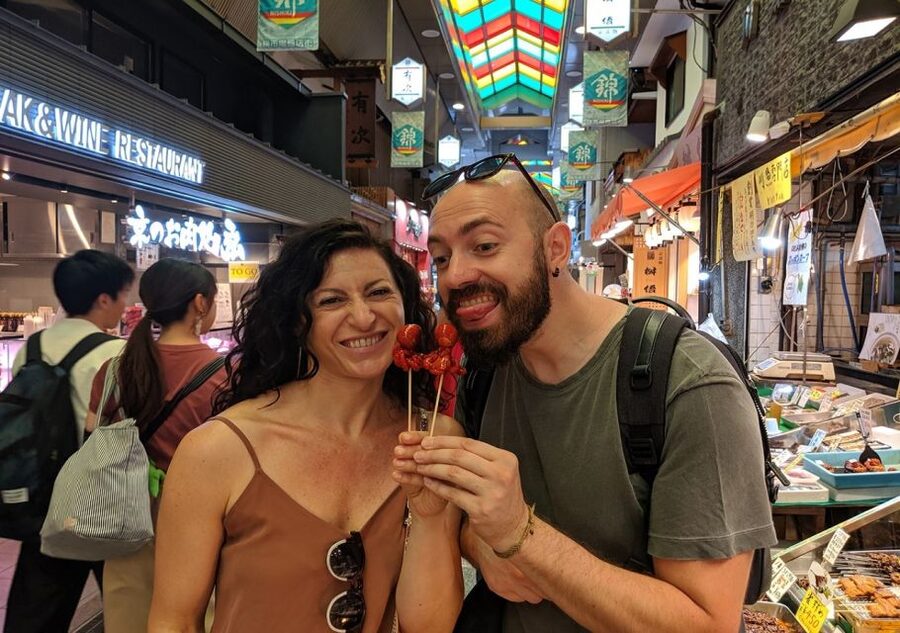
At each stop, expect a small tasting rather than a full restaurant portion. That is a strength. You can try several foods in one morning or afternoon without filling up after the first shop. The tour description specifically calls out fresh seafood, local snacks, and specialty items, while past experiences included dried bonito fish, traditional sweets, pickled vegetables, tea, and a substantial lunch.
Do not assume every stop will appeal to you. Market food can include unfamiliar textures and strong flavors. That is part of the point, but it helps to arrive with a curious attitude and enough flexibility to say no politely if something does not suit you.
About 10 vendors, from seafood to sweets
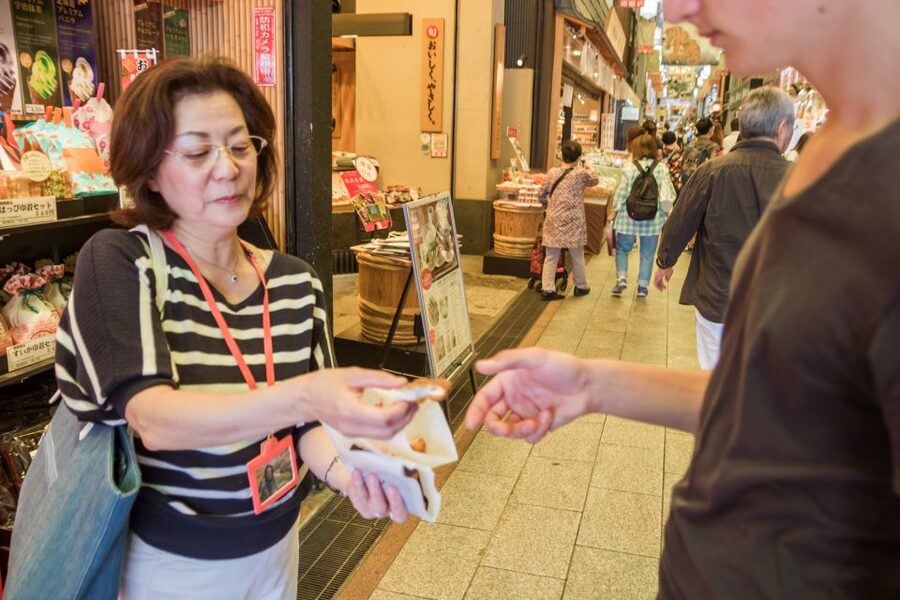
The number of stops gives the tour a useful range. You are not visiting one famous shop and calling it a market tour. You move through several businesses, each showing a different side of Kyoto food.
Fresh seafood is one likely highlight. Market seafood is valued for freshness, but the guide’s explanation is just as useful as the bite itself. You may learn how a product is prepared, why it is sold in that form, or how it relates to Japanese meals.
Pickled vegetables bring another important piece of the food story. Kyoto is known for careful preparation and seasonal ingredients, and pickles offer a direct way to taste that approach. Their flavors can be sharp, salty, sour, or subtle, so do not expect every sample to be familiar.
Dried bonito fish has made a lasting impression on at least one past participant, who became a fan after learning about it during the tour. That detail hints at the value of explanation. On its own, a dried ingredient may look plain. With context, it becomes part of the base flavor used in Japanese cooking.
You may also encounter hand-roasted tea, delicately made sweets, and other regional products. The displays are part of the experience. Seasonal produce and carefully arranged foods show how much attention Japanese food culture gives to color, timing, and presentation.
More Markets and Food Halls in Kyoto
- Nishiki Market Brunch Walking Tour (7 Tastings + Brunch)
★ 5.0 · 1,355 reviews - Kimono Tea Ceremony at Kyoto Maikoya, NISHIKI
★ 5.0 · 911 reviews - Kyoto Nishiki Market Food and Culture Walking Tour
★ 5.0 · 412 reviews - Kyoto: Nishiki Market Tea Ceremony with Koto Performance
★ 4.8 · 294 reviews
The included lunch changes the value equation
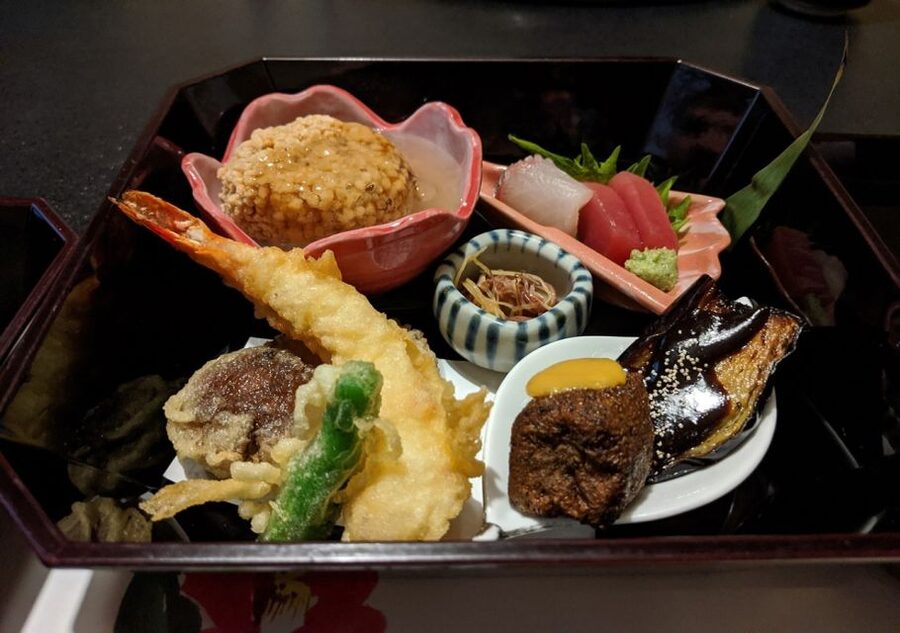
The included meal is described as a seasonal and regional lunch, with past participants also praising a traditional lunch after the market walk. This matters because a tasting route can otherwise leave you hungry or force you to keep spending.
The lunch gives the tour a proper meal in addition to small samples. It also lets you sit with the flavors you have encountered and see how market ingredients work in a larger setting. One past participant specifically enjoyed the traditional lunch, while another described the food as excellent and said it included items not easily found alone.
The exact menu is not provided, so you should not book this expecting a fixed dish or a guaranteed set of ingredients. Seasonal food changes. That uncertainty is part of the appeal, but it also means you should share allergies and dietary requirements in advance.
Additional food and drinks are not included. You can buy more at your own expense if a particular stall catches your eye. Shopping time is included, so bring room in your schedule and luggage for purchases, but remember that the tour’s included tastings are separate from personal shopping.
Japanese tea and the meaning of seasonality
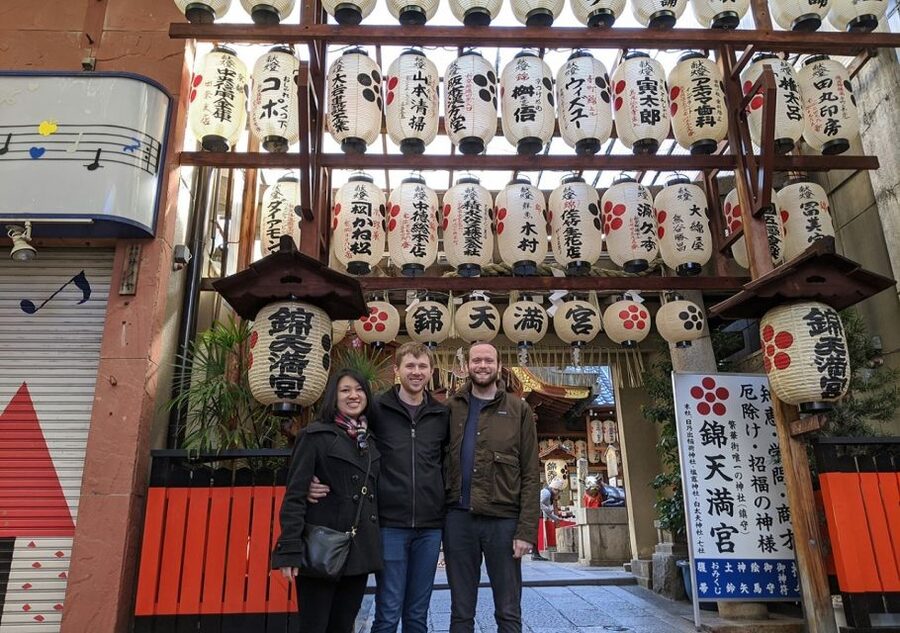
Japanese tea is included, and it gives the tour a welcome change of pace from walking and sampling. Tea is not treated only as a drink here. It helps explain the care given to temperature, preparation, timing, and presentation in Japanese food culture.
Seasonality is one of the main ideas running through the experience. The tour presents ingredients when they are at their best, which means the foods available can change during the year. This is useful for you because it explains why a Kyoto food experience in spring may not taste like the same tour in autumn.
The tour also discusses what makes Japanese cuisine unique and its UNESCO World Heritage status. That context helps connect individual bites to broader ideas about ingredients, balance, preparation, and respect for the seasons. You do not need prior food knowledge to follow along. The guide’s job is to make the unfamiliar understandable.
The guides are a major part of the experience
The strongest praise has gone to the guides. Sae was praised for helping the group try many foods while explaining Japanese traditions. Sanae was singled out for historical insight and a warm manner. Raquel was described as professional, pleasant, and attentive to the group’s experience.
Marie also made a strong impression by helping participants eat and learn more than they would have managed alone. Ida guided an enjoyable walk through the market, while Kohei was described as gracious, well prepared, and interesting. Rosalia Yoshiko received thanks for her hints and stories, especially around dried bonito fish.
These names do not guarantee who will lead your tour. They do show what the operator values: personal attention, food explanation, and cultural context. Guide quality matters greatly in a market experience because the same stalls can feel ordinary or fascinating depending on how clearly someone explains them.
One useful caution comes from the suggestion that a guide could offer more practical insight into the foods and products a local household shopper might buy every day. If that is your main interest, ask questions. For example, you can ask what a Kyoto resident might use at home, how an ingredient is stored, or which item makes a useful food gift.
What the small group means in practice
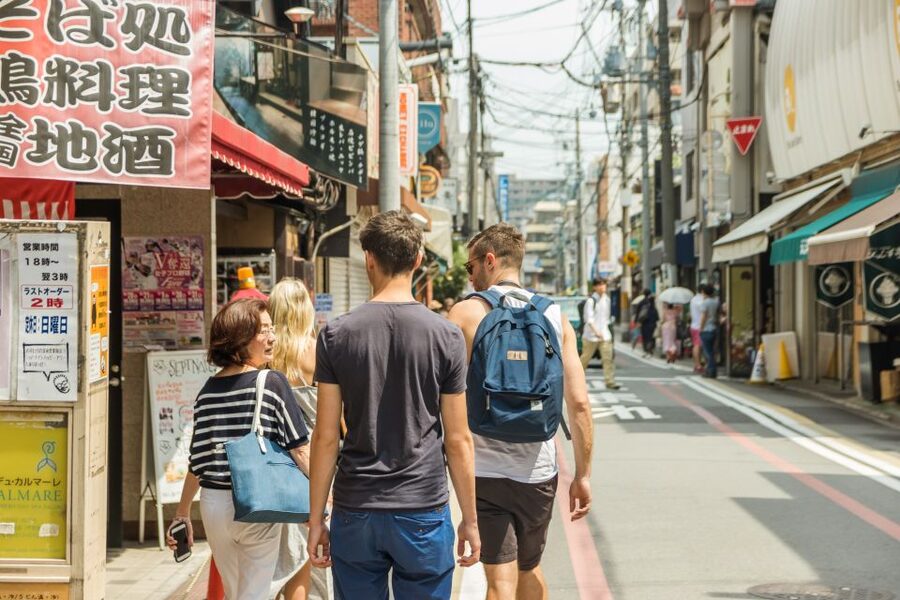
With no more than eight participants, you should have a better chance of hearing the English-speaking guide and getting answers. A small group also makes it easier to stop at a stall without blocking the entire corridor.
This format suits people who want conversation and explanation. You can ask about a strange-looking ingredient, request help identifying a food, or discuss where else to eat in Kyoto. Past participants received extra suggestions about restaurants and places to visit, which can add value beyond the three-hour route.
The tradeoff is that you are still moving as a group. If you want to linger at every display or shop independently for a long time, the tour may feel structured. Shopping time is provided, but it is not the same as spending an entire afternoon on your own.
Is $173 per person a fair price?
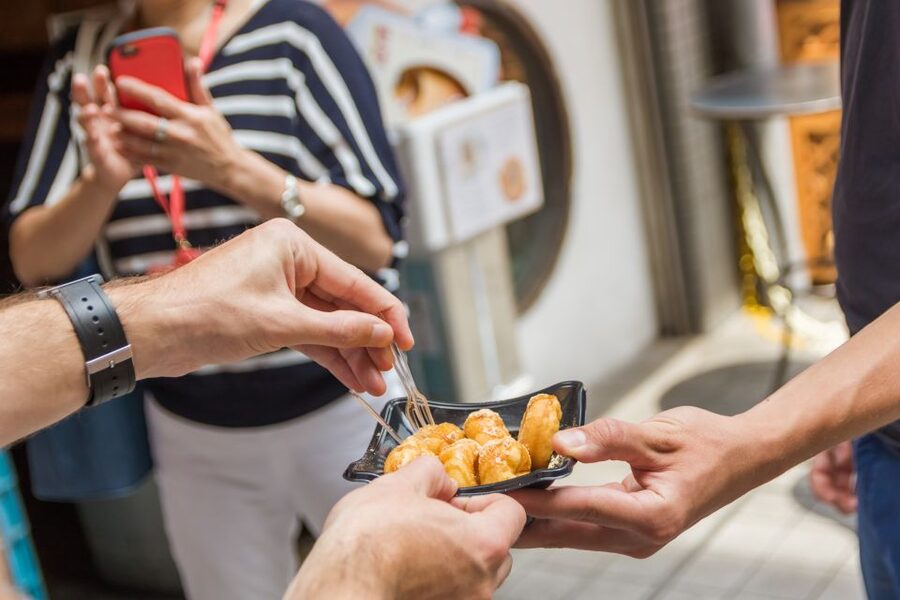
At $173, the tour costs more than simply entering Nishiki Market and buying a few snacks. You are paying for three hours of guidance, about 10 tastings, a seasonal lunch, tea, and the convenience of a planned route.
The value is strongest for a first-time visitor who wants to understand what they are eating. It is also useful if you are cautious about ordering unfamiliar foods or if you want a reliable introduction without spending time researching every stall.
The price is harder to justify if you already know Nishiki Market well, speak Japanese, or prefer to choose every bite yourself. Extra drinks, extra food, transportation, hotel pickup, and gratuity are not included, so your final cost can rise.
I would judge the tour by the meal and guidance rather than by the volume of food alone. This is not the cheapest way to eat in Kyoto. It is a structured cultural outing that uses food to explain the city.
Who should book this Nishiki Market tour?
This tour suits first-time Kyoto visitors, food-focused couples, small families, and anyone who wants a gentle introduction to Japanese ingredients. It also works well for people who have already visited Nishiki but felt they were only looking at displays without understanding them.
You should wear comfortable shoes. Three hours of walking and standing through market corridors is not a good match for stiff footwear. You should also tell the operator about allergies or dietary needs before the tour, since the experience centers on tastings.
People who prefer a very private tour, a fixed menu, or a long restaurant meal may want another option. The group is small, but it is still a group experience, and the menu changes with the season.
Free cancellation is available up to 24 hours in advance for a full refund, and you can reserve now and pay later. Participants aged 10 and over must provide a copy of passport information, so have that requirement in mind when booking for a family.
Final verdict: book it for context, not just calories
I would recommend this Nishiki Market Food Tour if you want more than a quick snack stop. The best parts are the family-run vendors, the seasonal focus, the included lunch, and guides who explain why the food matters.
Book it early in your Kyoto stay if possible, since the advice about other places to eat can help shape the rest of your visit. If you already know the market and enjoy choosing food on your own, spend the $173 elsewhere. But for a first visit, the small group and guided tastings make Nishiki easier to understand, and much more rewarding than wandering past every stall without knowing what to try.
FAQ
How long is the Nishiki Market Food Tour?
The tour lasts three hours.
Where does the tour meet?
The meeting point is in front of Lacoste at Naramonochi 375, Kyoto, in Shimogyo Ward.
How do I reach the meeting point by train?
From the Hankyu train line, get off at Kawaramachi Station and use Exit 9.
Is hotel pickup included?
No. Hotel pickup is not included, but it can be arranged for an additional charge.
How many people are in the group?
The group is limited to eight participants.
What language is the tour conducted in?
The live tour guide speaks English.
How many market vendors will I visit?
The tour visits around 10 market vendors.
Is lunch included?
Yes. Seasonal and regional lunch, food tastings, and Japanese tea are included.
Are extra food and drinks included?
No. Additional food and drinks can be purchased at your own expense.
Do I need to report allergies or dietary requirements?
Yes. You should inform the operator about allergies or dietary requirements before the tour.
Just added in Kyoto
- The “Golden Route” and Ancient Japan by DIAMIR Erlebnisreisen – 14-Day Tour★ 2.0 · 2 reviews
- Japan: Castles & Cuisine by G Adventures – 6-Day Kyoto to Osaka Tour★ 4.5 · 4 reviews
- Cycle Japan by Explore! – 13-Day Kyoto to Tokyo Tour★ 4.7 · 12 reviews
- Cycle Japan by Intrepid Travel – 11-Day Kyoto to Tokyo Tour★ 4.8 · 2 reviews
- Classic Japan by Intrepid Travel – 11-Day Kyoto to Tokyo Tour★ 4.4 · 14 reviews
- Ancient & Modern Japan 14-Day Tour by Exodus Adventure Travels★ 4.4 · 40 reviews
- 5 Day Cultural Adventure of Kyoto, Nara & Osaka by Tourist Journey★ 2.5 · 2 reviews
- 12 Days Kinosaki Onsen Escape: A Journey Through Japan’s Timeless Towns by UME Travel★ 4.8 · 5 reviews
Markets and Food Halls, compared.
Tokyo Tsukiji Fish Market Food and Culture Walking Tour
Read our review →

Senkyaku Banrai Toyosu Manyo Club Onsen Experience in Tokyo
Read our review →
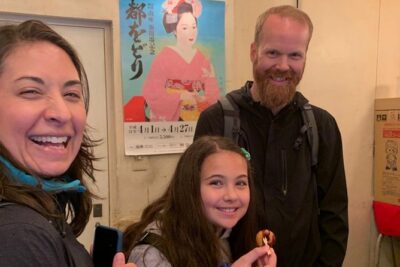
Nishiki Market Brunch Walking Tour (7 Tastings + Brunch)
Read our review →
Tokyo Sushi Making Class in Tsukiji with Professional Chef
Read our review →
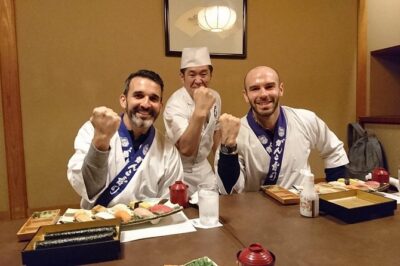
Tsukiji Fish Market Guided Tour and Sushi Making with Pro Chef
Read our review →Browse the lists this tour appears in