
Reviewed · TEMPLES AND SHRINES
Kyoto/Osaka: Nara, Fushimi Inari Taisha, Arashiyama Bus Tour
Three classic sights, one long day. This $52 bus tour links Nara Park, Fushimi Inari Taisha, and Arashiyama, giving you an easy way to see several major places without working out Japan’s train connections. I like the gentle deer at Nara and the striking walk beneath thousands of vermilion torii gates, while the air-conditioned bus removes much of the day’s travel hassle.
I also like the freedom built into the stops. Guides such as Amy, Willa, Christine, Fiona, and Laura have been praised for clear meeting instructions, good humor, helpful recommendations, and keeping the group moving. The main tradeoff is time: this is a greatest-hits day, so you may wish for longer at Fushimi Inari or Arashiyama.
In This Review
- The best parts of this $52 day out
- What this tour is really designed to do
- Nara Park: an hour with the sacred deer
- Fushimi Inari Taisha: walking beneath 10,000 torii gates
- Arashiyama: bamboo, temples, bridges, and free time
- Bamboo Forest
- Nonomiya Shrine
- Tenryu-ji Temple
- Togetsukyo Bridge
- Kimono Forest and Arashiyama Station
- Why the guides matter so much
- Price, comfort, and what is not included
- Walking needs and useful preparation
- Who should book this day tour?
- FAQ
- How long does the tour last?
- Where does the tour depart?
- What time does the tour leave Osaka and Kyoto?
- Can I finish the tour in Osaka or Kyoto?
- Is Tenryu-ji Temple included in the price?
- What languages does the guide speak?
- Is the tour suitable for wheelchair users?
- What should I bring?
- Should you book it?
The best parts of this $52 day out
- Nara’s free-roaming deer: Spend about an hour near more than 1,000 sacred deer and feed them special shika senbei crackers.
- Fushimi Inari’s red gate corridor: Walk into one of Japan’s most recognizable shrine settings and see how quickly the crowds can thin as you continue uphill.
- Arashiyama in one useful stop: Combine bamboo, Nonomiya Shrine, Tenryu-ji, Togetsukyo Bridge, Kimono Forest, food, and optional activities.
- A practical Osaka to Kyoto connection: The bus can help you relocate between the two cities while sightseeing on the way.
- Strong guide support: The most praised guides are warm, organized, funny, and careful about departure times.
- Flexible drop-off: You can finish in Osaka or Kyoto, but you need to tell the operator your preferred ending point when booking.
What this tour is really designed to do
This is a wide-ranging introduction to three major cultural areas. It is not a slow temple day, a photography workshop, or a detailed study of Nara and Kyoto. You get a taste of each place, enough to decide where you might return for a longer visit.
The day runs for roughly nine to ten hours. Departure is listed at 8:00 AM from Osaka and 9:00 AM from Kyoto, with two possible meeting areas: Harimaya Nippombashi 1-chome in Osaka and the sunken garden at Kyoto Station’s Hachijo Entrance Square. Exact arrangements depend on the option you choose.
I see the air-conditioned vehicle as the tour’s biggest practical benefit. Nara, Fushimi Inari, and Arashiyama are all easy to visit by public transport, but combining them requires transfers, careful timing, and a good deal of walking between stations and attractions. Here, you can sit down between stops and let the guide handle the day’s rhythm.
Traffic can affect the schedule, especially around Kyoto and Arashiyama. Arrive 10 to 15 minutes early because the bus leaves on time. The return may also be later than expected if roads are slow, so avoid booking an evening activity that requires a strict arrival time.
More Temples and Shrines in Kyoto
- [Kyoto & Nara Day Tour] Sagano Scenic Railway & Nara Park & Fushimi Inari Taisha Thousand Torii Gates & Togetsukyo Bridge & Bamboo Grove & Kimono Forest (Departing from Osaka)
★ 4.9 · 10,942 reviews - Kyoto: Fushimi Inari, Kinkakuji, Bamboo Grove 1 Day Bus Tour
★ 4.8 · 4,316 reviews - Kyoto: Tea Ceremony in a Traditional Tea House in Kiyomizu
★ 4.9 · 3,519 reviews
Nara Park: an hour with the sacred deer
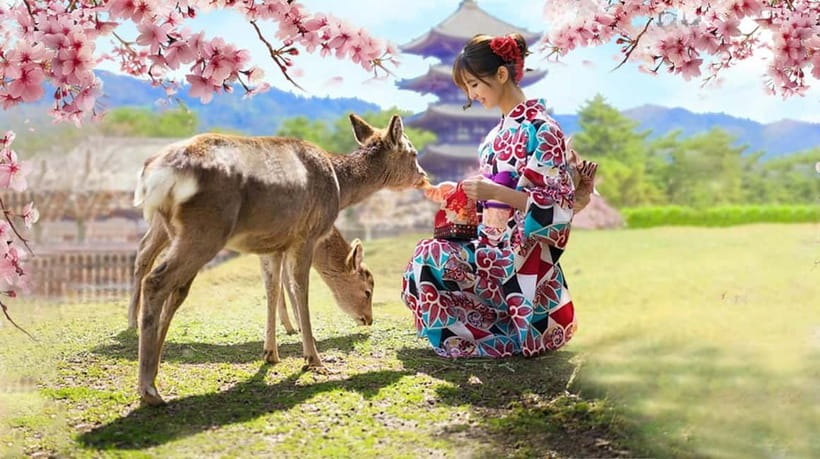
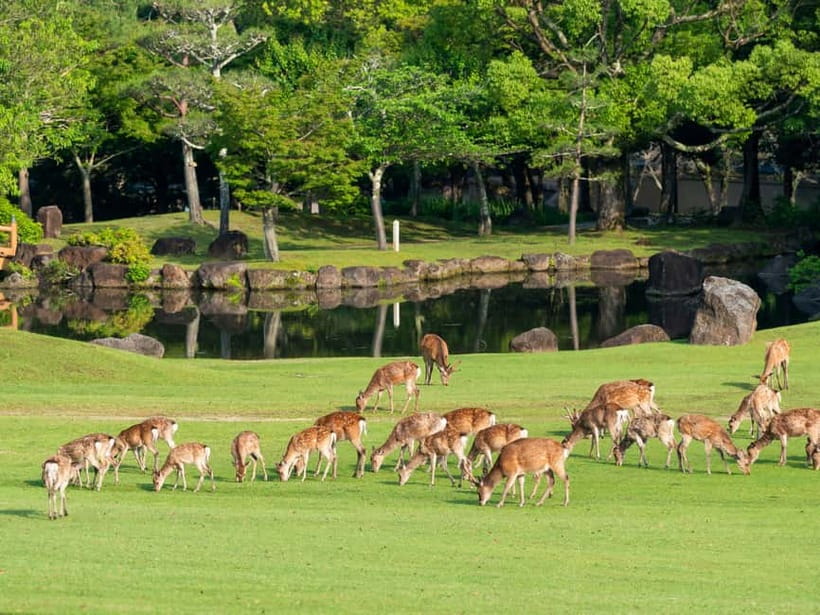
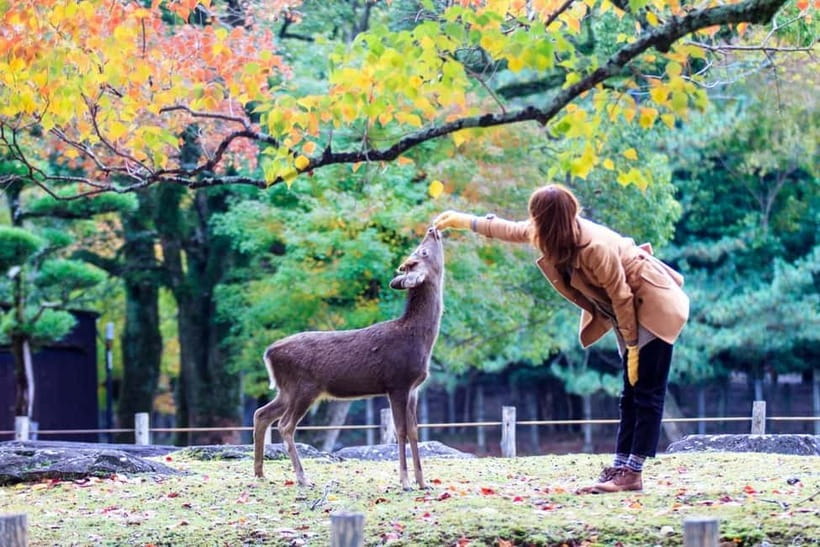
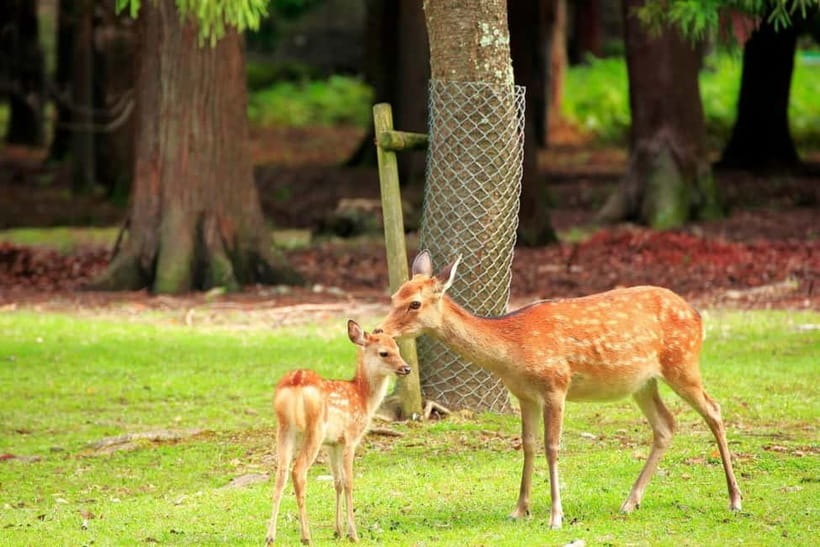
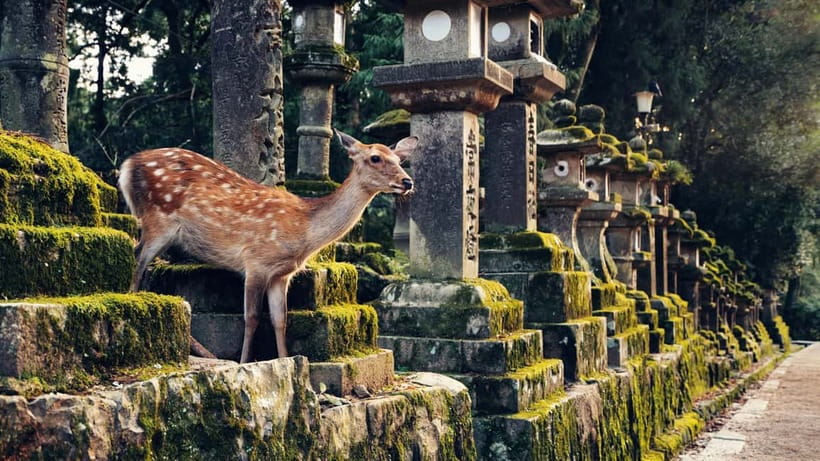
Nara Park is the most playful part of the day. More than 1,000 deer roam freely here, and they are regarded as divine messengers. You can buy shika senbei, the special crackers sold for feeding, then offer them carefully while taking photographs.
The deer are accustomed to people, but they are still animals, not tame pets. Keep the crackers visible, feed them promptly, and pay attention when your supply runs out. The experience is best when you treat it as an encounter with living creatures rather than a quick photo prop.
One hour gives you time to see the deer and get a feel for the park. It is enough for the main experience, but not enough for an unhurried visit to every nearby temple or museum. If Nara is your main reason for visiting Japan, you will want a separate day. If you want a memorable first look, this stop does the job well.
Nara can feel touristy near the feeding areas. That is part of the bargain. You are visiting one of Japan’s most famous sights, and the crackers, deer, and camera phones come as a package. The reward is an unusual setting you cannot reproduce in a city zoo or ordinary park.
Fushimi Inari Taisha: walking beneath 10,000 torii gates
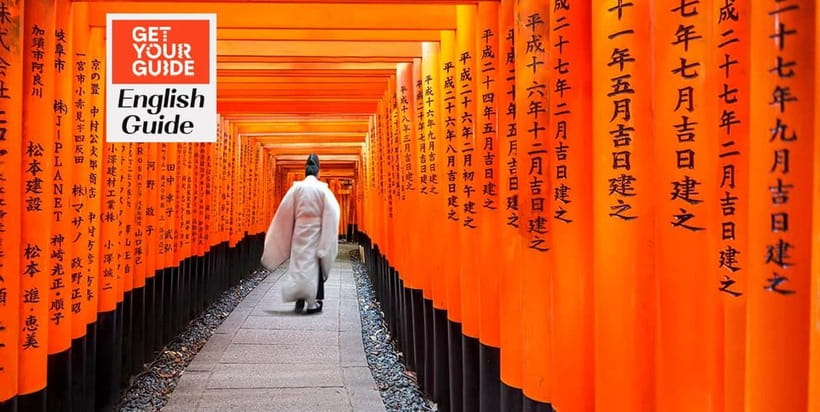
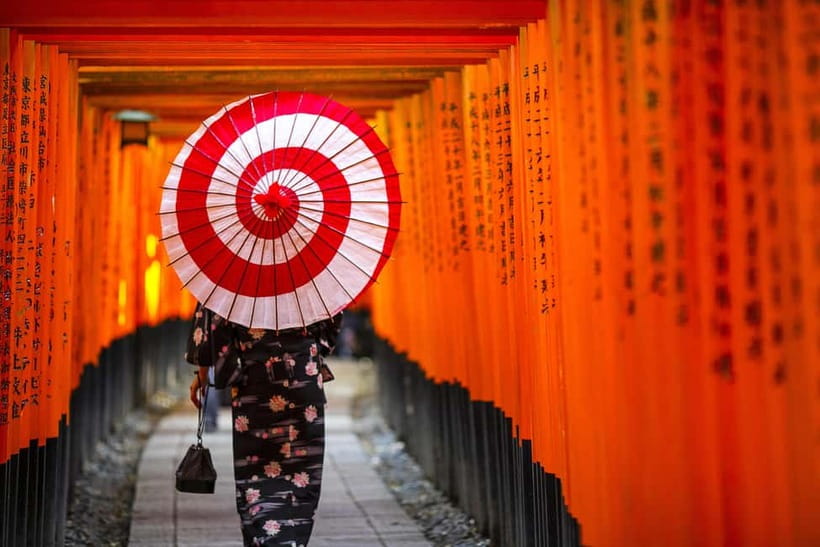
Fushimi Inari is the day’s most atmospheric stop. The shrine honors the god of prosperity, and its famous vermilion torii gates form a long passage up the mountainside. You will have about 70 minutes here, enough to enter the gate tunnels, take photographs, and walk partway uphill.
The first section is usually the busiest and most instantly photogenic. If you keep walking beyond the opening stretch, you might find a quieter feel, though reaching the higher parts requires more time and uphill effort than this stop allows.
This is also the most meaningful place for anyone interested in work and business blessings. The shrine’s connection with prosperity explains the many donated gates, each helping form the dense red corridors that make Fushimi Inari so memorable.
The time limit matters here. Fushimi Inari is not just a gate-lined photo stop. It is a large mountain shrine complex, and you cannot see all of it in 70 minutes. I would wear shoes with a firm grip and decide in advance if you want photographs near the entrance or a longer uphill walk.
The shrine has also appeared in popular screen stories, including Memoirs of a Geisha and Detective Conan. That may add a familiar touch, but the place is worth visiting even if you have never seen either one.
Arashiyama: bamboo, temples, bridges, and free time
Arashiyama receives the longest visit, about two and a half hours in the fuller schedule, with the detailed stop breakdown describing around an hour and a half for the main area plus shorter visits. This is where you have the most choice. You can focus on the bamboo forest, pay to enter Tenryu-ji, cross the bridge, eat, shop, or add another activity if time permits.
Do not expect to cover every corner. Arashiyama is a district, not a single attraction, and the walking distances between its sights add up. A quick plan will help you make the most of your free time.
A completely different kind of day out:
- PERFECT KYOTO 1-Day Bus Tour
★ 5.0 · 13,518 reviews - Kyoto: Gion Make Your Own Chopsticks with Engraving Option
★ 5.0 · 3,465 reviews - Kyoto Nara Day Trip │ Kiyomizu-dera Temple + Fushimi Inari-taisha Shrine + Nara Park (Departing from Osaka/Kyoto)
★ 4.7 · 3,408 reviews - Kyoto Geisha Walking Tour: Gion District & Hidden Gems
★ 4.7 · 3,273 reviews
Bamboo Forest
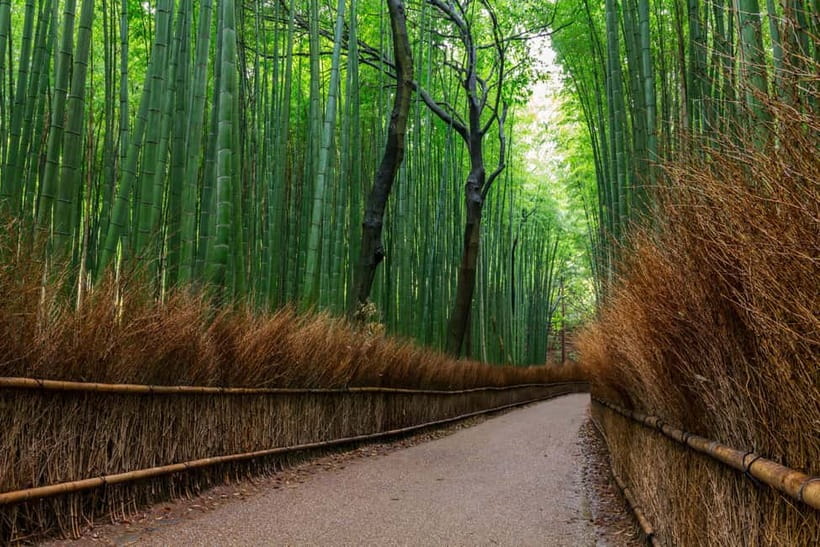
The bamboo path is the signature Arashiyama experience. Tall stalks close in around the walkway, with filtered light and a calm, almost hushed mood. You are scheduled to spend about 15 minutes specifically at the bamboo forest, though the wider Arashiyama stop allows more time in the area.
That short bamboo segment is enough for a walk and photographs, but it may feel brief if you hoped to wander slowly. The path is one of Kyoto’s best-known photo locations, so do not expect complete solitude. Still, the vertical bamboo creates a scene unlike the shrine and deer park earlier in the day.
Nonomiya Shrine
Nonomiya Shrine sits within the bamboo area and dates from the Heian Period, more than 1,000 years ago. It is associated with love and academic blessings, and its rare unpainted Kuroki Torii gives it a quieter look than Fushimi Inari’s red gates.
You have about 15 minutes here. That is enough to pause, look at the gate, and appreciate how the small shrine fits into the forest. It is not a long temple visit, but it adds a softer, more intimate note to Arashiyama.
Tenryu-ji Temple
Tenryu-ji is a UNESCO World Heritage Site and the main paid option of the day. Admission is extra, so budget for it if the temple is important to you. The draw is the Sogenchi Garden, which uses the surrounding scenery as part of its design.
I would choose Tenryu-ji if you value gardens, Zen temple architecture, and a quiet pause more than shopping or extra food stops. Since the free time is limited, you may need to choose between the temple and some of Arashiyama’s other options. The tour does not include admission, food, drinks, or personal purchases.
Togetsukyo Bridge
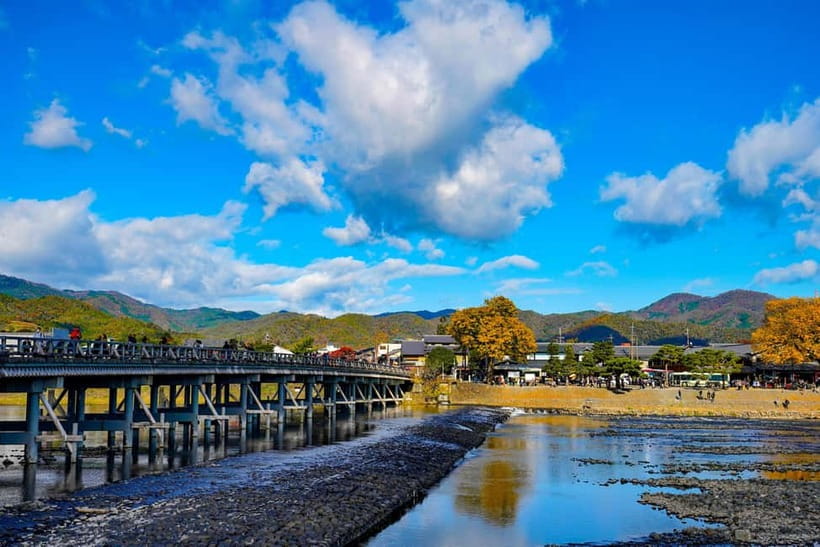
Togetsukyo Bridge gives you a broad view across the river and toward the hills around Arashiyama. It is a short 15-minute stop, useful for photographs and a change of pace after the enclosed bamboo path.
Rickshaws passing near the bridge provide a traditional visual touch. You may also find this the best spot to take in Arashiyama as a whole rather than focusing on one shrine or path.
Kimono Forest and Arashiyama Station
Kimono Forest is a modern art installation at Arashiyama Station, made from 600 pillars decorated with Kyo-Yuzen textile patterns. The colorful columns make an easy photo stop and show a more modern side of Kyoto’s design traditions.
The station area also offers the chance to use the Arashiyama footbath. Food stalls, restaurants, and shops fill out the remaining free time. The Rilakkuma Tea House is another possible stop for character-themed photographs and refreshments, though purchases are your responsibility.
This part of the day suits you if you like making your own choices. You might visit the bamboo forest and Tenryu-ji, try local street food, or simply slow down near the bridge. The drawback is that too many choices can make the final hours feel rushed.
Why the guides matter so much
A sightseeing day with several timed stops depends on a guide who can communicate clearly. The strongest guide feedback centers on organization, humor, and thoughtful reminders rather than long lectures.
Amy, also called Happy Bunny by some groups, has been praised for keeping people informed, answering questions, taking photographs, and maintaining a cheerful tone. Christine is noted for clear explanations, useful suggestions, and gathering people on time, even in rainy weather. Willa is praised for being warm, funny, attentive, and good at making the long day feel easy.
Other guides named in the feedback include Fiona, Laura, Frederick, Jackson, Tracy, Anson, Sofia, Elisa, Amanda, and Theodore Chan. The exact guide varies, but the pattern is clear: expect live guiding in English or Chinese, practical instructions before each stop, and reminders about where and when to meet the bus.
The driver matters, too. Several comments specifically praise smooth, careful driving, including drivers referred to as Mr. Wu, Mr. Yoshi, Mr. Ricky, Mr. Dragon, Mr. A, and Mr. C. You will spend a fair amount of time on the road, so a steady ride is not a minor detail.
Price, comfort, and what is not included
At $52 per person, this is good value if you want transport and a guide more than complete independence. The price covers the English-speaking guide, air-conditioned vehicle, taxes, parking, fuel, and handling charges. Those included costs are useful in Japan, where parking near major sights can be difficult and public transport connections take time.
You still pay for food, drinks, shika senbei, Tenryu-ji admission, and other personal expenses. The tour is not an all-inclusive day. Bring water and some spending money, then decide which extras matter to you.
The 4.7 rating from 1,275 reviews and the 87 percent perfect score for transport point to a well-liked operation, especially for first-time visitors. That does not erase the fixed schedule. If you prefer to sit for an hour at one temple garden, stop for a long meal, or explore at your own pace, public transport may suit you better.
Walking needs and useful preparation
You should bring comfortable shoes, water, an umbrella, and comfortable clothing. Fushimi Inari includes an uphill route if you choose to continue beyond the first gates, and Arashiyama involves walking between several sights.
The tour is not suitable for wheelchair users or people with mobility impairments. If you are traveling with an infant, stroller, or large luggage, state that during booking so suitable transport arrangements can be considered. Japanese traffic rules count babies as passengers, so accurate information matters.
Smoking is not allowed. Pregnant people and those aged 70 or above are asked to sign a travel waiver on arrival.
Free cancellation is available up to 24 hours before departure, and you can reserve now and pay later. Tell the operator if you want to end in Osaka or Kyoto. If you do not specify, the default is the same point as pickup.
Who should book this day tour?
I would recommend it to first-time visitors staying in Osaka or Kyoto who want to see the headline sights in one organized day. It is also useful if you are relocating between Osaka and Kyoto and want sightseeing built into the journey.
Families may appreciate the deer and the simple transport plan. Solo visitors can also find the bus social, and one person specifically noted that solo participants may be seated with others. The friendly guide style helps keep the day from feeling isolated.
I would hesitate if you have already explored these areas and want a slow second visit. The schedule gives you a strong overview, but you must accept fixed departure times and shorter visits. For a first look at Nara, Fushimi Inari, and Arashiyama, the combination is hard to beat at this price.
FAQ
How long does the tour last?
The experience lasts approximately nine to ten hours. The return time can change because of traffic, weather, and other unexpected conditions.
Where does the tour depart?
There are two possible starting areas: Harimaya Nippombashi 1-chome in Osaka and Kyoto Station Hachijo Entrance Square Sunken Garden. Your meeting point depends on the option booked.
What time does the tour leave Osaka and Kyoto?
The listed departure is 8:00 AM from Osaka and 9:00 AM from Kyoto. You should arrive 10 to 15 minutes early because the bus leaves on time.
Can I finish the tour in Osaka or Kyoto?
Yes. You should tell the operator your preferred drop-off point when booking. If you do not provide one, drop-off defaults to the pickup point.
Is Tenryu-ji Temple included in the price?
No. Tenryu-ji admission costs extra. Food, drinks, and personal purchases are also not included.
What languages does the guide speak?
Live guiding is offered in English and Chinese.
Is the tour suitable for wheelchair users?
No. The tour is not suitable for wheelchair users or people with mobility impairments.
What should I bring?
Bring comfortable shoes, an umbrella, water, and comfortable clothes. You should also bring money for food, drinks, deer crackers, temple admission, and personal expenses.
Should you book it?
Book this tour if you want an efficient first look at three major sights and prefer a bus to several train connections. The best reasons are the helpful guides, careful transport, flexible free time in Arashiyama, and strong value at $52.
Skip it if your ideal day means lingering. Nara, Fushimi Inari, and Arashiyama each deserve more time than one schedule can provide. For most first visits from Osaka or Kyoto, though, this is a practical and cheerful way to cover a lot of ground without spending the day reading train maps.
Just added in Kyoto
- The “Golden Route” and Ancient Japan by DIAMIR Erlebnisreisen – 14-Day Tour★ 2.0 · 2 reviews
- Japan: Castles & Cuisine by G Adventures – 6-Day Kyoto to Osaka Tour★ 4.5 · 4 reviews
- Cycle Japan by Explore! – 13-Day Kyoto to Tokyo Tour★ 4.7 · 12 reviews
- Cycle Japan by Intrepid Travel – 11-Day Kyoto to Tokyo Tour★ 4.8 · 2 reviews
- Classic Japan by Intrepid Travel – 11-Day Kyoto to Tokyo Tour★ 4.4 · 14 reviews
- Ancient & Modern Japan 14-Day Tour by Exodus Adventure Travels★ 4.4 · 40 reviews
- 5 Day Cultural Adventure of Kyoto, Nara & Osaka by Tourist Journey★ 2.5 · 2 reviews
- 12 Days Kinosaki Onsen Escape: A Journey Through Japan’s Timeless Towns by UME Travel★ 4.8 · 5 reviews
Temples and Shrines, compared.
![[Kyoto & Nara Day Tour] Sagano Scenic Railway & Nara Park & Fushimi Inari Taisha Thousand Torii Gates & Togetsukyo Bridge & Bamboo Grove & Kimono Forest (Departing from Osaka)](https://media.japanvisits.com/wp-content/uploads/kyoto-nara-day-tour-sagano-scenic-railway-nara-park-fushimi-inari-taisha-thousand-torii-gates-togetsukyo-bridge-bamboo-grove-kimono-forest-departing-from-osaka-k110001-400x257.jpg)
Kyushu One-Day Tour: Yufuin no Mori Train & Yufuin Town & Nyoirin-ji Temple & Dazaifu & Hell Hot Springs (Departing from Fukuoka)
Read our review →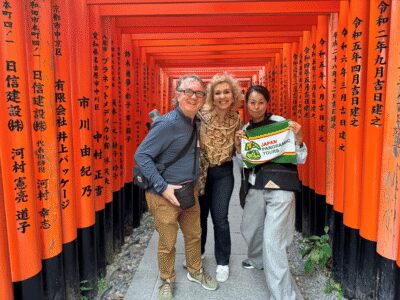
Fushimi Inari, Kinkakuji, Bamboo Grove 1 Day Bus Tour
Read our review →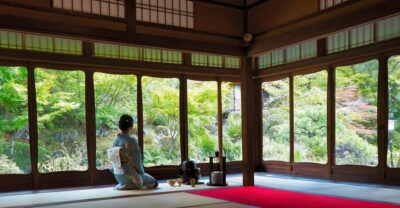
Tea Ceremony in a Traditional Tea House in Kiyomizu
Read our review →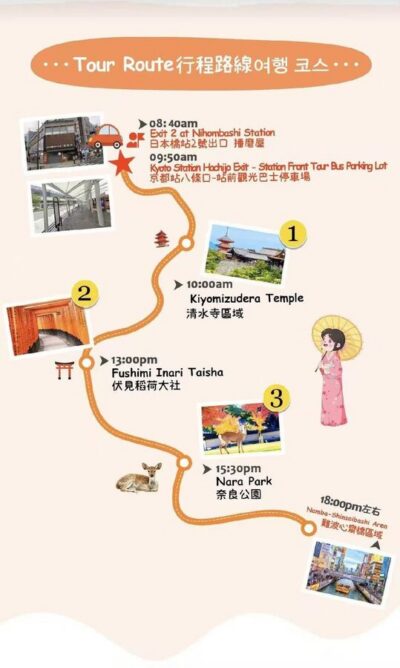
Kyoto Nara Day Trip │ Kiyomizu-dera Temple + Fushimi Inari-taisha Shrine + Nara Park (Departing from Osaka/Kyoto)
Read our review →
Browse the lists this tour appears in