
Reviewed · TEMPLES AND SHRINES
Kyoto: Zen Garden, Zen Mind (Private)
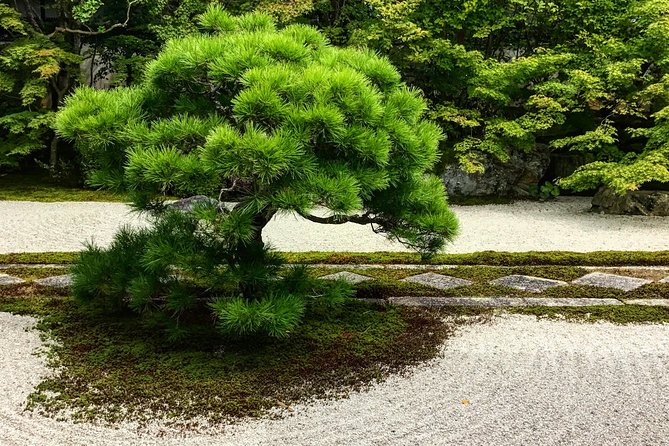
Quiet gardens, big ideas. This private Kyoto walk pairs three important temple sites with Andrew, a garden designer who has spent more than 15 years studying how Japanese gardens are made and understood. I like the way the tour looks past pretty rocks and clipped trees to explain Zen, Buddhism, Shinto, history, and daily life in Kyoto. I also like the small-group format, since your questions can shape the conversation.
The main consideration is cost. The tour is $380 per group of up to four, and the three temple admission fees, ¥1,600 per person, are extra. That makes it a serious investment, though the price can be reasonable if four people share it and you want expert guidance rather than a quick photo stop. The tour also takes about three and a half hours on foot, so comfortable shoes and decent weather matter.
In This Review
- Key points to know before you book
- Why this Kyoto garden walk is different
- Starting at Keage Station and walking into temple country
- Konchi-in: the best place to learn how a Zen garden speaks
- Tenjuan Temple: a quieter pause within Nanzen-ji
- Nanzen-ji: ending at Kyoto’s major Zen temple
- What Andrew adds that a guidebook cannot
- Is $380 a fair price for a private garden tour?
- Who will enjoy this most?
- Booking details that affect your day
- Should you book Kyoto: Zen Garden, Zen Mind?
- FAQ
- How long does the Kyoto Zen garden tour last?
- How many people can join the private tour?
- Which temples are visited?
- Where does the tour start?
- Where does the tour finish?
- Are temple admission fees included in the tour price?
- What happens if bad weather cancels the tour?
Key points to know before you book
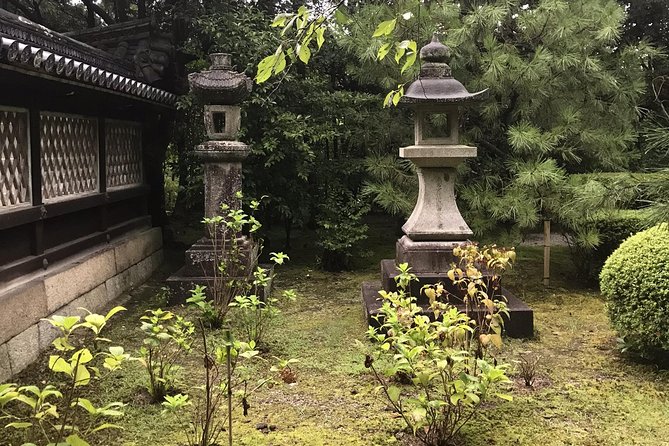
- Andrew brings a designer’s eye: His background in landscape architecture helps explain why rocks, gravel, moss, walls, and borrowed scenery appear where they do.
- Three temple gardens fit into one focused walk: You visit Konchi-in, Tenjuan, and Nanzen-ji, all connected with the Nanzen-ji Zen complex.
- The tour begins at Keage Station: You walk through Kyoto’s Higashiyama area and finish in front of Nanzen-ji.
- It goes beyond garden photography: Expect discussion of Zen philosophy, Japanese aesthetics, Buddhism, Shinto, history, and modern Kyoto life.
- The private format has real value: Only your group participates, making it easier to ask detailed questions and request more attention to design, religion, or culture.
- Admission is separate: Budget another ¥1,600 per person for the three temple tickets.
Why this Kyoto garden walk is different
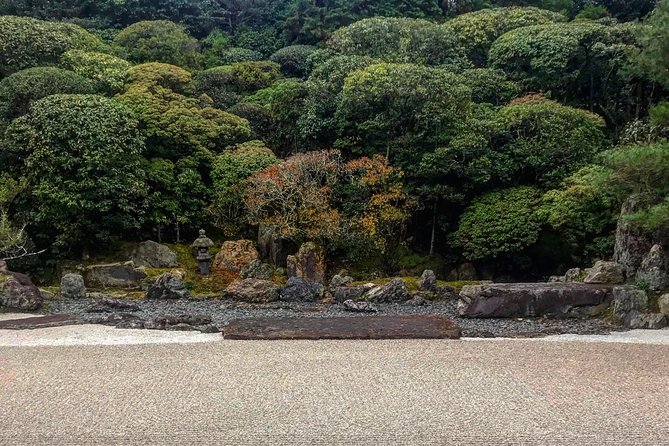
Kyoto has no shortage of beautiful temples. The challenge is knowing what to look at once you arrive. A rock garden can seem almost empty. A patch of moss may look like simple decoration. A wall may appear to be just a wall.
This tour gives you a way to read those choices. Andrew leads the walk as a garden designer, not simply as someone reciting dates and names. That matters because Japanese gardens often communicate through arrangement, suggestion, restraint, and absence. You are not only shown where to stand for a good view. You are helped to understand why the view was composed that way.
The subject also reaches well beyond gardening. Past comments about the experience praise Andrew’s explanations of Buddhist and Shinto traditions, Japanese history, social life, and the spiritual ideas connected with garden design. I would choose this tour if you want Kyoto to make more sense, not just look attractive in your camera roll.
The private setup helps. With up to four people, you can ask why one stone is placed beside another, how a dry garden suggests water, or how Zen ideas differ from popular Western ideas about meditation. The conversation can also be adjusted to your interests. One person may care about construction and materials, while another wants the religious background. This format has room for both.
More Temples and Shrines in Kyoto
- [Kyoto & Nara Day Tour] Sagano Scenic Railway & Nara Park & Fushimi Inari Taisha Thousand Torii Gates & Togetsukyo Bridge & Bamboo Grove & Kimono Forest (Departing from Osaka)
★ 4.9 · 10,942 reviews - Kyoto: Fushimi Inari, Kinkakuji, Bamboo Grove 1 Day Bus Tour
★ 4.8 · 4,316 reviews - Kyoto: Tea Ceremony in a Traditional Tea House in Kiyomizu
★ 4.9 · 3,519 reviews
Starting at Keage Station and walking into temple country
The meeting point is Keage Station in Kyoto’s Higashiyama Ward. That is a practical start because the tour is designed for walking, not for moving between distant sites by vehicle. Walking also lets you approach the temple area at a human pace, with time to notice entrances, walls, paths, and changes in atmosphere.
The exact walking route is not described in detail, so you should not expect a fixed list of side streets or extra sights. The important point is that the tour connects three places within the Nanzen-ji area, where a short ride would not provide the same sense of how the temples relate to one another.
You should plan for roughly three and a half hours, including about an hour at each main stop. That is long enough to examine the gardens without rushing, but it is not an all-day temple marathon. I see that as a strength. Kyoto sightseeing can become a blur of gates, incense, roofs, and photographs. This walk gives you one subject and stays with it.
Wear shoes that are comfortable for extended walking. The experience requires good weather, and poor conditions can lead to a different date or a full refund. Since much of the appeal comes from viewing gardens carefully, rain would be more than a minor nuisance.
Konchi-in: the best place to learn how a Zen garden speaks
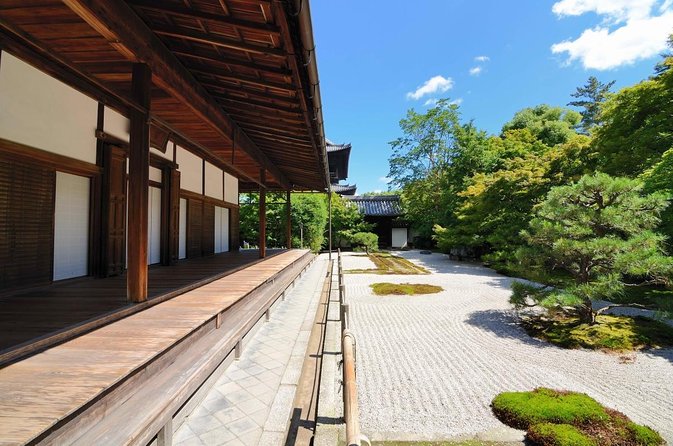
The first stop is Konchi-in, a sub-temple of Nanzen-ji. You spend about an hour here, with admission included in the route but not in the tour price. The total admission cost for all three temples is ¥1,600 per person.
Konchi-in is likely to be the place where Andrew establishes his method. Instead of rushing from one famous feature to the next, you can look at the garden as a designed composition. The placement of stones, the relationship between open gravel and planted areas, and the way the garden frames the temple become subjects for discussion.
This is where a guide with professional garden training can make a real difference. On your own, you may register the garden as calm, spare, or mysterious. Andrew can point out design principles and connections that are easy to miss. His explanations have been praised for linking the construction of rock gardens with Zen philosophy and Japanese aesthetics.
The religious context is also useful. Zen gardens are often treated as visual symbols of Japanese spirituality, but the meaning is not always simple or fixed. A good guide can help you separate established traditions from modern assumptions. Andrew’s interest in both the practical construction and spiritual purpose of gardens makes this first stop a strong introduction.
You should not expect a theatrical presentation. The appeal is close observation and conversation. If you enjoy asking questions, this is likely to be one of the most rewarding parts of the morning or afternoon. If you prefer moving quickly and checking off famous sights, one hour at a single sub-temple may feel slow.
Tenjuan Temple: a quieter pause within Nanzen-ji
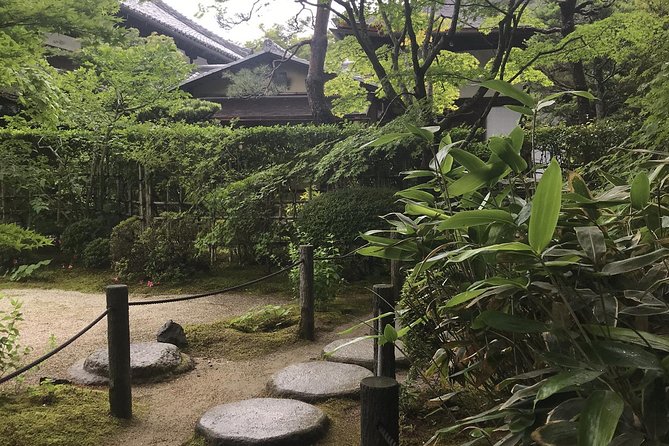
The second stop is Tenjuan Temple, another sub-temple of Nanzen-ji. The visit lasts about an hour, giving the tour a steady rhythm: one site, a period of careful looking, then a fresh set of details at the next.
Tenjuan is described as a quieter location, which can be important in Kyoto. A peaceful garden is easier to appreciate when you are not being pushed along by a large group or competing constantly for a clear view. The calm setting also suits the subject. Garden design is not something you understand only through facts. You need time to notice how the space affects your attention.
Andrew’s role here is to connect what you see with larger ideas. Past comments about the experience highlight his ability to explain imagery in garden designs and to draw links between religion, culture, and design choices. That broader context helps prevent the gardens from becoming isolated works of art with no connection to the temples around them.
I would pay attention to how the second garden differs from the first. The value of visiting multiple sites is not simply that you see more gardens. You can compare their use of stones, plantings, open space, enclosure, and views. Once you have a few examples in front of you, recurring patterns become easier to notice.
The possible drawback is that the tour’s quality depends heavily on your interest in interpretation. If you only want a quiet walk with minimal explanation, you may find the guiding too detailed. The strongest reason to book is your curiosity about how gardens work and what they express.
A completely different kind of day out:
- PERFECT KYOTO 1-Day Bus Tour
★ 5.0 · 13,518 reviews - Kyoto: Gion Make Your Own Chopsticks with Engraving Option
★ 5.0 · 3,465 reviews - Kyoto Nara Day Trip │ Kiyomizu-dera Temple + Fushimi Inari-taisha Shrine + Nara Park (Departing from Osaka/Kyoto)
★ 4.7 · 3,408 reviews - Kyoto Geisha Walking Tour: Gion District & Hidden Gems
★ 4.7 · 3,273 reviews
Nanzen-ji: ending at Kyoto’s major Zen temple

The final stop is Nanzen-ji, the head temple of the Nanzen-ji Zen Monastery. You spend about an hour here before finishing in front of the temple in Nanzenji Fukuchicho.
Nanzen-ji gives the tour a wider setting after the more concentrated visits to its sub-temples. The relationship between the head temple and its affiliated temples helps you understand that these gardens are not random attractions scattered around Kyoto. They belong to a religious and architectural setting with its own structure and traditions.
This final stop is also a chance to bring the pieces together. You have already discussed individual garden elements, spiritual ideas, and the history of Japanese garden design. At Nanzen-ji, you can consider how those details function within a larger temple complex.
The tour ends in front of Nanzen-ji rather than returning to the starting station. That is convenient if you plan to continue sightseeing in the area, though it means you should think about your next destination before setting out. The start and finish are not the same place.
Because the tour lasts around three and a half hours, the final temple may be a good point to continue independently. You will have the setting in mind and can decide if you want more time at Nanzen-ji. The guided portion gives you a framework, while the rest of your day remains flexible.
What Andrew adds that a guidebook cannot
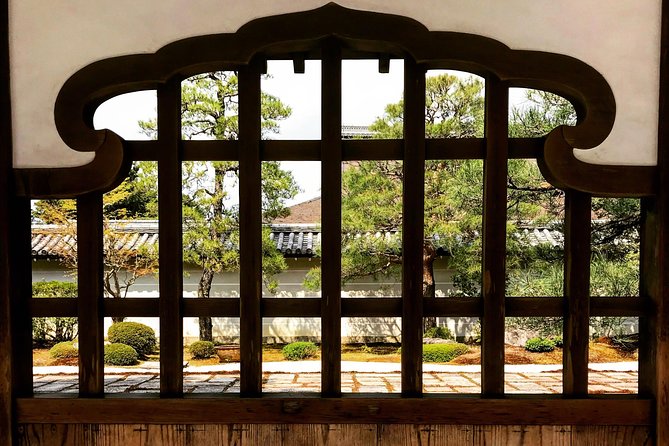
The most praised feature is Andrew’s ability to make the gardens meaningful. His training includes a master’s degree in landscape architecture, and his explanations cover both the physical work of building gardens and the ideas behind them.
That combination is unusual and useful. A specialist who only discusses design might overlook religion and history. A guide focused only on religious tradition might not explain how the garden was constructed. Here, the two subjects are treated as connected.
The experience also appears to benefit from Andrew’s long personal connection with Japan. His time in Kyoto and interest in local culture allow him to discuss more than formal facts. The tour can include contemporary life in Kyoto, along with Shinto and Buddhist practices and the history that shaped them.
I particularly like that the guide is described as willing to customize the discussion. If you have questions about Japanese religion, history, gardening, or aesthetics, this is the kind of tour where you can ask them as they arise. One past participant even noted that Andrew stayed late to cover their interests, though you should not assume extra time is guaranteed.
The comments also repeatedly describe the tour as eye-opening and as a high point of a Kyoto visit. That praise makes sense if you have already seen gardens but felt unsure how to interpret them. It is less important if you are looking only for a broad city tour.
Is $380 a fair price for a private garden tour?
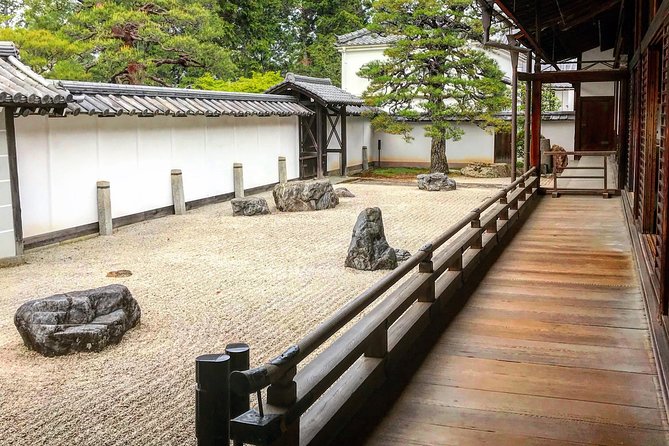
The listed price is $380 per group of up to four people. Split four ways, that is $95 per person before admission. For two people, it becomes $190 each, plus the ¥1,600 temple fee per person. The value depends on how much you want expert attention.
You are paying for a private three-and-a-half-hour walk led by a garden designer with more than 15 years of experience. You are also getting access to three temple sites and a discussion that covers design, spirituality, history, and culture. For four people with a strong interest in Japanese gardens, the price is easier to justify.
For a solo visitor or couple watching every yen, the calculation is tougher. You could visit temple gardens independently for far less, but you would lose the customized explanations and the chance to ask questions throughout. I would compare this tour with the cost of a private guide in any other major cultural city. It is not a budget activity, but it is specialized.
Remember the admission fee. The tour description says the total ticket cost for the three temples is ¥1,600 per person, and that fee is not included in the $380. You should also allow time and energy for walking rather than treating this as a quick guided stop.
Who will enjoy this most?
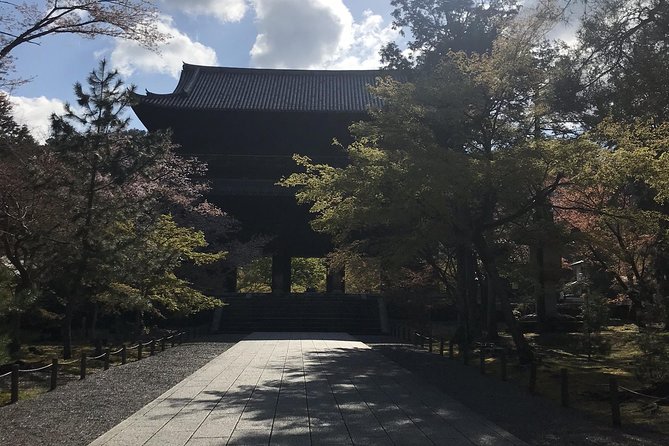
I would recommend this experience to you if you enjoy:
- Japanese gardens, architecture, or design
- Zen, Buddhism, Shinto, and Japanese aesthetics
- Small private tours with room for questions
- Quiet temple settings rather than crowded sightseeing routes
- Understanding the meaning behind what you see
- Walking between nearby cultural sites
It is also a good choice for a first visit to Kyoto if gardens are high on your list but you do not know how to read them. The tour can give you a set of ideas that will help at other temples during your trip.
I would hesitate if you want a general introduction to all of Kyoto, a food-focused outing, or a fast tour of many unrelated sights. This is a focused experience. It gives you three connected temple sites and a specialist’s view, not a citywide sampler.
The private format may suit families and small groups especially well. Children or teenagers who ask questions can receive direct answers, though the subject requires patience and attention. The tour is near public transportation, and most people can participate, but the experience is still a walking activity.
Booking details that affect your day
Confirmation is provided when you book, and the experience uses a mobile ticket. It is typically booked about 53 days ahead, so I would not leave it until the last moment if your Kyoto dates are fixed.
Free cancellation is available up to 24 hours before the start time for a full refund. Changes made less than 24 hours ahead are not accepted, and cancellations inside that period are not refunded. The cut-off follows Kyoto local time.
Weather deserves attention. The experience requires good conditions, and if the tour is canceled because of poor weather, you are offered another date or a full refund. Since the gardens are the main subject, this policy is sensible, but you should avoid placing it on the only open morning in a tightly packed itinerary.
Should you book Kyoto: Zen Garden, Zen Mind?
Book it if you want to understand Kyoto’s gardens rather than simply photograph them. Andrew’s design background, the three-hour-plus private format, and the combination of garden craft with Buddhist, Shinto, and historical context make this a strong choice for curious visitors.
I would especially recommend sharing the cost with three other people. At four participants, the price is much easier to accept, and the private format lets everyone ask questions without slowing a larger group.
Skip it if you want a low-cost temple visit or prefer to explore silently at your own pace. But if you have ever looked at a Zen garden and wondered what you were meant to see, this tour offers a thoughtful answer. It turns three temple stops into a lesson in how Kyoto uses space, stone, emptiness, and belief.
FAQ
How long does the Kyoto Zen garden tour last?
The tour lasts approximately 3 hours and 30 minutes.
How many people can join the private tour?
The price covers one private group of up to four people. Only your group participates.
Which temples are visited?
The tour visits Konchi-in, Tenjuan Temple, and Nanzen-ji Temple.
Where does the tour start?
It starts at Keage Station in Higashiyama Ward, Kyoto.
Where does the tour finish?
The tour ends in front of Nanzen-ji in Nanzenji Fukuchicho.
Are temple admission fees included in the tour price?
No. The entrance fees for the three temples total ¥1,600 per person and are paid separately.
What happens if bad weather cancels the tour?
If poor weather causes cancellation, you are offered a different date or a full refund.
Just added in Kyoto
- The “Golden Route” and Ancient Japan by DIAMIR Erlebnisreisen – 14-Day Tour★ 2.0 · 2 reviews
- Japan: Castles & Cuisine by G Adventures – 6-Day Kyoto to Osaka Tour★ 4.5 · 4 reviews
- Cycle Japan by Explore! – 13-Day Kyoto to Tokyo Tour★ 4.7 · 12 reviews
- Cycle Japan by Intrepid Travel – 11-Day Kyoto to Tokyo Tour★ 4.8 · 2 reviews
- Classic Japan by Intrepid Travel – 11-Day Kyoto to Tokyo Tour★ 4.4 · 14 reviews
- Ancient & Modern Japan 14-Day Tour by Exodus Adventure Travels★ 4.4 · 40 reviews
- 5 Day Cultural Adventure of Kyoto, Nara & Osaka by Tourist Journey★ 2.5 · 2 reviews
- 12 Days Kinosaki Onsen Escape: A Journey Through Japan’s Timeless Towns by UME Travel★ 4.8 · 5 reviews
Temples and Shrines, compared.
![[Kyoto & Nara Day Tour] Sagano Scenic Railway & Nara Park & Fushimi Inari Taisha Thousand Torii Gates & Togetsukyo Bridge & Bamboo Grove & Kimono Forest (Departing from Osaka)](https://media.japanvisits.com/wp-content/uploads/kyoto-nara-day-tour-sagano-scenic-railway-nara-park-fushimi-inari-taisha-thousand-torii-gates-togetsukyo-bridge-bamboo-grove-kimono-forest-departing-from-osaka-k110001-400x257.jpg)
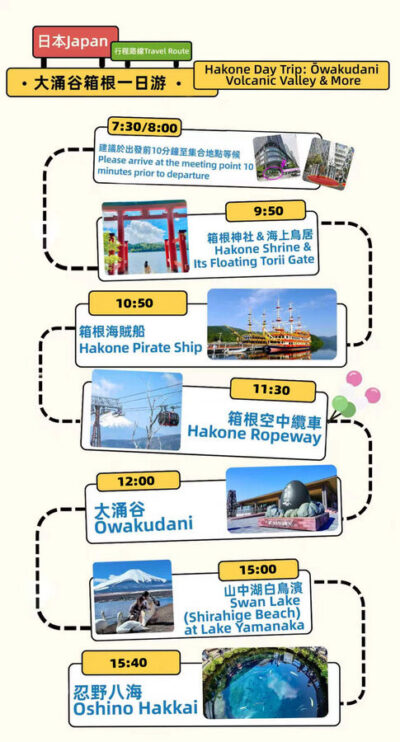
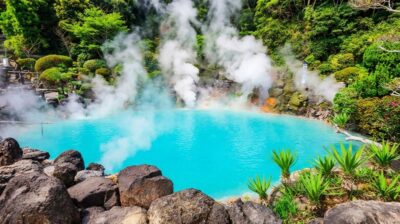
Kyushu One-Day Tour: Yufuin no Mori Train & Yufuin Town & Nyoirin-ji Temple & Dazaifu & Hell Hot Springs (Departing from Fukuoka)
Read our review →
Fushimi Inari, Kinkakuji, Bamboo Grove 1 Day Bus Tour
Read our review →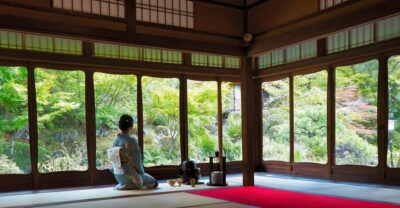
Tea Ceremony in a Traditional Tea House in Kiyomizu
Read our review →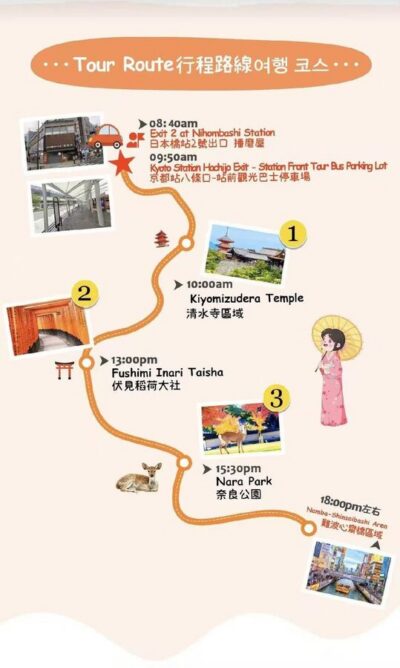
Kyoto Nara Day Trip │ Kiyomizu-dera Temple + Fushimi Inari-taisha Shrine + Nara Park (Departing from Osaka/Kyoto)
Read our review →
Browse the lists this tour appears in