Reviewed · KYOTO TOURS
Let’s make only one original onigawara in the world
Make a guardian for your home. This Kyoto workshop lets you shape an original onigawara, a traditional demon-faced roof tile, under the patient guidance of artisan Yuya. I like the clear, step-by-step teaching and the fact that your finished piece is fired and sent to your home. I also like that beginners, children, and people who claim to have clumsy hands can take part. The main drawback is that shipping costs extra and the final piece may take several weeks to arrive.
This is not a quick craft souvenir stamped out in a shop. You start with clay and build the form yourself, so every demon turns out differently. The workshop is listed as about two hours, but some sessions take closer to three hours, especially when the group works carefully. Wear clothes that can handle mud, and bring cash for shipping.
In This Review
- Key details before you book
- What an onigawara does on a Japanese roof
- Arriving at 瓦工房 You家 in Higashiyama
- Building the demon one piece at a time
- Why every demon looks different
- From soft clay to a fired keepsake
- Is $89.17 a good value?
- Timing, pace, and what to bring
- Who will enjoy this Kyoto workshop most
- The best reason to book it
- FAQ
- How long does the onigawara workshop last?
- Where does the activity begin and end?
- What is the maximum class size?
- Is shipping included in the price?
- Can I take the finished onigawara home that day?
- How long does delivery take?
- Do I need pottery experience?
- What should I wear?
- What is the cancellation policy?
Key details before you book
- You make a small demon-faced roof tile from clay, using a method designed to make the traditional form manageable for beginners.
- Yuya teaches in clear, simple English, breaking a complicated sculpture into small steps and offering hands-on help when needed.
- Your onigawara is fired in a kiln at the factory, then shipped to your home after it dries and is finished.
- The usual class size is limited to five people, which allows for personal help. Larger groups can be accepted, but the location changes.
- The workshop takes place at 瓦工房 You家, in Kyoto’s Higashiyama Ward, near public transportation.
- The $89.17 fee covers the workshop and bottled water, but not the apron or the separate shipping charge.
What an onigawara does on a Japanese roof
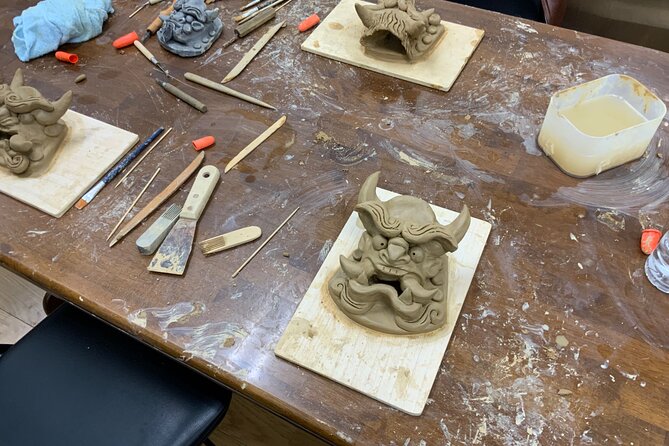
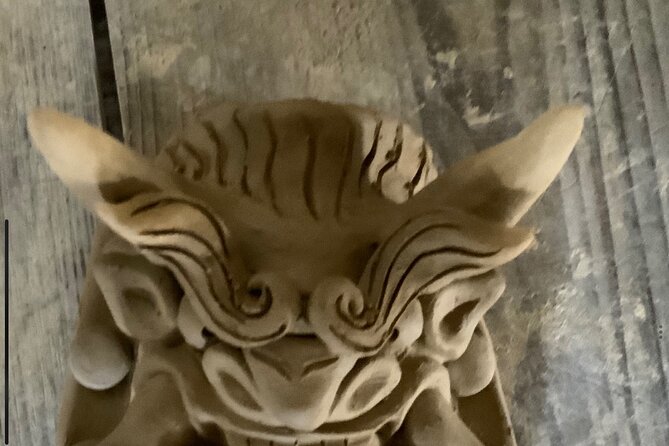
Before you touch the clay, the workshop gives you a reason to care about the object you are making. Kawara are traditional Japanese roof tiles, and onigawara are the carved ornaments placed at the ends of a main roof ridge.
Their fierce faces are not just decoration. The ogres and gargoyles are meant to guard buildings from evil, while their shape also helps protect roof edges from rainwater. You will recognize related faces on temples and other traditional buildings around Kyoto, which makes the finished piece more than a generic pottery souvenir.
I like this cultural context because it changes how you look at the city afterward. A roof ornament you might normally pass without a thought becomes something you can identify. You can compare the bold faces on Kyoto buildings with the smaller figure you made with your own hands.
The workshop also connects you with a form of Japanese tile production that has changed over time. Modern tile making is far more efficient, but this class gives you a chance to try an older, handmade approach. You are not simply copying a museum object. You are making a personal version of a protective figure.
A few more options to weigh up in Kyoto
- PERFECT KYOTO 1-Day Bus Tour
★ 5.0 · 13,518 reviews - [Kyoto & Nara Day Tour] Sagano Scenic Railway & Nara Park & Fushimi Inari Taisha Thousand Torii Gates & Togetsukyo Bridge & Bamboo Grove & Kimono Forest (Departing from Osaka)
★ 4.9 · 10,942 reviews - Kyoto: Fushimi Inari, Kinkakuji, Bamboo Grove 1 Day Bus Tour
★ 4.8 · 4,316 reviews
Arriving at 瓦工房 You家 in Higashiyama
The meeting point is 瓦工房 You家, listed at 373-2 Yamazakichō, Higashiyama Ward, Kyoto, postal code 605-0841. The studio is near public transportation, and the activity begins and ends at the same location.
That return to the starting point keeps the outing easy to fit into a Kyoto day. You do not need to arrange a second meeting place after working with clay, and one person noted that luggage could be stored during the class. Since storage is not formally listed as an included feature, ask the provider in advance if you need to leave larger bags.
The experience is held in a small workshop setting rather than a large visitor center. That matters here. Clay work calls for close attention, and a compact class makes it easier for Yuya to watch your technique, answer questions, and rescue a piece that begins to look a little uncertain.
The standard maximum is five people. Couples may find themselves in a private-feeling lesson if no one else books that time. Larger parties of five or more can be accepted, with capacity listed up to 40 people, but the location changes for groups. Confirm the venue before booking a large gathering.
Building the demon one piece at a time
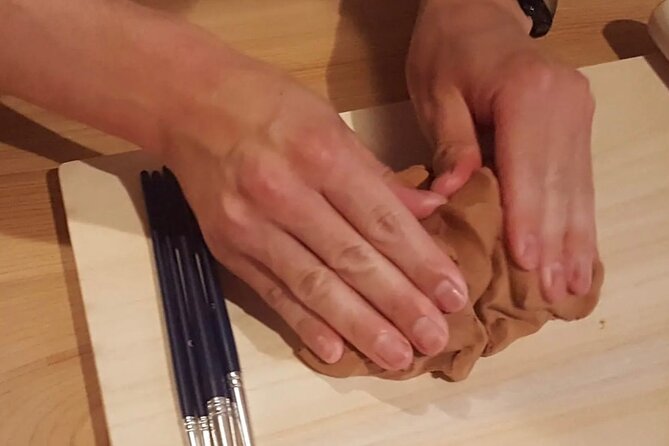
The class begins with an explanation of the clay and the structure of the onigawara. The process is broken into manageable parts rather than presented as one intimidating sculpture.
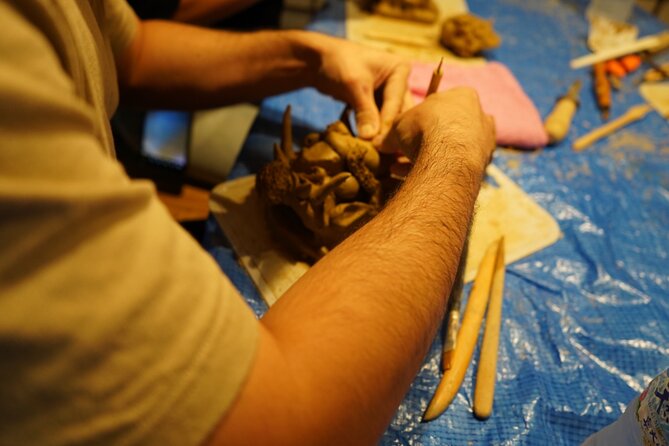
This is important because the finished sample can look far beyond the reach of a first-time clay worker. The method uses a set sequence of pieces and shapes, then lets you adjust the details to your own design. You may begin with a simple lump and wonder how it can become a snarling guardian. The answer arrives gradually, as each section is shaped and joined.
Yuya’s teaching is the strongest part of the experience. He has been praised for patient demonstrations, clear directions, and a friendly approach. His English is described as good enough for instruction, with occasional limits in casual conversation. For a hands-on class, that is the key point: you need to understand the technique, and the instructions are designed to be easy to follow.
You are encouraged to ask for help. Yuya offers suggestions to improve the shape without taking over your work, so the finished demon remains yours. That balance is valuable. A completely unassisted class could leave beginners frustrated, while a demonstration where the instructor does everything would produce a less meaningful souvenir.
Do not worry if your early form looks lopsided. The process is challenging for people who have never worked with clay, and the final result can look much better than the rough middle stages suggest. Trust the steps, keep working, and let the form develop.
Why every demon looks different
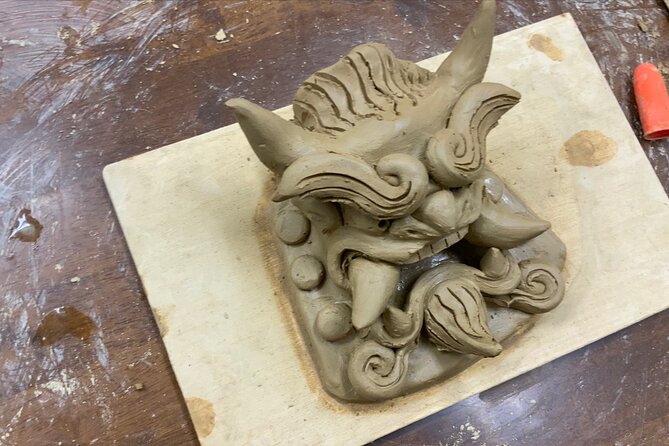
The workshop follows a shared method, but it does not produce identical figures. Your choices in shaping, facial expression, angles, and small details give the onigawara its character.
That difference is part of the fun for families and couples. Everyone begins with the same broad idea, yet the final pieces can look surprisingly unrelated. One person may create a fierce guardian, while another produces a quirky, almost playful creature.
Teenagers should enjoy the hands-on nature of the session, especially if they like art or making things. The activity has also worked well for families with no previous clay experience. Children can participate, but the exact age suitability is not specified, so ask when booking if you are bringing a young child.
The class can also suit adults who do not think of themselves as artistic. Yuya’s process is structured enough to keep you moving, while the final design still leaves room for personality. You do not need to arrive with a sculpture plan.
There is a small warning here: clay is messy. The workshop specifically advises wearing clothes that may get dirty. An apron is not included, so dress for the work rather than for your next elegant Kyoto dinner.
A completely different kind of day out:
- Kyoto: Tea Ceremony in a Traditional Tea House in Kiyomizu
★ 4.9 · 3,519 reviews - Kyoto: Gion Make Your Own Chopsticks with Engraving Option
★ 5.0 · 3,465 reviews - Kyoto Nara Day Trip │ Kiyomizu-dera Temple + Fushimi Inari-taisha Shrine + Nara Park (Departing from Osaka/Kyoto)
★ 4.7 · 3,408 reviews - Kyoto Geisha Walking Tour: Gion District & Hidden Gems
★ 4.7 · 3,273 reviews
From soft clay to a fired keepsake
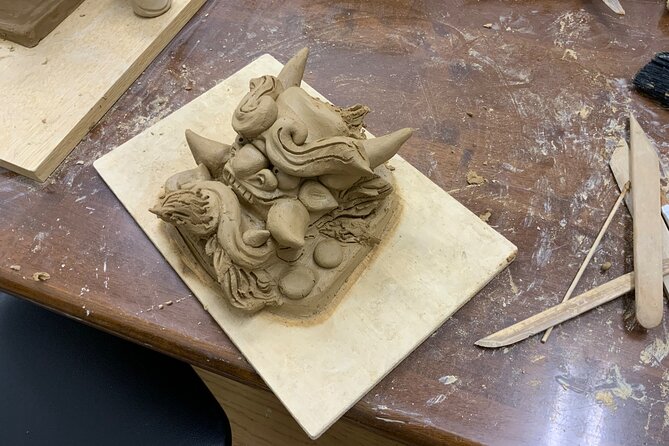
Your onigawara is not finished when you leave the studio. Yuya fires it in a kiln at the factory after the workshop, allowing the clay to dry and harden through the ceramic process.
The supplied information says the drying period can take about a month, and some comments describe the finished piece arriving a few weeks later or around two months. The exact timing may depend on drying, firing, and shipping. Plan on waiting, rather than expecting to carry the finished demon away that afternoon.
Shipping is required because the tile needs to be fired after your session. The shipping fee is not included in the $89.17 workshop price, and the amount is determined separately. One practical complaint is that the cost is paid at the end and may be quoted in cash, so ask for the current amount before the class begins and keep enough yen available.
The finished pottery has arrived safely for other participants, but no shipping method or delivery guarantee is stated. Give a complete home address and keep your booking details until the piece arrives. If you are moving soon after your trip, use an address where someone can receive it.
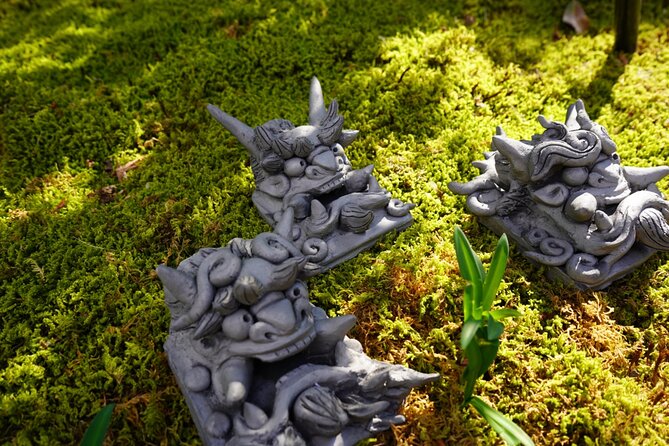
This delayed finish is both a weakness and a strength. You cannot inspect the completed ceramic before leaving Japan, but the wait gives the souvenir a story. Months later, the object on your shelf or in your garden still carries the memory of sitting in a Kyoto studio and shaping it yourself.
Is $89.17 a good value?
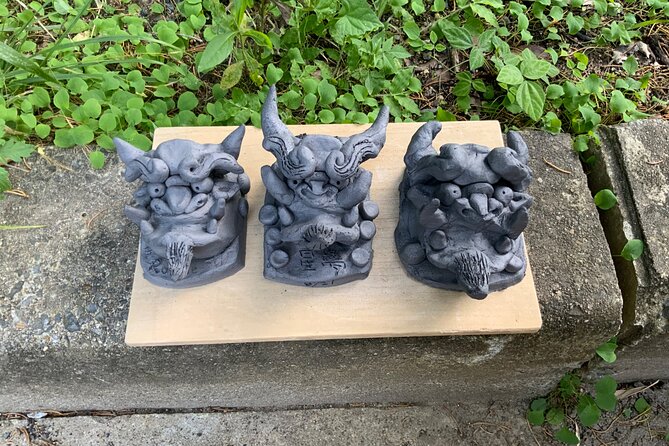
At $89.17 per person, this is not the cheapest Kyoto activity. You are paying for a small-group lesson, instruction from an onigawara artisan, the clay work itself, kiln firing, and a handmade object that cannot be duplicated exactly.
The value improves if you care about making rather than simply buying. A shop-bought ceramic figure may cost less and be easier to pack, but it will not reflect your decisions or your level of skill. This class gives you an activity during the trip and a souvenir afterward.
Bottled water is included, though that is a minor benefit. The real value comes from the teaching and the firing service. Since shipping is extra, treat the advertised price as the workshop fee, not the complete cost of receiving the tile at home.
For a family, group discount information may make the outing more appealing, but the exact discount is not provided. Ask about the group rate before paying. Large groups can be accepted, though they may work at a different location and should confirm the arrangements.
I would consider this good value for someone who has already seen several temples and wants a quieter, more personal Kyoto activity. It is less suitable if your priority is a finished souvenir in your suitcase that same day.
Timing, pace, and what to bring
The official duration is approximately two hours. In practice, allow up to three hours if you work slowly, ask many questions, or join a larger session. One particularly useful feature is that the instructor aims to help everyone finish, rather than rushing people out at a strict cutoff.
That makes the workshop a poor choice immediately before a train, meal reservation, or timed attraction. Leave a cushion after the class. Clay work can take longer than expected, particularly when each person is shaping a different expression.
Bring:
- Clothes that can get dirty
- Cash for the separate shipping charge
- Your home delivery address
- Patience for the drying and firing period
- A phone or camera, if you want to record the stages of your work
The provider lists mobile tickets and confirmation at booking. Service animals are allowed, and most people can participate. There is no detailed information about wheelchair access, specific child ages, or the exact shipping price, so contact the provider if any of those points matter to you.
Free cancellation is available when you cancel at least 24 hours before the local start time. Changes or cancellations inside that window are not accepted for a refund.
Who will enjoy this Kyoto workshop most
I would choose this activity for anyone who likes a souvenir with a personal story. It suits couples, families, teenagers, solo visitors, and small groups who would rather make something than spend another morning looking at displays.
It is especially good for:
- First-time clay workers who want firm guidance
- Families seeking a shared activity
- Teenagers who enjoy art and practical projects
- Visitors wanting a break from long walks
- People interested in Japanese architecture and protective symbols
- Anyone willing to wait for a handmade item to be fired and shipped
You may want to skip it if you dislike messy work, have very limited time, or need to keep your luggage light and your expenses fixed. The finished object is small, but shipping still adds a separate cost.
This is also not a silent, self-guided craft session. Yuya talks you through the method and offers help along the way. His conversational English is clear for instruction, though you should keep questions simple if you want to discuss more complex topics.
The best reason to book it
The strongest part of this experience is the transformation. You begin as a beginner with a lump of clay. Step by step, with Yuya’s help, that lump becomes a guardian with a face, posture, and personality.
I like that the workshop does not demand artistic confidence. The structure carries you through the difficult parts, while your own hands leave the marks that make the piece personal. Even if your demon looks uneven at first, the finished form can be surprisingly satisfying.
Book it if you want a slower, creative side of Kyoto and do not mind paying extra for delivery later. Skip it if you want a polished souvenir immediately. For the right visitor, this is a memorable way to connect a handmade object with the roofs, temples, and old protective traditions you see across the city.
FAQ
How long does the onigawara workshop last?
The listed duration is approximately two hours. Some sessions can take closer to three hours, especially for slower work or detailed instruction, so leave extra time afterward.
Where does the activity begin and end?
It begins and ends at 瓦工房 You家, at 373-2 Yamazakichō, Higashiyama Ward, Kyoto, 605-0841, Japan.
What is the maximum class size?
The usual maximum is five people. Groups of five or more can be accepted, with group capacity listed up to 40 people. The location changes for larger groups.
Is shipping included in the price?
No. Shipping costs are separate from the experience fee and are paid in addition to the $89.17 price.
Can I take the finished onigawara home that day?
No. The piece must dry and be fired in a kiln at the factory first. It is then shipped to your home.
How long does delivery take?
The provided information indicates that drying, firing, and delivery can take several weeks. Some pieces have taken about one to two months to arrive.
Do I need pottery experience?
No. The process is designed for beginners, including children and people who feel they are not good with their hands. The instructor demonstrates each step and provides help.
What should I wear?
Wear clothes that may get dirty because the activity uses soil or clay. An apron is not included.
What is the cancellation policy?
You can cancel for a full refund up to 24 hours before the local start time. Cancellations or changes made less than 24 hours before the activity are not accepted for a refund.
Just added in Kyoto
- The “Golden Route” and Ancient Japan by DIAMIR Erlebnisreisen – 14-Day Tour★ 2.0 · 2 reviews
- Japan: Castles & Cuisine by G Adventures – 6-Day Kyoto to Osaka Tour★ 4.5 · 4 reviews
- Cycle Japan by Explore! – 13-Day Kyoto to Tokyo Tour★ 4.7 · 12 reviews
- Cycle Japan by Intrepid Travel – 11-Day Kyoto to Tokyo Tour★ 4.8 · 2 reviews
- Classic Japan by Intrepid Travel – 11-Day Kyoto to Tokyo Tour★ 4.4 · 14 reviews
- Ancient & Modern Japan 14-Day Tour by Exodus Adventure Travels★ 4.4 · 40 reviews
- 5 Day Cultural Adventure of Kyoto, Nara & Osaka by Tourist Journey★ 2.5 · 2 reviews
- 12 Days Kinosaki Onsen Escape: A Journey Through Japan’s Timeless Towns by UME Travel★ 4.8 · 5 reviews
Kyoto Tours, compared.

![[Kyoto & Nara Day Tour] Sagano Scenic Railway & Nara Park & Fushimi Inari Taisha Thousand Torii Gates & Togetsukyo Bridge & Bamboo Grove & Kimono Forest (Departing from Osaka)](https://media.japanvisits.com/wp-content/uploads/kyoto-nara-day-tour-sagano-scenic-railway-nara-park-fushimi-inari-taisha-thousand-torii-gates-togetsukyo-bridge-bamboo-grove-kimono-forest-departing-from-osaka-k110001-400x257.jpg)

Fushimi Inari, Kinkakuji, Bamboo Grove 1 Day Bus Tour
Read our review →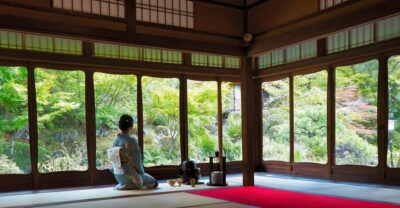
Tea Ceremony in a Traditional Tea House in Kiyomizu
Read our review →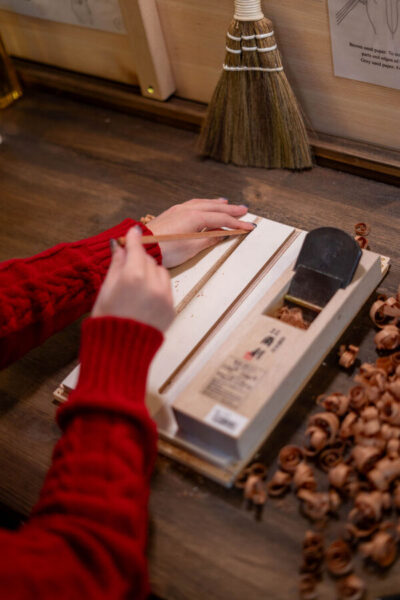
Gion Make Your Own Chopsticks with Engraving Option
Read our review →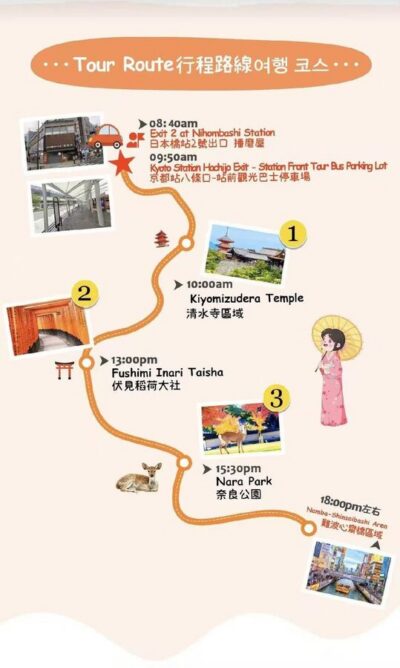
Kyoto Nara Day Trip │ Kiyomizu-dera Temple + Fushimi Inari-taisha Shrine + Nara Park (Departing from Osaka/Kyoto)
Read our review →
Kyoto Geisha Walking Tour: Gion District & Hidden Gems
Read our review →