Reviewed · KYOTO TOURS
Let’s make only one original onigawara in the world!!
Make a small guardian for your home. At Kawarakoubouyouya in Honshu, you shape a traditional Japanese onigawara roof ornament from raw clay, guided step by step by Yuya. I like the hands-on craft and the chance to make something with real cultural meaning, not just buy another souvenir. I also like the small groups, capped at five people, which give Yuya time to help with tricky details.
The main drawback is that your finished piece does not go home with you that day. It must dry, be fired in a kiln, and be shipped after about one to two months. You also pay the shipping fee separately, and the workshop uses soil, so clothes that can get dirty are a wise choice.
In This Review
- Key things to know before you book
- Why an onigawara is more than a souvenir
- Arriving at the Kawarakoubouyouya workshop
- The first stage: learning why the demon protects the roof
- Shaping clay with a beginner-friendly method
- Building the face, piece by piece
- A relaxed class with room for conversation
- What happens after you finish the clay figure
- Is $90 a good value?
- Who will enjoy this experience most
- Booking and cancellation details that matter
- Should you book the onigawara workshop?
- FAQ
- How much does the onigawara workshop cost?
- How long does the experience last?
- What will I make?
- When will I receive my finished onigawara?
- Is shipping included in the price?
- Do I need previous sculpting experience?
- What languages are available?
- Is the workshop wheelchair accessible?
Key things to know before you book
- You make a demon-faced onigawara by hand: The class teaches a simple process for shaping a small roof tile with the fierce face traditionally linked to protection.
- Yuya guides each stage patiently: The teaching style suits beginners, children, and people who do not think of themselves as good at sculpture.
- The group is limited to five: A small class means more room for questions and individual help.
- Your piece is fired later: After the clay dries and is kiln-fired, it changes to the traditional silver color before being sent to your home.
- The workshop lasts about two hours: The creative work is focused, but the experience can feel longer if your group takes its time.
- Shipping costs extra: The activity price is $90 per person, with postage paid separately on the day.
Why an onigawara is more than a souvenir
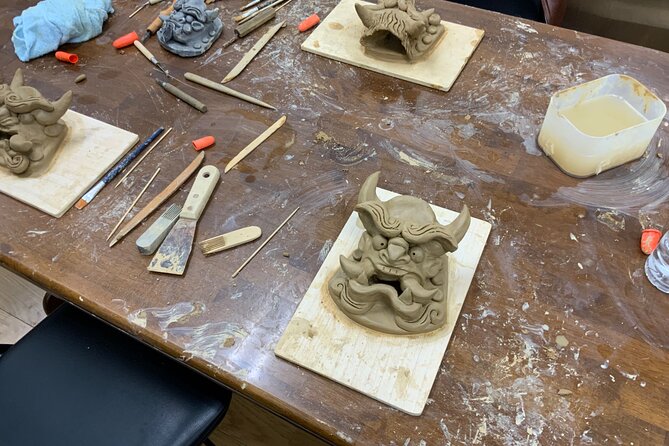
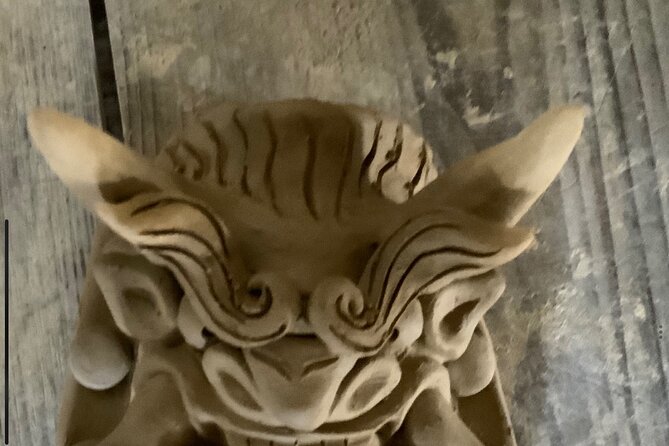
Onigawara are the small but striking roof ornaments seen at the ends of the main roof ridge on traditional Japanese buildings. Their faces often resemble ogres, demons, or gargoyles. The expression can look fierce, but the purpose is protective: these figures have been used to guard buildings from evil and help protect roof structures from rainwater.
The craft is part of a roof-tile tradition said to reach back about 1,400 years. That long span gives the workshop more weight than a standard clay activity. You are not simply pressing your hands into wet earth and taking home a trinket. You are making a small piece connected to a working tradition that shaped Japanese buildings for centuries.
I also like the basic idea behind the class. Modern tile production has changed over time, yet the workshop gives you a chance to make an ogre tile using a hand process inspired by the old way. Your finished figure will be small and simple, but it carries the character of a handmade object. Uneven edges or a slightly comic expression are part of the charm.
A few more options to weigh up in Kyoto
- PERFECT KYOTO 1-Day Bus Tour
★ 5.0 · 13,518 reviews - [Kyoto & Nara Day Tour] Sagano Scenic Railway & Nara Park & Fushimi Inari Taisha Thousand Torii Gates & Togetsukyo Bridge & Bamboo Grove & Kimono Forest (Departing from Osaka)
★ 4.9 · 10,942 reviews - Kyoto: Fushimi Inari, Kinkakuji, Bamboo Grove 1 Day Bus Tour
★ 4.8 · 4,316 reviews
Arriving at the Kawarakoubouyouya workshop
The meeting point is KAWARAKOUBOUYOUYA, the provider’s own shop and workshop. You should search for the name on Google Maps before setting out, since one participant reported that the map pin was about 40 meters off and required walking east.
That is a small issue, but it is worth knowing in advance. Give yourself extra time rather than arriving at the exact start time and then hunting around. The information provided does not specify a particular train station, bus route, or neighborhood landmark, so you should confirm your route before leaving your hotel.
The workshop welcomes English and Japanese speakers. Yuya’s patient manner is one of the strongest parts of the experience, especially if you are taking the class in English or working with children. The setting is a working craft space, not a large polished attraction, so expect a practical studio atmosphere rather than a formal museum presentation.
The class is wheelchair accessible. Since the workshop is limited to five participants, it should feel more personal than a large group activity, though the exact seating and workspace arrangement are not specified.
The first stage: learning why the demon protects the roof
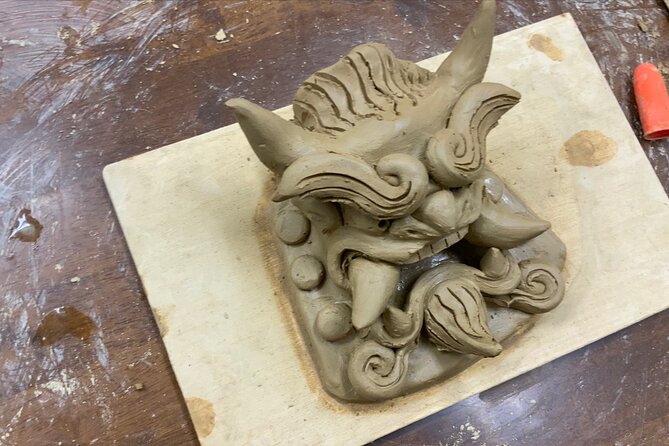
The class begins with an introduction to kawara, the traditional Japanese roof tiles that provide the foundation for onigawara. Yuya explains the history and meaning behind the figures before you begin shaping your own.
This background matters. Without it, the face might look like a funny monster. With it, the expression becomes part of a protective tradition. The demon is not there simply to frighten people. It is meant to guard a house, temple, or other building from harmful forces and the weather.
The history lesson appears to be practical rather than long and academic. You receive enough context to understand what you are making, then move quickly into the craft itself. That balance is useful during a two-hour activity. You learn the reason for the design without spending most of the session listening.
Shaping clay with a beginner-friendly method
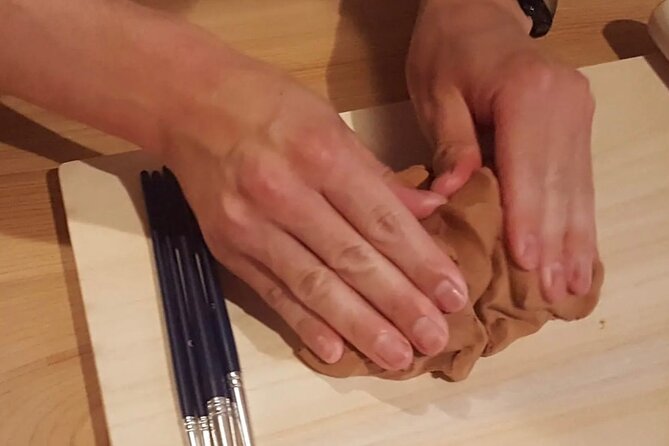
The raw material is soil, and you work it by hand. Yuya has developed a procedure intended to make onigawara accessible to children and people who feel they have clumsy hands. That is important because an elaborate traditional roof ornament would normally be far beyond the reach of a casual workshop.
You are taught how to manipulate the clay and build the figure in stages. The available details point to a process of making the various parts, refining them, and joining them together step by step. The pace gives you time to focus on each section rather than rushing to finish a rough shape.
One especially useful feature is the close guidance. Yuya does not simply hand you clay and leave you to guess what comes next. He demonstrates the procedure, watches your progress, and advises you on how to handle the material. That support is why this class works for beginners.
The work calls for concentration. You may spend more time than expected getting the pieces to fit or shaping the face into an expression you like. That is part of the appeal. A clay workshop gives you a quiet task during a busy trip, and the finished object reflects your own effort.
A completely different kind of day out:
- Kyoto: Tea Ceremony in a Traditional Tea House in Kiyomizu
★ 4.9 · 3,519 reviews - Kyoto: Gion Make Your Own Chopsticks with Engraving Option
★ 5.0 · 3,465 reviews - Kyoto Nara Day Trip │ Kiyomizu-dera Temple + Fushimi Inari-taisha Shrine + Nara Park (Departing from Osaka/Kyoto)
★ 4.7 · 3,408 reviews - Kyoto Geisha Walking Tour: Gion District & Hidden Gems
★ 4.7 · 3,273 reviews
Building the face, piece by piece
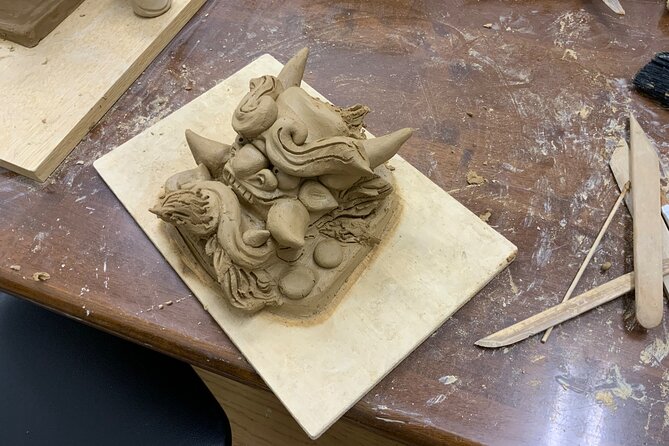
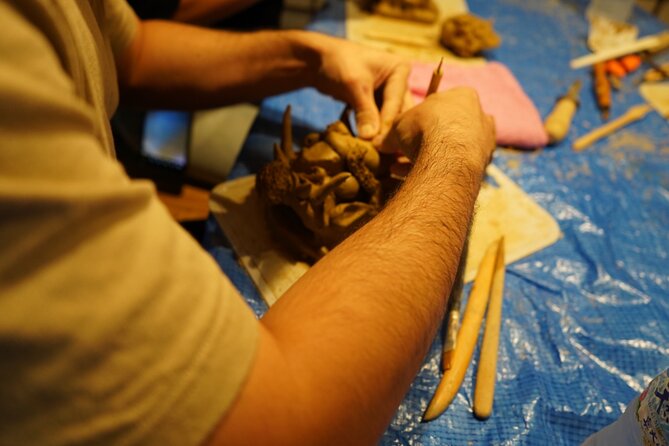
The demon face is the heart of the activity. You gradually add and adjust the parts that give the onigawara its fierce character. The exact result will vary from person to person, which is what makes each piece original.
You do not need to be a sculptor. The workshop’s method breaks a difficult traditional object into manageable steps. That does not mean every figure will look identical, and it should not. The goal is to help you create a convincing small onigawara while keeping the work achievable.
This is also where a small class helps. With no more than five participants, Yuya can point out where to press, shape, or attach the clay. A larger group would make that kind of personal correction harder. If you are visiting with children, the guided format should keep the task from becoming frustrating.
Children have enjoyed the workshop, but adults should not dismiss it as only a family activity. The slow, focused work gives couples, friends, and solo visitors a creative break from sightseeing. One participant described spending time away from the crowds and enjoying the chance to concentrate on something personal. That is a good way to think about the class.
A relaxed class with room for conversation
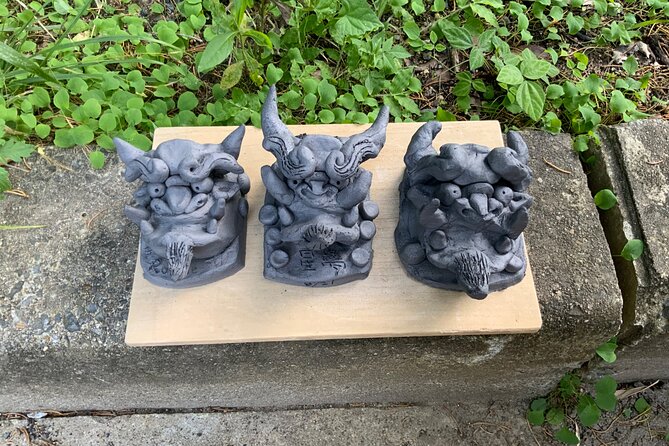
The atmosphere is friendly and informal. Yuya is described as kind, gentle, honest, and patient, qualities that matter when someone is teaching a hands-on craft in a second language.
You are not expected to work in silence. Conversation can develop while everyone builds their figures, and the small group makes it easier to ask questions or share a laugh when a clay piece does not behave as planned. The experience has been especially well received by people who wanted a calm activity rather than another packed sightseeing stop.
Allow roughly two hours, though one participant felt the time passed so quickly that the experience seemed closer to three hours. That comment suggests the session can feel unhurried and absorbing, but you should still rely on the official two-hour duration when planning the rest of your day.
The class may suit you best if you prefer making something over watching a demonstration. If you want a quick finished souvenir, the waiting period and hands-on work may feel like too much. If you enjoy learning by doing, the pace should be a strong match.
What happens after you finish the clay figure
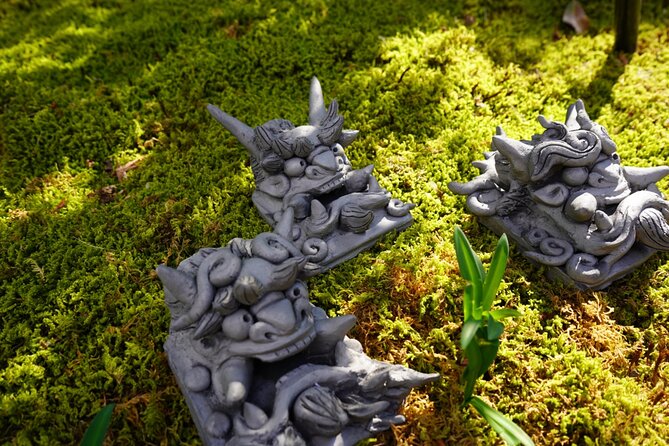
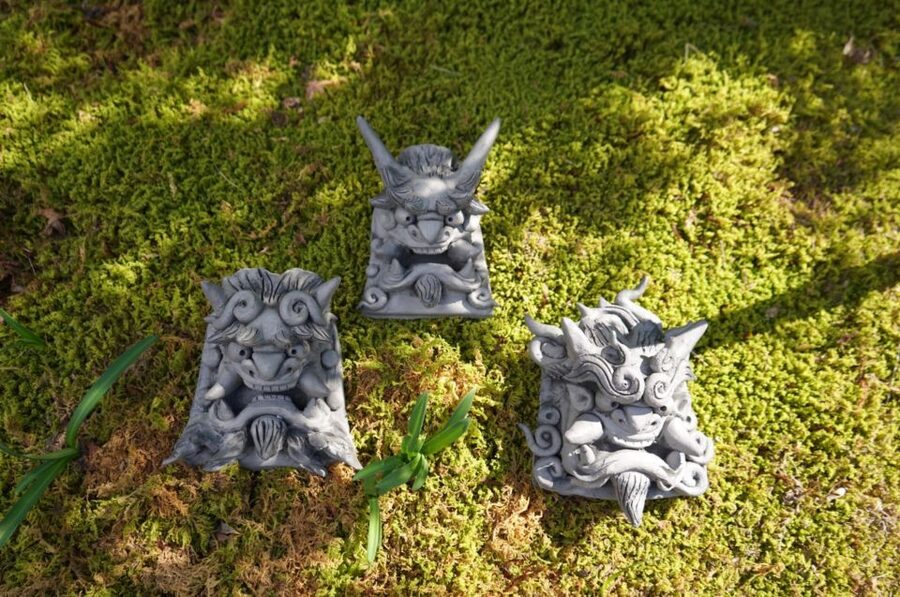
Your onigawara is not complete when you leave the workshop. It must dry before Yuya fires it in a kiln at the factory. After firing, the clay changes into the traditional silver color.
That later transformation is one of the most appealing parts of the experience. You leave with the memory of the clay-colored figure, then receive the finished piece after it has gone through the final stage of production. The delay can make the souvenir feel like a small parcel from your Japan trip arriving after you have returned home.
The stated time is about one to two months. The piece is sent to your home after firing, but shipping is not included in the $90 activity price. You pay the shipping fee separately on the day. The amount is not given, so ask Yuya about the current postage cost before you commit.
This arrangement also means you should provide accurate delivery details. The available information does not specify whether international shipping costs vary by country, so confirm that directly at the workshop. The important point is simple: you are paying for the class and the handmade piece, then adding postage for delivery later.
Is $90 a good value?
At $90 per person, this is not the cheapest craft class in Japan. Its value depends on what you want from a souvenir and from your time in Kyoto or the surrounding area.
You receive a two-hour guided activity, a small-group setting, instruction in English or Japanese, and a handmade onigawara that is later kiln-fired and shipped. You are also paying for access to a traditional craft process and for Yuya’s personal guidance. That makes the price easier to justify than a simple clay-painting session.
The extra postage should be included in your budget. Since the finished tile arrives one to two months later, the cost is not fully settled when the class ends. Still, the delayed delivery is part of the object’s story. You make it in Japan, it is finished in the kiln, and it later reaches your home.
I would consider the class good value if you care about Japanese architecture, traditional crafts, or meaningful handmade souvenirs. It is less compelling if you mainly want a low-cost activity or a keepsake you can pack immediately into your luggage.
Who will enjoy this experience most
This workshop is a good choice for:
- Families looking for a creative activity that can suit children.
- Couples or friends who want a shared project.
- Solo visitors who enjoy focused work and conversation.
- Anyone interested in Japanese roofs, architecture, or traditional craft.
- People who worry they are not artistic but still want to make something by hand.
- Visitors who prefer a small workshop to a large commercial attraction.
The class may be less suitable if you need to leave Japan with the finished object in your suitcase. It is also not ideal for anyone who wants to keep their clothes spotless, since the material is soil. Wear something practical and washable.
The wheelchair-accessible status is helpful, but the supplied information does not describe the exact workspace layout, toilet facilities, or assistance available. If you have specific access needs, contact the workshop before booking.
Booking and cancellation details that matter
You can reserve now and pay later, which helps if your Japan plans are still shifting. Cancellation is free up to 24 hours before the activity for a full refund.
The host or greeter can communicate in English and Japanese. The small group has a maximum of five participants, so availability may be limited on popular dates.
The $90 price is per person. Shipping is extra and paid separately on the day. Since the workshop uses clay, wear clothes that may get dirty and plan for the finished piece to arrive at home after firing rather than immediately after class.
Should you book the onigawara workshop?
Book it if you want a personal souvenir with a clear connection to Japanese tradition. The best features are the small group, Yuya’s patient step-by-step teaching, and the fact that your figure is fired and finished rather than left as a temporary craft project.
I would especially recommend it for families, craft fans, and visitors who have already seen plenty of temples and want to understand one small part of how Japanese buildings are protected and decorated. The workshop gives you a quiet change of pace, and the finished silver-colored demon should have more meaning than something picked up from a shop shelf.
Think twice if you need a finished souvenir right away, want a bargain activity, or dislike working with messy materials. Also allow time to find the workshop, since the Google Maps location may be about 40 meters off.
For the right person, this is a memorable two hours and a guardian you can keep long after your Japan trip ends.
FAQ
How much does the onigawara workshop cost?
The activity costs $90 per person. Shipping for the finished piece is not included and must be paid separately on the day.
How long does the experience last?
The stated duration is two hours. One participant felt the session passed so quickly that it seemed closer to three hours, but you should plan around the official two-hour duration.
What will I make?
You will make a small, simple onigawara tile with a traditional demon or ogre face. The figure is designed to represent protection for a building.
When will I receive my finished onigawara?
After the piece dries and is fired in a kiln, it will be sent to your home. The full process takes about one to two months.
Is shipping included in the price?
No. The shipping fee is charged separately on the day. The exact amount is not provided.
Do I need previous sculpting experience?
No. The workshop uses a procedure developed to help children and people with little confidence or clumsy hands make an onigawara.
What languages are available?
The host or greeter can communicate in English and Japanese.
Is the workshop wheelchair accessible?
Yes, the experience is listed as wheelchair accessible. Specific details about the workspace layout are not provided, so contact the workshop directly if you need particular arrangements.
Just added in Kyoto
- The “Golden Route” and Ancient Japan by DIAMIR Erlebnisreisen – 14-Day Tour★ 2.0 · 2 reviews
- Japan: Castles & Cuisine by G Adventures – 6-Day Kyoto to Osaka Tour★ 4.5 · 4 reviews
- Cycle Japan by Explore! – 13-Day Kyoto to Tokyo Tour★ 4.7 · 12 reviews
- Cycle Japan by Intrepid Travel – 11-Day Kyoto to Tokyo Tour★ 4.8 · 2 reviews
- Classic Japan by Intrepid Travel – 11-Day Kyoto to Tokyo Tour★ 4.4 · 14 reviews
- Ancient & Modern Japan 14-Day Tour by Exodus Adventure Travels★ 4.4 · 40 reviews
- 5 Day Cultural Adventure of Kyoto, Nara & Osaka by Tourist Journey★ 2.5 · 2 reviews
- 12 Days Kinosaki Onsen Escape: A Journey Through Japan’s Timeless Towns by UME Travel★ 4.8 · 5 reviews
Kyoto Tours, compared.

![[Kyoto & Nara Day Tour] Sagano Scenic Railway & Nara Park & Fushimi Inari Taisha Thousand Torii Gates & Togetsukyo Bridge & Bamboo Grove & Kimono Forest (Departing from Osaka)](https://media.japanvisits.com/wp-content/uploads/kyoto-nara-day-tour-sagano-scenic-railway-nara-park-fushimi-inari-taisha-thousand-torii-gates-togetsukyo-bridge-bamboo-grove-kimono-forest-departing-from-osaka-k110001-400x257.jpg)
Fushimi Inari, Kinkakuji, Bamboo Grove 1 Day Bus Tour
Read our review →
Tea Ceremony in a Traditional Tea House in Kiyomizu
Read our review →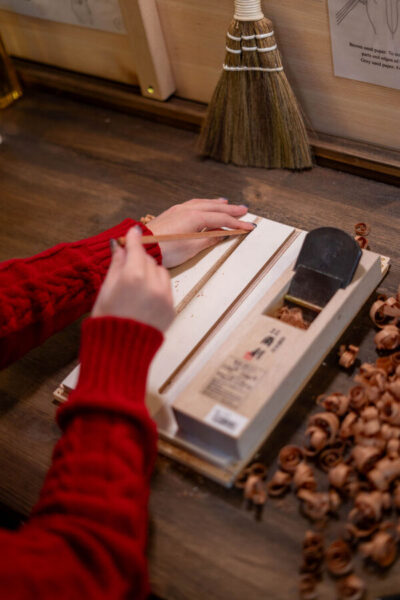
Gion Make Your Own Chopsticks with Engraving Option
Read our review →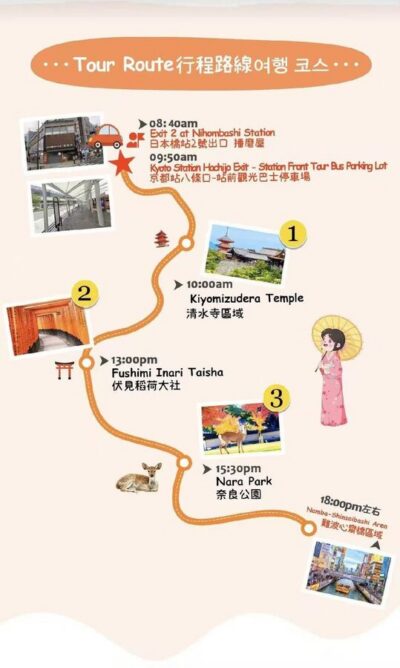
Kyoto Nara Day Trip │ Kiyomizu-dera Temple + Fushimi Inari-taisha Shrine + Nara Park (Departing from Osaka/Kyoto)
Read our review →
Kyoto Geisha Walking Tour: Gion District & Hidden Gems
Read our review →