Reviewed · TOKYO TOURS
Mochi Making at a Private Studio in Tokyo
Sticky rice, sweet fillings, and a little kitchen magic. This two-hour class near Meguro Station gives you hands-on practice with several Japanese treats, from strawberry daifuku and three-color dango to warabi mochi and grilled mochi with soy sauce and nori. I especially like the small-group format and the chance to learn directly from an English-speaking wagashi instructor in a private studio.
I also like the mix of making, tasting, and cultural explanation. You do not simply shape one kind of dessert and leave. You prepare several styles, watch a mochi ice cream demonstration, drink green tea or hojicha, and receive an English recipe sheet. The main consideration is the price, about $79.26 per person, which is fair for a two-hour cooking class but may feel high if you are looking only for a quick snack.
In This Review
- Key points to know before booking
- Arriving near Meguro Station
- A short introduction to mochi and Japanese traditions
- Making strawberry daifuku with fresh fruit
- Three-color dango and the pleasure of making a mess
- Warabi mochi and a different texture
- Savory grilled mochi with soy sauce and nori
- Watching mochi ice cream take shape
- Tasting everything with tea or coffee
- How much value do you get for $79.26?
- Group size, age rules, and the class atmosphere
- Who should book this mochi class?
- Should you book Mochi Making at a Private Studio in Tokyo?
- FAQ
- Where does the mochi-making class take place?
- How long does the experience last?
- What kinds of mochi will I make?
- Is the class taught in English?
- Are drinks and ingredients included?
- Can children attend the class?
- Can I cancel for a refund?
Key points to know before booking
- Several mochi styles in one class: Make strawberry daifuku, three-color dango, and warabi mochi, then taste savory grilled mochi.
- A private studio near Meguro Station: The meeting point is a short walk from JR Meguro Station and the nearby metro station.
- English instruction throughout: Certified wagashi instructors explain both the techniques and the cultural role of mochi.
- A good family activity: Children age four and older may attend, and families have found the hands-on pace easy to follow.
- Food to eat and take away: You taste your creations with tea or coffee, and containers may be provided for anything you cannot finish.
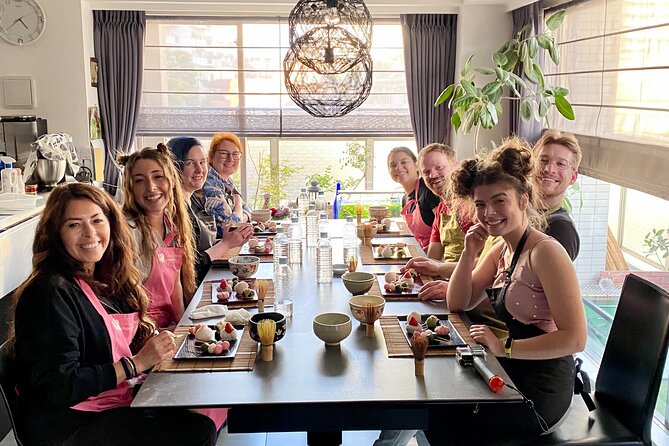
- Small-group setting: The activity is advertised for up to six people, although the wider activity information allows up to 12, so confirm the group size when booking.
Arriving near Meguro Station
The class meets at a private studio in Meguro City, at President Meguro Heights, 1-chome 3-16 Meguro, Tokyo 153-0063. It is within a short walk of JR Meguro Station on the Yamanote Line and a nearby metro station, making this one of the easier food activities to fit into a Tokyo day.
That location matters. You do not need to spend half a morning crossing the city for a two-hour class. You can pair it with sightseeing in Meguro, schedule it after arriving by train, or use it as a cool indoor break during a hot afternoon.
The class ends at the same meeting point. There is no hotel pickup, drop-off, or transportation between attractions, so you are responsible for reaching the studio and continuing your day afterward. The meeting address is specific, but Tokyo buildings can still take a little patience to identify. Give yourself time to find President Meguro Heights rather than arriving at the last minute.
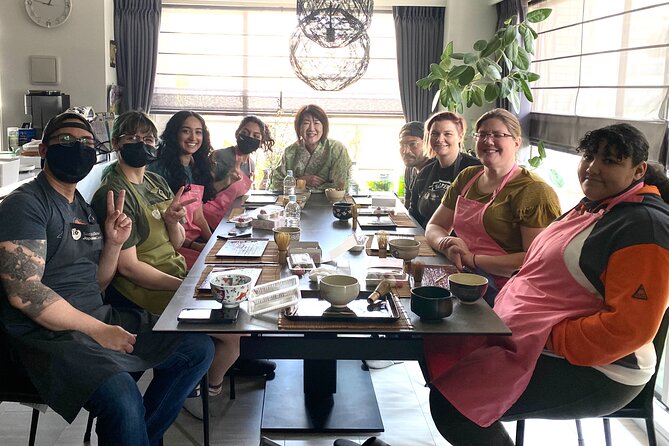
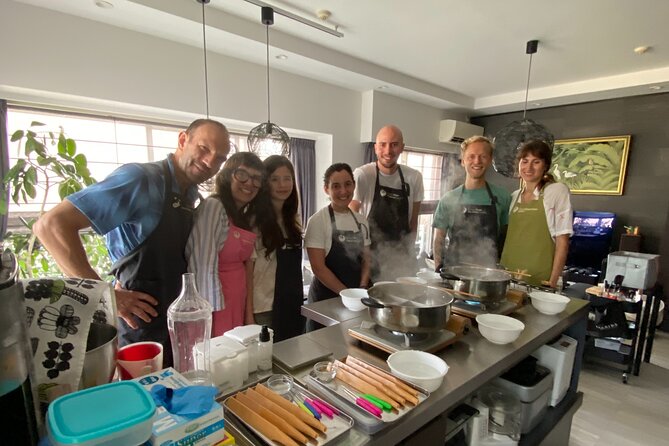
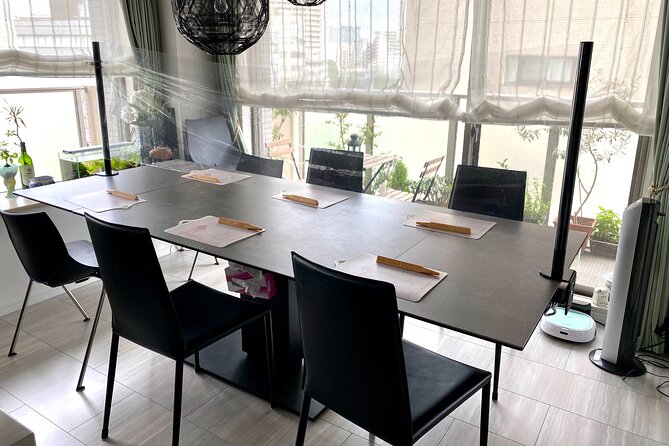
The studio setting is part of the appeal. This is not a large demonstration kitchen with rows of strangers watching from a distance. The space is described as a private kitchen or studio, with aprons and cooking tools supplied. You should expect a cozy working environment rather than a formal restaurant classroom.
A few more options to weigh up in Tokyo
- Tokyo Disney Resort – Tokyo Disneyland & Tokyo DisneySea Park Tickets
★ 4.8 · 99,488 reviews - SHIBUYA SKY Ticket
★ 4.7 · 46,509 reviews - JR Whole Japan Rail Pass
★ 4.8 · 29,150 reviews
A short introduction to mochi and Japanese traditions
The class begins with a presentation on mochi traditions, festivals, and its place in Japanese culture. That opening gives the cooking a useful frame. Mochi is not just a chewy dessert. It appears in both sweet and savory forms and has a role in seasonal customs and celebrations.
I like this beginning because it helps you understand why the same basic rice cake can appear in so many forms. Color, ingredients, shape, and serving style can all matter. The class also gives you a chance to ask about daily life in Tokyo, local shopping, and sightseeing. The instructor is fluent in English, so you are not left trying to follow a technical recipe through gestures alone.
Several instructors may lead the class, including Michiko, Ayumi, Owa, Waka, and Miho. The important point is that the teaching team is English-speaking and trained in wagashi, the Japanese tradition of handcrafted sweets. The exact instructor may depend on the date of your booking.
The cultural talk is not a substitute for the cooking. It is a short introduction before you start working, which keeps the experience active. If you want a long lecture on Japanese food history, this is not that. If you want enough context to understand what you are making, it fits the two-hour format well.
Making strawberry daifuku with fresh fruit
One of the main hands-on projects is strawberry daifuku. This is the familiar soft mochi shell wrapped around a filling and fresh strawberry. It is an appealing choice for beginners because the result is colorful, easy to photograph, and immediately recognizable.
The challenge is handling the sticky dough. You need to work carefully as you shape and wrap it, especially when trying to cover a round strawberry without tearing the outer layer. That slight mess is part of the fun, and the instructors guide you through each step rather than expecting polished pastry skills.
You should not need to be a strong cook to enjoy this class. The instructions are presented as easy to follow, and the process is broken into manageable stages. An assistant may help keep the work area tidy while you concentrate on shaping. Aprons are included, which is useful when flour or starch ends up in places you did not expect.
This is also a good activity for children. The minimum age is four, but children under four cannot attend because of safety concerns. Older children may enjoy the tactile work more than a standard sightseeing stop, though younger participants will still need adult supervision and help with the sticky mixture.
Three-color dango and the pleasure of making a mess
You also make three-color dango, the small mochi balls served on skewers. The process feels different from daifuku. Instead of wrapping a filling, you shape individual pieces and arrange them in a simple, attractive pattern.
The three colors add visual interest and connect the food to Japanese presentation. This is one of the easier projects to understand at a glance, making it a good confidence builder early in the class. You can see the result taking shape as the balls are prepared and skewered.
Dango is also a useful reminder that Japanese sweets are not all about heavy sweetness. The class gives you more than one kind of flavor and texture, so you can compare the soft, filled daifuku with the firmer, skewer-friendly dango.
The pace appears to be steady rather than rushed. You make several items, but the class is not designed for you to produce restaurant quantities. Some people have had enough to take home in containers, though the exact amount can depend on how much is eaten during the tasting session.
A completely different kind of day out:
- Mt Fuji and Hakone 1-Day Bus Tour Return by Bullet Train
★ 5.0 · 26,383 reviews - TOKYO SKYTREE® Ticket
★ 4.7 · 25,136 reviews - teamLab Borderless Tickets: MORI Building DIGITAL ART MUSEUM
★ 4.7 · 24,126 reviews - teamLab Planets TOKYO Ticket
★ 4.7 · 21,663 reviews
Warabi mochi and a different texture
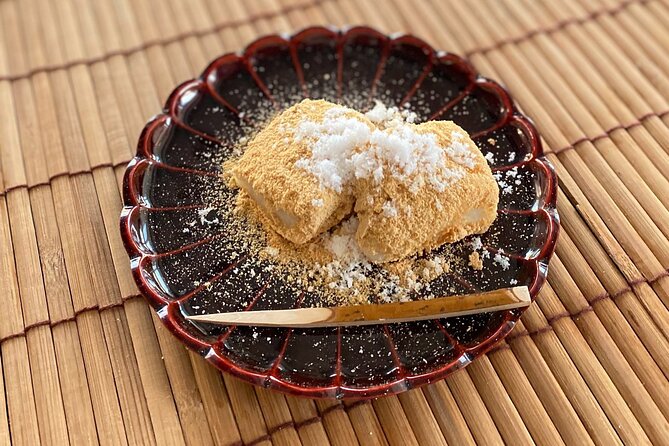
Warabi mochi brings another style to the table. Despite its name, it has a texture and preparation distinct from the soft rice-based mochi you may first picture. For many people, this is the item that makes the class feel broader than a single dessert lesson.
The value here is comparison. You are not simply learning one recipe and repeating it. You get to see how Japanese sweets can vary in texture, shape, and serving style. The English recipe sheet gives you a practical reminder of the methods after the class, and recipes may also be available through a QR code for printing at home.
Do not expect every style to become your favorite. One of the useful parts of the class is finding out which flavors and textures suit you. Some people may prefer the fresh fruit and sweet filling of daifuku, while others may favor the lighter, more delicate warabi mochi.
Savory grilled mochi with soy sauce and nori
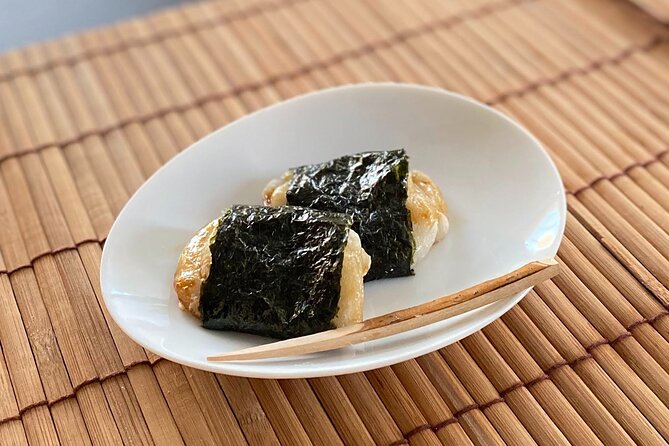
The class then moves beyond dessert with savory grilled mochi served with soy sauce and nori seaweed. This is one of the best reasons to choose this experience over a standard sweets workshop.
If you have only encountered mochi as a sweet snack or ice cream wrapper, savory grilled mochi may be a surprise. The soy sauce adds a salty edge, while nori brings a familiar seaweed flavor. It shows how flexible mochi can be in Japanese cooking and gives the tasting session a useful contrast.
This part is prepared for you rather than necessarily being another full hands-on project. That balance is sensible. You already have several items to shape, and the grilled preparation adds another taste without making the class too long or too complicated.
For me, this savory element gives the class more cultural and culinary value. You leave with a better sense of mochi as an everyday food, not only a colorful confection sold in a specialty shop.
Watching mochi ice cream take shape
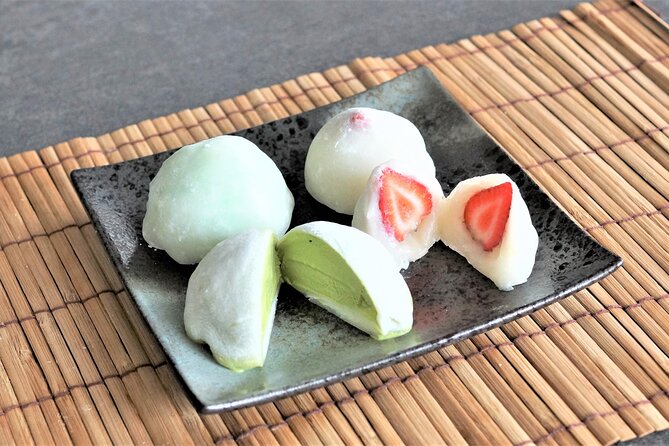
The instructor demonstrates how to make mochi ice cream. The demonstration is separate from the items you prepare yourself, so you should not assume that you will make a full batch of ice cream mochi from start to finish.
Still, it is a useful addition. Mochi ice cream is widely known outside Japan, and watching the process helps explain how the soft outer layer is formed around a cold filling. It also gives you another idea to try later if you receive the recipe details.
Dairy-free ice cream can be prepared upon request. You should make that request in advance rather than assuming it will be available on the day. The supplied information does not list other dietary substitutions, so contact the provider if you have additional restrictions.
Tasting everything with tea or coffee
The class closes with a tasting session. You sit down with your handmade sweets and sample the different preparations with green tea, hojicha, or coffee. This pause is welcome after the hands-on work, especially if you have spent the previous hour concentrating on sticky dough and careful shaping.
The drinks are included, and the final table gives you time to compare the results. You may find that the tasting is as enjoyable as the preparation. Making the food gives you a better appreciation for texture, freshness, and the small differences between each style.
Some people have been given containers for leftovers, which is helpful because the class produces several kinds of mochi. Do not count on carrying everything home in perfect condition, though. Mochi is soft and delicate, and the class is primarily built around making and eating it on site.
The recipe sheet is another practical benefit. It turns the class into more than a one-time Tokyo activity. You can try making the sweets again at home, though you may need to locate some Japanese ingredients depending on where you live.
How much value do you get for $79.26?
At about $79.26 per person, this is not the cheapest food activity in Tokyo. You are paying for an instructor-led class, ingredients, equipment, an apron, drinks, recipes, and a private studio setting. You are also paying for the chance to make several types of mochi in one sitting rather than buying one or two pieces at a shop.
The price makes the most sense if you value participation. If you only want to taste excellent mochi, you can spend far less at a Japanese sweets shop. If you want to learn the methods, ask questions in English, and leave with recipes and a better grasp of mochi culture, the cost is easier to justify.
The class is also a strong option in poor weather or extreme heat. One family used it as an afternoon activity during a very hot July day, and that timing makes sense. Two hours indoors can be a welcome change after a morning of walking, temples, or crowded city streets.
I would be more cautious if you are traveling alone. A minimum of two people per booking is required for regular classes, although private classes can be booked for up to six people under one adult reservation. Solo visitors should confirm the available booking arrangement before paying.
Group size, age rules, and the class atmosphere
The activity is promoted as a small-group class with a maximum of six people. That is a strong feature because mochi making works best when the instructor can watch your hands and correct your technique.
There is a small inconsistency in the supplied details: the additional information allows up to 12 participants, and one account describes a class of eight. I would confirm the expected group size for your date if personal attention is important to you. Even a well-run cooking class feels different with six people than with 12.
The class is non-smoking and near public transportation. Children age four and older are welcome, and families with school-age children have found the format engaging. Teenagers may especially enjoy the mix of food, photos, and hands-on work.
The friendly tone is a major part of the experience. Instructors such as Ayumi and Waka have been praised for patience, clear explanations, and warmth. Owa has also been noted for explaining the history and cultural meaning of mochi. That personal contact is valuable if you want to ask about Tokyo beyond the recipe.
Who should book this mochi class?
I would recommend it to first-time visitors who want a low-pressure cultural activity. You get food, conversation, and a practical connection to Japanese traditions without needing special cooking experience.
It suits families, couples, and small groups of friends especially well. The four-and-up age rule makes it more flexible than many food classes, though very young children may need considerable help with the sticky ingredients.
It is also a smart pick for anyone who loves Japanese sweets but has only tried packaged mochi or mochi ice cream. You will see several less familiar forms, including dango, warabi mochi, and savory grilled mochi.
I would skip it if you dislike sweet rice cakes, have serious food restrictions that have not been cleared in advance, or prefer to spend your Tokyo time at major sights. The class takes two hours, plus the time needed to reach Meguro and continue to your next stop.
Morning and afternoon departures give you useful flexibility. An afternoon booking can break up a hot sightseeing day, while a morning class leaves the rest of the day open. Free cancellation is available if you cancel at least 24 hours before the start time. Changes or cancellations inside that window are not refunded.
Should you book Mochi Making at a Private Studio in Tokyo?
Book it if you want to do more than eat Japanese sweets. The best parts are the hands-on variety, the English-speaking instruction, and the chance to understand both sweet and savory mochi in one compact class.
The price is reasonable for an interactive two-hour lesson with ingredients, drinks, recipes, and a private studio, but it is not a bargain food stop. Confirm the group size, request dairy-free ice cream in advance if needed, and allow extra time to find the Meguro meeting point.
For families, food lovers, and visitors looking for a calmer activity away from Tokyo’s busiest sights, this is a tasty and useful choice. You may leave with sticky fingers, a box of mochi, and enough confidence to try making it again at home.
FAQ
Where does the mochi-making class take place?
The class takes place at a private studio in President Meguro Heights, 1-chome 3-16 Meguro, Meguro City, Tokyo 153-0063. It is a short walk from JR Meguro Station and a nearby metro station.
How long does the experience last?
The class lasts approximately two hours.
What kinds of mochi will I make?
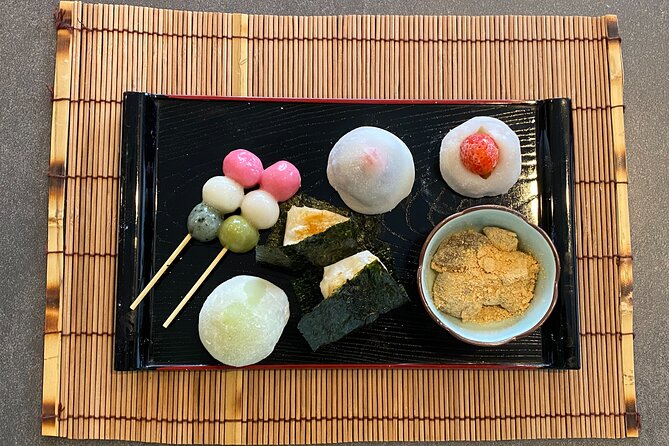
You will learn to make strawberry daifuku mochi, three-color dango on skewers, and warabi mochi. The instructor also demonstrates mochi ice cream, and you are served savory grilled mochi with soy sauce and nori seaweed.
Is the class taught in English?
Yes. The instructor is fluent in English and can explain the cooking steps, mochi traditions, local life, shopping, and sightseeing in Tokyo.
Are drinks and ingredients included?
The mochi-making lesson, food tasting, apron, English recipe sheet, and green tea, hojicha, or coffee are included. The supplied information does not list additional food or drinks unless specified.
Can children attend the class?
Children age four and older may attend. Children under four are not allowed in the class because of safety concerns.
Can I cancel for a refund?
You can cancel at least 24 hours before the experience start time for a full refund. Cancellations or changes made less than 24 hours before the start time are not accepted for a refund.
Just added in Tokyo
- Very popular in Harajuku♡Animal petting zoo★ 4.6 · 39 reviews
- Yokohama Port: Private Customizable Tour with Transfer★ 5.0 · 19 reviews
- Wagyu & Sake 8 Course Tasting Dinner in Shinjuku★ 4.9 · 20 reviews
- Warner Bros. Studio Tour Tokyo – The Making of Harry Potter★ 4.8 · 181 reviews
- Yanaka District: Historical Walking Tour in Tokyo’s Old Town★ 4.8 · 117 reviews
- Tokyo: Classic Tsukiji Food Tour★ 4.9 · 78 reviews
- Tokyo: Tsukiji Fish Market Tour with 6 Stops & Seafood Lunch★ 4.5 · 165 reviews
- Tokyo Wagyu & Sake Pairing Tasting Experience with Local Flavors★ 5.0 · 108 reviews
Tokyo Tours, compared.

Tokyo Disney Resort – Tokyo Disneyland & Tokyo DisneySea Park Tickets
Read our review →


Mt Fuji and Hakone 1-Day Bus Tour Return by Bullet Train
Read our review →

teamLab Borderless Tickets: MORI Building DIGITAL ART MUSEUM
Read our review →