
Reviewed · TEA CEREMONIES
Japanese Traditional Sweets making and Tea Ceremony
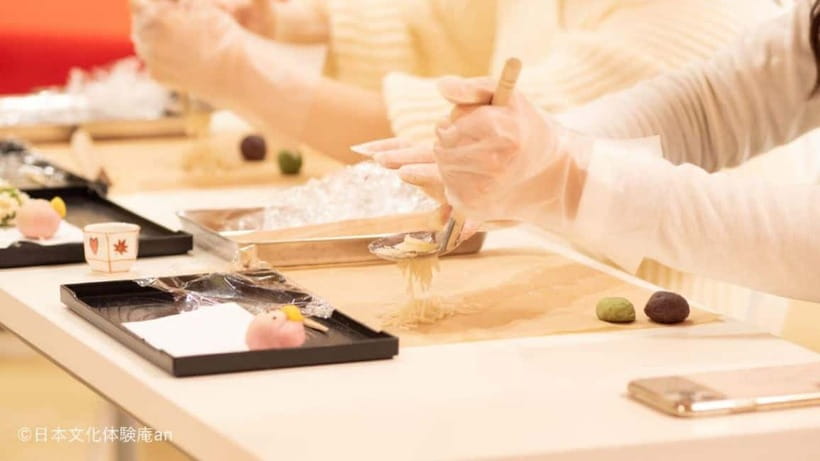
Make sweets, then whisk your own tea. This 95-minute class connects you with Kyoto food culture through nerikiri, a refined sweet made from colored white bean paste, followed by a tea ceremony with single-origin Uji matcha. I like the use of bean paste from long-established Kyoto shops, and I like that you make two seasonal designs rather than simply watching a demonstration. The $18 price also gives you a hands-on cultural activity without the cost of a full meal or major attraction.
The main consideration is the language and group setup. The instructor teaches in Japanese, with English translation provided as much as possible, and one recent class became difficult to follow because the room was crowded and the instructor continued before everyone could hear. Demonstrations are effective, but you should arrive ready to watch closely and ask for help when needed.
In This Review
- Key points to know before booking
- What this Japanese sweets class is really about
- Starting with white bean paste from Kyoto
- Why making two sweets improves the experience
- The 55-minute pause before tea
- Grinding Uji matcha and preparing your tea
- Picture time and the final tasting
- Is $18 a good value?
- Location, timing, and arrival advice
- Language and group-size concerns
- Who should book this experience?
- Should you book the nerikiri and tea ceremony?
- FAQ
- How long does the Japanese sweets and tea ceremony experience last?
- How much does the experience cost?
- Which sweets will I make?
- What ingredients are used?
- Is the class taught in English?
- Where is the meeting point?
- Can I take the sweets home?
- Is cancellation free?
Key points to know before booking
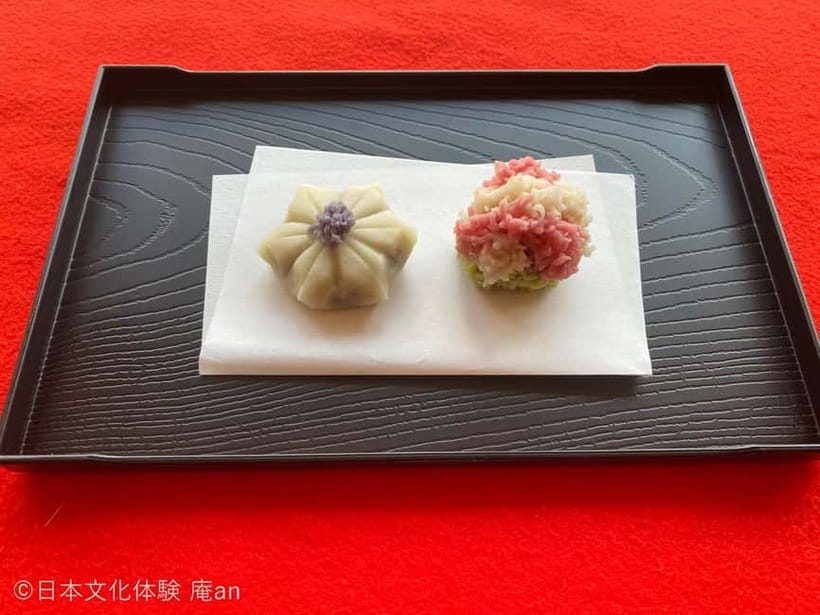
- Two seasonal sweets: You make a flower-shaped nerikiri and a kinton nerikiri, with the designs linked to the season.
- Kyoto-made ingredients: The white and red bean pastes come from long-established Kyoto shops, giving the activity a genuine food-craft focus.
- Uji matcha preparation: You grind matcha as part of the lesson, then prepare your own tea.
- One compact cultural lesson: The schedule moves from sweets to tea ceremony in 95 minutes, making it easy to fit into a day of sightseeing.
- Japanese-led instruction: English help is available as much as possible, but clear visual demonstrations matter.
- Low entry price: At $18 per person, the class offers good value, though a take-out box costs another 100 JPY and a completion certificate costs 300 JPY.
What this Japanese sweets class is really about
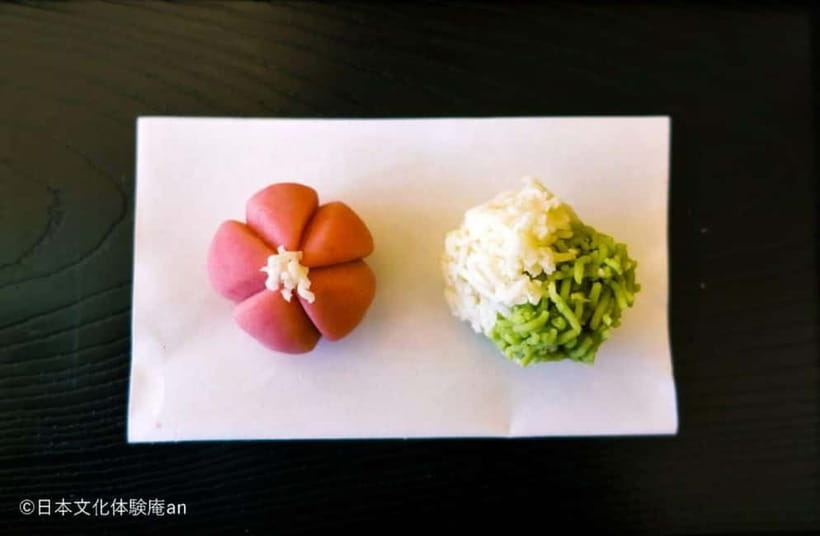
Japanese traditional sweets, known as wagashi, are often small, careful works of food art. They are not simply desserts designed to fill you up. Shape, color, season, texture, and the tea served with them all matter.
This class focuses on nerikiri, a high-grade sweet made from white bean paste. The paste is colored and shaped into seasonal flowers or fruit. You get to work with that paste yourself, which makes the lesson more memorable than a short explanation from behind a counter.
I like this kind of activity because the food gives you something concrete to take away. After the class, you will recognize the smooth, fine texture of nerikiri and understand why Japanese confectioners pay such close attention to seasonal forms.
You also make two sweets, not one. The first is a flower-shaped nerikiri. The second is a kinton nerikiri, a style with a more textured appearance. The exact designs match the season, so the finished sweets may vary during the year.
More Tea Ceremonies in Tokyo
- Matcha Making Class in Tokyo with Authentic Japanese Sweets Set
★ 5.0 · 744 reviews - Tokyo: Traditional Tea Ceremony with a Tea Master
★ 5.0 · 528 reviews - Tokyo: Matcha Making Experience with Mochi Sweets in Asakusa
★ 4.9 · 388 reviews
Starting with white bean paste from Kyoto
The class begins with an explanation of Japanese traditional sweets. You then start the nerikiri-making process by coloring the white bean paste.
This first step sounds simple, but it is where the character of the sweet begins. A little color changes the final flower or fruit shape, and the process gives you room to make small creative choices. You are not expected to produce a perfect confection on your first attempt. That is part of the fun.
The ingredients are important here. The class uses white and red bean paste produced by long-established Kyoto shops. Kyoto has a strong wagashi tradition, and using paste from established producers gives the lesson a direct link to that food culture rather than treating the sweets as generic craft material.
You will shape the paste by hand into the first seasonal design, then make the kinton nerikiri. The work calls for attention more than speed. If you rush, the shape can lose its clean lines. If you slow down and follow the demonstration, you can produce something that looks good enough for the final picture time.
This is also the point where the language issue matters most. The instructor is Japanese, and the main language is Japanese. English translation is provided as much as possible, but the teaching relies heavily on showing each motion. One class received strong praise for the instructor’s patience and helpful demonstrations, even though English was difficult for her. That is a useful sign for anyone who does not speak Japanese, but you should still expect a visual lesson rather than a fully English one.
Why making two sweets improves the experience
The two-sweet format gives the class a useful rhythm. The flower-shaped nerikiri introduces the basic coloring and shaping work. The kinton version lets you try another appearance and technique.
You may not remember every Japanese term after the class. One participant specifically wished the name of the technique had been written more clearly in the activity description. That is a fair point. If the vocabulary interests you, ask the instructor to write down nerikiri and kinton nerikiri so you can remember what you made.
The hands-on format also suits different ages. Children under two who sit on a parent’s lap can attend free of charge. For everyone else, the listed price is $18 per person.
I would choose this class for people who enjoy food preparation, small crafts, or cultural activities where you make something with your hands. It is less suitable if you want a fast, polished tasting with no participation. Here, the making is the main event.
The 55-minute pause before tea
The posted schedule places a break at about 55 minutes, after both sweets are prepared. This creates a natural pause before the tea portion begins.
The timing is useful because shaping two sweets requires focus. You get a moment between the food-making lesson and the ceremony, rather than moving directly from one demonstration into another. The schedule does not promise a meal, so you should not treat the break as lunch. The main food and drink come at the end, when you eat the sweets with your matcha.
The full program continues at about 65 minutes with an explanation of tea. Since the activity ends at 95 minutes, the class is fairly compact. You can place it into a Tokyo sightseeing day without giving up half a day, though you should allow enough time to reach the meeting point and avoid cutting it close.
A completely different kind of day out:
- Tokyo Disney Resort – Tokyo Disneyland & Tokyo DisneySea Park Tickets
★ 4.8 · 99,488 reviews - SHIBUYA SKY Ticket
★ 4.7 · 46,509 reviews - JR Whole Japan Rail Pass
★ 4.8 · 29,150 reviews - Mt Fuji and Hakone 1-Day Bus Tour Return by Bullet Train
★ 5.0 · 26,383 reviews
Grinding Uji matcha and preparing your tea
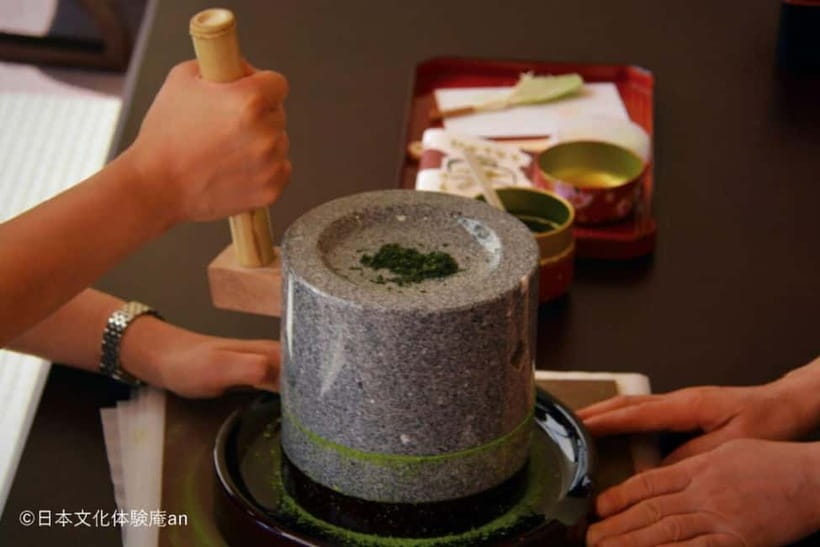
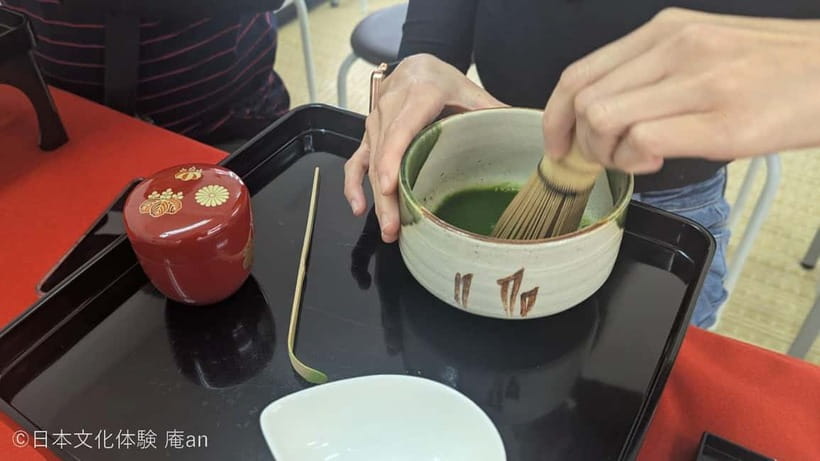
The tea portion uses Uji matcha, including a matcha-grinding demonstration. Uji, near Kyoto, is closely associated with Japanese tea production, so this part adds another Kyoto connection to the experience.
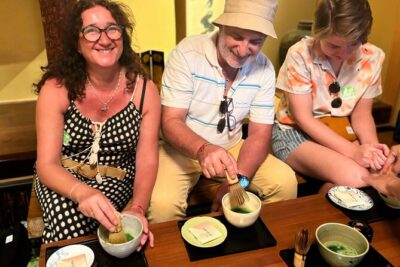
You then prepare your own matcha during the tea-ceremony experience. That hands-on step matters. Instead of receiving a finished cup and simply being told how tea is made, you take part in the preparation.
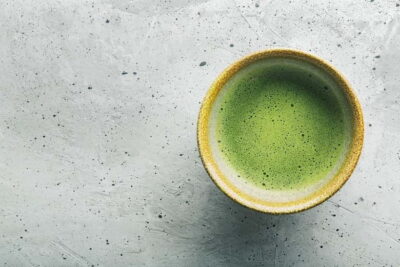
Matcha has a strong, slightly bitter taste that can surprise first-time drinkers. The sweet bean paste provides the balance. The fine sweetness of the white and red bean paste works well beside the matcha’s sharper flavor, and the contrast is one of the best reasons to try the pairing.
The ceremony also gives you a look at the social side of tea. The lesson is not just about powdered green tea. It shows how preparation, presentation, and eating fit together. You do not need prior tea experience. The instructor guides you through the process, and the demonstration should help even when the spoken explanation is limited.
Picture time and the final tasting
Around the 85-minute mark, the program reaches picture time. This is when you can photograph the sweets you made and the tea experience before eating and drinking.
That small window is worth using. Nerikiri is designed to look seasonal and precise, and the appearance can be one of the most satisfying parts of the class. If you want to take your sweets away instead of eating them immediately, a take-out box costs 100 JPY.
The listed program then ends at about 85 minutes, followed by eating and drinking time until room departure at 95 minutes. You get to enjoy both sweets with your matcha before leaving.
A completion certificate is available for 300 JPY. If you want a certificate with your name on it, provide your names in advance. Otherwise, the name space will be left blank. This is optional, and I would consider it mainly for children, families, or anyone collecting formal reminders of cultural activities.
Is $18 a good value?
At $18, this is a strong-value activity for a 95-minute cultural lesson. The price includes the sweets-making session and the tea ceremony, along with the ingredients needed for the activity. You are paying for instruction, participation, and a tasting, not just admission to watch someone else work.
The value is especially good if you are curious about Japanese food but do not want to commit to a long cooking course. You get a focused look at wagashi and matcha in one sitting.
There are a few small extra costs. The take-out box costs 100 JPY, and the completion certificate costs 300 JPY. Neither is required. You can simply eat the sweets during the class and leave without buying anything else.
The price does not guarantee a private or small-group lesson. A crowded session may make it harder to hear the instructor, and one recent class received a low score for that reason. If the room is full, stay near the demonstration area when possible and watch the instructor’s hands carefully.
Location, timing, and arrival advice
The meeting point is AN TOKYO Japanese Culture Experience, at coordinates 35.6916541, 139.7715022, in Honshu, Japan. The supplied details identify the venue but do not provide a station name or walking directions, so check the exact map location before setting out.
The operating hours are 10:00 to 17:00. Reservations received after 17:00 are processed the next day. You should arrive early because the event will not be held for late arrivals, regardless of the reason.
That rule matters in Tokyo, where a short delay can quickly become a missed train connection or a wrong turn. I would plan to reach the area before your scheduled start and keep the meeting-point coordinates available on your phone.
Only people taking part in the experience may enter. If one person in your group plans to wait without participating, do not assume that person can come inside.
The class lasts 95 minutes, but give yourself additional time before and after for finding the venue and leaving the area. The final departure is scheduled at 95 minutes, so do not book another activity immediately afterward if you need to cross the city.
Language and group-size concerns
Japanese is the listed language. English translation is offered as much as possible, but it is not presented as a full English-language class.
That does not make the activity unsuitable for English speakers. The strongest practical lesson from the available feedback is that the demonstrations carry much of the instruction. The instructor’s hand movements show the coloring, shaping, and tea preparation clearly. Still, spoken explanations may be harder to follow, particularly in a noisy or crowded room.
One class was praised for a helpful and patient instructor, while another had trouble hearing because there were too many people and the instructor continued without waiting. Both points can be true. The teaching may be good, but the room conditions can affect how much you understand.
If English support is important to you, contact the provider before booking and ask for it to be added. The provider is AN TOKYO Japanese Culture Experience, also shown as Japanese Culture Experience An Tokyo.
Who should book this experience?
I would recommend it to you if you want a short, affordable activity with a clear cultural focus. It suits first-time visitors who want more than photographs of Japan, families with older children, couples, and solo visitors who enjoy careful food preparation.
It is also a good choice for anyone interested in Kyoto’s food culture but spending time elsewhere in Honshu. The Kyoto bean paste and Uji matcha bring two Kyoto traditions into one class.
You should think twice if you dislike group instruction, need detailed English explanations, or want a quiet ceremony with lots of time for reflection. The 95-minute schedule is efficient, but it can feel brisk. You will make the sweets, learn the tea process, take pictures, and eat everything within a tight timetable.
Free cancellation is available up to 24 hours in advance for a full refund, and reserve-now-pay-later booking is offered. Once cancellation fees apply, changing the date or time can bring another specified fee. The provider also does not compensate you for travel costs if you cancel, so keep your transport plans sensible.
Should you book the nerikiri and tea ceremony?
Book it if you want to understand Japanese sweets by making them yourself. The combination of Kyoto bean paste, seasonal designs, Uji matcha, and a tea ceremony offers more substance than a quick tasting stop, and $18 is a reasonable price for the time involved.
Go in with realistic expectations about the language and group size. Watch the demonstrations closely, arrive early, and contact the provider if you need English help. For a hands-on introduction to wagashi and matcha, this is a small but worthwhile addition to a Japan itinerary.
FAQ
How long does the Japanese sweets and tea ceremony experience last?
The experience lasts 95 minutes, with the schedule moving from sweets preparation to tea ceremony, picture time, and final eating and drinking.
How much does the experience cost?
The listed price is $18 per person.
Which sweets will I make?
You will make two seasonal Japanese sweets: a flower-shaped nerikiri and a kinton nerikiri.
What ingredients are used?
The class uses white and red bean paste from long-established Kyoto shops. The tea portion uses single-origin Uji matcha.
Is the class taught in English?
The listed language is Japanese. English translation is provided as much as possible, and you can contact the provider if you would like English support added.
Where is the meeting point?
The meeting point is AN TOKYO Japanese Culture Experience, at coordinates 35.6916541, 139.7715022.
Can I take the sweets home?
Yes. A sweets take-out box is available for an additional 100 JPY.
Is cancellation free?
You can cancel up to 24 hours in advance for a full refund. Cancellation fees apply after that point, and changing the date or time after a fee has been incurred may also bring a specified charge.
More Dessert Tours in Tokyo
- Private Mochi Sweets Making class near Shibuya area
★ 5.0 · 93 reviews - Tokyo Local Food Tour: Noodles, Skewers, Dumplings, Sweets
★ 5.0 · 48 reviews - Tokyo: Two Types of Japanese Sweets Making and Tea Ceremony
★ 4.6 · 26 reviews - Japanese Traditional Sweets making
★ 4.1 · 19 reviews
Just added in Tokyo
- Japanese Home Cooking Class & Walk in Todoroki Temple Tokyo★ 5.0 · 88 reviews
- A One-of-a-Kind Sushi Experience in a Special Place of Japan★ 5.0 · 15 reviews
- Tokyo Cute Bento Cooking Class – Make a Kawaii Character Lunchbox★ 5.0 · 126 reviews
- Japan Tokyo Tower Observatory Deck E-Ticket★ 4.0 · 34 reviews
- Catch a Baseball Game in Tokyo with a Local – Tickets Included★ 5.0 · 24 reviews
- JDM Experience with Fast&Furious RX-7 (English speaking Driver)★ 5.0 · 57 reviews
- Tokyo Private Day Tour by Car with English speaking Driver Guide★ 4.0 · 29 reviews
- Japan Classic 10 Day – One Life Adventures★ 5.0 · 129 reviews
Tea Ceremonies, compared.
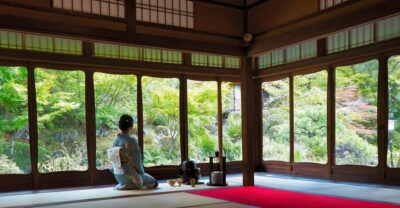
Tea Ceremony in a Traditional Tea House in Kiyomizu
Read our review →
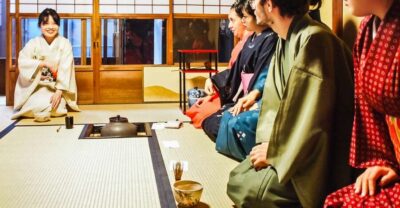
World Heritage Kyoto & Nara Uji Authentic Matcha Experience
Read our review →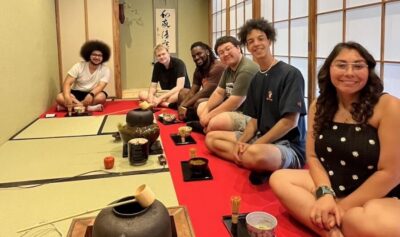
Browse the lists this tour appears in