
Reviewed · TEA CEREMONIES
Mochi Matcha Gluten Free Japanese Sweets Class near Shibuya area
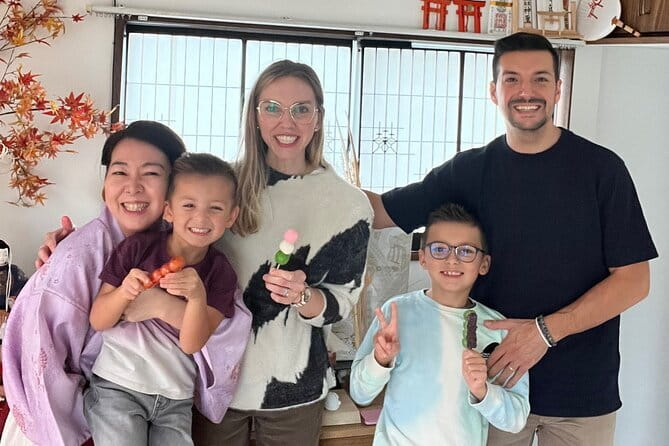
Mochi making turns a snack into a memory. This two-hour private class near Tokyo’s Shibuya area gives you hands-on practice with four Japanese sweets, including matcha-based mochi, while Sakura explains the culture behind them. I like the one-on-one teaching and the fact that you take home recipes, not just a box of sweets. The main consideration is price: at $112.01 per person, this costs more than a casual dessert stop, though the private format helps explain the premium.
I also like that the sweets are gluten-free and that the lesson takes place in a private home kitchen. That makes this a useful choice for people with celiac disease or gluten sensitivities, as well as families looking for an indoor activity on a hot or rainy Tokyo day. You should still confirm your dietary needs when booking, since gluten-free suitability is a key part of the experience.
In This Review
- Key points to know before booking
- Why this class makes sense in a busy Tokyo schedule
- Arriving at the Sangenjaya meeting point
- Learning four Japanese sweets by hand
- The value of a private home kitchen
- Matcha, tea, and a gluten-free focus
- Finishing the sweets and taking photos
- Taking the recipes home
- Is $112.01 per person fair?
- Who should book this activity?
- Booking, timing, and cancellation advice
- Should you book the Mochi Matcha class?
- FAQ
- How long does the mochi and Japanese sweets class last?
- Where does the class meet?
- Does the class take place near Shibuya?
- Is this a private activity?
- How many sweets will I make?
- Is the class gluten-free?
- Is tea included?
- Can I cancel for a full refund?
Key points to know before booking
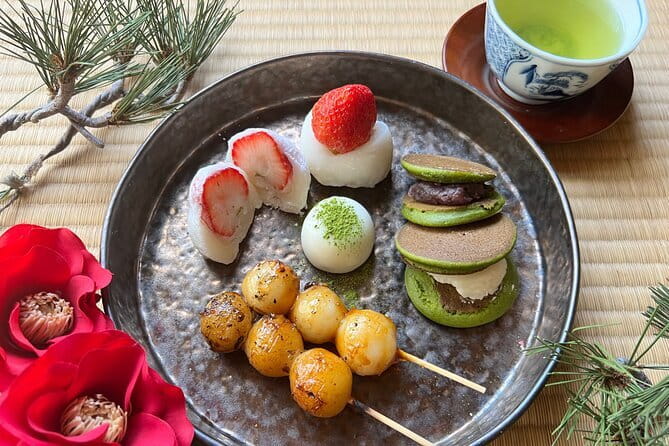
- Four Japanese sweets in about two hours: You get more than a single mochi demonstration and practice several recipes with Sakura.
- Private instruction at a Tokyo home: Only your group takes part, so the pace can suit children, beginners, or a guest with specific questions.
- Gluten-free and matcha-friendly: The class focuses on Japanese sweets that are gluten-free, with matcha green tea treats among the highlights.
- A recipe to use at home: You leave with instructions for making the sweets again for family and friends.
- A small photo table for finished desserts: You can arrange your creations for photographs before eating them.
- Near Shibuya, but check the exact address: The meeting point is 1-chōme-11-13 Sangenjaya, Setagaya City, not central Shibuya itself.
Why this class makes sense in a busy Tokyo schedule
Tokyo can wear you out. You may spend the morning crossing crowded streets, shopping in Shibuya, or visiting museums, then welcome two quiet hours at a kitchen table. This class gives you a break from sightseeing without asking you to give up a sense of place.
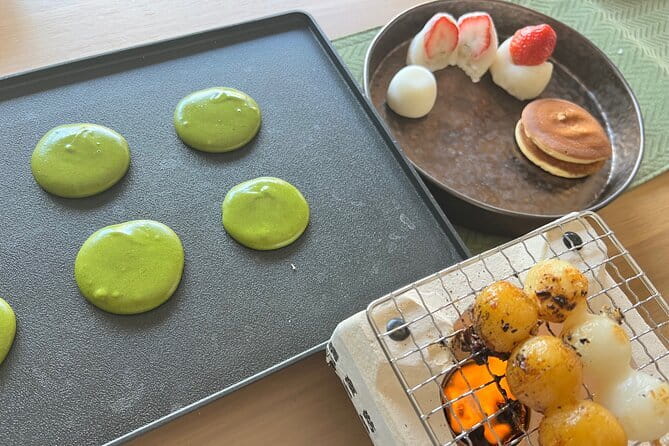
The experience is also weather-proof. Hot summer afternoons, sudden rain, and winter evenings are easier to handle when your plan takes place indoors. The class is not a passive cooking show. You work with the ingredients, learn the motions, and make sweets you can taste at the end.
I especially like the cultural side. Mochi is not simply a chewy dessert. It has a long place in Japanese food traditions, and Sakura explains the origins and significance of different sweets while you work. That context gives the food more meaning than buying a packaged treat at a station shop.
The class is taught by Sakura, a qualified professional teacher with experience working with children. Her English is described as excellent, which matters when you are learning techniques where texture and timing need clear explanation. Her teaching style is also described as patient, kind, and welcoming.
More Tea Ceremonies in Tokyo
- Matcha Making Class in Tokyo with Authentic Japanese Sweets Set
★ 5.0 · 744 reviews - Tokyo: Traditional Tea Ceremony with a Tea Master
★ 5.0 · 528 reviews - Tokyo: Matcha Making Experience with Mochi Sweets in Asakusa
★ 4.9 · 388 reviews
Arriving at the Sangenjaya meeting point
The stated meeting point is 1-chōme-11-13 Sangenjaya, Setagaya City, Tokyo 154-0024. The experience is described as near public transportation, but you should rely on the exact booking confirmation for the best route and arrival instructions.
The location deserves attention because the activity is marketed as being near Shibuya, while the address is in Sangenjaya, in Setagaya City. Those are not the same neighborhood. Sangenjaya is still a practical Tokyo location, but you should allow enough time to reach the address rather than assuming you can walk over from a central Shibuya attraction.
Your booking confirmation arrives within 48 hours, subject to availability. I would not leave this until the last morning of your trip, especially if the class is important to your plans. The experience is often booked well ahead, with an average booking lead time of about 38 days.
On arrival, you receive an apron and meet Sakura in the private home setting. The atmosphere is meant to be cozy and informal rather than like a large commercial cooking school. That can be a real benefit if you want personal guidance, though some people prefer the polished equipment and wider space of a purpose-built studio.
Learning four Japanese sweets by hand
The central lesson covers four different types of sweets. The exact recipes can vary according to the class plan, so you should not assume every session follows the same menu beyond the stated focus on mochi, matcha, and gluten-free Japanese sweets.
Matcha green tea sweets are presented as approachable for beginners. You learn how matcha contributes its distinct color and flavor, then work with the texture of the sweets as you shape and prepare them. Mochi can feel unfamiliar at first. It is soft, stretchy, and pleasantly sticky, so the hands-on work is part of the fun.
This is a good setting for children because the lesson is active and visual. Sakura has experience teaching kids, and a private class allows her to adjust explanations and pace to your group. A child who loses interest during a long demonstration has a better chance of staying involved when they can make the sweets themselves.
The class also suits adults who have never cooked Japanese food. You do not need to arrive with specialist skills. The point is to learn the basic methods, understand the ingredients, and practice enough to repeat the recipes at home.
One useful feature is the chance to ask questions as you go. In a large group, you might miss a small detail about consistency or shaping. Here, Sakura’s attention is directed to your group alone. That is one of the clearest reasons to consider the private format.
The value of a private home kitchen
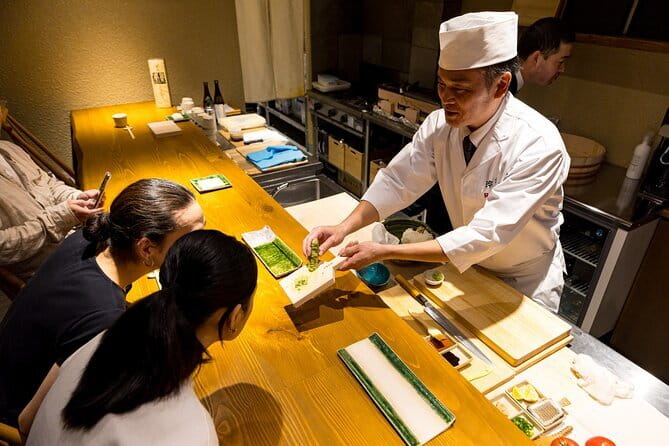
The private setting gives this activity its strongest sense of personal connection. You are not simply watching a local instructor prepare sweets behind a counter. You are invited into her home and work in a domestic kitchen, which makes the class feel closer to a visit than a standard sightseeing activity.
That setting has practical advantages. If you are cooking with a child, an older relative, or someone who needs extra explanation, you can ask for help without worrying about holding up a larger class. If your group includes only one or two people, the session may feel like a private lesson rather than a scheduled group event.
The format has a few limits, too. A home kitchen is likely to feel more intimate and less spacious than a professional school, though the supplied information does not specify the room size or equipment. If you want a polished culinary production with restaurant-style presentation, this may not be the right choice.
You may also meet Chocolate, Sakura’s dog. One participant specifically enjoyed the dog’s presence, but anyone with allergies or a fear of dogs should ask about this before booking. The available details do not state whether Chocolate is present at every class, so treat it as a possibility rather than a guaranteed part of the itinerary.
A completely different kind of day out:
- Tokyo Disney Resort – Tokyo Disneyland & Tokyo DisneySea Park Tickets
★ 4.8 · 99,488 reviews - SHIBUYA SKY Ticket
★ 4.7 · 46,509 reviews - JR Whole Japan Rail Pass
★ 4.8 · 29,150 reviews - Mt Fuji and Hakone 1-Day Bus Tour Return by Bullet Train
★ 5.0 · 26,383 reviews
Matcha, tea, and a gluten-free focus
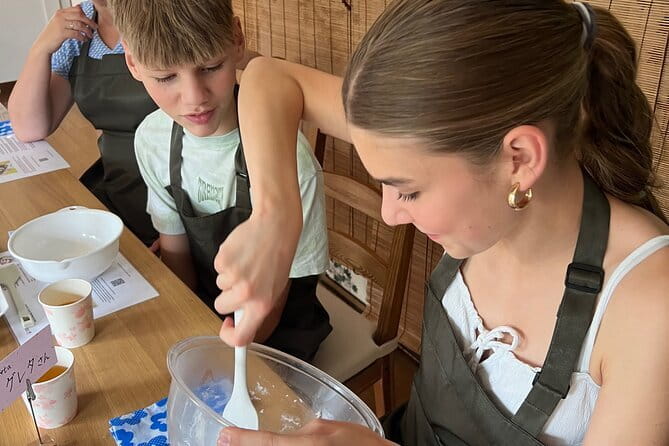
The class includes Japanese green tea, which makes a natural partner for the sweets. You also receive coffee and/or tea, though the specific beverage choice may depend on the session. Alcohol is not included.
For a gluten-free visitor, this experience can solve a common problem in Japan. Many people with celiac disease or gluten sensitivity hesitate to try unfamiliar sweets because ingredients and preparation methods may be unclear. Here, the class is specifically built around gluten-free Japanese sweets, and one participant with celiac disease found the arrangement suitable.
Still, you should communicate your needs clearly before the class. Gluten-free does not automatically mean safe for every allergy or dietary condition. The supplied details do not promise an allergen-free kitchen, separate equipment, or protection from cross-contamination. If you have a serious medical allergy, ask direct questions before paying.
The health claim that Japanese sweets are low in fat should not be treated as a medical guarantee. These are still sweet treats. The better reason to choose the class is that you learn what goes into them and can control the process when you recreate them at home.
Finishing the sweets and taking photos
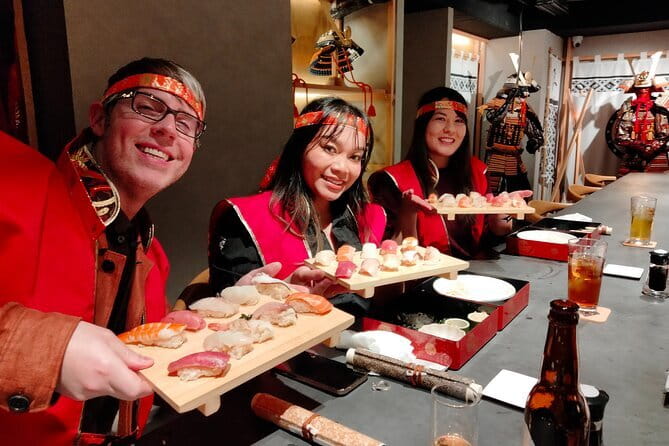
After the cooking, you get to eat what you made. This is where the lesson feels rewarding: the final sweets are not just an example prepared by an instructor, but the result of your own shaping and practice.
Sakura also provides a small photo-op table where you can arrange the finished desserts. This is a thoughtful touch. Mochi and wagashi can look beautiful in photographs, and the table gives you a cleaner backdrop than a busy restaurant or a paper takeaway box.
The photo table is not the main reason to book, but it adds a little ceremony to the end of the class. You can photograph the sweets, share the results with friends, and then enjoy them with tea. For families, it creates an easy way to mark the activity without turning the session into a formal photo shoot.
Do not expect a full meal. The focus is Japanese sweets and drinks, so plan your other food around the class if you need something more substantial.
Taking the recipes home
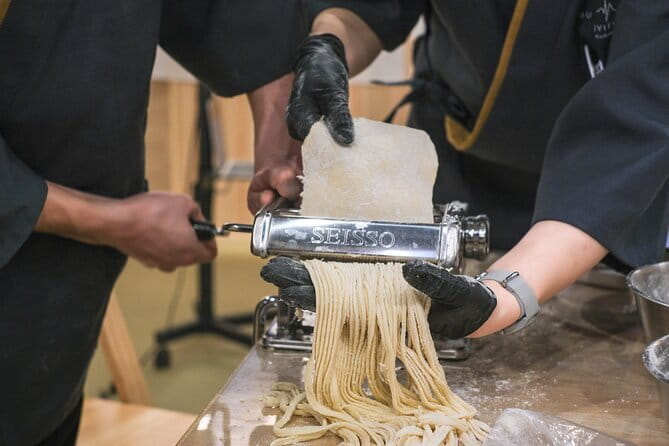
The recipe is one of the most useful parts of the experience. A souvenir disappears or gets forgotten. Written instructions give you a chance to repeat the sweets for family and friends after returning home.
That matters because mochi can seem like the sort of food best left to specialists. After a guided lesson, the process feels more manageable. You have handled the textures, seen the stages, and received explanations from Sakura while making the sweets.
The recipe also extends the cultural experience beyond Tokyo. You can use it to share what you learned instead of simply describing a food you tried. It may take some practice to match the class results, but the point is to give you a reliable starting place.
I would keep the recipe somewhere safe during the rest of your trip. It is a small item, but it may prove more useful than another souvenir from a shop.
Is $112.01 per person fair?
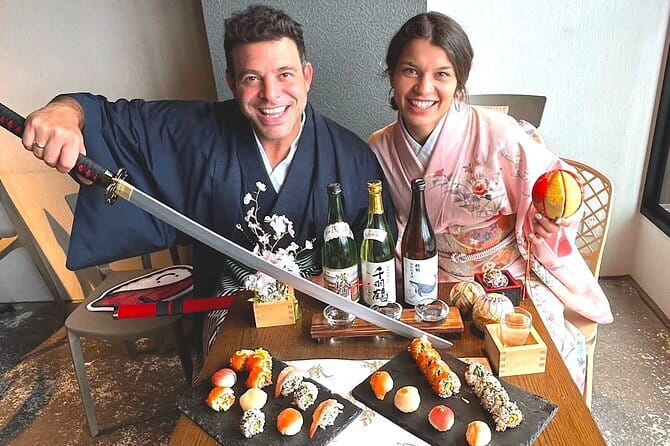
At $112.01 per person, this is a premium two-hour activity. You are not paying only for ingredients. The price covers private instruction, a home visit, an apron, tea or coffee, the guided lesson, four types of sweets, and the recipe.
The value improves if you are traveling as a small group that wants focused attention. Group discounts are available, so check the final price for your party rather than judging the experience only by the individual rate. If you would otherwise book a private food tour or cooking lesson, this can compare well.
The price is harder to justify if you only want to taste mochi. Tokyo has many cheaper ways to buy matcha sweets. This class makes sense when you want to learn, participate, ask questions, and take a skill home.
The five-star rating from 26 reviews and a 100 percent recommendation rate suggest strong satisfaction, particularly with Sakura’s teaching and the personal setting. Those figures cannot guarantee that every session will suit every person, but they support the idea that the instructor is the heart of the experience.
Who should book this activity?
I would put this near the top of the list for:
- Families with children who enjoy hands-on activities
- Couples seeking a quiet cultural experience
- Solo visitors who appreciate private instruction
- Gluten-free or celiac visitors who want a guided way to make Japanese sweets
- Matcha fans and people curious about wagashi
- Anyone needing an indoor plan in Tokyo
- Visitors who want a recipe rather than only a souvenir
It is less suited to you if you dislike sweet foods, want a large social group, or prefer a formal cooking school with professional facilities. It may also disappoint if you expect a full meal or a broad tour of Shibuya.
The class is private, so you get Sakura’s full attention, but that also means the experience depends heavily on enjoying a personal teaching environment. Based on the available feedback, her warmth and patience are major strengths.
Booking, timing, and cancellation advice
The class lasts about two hours and ends back at the meeting point. Mobile tickets are available, and free cancellation applies if you cancel at least 24 hours before the local start time.
Cancellations or changes made less than 24 hours before the start are not accepted for a refund. Since confirmation can take up to 48 hours and the class is often booked well in advance, make sure your Tokyo schedule is reasonably firm before reserving.
I would book around the middle of your stay if possible. That gives you time to recover if your flight or first sightseeing day goes wrong, and it leaves room to use the recipe again before you leave Japan. Most important, enter the Sangenjaya address into your planning and do not treat near Shibuya as an exact meeting location.
Should you book the Mochi Matcha class?
Book it if you want a personal, practical introduction to Japanese sweets rather than a quick tasting. Sakura’s patient instruction, the private home setting, the four-sweet format, and the recipe make this a more lasting experience than simply buying mochi at a department store.
I would also recommend it for families, matcha lovers, and gluten-free visitors who want extra confidence around the food they are making. The price is not low, and the exact meeting address requires care, but the private attention gives the cost a clear purpose.
Skip it if you only have time for major Shibuya sights or if you want a full meal. For the right visitor, though, these two hours offer something Tokyo often makes hard to find: a calm welcome, a useful skill, and sweets you can make again at home.
FAQ
How long does the mochi and Japanese sweets class last?
The class lasts approximately two hours.
Where does the class meet?
The meeting point is 1-chōme-11-13 Sangenjaya, Setagaya City, Tokyo 154-0024, Japan.
Does the class take place near Shibuya?
The experience is described as being near the Shibuya area, but the stated meeting address is in Sangenjaya, Setagaya City. Check the exact location before setting out.
Is this a private activity?
Yes. Only your group participates in the activity.
How many sweets will I make?
You will make four different types of Japanese sweets during the lesson.
Is the class gluten-free?
The class focuses on gluten-free Japanese sweets. If you have celiac disease or a serious allergy, communicate your dietary needs before booking because the available information does not specify cross-contamination procedures.
Is tea included?
Yes. Japanese green tea is included, along with coffee and/or tea. Alcoholic beverages are not included.
Can I cancel for a full refund?
Yes, if you cancel at least 24 hours before the experience start time. Cancellations or changes made less than 24 hours before the local start time are not accepted for a refund.
More Dessert Tours in Tokyo
- Make Traditional Nerikiri Sweets & Matcha experience in Shibuya
★ 5.0 · 130 reviews - Private Mochi Sweets Making class near Shibuya area
★ 5.0 · 93 reviews - Japanese Traditional Sweets making and Tea Ceremony
★ 4.7 · 50 reviews - Tokyo Local Food Tour: Noodles, Skewers, Dumplings, Sweets
★ 5.0 · 48 reviews
Just added in Tokyo
- Very popular in Harajuku♡Animal petting zoo★ 4.6 · 39 reviews
- Yokohama Port: Private Customizable Tour with Transfer★ 5.0 · 19 reviews
- Wagyu & Sake 8 Course Tasting Dinner in Shinjuku★ 4.9 · 20 reviews
- Warner Bros. Studio Tour Tokyo – The Making of Harry Potter★ 4.8 · 181 reviews
- Yanaka District: Historical Walking Tour in Tokyo’s Old Town★ 4.8 · 117 reviews
- Tokyo: Classic Tsukiji Food Tour★ 4.9 · 78 reviews
- Tokyo: Tsukiji Fish Market Tour with 6 Stops & Seafood Lunch★ 4.5 · 165 reviews
- Tokyo Wagyu & Sake Pairing Tasting Experience with Local Flavors★ 5.0 · 108 reviews
Tea Ceremonies, compared.
Tea Ceremony in a Traditional Tea House in Kiyomizu
Read our review →
World Heritage Kyoto & Nara Uji Authentic Matcha Experience
Read our review →
Browse the lists this tour appears in